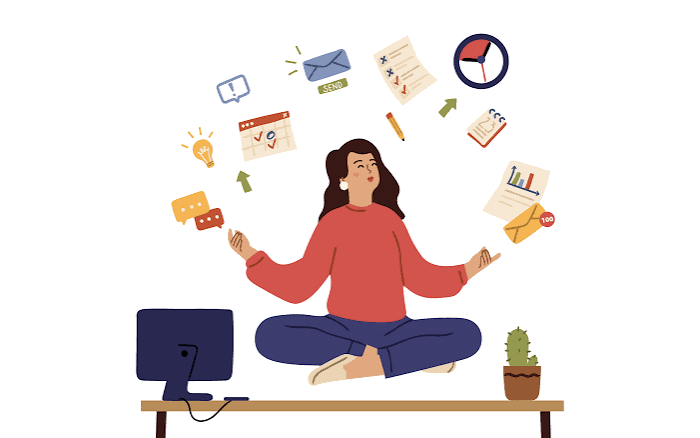
Waiting is an inescapable part of life. Whether it’s a delayed flight, a medical test result, or the slow growth of a retirement fund, we spend countless hours in the gap between now and the future we desire. For many, this gap feels like a burden—an anxious, restless stretch of time that we endure rather than experience. We try to distract ourselves, or we summon willpower to resist the urge for instant gratification, but these strategies often leave us drained and frustrated.
New research suggests there’s a different approach: mindfulness. By training attention to the present moment, mindfulness can change how we experience waiting, making it less psychologically painful—without requiring Herculean self-control. This isn’t about forcing yourself to be patient; it’s about shifting your relationship to time itself.
The Problem with Waiting
Humans are notoriously bad at waiting. Psychologists call this tendency temporal discounting: we devalue rewards that are delayed, so a $100 prize in a year feels worth far less than $100 today. This bias is deeply wired into our brains, and it’s linked to real-world struggles like procrastination, poor savings, addiction, and difficulty sticking to long-term goals.
Traditional solutions rely on willpower—the mental muscle that helps us resist temptation. But willpower is effortful and easily depleted. When we’re stressed or tired, our ability to delay gratification crumbles. That’s why we often give in to the immediate reward, whether it’s a sugary snack, a shopping spree, or a binge-watch session, even when we know it’s not in our best interest.
What Mindfulness Changes
Mindfulness—the practice of non-judgmental, present-moment awareness—offers a different route. Instead of fighting the urge for immediate reward, mindfulness teaches us to observe it without acting. This “monitoring and acceptance” approach reduces the emotional charge of desire, making it easier to let the urge pass.
But mindfulness does more than that. It also alters our perception of time. When we’re waiting, our attention tends to lock onto the absence of what we want. We mentally time-travel to the future, imagining how good it will be when the reward finally arrives—and that gap between present and future feels aversive. Mindfulness redirects attention to the sensory details of the present: the breath moving in and out, the feeling of the chair beneath us, the sounds around us. This “fills” the temporal gap, so the waiting period becomes less about what’s missing and more about what’s here.
What the Research Shows
Laboratory studies have found that even brief mindfulness exercises—just 10 to 15 minutes of focused breathing—can reduce impulsive choice. In one typical experiment, participants who practiced mindfulness were more likely to choose a larger, delayed reward over a smaller, immediate one, compared to control groups who did relaxation exercises or math problems.
Correlational studies support this: people who score higher on mindfulness questionnaires tend to have lower discounting rates, meaning they’re more patient. And neuroimaging research suggests that mindfulness practice changes activity in the brain’s default mode network—the system linked to mind-wandering and mental time travel—as well as in prefrontal-striatal circuits involved in decision-making.
Of course, there are limitations. Many studies are small, and the effects of a single mindfulness session may be short-lived. But the pattern is consistent: mindfulness seems to make waiting less painful, and it doesn’t require the same kind of effortful self-control that traditional willpower does.
Practical Techniques for Everyday Waiting
So what does this mean for your daily life? Here are a few mindfulness-based strategies to try the next time you’re stuck in a waiting situation:
- Breath-focused meditation: When you notice impatience rising, bring your attention to your breath. Feel the air entering and leaving your nostrils. When your mind wanders to the future, gently bring it back. This simple practice can anchor you in the present.
- Body scan: If you’re waiting in a line or a doctor’s office, do a quick mental scan of your body from head to toe. Notice any tension, and consciously relax those areas. This shifts your focus from the future to the present moment.
- Urge surfing: If you’re craving something immediate—a snack, a purchase, a text message—observe the urge like a wave. Notice where you feel it in your body, and watch it rise and fall without acting on it. This is a core skill in mindfulness-based relapse prevention.
- Mindful walking: If you’re waiting for a meeting or a call, take a short walk and pay attention to each step, the sensation of your feet on the ground, the rhythm of your stride. This can turn a frustrating wait into a grounding experience.
The Deeper Lesson
Waiting is not just an inconvenience; it’s a fundamental condition of human life. We are always waiting for something—a promotion, a diagnosis, a relationship, a moment of peace. The phrase “good things take time” suggests that the waiting itself has value. Mindfulness offers a way to be with time rather than against it. Instead of seeing the wait as an obstacle to be endured, we can see it as an opportunity to practice presence.
In a culture obsessed with speed and instant gratification, mindfulness is a radical counterbalance. It reminds us that the present moment is not a placeholder for the future—it’s the only place we ever actually live. By learning to wait mindfully, we don’t just make the wait easier; we reclaim the time we spend waiting as our own.
The next time you find yourself tapping your foot in frustration, remember: patience isn’t a fixed trait. It’s a skill that can be trained, and mindfulness is one of the most effective tools we have. By shifting your attention from the gap between now and later, you can transform waiting from a burden into a practice—one that makes the good things in life feel even sweeter when they finally arrive.
Summary
- Mindfulness can reduce the psychological burden of waiting by shifting attention away from the gap between present and future.
- Brief mindfulness exercises (10–15 minutes) have been shown to reduce impulsive choice in laboratory studies.
- Mindfulness works by observing desires without acting on them, bypassing the need for effortful willpower.
- Practical techniques include breath-focused meditation, body scans, urge surfing, and mindful walking.
- Waiting is a fundamental part of life; mindfulness helps us be with time rather than against it.
FAQ
Q: How does mindfulness reduce the pain of waiting?
A: Mindfulness shifts attention from the absence of the desired outcome to the sensory details of the present moment, which reduces the aversive feeling of the delay.
Q: Do I need to meditate for years to see benefits?
A: No. Even brief mindfulness exercises, like 10–15 minutes of focused breathing, can have an effect in laboratory settings, though longer-term practice may lead to more lasting changes.
Q: Is mindfulness just a form of distraction?
A: No. Distraction tries to ignore the wait; mindfulness involves acknowledging the present moment and observing thoughts and feelings without judgment, which is a different mechanism.
Q: Can mindfulness help with long-term goals like saving money?
A: Yes. By reducing temporal discounting, mindfulness can make it easier to choose larger, delayed rewards over smaller, immediate ones, which is beneficial for financial planning and other long-term goals.
Q: What if I find meditation difficult?
A: That’s normal. Mindfulness is a skill that improves with practice. You can start with short sessions and use guided meditations or apps to help you get started.
Leave a Reply