Tag: mindfulness

  • 7 Practical Digital Detox Strategies to Reclaim Your Focus and Well-Being

    7 Practical Digital Detox Strategies to Reclaim Your Focus and Well-Being

    The average person now spends nearly 7 hours a day staring at screens, and for many, that number climbs even higher when work is factored in. Notifications buzz every few minutes, pulling attention away from tasks and conversations. This constant connectivity has a cost: rising stress, poorer sleep, and a creeping sense of overwhelm that has become so common it has a name—tech fatigue.

    A digital detox doesn’t have to mean throwing your phone into the ocean or moving to a cabin in the woods. It simply means taking deliberate breaks from the digital noise to give your mind room to breathe. The strategies below are practical, evidence-informed, and designed to fit into real life—whether you’re a busy professional, a parent, or a student.

    Here are seven concrete ways to reset your relationship with technology and build healthier digital habits that stick.

    1. Schedule No-Screen Hours

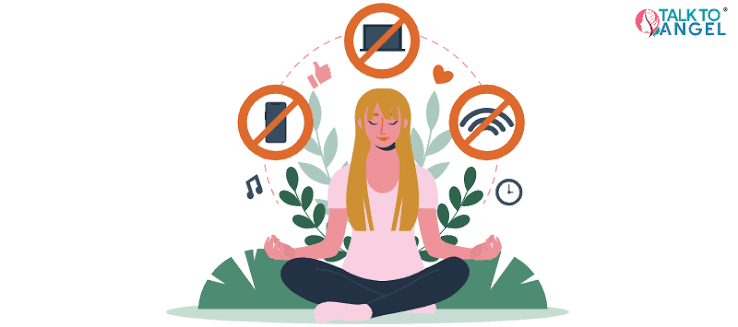
    Designate specific times of the day when all screens are off-limits. The first hour after waking and the last hour before bed are prime candidates. This helps you start and end your day with intention rather than immediately diving into messages, news, or social feeds.

    Why it works: Morning screen exposure spikes cortisol and sets a reactive tone for the day. Evening screen use, especially blue light, suppresses melatonin and disrupts sleep quality. By creating a buffer of screen-free time, you allow your brain to transition calmly. Try replacing that time with stretching, journaling, reading, or simply sitting with your coffee.

    2. Master Your Notifications

    Your phone’s buzz, ping, and flash are engineered to grab your attention—and they succeed. Research from UC Irvine found that a single interruption can take up to 23 minutes to recover from. That means a few stray notifications can cost you over an hour of focused work per day.

    Take control: Go into your settings and turn off all nonessential alerts. Keep notifications only for calls, messages from close contacts, and apps that genuinely require your immediate attention (like a calendar reminder or a delivery update). For the rest, set specific times to check them on your terms, not the app’s.

    3. Create Phone-Free Zones

    Establish physical areas where devices are simply not allowed. The bedroom is the most impactful place to start—keeping your phone out of reach can improve sleep and reduce nighttime scrolling. The dining table is another powerful choice: meals become opportunities for genuine connection with family or friends.

    Practical tip: Instead of relying on willpower, make it inconvenient. Use a physical alarm clock instead of your phone’s alarm. Leave your phone in another room during meals. These environmental changes work better than trying to resist temptation in the moment.

    4. Try App Fasting or Blocking

    If certain apps are your personal time-sinks, consider fasting from them for a set period—say, a week or a month. You can use built-in tools like Apple Screen Time or Google Digital Wellbeing to set limits, or third-party apps like Forest and Freedom that block distracting sites and apps.

    The key is to replace, not just remove. If you cut out Instagram, decide what you’ll do with that extra time: read a chapter of a book, call a friend, go for a walk. Otherwise, you’ll likely just shift the scrolling habit to a different app.

    5. Take a Digital Sabbath

    Once a week, take a full 24-hour break from all digital devices. This could be from sundown Friday to sundown Saturday, or any window that fits your schedule. This is not about productivity—it’s about resetting your baseline and reminding yourself that life exists beyond the screen.

    What to do instead: Spend time outdoors, engage in hobbies, have long conversations, or simply be bored. Boredom is actually a creativity trigger, and a digital sabbath gives your mind the space to wander and recharge.

    6. Swap Scrolling for Replacement Activities

    The average person spends over 7 hours a day on screens. That’s a massive chunk of time that could be redirected toward activities that genuinely improve your well-being. The trick is to plan ahead: decide in advance what you’ll do when the urge to scroll hits.

    Create a list of go-to replacements: exercise, reading, cooking a new recipe, playing with your pet, meditating, or working on a passion project. Keep this list handy—on a sticky note or in a notes app. When you feel the pull of your phone, choose one of these instead.

    7. Practice Mindful Consumption

    Not all screen time is equal. Mindful consumption means being intentional about what you engage with online. Curate your feeds: unfollow accounts that trigger anxiety, envy, or anger. Follow ones that educate, inspire, or simply make you laugh.

    Set an intention before you open an app. Ask yourself: Why am I opening this? What do I want to get out of it? If the answer is vague—like ‘just checking’—consider skipping it. Studies show that limiting social media to 30 minutes a day can significantly reduce loneliness and depression, according to a University of Pennsylvania study. Mindful consumption is about quality over quantity.

    Digital detox isn’t about perfection—it’s about awareness. Start with one or two strategies that resonate, and build from there. Over time, you’ll likely find that you feel less scattered, more focused, and more present in your real-world relationships. The goal isn’t to demonize technology, but to ensure it serves you, not the other way around.

    Summary

    • Schedule no-screen hours to bookend your day with calm, improving sleep and reducing morning stress.
    • Manage notifications to minimize interruptions, which can cost up to 23 minutes of focus each.
    • Create phone-free zones like the bedroom and dining table to foster better sleep and real connection.
    • Use app fasting or blockers to break compulsive habits, and always replace the time with meaningful activities.
    • Take a weekly digital sabbath to reset your baseline and rediscover offline joys.
    • Swap scrolling for replacement activities like exercise, reading, or hobbies to reclaim hours of your day.
    • Practice mindful consumption by curating your feeds and setting intentions before you open apps, which can reduce loneliness and depression.

    FAQ

    Q: How long should a digital detox last to see benefits?
    A: Even short breaks help. A 24-hour digital sabbath can reduce stress and improve focus. For lasting change, aim to integrate one or more strategies into your daily routine, like no-screen hours or notification management.

    Q: I need my phone for work. Can I still do a digital detox?
    A: Absolutely. A digital detox isn’t about abandoning your devices entirely—it’s about setting boundaries. You can detox from nonessential apps, turn off work notifications after hours, or create phone-free zones at home.

    Q: What if I feel anxious when I’m not checking my phone?
    A: That’s normal—it’s a sign of a habit loop. Start with short breaks (like 15 minutes) and gradually increase. The anxiety typically fades as you build new habits and realize the world doesn’t fall apart when you’re offline.

    Q: Are there any downsides to digital detoxes?
    A: The main downside is that a strict detox can feel unsustainable and lead to rebound overuse. That’s why experts often recommend digital hygiene—consistent, moderate habits—over periodic extreme detoxes. Also, not everyone can fully disconnect (e.g., essential workers), so focus on what’s realistic for you.

    Q: Do I need special apps to block social media?
    A: Not necessarily. You can start with built-in features like Screen Time or Digital Wellbeing. If you want extra help, apps like Forest and Freedom are effective, but they’re not the core—it’s your commitment that matters.
  • 7 Psychological Tricks to Stop Overthinking Instantly

    7 Psychological Tricks to Stop Overthinking Instantly

    Overthinking feels like a treadmill for the mind: you’re running hard, but you’re not getting anywhere. Whether you’re replaying an awkward conversation, worrying about a decision, or spiraling into worst-case scenarios, the mental loop can be exhausting. It’s not just an annoyance—research shows that up to 73% of adults aged 25–35 report overthinking regularly, and chronic rumination is linked to anxiety, depression, and poor sleep.

    The good news? You can interrupt the loop. These seven techniques are drawn from established psychological therapies like Acceptance and Commitment Therapy (ACT), cognitive-behavioral therapy (CBT), and mindfulness. They’re not magic cures—they’re interruption tools that give your brain a moment of relief, which is often enough to break the cycle. Here’s what actually works, according to research and clinical practice.

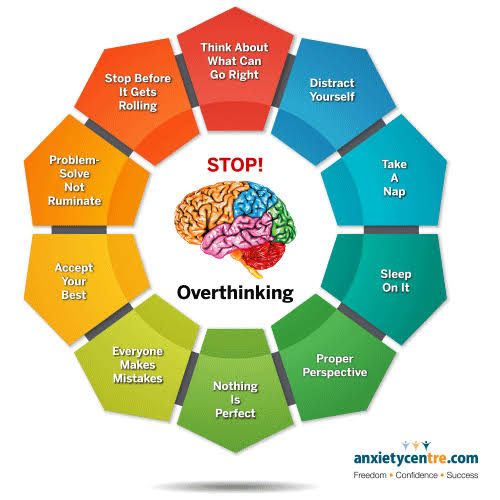
    1. The 5-4-3-2-1 Grounding Technique

    When your thoughts are spinning, your brain is stuck in the default mode network (DMN)—the network active when your mind wanders. Grounding techniques pull your attention back to the present moment by engaging your senses. The 5-4-3-2-1 method is a classic: name 5 things you can see, 4 you can touch, 3 you can hear, 2 you can smell, and 1 you can taste. This forces your brain to process sensory input, which reduces DMN activity and helps you step out of the thought loop.

    Try it next time you’re lying in bed at 2 a.m. replaying a mistake. You might not fall asleep instantly, but you’ll stop the spiral.

    2. Thought Labeling

    Thought labeling comes from ACT. The idea is to change your relationship with your thoughts by naming them for what they are: mental events, not facts. When you catch yourself overthinking, say (silently or aloud): “I am having the thought that I’m going to fail.” This simple act of labeling engages the prefrontal cortex, which helps regulate the amygdala—the brain’s fear center. It creates distance between you and the thought, making it less overwhelming.

    Research shows that labeling emotions reduces their intensity. The same applies to thoughts: when you name the pattern (“Here’s that worry about the meeting again”), you’re less likely to get swept away by it.

    3. Scheduled Worry Time

    Paradoxically, trying to suppress thoughts often makes them stronger—a phenomenon called ironic process theory. Instead of fighting your worries, schedule a specific time to think about them. For example, set aside 15 minutes each evening to worry. When a worry pops up during the day, write it down and tell yourself, “I’ll deal with this at 6 p.m.” This technique, used in CBT, gives your brain permission to let go of the thought until the designated time.

    A study published in the Journal of Anxiety Disorders found that scheduled worry time reduced anxiety and depressive symptoms in participants. It works because it transforms vague, intrusive worry into a bounded activity.

    4. The STOP Technique

    STOP stands for Stop, Take a breath, Observe, Proceed. It’s a mindfulness-based interruption tool. When you notice you’re overthinking, say “Stop” to yourself (or visualize a stop sign). Then take a deep breath. Observe your thoughts and emotions without judgment—just notice them. Finally, proceed with one small action, even if it’s just standing up or drinking water.

    This technique is effective because it breaks the automatic loop. The deep breath activates the parasympathetic nervous system, which calms your body’s stress response. The observation step creates distance, and the “proceed” step shifts your focus to the present.

    5. Distract Your Cognitive Resources

    Overthinking requires working memory. If you occupy your brain with a demanding cognitive task, there’s less room for rumination. Try counting backward from 100 by 7s, solving a puzzle, or memorizing a list. This isn’t avoidance—it’s a deliberate interruption that gives you a break from the loop.

    Research on attention-shifting shows that activities requiring focused attention reduce DMN activity. The key is to choose something challenging enough to hold your attention but not so frustrating that it adds stress.

    6. Write It Down

    Externalizing your thoughts on paper can help you see them more objectively. When you’re stuck in a loop, open a notebook and write down everything that’s running through your mind—without editing. This process, sometimes called “brain dumping,” helps you identify recurring themes and often reveals that your worries are less concrete than they feel.

    A study from the University of Chicago found that students who wrote about their worries before an exam performed better. Writing helps you process emotions and creates a sense of closure, making it easier to move on.

    7. The “Friend” Reframe

    Ask yourself: “What would I tell my best friend if they were having this same thought?” This reframe is a classic CBT technique. It challenges the harsh, self-critical tone of overthinking by forcing you to apply the same compassion you’d offer someone else.

    For example, if you’re thinking, “I’m going to mess up this presentation,” you’d probably tell a friend, “You’ve prepared well, and even if it’s not perfect, you’ll handle it.” This shift in perspective can reduce the intensity of the thought and help you think more realistically.

    These seven tricks aren’t a one-size-fits-all cure. Overthinking is a habit, and habits take time to change. But each technique offers a practical way to interrupt the loop—whether it’s grounding your senses, labeling your thoughts, or giving yourself permission to worry later. The goal isn’t to never overthink again; it’s to catch yourself sooner and step off the treadmill. And if rumination feels chronic or overwhelming, consider talking to a professional. These tools work best when paired with deeper support.

    Summary

    • Overthinking is not deep thinking—it’s repetitive, passive, and often unproductive.
    • Grounding techniques like 5-4-3-2-1 pull you out of the default mode network.
    • Thought labeling creates distance from your thoughts and reduces their power.
    • Scheduled worry time lets you postpone worry, avoiding the trap of suppression.
    • Cognitive distraction (puzzles, counting) gives your brain a break from the loop.
    • Writing down thoughts helps you externalize and process them.
    • Asking “What would I tell a friend?” adds self-compassion and perspective.
    • These are interruption tools, not cures—long-term change requires practice and sometimes therapy.

    FAQ

    Q: Can these tricks really stop overthinking instantly?nA: Not always, and not permanently. They’re designed to interrupt the loop quickly, but the effect is temporary. For lasting change, you need to practice these techniques regularly and address underlying triggers.

    Q: Is it bad to try to suppress thoughts?nA: Yes, research shows that thought suppression often backfires—it makes the thoughts more frequent. Techniques like scheduled worry time work better because they give your brain permission to worry at a specific time.

    Q: What if none of these tricks work for me?nA: Different techniques work for different people. If one doesn’t work, try another. If overthinking is severely impacting your life, consider talking to a therapist who can help you develop a personalized approach.

    Q: Are these tricks based on science?nA: Yes, most are drawn from evidence-based therapies like CBT, ACT, and mindfulness. However, the “instant” framing is a simplification—they’re best understood as interruption tools.

    Q: Is all overthinking bad?nA: No. Constructive reflection and planning are healthy. The problem is when thinking becomes repetitive and uncontrollable—that’s rumination. The goal is to shift from rumination to productive problem-solving.

  • Meditation for Beginners: A Practical, Evidence-Based Guide to Getting Started

    Meditation for Beginners: A Practical, Evidence-Based Guide to Getting Started

    You’ve probably heard that meditation can reduce stress, improve focus, and even lower blood pressure. Maybe you’ve tried an app for a few days, only to give up because your mind wouldn’t stop wandering. Or perhaps you’re curious but feel intimidated by the lotus position and incense.

    Here’s the good news: meditation is simpler than you think, and you don’t need any special equipment or 30-minute blocks of silence. This guide will walk you through the basics, clear up common misconceptions, and give you a practical starting point—all grounded in evidence and expert consensus.

    What Meditation Really Is (and Isn’t)

    Meditation is not a single practice but a family of techniques designed to cultivate a heightened state of awareness and focused attention. Think of it as a mental workout—not a mystical escape from reality.

    Common forms for beginners include:

    • Mindfulness meditation: Observing the present moment without judgment, often using the breath as an anchor.
    • Focused attention: Concentrating on a single object, sound (like a mantra), or sensation.
    • Loving-kindness (metta): Cultivating compassion toward yourself and others.
    • Body scan: Progressively moving your attention through physical sensations.

    One of the biggest myths is that meditation means emptying your mind. In reality, it’s about noticing when your mind wanders and gently bringing it back. That ‘noticing and returning’ is the core exercise—like a bicep curl for your attention.

    Getting Started: The Practical Basics

    Duration: Start Small

    Forget the idea that you need to meditate for 30 minutes a day. Research and teachers agree that 5–10 minutes daily is effective for beginners. Consistency beats duration. A short daily practice will yield more benefit than an occasional marathon session.

    Posture: Comfort is Key

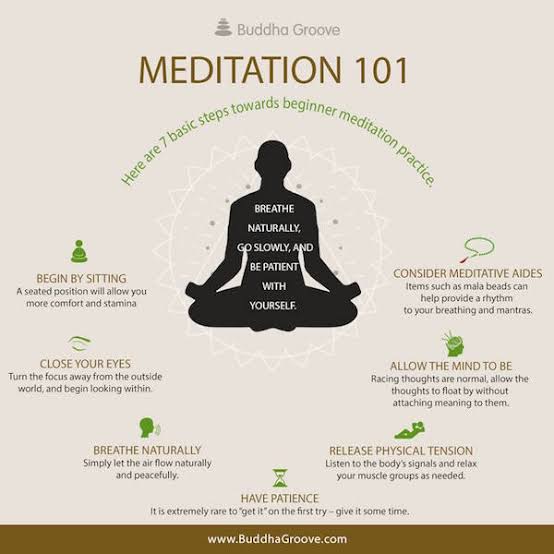
    You don’t need to sit cross-legged on the floor. The goal is a comfortable position with a straight but relaxed spine. You can sit on a chair, a cushion, or even lie down—though lying down might make you sleepy. Keep your eyes open or closed, whatever feels natural, and rest your hands on your knees or lap.

    A Simple 5-Minute Mindfulness Practice

    1. Find a quiet spot where you won’t be disturbed. Set a timer for 5 minutes.
    2. Sit comfortably with your back straight but not rigid.
    3. Close your eyes or lower your gaze.
    4. Bring your attention to your breath—notice the sensation of air entering and leaving your nostrils, or the rise and fall of your chest.
    5. When your mind wanders (and it will), simply notice that you’ve drifted, and gently return your attention to the breath. No judgment, no frustration.
    6. When the timer goes off, take a moment to notice how you feel before getting up.

    That’s it. The ‘distraction and return’ loop is the practice. Each time you notice your mind wandering and bring it back, you’re strengthening your attention muscle.

    Why It Works: The Evidence Behind the Hype

    Meditation isn’t just feel-good woo—it has a growing body of scientific support. Here’s what the research shows:

    • Reduced stress and anxiety: Moderate evidence supports meditation’s ability to lower stress markers like cortisol.
    • Improved attention and focus: Regular practice trains your ability to sustain attention and resist distraction.
    • Better emotional regulation: You become less reactive to emotional triggers.
    • Lower blood pressure: Some studies show modest reductions in blood pressure.
    • Improved sleep quality: Meditation can help quiet a racing mind at bedtime.

    These benefits accrue over weeks and months of consistent practice—not after a single session. So don’t expect a miracle after one try. Think of it like physical exercise: you wouldn’t expect to run a marathon after one jog.

    Common Misconceptions, Debunked

    • “I can’t meditate because I can’t empty my mind.” As we’ve said, that’s not the goal. You’re not trying to stop thoughts; you’re learning to observe them without getting swept away.
    • “I need to sit on the floor in lotus position.” Absolutely not. Chairs, cushions, lying down, or even walking meditation are all valid.
    • “Meditation is a religion.” While meditation has roots in Hindu and Buddhist traditions, it’s also found in Taoist, Christian, Jewish, and Islamic contemplative practices. Secular forms, like Mindfulness-Based Stress Reduction (MBSR), are widely used in healthcare without any religious framing.
    • “It works instantly.” A single session might feel relaxing, but durable changes require regular practice.
    • “I need to meditate for at least 30 minutes.” False. Short daily practice (5–10 minutes) is effective for beginners.
    • “If I get distracted, I failed.” Distraction is normal and part of the practice. The ‘repetition’ of noticing is the workout.
    • “Meditation is safe for everyone.” Generally yes, but it can exacerbate anxiety or trauma in some individuals. If you have severe mental health conditions, consult a professional before starting.

    Choosing Your Path: Secular, Spiritual, or Something In Between

    Meditation today comes in many flavors. You can use an app like Headspace or Calm, join a local meditation group, or explore traditional teachings. Some people appreciate the secular, science-based approach; others find deeper meaning in the spiritual context.

    There’s also a growing debate about “McMindfulness”—the commercialization of meditation as a productivity tool, stripped of its ethical and spiritual roots. Critics argue that this dilutes the practice, while proponents say it makes meditation accessible to more people. There’s no right answer; it’s about what resonates with you.

    Making It a Habit

    Here are some tips to stick with it:

    • Anchor it to an existing habit: Meditate right after brushing your teeth or with your morning coffee.
    • Use a timer: This prevents you from checking the clock.
    • Be kind to yourself: Missed a day? No problem. Just start again tomorrow.
    • Try different styles: If mindfulness doesn’t click, try a body scan or loving-kindness meditation.

    A Note on Accessibility and Safety

    Meditation should be inclusive. If sitting still is uncomfortable, try walking meditation or lying down. If you have a history of trauma, be cautious—silent meditation can sometimes bring up difficult emotions. In such cases, it’s wise to work with a qualified teacher or therapist.

    The Bottom Line

    Meditation is a simple, evidence-based practice that can improve your well-being—but it’s not a quick fix. Start with 5 minutes a day, keep your expectations realistic, and remember that the wandering mind is not a failure; it’s the very thing you’re training.

    Meditation is a journey, not a destination. By starting small, staying consistent, and letting go of perfectionism, you can build a practice that supports your mental and physical health. Whether you’re seeking stress relief, better focus, or a deeper sense of calm, the benefits are within reach—one breath at a time.

    Summary

    • Meditation is a family of techniques, not a single practice; mindfulness is a popular starting point.
    • Start with 5–10 minutes a day; consistency matters more than duration.
    • You don’t need to empty your mind or sit cross-legged—comfort and a relaxed spine are key.
    • Evidence supports benefits like reduced stress, improved focus, and better sleep, but they require regular practice over weeks.
    • Common myths include needing 30+ minutes, instant results, and that distraction means failure.

    FAQ

    Q: How long should I meditate as a beginner?
    A: Start with 5–10 minutes a day. It’s more effective to practice daily for a short time than occasionally for a long time.

    Q: What if I can’t stop thinking during meditation?
    A: That’s completely normal. The goal isn’t to stop thoughts but to notice them and gently return your attention to your breath. Each time you do that, you’re strengthening your focus.

    Q: Do I need to sit on the floor?
    A: No. You can sit on a chair, a cushion, or even lie down. The key is a comfortable position with a straight but relaxed spine.

    Q: Is meditation a religious practice?
    A: Meditation has roots in many religious traditions, but it’s not inherently religious. Secular forms like MBSR are widely used in healthcare and wellness settings.

    Q: Can meditation make my anxiety worse?
    A: In some cases, yes—especially if you have a history of trauma or severe anxiety. If you’re concerned, consult a mental health professional before starting a meditation practice.

  • How Mindfulness Can Make Waiting Easier—Without Willpower

    How Mindfulness Can Make Waiting Easier—Without Willpower

    Waiting is an inescapable part of life. Whether it’s a delayed flight, a medical test result, or the slow growth of a retirement fund, we spend countless hours in the gap between now and the future we desire. For many, this gap feels like a burden—an anxious, restless stretch of time that we endure rather than experience. We try to distract ourselves, or we summon willpower to resist the urge for instant gratification, but these strategies often leave us drained and frustrated.

    New research suggests there’s a different approach: mindfulness. By training attention to the present moment, mindfulness can change how we experience waiting, making it less psychologically painful—without requiring Herculean self-control. This isn’t about forcing yourself to be patient; it’s about shifting your relationship to time itself.

    The Problem with Waiting

    Humans are notoriously bad at waiting. Psychologists call this tendency temporal discounting: we devalue rewards that are delayed, so a $100 prize in a year feels worth far less than $100 today. This bias is deeply wired into our brains, and it’s linked to real-world struggles like procrastination, poor savings, addiction, and difficulty sticking to long-term goals.

    Traditional solutions rely on willpower—the mental muscle that helps us resist temptation. But willpower is effortful and easily depleted. When we’re stressed or tired, our ability to delay gratification crumbles. That’s why we often give in to the immediate reward, whether it’s a sugary snack, a shopping spree, or a binge-watch session, even when we know it’s not in our best interest.

    What Mindfulness Changes

    Mindfulness—the practice of non-judgmental, present-moment awareness—offers a different route. Instead of fighting the urge for immediate reward, mindfulness teaches us to observe it without acting. This “monitoring and acceptance” approach reduces the emotional charge of desire, making it easier to let the urge pass.

    But mindfulness does more than that. It also alters our perception of time. When we’re waiting, our attention tends to lock onto the absence of what we want. We mentally time-travel to the future, imagining how good it will be when the reward finally arrives—and that gap between present and future feels aversive. Mindfulness redirects attention to the sensory details of the present: the breath moving in and out, the feeling of the chair beneath us, the sounds around us. This “fills” the temporal gap, so the waiting period becomes less about what’s missing and more about what’s here.

    What the Research Shows

    Laboratory studies have found that even brief mindfulness exercises—just 10 to 15 minutes of focused breathing—can reduce impulsive choice. In one typical experiment, participants who practiced mindfulness were more likely to choose a larger, delayed reward over a smaller, immediate one, compared to control groups who did relaxation exercises or math problems.

    Correlational studies support this: people who score higher on mindfulness questionnaires tend to have lower discounting rates, meaning they’re more patient. And neuroimaging research suggests that mindfulness practice changes activity in the brain’s default mode network—the system linked to mind-wandering and mental time travel—as well as in prefrontal-striatal circuits involved in decision-making.

    Of course, there are limitations. Many studies are small, and the effects of a single mindfulness session may be short-lived. But the pattern is consistent: mindfulness seems to make waiting less painful, and it doesn’t require the same kind of effortful self-control that traditional willpower does.

    Practical Techniques for Everyday Waiting

    So what does this mean for your daily life? Here are a few mindfulness-based strategies to try the next time you’re stuck in a waiting situation:

    • Breath-focused meditation: When you notice impatience rising, bring your attention to your breath. Feel the air entering and leaving your nostrils. When your mind wanders to the future, gently bring it back. This simple practice can anchor you in the present.
    • Body scan: If you’re waiting in a line or a doctor’s office, do a quick mental scan of your body from head to toe. Notice any tension, and consciously relax those areas. This shifts your focus from the future to the present moment.
    • Urge surfing: If you’re craving something immediate—a snack, a purchase, a text message—observe the urge like a wave. Notice where you feel it in your body, and watch it rise and fall without acting on it. This is a core skill in mindfulness-based relapse prevention.
    • Mindful walking: If you’re waiting for a meeting or a call, take a short walk and pay attention to each step, the sensation of your feet on the ground, the rhythm of your stride. This can turn a frustrating wait into a grounding experience.

    The Deeper Lesson

    Waiting is not just an inconvenience; it’s a fundamental condition of human life. We are always waiting for something—a promotion, a diagnosis, a relationship, a moment of peace. The phrase “good things take time” suggests that the waiting itself has value. Mindfulness offers a way to be with time rather than against it. Instead of seeing the wait as an obstacle to be endured, we can see it as an opportunity to practice presence.

    In a culture obsessed with speed and instant gratification, mindfulness is a radical counterbalance. It reminds us that the present moment is not a placeholder for the future—it’s the only place we ever actually live. By learning to wait mindfully, we don’t just make the wait easier; we reclaim the time we spend waiting as our own.

    The next time you find yourself tapping your foot in frustration, remember: patience isn’t a fixed trait. It’s a skill that can be trained, and mindfulness is one of the most effective tools we have. By shifting your attention from the gap between now and later, you can transform waiting from a burden into a practice—one that makes the good things in life feel even sweeter when they finally arrive.

    Summary

    • Mindfulness can reduce the psychological burden of waiting by shifting attention away from the gap between present and future.
    • Brief mindfulness exercises (10–15 minutes) have been shown to reduce impulsive choice in laboratory studies.
    • Mindfulness works by observing desires without acting on them, bypassing the need for effortful willpower.
    • Practical techniques include breath-focused meditation, body scans, urge surfing, and mindful walking.
    • Waiting is a fundamental part of life; mindfulness helps us be with time rather than against it.

    FAQ

    Q: How does mindfulness reduce the pain of waiting?
    A: Mindfulness shifts attention from the absence of the desired outcome to the sensory details of the present moment, which reduces the aversive feeling of the delay.

    Q: Do I need to meditate for years to see benefits?
    A: No. Even brief mindfulness exercises, like 10–15 minutes of focused breathing, can have an effect in laboratory settings, though longer-term practice may lead to more lasting changes.

    Q: Is mindfulness just a form of distraction?
    A: No. Distraction tries to ignore the wait; mindfulness involves acknowledging the present moment and observing thoughts and feelings without judgment, which is a different mechanism.

    Q: Can mindfulness help with long-term goals like saving money?
    A: Yes. By reducing temporal discounting, mindfulness can make it easier to choose larger, delayed rewards over smaller, immediate ones, which is beneficial for financial planning and other long-term goals.

    Q: What if I find meditation difficult?
    A: That’s normal. Mindfulness is a skill that improves with practice. You can start with short sessions and use guided meditations or apps to help you get started.