Tag: well-being

  • Why Do We Compare Ourselves to Strangers on Social Media?

    Why Do We Compare Ourselves to Strangers on Social Media?

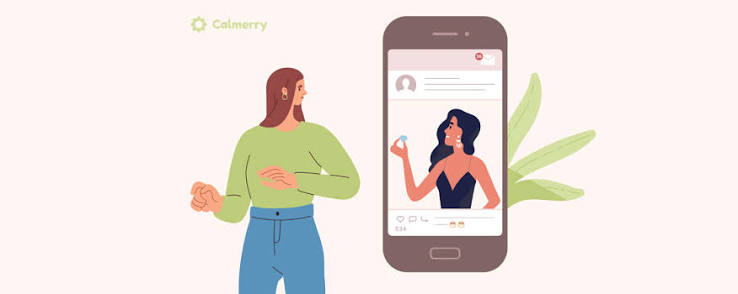
    It’s 11 p.m. and you’re scrolling through Instagram. A stranger—someone you’ve never met—is posting from a beach in Bali, laughing with a cocktail in hand. You feel a pang of something. It’s not quite jealousy, not quite admiration, but it’s uncomfortable. You close the app, but the feeling lingers. Why does a stranger’s highlight reel affect you so much?

    This scenario is universal. Social media has turned comparison into a 24/7 habit, and psychologists have been studying it for decades. The roots go back to 1954, when psychologist Leon Festinger proposed social comparison theory: humans have an innate drive to evaluate themselves by comparing to others, especially when objective measures are missing. But social media has supercharged this ancient instinct, and the consequences are real—from envy to depression.

    In this article, we’ll unpack the psychology, neuroscience, and sociology behind why we compare ourselves to strangers online. You’ll learn why your brain treats a stranger’s vacation photo like a threat, how algorithms amplify the effect, and what you can do to break the cycle.

    The Ancient Roots of Comparison

    Imagine you’re a hunter-gatherer 50,000 years ago. Your survival depends on your standing in a tribe of maybe 50 people. If you’re stronger, faster, or more skilled, you get better food, a mate, and protection. Your brain evolved a “social monitoring system” to constantly check where you rank. This was a survival tool.

    Fast forward to today. Your tribe is now the 300 people you follow on Instagram, plus the millions of strangers on TikTok. But your brain doesn’t know the difference. It still thinks social standing equals survival. So when you see a stranger’s luxury car or perfect body, your brain registers it as a threat to your position—even though you’ll never compete with that person for resources.

    This mismatch is at the heart of the problem. Your brain is wired for a small village, not a global feed. As psychologist Leon Festinger noted in 1954, we compare ourselves when objective standards are unavailable. On social media, objective standards are everywhere—follower counts, likes, engagement—but they’re misleading. They measure popularity, not worth.

    Upward and Downward: The Two Types of Comparison

    Psychologists distinguish between two types of comparison, and social media is dominated by one.

    Upward comparison is when you compare yourself to someone you perceive as better off. This can be inspiring—like seeing a fitness influencer and feeling motivated to hit the gym. But it can also be deflating, especially when the gap feels unbridgeable. A 2018 study in Computers in Human Behavior found that passive scrolling (just browsing, not interacting) is strongly linked to upward comparison, which in turn predicts envy and depressive symptoms.

    Downward comparison is the opposite—comparing yourself to someone worse off. This can boost self-esteem (“At least I’m not that guy”), but it also breeds complacency. Social media offers plenty of downward targets too, like memes about failed relationships or cringe-worthy videos. But here’s the catch: downward comparison is less common on social media because people rarely post their failures. The feed is skewed upward.

    The result? You’re constantly swimming in upward targets, and your brain’s comparison engine runs in overdrive.

    The Curated Self and the Stranger Problem

    Why is comparing to a stranger so different from comparing to a coworker? Three reasons stand out.

    First, you lack context. When you compare to a coworker, you know their struggles—they’ve been stressed about their kid, they have a mortgage, they sometimes eat junk food. With a stranger, you see only the final product: the beach photo, the promotion announcement. You fill the gaps with assumptions, and those assumptions are often negative about yourself. You think, “Why don’t I have that?” without knowing the stranger’s debt or burnout.

    Second, there’s no reciprocity. In a real relationship, comparison is moderated by social norms—you both know each other’s flaws. With a stranger, there’s no back-and-forth. You’re comparing against an idealized archetype, not a real person.

    Third, strangers are archetypes. The traveler, the CEO, the fitness model—these are roles, not individuals. They represent an ideal, not a human with bad days. As sociologist Erving Goffman would say, social media is a “front stage” performance, and you’re only seeing the act.

    This is why a stranger’s post can hurt more than a friend’s. Your brain knows your friend has flaws, but a stranger is a blank canvas on which you paint your own insecurities.

    What the Brain Does: Pain, Dopamine, and Mirror Neurons

    Neuroscience offers a fascinating look at why comparison feels so visceral. Brain imaging studies using fMRI show that social rejection and social comparison activate the anterior cingulate cortex and the insula—regions also associated with physical pain. So when you see a stranger’s success and feel a pang of envy, your brain is literally processing it as a form of pain.

    There’s also a dopamine angle. Seeing others’ success triggers dopamine responses tied to anticipated rewards. Your brain thinks, “That could be me,” and releases a hit of motivation. But when your own life doesn’t match, the “prediction error”—the gap between expectation and reality—produces a negative affective state. It’s a letdown, a chemical disappointment.

    Mirror neurons add another layer. When you watch someone’s experience, your brain activates the same networks as if you were living it. This is why a stranger’s vacation video can feel so immersive—you’re almost there. But it also means you feel the emotional weight of their lives, even if they’re not real to you.

    The Algorithmic Amplifier

    Social media platforms don’t just host comparison; they actively amplify it. Algorithms are designed to keep you engaged, and content that triggers strong emotions—like envy or aspiration—tends to perform well. Luxury lifestyles, perfect bodies, and dramatic success stories generate likes, comments, and shares.

    This creates a feedback loop. The algorithm notices you linger on a travel post, so it shows you more travel posts. Before long, your feed is a curated stream of highlight reels, and the comparison engine never turns off.

    As the “Facebook Envy” study by Krasnova and colleagues (2013) found, envy from passive browsing is a primary driver of the “social media paradox”: users feel more connected yet more miserable. The algorithm doesn’t care about your well-being; it cares about your attention.

    The Sociological View: Status Competition on a Global Scale

    Sociologists frame social media comparison as a modern form of status competition. In the past, you competed with your village or neighborhood. Now, your “comparison class” includes global elites—celebrities, influencers, and billionaires. This is a rigged game.

    Sociologists point to the concept of “relative deprivation”: you feel deprived not because of absolute lack, but because others seem to have more. When your comparison class expands to include the top 1% of the world, the gap feels insurmountable. This leads to the “compare and despair” loop, where no matter what you achieve, it never feels like enough.

    Social media also quantifies status in ways that didn’t exist before. Likes, followers, and shares are visible metrics of approval. They turn status into a number, and numbers are always comparable. This makes the comparison more concrete and more painful.

    Can Comparison Be Good?

    Not all comparison is bad. Psychologists distinguish between benign envy and malicious envy. Benign envy can motivate self-improvement—you see someone’s success and think, “I can do that too.” Malicious envy breeds hostility or schadenfreude.

    Social media tends to blur this distinction. Because you don’t know the stranger, it’s harder to feel benign envy. The lack of context makes it easier to feel malicious—or to simply feel bad about yourself.

    But you can use comparison constructively. If you follow people who are a step ahead of you in a realistic way—not global elites, but peers with similar starting points—you can turn upward comparison into a learning tool.

    Breaking the Cycle: Practical Steps

    You don’t have to quit social media entirely to reduce the damage. Here are evidence-based strategies:

    • Limit passive scrolling. The 2018 study showed that passive use is the problem. Engage actively—comment, share, message—instead of just browsing.
    • Curate your feed. Unfollow accounts that trigger negative comparison. Follow people who post authentic content, including struggles.
    • Practice gratitude. When you notice envy, write down three things you’re grateful for. This shifts your focus to your own life.
    • Remember the highlight reel. Remind yourself that posts are edited. The beach photo doesn’t show the sunburn or the credit card bill.
    • Take breaks. Set app limits or schedule digital detoxes. Your brain needs time to recalibrate.

    These steps won’t eliminate comparison—it’s a human instinct—but they can help you manage it.

    The Bigger Picture

    Understanding why we compare ourselves to strangers on social media isn’t just about personal well-being. It’s about recognizing that the platforms are designed to exploit an ancient brain mechanism. The comparison engine is not a bug; it’s a feature. The more you compare, the more you engage, and the more revenue the platform generates.

    By being aware of this, you can take back some control. You can choose what to feed your brain and how to interpret what you see. The goal isn’t to stop comparing altogether—that would be impossible. It’s to compare wisely, with context and compassion for yourself.

    Social media has turned a survival instinct into a daily habit, but understanding the mechanics can help you resist the trap. Your brain isn’t broken; it’s reacting to a world it wasn’t designed for. By recognizing the curated nature of online content, the algorithmic push toward envy, and the neurological pain of comparison, you can make conscious choices about what you consume. The next time a stranger’s post makes you feel small, remember: you’re seeing their highlight reel, not their life. And your own life—messy, imperfect, and real—is still the one worth living.

    Summary

    • Social comparison theory (Festinger, 1954) says humans have an innate drive to evaluate themselves against others, a drive that social media exploits 24/7.
    • Upward comparisons (to those seen as better off) dominate social media due to curated highlight reels, leading to envy and depressive symptoms.
    • Comparing to strangers is worse than comparing to peers because there is no context, no reciprocity, and strangers become idealized archetypes.
    • Brain imaging shows that social comparison activates pain regions (anterior cingulate cortex, insula), making the experience physically distressing.
    • Algorithms amplify comparison by surfacing content that triggers strong emotions, keeping you engaged in a “compare and despair” loop.
    • You can break the cycle by limiting passive scrolling, curating your feed, practicing gratitude, and remembering that posts are edited highlights.
    FAQ

  • 7 Practical Digital Detox Strategies to Reclaim Your Focus and Well-Being

    7 Practical Digital Detox Strategies to Reclaim Your Focus and Well-Being

    The average person now spends nearly 7 hours a day staring at screens, and for many, that number climbs even higher when work is factored in. Notifications buzz every few minutes, pulling attention away from tasks and conversations. This constant connectivity has a cost: rising stress, poorer sleep, and a creeping sense of overwhelm that has become so common it has a name—tech fatigue.

    A digital detox doesn’t have to mean throwing your phone into the ocean or moving to a cabin in the woods. It simply means taking deliberate breaks from the digital noise to give your mind room to breathe. The strategies below are practical, evidence-informed, and designed to fit into real life—whether you’re a busy professional, a parent, or a student.

    Here are seven concrete ways to reset your relationship with technology and build healthier digital habits that stick.

    1. Schedule No-Screen Hours

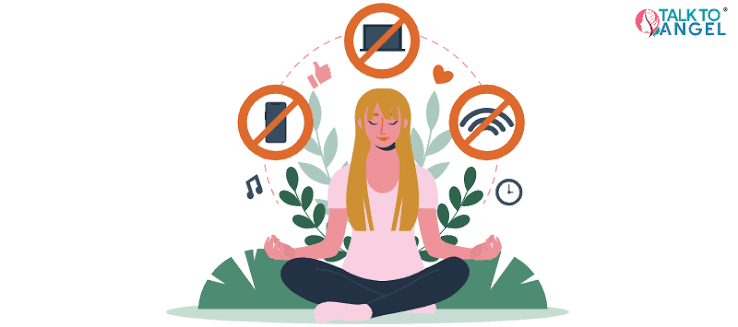
    Designate specific times of the day when all screens are off-limits. The first hour after waking and the last hour before bed are prime candidates. This helps you start and end your day with intention rather than immediately diving into messages, news, or social feeds.

    Why it works: Morning screen exposure spikes cortisol and sets a reactive tone for the day. Evening screen use, especially blue light, suppresses melatonin and disrupts sleep quality. By creating a buffer of screen-free time, you allow your brain to transition calmly. Try replacing that time with stretching, journaling, reading, or simply sitting with your coffee.

    2. Master Your Notifications

    Your phone’s buzz, ping, and flash are engineered to grab your attention—and they succeed. Research from UC Irvine found that a single interruption can take up to 23 minutes to recover from. That means a few stray notifications can cost you over an hour of focused work per day.

    Take control: Go into your settings and turn off all nonessential alerts. Keep notifications only for calls, messages from close contacts, and apps that genuinely require your immediate attention (like a calendar reminder or a delivery update). For the rest, set specific times to check them on your terms, not the app’s.

    3. Create Phone-Free Zones

    Establish physical areas where devices are simply not allowed. The bedroom is the most impactful place to start—keeping your phone out of reach can improve sleep and reduce nighttime scrolling. The dining table is another powerful choice: meals become opportunities for genuine connection with family or friends.

    Practical tip: Instead of relying on willpower, make it inconvenient. Use a physical alarm clock instead of your phone’s alarm. Leave your phone in another room during meals. These environmental changes work better than trying to resist temptation in the moment.

    4. Try App Fasting or Blocking

    If certain apps are your personal time-sinks, consider fasting from them for a set period—say, a week or a month. You can use built-in tools like Apple Screen Time or Google Digital Wellbeing to set limits, or third-party apps like Forest and Freedom that block distracting sites and apps.

    The key is to replace, not just remove. If you cut out Instagram, decide what you’ll do with that extra time: read a chapter of a book, call a friend, go for a walk. Otherwise, you’ll likely just shift the scrolling habit to a different app.

    5. Take a Digital Sabbath

    Once a week, take a full 24-hour break from all digital devices. This could be from sundown Friday to sundown Saturday, or any window that fits your schedule. This is not about productivity—it’s about resetting your baseline and reminding yourself that life exists beyond the screen.

    What to do instead: Spend time outdoors, engage in hobbies, have long conversations, or simply be bored. Boredom is actually a creativity trigger, and a digital sabbath gives your mind the space to wander and recharge.

    6. Swap Scrolling for Replacement Activities

    The average person spends over 7 hours a day on screens. That’s a massive chunk of time that could be redirected toward activities that genuinely improve your well-being. The trick is to plan ahead: decide in advance what you’ll do when the urge to scroll hits.

    Create a list of go-to replacements: exercise, reading, cooking a new recipe, playing with your pet, meditating, or working on a passion project. Keep this list handy—on a sticky note or in a notes app. When you feel the pull of your phone, choose one of these instead.

    7. Practice Mindful Consumption

    Not all screen time is equal. Mindful consumption means being intentional about what you engage with online. Curate your feeds: unfollow accounts that trigger anxiety, envy, or anger. Follow ones that educate, inspire, or simply make you laugh.

    Set an intention before you open an app. Ask yourself: Why am I opening this? What do I want to get out of it? If the answer is vague—like ‘just checking’—consider skipping it. Studies show that limiting social media to 30 minutes a day can significantly reduce loneliness and depression, according to a University of Pennsylvania study. Mindful consumption is about quality over quantity.

    Digital detox isn’t about perfection—it’s about awareness. Start with one or two strategies that resonate, and build from there. Over time, you’ll likely find that you feel less scattered, more focused, and more present in your real-world relationships. The goal isn’t to demonize technology, but to ensure it serves you, not the other way around.

    Summary

    • Schedule no-screen hours to bookend your day with calm, improving sleep and reducing morning stress.
    • Manage notifications to minimize interruptions, which can cost up to 23 minutes of focus each.
    • Create phone-free zones like the bedroom and dining table to foster better sleep and real connection.
    • Use app fasting or blockers to break compulsive habits, and always replace the time with meaningful activities.
    • Take a weekly digital sabbath to reset your baseline and rediscover offline joys.
    • Swap scrolling for replacement activities like exercise, reading, or hobbies to reclaim hours of your day.
    • Practice mindful consumption by curating your feeds and setting intentions before you open apps, which can reduce loneliness and depression.

    FAQ

    Q: How long should a digital detox last to see benefits?
    A: Even short breaks help. A 24-hour digital sabbath can reduce stress and improve focus. For lasting change, aim to integrate one or more strategies into your daily routine, like no-screen hours or notification management.

    Q: I need my phone for work. Can I still do a digital detox?
    A: Absolutely. A digital detox isn’t about abandoning your devices entirely—it’s about setting boundaries. You can detox from nonessential apps, turn off work notifications after hours, or create phone-free zones at home.

    Q: What if I feel anxious when I’m not checking my phone?
    A: That’s normal—it’s a sign of a habit loop. Start with short breaks (like 15 minutes) and gradually increase. The anxiety typically fades as you build new habits and realize the world doesn’t fall apart when you’re offline.

    Q: Are there any downsides to digital detoxes?
    A: The main downside is that a strict detox can feel unsustainable and lead to rebound overuse. That’s why experts often recommend digital hygiene—consistent, moderate habits—over periodic extreme detoxes. Also, not everyone can fully disconnect (e.g., essential workers), so focus on what’s realistic for you.

    Q: Do I need special apps to block social media?
    A: Not necessarily. You can start with built-in features like Screen Time or Digital Wellbeing. If you want extra help, apps like Forest and Freedom are effective, but they’re not the core—it’s your commitment that matters.

  • How Mindfulness Can Make Waiting Easier—Without Willpower

    How Mindfulness Can Make Waiting Easier—Without Willpower

    Waiting is an inescapable part of life. Whether it’s a delayed flight, a medical test result, or the slow growth of a retirement fund, we spend countless hours in the gap between now and the future we desire. For many, this gap feels like a burden—an anxious, restless stretch of time that we endure rather than experience. We try to distract ourselves, or we summon willpower to resist the urge for instant gratification, but these strategies often leave us drained and frustrated.

    New research suggests there’s a different approach: mindfulness. By training attention to the present moment, mindfulness can change how we experience waiting, making it less psychologically painful—without requiring Herculean self-control. This isn’t about forcing yourself to be patient; it’s about shifting your relationship to time itself.

    The Problem with Waiting

    Humans are notoriously bad at waiting. Psychologists call this tendency temporal discounting: we devalue rewards that are delayed, so a $100 prize in a year feels worth far less than $100 today. This bias is deeply wired into our brains, and it’s linked to real-world struggles like procrastination, poor savings, addiction, and difficulty sticking to long-term goals.

    Traditional solutions rely on willpower—the mental muscle that helps us resist temptation. But willpower is effortful and easily depleted. When we’re stressed or tired, our ability to delay gratification crumbles. That’s why we often give in to the immediate reward, whether it’s a sugary snack, a shopping spree, or a binge-watch session, even when we know it’s not in our best interest.

    What Mindfulness Changes

    Mindfulness—the practice of non-judgmental, present-moment awareness—offers a different route. Instead of fighting the urge for immediate reward, mindfulness teaches us to observe it without acting. This “monitoring and acceptance” approach reduces the emotional charge of desire, making it easier to let the urge pass.

    But mindfulness does more than that. It also alters our perception of time. When we’re waiting, our attention tends to lock onto the absence of what we want. We mentally time-travel to the future, imagining how good it will be when the reward finally arrives—and that gap between present and future feels aversive. Mindfulness redirects attention to the sensory details of the present: the breath moving in and out, the feeling of the chair beneath us, the sounds around us. This “fills” the temporal gap, so the waiting period becomes less about what’s missing and more about what’s here.

    What the Research Shows

    Laboratory studies have found that even brief mindfulness exercises—just 10 to 15 minutes of focused breathing—can reduce impulsive choice. In one typical experiment, participants who practiced mindfulness were more likely to choose a larger, delayed reward over a smaller, immediate one, compared to control groups who did relaxation exercises or math problems.

    Correlational studies support this: people who score higher on mindfulness questionnaires tend to have lower discounting rates, meaning they’re more patient. And neuroimaging research suggests that mindfulness practice changes activity in the brain’s default mode network—the system linked to mind-wandering and mental time travel—as well as in prefrontal-striatal circuits involved in decision-making.

    Of course, there are limitations. Many studies are small, and the effects of a single mindfulness session may be short-lived. But the pattern is consistent: mindfulness seems to make waiting less painful, and it doesn’t require the same kind of effortful self-control that traditional willpower does.

    Practical Techniques for Everyday Waiting

    So what does this mean for your daily life? Here are a few mindfulness-based strategies to try the next time you’re stuck in a waiting situation:

    • Breath-focused meditation: When you notice impatience rising, bring your attention to your breath. Feel the air entering and leaving your nostrils. When your mind wanders to the future, gently bring it back. This simple practice can anchor you in the present.
    • Body scan: If you’re waiting in a line or a doctor’s office, do a quick mental scan of your body from head to toe. Notice any tension, and consciously relax those areas. This shifts your focus from the future to the present moment.
    • Urge surfing: If you’re craving something immediate—a snack, a purchase, a text message—observe the urge like a wave. Notice where you feel it in your body, and watch it rise and fall without acting on it. This is a core skill in mindfulness-based relapse prevention.
    • Mindful walking: If you’re waiting for a meeting or a call, take a short walk and pay attention to each step, the sensation of your feet on the ground, the rhythm of your stride. This can turn a frustrating wait into a grounding experience.

    The Deeper Lesson

    Waiting is not just an inconvenience; it’s a fundamental condition of human life. We are always waiting for something—a promotion, a diagnosis, a relationship, a moment of peace. The phrase “good things take time” suggests that the waiting itself has value. Mindfulness offers a way to be with time rather than against it. Instead of seeing the wait as an obstacle to be endured, we can see it as an opportunity to practice presence.

    In a culture obsessed with speed and instant gratification, mindfulness is a radical counterbalance. It reminds us that the present moment is not a placeholder for the future—it’s the only place we ever actually live. By learning to wait mindfully, we don’t just make the wait easier; we reclaim the time we spend waiting as our own.

    The next time you find yourself tapping your foot in frustration, remember: patience isn’t a fixed trait. It’s a skill that can be trained, and mindfulness is one of the most effective tools we have. By shifting your attention from the gap between now and later, you can transform waiting from a burden into a practice—one that makes the good things in life feel even sweeter when they finally arrive.

    Summary

    • Mindfulness can reduce the psychological burden of waiting by shifting attention away from the gap between present and future.
    • Brief mindfulness exercises (10–15 minutes) have been shown to reduce impulsive choice in laboratory studies.
    • Mindfulness works by observing desires without acting on them, bypassing the need for effortful willpower.
    • Practical techniques include breath-focused meditation, body scans, urge surfing, and mindful walking.
    • Waiting is a fundamental part of life; mindfulness helps us be with time rather than against it.

    FAQ

    Q: How does mindfulness reduce the pain of waiting?
    A: Mindfulness shifts attention from the absence of the desired outcome to the sensory details of the present moment, which reduces the aversive feeling of the delay.

    Q: Do I need to meditate for years to see benefits?
    A: No. Even brief mindfulness exercises, like 10–15 minutes of focused breathing, can have an effect in laboratory settings, though longer-term practice may lead to more lasting changes.

    Q: Is mindfulness just a form of distraction?
    A: No. Distraction tries to ignore the wait; mindfulness involves acknowledging the present moment and observing thoughts and feelings without judgment, which is a different mechanism.

    Q: Can mindfulness help with long-term goals like saving money?
    A: Yes. By reducing temporal discounting, mindfulness can make it easier to choose larger, delayed rewards over smaller, immediate ones, which is beneficial for financial planning and other long-term goals.

    Q: What if I find meditation difficult?
    A: That’s normal. Mindfulness is a skill that improves with practice. You can start with short sessions and use guided meditations or apps to help you get started.