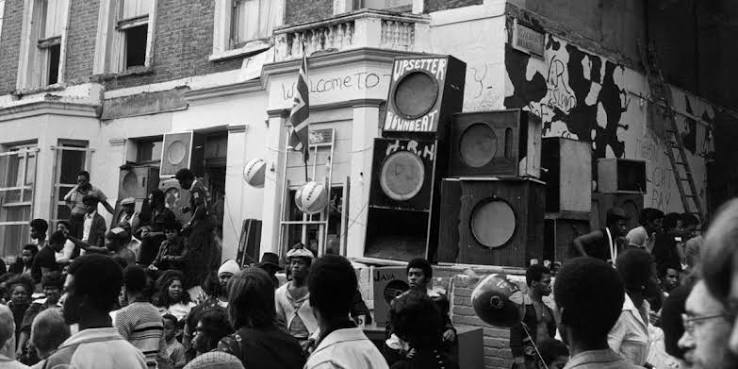
In the late 1940s, in the yards and streets of Kingston, Jamaica, a new kind of music delivery system was being assembled literally. Massive stacks of speakers, custom-built amplifiers, and turntables were loaded onto trucks and set up wherever crowds gathered. These were sound systems, mobile DJ units that would not only become the heart of Jamaican entertainment but also plant the seeds for genres as diverse as ska, reggae, dub, and even hip-hop.
At a time when radios were too expensive for most households and live venues were scarce, sound systems offered affordable, communal access to music. But they were more than just speakers playing records; they were competitive battles, social equalizers, and incubators for a recording industry that would eventually conquer the globe. This is the story of how a handful of selectors and technicians in a small island nation used engineering ingenuity and sheer audacity to create a sonic blueprint for the world.
The Birth of the Sound System
After World War II, Jamaica was a poor colony on the path to independence (achieved in 1962). The majority of the population had little access to formal entertainment. Radios were luxury items, and the hilly terrain made AM radio reception spotty at best. Into this vacuum stepped the sound system: a truckload of equipment—speakers, amplifiers, turntables—operated by a “selector” who played records, and a “toaster” who hyped the crowd over the music.
These mobile units were not just about playback; they were about presence. The biggest operators in Kingston—Clement “Coxsone” Dodd, Duke Reid, and Prince Buster—competed fiercely for crowd loyalty. Each sound system had its own identity, its own exclusive records, and its own following. The dancehall was a battleground where the loudest, most innovative system won.
From American R&B to Ska, Rocksteady, and Reggae
In the 1950s, sound system operators imported American R&B records, which were hugely popular. But when American labels shifted to rock and pop in the late 1950s, the supply of R&B dried up. Jamaican selectors needed new music, and local producers stepped in to fill the gap. This sparked the birth of the Jamaican recording industry.
Coxsone Dodd’s Studio One became the “Motown of Jamaica,” recording artists like Bob Marley and The Wailers, Toots and the Maytals, and countless others. These artists often got their start performing at sound system dances, where they could gauge crowd reactions in real-time. The sound system was not just a playback device; it was a talent incubator and an A&R department rolled into one.
The music evolved rapidly. Ska, with its upbeat tempo, emerged around 1959-1961. By the mid-1960s, ska slowed into rocksteady, which then morphed into reggae by the late 1960s. Each shift was driven by what worked on the dancefloor, and the sound system was the testing ground.
The Dub Revolution: Remixing Before It Had a Name
The late 1960s and 1970s saw a radical innovation from the sound system world: dub. King Tubby, an electronics repairman who ran his own sound system (Tubby’s Hometown Hi-Fi), began stripping vocals from tracks to create instrumental versions. He added heavy reverb, echo, and tape manipulation, turning the mixing board into an instrument in its own right.
Lee “Scratch” Perry, another dub pioneer, pushed the boundaries further, experimenting with studio effects and unconventional recording techniques. Dub was not just a genre; it was a philosophy. It introduced the concept of the remix, the idea that a record is a raw material to be reshaped. This predated and directly influenced modern electronic music production, from house and techno to hip-hop.
Technical Innovations: Bass, Dub Plates, and Versioning
The sound system’s insatiable demand for exclusivity and sonic impact drove technical innovations that would echo through music history.
- Dub plates: These were one-off pressings of tracks made specifically for a particular sound system. They ensured that a sound system had exclusive material no one else could play, a precursor to the modern DJ edit or VIP mix.
- Versioning: Reusing instrumental tracks (or “versions”) for new vocal performances became common. A producer could release multiple versions of the same rhythm, each with a different singer or toaster. This is a direct precursor to modern sampling.
- Speaker engineering: Operators built custom speaker boxes, like the “Coxsone” bass bins, to achieve a deep, powerful bass that could be felt in the chest. This “bass culture” emphasis would later influence the design of club sound systems worldwide.
Sound Systems Go Global
The migration of Jamaicans to the UK, US, and Canada in the 1970s and 1980s carried sound system culture with them. In London and Bristol, sound systems like Jah Shaka and Coxsone’s UK branch became hubs for the diaspora and local youth alike. They played a crucial role in the development of punk, reggae, and later electronic genres like jungle, drum and bass, and grime.
Perhaps the most famous transplant was DJ Kool Herc, a Jamaican immigrant who brought the sound system approach to the Bronx in the early 1970s. His parties, which featured him toasting over extended instrumental breaks, are widely credited as the birthplace of hip-hop. The lineage from Kingston to the Bronx is direct: the sound system model—selectors, toasters, massive speakers—was the template.
The Social and Political Voice
Sound systems were not just about entertainment; they were a platform for social commentary. In the 1970s, roots reggae, with its Rastafari spirituality and anti-colonial politics, used the sound system as a megaphone for the oppressed. The music spoke of “sufferers” and called for liberation, both spiritual and political.
Sound system clashes—competitive battles where two systems faced off, each trying to outplay the other—were not just about technical prowess. They were cultural resistance and community bonding. They gave voice to the poor and disenfranchised, creating a space where the marginalized could assert their identity and creativity.
The Gender Dimension
Sound system culture was overwhelmingly male-dominated, but women were not absent. Female artists like Sister Nancy and Lady Saw carved out spaces in dancehall, challenging the male-centric norms with their lyrics and presence. Women were also crucial as dancers and audience members, shaping the vibe and energy of dances. The debates around “slackness” (sexually explicit lyrics) in dancehall highlight the tensions between liberation and objectification, a conversation that continues today.
The Commercial and the Underground
From its grassroots, anti-establishment origins, the sound system has spawned a multi-billion-dollar global industry. Yet it remains a deeply underground, DIY culture at its core. The tension between commercial success and underground credibility is a constant thread. But the sound system’s legacy is undeniable: it democratized music, turned DJs into stars, and gave birth to entire genres. The revolution was loud, and it echoed far beyond Jamaica’s shores.
The sound system was more than a set of speakers; it was a social movement, a technological innovator, and a cultural catalyst. From the dusty yards of Kingston to the block parties of the Bronx and the raves of London, its influence is immeasurable. The next time you hear a DJ remix a track or MC hyping a crowd, remember: you are hearing the echo of a revolution that started with a few selectors and a stack of speakers on a Caribbean island.
Summary
- Sound systems were mobile DJ units in Kingston, Jamaica, that became the primary entertainment for working-class people in the 1950s.
- They drove the creation of ska, rocksteady, reggae, and dub, and pioneered techniques like remixing and versioning.
- Innovations like dub plates and custom speaker designs changed audio engineering forever.
- Sound system culture migrated to the UK and US, directly influencing hip-hop, jungle, and grime.
- They served as a platform for social commentary and gave voice to the marginalized.
FAQ
Q: What exactly was a sound system?
A: It was a mobile DJ unit with large speakers, turntables, and an amplifier, operated by a selector (DJ) and a toaster (MC). They were set up in yards, streets, and dancehalls to provide music for communal events.
Q: How did sound systems lead to the creation of reggae?
A: When American R&B supply dried up in the late 1950s, Jamaican producers began recording original music to meet the demand from sound systems. This led to ska, rocksteady, and eventually reggae.
Q: What is dub music?
A: Dub is a genre that emerged in the late 1960s where producers like King Tubby stripped vocals from tracks and added effects like reverb and echo, creating instrumental remixes. It introduced the concept of the remix and the studio as an instrument.
Q: How did sound systems influence hip-hop?
A: DJ Kool Herc, a Jamaican immigrant, brought the sound system approach to the Bronx in the 1970s. His parties, with toasting over instrumental breaks, are considered a birthplace of hip-hop.
Q: Were women involved in sound system culture?
A: Yes, though the culture was male-dominated. Women were dancers, vocalists, and occasionally selectors. Artists like Sister Nancy and Lady Saw challenged gender norms in dancehall.
Leave a Reply