Tag: music history

  • The Vacuum Tube That Sang: How the Theremin’s Eerie Tones Shaped Electronic Music and Film Scores

    The Vacuum Tube That Sang: How the Theremin’s Eerie Tones Shaped Electronic Music and Film Scores

    Imagine an instrument you play without touching. No keys, no strings, no bow. Just your hands moving through the air, shaping sound from invisible fields. That’s the theremin, invented in 1920 by Russian physicist Léon Theremin. Its sound—a wavering, ethereal wail—has haunted film scores and inspired electronic music for a century.

    But the theremin is more than a curiosity. It emerged from early radio engineering, using vacuum tubes and the heterodyne principle to turn capacitance changes into music. The same technology that made it sing also made it a tool for espionage. From Carnegie Hall concerts to Cold War listening bugs, the theremin’s story weaves science, music, and history into a single, strange thread.

    The Instrument That Senses Your Hands

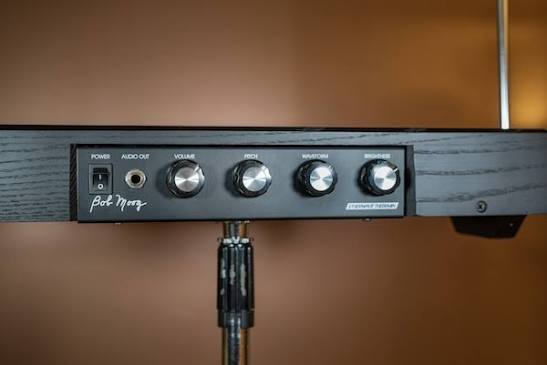
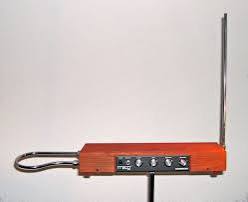
    A theremin looks like a wooden box with two antennas. One, a vertical rod, controls pitch. The other, a horizontal loop, controls volume. You play by moving your hands near these antennas—closer to the pitch antenna raises the frequency, closer to the volume antenna softens the sound. No contact needed.

    How does it work? Inside, two high-frequency radio oscillators hum at slightly different frequencies. This is the heterodyne principle: when two frequencies mix, they produce a beat frequency equal to their difference. If one oscillator runs at 500,000 Hz and the other at 500,500 Hz, the difference is 500 Hz—an audible tone. Your hand acts as a capacitor, changing the electric field around the antenna. This alters one oscillator’s frequency, sliding the pitch up or down.

    The original design used vacuum tubes, the same thermionic valves that powered early radios. In 1920, Léon Theremin was working on proximity sensors for the Soviet military when he noticed the pitch changes caused by his hand’s position. He realized he’d stumbled onto a musical instrument.

    From Lenin’s Lessons to Carnegie Hall

    Theremin demonstrated his invention—initially called the Termenvox or etherophone—to Lenin in 1922. The Soviet leader was reportedly fascinated and took lessons, though his musical career didn’t last. By 1928, Theremin had moved to the United States, patented his instrument, and launched commercial production with RCA. The RCA Model A sold poorly—around 500 units—but the theremin found its audience in concert halls.

    In 1929, Clara Rockmore gave a landmark performance at Carnegie Hall. A Lithuanian-American violinist, Rockmore developed a precise technique using finger positioning rather than whole-hand movements. Her control turned the theremin’s notoriously slippery pitch into a expressive voice, capable of phrasing that rivaled a singer’s.

    The theremin arrived during a period of intense musical experimentation. Futurists wanted to break from tradition, atonal composers sought new harmonic languages, and everyone looked for sounds beyond the orchestra. The theremin delivered something genuinely new: a glissando-heavy, vibrato-rich tone that was both human—like a voice or string—and alien. It was the first electronic instrument to achieve international fame.

    Eerie Sounds for Dark States of Mind

    The theremin’s cinematic career began in the 1940s, when composer Miklós Rózsa used it to score psychological turmoil. In Spellbound (1945), the theremin represents the protagonist’s obsessive, guilt-ridden mind. In The Lost Weekend (1945), it voices the agony of alcoholism. In The Red House (1947), it underscores a dark secret. Rózsa chose the theremin for its ability to convey the intangible—madness, intoxication, the supernatural.

    Why does it sound eerie? The theremin produces continuous pitch, sliding between notes without discrete steps. This is uncommon in Western music, which typically uses fixed pitches. Our ears, trained to expect steps, perceive the gliding as unsettling. Combine that with its unstable intonation and rich vibrato, and you get a sound that feels out of control. It’s the sonic equivalent of a nervous tremor.

    This sonic shorthand stuck. From there, the theremin appeared in sci-fi and horror films throughout the 1950s and beyond. Its sound became shorthand for the otherworldly, even when audiences didn’t know what instrument they were hearing.

    A Spy in the Orchestra

    Léon Theremin’s life took a strange turn in 1938. He returned to the Soviet Union under murky circumstances—likely forced repatriation by the NKVD. Instead of performing, he worked in a sharashka, a prison laboratory for scientists, developing espionage technology.

    His most famous creation was the Great Seal bug, also called “The Thing.” Hidden inside a carved wooden seal of the United States, it was a passive listening device that hung in the U.S. Ambassador’s Moscow residence from 1945 to 1952. It used a variant of the heterodyne principle: external radio waves struck the device, which modulated them with nearby audio, allowing Soviet agents to eavesdrop. The bug wasn’t discovered until 1952, and it’s now considered a precursor to RFID technology.

    The same physics that made music also made espionage possible. The capacitance-sensing principle behind the theremin is now everywhere—from smartphone proximity sensors to gesture-controlled devices. Theremin’s accidental instrument was a bridge between early radio and modern touchless tech.

    The Legacy: Electronic Music and Beyond

    The theremin’s influence on electronic music is foundational. It proved that music could be synthesized from pure electronics, without acoustic sources. This paved the way for synthesizers, which emerged decades later. The theremin also inspired other early electronic instruments like the Ondes Martenot (1928) and the Trautonium (1930), but it was the first to capture the public imagination.

    After Theremin’s death in 1993, interest surged. His grand-niece Lydia Kavina carried on the performing tradition, teaching a new generation. Today, you’ll hear theremins in pop songs, film scores, and experimental music. Bands like the Pixies and Portishead have used it; composers like Howard Shore have scored films with it.

    The theremin’s eerie voice remains instantly recognizable, a century after its invention. It’s a reminder that technology and art often arrive in the same package. A Soviet physicist built a device to sense proximity; he ended up creating the first electronic instrument. And when that instrument sang, it sang of things beyond words—obsession, mystery, and the unknown.

    The theremin is more than a novelty or a horror movie cliché. It’s a testament to how a single scientific principle—heterodyning—can produce both music and surveillance. Its inventor lived a life stranger than fiction, from Lenin’s lessons to Cold War espionage. And its sound, once heard, is never forgotten. Next time you hear that eerie wail in a film, remember: you’re listening to a vacuum tube, a capacitance field, and a century of imagination.

    Summary

    • The theremin (1920) is the first fully electronic musical instrument, played without physical contact by moving hands near two antennas.
    • It works via heterodyning: two high-frequency oscillators create an audible difference frequency, altered by the hand’s capacitance.
    • Clara Rockmore’s virtuosity defined its expressive potential in classical repertoire.
    • Miklós Rózsa’s 1940s film scores established the theremin as shorthand for psychological states and the supernatural.
    • Léon Theremin also invented espionage devices, including the Great Seal bug, linking the instrument’s science to Cold War history.

    FAQ

    Q: How does a theremin produce sound without being touched?
    A: The theremin uses two high-frequency radio oscillators. The difference between their frequencies produces an audible tone. Your hand’s capacitance changes one oscillator’s frequency, altering the pitch. Volume is controlled similarly by a second antenna.

    Q: Why does the theremin sound so eerie?
    A: Its continuous glissando—sliding between pitches without discrete steps—is unusual in Western music. Combined with wobbly intonation, it creates an unsettling, otherworldly effect.

    Q: Who was Clara Rockmore?
    A: She was a Lithuanian-American violinist who became the theremin’s greatest classical performer. Her precise finger technique allowed expressive playing that defined the instrument’s potential.

    Q: How is the theremin connected to espionage?
    A: Inventor Léon Theremin created the Great Seal bug, a covert listening device that used heterodyne principles. It hung in the U.S. Ambassador’s residence for seven years before being discovered.

    Q: Is the theremin still used in music today?
    A: Yes. It appears in film scores, pop songs, and experimental music. Many modern synthesizers and touchless sensing technologies trace their lineage to its principles.
  • The Sound of a Revolution: How Jamaican Sound Systems Redefined Music and Culture

    The Sound of a Revolution: How Jamaican Sound Systems Redefined Music and Culture

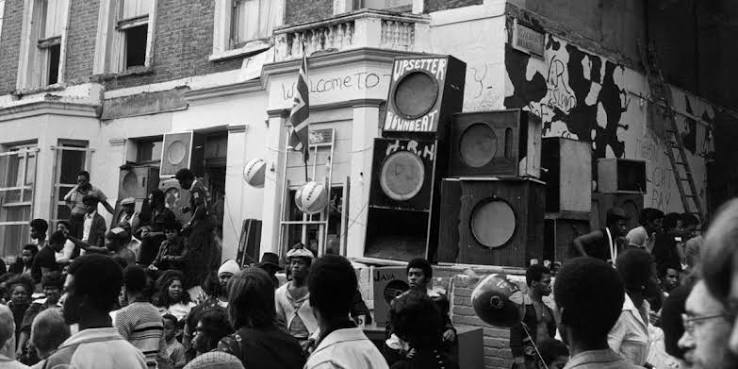
    In the late 1940s, in the yards and streets of Kingston, Jamaica, a new kind of music delivery system was being assembled literally. Massive stacks of speakers, custom-built amplifiers, and turntables were loaded onto trucks and set up wherever crowds gathered. These were sound systems, mobile DJ units that would not only become the heart of Jamaican entertainment but also plant the seeds for genres as diverse as ska, reggae, dub, and even hip-hop.

    At a time when radios were too expensive for most households and live venues were scarce, sound systems offered affordable, communal access to music. But they were more than just speakers playing records; they were competitive battles, social equalizers, and incubators for a recording industry that would eventually conquer the globe. This is the story of how a handful of selectors and technicians in a small island nation used engineering ingenuity and sheer audacity to create a sonic blueprint for the world.

    The Birth of the Sound System

    After World War II, Jamaica was a poor colony on the path to independence (achieved in 1962). The majority of the population had little access to formal entertainment. Radios were luxury items, and the hilly terrain made AM radio reception spotty at best. Into this vacuum stepped the sound system: a truckload of equipment—speakers, amplifiers, turntables—operated by a “selector” who played records, and a “toaster” who hyped the crowd over the music.

    These mobile units were not just about playback; they were about presence. The biggest operators in Kingston—Clement “Coxsone” Dodd, Duke Reid, and Prince Buster—competed fiercely for crowd loyalty. Each sound system had its own identity, its own exclusive records, and its own following. The dancehall was a battleground where the loudest, most innovative system won.

    From American R&B to Ska, Rocksteady, and Reggae

    In the 1950s, sound system operators imported American R&B records, which were hugely popular. But when American labels shifted to rock and pop in the late 1950s, the supply of R&B dried up. Jamaican selectors needed new music, and local producers stepped in to fill the gap. This sparked the birth of the Jamaican recording industry.

    Coxsone Dodd’s Studio One became the “Motown of Jamaica,” recording artists like Bob Marley and The Wailers, Toots and the Maytals, and countless others. These artists often got their start performing at sound system dances, where they could gauge crowd reactions in real-time. The sound system was not just a playback device; it was a talent incubator and an A&R department rolled into one.

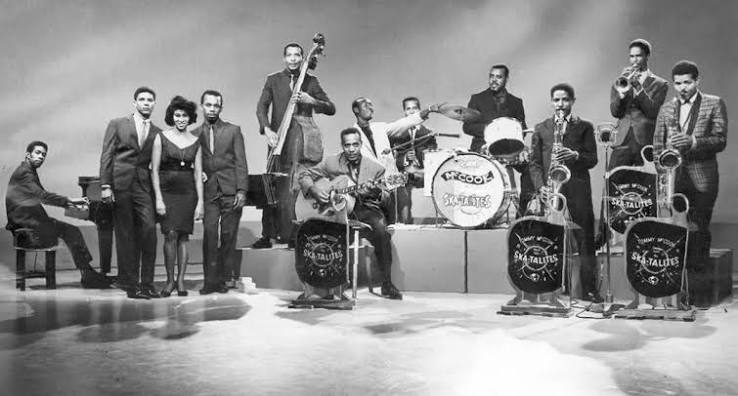
    The music evolved rapidly. Ska, with its upbeat tempo, emerged around 1959-1961. By the mid-1960s, ska slowed into rocksteady, which then morphed into reggae by the late 1960s. Each shift was driven by what worked on the dancefloor, and the sound system was the testing ground.

    The Dub Revolution: Remixing Before It Had a Name

    The late 1960s and 1970s saw a radical innovation from the sound system world: dub. King Tubby, an electronics repairman who ran his own sound system (Tubby’s Hometown Hi-Fi), began stripping vocals from tracks to create instrumental versions. He added heavy reverb, echo, and tape manipulation, turning the mixing board into an instrument in its own right.

    Lee “Scratch” Perry, another dub pioneer, pushed the boundaries further, experimenting with studio effects and unconventional recording techniques. Dub was not just a genre; it was a philosophy. It introduced the concept of the remix, the idea that a record is a raw material to be reshaped. This predated and directly influenced modern electronic music production, from house and techno to hip-hop.

    Technical Innovations: Bass, Dub Plates, and Versioning

    The sound system’s insatiable demand for exclusivity and sonic impact drove technical innovations that would echo through music history.

    • Dub plates: These were one-off pressings of tracks made specifically for a particular sound system. They ensured that a sound system had exclusive material no one else could play, a precursor to the modern DJ edit or VIP mix.
    • Versioning: Reusing instrumental tracks (or “versions”) for new vocal performances became common. A producer could release multiple versions of the same rhythm, each with a different singer or toaster. This is a direct precursor to modern sampling.
    • Speaker engineering: Operators built custom speaker boxes, like the “Coxsone” bass bins, to achieve a deep, powerful bass that could be felt in the chest. This “bass culture” emphasis would later influence the design of club sound systems worldwide.

    Sound Systems Go Global

    The migration of Jamaicans to the UK, US, and Canada in the 1970s and 1980s carried sound system culture with them. In London and Bristol, sound systems like Jah Shaka and Coxsone’s UK branch became hubs for the diaspora and local youth alike. They played a crucial role in the development of punk, reggae, and later electronic genres like jungle, drum and bass, and grime.

    Perhaps the most famous transplant was DJ Kool Herc, a Jamaican immigrant who brought the sound system approach to the Bronx in the early 1970s. His parties, which featured him toasting over extended instrumental breaks, are widely credited as the birthplace of hip-hop. The lineage from Kingston to the Bronx is direct: the sound system model—selectors, toasters, massive speakers—was the template.

    The Social and Political Voice

    Sound systems were not just about entertainment; they were a platform for social commentary. In the 1970s, roots reggae, with its Rastafari spirituality and anti-colonial politics, used the sound system as a megaphone for the oppressed. The music spoke of “sufferers” and called for liberation, both spiritual and political.

    Sound system clashes—competitive battles where two systems faced off, each trying to outplay the other—were not just about technical prowess. They were cultural resistance and community bonding. They gave voice to the poor and disenfranchised, creating a space where the marginalized could assert their identity and creativity.

    The Gender Dimension

    Sound system culture was overwhelmingly male-dominated, but women were not absent. Female artists like Sister Nancy and Lady Saw carved out spaces in dancehall, challenging the male-centric norms with their lyrics and presence. Women were also crucial as dancers and audience members, shaping the vibe and energy of dances. The debates around “slackness” (sexually explicit lyrics) in dancehall highlight the tensions between liberation and objectification, a conversation that continues today.

    The Commercial and the Underground

    From its grassroots, anti-establishment origins, the sound system has spawned a multi-billion-dollar global industry. Yet it remains a deeply underground, DIY culture at its core. The tension between commercial success and underground credibility is a constant thread. But the sound system’s legacy is undeniable: it democratized music, turned DJs into stars, and gave birth to entire genres. The revolution was loud, and it echoed far beyond Jamaica’s shores.

    The sound system was more than a set of speakers; it was a social movement, a technological innovator, and a cultural catalyst. From the dusty yards of Kingston to the block parties of the Bronx and the raves of London, its influence is immeasurable. The next time you hear a DJ remix a track or MC hyping a crowd, remember: you are hearing the echo of a revolution that started with a few selectors and a stack of speakers on a Caribbean island.

    Summary

    • Sound systems were mobile DJ units in Kingston, Jamaica, that became the primary entertainment for working-class people in the 1950s.
    • They drove the creation of ska, rocksteady, reggae, and dub, and pioneered techniques like remixing and versioning.
    • Innovations like dub plates and custom speaker designs changed audio engineering forever.
    • Sound system culture migrated to the UK and US, directly influencing hip-hop, jungle, and grime.
    • They served as a platform for social commentary and gave voice to the marginalized.

    FAQ

    Q: What exactly was a sound system?
    A: It was a mobile DJ unit with large speakers, turntables, and an amplifier, operated by a selector (DJ) and a toaster (MC). They were set up in yards, streets, and dancehalls to provide music for communal events.

    Q: How did sound systems lead to the creation of reggae?
    A: When American R&B supply dried up in the late 1950s, Jamaican producers began recording original music to meet the demand from sound systems. This led to ska, rocksteady, and eventually reggae.

    Q: What is dub music?
    A: Dub is a genre that emerged in the late 1960s where producers like King Tubby stripped vocals from tracks and added effects like reverb and echo, creating instrumental remixes. It introduced the concept of the remix and the studio as an instrument.

    Q: How did sound systems influence hip-hop?
    A: DJ Kool Herc, a Jamaican immigrant, brought the sound system approach to the Bronx in the 1970s. His parties, with toasting over instrumental breaks, are considered a birthplace of hip-hop.

    Q: Were women involved in sound system culture?
    A: Yes, though the culture was male-dominated. Women were dancers, vocalists, and occasionally selectors. Artists like Sister Nancy and Lady Saw challenged gender norms in dancehall.

  • The Unlikely Origin of the Violin: How a Medieval Fiddle Became the King of Instruments

    The Unlikely Origin of the Violin: How a Medieval Fiddle Became the King of Instruments

    The violin is a masterpiece of design a wooden box with four strings that can mimic the human voice, weep with sorrow, or dance with joy. It is the undisputed king of the orchestra, the centerpiece of chamber music, and the instrument most likely to make a listener cry. But how did this iconic instrument come to be? Its story begins not in a grand concert hall, but in the hands of medieval minstrels and troubadours, and it takes a surprising detour through the Islamic world. The violin’s journey from a humble fiddle to the pinnacle of Western music is a tale of innovation, cultural exchange, and a few brilliant craftsmen in a small Italian town.

    From the Vielle to the Violin: A Medieval Starting Point

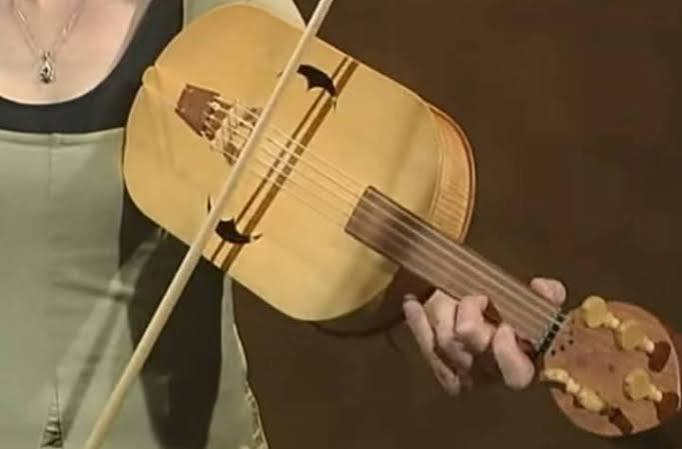
    In the 11th century, if you heard music at a European court, it was likely played on a vielle, a versatile bowed instrument that was the most popular of its time. The vielle was a workhorse: it could play melody and harmony (thanks to drone strings), accompany songs, and get people dancing. Troubadours and minstrels carried it across the continent. It had five strings and a flat bridge, and it was held against the chest or shoulder. But the vielle was not a standardized instrument—body shapes varied from oval to figure-eight, and it was often built for portability rather than power.

    Meanwhile, a different bowed instrument was making its way into Europe: the rebec. With a pear-shaped body carved from a single piece of wood, the rebec was a descendant of the Arab rabab, which had traveled through the Iberian Peninsula and Sicily during the medieval period. The rebec was known for its piercing, nasal tone, and it was played on the arm like the violin would later be. It was a folk instrument, but also found its way into art music. The very bow used to play it likely originated in Central Asia, where the horsehead fiddle (morin khuur) tradition still survives today. From there, the bow spread via the Silk Road to the Islamic world and then to Europe.

    The Missing Link: The Lira da Braccio

    By the 15th century, Renaissance Italy was buzzing with a rediscovery of classical culture. Poets and humanists wanted to emulate Orpheus, the mythical musician who could charm beasts with his lyre. They found their instrument in the lira da braccio—literally “arm lyre.” This instrument had seven strings (four melody strings over the fingerboard, plus two or three drone strings) and a body shape remarkably close to the modern violin. It was played on the shoulder, and its flat bridge allowed for chords, making it perfect for accompanying one’s own singing.

    The lira da braccio is considered the most direct ancestor of the violin in terms of playing position and body shape, but it still lacked the violin’s defining features: f-holes, a curved bridge, and four strings tuned in fifths. These innovations emerged in the early 16th century, as luthiers in northern Italy began experimenting with ways to make the instrument louder, more agile, and more expressive.

    The Violin Is Born: Brescia and Cremona

    The cities of Brescia and Cremona in northern Italy became the crucible of violin making. The earliest documented violins are attributed to Andrea Amati of Cremona, with surviving examples from the 1540s. The earliest known dated violin, the “Charles IX,” was made for the French court around 1560. Amati’s instruments set the standard: four strings tuned in fifths (G–D–A–E), f-holes (which allow the top plate to vibrate more freely than the C-holes of earlier instruments), a curved bridge for bowing individual strings, and no frets—a radical departure from the viol family.

    But why did the violin succeed where its relatives failed? The answer lies in its construction. Unlike the viola da gamba (the aristocrat’s instrument, with six strings, frets, and a flat back), the violin had a convex back, a shorter and thicker neck, and a sound post and bass bar inside the body. These internal components are critical to the violin’s powerful, focused tone. The sound post—a small wooden dowel—transfers vibrations from the top plate to the back, while the bass bar strengthens the top and distributes tension. These weren’t invented in Cremona, but they were refined there, and they gave the violin a volume and projection that could fill a hall.

    The Golden Age of Cremona: Amati, Stradivari, and Guarneri

    Andrea Amati’s sons and grandson continued the family tradition, but it was his grandson Nicolò Amati (1596–1684) who would shape the future of violin making. Nicolò taught two apprentices who would become legends: Antonio Stradivari (c. 1644–1737) and Andrea Guarneri (c. 1626–1698). Stradivari went on to produce around 1,100 instruments over his career, of which about 650 survive. His “Golden Period” (c. 1700–1725) is considered the apex of the craft. Stradivari’s violins are prized for their tonal balance, clarity, and projection—qualities that have never been fully replicated.

    The Guarneri family, meanwhile, produced Bartolomeo Giuseppe Guarneri (1698–1744), known as “del Gesù” for the cross he inscribed on his labels. His instruments have a darker, more powerful tone, and they were favored by the great virtuoso Niccolò Paganini, whose 1742 “Il Cannone” Guarneri remains one of the most famous violins in history.

    Why the Violin Won

    The violin family—violin, viola, cello, and double bass—eventually outcompeted the viol family for a simple reason: it was louder. As music moved from intimate courts to larger halls and orchestras, the violin’s ability to project was a decisive advantage. Its lack of frets allowed for expressive techniques like vibrato and glissando, which became essential to the Romantic style. And its agility made it a favorite of composers from Vivaldi to Beethoven to Paganini.

    The viola da gamba, with its sweet but quiet tone, retreated to the drawing rooms of aristocrats and eventually became a historical curiosity. The violin, meanwhile, became the king of instruments—not because it was the most complex or the most ancient, but because it was the most adaptable. It can whisper or shout, sing or speak, and it does so with a voice that feels almost human.

    A Legacy Carved in Wood

    Today, the violin remains a marvel of engineering and artistry. Each one is a unique creation, made from spruce and maple, shaped by hand, and tuned by ear. The instruments of Stradivari and Guarneri are still played by the world’s greatest musicians, and they command prices in the millions. But the violin’s true origin is humble: it descends from the vielle of medieval minstrels, the rebec of Arab traders, and the lira da braccio of Renaissance poets. It is a testament to how cultural exchange and a few clever innovations can transform a simple fiddle into an eternal masterpiece.

    The violin’s journey from a medieval fiddle to the king of instruments is a story of evolution—not just of wood and string, but of cultures and ideas. It was born in the workshops of northern Italy, but it owes its existence to a thousand years of musical experimentation across Europe, Asia, and the Middle East. Every time a violinist draws a bow across the strings, they are playing an instrument that carries the echoes of troubadours, court poets, and Arab musicians. The violin may be a product of its time, but its allure is timeless.

    Summary

    • The violin emerged in early 16th-century northern Italy, with the earliest documented instruments by Andrea Amati of Cremona.
    • Its ancestors include the medieval vielle, the Arab-derived rebec, and the Renaissance lira da braccio.
    • Key innovations—four strings tuned in fifths, f-holes, a curved bridge, and no frets—set it apart from the viol family.
    • The Amati, Stradivari, and Guarneri families in Cremona perfected the instrument during the 16th–18th centuries.
    • The violin won out over the viol due to its louder volume, greater agility, and expressive potential.

    FAQ

    Q: What is the earliest known violin?
    A: The earliest known dated violin is the “Charles IX,” made by Andrea Amati around 1560–1570 for the French court. Surviving instruments from the 1540s are also attributed to Amati.

    Q: How did the violin get its name?
    A: The word “violin” comes from the Italian violino, meaning “small viola.” The term viola itself traces back to the medieval Latin vitula, which possibly derives from vitulari, meaning “to rejoice” or “to sing.”

    Q: Why did the violin replace the viol?
    A: The violin family was louder and more agile than the viol family. The violin’s lack of frets allowed for expressive techniques like vibrato, and its construction gave it greater projection, making it better suited for larger halls and orchestras.

    Q: What is the sound post, and why is it important?
    A: The sound post is a small wooden dowel inside the violin’s body that transfers vibrations from the top plate to the back. It is crucial for the instrument’s tone and projection.

    Q: Are Stradivarius violins really better than modern ones?
    A: Many musicians and experts believe Stradivarius violins have superior tonal qualities, but scientific studies have been inconclusive. In blind tests, players often cannot distinguish between a Stradivarius and a high-quality modern violin, though the mystique remains.

  • Sun Ra: The Cosmic Architect Who Rebuilt Jazz as a Portal to Other Worlds


    Before Parliament-Funkadelic sent a Mothership to Earth, before Black Panther imagined a high-tech Wakanda, there was a lanky pianist from Birmingham, Alabama, who claimed he was from Saturn. His name was Sun Ra, and he built a band—the Arkestra—that played music unlike anything heard before: a swirling, chanting, costume-clad collision of big band swing, free jazz, Egyptian mythology, and science fiction. He declared himself an angel from another dimension, rejected Earth as a prison planet, and made every performance a cosmic ritual. He never used the word “Afrofuturism”—that term was coined in 1993, the year he died—but his music and mythology became its blueprint, a radical reimagining of Black identity and history through a telescopic lens.

    Sun Ra’s work wasn’t just ahead of its time; it refused to acknowledge time at all. He claimed to have been born on Saturn and to have arrived on Earth with a mission: to use music as a weapon against ignorance and as a key to unlock humanity’s potential. He was a serious musician with deep roots in jazz tradition, but he twisted that tradition into something strange and new. He made his band members live communally, rehearse for hours, and wear glittering space costumes. He wrote hundreds of songs, some barely a minute long, others sprawling epics. And he did it all while the world around him—segregated Birmingham, the Civil Rights movement, the Black Power era—demanded he pick a side in a terrestrial fight. Sun Ra’s answer was to leave Earth entirely, at least in his mind, and take his audience with him.

    This is the story of how a Black musician from the Jim Crow South used ancient Egypt, science fiction, and free jazz to create a mythology that would outlive him. It’s a story about how one man’s radical imagination transformed jazz from a music of the present into a portal to the future.

    The Man Who Was Born on Saturn

    Herman Poole Blount entered the world on May 22, 1914, in Birmingham, Alabama—a city so segregated it was nicknamed “the Magic City” for its rapid industrial growth, but where Black residents faced daily violence and humiliation. Young Herman was a prodigy: by his teens, he was already leading bands and sight-reading scores. He briefly attended Alabama A&M University on a music scholarship, but dropped out after a year, disillusioned with formal education.

    In the late 1930s, Blount claimed to have had a profound vision. He said he was transported to Saturn, where he saw a magnificent, otherworldly landscape and received a message: “Speak through music.” The experience transformed him. In the early 1950s, he legally changed his name to Sun Ra, after Ra, the Egyptian sun god. He began telling people he was not from Earth but from Saturn, and he refused to discuss his Earthly past, saying it was irrelevant.

    This mythology wasn’t just a gimmick; it was a philosophical framework. Growing up in the Jim Crow South, Sun Ra had experienced racism so pervasive that he concluded Earth was a “planet of despair.” He rejected both the integrationist hopes of the Civil Rights movement and the separatist nationalism of Black Power. Instead, he argued that Black people were not just descendants of slaves but of ancient Egyptian civilizations—and ultimately, of extraterrestrial beings sent to Earth on a mission. By claiming a Saturnian origin, he bypassed Earthly categories of race and nation entirely.

    The Arkestra: A Band as a Cosmic Community

    Sun Ra began forming his ensemble in Chicago in the 1950s. Originally called the Space Trio, then the Solar Arkestra, it eventually became simply the Arkestra—a name that combined “ark” (as in Noah’s) with “orchestra,” suggesting a vessel for survival and a musical ensemble. The band moved to New York City in the early 1960s, and later settled in Philadelphia in the late 1960s, where they lived communally in a house on Morton Street.

    Life in the Arkestra was total immersion. Members were expected to dedicate themselves fully to Sun Ra’s vision. Rehearsals were open to the public and could last for hours, blending rigorous musical instruction with lectures on cosmic philosophy. The band wore elaborate costumes—glittering capes, space helmets, Egyptian-inspired headdresses—designed to transform them into “cosmic musicians.” Performances were not concerts but “rituals,” complete with dancers, singers, film projections, and theatrical spoken word.

    Standout musicians included Marshall Allen, an alto saxophonist who later inherited leadership of the Arkestra and still leads it today; John Gilmore, a tenor saxophonist whose innovative playing influenced John Coltrane; and June Tyson, a vocalist whose incantatory singing became a signature of the band’s sound.

    From Big Band to Free Jazz to Funk

    Sun Ra’s music defied easy categorization. In the 1950s, he recorded accessible big band albums like Jazz by Sun Ra (1957), which swung with the best of them. But even then, he was pushing boundaries with unusual instrumental combinations and dissonant harmonies.

    The 1960s saw him dive headfirst into free jazz with albums like The Heliocentric Worlds of Sun Ra (1965), where the music became abstract, atonal, and sprawling. Yet unlike some free jazz musicians, Sun Ra never abandoned structure. He used composed frameworks, chants, and rhythmic grooves as launching pads for collective improvisation.

    In the 1970s, he embraced funk and electronic keyboards, creating music that was both otherworldly and danceable. Space Is the Place (1973), his most famous album, featured the title track, a cosmic anthem that has become an anthem for Afrofuturism. But he also made lyrical, melodic albums like Lanquidity (1978) and Sleeping Beauty (1979), proving he could groove as easily as he could fly.

    Sun Ra’s music was never purely anarchic or purely composed; it existed in a liminal space between order and chaos, between swing and abstraction, between the familiar and the alien. That tension was the engine of his creativity.

    Afrofuturism Before There Was a Name

    The term “Afrofuturism” was coined by critic Mark Dery in his 1993 essay “Black to the Future,” published in the anthology Flame Wars. Dery used it to describe the intersection of African diaspora culture with science fiction, technology, and speculation about the future. Sun Ra never used the term—he died in 1993, the same year the essay was published—but his work is now considered one of its foundational pillars.

    Long before Octavia Butler wrote Kindred or Samuel R. Delany explored queer Black futures in his fiction, Sun Ra was already building an entire mythology around Black identity in space. He drew on ancient Egyptian history, esoteric traditions like theosophy and Rosicrucianism, and the science fiction of his time. His philosophy was a radical synthesis: Black people were not victims of a tragic history but inheritors of a cosmic legacy; Earth was not the end goal but a way station; and music was not just entertainment but a technology for liberation.

    This vision resonated with the cultural ferment of the 1960s and 1970s. Sun Ra’s music and performances offered an alternative to the prevailing narratives of Black identity—neither assimilation into white society nor separation from it, but a transcendence of Earthly categories altogether. He was saying, “I’m not asking for a seat at your table; I’m from another planet entirely.”

    The Saturn Vision and the Birmingham Roots

    Despite his cosmic mythology, Sun Ra’s roots in Birmingham grounded his work in real-world struggle. He experienced the brutality of segregation firsthand, and that experience fueled his desire to escape Earth—not through physical relocation, but through a mental and spiritual reorientation.

    His Saturn vision, which he described in interviews, was likely a mystical experience during a period of intense study. He had been reading deeply in esoteric literature, including theosophy and Egyptian mythology, and the vision crystallized these influences into a personal revelation. He often spoke of Earth as a “prison” and humanity as beings who had forgotten their cosmic origins. His mission, as he saw it, was to remind them through music.

    The Legacy: The Arkestra Lives On

    Sun Ra died on May 30, 1993, in Birmingham, just days after his 79th birthday (or his 79th Earthly rotation, depending on how you counted). But the Arkestra did not disband. Marshall Allen, who had been a member since the 1950s, took over leadership and continues to lead the ensemble to this day. They still perform Sun Ra’s music, keeping his cosmic vision alive.

    Sun Ra’s influence extends far beyond jazz. His music has been sampled by hip-hop artists, his aesthetic has inspired visual artists and filmmakers, and his philosophy has become a cornerstone of Afrofuturist thought. He showed that jazz could be a vehicle for speculative fiction, that Black music could reach for the stars without leaving its roots behind, and that a band could be more than a group of musicians—it could be a community, a school, and a spaceship.

    Sun Ra was a visionary who built his own universe out of sound and myth. He took the raw materials of jazz, ancient Egypt, and science fiction and forged them into something entirely new—a music that still sounds like the future. His work reminds us that Afrofuturism is not just about imagining Black futures; it’s about redefining the past and present as part of a larger cosmic story. Sun Ra didn’t just predict science fiction’s popularity in music; he made it a lived reality.

    Summary

    • Sun Ra (born Herman Poole Blount) was a jazz musician who claimed he was from Saturn and created a cosmic mythology that predated Afrofuturism by decades.
    • He led the Arkestra, a communal band whose performances blended music, dance, costumes, and spoken word into “rituals.”
    • His music evolved from big band swing to free jazz to funk, always pushing boundaries while maintaining a unique balance of chaos and structure.
    • The term “Afrofuturism” was coined in 1993, the year Sun Ra died; his work is now considered a foundation of the movement.
    • Sun Ra’s legacy continues through the still-active Arkestra, led by Marshall Allen, and his influence persists across music, art, and culture.

    FAQ

    Q: Who was Sun Ra?
    A: Sun Ra was a jazz composer, bandleader, and philosopher born Herman Poole Blount in Birmingham, Alabama. He adopted the name Sun Ra in the early 1950s and claimed to be from Saturn, using his music to explore themes of space, ancient Egypt, and Black identity.

    Q: What is the Arkestra?
    A: The Arkestra is the musical ensemble Sun Ra founded in the 1950s. It was known for its communal lifestyle, elaborate costumes, and experimental performances that blended jazz, free improvisation, chanting, and theatrical elements. After Sun Ra’s death, alto saxophonist Marshall Allen took over leadership, and the group still performs today.

    Q: What is Afrofuturism and how does Sun Ra relate to it?
    A: Afrofuturism is a cultural movement that combines African diaspora history and culture with science fiction, technology, and speculation about the future. The term was coined in 1993 by Mark Dery, but Sun Ra’s earlier work—his cosmic mythology, use of ancient Egyptian motifs, and space-themed music—is considered a foundational influence on the movement.

    Q: What are some essential Sun Ra albums to start with?
    A: For newcomers, Space Is the Place (1973) is the most accessible entry point, featuring the cosmic anthem of the same name. Lanquidity (1978) offers a funkier, more groove-oriented sound, while The Heliocentric Worlds of Sun Ra (1965) showcases his free jazz explorations.

    Q: Did Sun Ra really believe he was from Saturn?
    A: Sun Ra consistently claimed to be from Saturn and often said he had been transported there in a vision. Whether he literally believed this or used it as a philosophical and artistic device, the mythology was integral to his message that humanity should look beyond Earthly divisions and embrace a broader cosmic perspective.

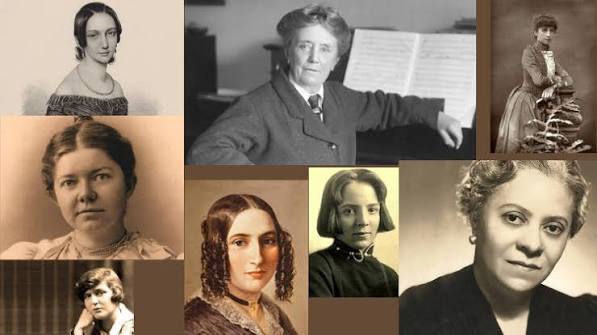
  • The Unsung Women Who Shaped Baroque Music

    The Unsung Women Who Shaped Baroque Music

    When we picture the Baroque era, names like Bach, Handel, and Vivaldi dominate. Yet a vibrant countercurrent existed women who composed operas, cantatas, and sonatas despite formidable barriers. Their stories are not footnotes but essential chapters in the history of music, revealing how creativity thrives even under constraint.

    Meet Barbara Strozzi, whose published output rivaled any male composer of her day; Francesca Caccini, who wrote the first opera by a woman; and Élisabeth Jacquet de La Guerre, who dazzled the court of Louis XIV. Their music survived, but for centuries, it was largely ignored. Only recent scholarship has begun to restore their rightful place.

    The Baroque Stage: A World Built for Men

    The Baroque era (c. 1600–1750) was a time of explosive musical invention: opera was born, tonality crystallized, and instrumental virtuosity soared. But this revolution was largely financed by courts, churches, and wealthy patrons—institutions that systematically excluded women from professional composition.

    Formal training in counterpoint and composition was confined to conservatories and apprenticeships, all closed to women. Even the church, which might have offered a haven, restricted elaborate music in convents after the Council of Trent. For aristocratic women, composing for private entertainment was acceptable, but public performance and publication were seen as unseemly. How, then, did women compose at all? They did so through extraordinary circumstances: family connections, religious vocation, or sheer force of will.

    Barbara Strozzi: The Venetian Voice

    Barbara Strozzi (1619–1677) was adopted by the poet Giulio Strozzi, who nurtured her talents and showcased her as a singer in his Accademia degli Unisoni—a rare platform for a woman. She went on to publish eight volumes of secular vocal music, more than any composer of her era. Her over 125 works include cantatas and arias that explore deep emotion with startling originality. Strozzi’s music is not a curiosity; it stands confidently beside the output of her male peers.

    Francesca Caccini: The Opera Pioneer

    Francesca Caccini (1587–c. 1641) was the daughter of Giulio Caccini, a key figure in early opera. She served the Medici court in Florence, where she composed and performed. In 1625, she produced La liberazione di Ruggiero, widely considered the first opera by a woman. This work is not merely a historical marker; it showcases her skill in blending dramatic narrative with musical expression. Caccini also composed other stage works, though many are lost.

    Élisabeth Jacquet de La Guerre: The French Exception

    France, with its salon culture and royal patronage, offered a more welcoming path for female artists. Élisabeth Jacquet de La Guerre (1665–1729) was a child prodigy on the harpsichord who performed for Louis XIV. In 1694, she composed Céphale et Procris, the first opera by a woman in France. She also published trio sonatas, cantatas, and harpsichord suites, combining French and Italian styles. Her work earned her a pension from the king—evidence that talent could override gender when circumstances aligned.

    Nuns, Courts, and Hidden Gems

    Other women composed in less visible spheres. Isabella Leonarda (1620–1704) was an Ursuline nun in Novara who published over 200 works, including the first sonatas by a woman (Op. 16, 1693). Her music was performed within her convent, yet it reached publication—a rare achievement for a nun. Antonia Bembo (c. 1640–c. 1720) left Venice for Paris, where she produced sacred and secular works under royal patronage. Diomira Pappi, about whom little is known, composed Sant’Alessio (1677), one of the earliest operas by a woman. Even Maddalena Casulana, though technically Renaissance, set a precedent by being the first woman to publish her own music in 1566.

    Why Were They Erased?

    The music of these women survived, but it was ignored for centuries. Works were often published under initials or male pseudonyms, or attributed to male relatives. Institutional bias meant that even when women composed, their music was rarely performed or preserved as seriously as men’s. The modern revival began in the 1970s with feminist musicologists like Jane Bowers and Judith Tick, who unearthed scores and challenged the canon. Since the 1990s, recordings and modern editions have multiplied, allowing us to hear these works.

    The Venetian ospedali—orphanages that trained girls to professional standards—produced exceptional musicians, though most compositions by women were performed only within those walls. Anna Bon emerged from this system, but her male instructors, like Vivaldi, received the acclaim.

    The Music They Left Behind

    What does this music sound like? Strozzi’s cantatas are intimate and expressive, with daring harmonic shifts. Caccini’s opera is lively and theatrical, with a strong role for the orchestra. Jacquet de La Guerre’s suites are elegant, showcasing keyboard virtuosity. Leonarda’s sonatas are structurally sophisticated, proving that distance from the male canon did not mean inferior craft. These works are not merely ‘forgotten treasures’; they are vital pieces of the Baroque repertoire.

    The Legacy and The Work Left to Do

    A substantial portion of music by female Baroque composers survives, but much remains unperformed, unrecorded, or unedited. Modern ensembles specializing in historical performance have championed this repertoire, but it still lags in concert programming. The recovery is ongoing: scholars continue to attribute works, discover manuscripts, and analyze how gender shaped musical choices. The question is not just whether these women composed—they did, prolifically—but why their contributions were erased and how we can ensure they are heard.

    The women who composed during the Baroque era did so against a backdrop of exclusion, yet their music speaks with authority and beauty. By bringing their works to light, we enrich our understanding of the period and challenge the assumption that genius is male. The next step is simple: listen, perform, and record their music so it can never be forgotten again.

    Summary

    • Barbara Strozzi published more secular vocal music than any composer of her era, with over 125 works.
    • Francesca Caccini composed the first opera by a woman, La liberazione di Ruggiero (1625).
    • Élisabeth Jacquet de La Guerre was the first woman to compose an opera in France, Céphale et Procris (1694).
    • Isabella Leonarda published the first sonatas by a woman (Op. 16, 1693), while a nun.
    • Many works by female composers were published under pseudonyms or attributed to men; modern scholarship has revived them since the 1990s.

    FAQ

    Q: Who was the first woman to compose an opera?
    A: Francesca Caccini is widely credited with the first opera by a woman, La liberazione di Ruggiero, premiered in 1625 in Florence.

    Q: How did women compose if they couldn’t access formal training?
    A: Women often received private instruction from male relatives or patrons. Some, like nuns, composed within convents. Others, like Strozzi, were championed by adoptive fathers or mentors.

    Q: Why were these composers forgotten?
    A: Institutional barriers meant their works were rarely published or performed. When they were, attribution was often obscured. The feminist musicology movement since the 1970s has worked to recover and credit them.

    Q: Is there a lot of surviving music by female Baroque composers?
    A: Yes, a substantial portion survives, but much remains unperformed or unrecorded. Since the 1990s, modern editions and recordings have increased.

    Q: What did the Venetian ospedali have to do with female composers?
    A: These orphanages trained girls in music, producing skilled performers and occasionally composers like Anna Bon, but most music was confined within the institutions.

  • The Theremin: How a Soviet Spy’s Invention Became the Soundtrack of Science Fiction and Psychedelia

    The Theremin: How a Soviet Spy’s Invention Became the Soundtrack of Science Fiction and Psychedelia

    Imagine an instrument you play without touching. Your hands hover in the air, shaping sound from invisible fields. It wails like a human voice, glides like a bird, and sends chills down the spine. This is the theremin, invented in 1920 by a Russian physicist who would later build a bug for the Kremlin. Its eerie tone became the voice of alien visitors in 1950s cinema and the psychedelic buzz of 1960s rock. But the story behind it is stranger than any sci-fi plot.

    Léon Theremin didn’t set out to create a spy gadget. He wanted to measure gas density, but stumbled onto a way to make music from radio waves. Yet his later espionage work would forever color how the world heard his invention. The same technology that produced celestial melodies also hid a covert listening device. That irony turned the theremin into a perfect metaphor for the Cold War: beautiful, mysterious, and just a little threatening.

    A Musical Accident Born from Radio Waves

    In 1919, a young physicist named Lev Termen was working on proximity sensors for the Soviet military. He noticed that moving his hand near a circuit changed its frequency, producing a whistle. Instead of dismissing it as noise, he tuned it into music. By 1920, he had a working prototype: a box with two antennas. One controlled pitch, the other volume. Players move their hands through the air, and the instrument sings.

    The principle is called heterodyning. Two high-frequency radio oscillators create an audible beat frequency. Your hand’s capacitance—its ability to store electrical charge—shifts that frequency. The result is a sound that slides between notes with seamless glides. No keys, no strings, no contact. Just you and the electromagnetic field.

    Termen, now known as Léon Theremin, showed his invention to Vladimir Lenin in 1922. The Soviet leader was reportedly delighted and even took lessons. Lenin sent Theremin on a world tour to showcase Soviet ingenuity. In 1927, he arrived in the United States, where he patented his device in 1928 and licensed it to RCA. But RCA’s attempt to sell it as a home instrument flopped. It was too difficult to play well. Most people produced only wails and squeaks.

    The Spy Who Came in from the Cold

    Theremin’s American years were glamorous. He lived in a Greenwich Village studio, mingled with celebrities, and performed with the New York Philharmonic. But in 1938, he vanished. Accounts differ: some say he was kidnapped by Soviet agents, others that he returned voluntarily to escape debt. Either way, he ended up back in Moscow—not to applause, but to arrest. In 1939, he was sent to a sharashka, a secret prison lab where scientists worked under guard. The same system that built Soviet jet engines and the atomic bomb now held the inventor of the theremin.

    While in the sharashka, Theremin didn’t build musical instruments. He built espionage devices. In 1945, he created “The Thing,” a passive listening bug hidden in a wooden replica of the Great Seal of the United States. Soviet schoolchildren presented the seal to the US Ambassador in Moscow, who hung it in his office. It required no power source and transmitted conversations via a resonant cavity. American intelligence didn’t discover it until 1952. This is the “Soviet spy” connection that would retroactively taint the theremin’s innocent sound.

    Theremin’s espionage work was not the theremin itself—the instrument was never a secret listening device. But the timing mattered. As the Cold War escalated, Hollywood needed a sound for alien threats and psychological dread. The theremin’s wobbly, ethereal tone fit perfectly. The same man who made music for peace had also made tools for surveillance. That irony wasn’t lost on audiences who felt watched by an unseen enemy.

    The Sound of Science Fiction

    The theremin first crept into film through composer Miklós Rózsa, who used it in Alfred Hitchcock’s Spellbound (1945) to evoke madness. The performer was Clara Rockmore, a virtuoso who had trained as a violinist and became the theremin’s greatest classical player. Her precision gave the instrument legitimacy. But it was Bernard Herrmann’s score for The Day the Earth Stood Still (1951) that cemented the theremin as the voice of the unknown. Samuel Hoffman, a podiatrist by day and thereminist by night, played the haunting theme for the alien Klaatu. From then on, the theremin signaled “not of this world.” It appeared in sci-fi and horror films throughout the 1950s, from The Thing from Another World to It Came from Outer Space.

    Why did this instrument become shorthand for the alien? Its sound has no obvious source. It doesn’t mimic a familiar acoustic instrument—it sounds like a voice, but not a human one. It glides in ways no singer can sustain. In an era of atomic anxiety and UFO sightings, the theremin gave voice to the unknown. It was the sonic equivalent of a shadowy figure in a trench coat.

    Psychedelia and Rock ‘n’ Roll

    By the 1960s, the theremin had crossed over from movie scores to popular music. The Beach Boys used an Electro-Theremin—a box with a slide controller, not the original antenna version—on Good Vibrations (1966). The song’s woozy, oscillating hook captured the psychedelic mood of the era. Led Zeppelin’s Jimmy Page went further. He bought a real theremin and used it live, coaxing eerie screams from it during performances. On Whole Lotta Love (1969), the theremin’s wail became a centerpiece of the song’s psychedelic middle section.

    Why did the theremin fit psychedelia? The genre embraced altered states, cosmic exploration, and the breaking of boundaries. The theremin broke the boundary between performer and instrument. It produced sounds that seemed to come from nowhere, bending pitch and volume in ways that defied conventional music. For listeners on acid, the theremin’s glissandos felt like a trip through space. For rock stars seeking an otherworldly edge, it was the perfect prop—you didn’t even have to touch it to make it scream.

    A Technical Pioneer: Robert Moog and the Modern Theremin

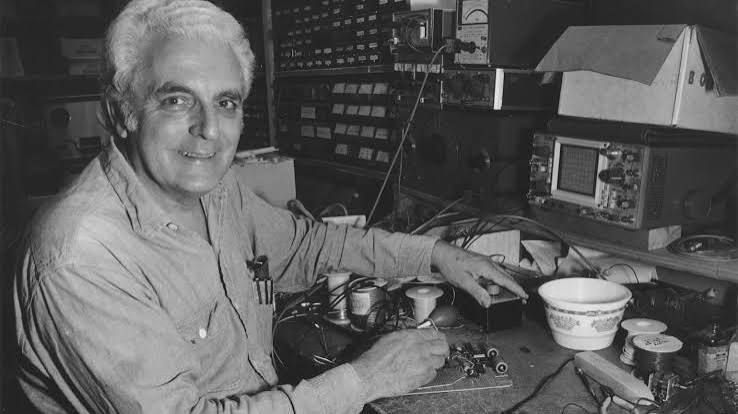
    Long before he invented the synthesizer, Robert Moog was building theremins. As a teenager in the 1950s, he sold theremin kits through a mail-order business. His early work with heterodyning oscillators directly influenced his later synthesizer designs. Moog’s company, Moog Music, began producing the Etherwave theremin in the 1990s, bringing the instrument to a new generation. Modern digital theremins are more stable than the original vacuum-tube models, which were bulky and prone to drift. But the playing technique remains the same—hands in the air, coaxing sound from invisible fields.

    The theremin’s technical evolution mirrors its cultural journey. From a Soviet lab to American concert halls, from spy bugs to rock stages, it has always been an instrument of paradoxes. It is one of the first fully electronic instruments, yet it demands the most human of gestures—a delicate touch that never actually touches. That paradox is its enduring appeal.

    Clara Rockmore and the Female Virtuosos

    The theremin is unusual in that its performance interface is the human body itself. No keys, no strings, no reeds—just the capacitance of your hands. This made it uniquely accessible to women, who were often excluded from classical music’s male-dominated institutions. Clara Rockmore became the instrument’s greatest exponent, performing with orchestras and commissioning works from composers like Bohuslav Martinů. Lucie Bigelow Rosen, a wealthy patron, helped popularize the theremin in high society and performed at Carnegie Hall. Lydia Kavina, Theremin’s grand-niece, kept the instrument alive in Russia after his death, teaching a new generation of players.

    Some scholars argue that the theremin offered women a rare space for musical agency. Because it required no physical contact, it sidestepped the gendered expectations of instrumental technique. A woman could play it with the same authority as a man, and the most celebrated players were women. This was a quiet revolution in a field that often overlooked female musicians.

    The Failed Instrument That Refused to Die

    RCA’s commercial failure in 1929 seemed to seal the theremin’s fate as a novelty. It was too hard to play, too eerie for most tastes, and too alien for mainstream music. Yet it kept resurfacing—in film scores, in psychedelic rock, in the hands of dedicated virtuosos. Robert Moog’s kits gave it a cult following. Modern artists like Carolina Eyck and Pamelia Stickney have pushed it into contemporary music. The theremin is no longer a one-hit wonder; it’s a niche instrument with a passionate community.

    Why has it persisted? Perhaps because it’s the only instrument that looks like magic. Watching a thereminist play—gliding hands, no contact, impossible sounds—is a performance in itself. It reminds us that music can come from anywhere, even from the air between our fingers. And that’s a lesson that never gets old.

    The theremin started as a Soviet physicist’s curiosity, became a Cold War spy’s footnote, and ended up as the soundtrack to our wildest imaginings. Its eerie voice still resonates in film, rock, and concert halls. Léon Theremin died in 1993, but his invention lives on—not as a spy gadget, but as a testament to human creativity’s strange and beautiful paths.

    Summary

    • The theremin was invented in 1920 by Russian physicist Léon Theremin, who later built a covert listening device for Soviet intelligence.
    • It is played without physical contact, using hand movements to control pitch and volume via radio oscillators.
    • Its eerie sound became iconic in sci-fi films like The Day the Earth Stood Still and in psychedelic rock like Led Zeppelin’s Whole Lotta Love.
    • Clara Rockmore and other female virtuosos elevated the theremin as a serious concert instrument.
    • Robert Moog built theremins as a teenager, which influenced his later synthesizer work.

    FAQ

    Q: How does a theremin produce sound without being touched?
    A: The theremin uses two high-frequency radio oscillators. The difference between their frequencies creates an audible beat. When you move your hand near the pitch antenna, your hand’s capacitance changes one oscillator’s frequency, altering the pitch. The volume antenna controls amplitude similarly.

    Q: Was the theremin actually used as a spy device?
    A: No, the theremin itself was not a spy device. However, its inventor, Léon Theremin, developed a passive listening bug called “The Thing” in 1945, which was hidden in a wooden seal and used to eavesdrop on the US Ambassador.

    Q: Why did the theremin become associated with science fiction?
    A: Its ethereal, gliding sound was unlike any traditional instrument, making it perfect for evoking the unknown and alien. Composers like Miklós Rózsa and Bernard Herrmann used it in films like Spellbound and The Day the Earth Stood Still.

    Q: Can I learn to play the theremin easily?
    A: The theremin is notoriously difficult to play well because pitch control requires precise hand movements with no physical reference. However, modern digital theremins are more stable, and with practice, it’s possible to produce melodic lines.

    Q: What’s the difference between a theremin and an Electro-Theremin?
    A: An original theremin uses antennas and hand capacitance to control sound without contact. An Electro-Theremin, used by the Beach Boys on Good Vibrations, has a slide controller for pitch and a knob for volume, so it’s played with physical touch.

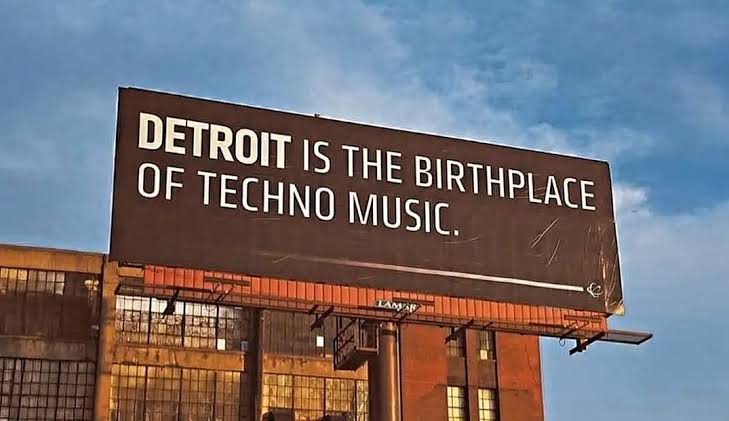
  • The Birth of Techno: How Detroit’s Underground Sound Conquered the World

    The Birth of Techno: How Detroit’s Underground Sound Conquered the World

    In the mid-1980s, in a city scarred by industrial decay, a small group of Black American teenagers began crafting a sound that would echo across decades and continents. Their name for it ‘techno’ came from a futuristic book, but its pulse was rooted in the Motor City’s machines, funk, and a vision of a world yet to come.

    Today, techno is a global phenomenon, with festivals in Berlin, Tokyo, and São Paulo drawing hundreds of thousands. But its journey from Detroit’s abandoned warehouses to the world’s biggest stages is a story of innovation, migration, and the unexpected power of a beat.

    The Belleville Three and the Birth of a Sound

    In the early 1980s, Juan Atkins, Derrick May, and Kevin Saunderson were students at Belleville High School, a suburban Detroit school that would become the unlikely cradle of a musical revolution. They were obsessed with the futuristic sounds of Kraftwerk and the cosmic funk of Parliament-Funkadelic. They were also kids of the Motor City, a place where the auto industry’s collapse had left a ghostly landscape of shuttered factories.

    Atkins, the eldest and most visionary, began experimenting with synthesizers and drum machines. His project Cybotron, with Richard Davis, released “Clear” in 1983—a track that many point to as the first techno record, even though the genre didn’t have a name yet. Atkins later coined “techno” after reading Alvin Toffler’s Future Shock, which spoke of “techno-rebels” who use technology to subvert and create.

    May and Saunderson followed suit, producing tracks that were raw, mechanical, yet suffused with soul. May called techno “George Clinton and Kraftwerk stuck in an elevator,” capturing its hybrid nature. Their music wasn’t an escape from Detroit’s reality; it was a reflection of it—the clang of machinery, the emptiness of the streets, but also the hope of a new beginning.

    From Detroit to the World: The European Bridge

    For a few years, techno was a local phenomenon, played at parties and on the radio by DJs like The Electrifying Mojo. But in 1987, a wave of British DJs began importing Detroit tracks to the UK, where they were spun alongside Chicago house in the acid house scene. The response was explosive.

    In 1988, Neil Rushton compiled Techno! The New Dance Sound of Detroit, a UK compilation that formally introduced the genre name to a global audience. That same year, Derrick May’s “Strings of Life” and Kevin Saunderson’s “Big Fun” (under the name Inner City) stormed the UK charts, becoming anthems of the Second Summer of Love.

    Meanwhile, in Germany, the fall of the Berlin Wall in 1989 opened up vast, abandoned industrial spaces in the East. Techno, with its cold, mechanical beats, became the soundtrack of reunification. The Love Parade began in 1989, and by the mid-1990s, Berlin was the techno capital of the world, home to legendary clubs like Berghain.

    The Sound of a City in Ruins

    Techno’s aesthetic was a direct response to Detroit’s post-industrial decline. The city, once the powerhouse of American manufacturing, had become a symbol of urban decay. Unemployment soared, and neighborhoods were left with empty lots and crumbling buildings.

    This environment shaped the music’s mood: cold, repetitive, and precise, mirroring the assembly lines that had once defined the city. But it also reflected the Afrofuturist vision of artists like George Clinton, who imagined a black future beyond the confines of the present. Techno was both a lament and a celebration—a way to dance in the ruins and dream of a better world.

    The “Belleville Three” narrative, however, has been critiqued for overlooking other early pioneers like Eddie Fowlkes, Blake Baxter, and James Pennington, who were also instrumental in shaping the sound. The movement was broader than three individuals, but their story remains the most compelling entry point.

    The Second Wave: Expanding the Sound

    As techno spread globally, a second wave of Detroit producers took it in new directions. Jeff Mills brought a hypnotic, percussive intensity; Carl Craig infused it with melody and depth; and Richie Hawtin, though Canadian, became a key figure in Detroit’s scene, pushing techno into minimalism.

    These artists, along with the labels they founded—Metroplex, Transmat, and KMS—cemented techno’s reputation as a serious art form. They also faced a paradox: while European audiences embraced techno, American radio and clubs largely ignored it, preferring house or hip-hop. Techno remained underground in the US for years, a testament to its creators’ vision and resilience.

    Techno’s Legacy and Global Reach

    Today, techno is a global industry, with festivals like Movement in Detroit (founded in 2000) and Berlin’s Love Parade attracting millions. Its influence extends beyond music into fashion, art, and technology. But its roots remain in that small group of Black teenagers from Belleville who imagined a future—and built it, one beat at a time.

    Techno’s story is not just about music; it’s about how a marginalized community used technology to create something new and transformative. It’s a reminder that the most innovative art often emerges from the most challenging circumstances.

    Conclusion

    From the ruins of Detroit to the halls of Berghain, techno has proven that a sound born in a struggling city can resonate with the entire world. Its creators—Atkins, May, Saunderson, and countless others—didn’t just make dance music; they made a statement about resilience, imagination, and the power of rhythm. As long as there are machines and dreams, techno will keep moving.

    • Techno was born in Detroit in the mid-1980s, created by Juan Atkins, Derrick May, and Kevin Saunderson—the “Belleville Three.”
    • The term “techno” was coined by Atkins, inspired by Alvin Toffler’s Future Shock.
    • Key tracks include Cybotron’s “Clear” (1983), Derrick May’s “Strings of Life” (1987), and Inner City’s “Big Fun” (1988).
    • Techno’s sound reflects Detroit’s post-industrial decay and Afrofuturist themes.
    • It found global fame through UK DJs and the German techno scene after the fall of the Berlin Wall.

    Q: Who are the Belleville Three?
    A: Juan Atkins, Derrick May, and Kevin Saunderson, who met at Belleville High School and are credited with founding techno.

    Q: What was the first techno record?
    A: “Clear” by Cybotron (1983), a project by Juan Atkins and Richard Davis, is often cited as the first.

    Q: Why did techno become popular in Europe before the US?
    A: British DJs imported Detroit tracks in the late 1980s, and German audiences embraced techno after the fall of the Berlin Wall, while US radio and clubs favored other genres.

    Q: How did Detroit’s decline influence techno’s sound?
    A: The city’s industrial decay and abandoned factories inspired the cold, mechanical, and repetitive beats that characterize techno.

    Q: What is the significance of the Music Institute?
    A: It was a short-lived Detroit nightclub (1988–1989) where May and others DJed, becoming a template for future techno clubs.

    Techno’s journey from a few teenagers messing with synths in a Detroit suburb to a global soundtrack of liberation is a story of creativity against the odds. It shows how a local scene can become a world movement, and how a beat can carry the weight of a city’s history.

    Summary

    • Techno was born in Detroit in the mid-1980s, created by Juan Atkins, Derrick May, and Kevin Saunderson—the “Belleville Three.”
    • The term “techno” was coined by Atkins, inspired by Alvin Toffler’s Future Shock.
    • Key tracks include Cybotron’s “Clear” (1983), Derrick May’s “Strings of Life” (1987), and Inner City’s “Big Fun” (1988).
    • Techno’s sound reflects Detroit’s post-industrial decay and Afrofuturist themes.
    • It found global fame through UK DJs and the German techno scene after the fall of the Berlin Wall.

    FAQ

    Q: Who are the Belleville Three?
    A: Juan Atkins, Derrick May, and Kevin Saunderson, who met at Belleville High School and are credited with founding techno.

    Q: What was the first techno record?
    A: “Clear” by Cybotron (1983), a project by Juan Atkins and Richard Davis, is often cited as the first.

    Q: Why did techno become popular in Europe before the US?
    A: British DJs imported Detroit tracks in the late 1980s, and German audiences embraced techno after the fall of the Berlin Wall, while US radio and clubs favored other genres.

    Q: How did Detroit’s decline influence techno’s sound?
    A: The city’s industrial decay and abandoned factories inspired the cold, mechanical, and repetitive beats that characterize techno.

    Q: What is the significance of the Music Institute?
    A: It was a short-lived Detroit nightclub (1988–1989) where May and others DJed, becoming a template for future techno clubs.

  • How Bob Moog’s Modular Synthesizer Re wired Popular Music

    How Bob Moog’s Modular Synthesizer Re wired Popular Music

    In 1964, at an audio engineering conference in New York, a soft-spoken engineer named Bob Moog unveiled a machine that looked more like a telephone switchboard than a musical instrument. It was a wall of modules, knobs, and patch cables, and it could produce sounds nobody had heard before—from a deep, fat bass to eerie, sci-fi sweeps. This was the Moog modular synthesizer, and it didn’t just add a new instrument to the band; it changed the very fabric of popular music.

    Before the Moog, electronic music was mostly an academic curiosity, locked away in studios with room-sized computers and tape loops. Moog, trained as an electrical engineer but with a musician’s soul, designed his synthesizer to be played, not programmed. He added a piano-style keyboard, made the controls intuitive, and focused on expressiveness. The result was an instrument that invited experimentation, and musicians from the Beatles to Stevie Wonder to Donna Summer took the bait, transforming pop, rock, soul, and dance music in the process.

    The Birth of the Moog: From Theremin to Voltage Control

    Bob Moog’s journey to the synthesizer began with the theremin, one of the earliest electronic instruments. As a teenager in the 1940s, he built theremins and sold them by mail order, eventually founding R.A. Moog Co. in 1954. The theremin is played without touch, using hand movements to control pitch and volume, and it taught Moog about the quirks of analog electronics. But the theremin was a niche instrument, and Moog wanted something more.

    In the early 1960s, he met composer Herb Deutsch, who was experimenting with electronic sounds for a composition. Deutsch needed a device that could generate a wide range of tones and shapes, and Moog realized that voltage control—using electrical signals to control pitch, filter, and amplitude—could be the key. By 1964, he had built the first voltage-controlled oscillator (VCO), filter (VCF), and amplifier (VCA), and he connected them with patch cables to create the first modular system.

    The Moog wasn’t the first synthesizer. The RCA Mark II, built in 1957, was a massive machine that required punch-card programming and filled an entire room. Don Buchla’s synthesizer, developed around the same time as Moog’s, used touch plates and sequencers instead of a keyboard. But Moog’s design was different: it was compact enough for a studio, intuitive enough for a musician, and, crucially, it had a keyboard. Moog believed that musicians needed a familiar starting point, and that piano-style keys would make the synthesizer approachable. That decision proved revolutionary.

    The Moog Sound: Knobs, Cables, and Personality

    A modular Moog system, like the one demonstrated in 1964, is a collection of separate modules—oscillators that generate raw waveforms, filters that shape the tone, amplifiers that control volume, and envelope generators that shape how sounds attack and decay. To make a sound, you patch cables from one module to another, creating a signal path. There are no presets; every sound is built from scratch, and the possibilities are nearly endless.

    This hands-on approach gave the Moog a distinct personality. The analog circuitry is notoriously unstable—it drifts with temperature and humidity, and tuning can be a constant battle. But that instability is also what makes it expressive. The filter, with its 24 dB/octave low-pass design, produces a fat, warm, almost liquid sound that became the signature ‘Moog bass.’ Musicians describe playing a Moog as a conversation, not a command; the instrument responds to touch and twist in ways that later digital synths couldn’t replicate.

    In 1970, Moog and engineer Bill Hemsath shrunk the modular system into a portable keyboard instrument called the Minimoog. With three oscillators, a built-in filter, and the iconic pitch and modulation wheels on the left, the Minimoog was a self-contained synthesizer that didn’t require patch cables. Around 13,000 units were sold between 1970 and 1981, making it the first synthesizer that working musicians could actually afford and tour with. The Minimoog brought the Moog sound out of the studio and onto the stage.

    Switched-On Bach and the Beatles: The Moog Goes Mainstream

    The Moog’s first big cultural moment came in 1968 with Wendy Carlos’s Switched-On Bach. Carlos, a composer and engineer, used a Moog modular system to record a full album of Bach compositions, played entirely on synthesizer. The album was a sensation: it won three Grammy Awards, sold over a million copies, and proved that a synthesizer could make music that was not just novel, but beautiful and musically legitimate. Suddenly, the Moog was on everyone’s radar.

    The Beatles were among the first rock bands to embrace it. On Abbey Road (1969), they used a Moog on ‘Because’ and ‘Here Comes the Sun,’ adding subtle electronic textures that signaled a new direction. George Harrison even released an album called Electronic Sound (1969) that was almost entirely Moog. The Beatles’ stamp of approval introduced the synthesizer to mainstream rock audiences, and soon, other musicians started experimenting.

    Stevie Wonder was a trailblazer in soul and R&B. On Music of My Mind (1972) and Talking Book (1972), he used the Moog to create rich, layered textures that pushed black music into futuristic territory. His use of the synthesizer influenced the development of funk and, later, electronic pop. In Germany, Kraftwerk took a different approach. On Autobahn (1974), they used Moogs and other synthesizers to create a completely synthesized pop aesthetic—no guitars, no drums, just machines. That album laid the groundwork for techno, synth-pop, and countless electronic genres.

    From ‘I Feel Love’ to the Dance Floor

    The Moog’s most direct impact on dance music came in 1977, when Giorgio Moroder used a Moog modular system to create the pulsing bassline for Donna Summer’s ‘I Feel Love.’ The track was a revelation: a disco song driven entirely by a synthesized, hypnotic groove. It’s widely cited as the birth of electronic dance music (EDM). The bassline was simple—just a repeating pattern—but it was relentless, and it changed how producers thought about rhythm. Suddenly, the synthesizer wasn’t just for textures; it could be the foundation of a hit.

    This moment marked a shift. The Moog had started as an experimental instrument for avant-garde composers, but by the late 1970s, it was a staple in pop, rock, and soul. Its sound became synonymous with the future, and its influence echoed through the 1980s synth-pop explosion, the acid house of the 1990s, and the electronic music that dominates today.

    The Fall and Rise of Analog

    The Moog’s dominance didn’t last. By the early 1980s, digital synthesizers with presets—like the Yamaha DX7 and Roland Jupiter-8—were cheaper, more reliable, and easier to use. They could store sounds and recall them instantly, which was a huge advantage in live performance and studio work. Analog modulars like the Moog were seen as bulky, temperamental, and expensive. Moog Music filed for bankruptcy in 1986, and Bob Moog had left the company in 1977.

    But the analog sound never disappeared. In the 1990s, dance music producers rediscovered the warmth and character of analog synths, and a boutique market emerged for vintage Moogs. Moog Music was relaunched in 1993, and the company has been thriving ever since, making new versions of the Minimoog and modular systems. The analog revival restored Moog’s reputation as a pioneer, and today, the Moog name is still synonymous with quality and craftsmanship.

    Bob Moog himself remained active until his death in 2005, teaching, designing, and advocating for electronic music. His legacy is not just a collection of instruments, but a philosophy: that technology should serve musical expression, not replace it. The Moog synthesizer, with its wires, knobs, and quirks, was a machine that made people want to play, and that’s why its sound still resonates.

    Why the Moog Matters Today

    The Moog synthesizer changed popular music in three fundamental ways. First, it made electronic music accessible. Before the Moog, synthesis was an academic pursuit, locked in studios with punch cards and tape loops. Moog’s keyboard interface and commercial vision brought it to the masses. Second, it created a new sonic palette. The Moog’s fat bass, sweeping filters, and otherworldly textures gave musicians a vocabulary that didn’t exist before, and those sounds became the building blocks of entire genres. Third, it influenced the culture. The Moog arrived at a moment of musical experimentation—psychedelic rock, the counterculture, the studio as an instrument—and it fed that energy, pushing artists to explore new territories.

    Today, you can buy a synthesizer app for your phone that emulates the Moog sound, and many modern hardware synths are modeled on its design. But there’s still nothing quite like the real thing. The Moog’s analog circuitry, its instability, its tactile interface—these are features, not bugs. They make each instrument unique and each performance a live negotiation between player and machine. That’s why, more than fifty years after its debut, the Moog remains a beloved tool for musicians who want to make music that feels alive.

    The Moog synthesizer wasn’t just a machine; it was a door. Bob Moog opened it, and musicians from Wendy Carlos to Donna Summer walked through, bringing us a world of sound that didn’t exist before. The Moog’s legacy is everywhere—in the bass of a dance track, the texture of a pop song, the experimental spirit of a composer. And it all started with a wall of modules and a belief that anyone could play electronic music. That belief still holds true today.

    Summary

    • Bob Moog’s modular synthesizer, first shown in 1964, made electronic music commercially viable and accessible to musicians, unlike earlier room-sized machines.
    • The Minimoog (1970) made synthesis portable and affordable, selling about 13,000 units and becoming a standard in rock and pop.
    • Key recordings like Wendy Carlos’s Switched-On Bach (1968), the Beatles’ Abbey Road (1969), Stevie Wonder’s early ’70s albums, and Donna Summer’s ‘I Feel Love’ (1977) showcased the Moog’s versatility and pioneered new genres.
    • The Moog’s analog sound—fat bass, expressive filters, and instability—became iconic and remains influential, even after digital synths dominated in the 1980s.
    • Moog Music’s bankruptcy in 1986 was followed by an analog revival in the 1990s, and the company still thrives today, ensuring the Moog’s legacy endures.

    FAQ

    Q: What was the first Moog synthesizer?
    A: The first Moog modular synthesizer was demonstrated publicly in 1964 at the Audio Engineering Society convention in New York. It was a modular system with separate components like oscillators and filters, connected by patch cables.

    Q: How is the Moog different from earlier synthesizers?
    A: Earlier synthesizers like the RCA Mark II were huge, required punch-card programming, and were not performable. The Moog was compact, used a piano-style keyboard, and was designed for musicians to play in real time.

    Q: What makes the Moog sound unique?
    A: The Moog’s analog circuitry, especially its low-pass filter, produces a warm, fat, and slightly unstable sound that many find more expressive than later digital synths. The instability means it responds to temperature and touch, giving each performance a unique character.

    Q: Which famous songs use the Moog synthesizer?
    A: Some famous examples include Wendy Carlos’s Switched-On Bach, the Beatles’ ‘Because’ and ‘Here Comes the Sun,’ Stevie Wonder’s albums Music of My Mind and Talking Book, Kraftwerk’s Autobahn, and Donna Summer’s ‘I Feel Love.’

    Q: Is the Moog still used today?
    A: Yes, Moog Music still makes synthesizers, including new versions of the Minimoog and modular systems. The analog sound is highly sought after in genres like electronic dance music, and many modern producers use Moogs or emulations of them.

  • The Birth of Ska: How a Tiny Island’s Sound Conquered the World

    The Birth of Ska: How a Tiny Island’s Sound Conquered the World

    In the late 1950s, a new sound began to pulse out of Kingston’s makeshift recording studios and street-corner sound systems. It was fast, horn-driven, and built on a rhythm that made you move whether you wanted to or not. By 1964, that sound ska had jumped the ocean and landed on pop charts in London and New York. But its real significance wasn’t just a couple of hit singles. Ska was the musical engine that powered Jamaica’s emergence as an independent nation, and it set the template for rocksteady, reggae, and generations of punk and pop that followed.

    This is the story of how a small Caribbean island, with limited resources but boundless creativity, created a genre that still reverberates today. It’s a tale of sound-system rivalries, studio ingenuity, and a beat that refused to stay in one place.

    The Kingston Sound System Scene

    To understand ska, you have to start with the sound systems. In 1950s Kingston, mobile DJ units trucks loaded with massive speakers, turntables, and a selector were the heartbeat of working-class entertainment. Men like Coxsone Dodd, Duke Reid, and Prince Buster ran competing systems, each vying for the newest American R&B records. The DJ with the freshest tunes drew the biggest crowd, and the biggest crowd meant the most prestige and profit.

    But there was a problem. American R&B was slowing down. As soul music became smoother and slower, Jamaican dancers who craved something upbeat and energetic began to lose interest. The sound system operators needed a solution. They couldn’t import faster records because they didn’t exist. So they started making their own.

    Dodd and Reid opened recording studios (Studio One was literally a converted bakery) and invited local musicians to cut tracks. These musicians had grown up on American jazz and R&B, but they also carried the rhythms of mento, calypso, and Jamaican religious drumming. When they sped up the shuffle beat and emphasized the offbeat, something new emerged.

    The Ska Sound: What Made It Different

    Ska’s defining feature is the “skank” a staccato guitar or piano chord played on the offbeat, the “and” between the main beats. It’s a rhythm that’s both syncopated and irresistibly danceable, typically clocking in at 120–140 BPM. That’s faster than rocksteady or reggae, which came later and slowed things down.

    Horns play a starring role. Trumpets, trombones, and saxophones blast melodic riffs and sharp accents, often carrying the main tune while a walking bass line (upright bass in the early days) holds the groove. Drums mix jazz-style swing with an R&B backbeat, snare cracking on beats two and four. The result is a sound that’s both polished and raw, sophisticated and streetwise.

    The genre’s name likely comes from the guitar or piano’s “ska” chop that offbeat stroke. There are other theories, like bassist Cluett Johnson’s greeting “skavoovie,” but the musical explanation fits best. The sound itself named the music.

    The Golden Age: 1962–1966

    Ska’s golden age coincided with Jamaica’s independence in 1962. The country was bursting with optimism, and ska became its soundtrack. The Skatalites, formed in 1964, were the premier instrumental band. Featuring trombonist Don Drummond, saxophonists Tommy McCook and Roland Alphonso, and keyboardist Jackie Mittoo, they backed nearly every major vocalist of the era. Their version of “Guns of Navarone”—a theme from a war movie—became a ska classic.

    Vocalists like Derrick Morgan, Desmond Dekker, and Toots Hibbert (of Toots and the Maytals) delivered catchy, socially aware lyrics. Prince Buster, a producer, singer, and DJ who’d started in the sound system wars, released “Al Capone” and “Madness”—songs that would later become touchstones for the 2 Tone movement.

    Studio One and Treasure Isle, run by Dodd and Reid respectively, were the two dominant production houses. Their rivalry pushed the music forward, as each producer tried to outdo the other with harder rhythms, catchier hooks, and more inventive arrangements.

    Going Global: “My Boy Lollipop” and Beyond

    In 1964, a 16-year-old singer named Millie Small recorded “My Boy Lollipop”—a bouncy ska-pop hybrid with a harmonica solo. It shot to #2 on both the UK and US charts. Suddenly, the world was listening to Jamaican music. Small’s success opened the door for other ska acts, even if the international audience often didn’t fully understand the genre’s roots.

    The Skatalites’ “Guns of Navarone” became a hit in the UK, and Desmond Dekker’s “007 (Shanty Town)” (1967) further cemented ska’s global reach. But even as the world caught on, Jamaica was already moving on. By the late 1960s, ska had slowed into rocksteady, a more soulful, bass-heavy sound, and then reggae, which would become Jamaica’s most famous export. Ska wasn’t dead—it was evolving.

    The 2 Tone Revival: Ska Meets Punk

    Ska might have stayed a footnote in music history if not for its resurrection in late-1970s Britain. The 2 Tone movement, named after the record label founded by Jerry Dammers of The Specials, fused ska’s offbeat rhythms with punk’s raw energy and DIY attitude. The Specials, The Selecter, Madness, and The Beat all drew directly from Jamaican ska and rocksteady.

    2 Tone was explicitly multiracial, reflecting the diverse communities of Coventry and London. Its black-and-white checkered flag became a symbol of unity against the racial tensions of Thatcher-era Britain. Songs like The Specials’ “Ghost Town” addressed unemployment and social decay, while Madness brought a pop sensibility that made ska accessible to a mainstream audience.

    The 2 Tone era also introduced a new generation to the original Jamaican artists. Prince Buster’s “Madness” gave the band Madness their name, and The Skatalites’ music was rediscovered by punk fans eager to trace the lineage.

    Third Wave and Beyond: Ska Goes Global

    Ska didn’t stop with 2 Tone. In the 1980s and ’90s, a third wave of ska erupted in North America, blending the genre with punk, pop, and alternative rock. Bands like The Mighty Mighty Bosstones, Reel Big Fish, No Doubt, and Sublime brought ska to a massive audience. No Doubt’s “Just a Girl” (1995) and Sublime’s “What I Got” (1996) were radio staples, and ska-punk became a staple of mid-90s alternative rock.

    Today, ska scenes thrive worldwide—from Japan to Latin America to Eastern Europe. Festivals, tribute bands, and new acts keep the genre alive, and its influence can be heard in pop, punk, and electronic music. The offbeat skank, once a local innovation, is now a global musical language.

    The Legacy of Ska

    Ska’s greatest legacy is its role as the foundation of Jamaican popular music. Without ska, there would be no rocksteady, no reggae, no dub. Bob Marley, Peter Tosh, and the Wailers—all built on the rhythmic innovations of ska’s pioneers. And through 2 Tone and third wave, ska has remained a vital, evolving genre that speaks to new generations.

    But ska’s impact goes beyond music. It was born in a moment of national optimism, when a colonized island was becoming a sovereign nation. Its sound reflected the pride, energy, and creativity of that transition. That’s why it still resonates today—not as a nostalgic artifact, but as a living proof that great music can come from anywhere, even a converted bakery in Kingston.

    Ska started as a local solution to a local problem—how to keep dancers moving in Kingston’s sound system parties. It grew into a global phenomenon that shaped the sound of modern music. From its origins in late-1950s Jamaica to its punk-infused revivals, ska’s offbeat rhythm and horn-driven melodies have proven endlessly adaptable. It’s a story of creativity born from limitation, and a reminder that the most revolutionary sounds often come from the most unexpected places.

    Summary

    • Ska emerged in Jamaica in the late 1950s, with its golden age from 1962 to 1966, as a direct precursor to rocksteady and reggae.
    • The genre’s defining feature is the offbeat “skank” rhythm, played on guitar or piano, combined with prominent horns and a fast, danceable tempo.
    • Key figures included producers Coxsone Dodd and Duke Reid, the instrumental band The Skatalites, and vocalists like Millie Small and Desmond Dekker.
    • Millie Small’s “My Boy Lollipop” (1964) brought ska to international charts, but the genre evolved into rocksteady and reggae by the late 1960s.
    • Ska saw major revivals with the UK’s 2 Tone movement in the late 1970s (The Specials, Madness) and the third-wave ska scene in the 1990s (No Doubt, Sublime), and it continues to thrive globally.

    FAQ

    Q: What does “ska” mean?
    A: The name likely comes from the “ska” sound of the guitar or piano chopping on the offbeat, though some trace it to a greeting used by bassist Cluett Johnson.

    Q: How is ska different from reggae?
    A: Ska is faster (120–140 BPM) and emphasizes the offbeat with a walking bass line, while reggae is slower, more laid-back, and often focuses on the “one drop” rhythm with heavier bass.

    Q: Who were the most influential ska artists?
    A: The Skatalites, Prince Buster, Derrick Morgan, Desmond Dekker, Toots and the Maytals, and Millie Small are among the most influential early ska acts.

    Q: Why did ska fade out in the late 1960s?
    A: Ska evolved into rocksteady, which slowed the tempo and added more soul influences, and then into reggae, as Jamaican musicians continued to innovate.

    Q: Is ska still popular today?
    A: Yes, ska has a global following, with active scenes in Japan, Latin America, Europe, and North America, and it continues to influence modern music genres.

  • The Forgotten Heroines of Blues: How Ma Rainey and Bessie Smith Paved the Way for Rock and Roll

    Ma Rainey and Bessie Smith Forged a Powerful Friendship That Helped Bring Blues to the Mainstream

    Before Elvis shook his hips, before Chuck Berry duck-walked across a stage, and before Little Richard pounded the piano with manic glee, there were two women who defined what it meant to command an audience. Ma Rainey and Bessie Smith weren’t just blues singers—they were architects of a performance style that rock and roll would later claim as its own. Their stories, often overshadowed by the male bluesmen who came after, reveal a crucial chapter in music history that deserves a spotlight.

    When we trace rock’s roots, we usually point to Delta bluesmen like Robert Johnson or electric pioneers like Muddy Waters. But the real foundation was laid in the 1920s by a group of bold, theatrical women who turned the blues into a national phenomenon. They were the first to sell records by the hundreds of thousands, the first to blend vaudeville showmanship with raw emotional power, and the first to make Black women’s voices a force in American music. This is their story—and why it matters for rock and roll.

    The Mother of the Blues: Ma Rainey’s Rise

    Gertrude Pridgett was born in Columbus, Georgia, in 1886. She started performing as a teenager in minstrel shows and vaudeville, absorbing the theatrical traditions that would define her career. By the time she took the stage name Ma Rainey, she had already spent years honing her craft. When she first recorded for Paramount Records in 1923, she was nearly 40 years old—an age when many performers were winding down. Instead, she launched a recording career that would produce over 100 songs, including classics like “Bo-Weavil Blues,” “See See Rider,” and the bold “Prove It on Me Blues,” which openly referenced her attraction to women.

    Rainey’s stage presence was legendary. She wore gold teeth, sequined gowns, and feather boas, transforming each performance into a spectacle. She didn’t just sing the blues—she acted them out, using her voice and body to convey every ounce of pain and joy in a song. This theatrical approach was a direct bridge between the vaudeville tradition and the raw emotionalism of the blues. It was also a template that rock performers would later adopt: think of Little Richard’s pompadour and wild piano, or James Brown’s cape routine. Rainey built that playbook decades earlier.

    The Empress of the Blues: Bessie Smith’s Reign

    If Rainey was the mother, Bessie Smith was the crown jewel. Born in Chattanooga, Tennessee, in 1894, Smith was orphaned young and began singing on street corners with her brother. She learned the ropes touring with Rainey’s troupe in the early 1910s, but she soon surpassed her mentor in commercial success. In 1923, Smith signed with Columbia Records and released her debut, “Down Hearted Blues.” It sold over 800,000 copies in six months—a staggering figure for the era, proving that Black audiences were hungry for blues records.

    Smith’s voice was a force of nature: powerful, precise, and emotionally devastating. She recorded with jazz luminaries like Louis Armstrong, Fletcher Henderson, and James P. Johnson. Her 1925 recording of “St. Louis Blues” with Armstrong is still considered a landmark of the genre. At her peak, Smith earned up to $2,000 a week—equivalent to over $30,000 today—making her one of the highest-paid Black performers of the 1920s. She was a businesswoman and a star, commanding respect on and off stage.

    The Blues-to-Rock Connection: A Direct Line

    Rock and roll didn’t emerge from a vacuum. Its DNA includes the 12-bar blues structure, call-and-response vocals, and bent-note guitar techniques that first became popular in the 1920s. But more than that, rock inherited a performance ethic from the classic blues women. They proved that music could be both deeply personal and wildly entertaining, that a singer could be vulnerable and commanding at the same time. That duality is at the heart of rock performance.

    Early rock pioneers openly cited blues singers as influences. Elvis Presley, Chuck Berry, Little Richard, and Jerry Lee Lewis all grew up listening to blues records, and they carried that emotional directness into their own music. But while male bluesmen like Robert Johnson get much of the credit, the women who preceded them—Rainey, Smith, and others—were the ones who built the commercial foundation. They were the first to sell blues records to a national Black audience, creating a market that later labels like Chess, Sun, and Atlantic would exploit for rock and roll.

    Why They Were Left Out of the Story

    The “forgotten” part of this story is no accident. Rock history has largely been written as a male lineage: bluesmen to rockers. The classic blues women are often reduced to footnotes, mentioned in passing but never given the central role they deserve. There are a few reasons for this. First, the Great Depression and the rise of talkies in the 1930s devastated the vaudeville circuits and record sales, ending the classic blues era. The center of blues shifted to male electric blues in Chicago, which directly fed into rock and roll. So the narrative naturally focused on those men.

    Second, there’s a gender bias in how music history is remembered. The “authentic” blues is often framed as rural, male, and acoustic, while the classic blues women are seen as more theatrical and commercial. But that’s a false distinction. Rainey and Smith were just as authentic—they simply came from a different tradition, one that embraced showmanship as much as sorrow. Their contributions didn’t just influence jazz and R&B vocalists like Billie Holiday and Etta James; they set the template for rock’s most electrifying performers.

    The Queer Angle: Another Layer of Erasure

    Both Rainey and Smith were open about their bisexuality, which adds another layer to their erasure. Rainey’s “Prove It on Me Blues” is one of the earliest examples of queer expression in popular music. For two Black women in the 1920s to sing about loving other women was revolutionary—and it made them even less palatable to a mainstream that preferred its idols neat and digestible. Their queerness wasn’t hidden; it was part of their persona. But that, too, got written out of the history books.

    A Legacy That Deserves the Spotlight

    Ma Rainey died in 1939, just a few years after retiring to Georgia to run a theater. Bessie Smith died in 1937 in a car accident in Mississippi, her career already fading. But their influence didn’t die with them. Every time a rock star struts across a stage, every time a singer pours raw emotion into a microphone, they’re channeling the spirit of Rainey and Smith. They were the first to show that the blues could be both personal and spectacular, and that a Black woman’s voice could command the world’s attention.

    The next time you hear a rock anthem or see a performer work a crowd, remember the women who started it all. Ma Rainey and Bessie Smith didn’t just sing the blues—they built a stage where raw emotion and dazzling showmanship could coexist. They paved the way, and it’s time we gave them their due.

    Summary

    • Ma Rainey, “Mother of the Blues,” was one of the first professional blues singers recorded, with over 100 songs and a theatrical stage presence that bridged vaudeville and blues.
    • Bessie Smith, “Empress of the Blues,” sold 800,000 copies of her debut in six months and became one of the highest-paid Black performers of the 1920s.
    • Both women established the vocal power and performance style that rock and roll later adopted, influencing pioneers like Elvis and Little Richard.
    • Rock history has often overlooked them due to gender bias and the shift to male electric blues, but their impact on the music industry is undeniable.
    • Their queerness added another layer of erasure, but songs like “Prove It on Me Blues” show their boldness in expressing their identities.

    FAQ

    Q: Why are Ma Rainey and Bessie Smith considered “forgotten” heroines?
    A: They are often overshadowed by male bluesmen in rock history, even though they pioneered the commercial blues market and the performance style that rock adopted.

    Q: How did they influence rock and roll?
    A: Their emotional vocal delivery, call-and-response patterns, and theatrical stage presence became essential elements of rock performance, inspiring early rock pioneers.

    Q: What was the “classic blues” era?
    A: A 1920s phenomenon where female singers like Rainey and Smith, rooted in vaudeville, recorded blues for a national Black audience, creating the first major blues record market.

    Q: Were they really queer?
    A: Yes, both were known to be bisexual, and Rainey’s “Prove It on Me Blues” is an early example of queer expression in pop music.

    Q: Why did their careers decline?
    A: The Great Depression devastated record sales, and the rise of sound films killed vaudeville touring, ending the classic blues era by the mid-1930s.

  • The Theremin’s Secret History: From Soviet Spycraft to Synth Pioneer

    The Theremin’s Secret History: From Soviet Spycraft to Synth Pioneer

    In 1920, a young Russian physicist named Lev Termen walked into a laboratory in Petrograd and built a machine that played music without being touched. He called it the etherphone. Within a decade, it would be the first electronic instrument sold to the public, the eerie voice of Hollywood science fiction, and a direct ancestor of the synthesizer in your laptop. But the theremin’s story is stranger than the sound it makes.

    Termen—who later styled himself Léon Theremin—was not just an inventor. He was a spy, a prisoner, and a pioneer of surveillance technology. His most famous creation was a musical instrument. His most important one, to the Soviet state, was a listening device that eavesdropped on the U.S. ambassador for seven years. Both came from the same research. The theremin’s untold history is a tangle of music, espionage, and Cold War intrigue that explains how a failed commercial product became the seed of modern electronic music and touch-sensitive technology.

    A Musician’s Radio Experiment

    Theremin was a cellist and a physicist, a combination that made him uniquely suited to hear music in radio interference. In 1919, he was working on proximity sensors for the Soviet military, using radio-frequency oscillators that produced a constant tone. When he moved his hand near the antenna, the pitch changed. Instead of filing it as a quirk, he built a version with two antennas—one for pitch, one for volume—and an amplifier. The result was an instrument that responded to the capacitance of the human body. No strings, no keys, no contact.

    He demonstrated it publicly in October 1920 at the Physico-Technical Institute in Petrograd. The audience included Vladimir Lenin, who was reportedly so impressed that he commissioned 600 instruments for Soviet propaganda purposes and took private lessons. For a few years, the theremin—or Termenvox, as it was known—was a symbol of Soviet technological triumph. Then Stalin’s cultural conservatism turned against experimental music, and Theremin’s career took a darker turn.

    The American Interlude and the RCA Flop

    In 1927, Theremin left the Soviet Union for a European tour, performing in Berlin, Paris, and London. He arrived in the United States in 1928, patented his instrument, and licensed production to RCA. The company began selling the RCA Theremin in 1929, hoping to tap into the craze for all things electronic. It was a commercial disaster—only about 500 units sold. The instrument was hard to play, required precise hand control, and sounded like nothing else on the radio. Most buyers gave up quickly.

    But the theremin found a niche in the hands of a few dedicated performers. Clara Rockmore, a Lithuanian-born violin prodigy who switched to theremin in the 1930s, became its greatest virtuoso. Her 1977 album The Art of the Theremin remains the definitive classical recording. Lucie Bigelow Rosen, an American socialite, funded Theremin’s work and performed herself. Samuel Hoffman, a physician, played the theremin on classic film scores, giving it the wailing, sci-fi sound you hear in movies like The Day the Earth Stood Still (1951).

    Composers took notice. Edgard Varèse wrote Ecuatorial for it in 1934. Bohuslav Martinů composed the Fantasia for Theremin, Oboe, String Quartet and Piano in 1944. The instrument was never mainstream, but it was never forgotten.

    The Kidnapping and the Bug

    In 1938, as political tensions rose, Theremin was kidnapped from his New York apartment by Soviet NKVD agents and returned to the USSR. He disappeared from public life, presumed dead. In reality, he was sent to a sharashka—a prison research laboratory—where he continued to work on military technology. The theremin’s technical principles, the heterodyne oscillators and capacitance sensing, proved useful for something far more secretive.

    In 1945, Theremin invented “The Thing,” a passive eavesdropping device that was hidden inside a carved wooden seal of the Great Seal of the United States. It was presented as a gift to U.S. Ambassador Averell Harriman and hung in his Moscow residence for seven years before being discovered. The device had no power source of its own—it was activated by radio waves beamed at it from outside, and it transmitted conversations back to Soviet agents. It is considered the first bugging device used by the Soviets against the United States, and it was a direct outgrowth of Theremin’s theremin research.

    The story of the bug was declassified in the 1960s, but Theremin himself remained in the USSR, working on other projects. He invented the Terpsitone, an instrument controlled by dance movements, and the Rhythmicon with composer Henry Cowell, an early rhythm machine. But he was effectively erased from Western history until 1967, when a New York Times profile by Harold Schonberg revealed that he was alive and working in Moscow.

    The Legacy: From Theremin to Moog to Touchscreens

    The theremin’s most lasting influence may be on the technology you use every day. In the 1950s, a young American engineer named Robert Moog started building theremins as a hobby. His first commercial product was a theremin kit, and the experience led him to develop the Moog synthesizer, which revolutionized music in the 1960s and beyond. The theremin is the direct ancestor of the synthesizer—the first mass-produced electronic instrument, and the template for electronic music as a genre.

    But the capacitance principle that makes the theremin work is also at the heart of modern touchscreens, motion detectors, and gesture-control interfaces. When you swipe your phone or wave at a smart device, you’re using the same physics that Theremin stumbled on in 1920. The instrument was a byproduct of military research, and so was the technology that now connects us.

    The theremin itself never became a household instrument, but it never disappeared. It appears in modern music, from the Beach Boys’ “Good Vibrations” to the soundtrack of Stranger Things. Its eerie, sliding tones remain the shorthand for mystery and otherworldliness. And the story of its inventor—the musician-spy who built a listening device from the same circuits that made music—reminds us that technology is never neutral. The theremin was a musical instrument and a spy tool, a symbol of Soviet ambition and a casualty of Stalinist repression. It changed music, but it also changed espionage, and that double life is the untold story worth remembering.

    The theremin’s legacy is not just a weird sound from old sci-fi movies. It is a direct link between the laboratory and the concert hall, between espionage and music, between a Soviet inventor and the smartphone in your pocket. Léon Theremin’s life was a Cold War thriller, and his invention—born of radio research and military secrecy—became the seed of electronic music and touch technology. The next time you hear that eerie slide, or swipe a screen, you’re touching history.

    Summary

    • Invented in 1920 by Russian physicist Léon Theremin, the instrument was the first to be played without physical contact.
    • Theremin was kidnapped by Soviet agents in 1938 and later invented ‘The Thing,’ a covert listening device used to spy on the U.S. ambassador.
    • The theremin inspired Robert Moog to build synthesizers, making it a direct ancestor of modern electronic music.
    • Its capacitance principle is now used in touchscreens and motion-sensing technology.
    • Key performers like Clara Rockmore kept the instrument alive, and composers like Varèse and Martinů wrote for it.

    FAQ

    Q: How does a theremin work?
    A: It uses two radio-frequency oscillators that create a beat frequency. The player’s hands act as capacitors, changing the pitch and volume without touching the instrument.

    Q: Why was the theremin a commercial failure?
    A: It was extremely difficult to play, required precise hand control, and had a sound that was unfamiliar to most listeners. RCA sold only about 500 units in 1929.

    Q: What is ‘The Thing’ bug?
    A: It was a passive eavesdropping device invented by Léon Theremin in 1945, hidden in a wooden seal given to the U.S. ambassador. It operated without a power source, activated by external radio waves.

    Q: How did the theremin influence modern music technology?
    A: Robert Moog built theremins before creating the Moog synthesizer, and the theremin is considered the first mass-produced electronic instrument, paving the way for electronic music.

    Q: Who was Clara Rockmore?
    A: She was the theremin’s greatest virtuoso, a Lithuanian-born musician who worked with Theremin in the 1930s and recorded the definitive classical album The Art of the Theremin in 1977.