Tag: Jamaica

  • The Sound of a Revolution: How Jamaican Sound Systems Redefined Music and Culture

    The Sound of a Revolution: How Jamaican Sound Systems Redefined Music and Culture

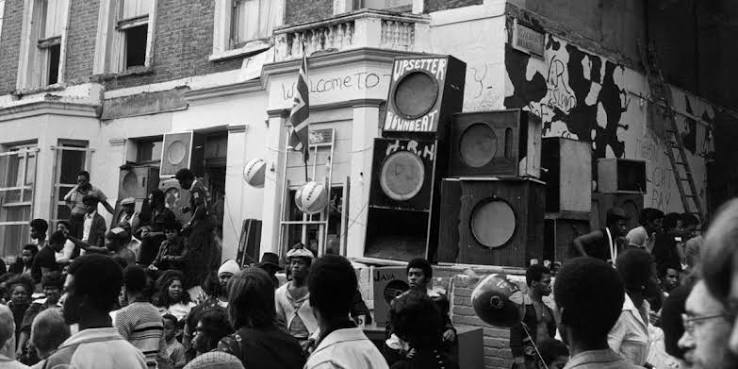
    In the late 1940s, in the yards and streets of Kingston, Jamaica, a new kind of music delivery system was being assembled literally. Massive stacks of speakers, custom-built amplifiers, and turntables were loaded onto trucks and set up wherever crowds gathered. These were sound systems, mobile DJ units that would not only become the heart of Jamaican entertainment but also plant the seeds for genres as diverse as ska, reggae, dub, and even hip-hop.

    At a time when radios were too expensive for most households and live venues were scarce, sound systems offered affordable, communal access to music. But they were more than just speakers playing records; they were competitive battles, social equalizers, and incubators for a recording industry that would eventually conquer the globe. This is the story of how a handful of selectors and technicians in a small island nation used engineering ingenuity and sheer audacity to create a sonic blueprint for the world.

    The Birth of the Sound System

    After World War II, Jamaica was a poor colony on the path to independence (achieved in 1962). The majority of the population had little access to formal entertainment. Radios were luxury items, and the hilly terrain made AM radio reception spotty at best. Into this vacuum stepped the sound system: a truckload of equipment—speakers, amplifiers, turntables—operated by a “selector” who played records, and a “toaster” who hyped the crowd over the music.

    These mobile units were not just about playback; they were about presence. The biggest operators in Kingston—Clement “Coxsone” Dodd, Duke Reid, and Prince Buster—competed fiercely for crowd loyalty. Each sound system had its own identity, its own exclusive records, and its own following. The dancehall was a battleground where the loudest, most innovative system won.

    From American R&B to Ska, Rocksteady, and Reggae

    In the 1950s, sound system operators imported American R&B records, which were hugely popular. But when American labels shifted to rock and pop in the late 1950s, the supply of R&B dried up. Jamaican selectors needed new music, and local producers stepped in to fill the gap. This sparked the birth of the Jamaican recording industry.

    Coxsone Dodd’s Studio One became the “Motown of Jamaica,” recording artists like Bob Marley and The Wailers, Toots and the Maytals, and countless others. These artists often got their start performing at sound system dances, where they could gauge crowd reactions in real-time. The sound system was not just a playback device; it was a talent incubator and an A&R department rolled into one.

    The music evolved rapidly. Ska, with its upbeat tempo, emerged around 1959-1961. By the mid-1960s, ska slowed into rocksteady, which then morphed into reggae by the late 1960s. Each shift was driven by what worked on the dancefloor, and the sound system was the testing ground.

    The Dub Revolution: Remixing Before It Had a Name

    The late 1960s and 1970s saw a radical innovation from the sound system world: dub. King Tubby, an electronics repairman who ran his own sound system (Tubby’s Hometown Hi-Fi), began stripping vocals from tracks to create instrumental versions. He added heavy reverb, echo, and tape manipulation, turning the mixing board into an instrument in its own right.

    Lee “Scratch” Perry, another dub pioneer, pushed the boundaries further, experimenting with studio effects and unconventional recording techniques. Dub was not just a genre; it was a philosophy. It introduced the concept of the remix, the idea that a record is a raw material to be reshaped. This predated and directly influenced modern electronic music production, from house and techno to hip-hop.

    Technical Innovations: Bass, Dub Plates, and Versioning

    The sound system’s insatiable demand for exclusivity and sonic impact drove technical innovations that would echo through music history.

    • Dub plates: These were one-off pressings of tracks made specifically for a particular sound system. They ensured that a sound system had exclusive material no one else could play, a precursor to the modern DJ edit or VIP mix.
    • Versioning: Reusing instrumental tracks (or “versions”) for new vocal performances became common. A producer could release multiple versions of the same rhythm, each with a different singer or toaster. This is a direct precursor to modern sampling.
    • Speaker engineering: Operators built custom speaker boxes, like the “Coxsone” bass bins, to achieve a deep, powerful bass that could be felt in the chest. This “bass culture” emphasis would later influence the design of club sound systems worldwide.

    Sound Systems Go Global

    The migration of Jamaicans to the UK, US, and Canada in the 1970s and 1980s carried sound system culture with them. In London and Bristol, sound systems like Jah Shaka and Coxsone’s UK branch became hubs for the diaspora and local youth alike. They played a crucial role in the development of punk, reggae, and later electronic genres like jungle, drum and bass, and grime.

    Perhaps the most famous transplant was DJ Kool Herc, a Jamaican immigrant who brought the sound system approach to the Bronx in the early 1970s. His parties, which featured him toasting over extended instrumental breaks, are widely credited as the birthplace of hip-hop. The lineage from Kingston to the Bronx is direct: the sound system model—selectors, toasters, massive speakers—was the template.

    The Social and Political Voice

    Sound systems were not just about entertainment; they were a platform for social commentary. In the 1970s, roots reggae, with its Rastafari spirituality and anti-colonial politics, used the sound system as a megaphone for the oppressed. The music spoke of “sufferers” and called for liberation, both spiritual and political.

    Sound system clashes—competitive battles where two systems faced off, each trying to outplay the other—were not just about technical prowess. They were cultural resistance and community bonding. They gave voice to the poor and disenfranchised, creating a space where the marginalized could assert their identity and creativity.

    The Gender Dimension

    Sound system culture was overwhelmingly male-dominated, but women were not absent. Female artists like Sister Nancy and Lady Saw carved out spaces in dancehall, challenging the male-centric norms with their lyrics and presence. Women were also crucial as dancers and audience members, shaping the vibe and energy of dances. The debates around “slackness” (sexually explicit lyrics) in dancehall highlight the tensions between liberation and objectification, a conversation that continues today.

    The Commercial and the Underground

    From its grassroots, anti-establishment origins, the sound system has spawned a multi-billion-dollar global industry. Yet it remains a deeply underground, DIY culture at its core. The tension between commercial success and underground credibility is a constant thread. But the sound system’s legacy is undeniable: it democratized music, turned DJs into stars, and gave birth to entire genres. The revolution was loud, and it echoed far beyond Jamaica’s shores.

    The sound system was more than a set of speakers; it was a social movement, a technological innovator, and a cultural catalyst. From the dusty yards of Kingston to the block parties of the Bronx and the raves of London, its influence is immeasurable. The next time you hear a DJ remix a track or MC hyping a crowd, remember: you are hearing the echo of a revolution that started with a few selectors and a stack of speakers on a Caribbean island.

    Summary

    • Sound systems were mobile DJ units in Kingston, Jamaica, that became the primary entertainment for working-class people in the 1950s.
    • They drove the creation of ska, rocksteady, reggae, and dub, and pioneered techniques like remixing and versioning.
    • Innovations like dub plates and custom speaker designs changed audio engineering forever.
    • Sound system culture migrated to the UK and US, directly influencing hip-hop, jungle, and grime.
    • They served as a platform for social commentary and gave voice to the marginalized.

    FAQ

    Q: What exactly was a sound system?
    A: It was a mobile DJ unit with large speakers, turntables, and an amplifier, operated by a selector (DJ) and a toaster (MC). They were set up in yards, streets, and dancehalls to provide music for communal events.

    Q: How did sound systems lead to the creation of reggae?
    A: When American R&B supply dried up in the late 1950s, Jamaican producers began recording original music to meet the demand from sound systems. This led to ska, rocksteady, and eventually reggae.

    Q: What is dub music?
    A: Dub is a genre that emerged in the late 1960s where producers like King Tubby stripped vocals from tracks and added effects like reverb and echo, creating instrumental remixes. It introduced the concept of the remix and the studio as an instrument.

    Q: How did sound systems influence hip-hop?
    A: DJ Kool Herc, a Jamaican immigrant, brought the sound system approach to the Bronx in the 1970s. His parties, with toasting over instrumental breaks, are considered a birthplace of hip-hop.

    Q: Were women involved in sound system culture?
    A: Yes, though the culture was male-dominated. Women were dancers, vocalists, and occasionally selectors. Artists like Sister Nancy and Lady Saw challenged gender norms in dancehall.
  • The Birth of Ska: How a Tiny Island’s Sound Conquered the World

    The Birth of Ska: How a Tiny Island’s Sound Conquered the World

    In the late 1950s, a new sound began to pulse out of Kingston’s makeshift recording studios and street-corner sound systems. It was fast, horn-driven, and built on a rhythm that made you move whether you wanted to or not. By 1964, that sound ska had jumped the ocean and landed on pop charts in London and New York. But its real significance wasn’t just a couple of hit singles. Ska was the musical engine that powered Jamaica’s emergence as an independent nation, and it set the template for rocksteady, reggae, and generations of punk and pop that followed.

    This is the story of how a small Caribbean island, with limited resources but boundless creativity, created a genre that still reverberates today. It’s a tale of sound-system rivalries, studio ingenuity, and a beat that refused to stay in one place.

    The Kingston Sound System Scene

    To understand ska, you have to start with the sound systems. In 1950s Kingston, mobile DJ units trucks loaded with massive speakers, turntables, and a selector were the heartbeat of working-class entertainment. Men like Coxsone Dodd, Duke Reid, and Prince Buster ran competing systems, each vying for the newest American R&B records. The DJ with the freshest tunes drew the biggest crowd, and the biggest crowd meant the most prestige and profit.

    But there was a problem. American R&B was slowing down. As soul music became smoother and slower, Jamaican dancers who craved something upbeat and energetic began to lose interest. The sound system operators needed a solution. They couldn’t import faster records because they didn’t exist. So they started making their own.

    Dodd and Reid opened recording studios (Studio One was literally a converted bakery) and invited local musicians to cut tracks. These musicians had grown up on American jazz and R&B, but they also carried the rhythms of mento, calypso, and Jamaican religious drumming. When they sped up the shuffle beat and emphasized the offbeat, something new emerged.

    The Ska Sound: What Made It Different

    Ska’s defining feature is the “skank” a staccato guitar or piano chord played on the offbeat, the “and” between the main beats. It’s a rhythm that’s both syncopated and irresistibly danceable, typically clocking in at 120–140 BPM. That’s faster than rocksteady or reggae, which came later and slowed things down.

    Horns play a starring role. Trumpets, trombones, and saxophones blast melodic riffs and sharp accents, often carrying the main tune while a walking bass line (upright bass in the early days) holds the groove. Drums mix jazz-style swing with an R&B backbeat, snare cracking on beats two and four. The result is a sound that’s both polished and raw, sophisticated and streetwise.

    The genre’s name likely comes from the guitar or piano’s “ska” chop that offbeat stroke. There are other theories, like bassist Cluett Johnson’s greeting “skavoovie,” but the musical explanation fits best. The sound itself named the music.

    The Golden Age: 1962–1966

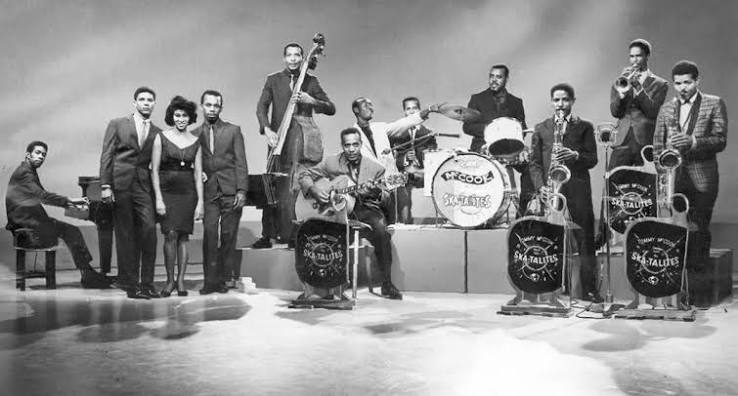
    Ska’s golden age coincided with Jamaica’s independence in 1962. The country was bursting with optimism, and ska became its soundtrack. The Skatalites, formed in 1964, were the premier instrumental band. Featuring trombonist Don Drummond, saxophonists Tommy McCook and Roland Alphonso, and keyboardist Jackie Mittoo, they backed nearly every major vocalist of the era. Their version of “Guns of Navarone”—a theme from a war movie—became a ska classic.

    Vocalists like Derrick Morgan, Desmond Dekker, and Toots Hibbert (of Toots and the Maytals) delivered catchy, socially aware lyrics. Prince Buster, a producer, singer, and DJ who’d started in the sound system wars, released “Al Capone” and “Madness”—songs that would later become touchstones for the 2 Tone movement.

    Studio One and Treasure Isle, run by Dodd and Reid respectively, were the two dominant production houses. Their rivalry pushed the music forward, as each producer tried to outdo the other with harder rhythms, catchier hooks, and more inventive arrangements.

    Going Global: “My Boy Lollipop” and Beyond

    In 1964, a 16-year-old singer named Millie Small recorded “My Boy Lollipop”—a bouncy ska-pop hybrid with a harmonica solo. It shot to #2 on both the UK and US charts. Suddenly, the world was listening to Jamaican music. Small’s success opened the door for other ska acts, even if the international audience often didn’t fully understand the genre’s roots.

    The Skatalites’ “Guns of Navarone” became a hit in the UK, and Desmond Dekker’s “007 (Shanty Town)” (1967) further cemented ska’s global reach. But even as the world caught on, Jamaica was already moving on. By the late 1960s, ska had slowed into rocksteady, a more soulful, bass-heavy sound, and then reggae, which would become Jamaica’s most famous export. Ska wasn’t dead—it was evolving.

    The 2 Tone Revival: Ska Meets Punk

    Ska might have stayed a footnote in music history if not for its resurrection in late-1970s Britain. The 2 Tone movement, named after the record label founded by Jerry Dammers of The Specials, fused ska’s offbeat rhythms with punk’s raw energy and DIY attitude. The Specials, The Selecter, Madness, and The Beat all drew directly from Jamaican ska and rocksteady.

    2 Tone was explicitly multiracial, reflecting the diverse communities of Coventry and London. Its black-and-white checkered flag became a symbol of unity against the racial tensions of Thatcher-era Britain. Songs like The Specials’ “Ghost Town” addressed unemployment and social decay, while Madness brought a pop sensibility that made ska accessible to a mainstream audience.

    The 2 Tone era also introduced a new generation to the original Jamaican artists. Prince Buster’s “Madness” gave the band Madness their name, and The Skatalites’ music was rediscovered by punk fans eager to trace the lineage.

    Third Wave and Beyond: Ska Goes Global

    Ska didn’t stop with 2 Tone. In the 1980s and ’90s, a third wave of ska erupted in North America, blending the genre with punk, pop, and alternative rock. Bands like The Mighty Mighty Bosstones, Reel Big Fish, No Doubt, and Sublime brought ska to a massive audience. No Doubt’s “Just a Girl” (1995) and Sublime’s “What I Got” (1996) were radio staples, and ska-punk became a staple of mid-90s alternative rock.

    Today, ska scenes thrive worldwide—from Japan to Latin America to Eastern Europe. Festivals, tribute bands, and new acts keep the genre alive, and its influence can be heard in pop, punk, and electronic music. The offbeat skank, once a local innovation, is now a global musical language.

    The Legacy of Ska

    Ska’s greatest legacy is its role as the foundation of Jamaican popular music. Without ska, there would be no rocksteady, no reggae, no dub. Bob Marley, Peter Tosh, and the Wailers—all built on the rhythmic innovations of ska’s pioneers. And through 2 Tone and third wave, ska has remained a vital, evolving genre that speaks to new generations.

    But ska’s impact goes beyond music. It was born in a moment of national optimism, when a colonized island was becoming a sovereign nation. Its sound reflected the pride, energy, and creativity of that transition. That’s why it still resonates today—not as a nostalgic artifact, but as a living proof that great music can come from anywhere, even a converted bakery in Kingston.

    Ska started as a local solution to a local problem—how to keep dancers moving in Kingston’s sound system parties. It grew into a global phenomenon that shaped the sound of modern music. From its origins in late-1950s Jamaica to its punk-infused revivals, ska’s offbeat rhythm and horn-driven melodies have proven endlessly adaptable. It’s a story of creativity born from limitation, and a reminder that the most revolutionary sounds often come from the most unexpected places.

    Summary

    • Ska emerged in Jamaica in the late 1950s, with its golden age from 1962 to 1966, as a direct precursor to rocksteady and reggae.
    • The genre’s defining feature is the offbeat “skank” rhythm, played on guitar or piano, combined with prominent horns and a fast, danceable tempo.
    • Key figures included producers Coxsone Dodd and Duke Reid, the instrumental band The Skatalites, and vocalists like Millie Small and Desmond Dekker.
    • Millie Small’s “My Boy Lollipop” (1964) brought ska to international charts, but the genre evolved into rocksteady and reggae by the late 1960s.
    • Ska saw major revivals with the UK’s 2 Tone movement in the late 1970s (The Specials, Madness) and the third-wave ska scene in the 1990s (No Doubt, Sublime), and it continues to thrive globally.

    FAQ

    Q: What does “ska” mean?
    A: The name likely comes from the “ska” sound of the guitar or piano chopping on the offbeat, though some trace it to a greeting used by bassist Cluett Johnson.

    Q: How is ska different from reggae?
    A: Ska is faster (120–140 BPM) and emphasizes the offbeat with a walking bass line, while reggae is slower, more laid-back, and often focuses on the “one drop” rhythm with heavier bass.

    Q: Who were the most influential ska artists?
    A: The Skatalites, Prince Buster, Derrick Morgan, Desmond Dekker, Toots and the Maytals, and Millie Small are among the most influential early ska acts.

    Q: Why did ska fade out in the late 1960s?
    A: Ska evolved into rocksteady, which slowed the tempo and added more soul influences, and then into reggae, as Jamaican musicians continued to innovate.

    Q: Is ska still popular today?
    A: Yes, ska has a global following, with active scenes in Japan, Latin America, Europe, and North America, and it continues to influence modern music genres.