
Tag: linguistics

  • The Whistled Language That Refuses to Die: How Silbo Gomero Beat Extinction

    The Whistled Language That Refuses to Die: How Silbo Gomero Beat Extinction

    On the rugged island of La Gomera, where deep ravines slice the land into natural fortresses, a conversation can travel three kilometers without a phone line or a shout. It rides on a whistle, cutting through the silence with two tones and a handful of interruptions that somehow carry whole sentences in Spanish. This is Silbo Gomero, a whistled form of speech that has outlived its practical need and found a second life as a symbol of identity.

    For centuries, this was the island’s version of a text message: shepherds on one ridge warning of danger, farmers coordinating harvests across valleys, neighbors sharing news without walking hours. Then roads came, telephones arrived, and Silbo nearly vanished. Today, it is a UNESCO-protected treasure, taught in every primary school on the island, and studied by neuroscientists as a window into how the brain processes language itself.

    A Language Born from Geography

    La Gomera is one of the smallest Canary Islands, but its terrain is brutally vertical. Barrancos—steep, narrow ravines—cut the island into isolated pockets where foot travel could take hours over treacherous paths. In this landscape, a voice carried only a few hundred meters, but a well-aimed whistle could travel up to five kilometers, bouncing off canyon walls.

    The indigenous Guanche people, who arrived from North Africa centuries before the Spanish conquest, likely developed whistling as a practical tool. After the Spanish took over in the 15th century, the practice adapted: instead of whistling in Guanche, speakers began whistling in Spanish, transforming the spoken language into a series of pitch contours that could traverse the ravines.

    Silbo Gomero is not a separate language—it is Spanish re-encoded into whistled tones. Vowels and consonants are reduced to just a few distinct pitch patterns: two vowel qualities and four to five consonant contrasts. The result sounds like a bird’s song to the untrained ear, but to a fluent whistler, it carries the full meaning of spoken Spanish.

    The Mechanics: How Does Whistling Carry Language?

    To understand Silbo, imagine stripping Spanish down to its bare essentials. Spoken Spanish has five vowels and around twenty consonants; Silbo reduces these to a simpler system. Vowels are distinguished by pitch level—high, low, or falling. Consonants are marked by interruptions or pitch breaks. For example, a continuous whistle might represent a vowel, while a sharp cut signals a consonant like ‘p’ or ‘t’.

    Crucially, Silbo is not a code where each word has a fixed whistle. Instead, it re-encodes the phonology of Spanish. Listeners decode the whistled signal using context and redundancy, just as they would with mumbled speech or a noisy phone line. This is why Silbo can be learned as a natural language skill rather than memorized as a secret cipher.

    In 2005, researchers led by Manuel Carreiras published a landmark study in Nature showing that Silbo Gomero activates the same left-hemisphere language areas of the brain as spoken Spanish. When fluent whistlers listened to Silbo, their brains processed it as language, not as music or ambient noise. This finding reshaped scientific understanding of what counts as language—proving that vocal cords are not essential for linguistic processing.

    The Decline: Roads, Telephones, and Shame

    Silbo Gomero thrived for centuries because it was essential. But in the mid-20th century, the island began to modernize. Roads connected previously isolated villages, making foot travel less necessary. Telephones arrived, allowing real-time conversation without stepping outside. And tourism began to reshape the economy, drawing younger generations away from the rural livelihoods of shepherding and farming that had sustained whistling.

    Just as importantly, Silbo became stigmatized. Younger islanders associated it with an older, poorer way of life. Whistling in public was seen as rustic or backward, and many parents stopped teaching it to their children. By the 1970s, Silbo Gomero was on the brink of extinction, with only a handful of elderly speakers still using it regularly.

    The Revival: Schools and UNESCO

    The turnaround began in the 1980s, when a group of educators and linguists—most notably Isidro Ortiz—argued that Silbo was not a folkloric relic but a valuable cultural asset. They lobbied the regional government to introduce Silbo into the school curriculum, and in 1999, it became a mandatory subject in all primary schools on La Gomera.

    This was a radical experiment: teaching a whistled form of speech as a second language to children who had grown up with telephones and paved roads. The program aimed not just to preserve Silbo but to give it a new generation of speakers. Today, over 3,000 students have gone through the Silbo curriculum, and estimates suggest that between 20,000 and 30,000 residents now have some level of understanding, though fluent, active whistlers remain in the low thousands.

    UNESCO recognition added another layer of protection. In 2005, Silbo Gomero was proclaimed a Masterpiece of the Oral and Intangible Heritage of Humanity, and in 2009, it was inscribed on the Representative List. This global acknowledgment shifted local perception: what had once been a source of embarrassment became a source of pride. The Spanish government and the Canary Islands’ regional authorities now grant Silbo legal protection, and it is officially classified as an intangible cultural heritage asset.

    What Silbo Teaches Us About Language and Identity

    Silbo Gomero is one of around seventy documented whistled languages worldwide—from the whistled Turkish of Kuşköy to the Mazatec whistled speech in Mexico—but it is the most studied and best understood. Its survival offers a glimpse into how language adapts to extreme environments and how communities can actively reclaim a fading tradition.

    For linguists, Silbo is a natural experiment in language universals. It shows that the human brain can process linguistic information through channels other than the voice, as long as the structural elements of language are preserved. For the people of La Gomera, Silbo is a link to their Guanche ancestors and to a rural past that modernization erased. It is a reminder that even in an age of instant global communication, a whistle across a canyon can still say something that a phone call cannot.

    Despite its revival, Silbo remains vulnerable. Linguists note that the number of truly fluent whistlers is small, and the school program teaches a standardized version that may differ from the traditional dialects once spoken in different valleys. The challenge now is not just to keep Silbo alive in classrooms but to ensure it is used in daily life, not just performed as a cultural show.

    The Future: A Whistle in the Digital Age

    In 2024, Silbo Gomero faces a new set of pressures and opportunities. Tourism brings thousands of visitors each year, and Silbo has become a popular attraction, with demonstrations in San Sebastián de La Gomera and other towns. Some worry that this commodification could reduce Silbo to a folkloric performance, stripped of its original practicality.

    But there are also signs of adaptation. Social media and video platforms have allowed young whistlers to share their skills with a global audience, and researchers have used smartphones to document and analyze the acoustic properties of Silbo in unprecedented detail. The island’s schools continue to teach Silbo to each new cohort, and the government has invested in community workshops and events.

    Whether Silbo Gomero will survive the next century depends on whether it can evolve from a necessary tool into a chosen one. As one local teacher put it, “We don’t need to whistle to communicate anymore, but we choose to whistle to remember who we are.” In that choice lies the real hope for this forgotten language.

    Silbo Gomero is more than a quirky remnant of a pre-technological past. It is proof that human communication can take astonishing forms when pushed by necessity—and that a community can deliberately rescue a language from the brink of silence. As long as there are children on La Gomera learning to whistle their names across a ravine, the oldest voice of the island will keep echoing.

    Summary

    • Silbo Gomero is a whistled form of Spanish used on La Gomera island, capable of traveling up to 5 km.
    • It encodes Spanish phonology into pitch patterns and interruptions; not a separate language.
    • In 2005, Nature research proved it activates brain language areas, not just auditory regions.
    • Decline in mid-20th century due to roads, phones, and stigma; revived through school programs since 1999.
    • UNESCO recognized it in 2009; now a cultural identity symbol, though still vulnerable.

    FAQ

    Q: Is Silbo Gomero a unique language?
    A: No, it is a whistled adaptation of Spanish, reducing the language to a few pitch contours and interruptions. It is one of about 70 documented whistled languages worldwide.

    Q: How far can a Silbo whistle be heard?
    A: Under optimal conditions, a Silbo whistle can be understood up to 3–5 kilometers away, far beyond the range of a shout.

    Q: Why is Silbo Gomero taught in schools?
    A: To revive a dying practice, Silbo was made a mandatory subject in all La Gomera primary schools in 1999, teaching children the whistled language as a second language.

    Q: What did the Nature study find about Silbo?
    A: In 2005, researchers showed that fluent whistlers process Silbo in the same brain areas as spoken language, proving it is a true linguistic system, not just a code or music.

    Q: Is Silbo Gomero in danger of dying out again?
    A: While official protection and school programs have boosted numbers, fluent active whistlers remain few, making it still vulnerable despite a strong revival.

  • The Great Vowel Shift: How English Spelling Got Weird


    Why is English spelling such a mess? Why do we write ‘knight’ but say ‘nite,’ and why does ‘ough’ have at least six different pronunciations? The answer lies in a seismic event that occurred between 1400 and 1700, when the pronunciation of English underwent a radical transformation. This was the Great Vowel Shift, a period when all the long vowels in English systematically changed their sounds but the spelling, already being standardized by the new printing press, stayed frozen in time.

    The result is a language where the written word often bears little resemblance to the spoken one. Understanding the Great Vowel Shift doesn’t just explain spelling irregularities; it reveals how language evolves, how social forces shape speech, and why English speakers today are still grappling with the consequences of a change that happened centuries ago.

    A Phonetic Earthquake

    Imagine you’re a Londoner in the year 1400. You pronounce the word “bite” to rhyme with “beet,” “house” to rhyme with “moose,” and “name” to rhyme with “calm.” This wasn’t a regional quirk—it was standard Middle English. But over the next three centuries, something extraordinary happened: every long vowel in the language shifted its pronunciation. The tongue moved higher and further forward in the mouth, creating a chain reaction that transformed the sound of English forever.

    This wasn’t a single event but a gradual, rolling change. By the time Shakespeare was writing in the late 1500s, the shift was still in progress, which is why his puns and rhymes often confuse modern readers. For example, in “Romeo and Juliet,” the line “Come, night, come Romeo, come thou day in night” only works if “night” and “day” have shifted enough to create a near-rhyme, but not exactly as we speak today.

    The Chain Reaction

    The Great Vowel Shift is often described as a chain reaction, but linguists still debate the exact mechanism. One theory, the “pull chain,” suggests that the high vowels /iː/ (as in “beet”) and /uː/ (as in “moon”) began to diphthongize first, turning into two-part sounds like /aɪ/ and /aʊ/. This created a gap in the vowel system, which then “pulled” the other vowels up to fill it. The alternative “push chain” theory argues the opposite: lower vowels moved up first, “pushing” the high vowels out of place.

    Regardless of which theory is correct, the result was a systematic shift. The vowel in “meet” moved from /eː/ to /iː/, while “meat” moved from /ɛː/ to /iː,” merging the two words. “Stone” went from /ɔː/ to /oʊ/, and “name” from /aː/ to /eɪ/. These changes didn’t happen overnight—they rippled through dialects and generations, but by 1700, the shift was complete for standard southern English.

    Why Spelling Didn’t Follow

    Here’s the crux of the problem: while pronunciation was shifting, spelling was being locked in. The printing press arrived in England in 1476, courtesy of William Caxton, and with it came a push for standardized spelling. Printers, many of them from the Low Countries, made choices that often reflected Middle English pronunciation, not the emerging modern sounds. By the time dictionaries like Samuel Johnson’s in 1755 cemented these spellings, the gap between the written and spoken word had become permanent.

    So, when we write “knight,” we’re preserving a sound that once had a pronounced /k/ and /x/ (like the “ch” in “loch”). The word “though” retains the “gh” from a time when it was pronounced as a guttural sound. The Great Vowel Shift didn’t change these spellings—it just made them archaic.

    The Causes: A Mystery Wrapped in a Vowel

    Why did this happen? Linguists have proposed several theories, but there’s no consensus. The Black Death (1348–49) and the Hundred Years’ War led to a resurgence of English over French, and London’s growing population mixed people from different dialect regions. Some scholars suggest that speakers hypercorrected toward prestigious forms, while others point to internal drift—the idea that languages naturally change over time without any external trigger.

    One thing is clear: the shift wasn’t a top-down decree but a grassroots phenomenon. It started in the south of England and gradually spread, affecting different regions at different times. This explains why some dialects, like those in northern England, retain older vowel sounds today.

    The Legacy: A Global Mismatch

    As England colonized the world, the new pronunciation spread to North America, Australia, and beyond, but the spelling had already been frozen. This is why English is notorious for its irregular spelling, and why every learner of English has to memorize the exceptions. The mismatch is so profound that it has sparked centuries of spelling reform movements. Benjamin Franklin proposed a new alphabet, Noah Webster simplified some spellings (like “color” for “colour”), and George Bernard Shaw left money in his will for a phonetic alphabet competition. Despite these efforts, the crazy spelling persists, a testament to the power of historical accident.

    The Great Vowel Shift in Modern English

    You don’t need to be a historian to see the shift’s fingerprints. Consider the silent ‘e’ at the end of words like “make” and “home.” In Middle English, that ‘e’ was pronounced, but the vowel shift changed the preceding vowel sound, and the ‘e’ became silent. The pattern of long and short vowels in English—like the difference between “bit” and “bite”—is a direct result of the shift. Even the way we pronounce the letter names—”A” as /eɪ/, “E” as /iː/, “I” as /aɪ/—reflects the shifted values.

    So, the next time you wonder why “rough” doesn’t rhyme with “through,” remember the Great Vowel Shift. It’s not just a quirky historical footnote; it’s the reason English spelling is a living fossil, preserving the sounds of a bygone era.

    The Great Vowel Shift is a reminder that language is never static. It changes under the influence of social, political, and even economic forces, often leaving behind a trail of outdated spellings and confusing pronunciations. For English speakers, the shift is not just a historical curiosity—it’s the very reason our spelling system seems so illogical. Yet, in that chaos lies a fascinating story of how a language evolves, adapts, and ultimately, survives. The vanishing vowels didn’t disappear; they just changed their tune, and we’re still dancing to it today.

    Summary

    • The Great Vowel Shift (1400–1700) systematically changed the pronunciation of all long vowels in English, creating the modern vowel system.
    • Spelling was standardized by the printing press (from 1476) before the shift was complete, freezing pre-shift pronunciations in writing.
    • The shift likely involved a chain reaction, but linguists debate whether it was a “push” or “pull” chain.
    • The result is a deep mismatch between English spelling and pronunciation, leading to centuries of spelling reform attempts.
    • The shift’s legacy is visible in everyday words like “bite,” “house,” and “name,” whose spellings reflect Middle English sounds.

    FAQ

    Q: What is the Great Vowel Shift in simple terms?
    A: The Great Vowel Shift was a major change in the pronunciation of English long vowels that happened between 1400 and 1700. All long vowel sounds moved to different positions in the mouth, but the spelling didn’t change, creating the mismatch we see today.

    Q: Why did English spelling stop matching pronunciation?
    A: Because the printing press introduced standardized spelling in the late 1400s, based on Middle English pronunciation. The vowel shift continued for another two centuries, but by then, spellings were already fixed in print and later in dictionaries.

    Q: When did the Great Vowel Shift start and end?
    A: Most scholars place it between 1400 and 1700, though some suggest it began earlier or ended later. It was a gradual process, not a single event.

    Q: Did the Great Vowel Shift affect all English dialects?
    A: It affected all long stressed vowels, but not all dialects at the same time or to the same degree. Regional dialects, especially in northern England, often retain older pronunciations.

    Q: Why is English spelling so irregular?
    A: The Great Vowel Shift is a major reason, but not the only one. English also borrowed words from many languages (French, Latin, Greek) without fully adapting their spellings, and historical events like the Norman Conquest left a legacy of mixed spelling conventions.

  • Why Do Languages Die? The Science Behind Vanishing Tongues and Revival Efforts

    Why Do Languages Die? The Science Behind Vanishing Tongues and Revival Efforts

    Every two weeks, somewhere in the world, a language falls silent. It might be an elder in a remote village who passes away, taking with them the last fluent words of a tongue that has been spoken for millennia. Or it might be a parent who, hoping for a better future, decides to raise their children in a more dominant language, breaking the chain of transmission that has held for generations. This is not a hypothetical scenario—linguists estimate that 30–50% of the world’s approximately 7,000 languages will be extinct by the end of this century. That’s the loss of thousands of unique systems of thought, culture, and identity.

    But why does this happen? The science behind language death is complex, involving a mix of social, economic, political, and even psychological factors. It’s not simply that languages are ‘weak’ or ‘primitive’ all languages are fully complex and expressive. Rather, languages die when their speakers face overwhelming pressures to shift to another language. Understanding these mechanisms is crucial for efforts to revitalize endangered languages and, in some cases, revive those that have already disappeared.

    The Scale of the Problem

    To grasp the magnitude, consider this: the top 20 languages are spoken by about half of the world’s population, while the bottom 3,500+ languages are spoken by less than 0.1% of humanity. Roughly half of all languages have fewer than 10,000 speakers, and about a quarter have fewer than 1,000. This precarious distribution means that many languages are just one or two generations away from extinction.

    Geographically, language diversity is not evenly spread. Melanesia, particularly Papua New Guinea, is a hotspot with around 840 languages. Sub-Saharan Africa boasts around 2,000. The Americas, especially indigenous communities in Brazil, Mexico, and the US/Canada, hold many endangered tongues. Australia has already lost about 90% of its original 250 languages. The UNESCO categories range from ‘safe’ to ‘vulnerable’ to ‘definitely endangered’ to ‘severely endangered’ to ‘critically endangered’ and finally ‘extinct.’ The most alarming statistic is that only about 10–15% of the world’s languages have adequate documentation—grammars, dictionaries, text corpora. The rest may vanish without a trace, leaving no record of their existence.

    The Core Mechanisms of Language Death

    Intergenerational Transmission Failure

    The single most important factor in language death is simple: if parents stop speaking a language to their children, it will likely die within one or two generations. This is rarely a sudden event but a gradual process of language shift, where a community progressively abandons its heritage language in favor of another. It often starts with certain domains—like school or work—where the dominant language takes over, and then slowly seeps into the home.

    Economic and Social Pressures

    Economic realities often drive language shift. When minority language speakers cannot access jobs, education, or economic opportunity without the dominant language, they have a powerful incentive to switch. Urbanization compounds this: rural communities migrate to cities where the dominant language prevails, breaking up tight-knit language communities. Education systems have historically been a double-edged sword. Many governments actively suppressed minority languages in schools. For example, the US ran English-only boarding schools for Native American children, the Welsh Not in 19th-century Wales punished children for speaking Welsh, and Soviet Russification policies discouraged local languages. These policies created stigma and shame, making speakers feel their language was ‘backward’ or ‘useless.’

    Political and Historical Factors

    Colonialism is a major historical driver. Colonizers imposed their languages, often actively suppressing indigenous ones. Even after independence, many post-colonial states promoted a single national language to unify diverse populations—think Bahasa Indonesia, Swahili in Tanzania, or French in post-revolution France. In extreme cases, genocide and forced displacement have destroyed both a people and their language, as happened with the Tasmanian languages and many Amazonian groups.

    Demographic Vulnerabilities

    Languages with small speaker populations are inherently vulnerable to stochastic events—a disease outbreak, a natural disaster, a conflict—that can wipe out a significant portion of the community. Intermarriage also plays a role: when speakers of a minority language marry outside the community, the household language often shifts to the dominant one, further reducing the number of children exposed to the heritage language.

    Cultural Attitudes and Prestige

    The perceived prestige of a language is a powerful force. Global languages like English, Mandarin, and Spanish carry economic and social prestige, making them attractive to speakers of smaller languages. Conversely, speakers may internalize negative attitudes about their own language, viewing it as a barrier to success. This stigma can lead to what linguists call ‘semi-speakers’ and ‘rememberers’—people who have partial knowledge but do not actively use the language.

    What Happens Linguistically When a Language Dies?

    Language death is not just a social phenomenon; it has concrete linguistic consequences. As a language loses speakers, it often undergoes structural attrition—simplification of grammar, reduction in vocabulary, and regularization of irregular forms. Semantic erosion occurs as domains of life that are no longer discussed in the language, such as traditional ecological knowledge or ceremonial practices, lose their vocabulary. Dying languages increasingly borrow from the dominant language, sometimes becoming a mixed code that is barely recognizable as the original language.

    One famous example is the Eyak language of Alaska. Its last speaker, Marie Smith Jones, died in 2008, taking the language with her. Before her death, linguists worked with her to document as much as possible, but many nuances were lost. Eyak is now considered extinct, though revitalization efforts have attempted to teach it to new learners using the documentation.

    Can Languages Be Saved? The Science of Revitalization

    Despite the grim statistics, there is hope. Language revitalization efforts have shown that languages can be brought back from the brink, and even from extinction. One of the most famous success stories is Hebrew, which was revived as a spoken language in the late 19th and 20th centuries after being used primarily as a liturgical language for centuries. Today, Hebrew is the native language of millions of Israelis. It is the only true ‘revival’ of a language, but other efforts have seen significant progress.

    Cornish, a Celtic language that was declared extinct in the 18th century, has been successfully revived through a movement that now has hundreds of fluent speakers and is used in schools, media, and daily life. Similarly, the Wampanoag language of Massachusetts, which had no native speakers for over a century, has been revived by the Wampanoag community using historical documents and linguistic analysis. Today, a small but growing number of people are learning and using the language.

    Revitalization efforts often follow a common framework. First, documentation is crucial—linguists work with the remaining speakers to record vocabulary, grammar, stories, and songs. This creates a resource for future learners. Second, community involvement is essential. Revitalization only succeeds if the community themselves are motivated and engaged, not if it is imposed from the outside. Third, education programs, including immersion schools, can create new generations of speakers. For example, the Māori language in New Zealand saw a revival through the Kōhanga Reo (language nests) movement, which established preschools where children are immersed in the language.

    The Role of Technology

    Technology has become a powerful ally in language preservation. Apps like Duolingo now offer courses in endangered languages like Navajo and Hawaiian. Social media and video platforms allow speakers to connect and share resources. Digital archives, like the Endangered Languages Project, provide platforms for documentation and collaboration. However, technology alone cannot save a language; it must be accompanied by real-world community building and daily use.

    The Ethics of Language Loss

    Some argue that language loss is a natural process, a kind of linguistic Darwinism where the fittest languages survive. But this viewpoint ignores the fact that language loss is often driven by human choices—colonialism, forced assimilation, and economic pressures—not natural selection. Moreover, languages are not just tools for communication; they are repositories of culture, identity, and knowledge. Each language encodes a unique way of viewing the world, and its loss is a loss for all of humanity. When a language dies, we lose not only words but also the stories, songs, and wisdom of an entire people, accumulated over centuries.

    Conclusion

    The science behind language death is a sobering reminder of the fragility of human culture. Yet, the successes of revitalization efforts show that it is possible to reverse the tide. The key is a combination of documentation, community engagement, and the political will to support linguistic diversity. As the linguist David Harrison once said, ‘When we lose a language, we lose a part of our collective human heritage.’ The question is: will we let that heritage slip away, or will we act to preserve it?

    The disappearance of languages is not an inevitable fate. By understanding the mechanisms that drive language death—from economic pressures to intergenerational transmission failure—we can design better strategies to keep them alive. Revitalization efforts, supported by technology and community passion, have proven that even languages on the brink can be brought back. The challenge is immense, but the stakes are nothing less than the diversity of human thought and culture.

    Summary

    • Approximately 30–50% of the world’s 7,000 languages could be extinct by 2100.
    • The primary cause of language death is the failure of intergenerational transmission, often driven by economic, political, and social pressures.
    • Languages that are lost often undergo structural simplification and semantic erosion before disappearing.
    • Revival efforts, such as those for Hebrew, Cornish, and Wampanoag, show that languages can be brought back from extinction.
    • Technology, including apps and digital archives, plays a growing role in preservation and revitalization.

    FAQ

    Q: What is the difference between language death and language endangerment?
    A: Language death occurs when a language has no living native speakers. Language endangerment is a spectrum, with UNESCO classifying languages from ‘safe’ to ‘vulnerable’ to ‘critically endangered’ based on factors like speaker numbers and intergenerational transmission.

    Q: How many languages die each year?
    A: Estimates vary, but linguists suggest that a language dies roughly every two weeks to every three months, depending on the methodology used.

    Q: Can a dead language be revived?
    A: Yes, though it is difficult. Hebrew is the most famous example, having been revived from a liturgical language to a native spoken one. Cornish and Wampanoag have also been successfully revived using historical documentation.

    Q: Why should we care about language loss?
    A: Languages carry unique cultural knowledge, identity, and ways of viewing the world. Their loss diminishes human diversity and can lead to the loss of traditional knowledge, such as medicinal plants or ecological practices.

    Q: What can individuals do to help preserve endangered languages?
    A: Individuals can support revitalization efforts by learning endangered languages, contributing to documentation projects, and advocating for policies that protect linguistic diversity. Even using an endangered language in daily life or on social media can help.

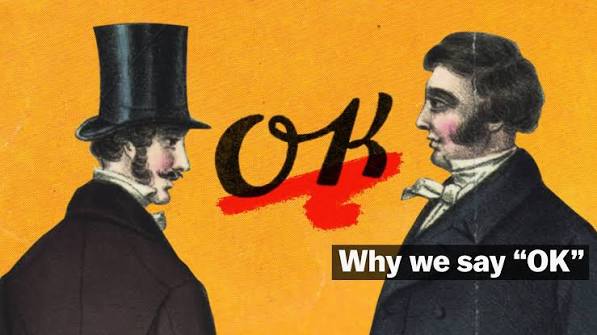
  • How a Misspelled Joke Became the World’s Most Spoken Word: The 185-Year Journey of ‘OK’

    How a Misspelled Joke Became the World’s Most Spoken Word: The 185-Year Journey of ‘OK’

    On March 23, 1839, a Boston newspaper printed a tiny joke that would outlive every political slogan, every internet meme, and every catchphrase of its era. The joke was ‘o.k.’—a playful abbreviation for ‘oll korrect,’ a deliberately misspelled ‘all correct.’ No one laughed for long; the joke itself was forgettable. But the two letters stuck around, spread across continents, and became the most universally understood word on Earth.

    Today, ‘OK’ is spoken or recognized by roughly 90% of the world’s population, according to linguist Allan Metcalf, author of ‘OK: The Improbable Story of America’s Greatest Word.’ It has been borrowed into Japanese, Spanish, Arabic, Hindi, and dozens of other languages. It works as a noun, a verb, an adjective, an adverb, and an interjection. It can mean ‘fine,’ ‘I understand,’ ‘let’s go,’ or simply ‘I’m still here.’

    How did a misspelled joke from 1839 conquer the globe? The answer involves a failed presidential campaign, the telegraph, and a linguistic perfect storm that made ‘OK’ the most successful word ever invented.

    A Joke Born in the Penny Press

    The 1830s were a wild time for American English. The young nation was forging its own identity, and Boston and New York journalists were at the center of a linguistic playground. They invented a fad of playful abbreviations and intentional misspellings—a 19th-century version of internet slang. ‘O.W.’ stood for ‘oll wright’ (all right), ‘N.C.’ meant ’nuff ced’ (enough said), and ‘K.Y.’ was ‘know yuse’ (no use). Most of these died within months.

    But ‘o.k.’ survived. Why? It had two things going for it: it was short, and it was funny. The abbreviation appeared in a satirical article in the Boston Morning Post, and readers got the joke. It was a small, clever wink at the absurdity of taking yourself too seriously.

    The Campaign That Launched a Word

    ‘OK’ might have stayed a niche joke if not for a lucky coincidence in 1840. Martin Van Buren, the sitting president, was running for re-election. His opponents called him ‘Old Kinderhook,’ after his hometown in New York. His campaign seized on the nickname and turned it into a slogan: ‘Vote for OK.’

    The slogan was printed on banners, chanted at rallies, and plastered in newspapers. It was one of the first examples of political branding in a mass media age—a catchy, meme-like hook designed to stick. Van Buren lost the election to William Henry Harrison, but ‘OK’ won a permanent place in the American lexicon. The word had gone from a niche joke to a national catchphrase in under a year.

    The Telegraph Made It Official

    If the campaign made ‘OK’ famous, the telegraph made it essential. In the 1840s and 1850s, telegraph operators needed a quick, unambiguous way to acknowledge messages. ‘OK’ was perfect: two letters, easy to tap in Morse code, and universally understood. It became the standard acknowledgment on transmission lines, and later, a prosign for ‘end of message.’

    The telegraph trained a generation of operators—and the businesses that used them—to rely on ‘OK.’ When the typewriter arrived, ‘OK’ was one of the first words taught in typing classes. When early computers needed a default button, ‘OK’ was there. Each new technology picked up the word and carried it forward.

    Why ‘OK’ Won

    Linguists have spent decades trying to explain why ‘OK’ beat out every other slang term of its era. The answer is a perfect storm of phonetics, visual clarity, and semantic flexibility.

    Phonetically, ‘OK’ is two short, easy sounds that work across almost all language systems. The ‘oh’ and the ‘kay’ are distinct and simple to pronounce, whether you speak English, Japanese, or Swahili. Visually, the two letters are clear and easy to read, even in poor handwriting or on a flickering screen.

    But the real genius of ‘OK’ is its flexibility. It can mean approval (‘That’s OK’), acknowledgment (‘OK, I heard you’), agreement (‘OK, let’s do it’), or understanding (‘OK, I get it’). It can be a noun (‘I got the OK’), a verb (‘She OK’d the plan’), an adjective (‘It’s OK’), an adverb (‘He did OK’), or an interjection (‘OK, let’s go!’). It’s a pragmatic chameleon, adapting to almost any situation.

    The Global Export

    ‘OK’ didn’t just spread—it conquered. American media, technology, and business carried it overseas in the 20th century. Hollywood movies, the internet, and global corporations needed a word that meant ‘yes, fine, understood’ in any context. ‘OK’ fit the bill.

    In Japan, it became オーケー (ōkē), used as a polite acknowledgment in customer service. In Spain and Latin America, it’s ‘okey,’ sometimes with a slightly dismissive edge. In Arabic, it’s أوكي (ōkay), and in Hindi, ओके (oke). In many languages, ‘OK’ is a loanword that needs no translation—it’s simply understood.

    ‘OK’ is also classless, ageless, and borderless. Unlike ‘cool’ or ‘dude,’ it’s not tied to a subculture or a generation. A toddler in Tokyo, a CEO in São Paulo, and a farmer in rural Kenya all recognize it. That universality is why Allan Metcalf calls it ‘the most successful word ever invented.’

    A Word for the Ages

    ‘OK’ has outlived the abbreviations that inspired it, the politicians who popularized it, and the technologies that entrenched it. It’s a small word with a big story—a story that starts with a misspelled joke in a Boston newspaper and ends with a word spoken by billions.

    Next time you type ‘OK’ into a chat box or nod and say ‘OK’ in a meeting, remember: you’re using a piece of American history that conquered the world.

    The story of ‘OK’ is a reminder that language is alive—it grows, spreads, and adapts in ways no one can predict. A joke from 1839 became the world’s most global word, not because it was profound, but because it was useful. And that utility has made it immortal.

    Summary

    • ‘OK’ originated as a humorous abbreviation for ‘oll korrect’ (a misspelling of ‘all correct’) in a Boston newspaper in 1839.
    • Martin Van Buren’s 1840 presidential campaign used ‘OK’ as a slogan, giving it national exposure.
    • The telegraph cemented ‘OK’ as a standard acknowledgment, and later technologies (typewriters, computers) reinforced it.
    • ‘OK’ is now recognized by about 90% of the world’s population, making it the most widely understood word on Earth.
    • Its success is due to phonetic simplicity, visual clarity, and semantic flexibility—it can mean many things in many contexts.

    FAQ

    Q: When was the first recorded use of ‘OK’?
    A: The first recorded use was in the Boston Morning Post on March 23, 1839, as ‘o.k.’ in a satirical article.

    Q: What does ‘OK’ originally stand for?
    A: It stands for ‘oll korrect,’ a deliberate misspelling of ‘all correct’ that was part of a 1830s fad of playful abbreviations.

    Q: Why did ‘OK’ survive while other abbreviations from that era died?
    A: ‘OK’ had phonetic simplicity, visual clarity, and semantic flexibility. It was easy to say, easy to write, and could mean many things, making it more useful than its peers.

    Q: How did the telegraph contribute to the spread of ‘OK’?
    A: Telegraph operators needed a quick, unambiguous acknowledgment, and ‘OK’ was short and easy to send in Morse code. It became the standard, training a generation to use it.

    Q: Is ‘OK’ used in other languages?
    A: Yes, it’s borrowed into nearly every major language, including Japanese, Spanish, Arabic, and Hindi, often as a loanword that needs no translation.

  • The 1839 Joke That Became the World’s Most Useful Word: The Strange Story of OK

    The 1839 Joke That Became the World’s Most Useful Word: The Strange Story of OK

    Steve - Today in History: On March 23, 1839, the term “O.K.” appeared for the very first time in print in THE BOSTON MORNING POST. Used as part of a humorous fad

    On March 23, 1839, the Boston Morning Post printed a sentence that would quietly change the world. It wasn’t a declaration of war or a scientific breakthrough just a two-letter abbreviation buried in a joke. ‘He … would have had the OK if he had succeeded in his object,’ the paper wrote, using “OK” to mean “oll korrect,” a playful misspelling of “all correct.” Nobody could have guessed that this throwaway gag would outlive every newspaper from that era, conquer the globe, and become the most widely understood word in human history.

    Today, “OK” is so ingrained in our lives that we barely notice it. We use it to confirm plans, acknowledge emails, and check if our computers are working (HTTP 200: OK). Astronauts say it to Mission Control. Children learn it before they can tie their shoes. But how did a 19th-century joke become a universal linguistic Swiss Army knife? The answer involves a presidential election, a smear campaign, and a lucky accident of timing.

    A Fad for Misspellings

    In the 1830s, Boston newspapers were a playground for witty editors who competed for readers with inside jokes and playful slang. One of their favorite games was intentional misspelling paired with abbreviations—a bit like today’s internet acronyms (LOL, BRB) but with a literary twist. “OK” stood for “oll korrect,” a deliberately wrong spelling of “all correct.” It was part of a broader fad: newspapers also used “O.W.” for “oll wright,” “K.G.” for “know go,” and “N.C.” for “nuff ced.” Readers who understood these abbreviations were “in the know,” and the jokes signaled sophistication.

    The specific credit for the first “OK” usually goes to Charles Gordon Greene, the editor of the Boston Morning Post, though some scholars suggest a contributor may have written it. The sentence appeared in an article about a group traveling to Providence, and it wasn’t even the main point—just a passing quip. Yet, of all those abbreviations, only “OK” survived. Why? Because it got a lucky break in the 1840 presidential election.

    The Political Boost That Changed Everything

    Martin Van Buren, the incumbent president, was running for re-election. He was born in Kinderhook, New York, and his supporters affectionately called him “Old Kinderhook.” The initials matched the existing “OK” abbreviation, and the Democrats seized the opportunity. They formed “OK Clubs” across New York and other cities, turning “OK” into a rallying cry. It was the first modern political meme—a slogan that fused a joke with a nickname.

    But politics is a rough game. The Whig opposition twisted “OK” into “Out of Kash,” “Orful Katastrophe,” and “Out of Kwick,” referencing financial scandals and Van Buren’s associates. They even spread a false rumor that Van Buren had learned the term from his “old master,” implying he was a slave (he wasn’t), hoping to use the word as a racial slur. Despite losing the election, Van Buren gave “OK” the national platform it needed to stick around.

    The political boost was critical. Without it, “OK” would likely have faded like its siblings “O.W.” and “K.G.” But instead, it entered the American lexicon permanently. By the end of the 19th century, it had spread to telegraphy, where it became the standard acknowledgment signal because it was short, unambiguous, and easy to transmit.

    Why Did “OK” Win the Linguistic Lottery?

    Why did “OK” survive when so many other words faded? The answer lies in three properties: phonetic utility, semantic flexibility, and cultural momentum.

    Phonetic utility: “OK” is incredibly easy to say, hear, and type. It has a crisp, clear sound that cuts through noise, which is why telegraph operators, pilots, and astronauts love it. In 1969, Apollo 11 astronauts used “OK” in communications with Mission Control, cementing its association with competence and precision.

    Semantic flexibility: “OK” can mean agreement (“OK, let’s go”), acknowledgment (“OK, I hear you”), approval (“The boss gave the OK”), or a general state of being fine (“It’s OK”). It works as a noun, verb, adjective, and interjection. That versatility makes it indispensable.

    Cultural momentum: Once “OK” got a boost from the election and telegraphy, it became a self-reinforcing loop. The more people used it, the more useful it became, until it spread to languages with no native “O” or “K” sounds. In Japanese, it’s “ōkē”; in many other languages, it coexists with native equivalents like French “d’accord” or Spanish “vale,” but often wins for its brevity and neutrality.

    The Man Who Proved It

    For decades, people guessed at the origin of “OK.” Some thought it came from a Native American language (Choctaw “okeh”), others from a French mispronunciation of “aux Cayes,” or from a German abbreviation. But in the 1960s, American etymologist Allen Walker Read published his meticulous research, tracing “OK” back to that 1839 Boston Morning Post article. He combed through archives, found the original sentence, and debunked all earlier theories.

    Read’s work is now the gold standard. It’s a reminder that the most familiar words can have surprisingly concrete, documented origins—and that a single lucky joke can change the world.

    So the next time you type “OK” in a text or hear it in a movie, remember its journey: from a Boston newspaper joke, to a presidential campaign slogan, to a telegraph signal, to a global linguistic phenomenon. It survived because it was useful, yes, but also because of a series of accidents—a political nickname, a fad for misspellings, and a need for clear communication. “OK” is proof that sometimes the most profound impact comes from the simplest, most playful of ideas.

    Summary

    • “OK” originated on March 23, 1839, in the Boston Morning Post as part of a fad for intentional misspellings, standing for “oll korrect” (all correct).
    • The 1840 presidential election boosted “OK” when Martin Van Buren’s supporters used it as a nickname for “Old Kinderhook,” forming OK Clubs.
    • Opponents weaponized “OK” with smear interpretations like “Out of Kash” and false racial claims, but it survived and spread.
    • “OK” survived due to its phonetic utility, semantic flexibility, and cultural momentum, aided by telegraphy and later spaceflight.
    • Allen Walker Read’s research in the 1960s definitively traced “OK” to its 1839 source, debunking earlier theories.

    FAQ

    Q: What does “OK” originally stand for?
    A: It stood for “oll korrect,” a deliberate misspelling of “all correct,” used as a joke in a Boston newspaper in 1839.

    Q: Why did “OK” become so popular after 1839?
    A: It got a major boost in the 1840 U.S. presidential election when Martin Van Buren’s supporters used it as a slogan for “Old Kinderhook.” The political exposure gave it a national audience.

    Q: Are there other similar abbreviations from that era?
    A: Yes, there were others like “O.W.” (oll wright) and “K.G.” (know go), but they died out. “OK” survived because of its phonetic clarity, versatility, and the political accident.

    Q: How did “OK” spread to other languages?
    A: It spread through global communication technologies like telegraphy, radio, and later the internet, and because of its simplicity, it was adopted even in languages without native “O” or “K” sounds, like Japanese.

    Q: Was “OK” ever used as a racial slur?
    A: Yes, in the 1840 election, opponents spread a false rumor that Van Buren learned it from his enslaved servant, using it as a smear. But that usage didn’t stick; the word’s positive associations prevailed.

  • The Language of Whistles: How Silbo Gomero and Other Whistled Languages Work

    The Language of Whistles: How Silbo Gomero and Other Whistled Languages Work

    On the rugged island of La Gomera, a shepherd stands on one ridge and whistles a message across a ravine to a neighbor three kilometers away. To the untrained ear, it’s just a bird-like trill. But to a local, it’s a full sentence in Spanish words carried on a single pure tone, shaped by the tongue and lips into meaning.

    This is Silbo Gomero, the most famous whistled language in the world. It’s not a separate tongue but a clever acoustic trick: Spanish phonemes replaced by whistled pitches and glides. And it’s just one of dozens of whistled languages found from the Turkish Black Sea coast to the mountains of Mexico. They all solve the same problem how to communicate over distances where shouting fails and they do it with remarkable efficiency.

    What Exactly Is Silbo Gomero?

    Silbo Gomero (literally “Gomeran whistle”) is a whistled form of Spanish used on La Gomera, one of Spain’s Canary Islands. It’s a phonological replacement, not a separate language. Speakers “translate” Spanish words into whistles that mimic the vowels and consonants of spoken Spanish. The whistle itself is a single frequency carrier, modulated by the shape of the mouth, tongue, and lips the same articulatory gestures used in speech, but without vocal cord vibration.

    The result is a system that reduces Spanish’s roughly 24 phonemes to just 4 “vowel” pitches and 4 “consonant” shapes (some analyses say 2 vowels and 4 consonants). That makes it highly redundant and context-dependent. Listeners rely on word order, predictability, and the situation to fill in the gaps. Untrained ears hear only a whistle; trained ears hear sentences.

    Why Whistle at All?

    La Gomera is carved by deep barrancos (ravines) and steep valleys. Walking between them can take hours; shouting across them is useless. But a whistle cuts through the air. Whistles are pure tones with a narrow bandwidth, which carry much farther than the broad-frequency noise of shouting, especially in wind or across open valleys. The human ear is also most sensitive in the 2–4 kHz range, where most whistled languages operate. And whistling takes far less air than shouting, so you can sustain a long message.

    Distances of 3 to 5 kilometers (roughly 2 to 3 miles) are common in Silbo Gomero. That’s why the practice likely originated with the Guanche, the Berber-derived indigenous people of the Canary Islands, long before the Spanish arrived in the 15th century. Early chroniclers noted the Guanches whistling across ravines. After the conquest, the whistle was adapted to Spanish, and it survives today as a unique blend of ancient practice and modern language.

    How the Whistle Encodes Speech

    Whistled languages are not codes like Morse. They are speech surrogates that encode the phonology of the spoken language, not its spelling. They preserve prosody (rhythm, intonation) and syllable structure, so speakers of the base language can learn to hear the words.

    For vowels, Silbo Gomero uses distinct pitches: high, mid, low, and sometimes a glide. For consonants, it uses interruptions or transitions in the whistle—rising or falling glides, breaks, or changes in airflow. This is enough to distinguish, say, /p/ from /b/ in context, even if the acoustic signal is far simpler than full speech.

    Tonal languages take a different route. In Mazatec (Oaxaca, Mexico) or Hmong (Southeast Asia), whistlers encode the tones directly—the whistle pitch mimics the tone contour of each syllable. Non-tonal languages like Spanish, Greek, and Turkish instead whistle vowel quality and consonant articulation indirectly. Either way, the system works because the brain is remarkably good at filling in missing information when given a predictable context.

    Other Whistled Languages Around the World

    Silbo Gomero is the most famous, but it’s far from alone. Whistled languages exist on every inhabited continent, though they’re rare—fewer than 100 documented cases, with many extinct or endangered. They tend to arise in mountainous, forested, or island terrain where long-distance vocal communication is inefficient.

    • Turkish “kuş dili” (bird language): Used in the Black Sea region village of Kuşköy, this whistled Turkish was UNESCO-listed in 2017. It’s still used for everyday communication, from market prices to local news.
    • Whistled Greek: In the village of Antia on Evia island, a whistled form of Greek survives, though it’s now nearly extinct. Only a few elderly speakers remain.
    • Whistled French: In the Aas valley of the French Pyrenees, a whistled French once existed but is now gone.
    • Mazatec whistled speech: In Oaxaca, Mexico, the tonal Mazatec language is whistled for long-distance communication. Here, the whistle carries the tone, making it directly intelligible to speakers.
    • Pirahã: This Amazonian language is famously tonal and is also hummed and whistled by speakers, though it’s not a “whistled language” in the same sense—it’s a full language with multiple channels.
    • Chepang (Nepal) and Hmong (Southeast Asia): Both use whistled forms for courtship and long-distance calls.

    The fact that these languages arise independently on different continents suggests that whistling is a natural solution to a universal human problem: how to be heard across distance.

    The Cultural Life of Silbo Gomero

    Silbo Gomero is more than a communication tool—it’s a marker of local identity on La Gomera, a source of pride, and a living link to the island’s past. Shepherds, farmers, and older residents still use it daily. It’s also a tourist attraction, with demonstrations and classes for visitors.

    Since 1999, Silbo Gomero has been mandatory in local schools, taught as part of the curriculum to ensure its survival. UNESCO recognized it as a Masterpiece of the Oral and Intangible Heritage of Humanity in 2009 (proclaimed earlier in 2005). The listing brought funding and awareness, but also raised questions about authenticity: can a tradition survive when it becomes a school subject and a spectacle?

    So far, the answer seems to be yes. Annual competitions and demonstrations keep it alive, and a new generation of speakers is learning to whistle as naturally as they learn to speak. The UNESCO designation has also inspired other communities, like Kuşköy, to seek similar recognition for their own whistled languages.

    Why Whistled Languages Matter

    Whistled languages are not curiosities—they’re windows into how the human brain processes language. They show that the link between sound and meaning is flexible, and that the same linguistic structures can be carried by very different acoustic signals. They also remind us that language is a adaptive tool, shaped by the environment as much as by the mind.

    In a world of smartphones and instant messaging, whistled languages might seem obsolete. But on La Gomera, a shepherd still whistles across a ravine because it’s faster than texting and more reliable than a phone signal. And in Kuşköy, villagers whistle because it’s part of who they are. These languages are not just relics—they’re living proof that human communication is as varied as the landscapes we inhabit.

    The next time you hear a whistle in a quiet valley, listen closer. It might be a conversation—a sentence carried on a pure tone, shaped by the same tongue and lips that form words. Silbo Gomero and its cousins are a testament to human ingenuity: simple, elegant, and perfectly adapted to the places where they evolved. They remind us that language is not just what we speak, but how we make ourselves heard.

    Summary

    • Silbo Gomero is a whistled form of Spanish used on La Gomera, not a separate language, but a phonological replacement of speech sounds.
    • It works by using a single-frequency whistle modulated by mouth and tongue position to mimic vowels and consonants.
    • Whistles carry farther than shouting because they are pure tones in the 2–4 kHz range where hearing is most acute.
    • Whistled languages exist worldwide, including Turkish kuş dili, Mazatec, and whistled Greek, but many are endangered.
    • Silbo Gomero is taught in schools since 1999 and UNESCO-listed since 2009, ensuring its survival as a cultural heritage.

    FAQ

    Q: Is Silbo Gomero a separate language?
    A: No, it’s a whistled form of Spanish. Speakers “translate” Spanish words into whistles that mimic the phonology, so it’s intelligible to Spanish speakers who learn the system.

    Q: How far can a whistle carry?
    A: On La Gomera, whistled messages can travel 3–5 kilometers (2–3 miles) across ravines, thanks to the pure tone and the ear’s sensitivity to that frequency range.

    Q: Can anyone learn to whistle a language?
    A: Yes, with practice. Silbo Gomero is taught in schools on La Gomera, and courses are available for visitors. It requires learning to map speech sounds to whistle pitches and glides.

    Q: Why do whistled languages exist?
    A: They arise in terrain like mountains or islands where walking is slow and shouting doesn’t carry. Whistling is more efficient for long-distance communication.

    Q: Are whistled languages endangered?
    A: Many are. Only a few, like Silbo Gomero, have active revitalization efforts. Others, like whistled Greek, have only a handful of elderly speakers left.

  • The Last Speakers: What We Lose When a Language Dies

    The Last Speakers: What We Lose When a Language Dies

    Every two weeks, somewhere on Earth, a language falls silent. It might be a grandmother in the Andes, a fisherman in the Andaman Islands, or a child in Alaska who never learned the tongue of their ancestors. With that voice, a unique way of seeing the world—centuries of knowledge, stories, and songs—fades into history. This is the quiet crisis of language extinction, a phenomenon that threatens nearly half of the world’s 7,000 languages. But it’s not just about words; it’s about the cultures, identities, and wisdom they carry. In this article, we explore why languages die, what we lose when they do, and how some communities are fighting to bring them back.

    The Scale of the Crisis

    Linguists estimate that 40–50% of the world’s approximately 7,000 languages are endangered. Some projections warn that up to 90% could disappear by the end of this century. The United Nations Educational, Scientific and Cultural Organization (UNESCO) lists over 2,500 languages as vulnerable, definitely endangered, severely endangered, or critically endangered. The numbers are stark: 96% of the world’s languages are spoken by only 3% of the population. That means a tiny fraction of humanity carries the vast majority of linguistic diversity.

    Geographically, the crisis is concentrated in regions with high indigenous populations and historical colonization. Papua New Guinea alone has over 800 languages, many with fewer than 1,000 speakers. Australia is a particularly stark case: of about 250 Aboriginal languages spoken at European contact, only around 13 are still acquired by children today. In North America, of an estimated 300+ indigenous languages spoken pre-contact, fewer than 35 are still being learned by children.

    Why Languages Die

    Languages don’t just fade away; they are often actively suppressed. Colonization and forced assimilation have played a devastating role. In the United States, Canada, and Australia, boarding schools and residential schools punished indigenous children for speaking their native languages, sometimes physically. The goal was to erase cultural identity, and it largely succeeded.

    Economic pressure is another major driver. Parents choose to raise their children in dominant languages like English, Spanish, or Mandarin because they offer access to education, jobs, and social mobility. When a language is seen as a barrier to success, it is often abandoned. Urbanization and migration also break down the close-knit communities where languages are passed down. As people move to cities, they adopt the dominant language, and the old tongue is left behind.

    Media and technology further entrench the dominance of major languages. Television, the internet, and digital interfaces are overwhelmingly in a few global languages, making it harder for minority languages to survive in the modern world. Even climate change plays a role: environmental disruption forces communities to relocate, severing their ties to traditional lands and lifeways, which are often intimately linked to language.

    What Is Lost When a Language Dies

    When a language dies, it’s not just words that disappear. Each language is a unique lens on the world, encoding distinct ways of categorizing time, space, kinship, nature, and spirituality. For example, the Guugu Yimithirr people of Australia use absolute cardinal directions (north, south, east, west) instead of relative terms like left and right. As a result, speakers have extraordinary spatial orientation, always knowing which way is north, even in unfamiliar buildings.

    The Pirahã language of Brazil has no numbers, no color terms, and no recursion (the ability to embed clauses within clauses). This challenges long-held theories of universal grammar and offers a window into how human cognition can work differently.

    Some words are so culturally specific they resist translation. The Yaghan word mamihlapinatapai is often cited as the most untranslatable word: it describes a look shared between two people, each hoping the other will initiate something both desire. Such terms capture nuances of human experience that are lost when the language disappears.

    Beyond cognition, languages carry traditional ecological knowledge. Indigenous languages often contain detailed information about local flora, fauna, weather patterns, and medicinal plants. This knowledge is irreplaceable for biodiversity conservation. When a language dies, we lose not only a cultural treasure but also a potential source of scientific insight.

    Oral literature, songs, and stories are also embedded in language. Creation myths, genealogies, and historical accounts cannot be fully translated without losing their rhythm, metaphor, and emotional resonance. Language is a living archive of a community’s identity and history.

    The Debate: Does Linguistic Diversity Matter?

    Some argue that language death is a natural process, and that the world is better off with fewer, more efficient languages. But linguists like David Crystal and K. David Harrison counter that linguistic diversity is as important as biodiversity. Each language is a unique repository of human cognition and culture. When one dies, we lose not only a scientific resource but also the cultural heritage of an entire community.

    Moreover, language is deeply tied to identity and well-being. Studies show that indigenous communities that maintain their languages have higher self-esteem and better mental health outcomes. Language revitalization is not just about preserving the past; it’s about empowering the future.

    Success Stories: Bringing Languages Back

    The most remarkable success story is Hebrew. Once a liturgical language used only in religious contexts, it was revived as a living national language in Israel within roughly one generation. Today, it is the native tongue of millions. This proves that language revival is possible, even on a large scale.

    Smaller-scale efforts have also borne fruit. In New Zealand, the Māori kōhanga reo (“language nests”)—immersion preschools founded in 1982—have dramatically increased speaker numbers. Similarly, Hawaiian has grown from about 2,000 speakers in the 1980s (mostly elderly) to over 18,000 today, thanks to immersion schools and university programs.

    In Wales, government policy, bilingual education, and legal protections have boosted speaker numbers from around 500,000 in the 1990s to over 870,000 in the 2021 census. These examples show that with commitment and resources, endangered languages can be revitalized.

    The Last Speakers: Human Stories

    Behind the statistics are human stories. Boa Sr, who died in 2010, was the last speaker of the Bo language of the Andaman Islands. Marie Smith Jones, who died in 2008, was the last speaker of Eyak in Alaska. Cristina Calderón, who died in 2022, was the last full-blooded speaker of Yaghan in Chile. These individuals carried entire worlds within them—worlds that died with them.

    Sometimes, the story is more complicated. The last two speakers of Ayapaneco in Mexico, Manuel Segovia and Isidro Velazquez, reportedly refused to speak to each other for years, a story later disputed but nonetheless illustrative of the personal dynamics that can affect language survival. In Australia, Ned Mandrell, the last speaker of Ngarrindjeri, died in 1974, but revitalization efforts have since revived elements of the language, showing that even after a language is declared “dead,” it can be reborn.

    What Can Be Done?

    Language preservation requires a multi-pronged approach. Documentation is critical: recording native speakers, creating dictionaries, and archiving oral histories. But documentation alone is not enough. Revitalization requires creating new speakers, which means supporting immersion schools, language nests, and community programs. It also requires policy changes, such as recognizing indigenous languages in education and government.

    Technology can help, too. Apps, online courses, and digital archives can make learning materials accessible. Social media can connect speakers and learners across distances. But ultimately, the most important factor is community will. A language lives only if people speak it, and people speak it only if they see value in it.

    Conclusion

    The loss of a language is a loss for all of humanity. It erases a unique way of understanding the world, a repository of knowledge, and a cultural identity. But the story is not over. Around the world, communities are fighting to keep their languages alive, and they are succeeding. The question is whether the rest of us will support them. Every language that survives is a testament to human resilience and the enduring power of culture.

    Summary

    • Approximately 40–50% of the world’s 7,000 languages are endangered, with up to 90% potentially disappearing by 2100.
    • Languages die due to colonization, economic pressure, urbanization, and media dominance.
    • Each language carries unique worldviews, ecological knowledge, and cultural identity that cannot be fully translated.
    • Successful revitalization examples include Hebrew, Māori, Hawaiian, and Welsh.
    • Documentation and community-driven immersion programs are key to saving endangered languages.

    FAQ

    Q: How many languages are endangered?
    A: Linguists estimate that 40–50% of the world’s approximately 7,000 languages are endangered. UNESCO lists over 2,500 languages as vulnerable, definitely endangered, severely endangered, or critically endangered.

    Q: Why should we care about language loss?
    A: Each language is a unique repository of human cognition, culture, and traditional knowledge. Losing a language means losing a way of understanding the world, as well as irreplaceable ecological and scientific insights.

    Q: Can a dead language be revived?
    A: Yes, the most famous example is Hebrew, which was revived from a liturgical language to a living national language. Smaller-scale revivals include Māori, Hawaiian, and Welsh, which have all seen increases in speakers through immersion programs and policy support.

    Q: What is a ‘language nest’?
    A: A language nest is an immersion preschool where children are surrounded by the endangered language from a young age. The concept originated with the Māori in New Zealand and has been successfully adapted in Hawaii and other communities.

    Q: What can individuals do to help preserve endangered languages?
    A: Individuals can support language documentation projects, learn an endangered language themselves, advocate for policy changes, and respect and promote the use of indigenous languages in their communities.