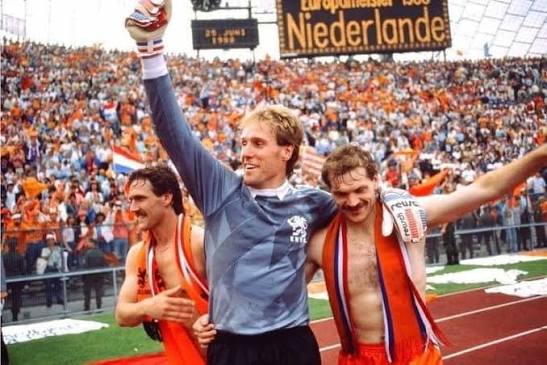
In the 1988 European Cup final, with the score tied at 0-0 after extra time, PSV Eindhoven goalkeeper Hans van Breukelen faced a penalty shootout against Benfica. He saved two spot-kicks, securing the club’s first and only European Cup. But the most revolutionary thing van Breukelen did that night wasn’t in the shootout it was in the 120 minutes before it, when he repeatedly stepped out of his penalty area to intercept long balls and started attacks with short passes to his defenders. At a time when goalkeepers were expected to stay on their line and boot the ball long, van Breukelen was playing like a fifth defender and first attacker. This was no accident; it was a systematic tactical innovation that would reshape the position forever.
Van Breukelen’s style, refined under Guus Hiddink at PSV, was a radical departure from the traditional shot-stopper. He was the first goalkeeper to consistently function as a ‘sweeper-keeper’ at the highest level of European club football, and his influence echoes in the modern game’s most celebrated goalkeepers Manuel Neuer, Ederson, and Alisson all trace their lineage directly to him. This is the story of how a Dutchman turned soccer’s most thankless position into the most tactically influential one on the pitch.
The Goalkeeper as a Liability
For most of football history, goalkeepers were judged on one thing: keeping the ball out of the net. They stayed on their line, caught crosses, and punted the ball upfield. Any excursion outside the penalty area was considered reckless a goalkeeper caught out of position was a liability, not an asset. This was the orthodox view even in the 1980s, when van Breukelen was turning heads in the Netherlands.
The back-pass rule, which allowed goalkeepers to handle deliberate back-passes, reinforced this passivity. Goalkeepers were often the target of time-wasting back-passes, but they rarely used the ball to initiate attacks. They were the last line of defense, not the first line of attack.
Total Football’s Missing Piece
The Netherlands’ ‘Total Football’ philosophy of the 1970s, pioneered by Rinus Michels and Johan Cruyff, emphasized positional interchange and relentless pressing. But even Cruyff’s Ajax and Netherlands teams used goalkeepers like Jan Jongbloed, who were comfortable with their feet but not yet ‘sweeper-keepers’ in the modern sense. Jongbloed was an outfield player converted to goalkeeper, but his role was still primarily that of a shot-stopper who happened to be decent on the ball.
It was van Breukelen, under Guus Hiddink at PSV in the mid-1980s, who combined Total Football’s pressing principles with a genuinely proactive goalkeeping style. Hiddink instructed his keeper to act as a ‘keeper-sweeper’ a term that would later become ‘sweeper-keeper.’ Van Breukelen was tasked with sweeping up balls behind the defense, rushing off his line to intercept through balls, and starting attacks with short passes to his defenders. This required exceptional reading of the game, comfort on the ball, and the courage to make split-second decisions under pressure.
The Mechanics of the Role
Van Breukelen’s positioning was the key. He stood higher up the pitch than traditional keepers, often on the edge of his penalty area or even beyond it. This compressed the pitch, reducing the space for opponents to exploit. When PSV pressed high, van Breukelen was the safety net, ready to clear any ball played over the top. He effectively became a fifth defender, sweeping up loose balls and launching counter-attacks before the opposition could regroup.
His footwork was equally crucial. Van Breukelen was comfortable receiving a back-pass under pressure and playing a short pass to a teammate, rather than hoofing it long. This allowed PSV to maintain possession and build attacks from the back, a tactic that was virtually unheard of for goalkeepers at the time. He was the first playmaker from the goalkeeper position, and his distribution was as important as his shot-stopping.
Euro 88 and the European Cup
Van Breukelen’s finest hour came in 1988. He was the Netherlands’ number one as they won the European Championship, saving a crucial penalty in the final against the USSR. But it was his all-round game that set him apart. He was not just a shot-stopper; he was the team’s first playmaker, often receiving back-passes and distributing short to defenders to maintain possession under pressure. His performance in the final was a masterclass in the sweeper-keeper role, and it helped legitimize the style on the international stage.
The same year, van Breukelen led PSV to the European Cup, saving two penalties in the final shootout against Benfica. That triumph was the culmination of Hiddink’s tactical revolution, and van Breukelen was its on-pitch embodiment. He was named Dutch Footballer of the Year in 1988 and 1989, a rare honor for a goalkeeper, and a testament to his influence on the game.
The Back-Pass Rule and the Acceleration of Change
Ironically, the 1992 rule change that forbade goalkeepers from handling deliberate back-passes made the sweeper-keeper role even more relevant. Goalkeepers were now forced to use their feet more, accelerating the evolution van Breukelen had already begun. The rule change was a response to time-wasting tactics, but it also pushed goalkeepers to become better with the ball at their feet. Van Breukelen was ahead of his time; he had already embraced the role that the rule change would make mandatory for top-level keepers.
The Skeptics and the Rivals
Not everyone was convinced. Critics pointed out that van Breukelen was occasionally caught out of position, and that his style was only viable because PSV dominated the Dutch league. Some argued that the true pioneers were René Higuita of Colombia or Jorge Campos of Mexico, who were more flamboyant but less systematic. Higuita’s scorpion kick and Campos’s acrobatics were attention-grabbing, but neither had the tactical discipline or team-wide impact of van Breukelen.
The debate misses the point. Van Breukelen was not a showman; he was a system player. His role was not about individual flair but about team structure. He was the first to make the sweeper-keeper a coherent, repeatable tactical principle at the highest level of European club football. Higuita and Campos were exceptions; van Breukelen was a rule.
The Modern Legacy
Van Breukelen’s influence is most visible in the modern game’s elite goalkeepers. Manuel Neuer, widely considered the best sweeper-keeper of his generation, has cited van Breukelen as an influence. Ederson and Alisson, the Premier League’s most celebrated keepers, are both products of the same lineage. They are all comfortable with the ball at their feet, quick off their line, and central to their teams’ build-up play. The modern archetype—the goalkeeper as an extra outfield player—owes its existence to van Breukelen’s pioneering work.
In an era when goalkeepers were often the most isolated and thankless players on the pitch, van Breukelen turned the position into the most tactically influential one. He was a revolutionary, and his legacy is written in every goal kick, every sweeping clearance, and every short pass out from the back in the modern game.
Hans van Breukelen didn’t invent the sweeper-keeper out of thin air—he synthesized earlier experiments into a systematic role that transformed the goalkeeper from a passive last line of defense into an active participant in every phase of play. His success with PSV and the Netherlands in 1988 proved that a goalkeeper could be a playmaker, a fifth defender, and a first attacker, all at once. The modern game, with its high press and build-from-the-back philosophy, is unthinkable without him. Van Breukelen didn’t just change the position; he changed how we watch the game.
Summary
- Hans van Breukelen pioneered the ‘sweeper-keeper’ role at PSV in the 1980s, systematically combining shot-stopping with active participation in build-up play.
- His style, refined under Guus Hiddink, allowed PSV to press high and compress the pitch, making him an extra outfielder and first playmaker.
- Van Breukelen’s 1988 European Championship and European Cup victories showcased his all-round game, including a penalty save in the Euro 88 final and two in the European Cup shootout.
- The 1992 back-pass rule change made the sweeper-keeper role more relevant, but van Breukelen was ahead of his time.
- Modern goalkeepers like Manuel Neuer, Ederson, and Alisson trace their lineage to van Breukelen, who redefined the position for the modern era.
FAQ
Q: What exactly is a ‘sweeper-keeper’?
A: A sweeper-keeper is a goalkeeper who actively participates in build-up play, acting as an extra outfield player. They often rush off their line to intercept through balls, clear long passes behind the defense, and distribute the ball short to teammates to maintain possession. This role was pioneered by Hans van Breukelen in the 1980s.
Q: How did van Breukelen differ from earlier goalkeepers like Jan Jongbloed?
A: Jan Jongbloed was an outfield player converted to goalkeeper and was comfortable with his feet, but he was still primarily a shot-stopper. Van Breukelen, under Guus Hiddink, was explicitly instructed to play as a ‘keeper-sweeper’—a systematic tactical role that involved sweeping up balls behind the defense and starting attacks. He was the first to do this consistently at the highest level of European club football.
Q: Why is the back-pass rule relevant to the sweeper-keeper’s evolution?
A: The 1992 rule change forbade goalkeepers from handling deliberate back-passes, forcing them to use their feet more. This accelerated the evolution toward the sweeper-keeper role, but van Breukelen had already embraced it years before the rule change. He was ahead of his time.
Q: Who else was a pioneer of the sweeper-keeper role?
A: Gyula Grosics of Hungary in the 1950s experimented with a similar style, and Italian football had the ‘libero’ goalkeeper concept. René Higuita and Jorge Campos were more flamboyant but less systematic. Van Breukelen was the first to make it a team-wide tactical principle at the highest level of European club football.
Q: How has van Breukelen influenced modern goalkeepers?
A: Manuel Neuer has cited van Breukelen as an influence. Ederson and Alisson are also products of the same lineage. Modern goalkeepers are expected to be comfortable with the ball at their feet, quick off their line, and central to their team’s build-up play—all traits that van Breukelen pioneered.
Leave a Reply