You type “best running shoes for flat feet” into Google, but what you really want is a recommendation from someone who’s tested them on the road, not a list of affiliate blogs. Or you ask ChatGPT to “plan a weekend trip to Portland,” but deep down you want a quirky, off-the-beaten-path itinerary, not a generic list of top attractions.
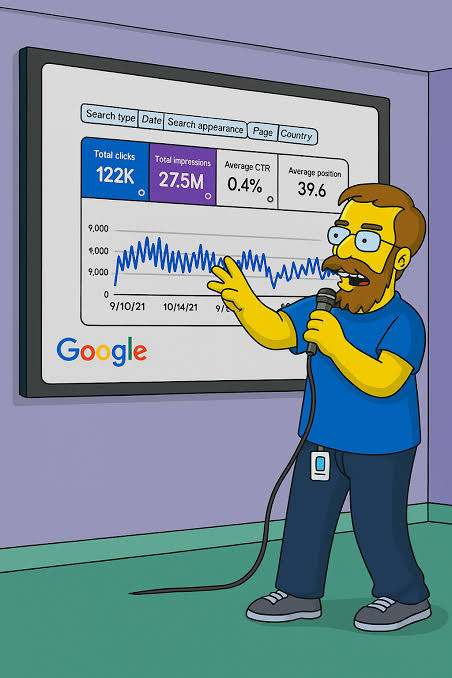
This gap between the words you type and the goal in your head is widening. Search experts call it the “Great Decoupling” the growing separation between the query and the intent behind it. It’s not just a quirk of modern search; it’s a fundamental shift in how we find information, driven by AI, platform fragmentation, and new user habits.
Understanding this shift matters for anyone who creates content, markets a product, or simply wonders why Google sometimes feels out of touch. The old rules of search type keywords, get links, click through are dissolving. In their place, a new ecosystem is emerging where the search engine itself tries to answer your question directly, and where you might not even use a traditional search engine at all.
The Old Contract: Query to Document
For two decades, search worked on a simple model: you typed keywords, and the engine returned a ranked list of links. The implicit contract was that the search engine helped you find a page, and that page fulfilled your intent. Keywords were the raw material, and click-through rate was the primary signal of whether the engine had matched your intent correctly.
This model had its quirks. Users learned to speak “search engine” abbreviating, adding modifiers, and stripping grammar. “Best pizza nyc” replaced “What’s the best pizza place in New York City?” because the former got better results. Intent was inferred from these fragments, and the system worked well enough that Google became a verb.
But the contract had a flaw: it assumed that a list of links was the end product. The actual work of synthesizing information, comparing options, and making decisions was left to you, the user. You had to click, read, compare, and triangulate. The search engine was a librarian, not an advisor.
The New Contract: Answer Engines
Enter large language models. Search engines like Google’s AI Overviews, Bing Copilot, and Perplexity now generate answers directly in the results page. They synthesize information from multiple sources and present a coherent paragraph, complete with citations, instead of a list of blue links.
The contract has changed. The search engine now fulfills intent itself, rather than pointing you to a page that might. This is a profound shift. For many queries — especially simple, factual ones — you no longer need to click anywhere. The answer is right there.
But this creates a tension. For publishers, it means fewer clicks, less traffic, and potentially less ad revenue. If Google answers “what’s the capital of France” without a click, that’s fine. But if it answers “best running shoes for flat feet” with a synthesized summary, the dozens of blogs that spent hours testing shoes lose their visitors.
Google’s own data suggests the effect is mixed. AI Overviews increase clicks for some complex, high-intent queries — because users are more engaged and ask follow-ups — but decrease clicks for simple informational queries. The net impact on traffic is still being debated, but the anxiety among SEO professionals is real.
The Fragmentation of Intent
At the same time, users are not relying on a single search engine. The “Great Decoupling” is also a story of platform fragmentation. Different intent types now route to different platforms:
- Transactional intent — buying something — often starts on Amazon or a brand’s site directly, not Google.
- Navigational intent — getting to a specific site — is handled by typing a URL or using browser autocomplete.
- Informational intent — learning facts — might go to Wikipedia, YouTube, or a Q&A site like Reddit.
- Discovery or exploratory intent — finding something new — increasingly happens on TikTok, Instagram, or Pinterest.
- Local intent — finding a nearby restaurant or store — goes to Google Maps, Yelp, or Apple Maps.
For Gen Z, this fragmentation is even more pronounced. Google’s own internal research reportedly found that around 40% of young users prefer TikTok or Instagram for discovery over Google Search. Reddit and TikTok now rank among the top “search engines” for this demographic, even though they’re not traditional search engines at all.
The result is that no single engine sees the full picture of a user’s intent. A user might search TikTok for product recommendations, then Amazon for price, then Reddit for honest reviews, then Google for a specific fact. Each platform sees only a fragment, and the intent is decoupled from any single query.
The Rise of Implicit Intent
Modern interfaces are also moving beyond explicit queries. Multimodal search lets you point your camera at an object and ask “what is this?” — no text needed. Voice search allows for natural, conversational phrasing. Predictive search — autocomplete, “people also ask” — shapes your query before you even finish typing.
And then there are AI agents. Tools like ChatGPT Search and web-enabled Claude represent a new category: “answer engines.” You state a goal — “plan a weekend trip to Portland” — and the agent decides what to search for, synthesizes results, and even performs multi-step tasks. The query step might disappear altogether.
This shift from explicit to implicit intent has profound implications. Search engines can infer what you want from context, but they can also get it wrong. When the engine synthesizes an answer, you’re getting one model’s interpretation, not a range of sources. This can create “filter bubbles” where the engine’s synthesis replaces diverse perspectives, and you might not even realize the trade-off.
What This Means for You
If you’re a content creator, marketer, or business owner, the Great Decoupling changes the rules of the game. Traditional SEO — optimizing for keywords and backlinks — is no longer sufficient. You need to optimize for being cited by AI systems, and for appearing where your audience actually searches, whether that’s TikTok, Reddit, or an AI chat interface.
For users, the shift is a double-edged sword. On one hand, you get faster, more direct answers. On the other, you may lose the serendipity of browsing multiple sources, and you must be more aware of the biases and limitations of AI-generated summaries.
The Great Decoupling is not a temporary trend; it’s a structural change in how we find and consume information. Understanding it is the first step to adapting.
The Great Decoupling is reshaping the search landscape, and it’s not going to reverse. The days of the keyword-and-link model are fading, replaced by AI-synthesized answers and fragmented platform usage. For publishers, this means adapting to a world where clicks are scarce and citations matter. For users, it means embracing the convenience of answer engines while staying vigilant about their limitations. The gap between what we type and what we want will continue to widen, but with awareness, we can navigate it.
Summary
- The Great Decoupling describes the growing gap between search queries and the user’s underlying intent.
- Generative AI has shifted search from a link-list model to an answer-engine model, where the engine itself fulfills intent.
- Users now search across multiple platforms (TikTok, Reddit, Amazon) depending on the type of intent, fragmenting the search landscape.
- Implicit intent (via multimodal, voice, and agentic search) is replacing explicit keyword queries.
- This shift has major implications for SEO, content creation, and user behavior.
FAQ
Q: What is the Great Decoupling in search?
A: The Great Decoupling is the widening gap between what users type into a search engine (their query) and what they actually want to achieve (their intent). It’s driven by AI-generated answers, platform fragmentation, and new user behaviors.
Q: Why is search intent becoming harder to match?
A: Because users now have more ways to search and more diverse platforms for different intents. Also, AI can infer intent from context, but it’s not perfect, and the query itself may be vague.
Q: Does the Great Decoupling mean the end of SEO?
A: No, but it means SEO must evolve. Instead of just optimizing for keywords, you need to optimize for being cited by AI and for being visible on multiple platforms where your audience searches.
Q: How does this affect users?
A: Users get faster answers, but they may also get biased or incomplete information from AI summaries. It’s important to check sources and be aware of what the AI might be omitting.
Q: Is Google losing its dominance because of this?
A: Google still holds about 90% of the search market, but its hold on intent fulfillment is slipping as users turn to other platforms for specific types of searches. The Great Decoupling is a shift in user behavior, not just a technical change.
Leave a Reply