For years, the standard playbook for content marketing was simple: write a blog post answering a basic question. “What is a CRM?” “What is cloud computing?” “What is blockchain?” These explainers were the bread and butter of top-of-funnel traffic. But something has changed. Buyers no longer need you to tell them what a CRM is they need you to tell them which CRM to buy. This shift has given rise to a new kind of content: decision-grade content.
Decision-grade content doesn’t just inform; it helps you choose. It’s the difference between a dictionary definition and a comparison matrix. It’s the difference between a Wikipedia entry and a side-by-side feature breakdown. As buyers spend more time researching on their own and less time talking to salespeople, this type of content has become a critical tool for companies that want to win their business.
Why “What Is X?” Content No Longer Cuts It
The internet is drowning in definitional content. Type “What is a CRM?” into Google and you’ll get millions of results, many of them nearly identical. Google’s Helpful Content Update, rolled out in 2022 and refined since, has explicitly de-prioritized thin content that doesn’t add unique value. The result? AI chatbots can now answer these basic questions instantly, making them even less valuable as a differentiator.
More importantly, user behavior has shifted. Forrester reports that 68% of B2B buyers prefer to research on their own, online. Gartner’s 2023 B2B Buying Report found that 77% of buyers say their last purchase was very complex or difficult, and they spend only 17% of their time meeting with potential suppliers. The rest of their time is spent on self-serve content but not the kind that just defines a product category. They’re looking for content that helps them make a decision.
Consider the “messy middle” of the buyer’s journey, a concept Google introduced in 2020. Buyers don’t move in a straight line from awareness to purchase. Instead, they oscillate between exploration (learning about options) and evaluation (comparing those options). “What is X?” content serves the exploration phase. Decision-grade content serves the evaluation phase and that’s where the real value lies.
What Makes Content “Decision-Grade”?
Decision-grade content is engineered to facilitate a specific choice. It’s not just a longer blog post; it’s a different beast altogether. Here are the key differentiators:
- Intent: “What is X?” content aims to educate. Decision-grade content aims to guide a choice. The difference is subtle but crucial. A reader of “What is a CRM?” is asking, “What does this term mean?” A reader of “Best CRM for Small Business 2025” is asking, “Which one should I buy?”
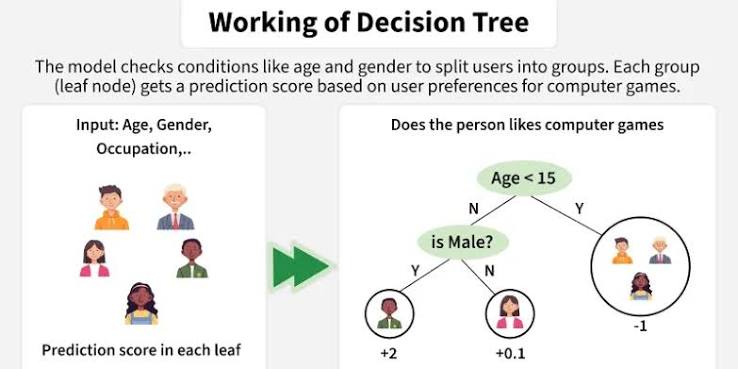
- Structure: “What is X?” content is linear and definitional, often a list of features or benefits. Decision-grade content uses comparative matrices, decision trees, scoring rubrics, and side-by-side feature tables. It’s structured for comparison, not just comprehension.
- Depth: “What is X?” content typically runs 500 to 1,500 words. Decision-grade content is a deep dive, often 2,000 to 5,000 words or more, and sometimes multi-part or interactive. It’s not a quick read; it’s a resource.
- Call-to-Action (CTA): “What is X?” content ends with a soft CTA, like a newsletter signup or a link to a related article. Decision-grade content ends with a hard CTA, like a demo request, a free trial, or a pricing consultation. It’s designed to convert, not just inform.
To put it simply: “What is X?” content is a textbook. Decision-grade content is a buyer’s guide.
How Companies Are Using Decision-Grade Content
Major B2B SaaS companies like HubSpot, Salesforce, Atlassian, and Zapier are restructuring their content libraries to include decision-grade assets. They’re not abandoning “What is X?” content entirely it still has a place in the funnel but they’re investing heavily in comparison pages, buyer’s guides, and vendor evaluations.
Take Zapier, for example. The automation platform has long been known for its educational content, but it now publishes detailed comparisons like “Zapier vs. Make vs. n8n” and “The Best Zapier Alternatives.” These pages don’t just define what automation tools are; they help readers choose between specific options, complete with pricing breakdowns, feature tables, and real-world use cases.
Similarly, G2, Capterra, and TrustRadius have built entire platforms on decision-grade content. Their user reviews and comparison charts are the go-to resources for buyers evaluating software. They didn’t get there by writing “What is project management software?”—they got there by helping people choose between Asana, Trello, and Monday.com.
The metrics shift is telling. Content teams are moving away from measuring traffic and time-on-page and toward measuring pipeline influence, demo bookings, trial sign-ups, and win rates. In other words, they’re asking not “Did people read it?” but “Did it help us close deals?”
The AI Factor
Generative AI has commoditized “What is X?” content. Ask ChatGPT to explain cloud computing, and you’ll get a clear, accurate answer in seconds. That’s great for users, but it means that human-written content needs to offer something AI can’t: judgment, nuance, and decision frameworks.
AI can tell you what a CRM is, but it can’t tell you which CRM is right for your specific business—at least not with the depth and context that a well-researched comparison can provide. That’s the opportunity for decision-grade content. It’s not just data; it’s interpretation.
This doesn’t mean AI is irrelevant to decision-grade content. On the contrary, AI can help generate initial drafts, analyze large datasets, and identify patterns. But the final product needs human expertise to be truly decision-grade. As one content strategist put it, “AI can give you the ingredients, but you need a chef to make the meal.”
The Risks and Criticisms
Decision-grade content isn’t without its challenges. For one, it can feel overly salesy if not balanced with genuine education. If every comparison page is just a thinly veiled pitch for your own product, readers will see through it—and they’ll go elsewhere for trustworthy advice.
There’s also the issue of bias. A vendor writing a comparison between their product and a competitor’s is inherently biased, no matter how hard they try to be objective. That’s why third-party platforms like G2 and TrustRadius have gained so much traction—they’re seen as more impartial.
Some skeptics argue that decision-grade content is just a rebranding of “comparison content” or “buyer’s guides” that have existed for a decade. And they’re not entirely wrong. The term “decision-grade” may be new, but the concept isn’t. What’s changed is the emphasis: companies are now dedicating more resources to this type of content because they’ve realized it’s what actually drives conversions.
Finally, there’s the cost. Decision-grade content is expensive to produce. It requires more research, more expertise, and more ongoing maintenance to stay current. A “Best CRM 2025” page is useless if it’s not updated with the latest pricing and features. This is a long-term investment, not a one-off blog post.
The Ethical Line
There’s a fine line between helping users decide and manipulating them. The ethical approach is to be transparent about your biases, provide balanced information, and let the user make their own choice. The unethical approach is to hide your affiliation, cherry-pick data, and steer users toward your product regardless of fit.
Users are savvy. They know that a company’s own comparison page is likely to favor that company. That’s why transparency is key. If you’re writing a comparison that includes your own product, say so. If you’re using affiliate links, disclose them. Trust is the currency of decision-grade content, and once you lose it, you can’t get it back.
A Practical Example: Choosing a Project Management Tool
Let’s walk through what decision-grade content looks like in practice. Suppose you’re a small business owner looking for a project management tool. You could search for “What is project management software?” and get a definition. But that won’t help you choose between Asana, Trello, and Monday.com.
A decision-grade article would start by acknowledging the complexity: “Choosing a project management tool is a big decision. Here’s how to evaluate your options.” It would then provide a scoring rubric, listing criteria like pricing, ease of use, integrations, and scalability. It would include a comparison table with side-by-side feature breakdowns. It would offer real-world use cases: “If you’re a small team with simple needs, Trello might be enough. If you need advanced reporting, look at Asana or Monday.” And it would end with a clear CTA: “Try a free trial of each and see which fits best.”
That’s decision-grade content. It doesn’t just inform; it empowers.
The Future of Content Strategy
As we look ahead, the trend toward decision-grade content is likely to accelerate. Economic pressure is forcing marketers to justify every dollar, and content that drives revenue will always win over content that doesn’t. The rise of AI will continue to commoditize basic informational content, making it even harder to rank for “What is X?” queries.
But that doesn’t mean “What is X?” content is dead. It still has a role in building brand awareness and capturing users at the very top of the funnel. The key is to use it strategically—and to recognize that its primary value is not in driving conversions but in setting the stage for decision-grade content further down the funnel.
The shift from “What is X?” to “Which X should I pick?” is a fundamental change in how we think about content. It’s a move from quantity to quality, from traffic to conversions, from education to empowerment. For companies that embrace it, the payoff is clear: higher engagement, more leads, and ultimately, more sales. But it requires a commitment to depth, transparency, and ongoing maintenance. In a world where buyers are overwhelmed with information, decision-grade content cuts through the noise and helps them make confident choices. That’s not just good marketing—it’s good service.
Summary
- “What is X?” content educates; decision-grade content helps users choose.
- Decision-grade content uses comparison matrices, decision trees, and scoring rubrics.
- 77% of B2B buyers find purchases complex, and 68% prefer to research independently.
- AI has commoditized definitional content, making decision-grade content more valuable.
- Companies like HubSpot and Zapier are investing in decision-grade assets to drive conversions.
FAQ
Q: What is the main difference between “What is X?” content and decision-grade content?
A: The main difference is intent. “What is X?” content aims to educate and inform, while decision-grade content aims to help the user make a specific choice. Decision-grade content is structured for comparison and evaluation, with features like side-by-side tables and scoring rubrics, and it typically ends with a hard CTA like a demo request or free trial.
Q: Why is decision-grade content becoming more important?
A: Buyers are spending more time researching on their own and less time talking to salespeople. They’re overwhelmed with basic information and need help with the next step: choosing between options. Also, AI has made it easy to get “What is X?” answers instantly, so human-written content must offer more value to stand out.
Q: Is decision-grade content just a fancy term for comparison content?
A: It’s related, but it’s broader. Comparison content is one type of decision-grade content, but decision-grade also includes implementation guides, cost breakdowns, risk assessments, and vendor-specific evaluations. The term emphasizes the goal: to provide the user with everything they need to make a confident decision.
Q: Can decision-grade content be biased?
A: Yes, especially if it’s written by a vendor about their own product. To mitigate bias, companies should be transparent about their affiliations, provide balanced information, and include both pros and cons. Third-party platforms like G2 and TrustRadius are trusted because they’re seen as more impartial.
Q: Is “What is X?” content still useful?
A: Yes, it’s still useful for capturing users at the top of the funnel and building brand awareness. But its role is changing. It’s no longer the main driver of conversions; instead, it sets the stage for decision-grade content that comes later in the buyer’s journey.
Leave a Reply