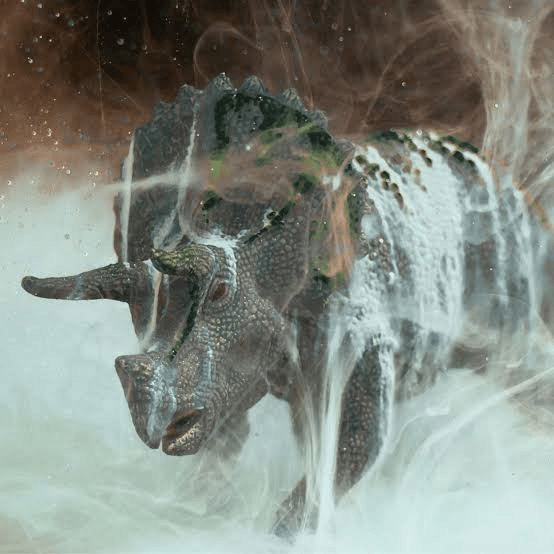
Sixty-six million years ago, an asteroid slammed into Earth, triggering a mass extinction that wiped out the dinosaurs. But in the aftermath, a strange world emerged—one dominated by fungi. New evidence is reviving a provocative hypothesis: that this ‘fungal world’ may have given early mammals the evolutionary edge they needed to thrive. Could our own origins be tied to a planet covered in rot?
The Day the World Turned to Rot
When the Chicxulub asteroid struck the Yucatán Peninsula, it didn’t just kill the dinosaurs. It unleashed global fires, tsunamis, and a nuclear winter that blocked sunlight for months. Photosynthesis collapsed, and with it, most plant life. The world became a graveyard of decaying vegetation, and in that stinking, dark landscape, one group of organisms flourished: fungi.
Paleontologists have long noticed a dramatic spike in fungal spores in the rock layers that mark the Cretaceous–Paleogene (K–Pg) boundary. This ‘fungal spike’ is so consistent that it’s used as a marker for the extinction event itself. It paints a picture of a planet literally covered in mold and mushrooms, feasting on the remains of a dead world.
A Provocative Hypothesis
For decades, scientists assumed that mammals simply took advantage of the dinosaurs’ disappearance. But a new wave of research, led by microbiologist Dr. Arturo Casadevall of Johns Hopkins, suggests something more subtle: that the fungal world itself may have given mammals a crucial advantage.
The idea is twofold. First, mammals are warm-blooded, and most fungi cannot survive at mammalian body temperatures. This ‘temperature barrier’ means that mammals have a natural resistance to fungal infections that reptiles and dinosaurs—being cold-blooded—lacked. In a world teeming with fungi, this immunity would have been a lifesaver.
Second, fungi are nutritious. Many are rich in protein and calories. Early mammals, with their flexible diets, could have eaten fungi directly or fed on the insects and other creatures that thrived on rotting matter. In a world where food was scarce, this fungal buffet could have been a lifeline.
The Evidence: What We Know
The hypothesis rests on several lines of evidence. The fungal spike itself is real—it’s found in sediments worldwide. Mammals did survive and diversify rapidly after the extinction, filling niches left empty by the dinosaurs. And comparative studies show that mammals have more robust immune responses to fungal infections than reptiles.
Some studies even suggest an inverse correlation in the fossil record: as mammals rose, fungal diversity declined. This could mean that mammals, by grazing and competing, helped suppress the fungal world they initially benefited from.
The Skeptics’ View
But not everyone is convinced. Critics point out that the fungal spike might be a taphonomic artifact—fungi are more resistant to decay than pollen, so they may be overrepresented in the fossil record. They argue that mammals’ success can be explained by simpler factors: their small size, burrowing habits, and generalist diets, which allowed them to survive the catastrophe and then thrive once the dinosaurs were gone.
The immune system argument is also speculative. We don’t know the immune status of extinct mammals or dinosaurs, and the correlation between fungal decline and mammalian rise could be coincidental, driven by other environmental changes like climate cooling.
A Piece of the Puzzle
Even proponents admit that the fungal world hypothesis is not the whole story. It’s likely one of several factors that helped mammals take over. The removal of dinosaur competitors, the mammals’ pre-adaptations for survival, and their ability to exploit new niches all played a role.
But the idea is compelling because it highlights how mass extinctions can be shaped by the smallest organisms. While the dinosaurs were the most visible victims, the true rulers of the post-apocalyptic Earth may have been fungi—and the mammals that could tolerate them.
Why It Matters Today
Understanding this ancient event isn’t just about the past. It has implications for today. Fungi are emerging as major threats to human health, especially in a warming world. Casadevall’s work on the temperature barrier has already influenced how we think about fungal diseases. If the K–Pg event was a turning point in the evolution of mammalian immunity, it could help us prepare for future challenges.
So, the next time you see mold on your bread, remember: it might be a distant echo of the world that gave our ancestors their big break.
The fungal world hypothesis remains unproven, but it’s a fascinating lens through which to view one of the most pivotal moments in Earth’s history. It reminds us that evolution is not just about big, flashy creatures—it’s also about the quiet, often overlooked organisms that shape the course of life. Whether or not fungi gave mammals an edge, they certainly left their mark on our story.
Summary
- The Chicxulub asteroid impact 66 million years ago caused a mass extinction, leading to a ‘fungal spike’ in the fossil record.
- The hypothesis suggests that a fungus-dominated world may have favored mammals due to their warm-blooded immunity and dietary flexibility.
- Evidence includes the fungal spike, mammalian survival and diversification, and comparative immune studies.
- Critics argue the fungal spike may be an artifact, and simpler explanations like small size and burrowing may suffice.
- The hypothesis is not widely accepted but remains a plausible contributing factor to mammalian dominance.
FAQ
Q: What exactly is the ‘fungal spike’?
A: It’s a dramatic increase in fungal spores found in sediment layers from the K–Pg boundary, indicating a world covered in decaying organic matter.
Q: How could fungi have helped mammals?
A: Mammals’ warm-blooded metabolism made them resistant to fungal pathogens, and fungi themselves may have been a food source.
Q: Why are some scientists skeptical?
A: They argue the fungal spike could be a fossilization artifact, and that mammals’ success can be explained by other factors like small size and generalist diets.
Q: Is this hypothesis widely accepted?
A: No, it’s considered provocative but plausible, and likely one of several factors that contributed to mammalian dominance.
Q: What are the broader implications?
A: It highlights the role of microbes in mass extinctions and could inform our understanding of fungal diseases today.
Leave a Reply