Tag: fungi

  • Desert Truffles: The Ancient Fungi That Fed Empires and Still Thrive in Sand

    Desert Truffles: The Ancient Fungi That Fed Empires and Still Thrive in Sand

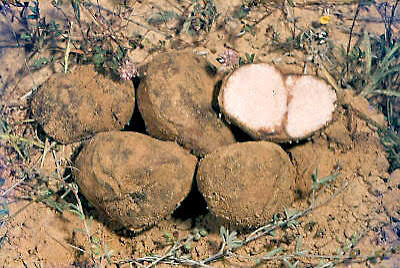
    In the arid expanses of the Sahara and the Arabian Peninsula, where rain is a rare blessing, a humble fungus pushes through cracked soil after the first downpour. It has no perfume, no gnarled black exterior just a smooth, pale sphere that locals call ‘terfez’ or ‘fahma.’ For millennia, these desert truffles have been a vital food source, a trade commodity, and a cultural touchstone, long before European truffles became the gold standard of gourmet dining.

    While the Périgord black truffle commands thousands of dollars a kilogram and is sniffed out by trained pigs in French oak forests, desert truffles grow in sandy soils, partner with sun-loving shrubs, and are sold for a fraction of the price. Yet their story is older, spanning biblical texts, Saharan rock art, and the bustling markets of Baghdad. This is the hidden life of desert truffles how they shaped trade routes, enriched cuisines, and sustain fragile ecosystems.

    What Exactly Is a Desert Truffle?

    Desert truffles belong mainly to the genera Terfezia and Tirmania, though some species fall under Picoa and Delastria. They form mycorrhizal associations with the roots of Helianthemum (rockroses) and certain Cistus shrubs. The fungus and plant exchange nutrients: the truffle provides minerals and water from the soil, while the plant supplies sugars from photosynthesis.

    Unlike their European cousins, desert truffles lack the intense aroma that makes Tuber species so coveted. Their scent is mild — earthy, nutty, or mushroom-like — and their flesh has a potato-like texture. They range from walnut-sized to grapefruit-sized, and some specimens can exceed a kilogram. The interior is firm and cream-colored, sometimes marbled with brown veins.

    Key species include Terfezia claveryi, the most commercially important, found across North Africa, the Middle East, and Spain; Tirmania nivea (white desert truffle) prized in the Arabian Peninsula; and the Kalahari truffle (Terfezia pfeilii), harvested by the San people of Botswana and Namibia.

    Ancient Roots: From Rock Art to Biblical ‘Manna’

    Desert truffles have been part of human diet for thousands of years. In the Tassili n’Ajjer region of Algeria, rock art dating to around 7000–5000 BCE depicts figures that some archaeologists interpret as truffle gatherers, though this reading is debated. Babylonian texts from around 2000 BCE reference a food called ‘kamasu,’ which scholars believe refers to desert truffles.

    The Bible mentions the poor gathering ‘mallows’ in Job 30:4, and some scholars argue this could be desert truffles. In classical antiquity, Theophrastus (c. 371–287 BCE) wrote about truffles as ‘plants without roots’ that arise from rain and thunder. Pliny the Elder called them ‘the most wonderful of all things’ for springing from nothing.

    Islamic tradition elevated their status. The Prophet Muhammad is recorded in hadith literature as saying truffles are ‘manna’ — a divine gift — and that their juice cures eye ailments. This religious endorsement made them a revered food in Islamic culture, appearing in 10th–13th century cookbooks from Baghdad and Andalusia.

    The Caravan Trade and Culinary Traditions

    Desert truffles were traded along caravan routes across the Sahara and the Arabian Peninsula, carried by camel trains to markets in North Africa and the Middle East. They were a valuable food source for travelers because they could be dried and stored, providing sustenance during long journeys.

    In medieval Arab cuisine, truffles were a delicacy. Recipes from Ibn Sayyar al-Warraq’s Annals of the Caliphs’ Kitchens (10th century) and the anonymous Kitab al-Tabikh (13th century) show them cooked in stews, roasted, or pickled. The milder flavor made them versatile, absorbing spices and broths.

    Today, desert truffles remain a seasonal luxury in Saudi Arabia and Kuwait, where prices spike during Ramadan. In Morocco and Algeria, they are sold fresh in local markets, often fried in butter or simmered in tagines. The Kalahari truffle is a staple for the San people, who have harvested them for generations, using their knowledge of the land to find the subtle cracks in the soil that signal a truffle below.

    Harvesting: A Skill Passed Down Generations

    Desert truffles fruit after seasonal rains — typically from January to April in the Northern Hemisphere, following winter rains, and from May to August in southern Africa, after summer rains. The process requires a precise sequence: sufficient autumn or winter rain to trigger mycorrhizal colonization, followed by a dry period, then heavy rains that trigger fruiting.

    Harvesting is traditionally done by hand. Locals scan the ground for subtle cracks or heaves in the soil, a skill honed over years. In North Africa, some use donkeys, which are said to detect truffles by scent. Increasingly, trained dogs are used, as they are more effective and less likely to damage the truffles than pigs, which are not used in desert truffle hunting.

    Unlike European truffles, desert truffles have a short shelf life — only 3 to 7 days refrigerated. This limits export and means they are mostly consumed locally. Prices are dramatically lower than European truffles, typically $20–$100 per kilogram, but premium early-season specimens can fetch more.

    Ecological Role and Modern Cultivation

    Desert truffles play a crucial role in their ecosystems. As mycorrhizal partners, they help Helianthemum shrubs survive in poor, arid soils by enhancing water and nutrient uptake. In return, the shrubs provide the fungi with carbohydrates. This symbiosis also benefits the soil, improving its structure and fertility.

    The fungi are also a food source for animals. Rodents, insects, and even some birds dig up truffles, dispersing spores in the process. This helps the truffles propagate across the landscape.

    In recent years, there has been growing interest in cultivating desert truffles. Spain has seen some success with irrigated Helianthemum plantations, and research is ongoing in other regions. Cultivation could provide a sustainable income for rural communities in arid areas, reducing pressure on wild populations.

    However, desert truffles are sensitive to climate change. Changes in rainfall patterns can disrupt the delicate timing of fruiting, leading to poor harvests. Overharvesting is also a concern, as is habitat destruction from agriculture and development.

    A Delicacy Worth Rediscovering

    Desert truffles may not have the cachet of their European relatives, but they have a rich history and a unique flavor profile that chefs are beginning to explore. Their earthy, nutty taste pairs well with butter, garlic, and herbs. In the Middle East, they are often cooked with rice and meat, while in North Africa, they are featured in couscous dishes.

    For those lucky enough to find fresh desert truffles, the experience is a connection to an ancient food that has nourished people for millennia. Whether you call them terfez, kames, or fahma, these hidden fungi are a testament to the resilience of life in the world’s driest regions.

    Desert truffles are more than a culinary curiosity; they are a living link to our past, a vital part of arid ecosystems, and a potential resource for sustainable agriculture. As climate change and market forces reshape the world of gourmet foods, these unassuming fungi deserve a closer look — not for their aroma, but for their story.

    Summary

    • Desert truffles (genera Terfezia and Tirmania) grow in arid regions, forming mycorrhizal partnerships with Helianthemum shrubs.
    • They lack the strong aroma of European truffles but have a mild, earthy flavor and a potato-like texture.
    • Ancient evidence includes Saharan rock art, Babylonian texts, and references in the Bible and Islamic tradition.
    • They are harvested by hand after seasonal rains and are a seasonal delicacy in the Middle East and North Africa.
    • Prices are much lower than European truffles, but cultivation efforts in Spain show promise for sustainable production.

    FAQ

    Q: What do desert truffles taste like?
    A: Desert truffles have a mild, earthy, nutty flavor, often compared to mushrooms or potatoes. Their texture is firm and crunchy when raw, becoming tender when cooked.

    Q: How are desert truffles different from European truffles?
    A: European truffles (e.g., Périgord black) have a strong, complex aroma and grow in temperate forests. Desert truffles grow in arid regions, lack the strong scent, and are much less expensive.

    Q: Can desert truffles be cultivated?
    A: Yes, some species like Terfezia claveryi have been successfully cultivated in Spain using irrigated Helianthemum plantations, though commercial production is still limited.

    Q: Why are desert truffles not exported widely?
    A: They have a short shelf life (3–7 days refrigerated), which makes long-distance shipping difficult. Most are consumed fresh in local markets.

    Q: Are desert truffles mentioned in religious texts?
    A: Yes, hadith literature records Prophet Muhammad describing truffles as ‘manna’ and their juice as a cure for eye ailments. Some scholars also interpret biblical ‘mallows’ as desert truffles.

  • The Wood Wide Web: How Fungi Connect Forests and Feed Trees

    The Wood Wide Web — Forest Healing

    Beneath the forest floor lies a network more intricate than any fiber-optic cable. Thread-like fungal filaments weave through the soil, linking the roots of trees and plants in a web of exchange. This is the mycorrhizal network, often called the ‘Wood Wide Web,’ and it is rewriting our understanding of how forests function.

    For over 90% of land plants, survival is not a solo endeavor. They partner with fungi that extend their reach into the soil, trading sugars for water and nutrients. But the story goes deeper: these fungal connections can link one tree to another, allowing carbon and nutrients to flow between individuals. Recent research has transformed this hidden world from a botanical curiosity into a cornerstone of forest ecology, with implications for conservation and climate science.

    What Exactly Is a Mycorrhiza?

    The term ‘mycorrhiza’ comes from Greek: mykos (fungus) and rhiza (root). It’s a symbiotic association where a fungus lives in and around plant roots. The plant supplies the fungus with carbohydrates—sugars produced through photosynthesis—while the fungus provides water and essential nutrients, particularly phosphorus and nitrogen, which it extracts from the soil far more efficiently than plant roots alone.

    Think of it as a trade agreement: the plant is the sugar factory, and the fungus is the mining company. The fungus’s thread-like filaments, called hyphae, extend far beyond the root zone, acting as an extension of the plant’s own root system. This partnership is ancient, dating back to the Ordovician period, about 450–470 million years ago, when plants first colonized land. Fossil evidence shows that early land plants like Aglaophyton already had arbuscular-like structures—strong evidence that this symbiosis was a key innovation that allowed plants to survive on land, where nutrients are patchy and water is scarce.

    Two Main Types of Mycorrhizae

    For trees, there are two primary types of mycorrhizae, each with distinct characteristics:

    | Type | Key Features | Typical Hosts |
    |——|————–|—————|
    | Arbuscular mycorrhizae (AM) | Fungus penetrates root cells; forms tree-like structures (arbuscules); ancient association (~400 million years) | Most deciduous trees, grasses, crops |
    | Ectomycorrhizae (EcM) | Fungus wraps around root tips, forming a mantle; does not penetrate cells; forms a ‘Hartig net’ between cells | Pines, oaks, birches, spruces, firs |

    Arbuscular mycorrhizae are the older of the two, forming intricate structures inside root cells. Ectomycorrhizae, on the other hand, envelop the root tips externally, creating a dense sheath and a network between cells. Each type has its own strengths and host preferences, but both serve the same fundamental purpose: enhancing nutrient uptake.

    The Network: The ‘Wood Wide Web’

    The hyphae of mycorrhizal fungi don’t just stay attached to one plant. They can grow outward and connect to the roots of neighboring plants, forming a common mycorrhizal network (CMN). This network can span kilometers of forest floor, with a single fungal individual (genet) covering vast areas. The largest known organism on Earth is a honey fungus (Armillaria ostoyae) in Oregon, covering about 2,385 acres—though that particular fungus is a pathogen, not a mutualist.

    These networks are not random. Fungi show preferences for certain host species, and plants can ‘choose’ among fungal partners. This selectivity creates a complex, dynamic web where some connections are strong and others weak. The network acts as a shared infrastructure, allowing resources to move from one plant to another.

    How Do Trees Trade Through the Network?

    The mechanics of nutrient exchange are fascinating. Trees ship up to 20–30% of their photosynthetically fixed carbon to fungal partners. In return, fungi deliver nitrogen and phosphorus, often obtained from soil organic matter that plant roots cannot access. Isotope studies using ¹³C and ¹⁵N have traced these transfers in the field, showing that carbon can move from one tree to another through the network within hours to days—not years.

    This rapid transfer suggests that the network is highly active, with resources flowing readily. But is this a cooperative exchange or a selfish one? The scientific consensus is that the fungus is primarily trading nutrients for carbon, and the plant is trading carbon for nutrients. The flow between trees is a byproduct of this mutualistic exchange, not necessarily an intentional act of altruism.

    The ‘Mother Tree’ Concept: Science vs. Story

    The idea of the ‘Wood Wide Web’ was popularized by Dr. Suzanne Simard, a forest ecologist at the University of British Columbia. Her landmark 1997 Nature paper showed carbon transfer between paper birch and Douglas fir seedlings via shared mycorrhizal networks. Later work, including a widely cited 2009 paper, suggested that ‘hub’ or ‘mother’ trees—large, old individuals—serve as central nodes, distributing resources to understory seedlings and even to neighboring trees under stress.

    This concept has captured the public imagination, inspiring books like The Hidden Life of Trees and Finding the Mother Tree, and documentaries like Fantastic Fungi. However, the popular narrative often goes beyond what the data support. Many ecologists argue that the observed transfers are better explained by selfish, mutualistic exchange rather than intentional tree-to-tree communication. A 2023 review in New Phytologist highlighted that many claims in the popular press are overinterpreted, leading to misinformation about common mycorrhizal networks.

    So, while the network is real and ecologically important, the idea that trees ‘talk’ or ‘cooperate’ with intent is not supported by evidence. The network is more like a market economy than a social welfare system.

    Ecological Significance: Beyond Tree-to-Tree Transfer

    Mycorrhizal networks do more than connect trees. They enhance nutrient cycling, improve soil structure, and increase water retention. Arbuscular mycorrhizal fungi produce glomalin, a glycoprotein that binds soil particles into aggregates, improving soil health and reducing erosion. The fungal biomass in soil is a significant carbon pool, and mycorrhizae influence how much carbon is stored versus respired, playing a role in climate regulation.

    In forests, these networks are crucial for seedling establishment. When a young tree germinates, it may connect to the network and receive resources from established trees, giving it a better chance of survival. This is particularly important in disturbed environments where nutrients are scarce.

    Implications for Forestry and Agriculture

    Understanding mycorrhizal networks has practical applications. In forestry, recognizing the role of ‘mother trees’ could influence logging practices. If large trees serve as hubs for nutrient distribution, clear-cutting them might disrupt the network and hinder regeneration. Some foresters now advocate for retention harvesting, where some mature trees are left to maintain network connectivity.

    In agriculture, mycorrhizal fungi can reduce the need for chemical fertilizers. By fostering these beneficial fungi, farmers can improve crop yields while reducing environmental impact. This is a growing area of research, with commercial inoculants available for crops like corn and soybeans.

    The Bottom Line

    Mycorrhizal networks are a vital, hidden component of forest ecosystems. They facilitate nutrient exchange, enhance soil health, and support plant communities. While the popular narrative of talking, nurturing trees is overstated, the scientific reality is no less remarkable: a vast underground web that connects plants and fungi in a mutually beneficial partnership. As we continue to study these networks, we gain a deeper appreciation for the complexity of life beneath our feet.

    The mycorrhizal network is a testament to the intricate, invisible connections that sustain life on Earth. While the ‘Wood Wide Web’ may not be a conscious social network, it is a genuine biological phenomenon with profound ecological implications. By understanding and protecting these networks, we can better manage our forests and agricultural systems, ensuring their resilience for generations to come.

    Summary

    • Mycorrhizae are symbiotic associations between fungi and plant roots, formed by about 90% of land plant species.
    • Two main types: arbuscular (AM) and ectomycorrhizal (EcM), with different structures and hosts.
    • Fungal hyphae form common mycorrhizal networks (CMNs) that connect multiple plants, enabling resource exchange.
    • Trees transfer up to 20–30% of their carbon to fungi, while fungi deliver nitrogen and phosphorus.
    • The ‘mother tree’ concept is popularized but scientifically contested; transfer is likely selfish mutualism, not altruism.
    • Mycorrhizal networks enhance nutrient cycling, soil structure, and seedling establishment, with implications for forestry and agriculture.

    FAQ

    Q: What is a mycorrhizal network?
    A: It’s a web of fungal hyphae that connects the roots of multiple plants, allowing exchange of water, nutrients, and carbon between them. It’s often called the ‘Wood Wide Web.’

    Q: Do trees really ‘talk’ to each other through the network?
    A: No, that’s an overstatement. While resources do move between trees, the exchange is best explained by mutualistic trading between plants and fungi, not intentional communication.

    Q: How much carbon do trees share with fungi?
    A: Trees can ship up to 20–30% of their photosynthetically fixed carbon to their fungal partners.

    Q: Can mycorrhizal networks be used in agriculture?
    A: Yes, inoculating crops with beneficial mycorrhizal fungi can improve nutrient uptake and reduce fertilizer needs, promoting sustainable farming.

    Q: Are all plants part of mycorrhizal networks?
    A: About 90% of land plant species form mycorrhizal associations, but some groups like the Brassicaceae (e.g., mustard) do not.

  • Did a Fungal World Fuel the Rise of Mammals After the Asteroid?

    Did a Fungal World Fuel the Rise of Mammals After the Asteroid?

    Sixty-six million years ago, an asteroid slammed into Earth, triggering a mass extinction that wiped out the dinosaurs. But in the aftermath, a strange world emerged—one dominated by fungi. New evidence is reviving a provocative hypothesis: that this ‘fungal world’ may have given early mammals the evolutionary edge they needed to thrive. Could our own origins be tied to a planet covered in rot?

    The Day the World Turned to Rot

    When the Chicxulub asteroid struck the Yucatán Peninsula, it didn’t just kill the dinosaurs. It unleashed global fires, tsunamis, and a nuclear winter that blocked sunlight for months. Photosynthesis collapsed, and with it, most plant life. The world became a graveyard of decaying vegetation, and in that stinking, dark landscape, one group of organisms flourished: fungi.

    Paleontologists have long noticed a dramatic spike in fungal spores in the rock layers that mark the Cretaceous–Paleogene (K–Pg) boundary. This ‘fungal spike’ is so consistent that it’s used as a marker for the extinction event itself. It paints a picture of a planet literally covered in mold and mushrooms, feasting on the remains of a dead world.

    A Provocative Hypothesis

    For decades, scientists assumed that mammals simply took advantage of the dinosaurs’ disappearance. But a new wave of research, led by microbiologist Dr. Arturo Casadevall of Johns Hopkins, suggests something more subtle: that the fungal world itself may have given mammals a crucial advantage.

    The idea is twofold. First, mammals are warm-blooded, and most fungi cannot survive at mammalian body temperatures. This ‘temperature barrier’ means that mammals have a natural resistance to fungal infections that reptiles and dinosaurs—being cold-blooded—lacked. In a world teeming with fungi, this immunity would have been a lifesaver.

    Second, fungi are nutritious. Many are rich in protein and calories. Early mammals, with their flexible diets, could have eaten fungi directly or fed on the insects and other creatures that thrived on rotting matter. In a world where food was scarce, this fungal buffet could have been a lifeline.

    The Evidence: What We Know

    The hypothesis rests on several lines of evidence. The fungal spike itself is real—it’s found in sediments worldwide. Mammals did survive and diversify rapidly after the extinction, filling niches left empty by the dinosaurs. And comparative studies show that mammals have more robust immune responses to fungal infections than reptiles.

    Some studies even suggest an inverse correlation in the fossil record: as mammals rose, fungal diversity declined. This could mean that mammals, by grazing and competing, helped suppress the fungal world they initially benefited from.

    The Skeptics’ View

    But not everyone is convinced. Critics point out that the fungal spike might be a taphonomic artifact—fungi are more resistant to decay than pollen, so they may be overrepresented in the fossil record. They argue that mammals’ success can be explained by simpler factors: their small size, burrowing habits, and generalist diets, which allowed them to survive the catastrophe and then thrive once the dinosaurs were gone.

    The immune system argument is also speculative. We don’t know the immune status of extinct mammals or dinosaurs, and the correlation between fungal decline and mammalian rise could be coincidental, driven by other environmental changes like climate cooling.

    A Piece of the Puzzle

    Even proponents admit that the fungal world hypothesis is not the whole story. It’s likely one of several factors that helped mammals take over. The removal of dinosaur competitors, the mammals’ pre-adaptations for survival, and their ability to exploit new niches all played a role.

    But the idea is compelling because it highlights how mass extinctions can be shaped by the smallest organisms. While the dinosaurs were the most visible victims, the true rulers of the post-apocalyptic Earth may have been fungi—and the mammals that could tolerate them.

    Why It Matters Today

    Understanding this ancient event isn’t just about the past. It has implications for today. Fungi are emerging as major threats to human health, especially in a warming world. Casadevall’s work on the temperature barrier has already influenced how we think about fungal diseases. If the K–Pg event was a turning point in the evolution of mammalian immunity, it could help us prepare for future challenges.

    So, the next time you see mold on your bread, remember: it might be a distant echo of the world that gave our ancestors their big break.

    The fungal world hypothesis remains unproven, but it’s a fascinating lens through which to view one of the most pivotal moments in Earth’s history. It reminds us that evolution is not just about big, flashy creatures—it’s also about the quiet, often overlooked organisms that shape the course of life. Whether or not fungi gave mammals an edge, they certainly left their mark on our story.

    Summary

    • The Chicxulub asteroid impact 66 million years ago caused a mass extinction, leading to a ‘fungal spike’ in the fossil record.
    • The hypothesis suggests that a fungus-dominated world may have favored mammals due to their warm-blooded immunity and dietary flexibility.
    • Evidence includes the fungal spike, mammalian survival and diversification, and comparative immune studies.
    • Critics argue the fungal spike may be an artifact, and simpler explanations like small size and burrowing may suffice.
    • The hypothesis is not widely accepted but remains a plausible contributing factor to mammalian dominance.

    FAQ

    Q: What exactly is the ‘fungal spike’?
    A: It’s a dramatic increase in fungal spores found in sediment layers from the K–Pg boundary, indicating a world covered in decaying organic matter.

    Q: How could fungi have helped mammals?
    A: Mammals’ warm-blooded metabolism made them resistant to fungal pathogens, and fungi themselves may have been a food source.

    Q: Why are some scientists skeptical?
    A: They argue the fungal spike could be a fossilization artifact, and that mammals’ success can be explained by other factors like small size and generalist diets.

    Q: Is this hypothesis widely accepted?
    A: No, it’s considered provocative but plausible, and likely one of several factors that contributed to mammalian dominance.

    Q: What are the broader implications?
    A: It highlights the role of microbes in mass extinctions and could inform our understanding of fungal diseases today.