Tag: evolution

  • Why Being Born Helpless May Be Humanity’s Secret Weapon


    A newborn human can’t lift its head, grasp a finger, or regulate its own body temperature. It’s entirely dependent on others for years a level of helplessness unmatched among primates. For decades, this was seen as an evolutionary trade-off: bipedalism narrowed the birth canal, forcing us to be born early. But new research suggests vulnerability isn’t just a cost; it may be a core strength that shaped our species’ most human traits.

    The Helpless Human Infant

    Walk into any maternity ward, and you’ll see a creature utterly unequipped for survival. A human baby can’t hold up its own head, let alone crawl or feed itself. This extreme dependency stretches on for years—far longer than any other primate. Our closest relatives, chimpanzee newborns, arrive with brains already 40–50% of adult size, while human infants are born with a brain only 25–30% of its adult volume.

    This contrast is stark. Horses and deer are born precocial—up and running within hours. Humans are the most altricial of all great apes, born underdeveloped and requiring intensive care. For a species that would go on to dominate the planet, this seems like a terrible start.

    Rethinking the ‘Obstetric Dilemma’

    The classic explanation for this helplessness was the obstetric dilemma: as our ancestors became bipedal, the birth canal narrowed, while brains expanded. To fit through, babies had to be born earlier, before their heads grew too large. This story dominated evolutionary biology for decades.

    But recent research complicates the picture. Anthropologist Holly Dunsworth and colleagues argue the real constraint isn’t the pelvis but maternal metabolism. A mother’s body can only sustain a fetus for about nine months before energy demands become unsustainable. Their ‘energetics of gestation and brain growth’ (EGG) hypothesis suggests the limit isn’t mechanical but metabolic.

    Whether the bottleneck is pelvic or energetic, both explanations frame helplessness as a necessary compromise. But what if this vulnerability is actually an adaptation with profound benefits?

    Vulnerability as a Social Technology

    Anthropologist Sarah Blaffer Hrdy offers a radical rethinking. She argues that human helplessness evolved in tandem with cooperative breeding—a system where mothers rely heavily on others—fathers, grandmothers, siblings, even unrelated group members—to help raise offspring. No other great ape does this.

    A baby that cannot survive without collective care creates a powerful selective pressure for prosocial behavior. Adults who were attentive, responsive, and emotionally invested in others’ needs were more likely to see their genes survive. This may explain uniquely human traits like theory of mind, empathy, and shared intentionality—our ability to read and respond to others’ mental states.

    In this view, helplessness is a ‘social technology’ that forces cooperation. It’s the evolutionary root of caregiving and altruism, enabling everything from pair-bonding to large-scale societies.

    Born Early to Learn More

    There’s also a cognitive payoff. Being born early means more brain development occurs in the world rather than in the womb. This allows the brain to be shaped by experience, environment, and social input.

    Human infants arrive with fewer hardwired instincts and more capacity for learning—a trade-off that pays off in remarkable adaptability. This ‘neoteny’ hypothesis suggests humans retain juvenile traits like curiosity and playfulness into adulthood, fueling our capacity for innovation.

    The extended dependency period also enables massive cultural transmission. Language, tool use, social norms—none of these could be passed on without years of learning. Researchers like Karin Isler and Carel van Schaik link this extended brain growth after birth to the ability to master complex skills that require years of practice.

    The Cost of Vulnerability

    This isn’t to romanticize helplessness. Infant mortality in ancestral environments was high, and a long dependent period is energetically expensive and risky for mothers. The vulnerability is real.

    Yet despite these costs, the benefits appear to outweigh them. The same helplessness that makes a baby so fragile also ensures it is deeply embedded in a social network from the first breath.

    A Unique Developmental Niche

    Human infants are born with brains that are highly plastic and under-specified. Rather than being ‘incomplete,’ this may be an adaptation for flexible learning within a rich social and cultural environment.

    Over 2–3 million years, from Australopithecus with brains of ~400–500 cc to Homo sapiens at ~1,350 cc, brain size tripled. Alongside this growth came shifts in life history: longer gestation, longer infancy, later weaning, and extended juvenile dependence. This trajectory suggests helplessness isn’t a bug but a feature of our evolutionary path.

    The fossil record, including pelvic morphology in early hominins, shows birth mechanics changed over time, but the exact timing of when helplessness emerged as a distinct trait remains debated. What’s clear is that it’s deeply intertwined with our social and cognitive evolution.

    In the end, being born helpless may be one of humanity’s greatest strengths—a vulnerability that forced us to care for each other, learn from each other, and build societies that no other species has matched.

    Human helplessness is not a flaw to be overcome but a foundation on which our species built its success. By forcing us to rely on others, it created the social bonds, empathy, and learning capacity that define us. The next time you see a newborn, remember: that fragile, dependent creature carries the key to what makes us human.

    Summary

    • Human infants are born exceptionally helpless, with brains only 25–30% of adult size, compared to chimpanzees at 40–50%.
    • The traditional ‘obstetric dilemma’ explanation is being challenged by the ‘energetics of gestation and brain growth’ (EGG) hypothesis, which points to maternal metabolism as the limiting factor.
    • Helplessness may have driven the evolution of cooperative breeding, fostering prosocial behaviors like empathy and altruism.
    • Being born early allows more brain development to occur in a social context, enhancing learning and adaptability.
    • This vulnerability, while costly, is a unique strength that enabled cultural transmission and complex societies.

    FAQ

    Q: What does ‘altricial’ mean?
    A: Altricial species are born underdeveloped and require extensive parental care, like humans, dogs, and cats. Precocial species, like horses and deer, are born relatively developed and mobile.

    Q: Why are human babies born so early?
    A: The traditional view is the ‘obstetric dilemma’—bipedalism narrowed the birth canal, so babies had to be born before their heads became too large. Newer research suggests maternal metabolic limits may be the real constraint.

    Q: How does helplessness benefit humans?
    A: It forces cooperation and caregiving, which may have driven the evolution of empathy and social bonding. It also allows more brain development to occur post-birth, enhancing learning and adaptability.

    Q: Are humans the only helpless primates?
    A: No, but they are the most altricial of the great apes. Other primates have relatively more developed newborns.

    Q: Is helplessness unique to humans?
    A: No, many mammals have altricial young, but humans have an unusually long dependent period compared to other primates, reflecting our extended childhood and cultural learning.

  • A 150-Year-Old Darwin Hypothesis Finds Support in a Chinese Alpine Plant

    A 150-Year-Old Darwin Hypothesis Finds Support in a Chinese Alpine Plant

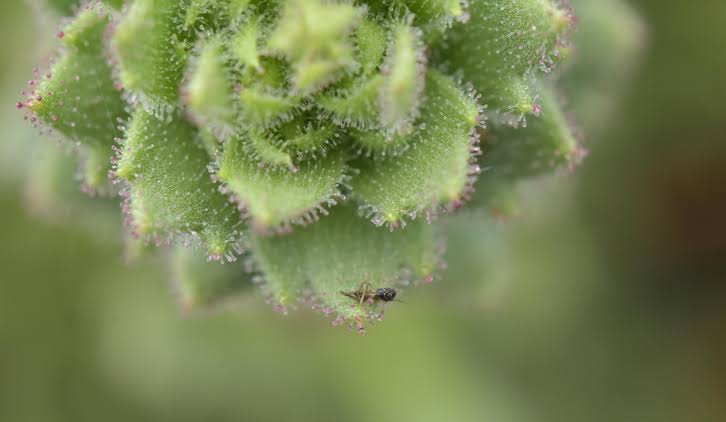
    In 1875, Charles Darwin published Insectivorous Plants, a detailed study of species like sundews and Venus flytraps. But he also speculated that many other plants with sticky hairs might be secretly carnivorous, even without dramatic traps. Now, researchers have confirmed that Triaenophora, a plant from the high mountains of southwest China, fits that description providing concrete evidence for Darwin’s 150-year-old idea.

    The discovery is more than a botanical curiosity. It shows that carnivory can be subtle, evolving in forms that don’t immediately scream “meat-eater.” And it underscores how nutrient-poor environments, like alpine soils, can drive plants to adopt surprising strategies.

    A Plant That Was Always Suspected

    Triaenophora is a small genus of perennial herbs that grow on rocky slopes and scree fields at elevations above 2,500 meters in the Chinese provinces of Sichuan, Yunnan, and possibly Guizhou. The plants have sticky glandular hairs on their leaves and stems, which long led botanists to suspect they trapped insects. But trapping alone isn’t enough to qualify as carnivorous—the plant must also digest and absorb nutrients from its prey.

    Until recently, that evidence was missing. But a team of researchers, including Chinese botanists and international collaborators, has now provided it. Their findings, published in a peer-reviewed journal, confirm that Triaenophora is genuinely carnivorous, not just an accidental insect trap.

    Darwin’s Insight

    Darwin’s Insectivorous Plants was a landmark work that documented how sundews, butterworts, and bladderworts capture and digest prey. But he also made a broader prediction: that many more plants with glandular hairs might be carnivorous, even if they lacked the iconic snap-traps or pitchers. He saw carnivory as an adaptation to nitrogen-poor soils, a hypothesis that has held up well.

    Triaenophora fits that prediction perfectly. Its alpine habitat is nutrient-poor because cold temperatures slow decomposition, leaving little available nitrogen. The plant’s sticky hairs capture insects, and its digestive enzymes break them down, releasing nitrogen that the plant absorbs.

    The Evidence for Carnivory

    The research team used a combination of methods to confirm carnivory. They detected protease and other digestive enzymes on the glandular hairs. They used stable isotope analysis—labeling insects with ¹⁵N—to show that nitrogen from prey was absorbed into plant tissues. And they grew plants with and without insect feedings, finding that those fed insects grew better.

    This is the kind of evidence that separates true carnivory from mere “protocarnivory,” where plants may trap insects but don’t fully digest or benefit from them. Triaenophora does all three: it traps, digests, and absorbs.

    Why This Matters

    Carnivorous plants are rare—only about 630 to 750 species worldwide—and most are found in sunny, wet, nitrogen-poor habitats like bogs and heathlands. Alpine Asia has been understudied compared to other regions, so finding a new carnivorous species there expands the known range and diversity of this trait.

    But the deeper significance is evolutionary. Darwin suggested that carnivory evolves gradually, from simple sticky traps to more complex structures. Triaenophora may represent an early or intermediate stage in that process. It’s a reminder that evolution often works in subtle steps, not just dramatic leaps.

    A Call to Re-Examine Other Plants

    The discovery also encourages botanists to look again at other glandular-haired plants, especially in nutrient-poor environments. There may be many more “cryptic” carnivores out there, plants that don’t look like the Venus flytrap but are just as deadly to insects.

    In fact, the concept of “protocarnivory” has been around for years, but confirming it in a new lineage is significant. It shows that the boundary between carnivorous and non-carnivorous plants is more fluid than we once thought.

    The Broader Picture

    Carnivory has evolved independently multiple times across the plant kingdom. Triaenophora belongs to the broomrape family (Orobanchaceae), which is not closely related to other carnivorous groups. That’s a powerful example of convergent evolution: when similar ecological pressures—like low nitrogen—lead to similar adaptations in distant lineages.

    Darwin would likely have been delighted. He hypothesized that carnivory was a response to nitrogen scarcity, and that it could exist in forms less dramatic than the Venus flytrap. Triaenophora is a concrete, living example of both points.

    The research also highlights the importance of studying under-explored habitats. High-altitude regions are extreme environments, and plants there often have unique adaptations. Who knows what else is hiding in the scree fields of the Himalayas or the Hengduan Mountains?

    The confirmation of carnivory in Triaenophora is a satisfying vindication of Darwin’s foresight. It shows that even a century and a half later, his ideas can still guide discovery. And it reminds us that the natural world is full of surprises—if we know where to look.

    Summary

    • Triaenophora, a plant from alpine southwest China, has been confirmed as carnivorous, supporting Darwin’s 1875 hypothesis about plants with sticky hairs.
    • Researchers found digestive enzymes, nitrogen absorption from prey, and growth benefits from insect feeding.
    • The discovery expands the known range of carnivorous plants into alpine Asia and suggests many more may exist.
    • It demonstrates convergent evolution in a new plant family and supports a gradual model for the evolution of carnivory.

    FAQ

    Q: What is Triaenophora?
    A: It’s a genus of perennial herbs found in high-altitude, rocky habitats in southwest China, known for sticky glandular hairs.

    Q: How did researchers confirm it’s carnivorous?
    A: They found digestive enzymes, used isotope labeling to show nitrogen from insects was absorbed, and observed better growth in plants fed insects.

    Q: Why is this linked to Darwin?
    A: In 1875, Darwin speculated that many plants with glandular hairs might be carnivorous, even without obvious traps. This discovery supports that idea.

    Q: Why does this matter for evolution?
    A: It shows carnivory can evolve subtly and has arisen independently in a new plant family, supporting convergent evolution.

    Q: Are there other plants like this?
    A: Possibly. The finding encourages re-examining other glandular-haired plants, especially in nutrient-poor environments.

  • Did a Fungal World Fuel the Rise of Mammals After the Asteroid?

    Did a Fungal World Fuel the Rise of Mammals After the Asteroid?

    Sixty-six million years ago, an asteroid slammed into Earth, triggering a mass extinction that wiped out the dinosaurs. But in the aftermath, a strange world emerged—one dominated by fungi. New evidence is reviving a provocative hypothesis: that this ‘fungal world’ may have given early mammals the evolutionary edge they needed to thrive. Could our own origins be tied to a planet covered in rot?

    The Day the World Turned to Rot

    When the Chicxulub asteroid struck the Yucatán Peninsula, it didn’t just kill the dinosaurs. It unleashed global fires, tsunamis, and a nuclear winter that blocked sunlight for months. Photosynthesis collapsed, and with it, most plant life. The world became a graveyard of decaying vegetation, and in that stinking, dark landscape, one group of organisms flourished: fungi.

    Paleontologists have long noticed a dramatic spike in fungal spores in the rock layers that mark the Cretaceous–Paleogene (K–Pg) boundary. This ‘fungal spike’ is so consistent that it’s used as a marker for the extinction event itself. It paints a picture of a planet literally covered in mold and mushrooms, feasting on the remains of a dead world.

    A Provocative Hypothesis

    For decades, scientists assumed that mammals simply took advantage of the dinosaurs’ disappearance. But a new wave of research, led by microbiologist Dr. Arturo Casadevall of Johns Hopkins, suggests something more subtle: that the fungal world itself may have given mammals a crucial advantage.

    The idea is twofold. First, mammals are warm-blooded, and most fungi cannot survive at mammalian body temperatures. This ‘temperature barrier’ means that mammals have a natural resistance to fungal infections that reptiles and dinosaurs—being cold-blooded—lacked. In a world teeming with fungi, this immunity would have been a lifesaver.

    Second, fungi are nutritious. Many are rich in protein and calories. Early mammals, with their flexible diets, could have eaten fungi directly or fed on the insects and other creatures that thrived on rotting matter. In a world where food was scarce, this fungal buffet could have been a lifeline.

    The Evidence: What We Know

    The hypothesis rests on several lines of evidence. The fungal spike itself is real—it’s found in sediments worldwide. Mammals did survive and diversify rapidly after the extinction, filling niches left empty by the dinosaurs. And comparative studies show that mammals have more robust immune responses to fungal infections than reptiles.

    Some studies even suggest an inverse correlation in the fossil record: as mammals rose, fungal diversity declined. This could mean that mammals, by grazing and competing, helped suppress the fungal world they initially benefited from.

    The Skeptics’ View

    But not everyone is convinced. Critics point out that the fungal spike might be a taphonomic artifact—fungi are more resistant to decay than pollen, so they may be overrepresented in the fossil record. They argue that mammals’ success can be explained by simpler factors: their small size, burrowing habits, and generalist diets, which allowed them to survive the catastrophe and then thrive once the dinosaurs were gone.

    The immune system argument is also speculative. We don’t know the immune status of extinct mammals or dinosaurs, and the correlation between fungal decline and mammalian rise could be coincidental, driven by other environmental changes like climate cooling.

    A Piece of the Puzzle

    Even proponents admit that the fungal world hypothesis is not the whole story. It’s likely one of several factors that helped mammals take over. The removal of dinosaur competitors, the mammals’ pre-adaptations for survival, and their ability to exploit new niches all played a role.

    But the idea is compelling because it highlights how mass extinctions can be shaped by the smallest organisms. While the dinosaurs were the most visible victims, the true rulers of the post-apocalyptic Earth may have been fungi—and the mammals that could tolerate them.

    Why It Matters Today

    Understanding this ancient event isn’t just about the past. It has implications for today. Fungi are emerging as major threats to human health, especially in a warming world. Casadevall’s work on the temperature barrier has already influenced how we think about fungal diseases. If the K–Pg event was a turning point in the evolution of mammalian immunity, it could help us prepare for future challenges.

    So, the next time you see mold on your bread, remember: it might be a distant echo of the world that gave our ancestors their big break.

    The fungal world hypothesis remains unproven, but it’s a fascinating lens through which to view one of the most pivotal moments in Earth’s history. It reminds us that evolution is not just about big, flashy creatures—it’s also about the quiet, often overlooked organisms that shape the course of life. Whether or not fungi gave mammals an edge, they certainly left their mark on our story.

    Summary

    • The Chicxulub asteroid impact 66 million years ago caused a mass extinction, leading to a ‘fungal spike’ in the fossil record.
    • The hypothesis suggests that a fungus-dominated world may have favored mammals due to their warm-blooded immunity and dietary flexibility.
    • Evidence includes the fungal spike, mammalian survival and diversification, and comparative immune studies.
    • Critics argue the fungal spike may be an artifact, and simpler explanations like small size and burrowing may suffice.
    • The hypothesis is not widely accepted but remains a plausible contributing factor to mammalian dominance.

    FAQ

    Q: What exactly is the ‘fungal spike’?
    A: It’s a dramatic increase in fungal spores found in sediment layers from the K–Pg boundary, indicating a world covered in decaying organic matter.

    Q: How could fungi have helped mammals?
    A: Mammals’ warm-blooded metabolism made them resistant to fungal pathogens, and fungi themselves may have been a food source.

    Q: Why are some scientists skeptical?
    A: They argue the fungal spike could be a fossilization artifact, and that mammals’ success can be explained by other factors like small size and generalist diets.

    Q: Is this hypothesis widely accepted?
    A: No, it’s considered provocative but plausible, and likely one of several factors that contributed to mammalian dominance.

    Q: What are the broader implications?
    A: It highlights the role of microbes in mass extinctions and could inform our understanding of fungal diseases today.