Before refrigeration, before canning, before preservatives, there was fermentation—a microbial alchemy that transformed raw ingredients into foods that lasted, nourished, and defined civilizations. From the earliest beer brewed in stone mortars 13,000 years ago to the tangy kimchi in your fridge today, fermentation is not just a preservation technique; it is a thread woven through the fabric of human history, culture, and cuisine.
This ancient practice, powered by invisible microorganisms, allowed our ancestors to survive harsh winters and long voyages, to build economies around wine and cheese, and to create culinary traditions that still anchor our identities. Understanding fermentation is understanding how humans learned to cooperate with nature to turn perishable surpluses into lasting treasures—and how that cooperation continues to shape what we eat and how we think about food.
What Fermentation Actually Is
At its core, fermentation is a metabolic process where microorganisms—yeast, bacteria, and molds—convert carbohydrates into alcohols, acids, or gases. This transformation not only preserves food but also profoundly changes its flavor, texture, and nutritional profile. There are several distinct types, each with its own microbial cast:
- Lactic acid fermentation (by bacteria): yogurt, cheese, sauerkraut, kimchi, and pickles.
- Ethanol fermentation (by yeast): beer, wine, bread, and spirits.
- Acetic acid fermentation (by bacteria): vinegar.
- Alkaline fermentation (by bacteria): natto and some African condiments.
- Mold-based fermentation (by fungi): soy sauce, miso, tempeh, and cheeses like Roquefort and Camembert.
These processes have been harnessed independently by cultures across the globe, resulting in a stunning diversity of fermented foods that reflect local ingredients and tastes.
A 13,000-Year-Old Story
The earliest known evidence of fermentation dates back about 13,000 years to the Natufian culture in what is now Israel, where stone mortars were used to brew beer. This predates agriculture itself, suggesting that the desire for fermented beverages may have motivated early humans to settle and cultivate grains. By 7,000 to 8,000 years ago, people in the Fertile Crescent were fermenting dairy, and cheese-making evidence in Poland dates to about 7,000 years ago. Wine production emerged in the Caucasus around 6,000 to 7,000 years ago, and soon after, Egyptians and Mesopotamians were baking leavened bread.
Fermented foods were not just sustenance; they were central to religious rituals and social bonding. Wine became a symbol in Christian communion and Jewish Passover, while beer was offered to gods in ancient Mesopotamia. In East and Southeast Asia, soy sauce, miso, and fish sauces developed thousands of years ago, and the Romans prized garum—a fermented fish sauce—so highly that it was a staple in their cuisine and a valuable trade commodity.
The Science and the Revolution
For most of history, fermentation was a mysterious art. It was not until the 17th century that Antonie van Leeuwenhoek first observed yeast cells under a microscope, and only in the 1850s did Louis Pasteur prove that fermentation is caused by living microorganisms, shattering the theory of spontaneous generation. This discovery laid the foundation for modern microbiology and eventually allowed scientists to isolate specific strains for controlled fermentation, revolutionizing food production.
The 20th century saw fermentation go industrial: mass-produced yogurt, commercial yeast, and even monosodium glutamate (MSG) are now produced through large-scale fermentation. But this industrialization also paved the way for a backlash—the 21st-century ‘fermentation revival’ celebrates artisanal sourdough, home-made kimchi, and kombucha, as people seek to reconnect with traditional methods and escape the homogeneity of ultra-processed foods.
Health and Nutrition: Beyond the Hype
Fermentation can make food more nutritious. It can increase the bioavailability of certain nutrients, such as B vitamins and folate, and reduce antinutrients like phytic acid in grains and legumes, improving mineral absorption. However, the widely touted probiotic benefits apply only to some fermented foods—those that still contain live beneficial bacteria, such as yogurt, kefir, and raw sauerkraut. Baked sourdough, pasteurized products, beer, and wine do not provide live probiotics.
The human gut microbiome is indeed influenced by fermented foods, and research on their long-term health effects is promising but ongoing. Popular media often overstates these benefits, so it is wise to approach such claims with a healthy dose of skepticism.
A World of Fermented Flavors
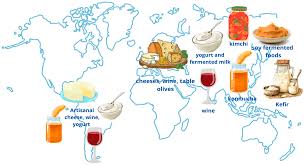
Fermentation is a global phenomenon, with every region boasting its own unique creations:
- Asia: kimchi in Korea, miso and soy sauce in Japan, tempeh in Indonesia, natto in Japan, fish sauce across Southeast Asia, and kombucha from China.
- Europe: an array of cheeses, yogurt, sauerkraut, sourdough bread, beer, wine, and kefir from the Caucasus.
- Africa: injera (Ethiopia), ogi (Nigeria), kenkey (Ghana), and mageu (Southern Africa).
- Americas: pozole (Mexico), chicha (Andes), sour pickles, and fermented hot sauces like Tabasco.
- Middle East and South Asia: idli and dosa batter (India), lassi, labneh, and pickled vegetables like turşu.
These foods are more than just nourishment; they are markers of cultural identity and terroir. Kimchi is a national symbol of Korea, sourdough is proudly claimed by San Francisco, and wine is intrinsically linked to French culture.
The Economic Engine of History
Fermented goods were among the first major trade commodities. Wine, beer, cheese, and fish sauce were transported across ancient trade routes, and the desire for vinegar and pickled provisions fueled colonial expeditions. Today, industrial fermentation is a multi-billion-dollar industry, producing not only foods but also antibiotics like penicillin, vitamins, citric acid, and amino acids. The same microbial processes that once preserved a harvest now sustain global health and commerce.
Fermentation is a testament to human ingenuity and our symbiotic relationship with the microbial world. From its accidental origins to its modern scientific mastery, it has preserved our food, enriched our nutrition, and defined our cultures. As we look to the future, fermentation continues to evolve, offering sustainable solutions for food production and a deeper connection to our culinary heritage. The next time you savor a slice of sourdough or a spoonful of kimchi, remember that you are tasting history—a history shaped by invisible allies that have been with us for millennia.
Summary
- Fermentation is a metabolic process using microorganisms to convert carbohydrates into alcohols, acids, or gases, preserving and transforming food.
- Evidence of fermented beverages dates back 13,000 years, predating agriculture, and fermented foods have been central to human culture, religion, and trade.
- Louis Pasteur’s 19th-century discovery that fermentation is biological laid the foundation for microbiology and modern industrial fermentation.
- Fermentation can enhance nutrition by increasing nutrient bioavailability and reducing antinutrients, though probiotic benefits apply only to certain live-culture foods.
- Today, fermentation is experiencing a revival, driven by artisanal movements and a desire for authentic, less processed foods.
FAQ
Q: What are the main types of fermentation?
A: The main types include lactic acid fermentation (yogurt, sauerkraut), ethanol fermentation (beer, wine, bread), acetic acid fermentation (vinegar), alkaline fermentation (natto), and mold-based fermentation (soy sauce, tempeh, certain cheeses).
Q: How does fermentation preserve food?
A: Fermentation produces acids or alcohols that lower pH or create an environment hostile to spoilage-causing microorganisms, effectively preserving the food for extended periods.
Q: Are all fermented foods probiotic?
A: No. Only fermented foods that contain live, active cultures, such as yogurt, kefir, and raw sauerkraut, provide probiotics. Baked products, pasteurized items, and most alcoholic beverages do not.
Q: Can fermentation improve nutritional value?
A: Yes, fermentation can increase the bioavailability of certain nutrients like B vitamins and folate, and reduce antinutrients like phytic acid, which improves mineral absorption.
Q: What sparked the modern fermentation revival?
A: The revival is partly a reaction against industrialized food homogeneity and ultra-processed diets, with people seeking authenticity, flavor, and perceived health benefits from traditional fermented foods.
Leave a Reply