On July 30, 1966, at Wembley Stadium, Geoff Hurst scored his third goal in extra time to seal a 4–2 win over West Germany, and England had its first—and so far only—World Cup title. But beneath the delirium of the final whistle lay a quiet tactical revolution. Manager Alf Ramsey had dismantled the conventional wisdom that wingers were essential to attacking play, and in doing so, he didn’t just win a tournament; he offered a template for the future of football.
Ramsey’s system, derided as the ‘wingless wonders,’ was a radical departure from the status quo. It wasn’t just about removing wingers—it was about reshaping the midfield, redefining the striker’s role, and prioritizing team shape over individual flair. The approach was pragmatic, disciplined, and extraordinarily effective, and its echoes can be heard in every modern team that presses, rotates, and plays without a traditional number 9.
The Tactical Landscape Before 1966
To understand the shock of Ramsey’s revolution, you need to look at the world England was playing in. The WM formation—a 3-2-2-3 that had dominated since the 1930s—was crumbling. Brazil’s 4-2-4, with its dazzling attacking quartet, had won the 1958 and 1962 World Cups and was considered the height of modern play. Meanwhile, Italy’s catenaccio system, perfected by Helenio Herrera at Inter Milan, had won back-to-back European Cups in 1964 and 1965. It was a defensive masterclass that prioritized stopping the opponent over creating chances.
The 1962 World Cup in Chile had been brutally physical, and the game’s athletic demands were rising. Into this maelstrom stepped Alf Ramsey, appointed England manager in 1963. He had a clear vision, and it didn’t include the traditional English winger—a position as beloved as the striker in the nation’s football culture. Ramsey’s declaration that England would ‘win without wingers’ was met with disbelief and hostility. It was heresy.
But Ramsey wasn’t being contrarian for its own sake. He saw that the 4-2-4 left teams vulnerable in midfield, and that catenaccio’s negativity could be beaten by patience and movement. His solution was a hybrid—a 4-4-2 that became known as the ‘wingless wonders’—that emphasized compactness and control.
The Anatomy of Ramsey’s System
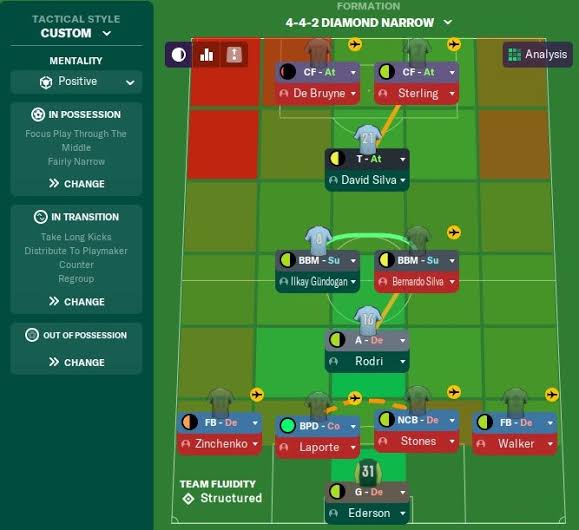
At its core, Ramsey’s system was a 4-4-2, but it was a 4-4-2 unlike anything seen before. The midfield was narrow, with four players—Alan Ball, Nobby Stiles, Bobby Charlton, and Martin Peters—packed into the center. There were no traditional wide midfielders; instead, the full-backs, George Cohen and Ray Wilson, provided width, but they were disciplined, defensive first and foremost. This narrow setup suffocated opponents in the center of the pitch, where most teams still tried to build play.
Nobby Stiles was the linchpin, a proto-‘destroyer’ or holding midfielder. His job was simple: man-mark the opponents’ most dangerous player out of the game. In the semi-final against Portugal, he shadowed Eusébio—the tournament’s top scorer with nine goals—so effectively that the great forward was reduced to a spectator until a late penalty. That role, now ubiquitous in modern football as the defensive midfielder, was revolutionary in 1966.
Bobby Charlton was given a free role as a deep-lying playmaker, dropping off the striker to pick up the ball and drive forward. Geoff Hurst, the target man, was instructed to drop deep, dragging defenders out of position and creating space for the midfielders to run into. This was a precursor to the modern ‘false nine’—a striker who doesn’t stay on the shoulder of the last defender but instead comes deep to link play and open up channels for runners. Hurst’s mobility and selflessness were key to the system’s success, and it’s no coincidence that his hat-trick in the final came from exactly these movements.
Ramsey’s England wasn’t a purely defensive side—it was a possession-based team that controlled games and struck quickly on the counter. The Wembley pitch, which was wide at 100 yards, suited this style, allowing England’s full-backs to push forward and the midfield to find space. Fitness was also a deliberate focus, with players conditioned to last the full 90 minutes plus extra time in July heat that sapped many European teams.
The Controversies That Shaped the Narrative
The tournament wasn’t without its dark moments. The quarter-final against Argentina descended into a bitter, defensive slog, culminating in Antonio Rattín’s sending-off for alleged dissent. Ramsey’s infamous description of the Argentinians as ‘animals’—later retracted—reflected the tension of a match that was more about disruption than football. England’s resilience in that game, and in the semi-final against Portugal, proved that the system could win ugly when necessary.
The final itself was a microcosm of everything that was new and contentious about England’s approach. Hurst’s second goal, which made it 3–2 in extra time, is still debated today. The ball hit the crossbar, bounced down, and was ruled to have crossed the line by Swiss referee Gottfried Dienst, with assistance from linesman Tofiq Bahramov. Modern goal-line technology would almost certainly have confirmed the goal, but the dispute persists, adding to the mythos of the match. Hurst’s fourth goal, scored in the final minute after a pitch invasion, was also controversial—some argue play should have been stopped. But the result stood, and England had won.
The Legacy: A Blueprint for Modern Football
Ramsey’s wingless wonders were the direct ancestor of the modern 4-4-2 and 4-2-3-1. The narrow midfield with a holding player and a box-to-box runner is now the standard template in leagues across the globe. The ‘false nine’ role, popularized by players like Roberto Firmino and Lionel Messi in his later Barcelona years, has its roots in Hurst’s movements. And the emphasis on team shape over individual flair—a lesson reinforced by this tournament—has influenced generations of coaches from Arrigo Sacchi to Pep Guardiola.
But there’s a paradox in Ramsey’s revolution. Some historians see him as a reactionary, simply adapting to the physical demands of the era rather than innovating. Others view him as a pragmatic genius who understood that winning mattered more than style. The truth is probably both. Ramsey didn’t invent a new system out of thin air; he synthesized existing ideas—the holding role, the narrow midfield, the dropping striker—and applied them with a discipline and rigor that was ahead of its time.
The 1966 World Cup also marked a shift in the global game. It was the first with comprehensive TV coverage and the first to be broadcast live via satellite, making it a true global event. The tournament’s controversies, from the stolen Jules Rimet Trophy (found by a dog named Pickles) to the disputed goals, have become part of football’s cultural memory. But its tactical legacy is more profound: it proved that a well-organized team could beat more talented opponents, and that success was not a matter of tradition but of adaptation.
England’s victory in 1966 was more than a moment of national glory—it was a turning point in football’s tactical evolution. Ramsey’s wingless wonders didn’t just win a World Cup; they demonstrated that the future belonged to systems that prioritized control, discipline, and collective movement over individual brilliance. The echoes of that approach are visible in every modern team that presses, rotates, and plays without a traditional winger or striker. While England has never won the World Cup again, the tactical blueprint from that summer at Wembley remains a permanent part of football’s DNA.
Summary
- Alf Ramsey’s ‘wingless wonders’ replaced the traditional winger with a narrow, packed midfield, a radical departure that shaped the modern 4-4-2 and 4-2-3-1.
- Nobby Stiles’ role as a man-marking holding midfielder anticipated the modern defensive midfielder, while Geoff Hurst’s dropping deep was an early version of the false nine.
- England’s possession-based, disciplined approach proved that team shape could overcome individual flair, a lesson that influenced European football’s tactical development.
- The 1966 World Cup was the first with comprehensive TV coverage and live satellite broadcast, making it a global event that amplified the impact of England’s tactical innovation.
- The tournament’s controversies, including the disputed ‘Wembley Goal’ and the ‘animals’ remark, are inseparable from its legacy, but the tactical revolution remains its most enduring contribution.
FAQ
Q: What was the ‘wingless wonders’ formation?
A: It was a 4-4-2 hybrid with a narrow midfield—Alan Ball, Nobby Stiles, Bobby Charlton, and Martin Peters—and no traditional wingers. Full-backs provided width, and the system emphasized control and quick transitions.
Q: How did Geoff Hurst’s role anticipate the false nine?
A: Hurst was instructed to drop deep from the striker position, dragging defenders out of position and creating space for midfield runners. This is a precursor to modern false nines like Roberto Firmino or Lionel Messi.
Q: Why was Nobby Stiles important?
A: Stiles operated as a proto-destroyer, man-marking key opponents out of the game. His role in neutralizing Eusébio in the semi-final was pivotal, and it set a template for the defensive midfielder role we see today.
Q: Was Ramsey’s approach purely defensive?
A: No. It was a possession-based system with quick transitions. England controlled games and struck on the counter, as evidenced by their four goals in the final.
Q: How has 1966 influenced modern football tactics?
A: The 4-4-2 and 4-2-3-1 formations trace their lineage to Ramsey’s system. The emphasis on team shape, pressing, and positional discipline has become the standard in modern football.
Leave a Reply