Tag: football history

  • The Longevity Elite: Why Wenger, Ferguson, and Now Arteta Define Premier League Staying Power

    Premier League - Wikipedia

    In an era where a handful of bad results can trigger a P45, the Premier League’s longest-serving managers stand as monuments to a bygone age of patience—or, in some cases, to the power of a well-protected project. Arsène Wenger’s 21 years and 7 months at Arsenal remains the gold standard, edging out Sir Alex Ferguson’s 20 years and 8 months in the Premier League era alone. But as Mikel Arteta climbs the all-time rankings, a new question emerges: is longevity a relic of football’s past, or a blueprint for sustainable success in a sport increasingly defined by instant gratification?

    The Record Holders: Wenger and Ferguson

    Arsène Wenger’s tenure at Arsenal (October 1996 – May 2018) is the longest continuous reign in Premier League history, spanning 21 years, 7 months, and 23 days. His arrival revolutionized English football—from diet and training methods to a possession-based philosophy that yielded three league titles, including the unforgettable 2003–04 ‘Invincibles’ season. Yet his later years were marked by a trophy drought from 2005 to 2014, and critics argued his longevity became a liability. Still, Wenger’s consistency in securing top-four finishes provided the financial stability that allowed Arsenal to build the Emirates Stadium, a trade-off the board accepted.

    Sir Alex Ferguson’s 21 years, 1 month, and 14 days at Manchester United (November 1986 – May 2013) technically predates the Premier League, but his Premier League-specific tenure of 20 years and 8 months places him second. Ferguson’s 13 Premier League titles defined the competition’s first two decades, and his ability to rebuild teams across generations—from Eric Cantona to Cristiano Ronaldo—remains unmatched. The distinction matters: Wenger’s entire reign was within the PL era, while Ferguson’s includes pre-1992 years, a nuance often lost in casual comparisons.

    The Modern Climb: Arteta and the ‘Process’ Model

    Mikel Arteta, appointed at Arsenal in December 2019, is currently on track to enter the top 10 if he remains through the 2025–26 season. His tenure already represents a rare modern example of a club ‘sticking with the process.’ After winning the FA Cup in 2020, Arteta endured a rocky 2020–21 season, narrowly missed the title in 2022–23, and has rebuilt the squad with a clear identity. Arsenal’s patience contrasts sharply with the league’s average managerial tenure of just 1.5–2 years, and the 10 managerial changes in the 2023–24 season alone.

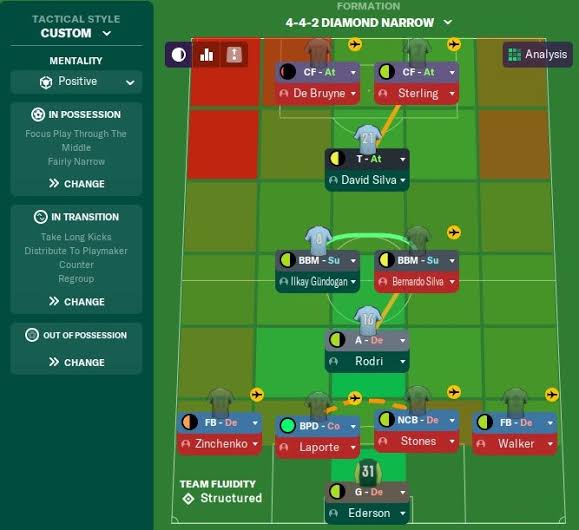
    Arteta and Pep Guardiola (Manchester City, 2016–present) embody a new archetype: clubs deliberately hire a manager with a long-term project, accept short-term pain, and measure success over multi-year cycles. Guardiola’s 8+ years at City have yielded multiple titles, but his longevity is also a product of a supportive board and a recruitment structure that aligns with his philosophy. This ‘process’ model is a deliberate counter-trend to the sack-happy norm, but it requires patience—a commodity in short supply.

    The Top 10 and the Changing Landscape

    Beyond the top two, David Moyes ranks third with 11 years and 1 month at Everton (2002–2013), a testament to his ability to overachieve on a budget. Jürgen Klopp’s 8 years and 6 months at Liverpool (2015–2024) and Guardiola’s ongoing tenure round out the top five. Harry Redknapp’s longest single spell was just 3 years and 10 months at West Ham, illustrating that cumulative longevity across clubs (13 years total) doesn’t always translate to long single-club reigns.

    The Premier League era is defined by escalating financial stakes, global broadcasting revenues, and instant-gratification ownership models. Sackings have become more frequent, and the pressure to qualify for the Champions League—a financial safety net—often dictates a manager’s fate. Structural factors that enable long tenures include strong academy pipelines, supportive boards, and a clear footballing philosophy. Wenger and Ferguson benefited from a less globalized, less data-driven era, where squads were smaller and owners more patient. Their longevity is partly a product of their era’s lower pressure.

    Perspectives on Longevity: Golden Age, Process, Survivor, or Stagnation?

    The ‘Golden Age’ argument holds that Wenger and Ferguson’s success was aided by a less chaotic transfer market and a more forgiving media cycle. The ‘Process’ model, exemplified by Arteta and Guardiola, suggests that clubs can deliberately choose patience as a strategy. The ‘Survivor’ perspective highlights managers like Sam Allardyce and Tony Pulis, who built long careers through pragmatic survival football, though their per-club tenures were shorter. Finally, the ‘Trophy or Bust’ critique argues that Wenger’s later years were marked by stagnation, and that his longevity was a liability. Similarly, some argue Arteta’s early years were underwhelming, and only Arsenal’s financial stability allowed him to survive.

    The Statistical View: Does Longevity Even Matter?

    Analytics suggest that managerial impact on results is often overstated; squad quality and recruitment matter more. Longevity may correlate with good recruitment structures rather than managerial genius. Ferguson’s success was built on a legendary youth academy and astute signings, while Wenger’s early years were powered by a scouting network that unearthed gems like Thierry Henry. In this light, longevity is as much a reflection of the club’s infrastructure as it is of the manager’s ability.

    Common Misunderstandings

    One common error is confusing ‘longest-serving’ with ‘most games managed.’ Ferguson managed more Premier League games (810) than Wenger (828? Actually, Wenger managed 828 PL games, Ferguson 810—so Wenger holds that record too). Another is conflating total English top-flight tenure with Premier League-only tenure. Ferguson’s overall Manchester United reign is longer than Wenger’s, but within the PL era, Wenger edges him out. Clarifying these distinctions is crucial for accurate historical comparisons.

    Longevity in the Premier League is a rare and complex achievement, shaped by era, club structure, and sheer resilience. Wenger and Ferguson set a bar that may never be reached again, while Arteta and Guardiola represent a new model of patient project-building. As the league’s average tenure shrinks, these long-serving managers remind us that sustained success is as much about institutional support as it is about individual brilliance. Whether Arteta can join the elite ranks depends not just on trophies, but on Arsenal’s continued faith in the process.

    Summary

    • Arsène Wenger holds the Premier League record for longest continuous tenure: 21 years, 7 months, 23 days at Arsenal.
    • Sir Alex Ferguson’s Premier League-only tenure is 20 years, 8 months, though his total Manchester United reign was longer (pre-dating the PL).
    • Mikel Arteta is climbing the all-time rankings and could enter the top 10 if he stays through 2025–26.
    • Average Premier League managerial tenure has fallen to 1.5–2 years, with 10 changes in 2023–24 alone.
    • Longevity is often tied to structural factors like academy pipelines, board patience, and Champions League revenue, not just managerial skill.

    FAQ

    Q: Who is the longest-serving Premier League manager of all time?
    A: Arsène Wenger, with 21 years, 7 months, and 23 days at Arsenal (October 1996 – May 2018).

    Q: Why is Sir Alex Ferguson sometimes listed as longer-serving than Wenger?
    A: Ferguson’s total Manchester United tenure (21 years, 1 month) includes years before the Premier League’s 1992 founding. His Premier League-only tenure is 20 years, 8 months, placing him second behind Wenger.

    Q: How close is Mikel Arteta to breaking into the top 10?
    A: Arteta, appointed in December 2019, would enter the top 10 if he remains at Arsenal through the 2025–26 season, surpassing managers like Harry Redknapp’s longest single spell.

    Q: What factors enable a manager to stay at a club for a long time?
    A: Key factors include a supportive board, a clear footballing philosophy, a strong academy pipeline, and consistent Champions League qualification as a financial safety net.

    Q: Does longevity always mean success?
    A: Not necessarily. Some managers like Sam Allardyce built long careers through survival football, while others like Wenger faced criticism for stagnation in later years. Longevity often correlates with good recruitment structures rather than pure managerial genius.

  • The World Cup: A Century of Glory, Politics, and Football Evolution (1930–2022)

    The best photos of the 2022 World Cup | CNN

    Every four years, the world stops. For a month, borders blur, flags wave, and billions of eyes fixate on a single ball. The FIFA World Cup is more than a tournament; it is a global phenomenon that mirrors the political, cultural, and tactical shifts of its era. From its humble beginnings in 1930 with 13 invited teams to the lavish, technology-driven spectacle of Qatar 2022, the World Cup has evolved into a $7.5 billion industry and the ultimate stage for footballing immortality.

    But the tournament’s history is not just about goals and trophies. It is a story of dictators using sport for propaganda, of underdogs defying empires, of tactical revolutions that changed how the game is played, and of a world that grows more connected with each passing edition. As we look ahead to the 48-team format in 2026, understanding where the World Cup has been is essential to appreciating where it is going.

    The Birth of a Global Game: Uruguay 1930

    In 1930, football was already the world’s most popular sport, but it lacked a true global championship. The Olympics had served as a proxy, but FIFA—founded in 1904—wanted a professional, standalone event. Uruguay, the reigning Olympic champion and celebrating its centenary of independence, was the perfect host. The tournament was invitation-only, and the transatlantic journey proved prohibitive for many European nations. Only four—France, Belgium, Romania, and Yugoslavia—made the trip. In the final, Uruguay beat Argentina 4–2 in front of a passionate Montevideo crowd, cementing its place in history.

    The early tournaments were marked by European reluctance and South American dominance. Italy won back-to-back titles in 1934 and 1938, but these victories were tainted by their use as propaganda tools for Mussolini’s fascist regime. The 1938 tournament saw Uruguay boycott in protest of European bias, and the 1942 and 1946 editions were cancelled entirely due to World War II. The World Cup, like the world, was in turmoil.

    Post-War Resurgence and the Birth of Legends

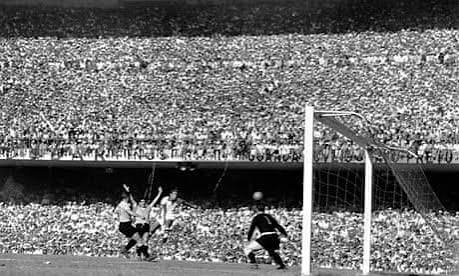
    The 1950 tournament in Brazil marked the first post-war World Cup and the first with British participation. England’s debut ended in humiliation with a 1–0 loss to the United States—a result so shocking it was dubbed “The Miracle on Grass.” The final, held at the Maracanã, saw Uruguay defeat Brazil 2–1 in front of nearly 200,000 spectators, a moment that still haunts Brazilian football. That match remains the highest-attended single game in World Cup history.

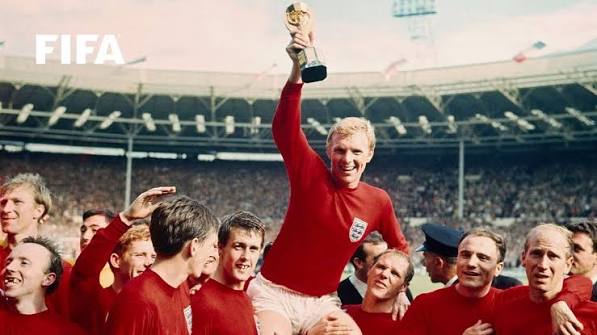
    The 1950s and 1960s saw the rise of attacking football. West Germany’s “Miracle of Bern” in 1954, Hungary’s “Golden Team” that fell short, and Brazil’s emergence as a global powerhouse with Pelé in 1958 and 1962. England won on home soil in 1966, a triumph steeped in Cold War symbolism, with North Korea’s shocking upset of Italy adding a geopolitical subplot. The 1970 tournament in Mexico was the first broadcast in color, and Brazil’s team—featuring Pelé, Jairzinho, and Carlos Alberto—is often hailed as the greatest ever. Their third title earned them the Jules Rimet Trophy permanently.

    Tactical Evolution and Political Shadows

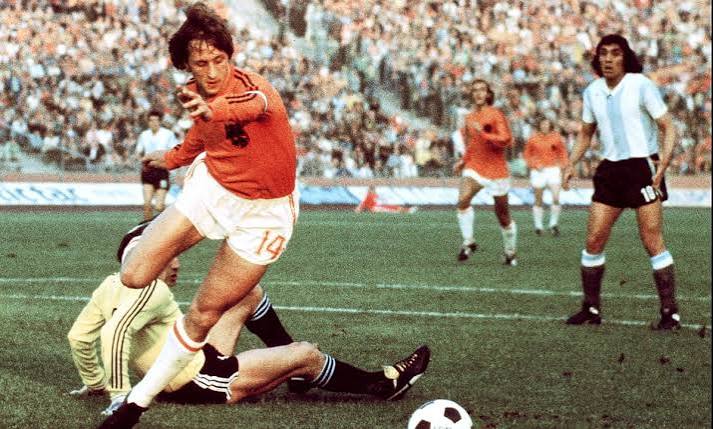
    The 1970s and 1980s brought tactical sophistication and political intrigue. The Netherlands introduced “Total Football” in 1974, but lost to West Germany in the final. Argentina’s 1978 victory was overshadowed by the military junta’s use of the tournament for propaganda, with allegations of match-fixing in their 6–0 win over Peru. The 1982 tournament expanded to 24 teams, and Italy’s Paolo Rossi led them to glory. In 1986, Diego Maradona produced the most iconic individual performance in history, scoring the “Hand of God” and the “Goal of the Century” in the same match against England—a game loaded with Falklands War subtext.

    Commercialization and Global Expansion

    The 1990s marked a turning point in the World Cup’s commercial power. The 1994 tournament in the United States saw the first final decided on penalties, with Brazil triumphing over Italy. It also demonstrated the sport’s global appeal, drawing record crowds and television audiences. The 1998 tournament expanded to 32 teams, and France won on home soil. The 2002 edition was the first held in Asia, co-hosted by South Korea and Japan, with South Korea’s controversial run to the semifinals sparking debate. In 2010, South Africa became the first African host, and Spain’s tiki-taka style dominated. Germany’s 7–1 demolition of Brazil in the 2014 semifinal was a tactical masterclass, and 2018 saw the introduction of VAR, changing the game’s officiating forever.

    Qatar 2022: A Winter Spectacle and a New Era

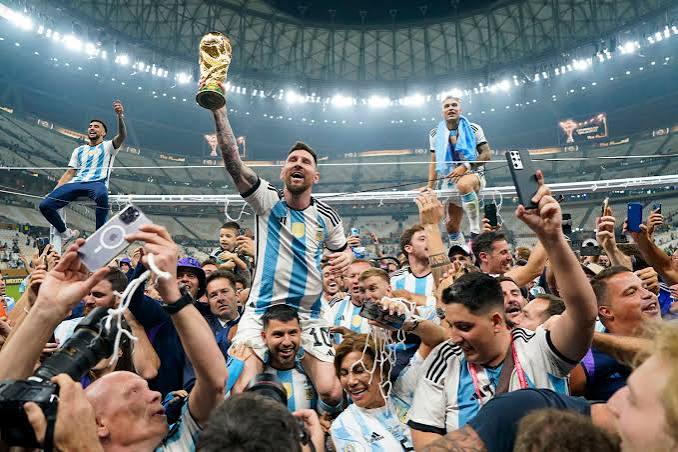
    The 2022 World Cup in Qatar was unprecedented: the first in the Middle East, the first in November–December, and the most expensive in history. It was also a lightning rod for controversy over human rights and environmental concerns. On the pitch, the tournament delivered drama, with Argentina and Lionel Messi finally lifting the trophy after a penalty shootout against France in a final that many consider the greatest ever. The tournament also saw Morocco become the first African semifinalist, a historic breakthrough. With FIFA’s revenue exceeding $7.5 billion, the World Cup has become a global economic juggernaut.

    The Road to 2026: A 48-Team Future

    As the World Cup expands to 48 teams in 2026, hosted by the United States, Canada, and Mexico, the tournament faces new challenges and opportunities. Will the expanded format dilute quality or democratize access? Can the World Cup maintain its magic in an era of club football dominance? The history suggests that the tournament has always adapted, reflecting the times while shaping them. From 13 teams to 48, from black-and-white broadcasts to 4K, from amateur players to global superstars, the World Cup remains the ultimate stage—a mirror to our world and a celebration of the beautiful game.

    The World Cup’s journey from a 13-team invitation in Montevideo to a global spectacle in Qatar is a testament to football’s unifying power. It has survived wars, boycotts, and controversies, evolving with each generation. As we look to 2026, the tournament will continue to be a stage where history is written, legends are born, and the world comes together—one match at a time.

    Summary

    • The World Cup began in 1930 with 13 teams and has grown to 32 (1998–2022), with 48 teams coming in 2026.
    • Brazil holds the record with 5 titles, followed by Germany and Italy with 4 each.
    • The tournament has been shaped by politics, from Mussolini’s propaganda to Cold War tensions and Qatar’s soft power ambitions.
    • Tactical evolution has seen shifts from attacking play to Total Football, tiki-taka, and modern high-pressing systems.
    • Commercial growth has made the World Cup a multi-billion-dollar event, with 2022 revenues exceeding $7.5 billion.

    FAQ

    Q: Why was the World Cup not held in 1942 and 1946?
    A: The tournaments were cancelled due to World War II, as global conflict made hosting and participation impossible.

    Q: Who has scored the most goals in World Cup history?
    A: Miroslav Klose of Germany scored 16 goals across four tournaments (2002–2014), the all-time record.

    Q: What was the “Hand of God” goal?
    A: In the 1986 quarterfinal, Diego Maradona scored a goal with his hand, which was allowed by the referee. He later called it “a little with the head of Maradona, and a little with the hand of God.”

    Q: Why was the 2022 World Cup held in winter?
    A: Qatar’s extreme summer heat made it unsafe to play in June–July, so the tournament was moved to November–December, breaking tradition.

    Q: How many teams will compete in the 2026 World Cup?
    A: The tournament will expand to 48 teams, hosted by the United States, Canada, and Mexico.

  • The 1966 World Cup Final: Was Geoff Hurst’s Ghost Goal Really Over the Line?

    1966 WORLD CUP FINAL: England 4-2 Germany

    On July 30, 1966, Wembley Stadium hosted one of the most iconic moments in football history—and one of its most enduring controversies. With the score locked at 2–2 in extra time of the World Cup Final, England’s Geoff Hurst unleashed a shot that crashed off the underside of the crossbar and bounced down. The Swiss referee, Gottfried Dienst, hesitated, then looked to his Soviet linesman, Tofiq Bahramov, who signaled a goal. England went on to win 4–2, claiming their first—and only—World Cup title.

    But was it really a goal? Over five decades later, the question still ignites debate. The footage is grainy, the angles are ambiguous, and the stakes were monumental. This was not just a goal; it was the defining moment of a nation’s footballing identity. The decision shaped careers, fueled conspiracy theories, and ultimately changed how the sport approaches officiating. In an era before goal-line technology and VAR, the call was made in a split second by human eyes—and it has been dissected ever since.

    In this analysis, we’ll examine the evidence from all angles, the physics, the politics, and the legacy of the most debated goal in World Cup history. Was it over the line? Or was it a monumental error that handed England the trophy? The answer, as we’ll see, is more complex than a simple yes or no.

    The Goal That Refuses to Die

    The 1966 World Cup Final was a classic: England, the hosts, against West Germany, the reigning runners-up. The match was tense, with both sides trading goals. By the 101st minute, the score was 2–2, and the pressure was unbearable. Then Hurst received the ball on the edge of the box, turned, and fired. The ball soared toward the goal, struck the underside of the crossbar, and bounced straight down. For a split second, the world held its breath. Did it cross the line?

    Referee Gottfried Dienst was unsighted—he later admitted he couldn’t tell. He looked to linesman Tofiq Bahramov, who was positioned near the goal line. Bahramov, a Soviet official from Azerbaijan, had a clear view, or so it seemed. He waved his flag toward the center circle, signaling a goal. England led 3–2. The rest is history: Hurst completed his hat-trick in the dying seconds, and England won 4–2.

    But the controversy never faded. Every few years, a new study or a new piece of footage reignites the debate. In 2013, researchers from the University of Oxford and the University of Reading used 3D reconstruction to simulate the ball’s trajectory. Their conclusion: the ball crossed the line by about 6 centimeters. But this was a computer model, not a definitive answer. Critics pointed out that the simulation relied on assumptions about the ball’s deformation and the camera angles. The debate raged on.

    The Evidence: What Do the Images Really Show?

    Let’s look at the visual evidence. The most famous photograph shows the ball just after it hit the ground, with the white goal line visible beneath it. To the naked eye, it appears the ball is on the line, not fully over it. But the angle is from above and behind, making it impossible to judge with certainty. The ball is a sphere, and its curvature means that even if the bottom of the ball is touching the line, the point of contact might be slightly behind the line.

    Another issue is the camera frame rate. The film from 1966 was shot at 24 frames per second, which means the ball’s position is captured at intervals. The exact moment the ball hits the ground is likely between frames, so we never see the precise point of impact. This is why some analysts argue that the ball could have crossed the line and bounced back out before the next frame was captured.

    In 1995, a BBC program attempted to settle the debate using a computer simulation of the ball’s bounce. They concluded that the ball did not cross the line. But this was also criticized for its assumptions. The truth is, without a high-speed camera or goal-line technology, we may never know for certain.

    The Physics of the Bounce

    To understand the controversy, we need to look at the physics. When a ball hits the ground, it deforms slightly. The point of contact is not a single point but a small area. If the ball hits the ground just behind the line, the deformation could cause part of the ball to cross the line, even if the center of the ball does not. According to the laws of the game, the whole of the ball must cross the line for a goal to be awarded. So even if 99% of the ball is over the line, it’s not a goal.

    In 1966, the ball was a Slazenger “Challenge,” made of leather panels. It was heavier and less elastic than modern balls, but it still deformed on impact. The 2013 Oxford study attempted to model this deformation, but the exact parameters are unknown. The ball’s inflation, the surface of the pitch, and the force of the shot all affect the bounce. The study’s authors admitted that their model was based on assumptions, not on the actual ball.

    The Human Factor: Bahramov’s Decision

    Tofiq Bahramov was a controversial figure. He was Azerbaijani, not Russian, but English media often called him “the Russian linesman.” This label fed into Cold War narratives: some claimed that Bahramov, whose country was part of the Soviet Union, might have been biased against West Germany because the USSR had lost to them in the semi-final. But this theory is speculative. Bahramov was a respected official, and there is no evidence of deliberate bias.

    In fact, Bahramov’s decision was likely based on his instantaneous judgment. He was positioned near the goal line, and he had a clear view of the ball. He later said he saw the ball cross the line. But could he have been mistaken? Human eyes are not perfect, especially under pressure. The ball was moving fast, and the line was painted white on green grass. It’s possible that he saw what he expected to see, or that his view was obstructed by players.

    Some have argued that Bahramov’s decision was influenced by the fact that he was a Soviet official. The USSR had been eliminated by West Germany in the semi-final, and there was a political rivalry between the Eastern and Western blocs. But this is a conspiracy theory without evidence. Bahramov was known for his integrity, and he was later honored by FIFA. In 2004, a street in Baku was named after him, and a monument was erected in his honor.

    The Fourth Goal: Another Controversy

    Even if the disputed goal had been disallowed, the match might not have ended 2–2. In the final minute of extra time, Hurst scored his third goal to make it 4–2. But this goal was also controversial: some claimed that the ball went out of play before the cross. The linesman, again Bahramov, signaled that the ball was in play. This goal is often overshadowed by the first controversy, but it adds another layer of uncertainty.

    If the first goal had been disallowed, the score would have been 2–2, and the match would have continued. It’s possible that West Germany could have scored, or that England could have won anyway. But the fourth goal would still have been a point of contention. So even if we could definitively say that the first goal was not over the line, we can’t say that England would have lost.

    The Legacy: How 1966 Changed Football

    The 1966 controversy had a lasting impact on football. It highlighted the need for technology to assist referees. In the decades that followed, the debate over goal-line technology intensified, especially after similar incidents in later World Cups. Finally, in 2012, FIFA introduced goal-line technology, and in 2018, VAR was used in the World Cup. These systems are designed to eliminate exactly the kind of ambiguity that plagued 1966.

    But the 1966 goal remains a cultural touchstone. It’s a reminder that football is a human game, with human errors. The controversy has become part of the folklore of the sport, a story that fans debate with passion. For England fans, it’s a moment of triumph; for German fans, it’s a moment of injustice. The truth may never be known, but that’s part of the charm.

    The Verdict: Was It Over the Line?

    So, was it over the line? The evidence is inconclusive. The photographs and film are ambiguous, the physics is uncertain, and the human testimony is divided. The 2013 study suggests it was over, but it’s not definitive. The 1995 study suggests it wasn’t. The truth is that we may never know for certain.

    What we do know is that the goal was awarded, and England won the World Cup. The decision was made by human officials, using their best judgment. In the absence of technology, that’s all we can ask for. The controversy is a testament to the passion that football inspires, and it’s a reminder that sometimes, the most memorable moments are the ones that are debated for generations.

    The 1966 World Cup Final goal remains one of the greatest mysteries in sports history. Was it over the line? The answer is lost to time, buried in the ambiguity of a black-and-white photograph and the fallibility of human perception. What is certain is that the goal changed the course of football history, giving England their only World Cup title and sparking a debate that would last for decades. In the end, the controversy is not just about a goal—it’s about the nature of sport itself, where moments of glory and injustice are often two sides of the same coin. And that’s what makes it unforgettable.

    Summary

    • The 1966 World Cup Final between England and West Germany ended 4–2, with Geoff Hurst scoring a hat-trick.
    • The most debated goal came in extra time, when Hurst’s shot hit the crossbar and bounced down; the referee awarded a goal after consulting linesman Tofiq Bahramov.
    • Evidence is inconclusive: photographs and film are ambiguous, and computer simulations have yielded conflicting results.
    • Conspiracy theories about Bahramov’s bias are speculative and lack evidence.
    • The controversy led to the eventual introduction of goal-line technology and VAR, but the 1966 goal remains a cultural touchstone.

    FAQ

    Q: Was the ball really over the line in the 1966 World Cup Final?
    A: The evidence is inconclusive. Some computer simulations suggest it crossed by a small margin, while others suggest it did not. The footage is too grainy and the angles too ambiguous to be certain.

    Q: Who was Tofiq Bahramov?
    A: Tofiq Bahramov was an Azerbaijani football referee from the Soviet Union. He served as the linesman in the 1966 final and signaled that the ball had crossed the line. He was later honored for his career in football officiating.

    Q: Did the Soviet Union have a grudge against West Germany?
    A: The USSR lost to West Germany in the semi-final of the 1966 World Cup, but there is no evidence that Bahramov was biased. The theory is speculative and not supported by any facts.

    Q: What would have happened if the goal had been disallowed?
    A: The score would have remained 2–2, and the match would have continued. It’s impossible to know what would have happened, but England also scored a controversial fourth goal, so the outcome might have been different.

    Q: How did this controversy change football?
    A: The 1966 controversy highlighted the need for technology in officiating. It contributed to the development and eventual introduction of goal-line technology and VAR, which are now used in major competitions.

  • The Forgotten Legends: 10 Underrated Footballers Who Shaped the Modern Game

    10 Most Underrated Players in Football History [Ranked]

    In the pantheon of football greatness, names like Pelé, Maradona, and Cruyff shine eternally. But the game’s evolution is not solely the work of these titans. Behind every tactical revolution and every iconic position, there are pioneers whose brilliance has faded from collective memory, overshadowed by geography, media bias, or the sheer dazzle of their contemporaries. This article unearths ten such figures—players who, though underrated today, left an indelible mark on how football is played and understood.

    From the Cold War-era innovators of Eastern Europe to the unsung architects of modern systems, these legends span decades and continents. Their stories are not just about goals and trophies, but about ideas that outlived their careers. As we celebrate the modern game’s fluidity and tactical sophistication, it’s time to credit the forgotten minds and feet that made it possible.

    The Tactical Pioneers: Redefining Positions

    László Kubala: The Original False 9

    Before Lionel Messi roamed Barcelona’s front line, there was László Kubala. A Hungarian refugee who fled the 1956 revolution, Kubala arrived at Barcelona in 1950 and immediately became a phenomenon. He was not a traditional striker or midfielder; he was a hybrid—dropping deep to collect the ball, linking play, and scoring from anywhere. His role was a precursor to the false 9, a position popularized by Messi and Thomas Müller decades later. Kubala’s vision and dribbling made him unplayable, and his 274 goals in 345 appearances for Barça remain a testament to his genius. Yet, because he never won a World Cup and played in an era before global broadcasting, his name is often omitted from the pantheon. Modern Barcelona’s tiki-taka owes a debt to Kubala’s fluid movement.

    Giacinto Facchetti: The Attacking Full-Back

    In the 1960s, full-backs were expected to defend, clear the ball, and little else. Giacinto Facchetti changed that. The Italian left-back for Inter Milan under Helenio Herrera’s ‘Catenaccio’ system was a revelation—he bombed forward with the energy of a winger, overlapping and delivering crosses, while still fulfilling his defensive duties. Facchetti’s raids down the flank were a key weapon in Inter’s two European Cup triumphs (1964, 1965). He redefined the role, showing that full-backs could be attacking assets. Today’s marauding full-backs like Trent Alexander-Arnold and Alphonso Davies are direct descendants of Facchetti’s innovation. Yet, because Catenaccio is often misremembered as purely defensive, Facchetti’s attacking contribution is overlooked.

    Valery Voronin: The Box-to-Box Midfielder

    Long before Frank Lampard and Steven Gerrard, there was Valery Voronin. The Soviet Union midfielder was a complete player—he could tackle, pass, dribble, and score, covering every blade of grass. In the 1960s, Voronin was the engine of the Soviet national team, leading them to the 1964 European Championship final and the 1966 World Cup semi-finals. His ability to transition from defense to attack was revolutionary, and he was named in the World Cup All-Star Team in 1966. However, due to the Cold War, his brilliance was rarely seen in the West, and his career was cut short by a car accident in 1968. Voronin’s legacy is a reminder of the talent hidden behind the Iron Curtain.

    The Regional Heroes: Superstars Beyond the Spotlight

    Oleg Blokhin: The Ukrainian Speedster

    Oleg Blokhin was a phenomenon in the Soviet Union, winning the Ballon d’Or in 1975—the first Ukrainian to do so. His blistering pace and clinical finishing made him a nightmare for defenders, and he scored 211 goals in 432 appearances for Dynamo Kyiv. Blokhin led Dynamo to two European Cup Winners’ Cup titles (1975, 1986) and was the Soviet Union’s all-time top scorer with 42 goals. Yet, because he played in a league that was largely ignored by Western media, his name is rarely mentioned alongside the greats. Blokhin’s speed and directness were ahead of his time, and he remains a legend in Ukraine, but the world has largely forgotten him.

    Enzo Francescoli: The Prince of Uruguay

    Enzo Francescoli was the idol of a generation in South America, earning the nickname ‘El Príncipe’ for his elegant style. The Uruguayan playmaker was a master of the no-look pass and had a sublime first touch, orchestrating attacks with grace. He won three Copa América titles with Uruguay (1983, 1987, 1995) and was a key figure at River Plate, where he won multiple league titles. Francescoli’s influence extended beyond his own career—he was a role model for Zinedine Zidane, who named his son Enzo in his honor. Yet, because he never played in a major European league at his peak (his stints in France and Italy were brief), his global recognition is limited. Francescoli’s artistry deserves a wider audience.

    Kazimierz Deyna: The Polish Captain

    Kazimierz Deyna was the captain of the great Polish team of the 1970s, which finished third in the 1974 World Cup and won the Olympic gold in 1972. A deep-lying playmaker, Deyna was the creative hub of the team, with impeccable passing and a knack for scoring from midfield. He scored 41 goals in 65 appearances for Poland, a remarkable record for a midfielder. However, Poland’s achievements are often overshadowed by the hosts’ triumph in 1974, and Deyna’s career in the West was brief and unremarkable. He died tragically in a car accident in 1989, and his memory has faded. Deyna was a pioneer of the modern ‘regista’ role, dictating play from deep.

    The Glue Players: The Unsung Architects

    Dunga: The Defensive Midfield General

    Before the term ‘holding midfielder’ became fashionable, there was Dunga. The Brazilian captain in the 1994 World Cup was not a flashy samba star; he was a disciplined, hard-tackling midfielder who broke up play and distributed the ball with efficiency. Dunga’s leadership was instrumental in Brazil’s fourth World Cup title, and he also won the Copa América in 1989 and 1997. Yet, because he didn’t fit the stereotype of the Brazilian flair player, his contributions were often undervalued. Dunga’s role was crucial in allowing the attacking talents of Romário and Bebeto to flourish. He was the prototype for modern defensive midfielders like N’Golo Kanté, who are now celebrated for their work rate.

    Jan Ceulemans: The Belgian Complete Midfielder

    Jan Ceulemans was the heart of Belgium’s ‘Golden Generation’ in the 1980s. A versatile midfielder who could also play as a striker, Ceulemans was known for his stamina, aerial ability, and goal-scoring from midfield. He captained Belgium to the final of the 1980 European Championship and led them to a fourth-place finish in the 1986 World Cup. Ceulemans scored 23 goals in 96 appearances for Belgium, a record that stood for years. Yet, because Belgium was not a traditional powerhouse, his achievements are often overlooked. Ceulemans was a box-to-box midfielder before the term existed, and his work rate was unmatched.

    The What-If Stories: Potential Unfulfilled

    Duncan Edwards: The Lost Prodigy

    Duncan Edwards was a once-in-a-generation talent, a powerful midfielder who could dominate games at just 21. He was a key player for Manchester United’s ‘Busby Babes’ and had already won two league titles. Edwards was tipped to become one of the greatest players ever, but his life was tragically cut short in the Munich air disaster of 1958. His death at 21 left a void in football, and his potential remains a tantalizing ‘what if.’ Edwards was a complete midfielder—strong, skilled, and intelligent—and his influence on the modern game would have been immense. He is remembered, but not with the reverence he deserves, as his career was so brief.

    Mário Coluna: The Giant Behind Eusébio

    Mário Coluna was the midfield general of Portugal’s ‘Golden Generation’ in the 1960s, which finished third in the 1966 World Cup. While Eusébio grabbed the headlines with his goals, Coluna was the engine, providing the passes and leadership. A powerful left-footed midfielder, Coluna was a set-piece specialist and a long-range shooter. He won three European Cups with Benfica (1961, 1962, 1965) and was the captain of the national team. Yet, because he played in the shadow of Eusébio, his contributions are often forgotten. Coluna was a pioneer of the ‘box-to-box’ role, and his legacy is a reminder that great teams are built on more than just star strikers.

    José Torres: The Giant Who Paved the Way

    José Torres, known as ‘The Giant,’ was a towering striker for Portugal in the 1960s. At 6’3″, he was an aerial threat, but he was also technically gifted, with a soft touch and good link-up play. Torres was the target man who allowed Eusébio to roam, and his partnership was crucial in Portugal’s 1966 World Cup run. He scored 19 goals in 33 appearances for Portugal, a respectable record. However, because he played in the shadow of Eusébio and later had a modest career in Brazil, his name is rarely mentioned. Torres was a precursor to the modern ‘target man’ who holds up play and brings others into the game, a role now essential in many teams.

    The Cult Icons: Beloved by Connoisseurs

    Zbigniew Boniek: The Polish Dynamo

    Zbigniew Boniek was a dazzling winger who lit up the 1982 World Cup, scoring a hat-trick against Belgium and leading Poland to a third-place finish. His pace, dribbling, and finishing made him one of the most exciting players of his era. Boniek played for Juventus, where he won the European Cup in 1985, and was nicknamed ‘Bello di notte’ (Beautiful at night) for his tendency to shine in evening matches. Yet, because he played for Poland, a team that never won a major trophy, his global recognition is limited. Boniek was a cult hero, adored by fans who appreciated his flair, but he never achieved the fame of his contemporaries like Platini or Maradona.

    Conclusion: Remembering the Forgotten

    These ten players, each in their own way, shaped the modern game—through tactical innovation, regional excellence, or unheralded contributions. They remind us that football’s history is not a linear story of a few superstars, but a rich tapestry woven by countless hands. As we watch today’s stars, let us tip our hats to the forgotten legends who made their brilliance possible. Their legacies deserve to be celebrated, not just in the annals of history, but in the way we understand the beautiful game.

    Summary

    • László Kubala pioneered the false 9 role at Barcelona, decades before Messi.
    • Giacinto Facchetti redefined the full-back position with his attacking runs.
    • Valery Voronin was a box-to-box midfielder ahead of his time, hidden behind the Iron Curtain.
    • Oleg Blokhin won the Ballon d’Or but remains underrated due to Cold War-era media bias.
    • Enzo Francescoli inspired Zidane and was a master playmaker, yet is little known outside South America.

    FAQ

    Q: Why are these players considered ‘forgotten’?
    A: They are not universally celebrated like Pelé or Maradona, often due to limited media coverage in their era, playing for smaller nations, or being overshadowed by teammates.

    Q: How did these players influence the modern game?
    A: They pioneered tactical roles such as the false 9, attacking full-back, and box-to-box midfielder, which are now standard in modern football.

    Q: Are there any players from the 21st century who are similarly underrated?
    A: Yes, but this article focuses on the 1950s-2000s to ensure historical distance and verifiable legacy.

    Q: What criteria were used to select these players?
    A: They had a measurable impact on tactics or playing style, are not already universally celebrated, and have impressive careers that are often overshadowed.

    Q: How can I learn more about these players?
    A: Look for biographies, match footage on archival channels, and historical analyses from football historians.