Tag: 1966 World Cup

  • The Wingless Wonders: How England’s 1966 World Cup Victory Reshaped Football Tactics

    The Wingless Wonders: How England’s 1966 World Cup Victory Reshaped Football Tactics

    On July 30, 1966, at Wembley Stadium, Geoff Hurst scored his third goal in extra time to seal a 4–2 win over West Germany, and England had its first—and so far only—World Cup title. But beneath the delirium of the final whistle lay a quiet tactical revolution. Manager Alf Ramsey had dismantled the conventional wisdom that wingers were essential to attacking play, and in doing so, he didn’t just win a tournament; he offered a template for the future of football.

    Ramsey’s system, derided as the ‘wingless wonders,’ was a radical departure from the status quo. It wasn’t just about removing wingers—it was about reshaping the midfield, redefining the striker’s role, and prioritizing team shape over individual flair. The approach was pragmatic, disciplined, and extraordinarily effective, and its echoes can be heard in every modern team that presses, rotates, and plays without a traditional number 9.

    The Tactical Landscape Before 1966

    To understand the shock of Ramsey’s revolution, you need to look at the world England was playing in. The WM formation—a 3-2-2-3 that had dominated since the 1930s—was crumbling. Brazil’s 4-2-4, with its dazzling attacking quartet, had won the 1958 and 1962 World Cups and was considered the height of modern play. Meanwhile, Italy’s catenaccio system, perfected by Helenio Herrera at Inter Milan, had won back-to-back European Cups in 1964 and 1965. It was a defensive masterclass that prioritized stopping the opponent over creating chances.

    The 1962 World Cup in Chile had been brutally physical, and the game’s athletic demands were rising. Into this maelstrom stepped Alf Ramsey, appointed England manager in 1963. He had a clear vision, and it didn’t include the traditional English winger—a position as beloved as the striker in the nation’s football culture. Ramsey’s declaration that England would ‘win without wingers’ was met with disbelief and hostility. It was heresy.

    But Ramsey wasn’t being contrarian for its own sake. He saw that the 4-2-4 left teams vulnerable in midfield, and that catenaccio’s negativity could be beaten by patience and movement. His solution was a hybrid—a 4-4-2 that became known as the ‘wingless wonders’—that emphasized compactness and control.

    The Anatomy of Ramsey’s System

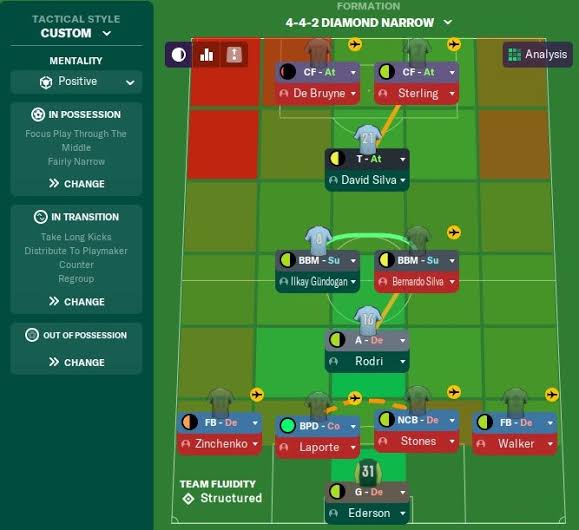
    At its core, Ramsey’s system was a 4-4-2, but it was a 4-4-2 unlike anything seen before. The midfield was narrow, with four players—Alan Ball, Nobby Stiles, Bobby Charlton, and Martin Peters—packed into the center. There were no traditional wide midfielders; instead, the full-backs, George Cohen and Ray Wilson, provided width, but they were disciplined, defensive first and foremost. This narrow setup suffocated opponents in the center of the pitch, where most teams still tried to build play.

    Nobby Stiles was the linchpin, a proto-‘destroyer’ or holding midfielder. His job was simple: man-mark the opponents’ most dangerous player out of the game. In the semi-final against Portugal, he shadowed Eusébio—the tournament’s top scorer with nine goals—so effectively that the great forward was reduced to a spectator until a late penalty. That role, now ubiquitous in modern football as the defensive midfielder, was revolutionary in 1966.

    Bobby Charlton was given a free role as a deep-lying playmaker, dropping off the striker to pick up the ball and drive forward. Geoff Hurst, the target man, was instructed to drop deep, dragging defenders out of position and creating space for the midfielders to run into. This was a precursor to the modern ‘false nine’—a striker who doesn’t stay on the shoulder of the last defender but instead comes deep to link play and open up channels for runners. Hurst’s mobility and selflessness were key to the system’s success, and it’s no coincidence that his hat-trick in the final came from exactly these movements.

    Ramsey’s England wasn’t a purely defensive side—it was a possession-based team that controlled games and struck quickly on the counter. The Wembley pitch, which was wide at 100 yards, suited this style, allowing England’s full-backs to push forward and the midfield to find space. Fitness was also a deliberate focus, with players conditioned to last the full 90 minutes plus extra time in July heat that sapped many European teams.

    The Controversies That Shaped the Narrative

    The tournament wasn’t without its dark moments. The quarter-final against Argentina descended into a bitter, defensive slog, culminating in Antonio Rattín’s sending-off for alleged dissent. Ramsey’s infamous description of the Argentinians as ‘animals’—later retracted—reflected the tension of a match that was more about disruption than football. England’s resilience in that game, and in the semi-final against Portugal, proved that the system could win ugly when necessary.

    The final itself was a microcosm of everything that was new and contentious about England’s approach. Hurst’s second goal, which made it 3–2 in extra time, is still debated today. The ball hit the crossbar, bounced down, and was ruled to have crossed the line by Swiss referee Gottfried Dienst, with assistance from linesman Tofiq Bahramov. Modern goal-line technology would almost certainly have confirmed the goal, but the dispute persists, adding to the mythos of the match. Hurst’s fourth goal, scored in the final minute after a pitch invasion, was also controversial—some argue play should have been stopped. But the result stood, and England had won.

    The Legacy: A Blueprint for Modern Football

    Ramsey’s wingless wonders were the direct ancestor of the modern 4-4-2 and 4-2-3-1. The narrow midfield with a holding player and a box-to-box runner is now the standard template in leagues across the globe. The ‘false nine’ role, popularized by players like Roberto Firmino and Lionel Messi in his later Barcelona years, has its roots in Hurst’s movements. And the emphasis on team shape over individual flair—a lesson reinforced by this tournament—has influenced generations of coaches from Arrigo Sacchi to Pep Guardiola.

    But there’s a paradox in Ramsey’s revolution. Some historians see him as a reactionary, simply adapting to the physical demands of the era rather than innovating. Others view him as a pragmatic genius who understood that winning mattered more than style. The truth is probably both. Ramsey didn’t invent a new system out of thin air; he synthesized existing ideas—the holding role, the narrow midfield, the dropping striker—and applied them with a discipline and rigor that was ahead of its time.

    The 1966 World Cup also marked a shift in the global game. It was the first with comprehensive TV coverage and the first to be broadcast live via satellite, making it a true global event. The tournament’s controversies, from the stolen Jules Rimet Trophy (found by a dog named Pickles) to the disputed goals, have become part of football’s cultural memory. But its tactical legacy is more profound: it proved that a well-organized team could beat more talented opponents, and that success was not a matter of tradition but of adaptation.

    England’s victory in 1966 was more than a moment of national glory—it was a turning point in football’s tactical evolution. Ramsey’s wingless wonders didn’t just win a World Cup; they demonstrated that the future belonged to systems that prioritized control, discipline, and collective movement over individual brilliance. The echoes of that approach are visible in every modern team that presses, rotates, and plays without a traditional winger or striker. While England has never won the World Cup again, the tactical blueprint from that summer at Wembley remains a permanent part of football’s DNA.

    Summary

    • Alf Ramsey’s ‘wingless wonders’ replaced the traditional winger with a narrow, packed midfield, a radical departure that shaped the modern 4-4-2 and 4-2-3-1.
    • Nobby Stiles’ role as a man-marking holding midfielder anticipated the modern defensive midfielder, while Geoff Hurst’s dropping deep was an early version of the false nine.
    • England’s possession-based, disciplined approach proved that team shape could overcome individual flair, a lesson that influenced European football’s tactical development.
    • The 1966 World Cup was the first with comprehensive TV coverage and live satellite broadcast, making it a global event that amplified the impact of England’s tactical innovation.
    • The tournament’s controversies, including the disputed ‘Wembley Goal’ and the ‘animals’ remark, are inseparable from its legacy, but the tactical revolution remains its most enduring contribution.

    FAQ

    Q: What was the ‘wingless wonders’ formation?
    A: It was a 4-4-2 hybrid with a narrow midfield—Alan Ball, Nobby Stiles, Bobby Charlton, and Martin Peters—and no traditional wingers. Full-backs provided width, and the system emphasized control and quick transitions.

    Q: How did Geoff Hurst’s role anticipate the false nine?
    A: Hurst was instructed to drop deep from the striker position, dragging defenders out of position and creating space for midfield runners. This is a precursor to modern false nines like Roberto Firmino or Lionel Messi.

    Q: Why was Nobby Stiles important?
    A: Stiles operated as a proto-destroyer, man-marking key opponents out of the game. His role in neutralizing Eusébio in the semi-final was pivotal, and it set a template for the defensive midfielder role we see today.

    Q: Was Ramsey’s approach purely defensive?
    A: No. It was a possession-based system with quick transitions. England controlled games and struck on the counter, as evidenced by their four goals in the final.

    Q: How has 1966 influenced modern football tactics?
    A: The 4-4-2 and 4-2-3-1 formations trace their lineage to Ramsey’s system. The emphasis on team shape, pressing, and positional discipline has become the standard in modern football.
  • The 1966 World Cup Final: Inside England’s Only Triumph and the Goal That Still Haunts Football

    The 1966 World Cup Final: Inside England’s Only Triumph and the Goal That Still Haunts Football

    On a sweltering Saturday afternoon in July 1966, Wembley Stadium held its breath. England and West Germany were locked at 2–2 in extra time of the World Cup final, and Geoff Hurst had just struck a shot that thumped against the underside of the crossbar. The ball bounced down. Did it cross the line? To this day, no one can say with certainty—but Swiss referee Gottfried Dienst looked to his Azerbaijani linesman, Tofiq Bahramov, who nodded. Goal. The roar that followed changed English football forever.

    That 3–2 lead, secured by a decision that has been debated for nearly six decades, set the stage for Hurst’s famous hat-trick and the most iconic commentary line in sports history. England won 4–2 after extra time, claiming their first—and still only—World Cup. This is the story of that match, the tactical revolution behind it, and the controversies that refuse to fade.

    The Road to Wembley: A Nation’s Expectations

    England had never won the World Cup. In fact, they hadn’t even bothered to enter before 1950, and their subsequent attempts were mediocre at best—group-stage exits in 1950 and 1958, quarter-final losses in 1954 and 1962. The 1966 tournament, held on home soil, was supposed to change that, but the pressure was immense.

    Alf Ramsey, appointed manager in 1963, made a bold public declaration before the tournament: “We will win the World Cup.” In the buttoned-up English football culture of the time, that was borderline arrogant. Yet Ramsey backed it up with a radical tactical shift. He abandoned traditional wingers—a heresy to English football purists—and deployed a narrow 4-4-2/4-3-3 hybrid that became known as the “wingless wonders.” Full-backs George Cohen and Ray Wilson pushed forward, Bobby Charlton roamed as a deep-lying playmaker, and the strike partnership of Geoff Hurst and Roger Hunt provided relentless mobility.

    England’s path to the final was steady rather than spectacular: a 0–0 draw with Uruguay, then wins over Mexico (2–0) and France (2–0). The knockout rounds brought tougher tests—a contentious 1–0 quarter-final against Argentina, where Ramsey famously called the opposition “animals,” and a 2–1 semi-final win over a Eusébio-led Portugal. West Germany, meanwhile, had cruised through with a 5–0 demolition of Switzerland, a 0–0 draw with Argentina, and a 2–1 win over Spain. Their semi-final against the Soviet Union was a 2–1 grind. Both teams arrived at Wembley having conceded just three goals (England) and six (Germany) respectively, but it was the Germans who looked more fluid in attack.

    The Final: A Game of Two Halves (and Extra Time)

    Wembley on 30 July 1966 was packed to its 98,000 capacity, with millions more watching on television. The match started at a frantic pace. West Germany struck first in the 12th minute when Helmut Haller pounced on a defensive mix-up to slot home. England’s response was immediate: just six minutes later, Bobby Moore’s quick free-kick released Hurst, who powered a header past Hans Tilkowski. The score stayed 1–1 through a tense second half, with both goalkeepers—Gordon Banks and Tilkowski—making crucial saves.

    Then, in the 78th minute, Martin Peters tapped in a cross from Hurst to put England ahead. It looked like the trophy was theirs. But West Germany, showing the resilience that would define their football for decades, equalised in the 89th minute. Wolfgang Weber’s shot deflected off a defender and trickled over the line. 2–2. Extra time. The weight of a nation hung on the next thirty minutes.

    The first period of extra time brought the moment that still divides football fans. Hurst, receiving the ball on the edge of the area, turned and fired a left-footed shot that clipped the crossbar and bounced down onto the line. The ball spun back into play, but Bahramov, the linesman, was adamant: it had crossed. Goal. England 3–2. Replays have never provided a definitive answer. In 2018, a team of scientists at Lancaster University used computer graphics to conclude that the ball did not fully cross the line. But in 1966, there was no VAR, only a Swiss referee and a Soviet linesman from Azerbaijan—whose nationality is still often misreported as “Russian.”

    If that goal was controversial, the fourth was pure theatre. In the final minute of extra time, with fans already spilling onto the pitch, Hurst broke clear and hammered the ball into the roof of the net. BBC commentator Kenneth Wolstenholme delivered the immortal line: “Some people are on the pitch… they think it’s all over. It is now!” The whistle blew. England were world champions.

    The Men Behind the Triumph

    Alf Ramsey’s tactical gamble paid off, but the final was won by individual brilliance. Geoff Hurst, a West Ham forward who had only made his England debut earlier in the tournament, scored a hat-trick—the only one ever in a World Cup final, a record that still stands. His four goals in the tournament all came in the last two matches: one in the semi-final, three in the final. Bobby Moore, the 25-year-old captain, marshalled the defence with a composure that belied his age, earning the respect of even the Brazilian great Pelé, who later called him “the greatest defender I ever played against.”

    Bobby Charlton, the midfield engine, was named the tournament’s best young player. And Gordon Banks, the goalkeeper, conceded just three goals in six matches. But it was the team’s collective discipline that Ramsey had instilled—the “wingless wonders” who sacrificed flair for structure—that proved decisive. West Germany, managed by Helmut Schön and led by Uwe Seeler, played a more conventional 4-2-4 with Franz Beckenbauer as a libero. Their approach was not wrong; it simply met a team that had prepared for every eventuality.

    The Aftermath: A Legacy of Joy and What-Ifs

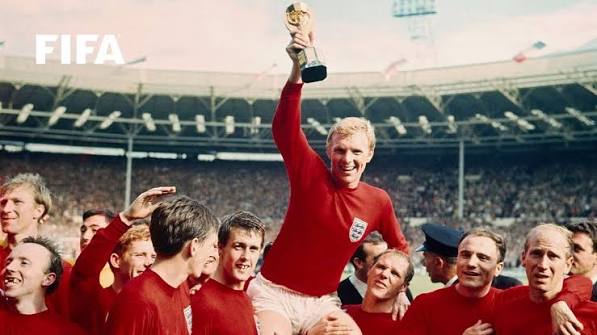
    The trophy presentation was a moment of pure pageantry. Queen Elizabeth II handed the Jules Rimet Trophy to Bobby Moore, who famously wiped his hands on his shorts before shaking her hand—a gesture that became iconic, not as a snub but as a pragmatic wipe of sweat and dirt. England became the third host nation to win the World Cup, after Uruguay in 1930 and Italy in 1934.

    But the victory’s legacy is bittersweet. It remains England’s only major international trophy, and every subsequent failure—1970, 1990, 1996, 2006, 2018, 2024—has been measured against 1966. The goal that wasn’t a goal has become a national obsession, a symbol of both triumph and what-ifs. For West Germany, the loss was a bitter pill, but they would go on to win the World Cup in 1974 and again in 1990, while England have never come close to a second title.

    The controversy also raised questions about officiating that echo into the modern era. Bahramov’s decision, made in a split second, has been dissected endlessly. Most modern analyses suggest the ball did not fully cross the line, but in 1966, that didn’t matter. The goal stood, and history was written.

    Why It Still Matters

    For English fans, 1966 is a golden age, a touchstone of national identity. For neutrals, it’s a story of how a single decision can alter the fate of nations. The match is also a tactical time capsule—a clash between Ramsey’s pragmatic wingless wonders and Schön’s more traditional German setup. It was the last World Cup final before the era of total football and the tactical revolutions that followed.

    And then there’s the commentary. “They think it’s all over” has entered the lexicon, used in everything from election nights to cricket matches. It’s a phrase that evokes not just a goal, but a moment when a nation exhaled. Sixty years later, England still haven’t won another World Cup, but they have that moment—and it’s still all over.

    The 1966 World Cup final was not just a match; it was a crucible of skill, controversy, and raw emotion. England’s 4–2 victory over West Germany delivered their only World Cup, but it also gave the world one of football’s greatest debates—the Wembley Goal—and a piece of commentary that will outlive us all. Whether the ball crossed the line or not, the legacy is secure: on that July afternoon, England conquered the world, and football gained a story for the ages.

    Summary

    • England won their first and only World Cup on 30 July 1966, beating West Germany 4–2 after extra time at Wembley.
    • Geoff Hurst scored a hat-trick, the only one in a World Cup final, including the controversial “Wembley Goal” in the 101st minute.
    • Alf Ramsey’s “wingless wonders” formation, which abandoned traditional wingers, was a radical tactical shift that paid off.
    • The final has been debated for decades, particularly the decision by linesman Tofiq Bahramov to award England’s third goal, which modern analysis suggests may not have crossed the line.
    • Kenneth Wolstenholme’s commentary line “They think it’s all over… it is now!” has become a cultural touchstone.

    FAQ

    Q: Was the ball over the line for Geoff Hurst’s third goal?
    A: The debate remains unresolved. Modern computer analysis from Lancaster University in 2018 concluded the ball did not fully cross the line, but no definitive proof exists. The goal was awarded by linesman Tofiq Bahramov and stood.

    Q: Who was Tofiq Bahramov?
    A: He was a linesman from the Soviet Union, specifically from Azerbaijan. He is often incorrectly referred to as “the Russian linesman,” but his nationality was Azerbaijani. His decision to award the goal made him a controversial figure in football history.

    Q: What was Alf Ramsey’s “wingless wonders” tactic?
    A: It was a 4-4-2/4-3-3 hybrid formation that did not use traditional wingers. Instead, Ramsey relied on narrow midfield play, attacking full-backs, and a mobile strike partnership, which was a radical departure from conventional English football at the time.

    Q: How many goals did Geoff Hurst score in the 1966 World Cup?
    A: He scored four goals in total: one in the semi-final against Portugal and a hat-trick in the final against West Germany. All his goals came in the last two matches of the tournament.

    Q: What is the significance of “They think it’s all over”?
    A: It’s the famous commentary by BBC’s Kenneth Wolstenholme during Hurst’s final goal, when fans were already invading the pitch. The line has become a ubiquitous phrase in British culture, used in various contexts beyond football.

  • The 1966 World Cup Final: Was Geoff Hurst’s Ghost Goal Really Over the Line?

    The 1966 World Cup Final: Was Geoff Hurst’s Ghost Goal Really Over the Line?

    On July 30, 1966, Wembley Stadium hosted one of the most iconic moments in football history—and one of its most enduring controversies. With the score locked at 2–2 in extra time of the World Cup Final, England’s Geoff Hurst unleashed a shot that crashed off the underside of the crossbar and bounced down. The Swiss referee, Gottfried Dienst, hesitated, then looked to his Soviet linesman, Tofiq Bahramov, who signaled a goal. England went on to win 4–2, claiming their first—and only—World Cup title.

    But was it really a goal? Over five decades later, the question still ignites debate. The footage is grainy, the angles are ambiguous, and the stakes were monumental. This was not just a goal; it was the defining moment of a nation’s footballing identity. The decision shaped careers, fueled conspiracy theories, and ultimately changed how the sport approaches officiating. In an era before goal-line technology and VAR, the call was made in a split second by human eyes—and it has been dissected ever since.

    In this analysis, we’ll examine the evidence from all angles, the physics, the politics, and the legacy of the most debated goal in World Cup history. Was it over the line? Or was it a monumental error that handed England the trophy? The answer, as we’ll see, is more complex than a simple yes or no.

    The Goal That Refuses to Die

    The 1966 World Cup Final was a classic: England, the hosts, against West Germany, the reigning runners-up. The match was tense, with both sides trading goals. By the 101st minute, the score was 2–2, and the pressure was unbearable. Then Hurst received the ball on the edge of the box, turned, and fired. The ball soared toward the goal, struck the underside of the crossbar, and bounced straight down. For a split second, the world held its breath. Did it cross the line?

    Referee Gottfried Dienst was unsighted—he later admitted he couldn’t tell. He looked to linesman Tofiq Bahramov, who was positioned near the goal line. Bahramov, a Soviet official from Azerbaijan, had a clear view, or so it seemed. He waved his flag toward the center circle, signaling a goal. England led 3–2. The rest is history: Hurst completed his hat-trick in the dying seconds, and England won 4–2.

    But the controversy never faded. Every few years, a new study or a new piece of footage reignites the debate. In 2013, researchers from the University of Oxford and the University of Reading used 3D reconstruction to simulate the ball’s trajectory. Their conclusion: the ball crossed the line by about 6 centimeters. But this was a computer model, not a definitive answer. Critics pointed out that the simulation relied on assumptions about the ball’s deformation and the camera angles. The debate raged on.

    The Evidence: What Do the Images Really Show?

    Let’s look at the visual evidence. The most famous photograph shows the ball just after it hit the ground, with the white goal line visible beneath it. To the naked eye, it appears the ball is on the line, not fully over it. But the angle is from above and behind, making it impossible to judge with certainty. The ball is a sphere, and its curvature means that even if the bottom of the ball is touching the line, the point of contact might be slightly behind the line.

    Another issue is the camera frame rate. The film from 1966 was shot at 24 frames per second, which means the ball’s position is captured at intervals. The exact moment the ball hits the ground is likely between frames, so we never see the precise point of impact. This is why some analysts argue that the ball could have crossed the line and bounced back out before the next frame was captured.

    In 1995, a BBC program attempted to settle the debate using a computer simulation of the ball’s bounce. They concluded that the ball did not cross the line. But this was also criticized for its assumptions. The truth is, without a high-speed camera or goal-line technology, we may never know for certain.

    The Physics of the Bounce

    To understand the controversy, we need to look at the physics. When a ball hits the ground, it deforms slightly. The point of contact is not a single point but a small area. If the ball hits the ground just behind the line, the deformation could cause part of the ball to cross the line, even if the center of the ball does not. According to the laws of the game, the whole of the ball must cross the line for a goal to be awarded. So even if 99% of the ball is over the line, it’s not a goal.

    In 1966, the ball was a Slazenger “Challenge,” made of leather panels. It was heavier and less elastic than modern balls, but it still deformed on impact. The 2013 Oxford study attempted to model this deformation, but the exact parameters are unknown. The ball’s inflation, the surface of the pitch, and the force of the shot all affect the bounce. The study’s authors admitted that their model was based on assumptions, not on the actual ball.

    The Human Factor: Bahramov’s Decision

    Tofiq Bahramov was a controversial figure. He was Azerbaijani, not Russian, but English media often called him “the Russian linesman.” This label fed into Cold War narratives: some claimed that Bahramov, whose country was part of the Soviet Union, might have been biased against West Germany because the USSR had lost to them in the semi-final. But this theory is speculative. Bahramov was a respected official, and there is no evidence of deliberate bias.

    In fact, Bahramov’s decision was likely based on his instantaneous judgment. He was positioned near the goal line, and he had a clear view of the ball. He later said he saw the ball cross the line. But could he have been mistaken? Human eyes are not perfect, especially under pressure. The ball was moving fast, and the line was painted white on green grass. It’s possible that he saw what he expected to see, or that his view was obstructed by players.

    Some have argued that Bahramov’s decision was influenced by the fact that he was a Soviet official. The USSR had been eliminated by West Germany in the semi-final, and there was a political rivalry between the Eastern and Western blocs. But this is a conspiracy theory without evidence. Bahramov was known for his integrity, and he was later honored by FIFA. In 2004, a street in Baku was named after him, and a monument was erected in his honor.

    The Fourth Goal: Another Controversy

    Even if the disputed goal had been disallowed, the match might not have ended 2–2. In the final minute of extra time, Hurst scored his third goal to make it 4–2. But this goal was also controversial: some claimed that the ball went out of play before the cross. The linesman, again Bahramov, signaled that the ball was in play. This goal is often overshadowed by the first controversy, but it adds another layer of uncertainty.

    If the first goal had been disallowed, the score would have been 2–2, and the match would have continued. It’s possible that West Germany could have scored, or that England could have won anyway. But the fourth goal would still have been a point of contention. So even if we could definitively say that the first goal was not over the line, we can’t say that England would have lost.

    The Legacy: How 1966 Changed Football

    The 1966 controversy had a lasting impact on football. It highlighted the need for technology to assist referees. In the decades that followed, the debate over goal-line technology intensified, especially after similar incidents in later World Cups. Finally, in 2012, FIFA introduced goal-line technology, and in 2018, VAR was used in the World Cup. These systems are designed to eliminate exactly the kind of ambiguity that plagued 1966.

    But the 1966 goal remains a cultural touchstone. It’s a reminder that football is a human game, with human errors. The controversy has become part of the folklore of the sport, a story that fans debate with passion. For England fans, it’s a moment of triumph; for German fans, it’s a moment of injustice. The truth may never be known, but that’s part of the charm.

    The Verdict: Was It Over the Line?

    So, was it over the line? The evidence is inconclusive. The photographs and film are ambiguous, the physics is uncertain, and the human testimony is divided. The 2013 study suggests it was over, but it’s not definitive. The 1995 study suggests it wasn’t. The truth is that we may never know for certain.

    What we do know is that the goal was awarded, and England won the World Cup. The decision was made by human officials, using their best judgment. In the absence of technology, that’s all we can ask for. The controversy is a testament to the passion that football inspires, and it’s a reminder that sometimes, the most memorable moments are the ones that are debated for generations.

    The 1966 World Cup Final goal remains one of the greatest mysteries in sports history. Was it over the line? The answer is lost to time, buried in the ambiguity of a black-and-white photograph and the fallibility of human perception. What is certain is that the goal changed the course of football history, giving England their only World Cup title and sparking a debate that would last for decades. In the end, the controversy is not just about a goal—it’s about the nature of sport itself, where moments of glory and injustice are often two sides of the same coin. And that’s what makes it unforgettable.

    Summary

    • The 1966 World Cup Final between England and West Germany ended 4–2, with Geoff Hurst scoring a hat-trick.
    • The most debated goal came in extra time, when Hurst’s shot hit the crossbar and bounced down; the referee awarded a goal after consulting linesman Tofiq Bahramov.
    • Evidence is inconclusive: photographs and film are ambiguous, and computer simulations have yielded conflicting results.
    • Conspiracy theories about Bahramov’s bias are speculative and lack evidence.
    • The controversy led to the eventual introduction of goal-line technology and VAR, but the 1966 goal remains a cultural touchstone.

    FAQ

    Q: Was the ball really over the line in the 1966 World Cup Final?
    A: The evidence is inconclusive. Some computer simulations suggest it crossed by a small margin, while others suggest it did not. The footage is too grainy and the angles too ambiguous to be certain.

    Q: Who was Tofiq Bahramov?
    A: Tofiq Bahramov was an Azerbaijani football referee from the Soviet Union. He served as the linesman in the 1966 final and signaled that the ball had crossed the line. He was later honored for his career in football officiating.

    Q: Did the Soviet Union have a grudge against West Germany?
    A: The USSR lost to West Germany in the semi-final of the 1966 World Cup, but there is no evidence that Bahramov was biased. The theory is speculative and not supported by any facts.

    Q: What would have happened if the goal had been disallowed?
    A: The score would have remained 2–2, and the match would have continued. It’s impossible to know what would have happened, but England also scored a controversial fourth goal, so the outcome might have been different.

    Q: How did this controversy change football?
    A: The 1966 controversy highlighted the need for technology in officiating. It contributed to the development and eventual introduction of goal-line technology and VAR, which are now used in major competitions.