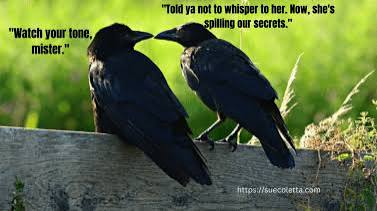
If you’ve ever listened to crows cawing in a city park and then heard them in a rural forest, you might have noticed a difference not just in volume, but in the tone and rhythm of their calls. These differences aren’t random; they’re regional dialects, much like human accents. Crows in different areas develop distinct ‘caw’ patterns, and these patterns are learned, not inherited, making them a fascinating window into animal culture.
But how do these dialects form, and what do they mean? Research on American Crows and carrion crows in Europe reveals that these birds are not just making noise; they’re participating in a complex system of vocal communication that varies from place to place. Understanding this system not only illuminates crow behavior but also challenges our assumptions about what animals can learn and pass down.
The Anatomy of a Caw
Contrary to popular belief, a crow’s “caw” is not a single, uniform sound. Acoustic analysis has identified multiple distinct call types, each serving a different purpose. There are alarm caws, which are sharp and harsh, used to warn of predators. Contact caws, which are softer and more rhythmic, help maintain social bonds within a flock. There are also “ko” calls and “rattle” calls, each with its own frequency profile. When researchers study dialects, they focus on specific call types, particularly the scolding or alarm calls, because these show the most measurable variation between regions.
Dr. Andrea Townsend and her colleagues have documented that American Crow alarm calls vary in pitch, duration, and rhythm between populations separated by just a few hundred kilometers. These variations are consistent enough that a trained ear—or a spectrogram—can often tell where a crow is from.
Learning the Local Lingo
Crows are vocal learners, a trait they share with humans, parrots, and hummingbirds. This means that their calls are not hardwired from birth; instead, juvenile crows learn their regional call patterns by listening to and imitating the adults in their natal area. This learning process is crucial: a crow that moves to a new region can adopt the local call patterns, demonstrating that dialects are cultural, not genetic.
Behavioral studies support this. When researchers play recordings of local versus foreign crow calls to wild crows, the birds respond more aggressively to local calls, suggesting they recognize and favor the familiar. This response indicates that dialects are not just acoustic variations but carry social significance.
Why Do Dialects Exist?
So, why do crows develop regional dialects in the first place? Several hypotheses have been proposed, and it’s likely a combination of factors:
- Kin recognition and group cohesion: Local calls help crows identify members of their own social group or territory, which is essential for cooperative behaviors like mobbing predators.
- Mate selection: Female crows may prefer males with local calls, leading to assortative mating that reinforces dialects.
- Environmental adaptation: The acoustic adaptation hypothesis suggests that calls are shaped by the local sound environment. Urban crows, for example, produce calls with higher pitch and shorter duration, which are better at cutting through low-frequency traffic noise.
- Cultural drift: Similar to how human languages evolve, dialects may arise from random copying errors that accumulate over generations.
The Urban Crow Phenomenon
Urbanization provides a natural experiment for studying dialect formation. In cities, crows face continuous low-frequency noise, and research shows they adjust their calls to be higher-pitched and shorter. This is a form of behavioral plasticity—crows can change their calls within their lifetime to adapt to their environment. It’s not a genetic change but a learned adjustment, highlighting the flexibility of crow vocalizations.
Crows and the Concept of Culture
The existence of learned, geographically distinct vocal traditions in crows raises a provocative question: does this constitute “culture”? In biology, culture is defined as socially transmitted behavior, and by that definition, crow dialects are a form of culture. These traditions persist across generations, passed down not through DNA but through observation and imitation.
This finding aligns with what we know about corvid intelligence. Crows are renowned for problem-solving, tool use, and social cognition. Their vocal flexibility is another manifestation of their cognitive sophistication, suggesting that the mental machinery required for cultural transmission is not unique to humans.
How Scientists Study Crow Calls
To study crow dialects, researchers use spectrograms—visual representations of sound frequency over time. By measuring parameters like pitch (frequency), duration, and rhythm, they can quantify differences between populations. Playback experiments, where they broadcast recorded calls to wild crows, allow them to test behavioral responses.
One notable study by Yorzinski and Vehrencamp (2009) showed that crows can discriminate between familiar and unfamiliar individual voices, adding another layer to their communication system. This individual recognition, combined with regional dialects, suggests a rich social structure.
Common Questions About Crow Dialects
Are crow dialects a form of language?
No, not in the human sense. Crow calls lack syntax, recursion, or symbolic reference. They are more like accents or regional variations in non-linguistic vocalizations. The “secret language” framing is evocative but scientifically imprecise.
Can crows from different regions understand each other?
Yes, they can. Studies show that crows respond to foreign calls, though less intensely than to local ones. This suggests that while dialects differ, there is enough commonality for basic communication.
Do all crows have dialects?
Dialects have been documented in American Crows and carrion crows, but the extent varies by species and region. European carrion crows show less pronounced regional variation than American Crows.
How long does it take for a crow to learn its local dialect?
Juvenile crows begin producing adult-like calls after several months, and their calls “crystallize” into the local pattern as they mature. The exact timeframe can vary.
Can crows change their dialect if they move?
Yes, because dialects are learned, a crow that moves to a new area can adopt local call patterns. This flexibility is a key feature of vocal learning.
Crow dialects are more than just background noise—they are a window into the social and cognitive lives of these remarkable birds. By studying how regional variations in caws emerge, we gain insight into the mechanisms of vocal learning, the importance of social transmission, and the very nature of culture in the animal kingdom. Next time you hear a crow caw, listen closely: it might be speaking in its own local accent.
Summary
- Crows are vocal learners, not born with calls but learning them from adults in their community.
- Regional dialects in alarm calls vary measurably, even between populations separated by a few hundred kilometers.
- Dialects serve functions like kin recognition, mate selection, and environmental adaptation.
- Urban crows adjust their calls to be higher-pitched to overcome city noise, showing behavioral flexibility.
- Crow dialects are culturally transmitted, making them a form of animal culture.
FAQ
Q: Are crow dialects really like human accents?nA: Yes, in a limited way. Crows in different regions have distinct call patterns that are learned, not innate. However, crow calls lack the complexity of human language.
Q: Can crows from different regions understand each other?nA: Yes, they can communicate, but they respond more strongly to local calls, indicating they recognize the difference.
Q: Do crows change their calls if they move to a new area?nA: Yes, because dialects are learned, a crow can adopt the local call patterns after moving.
Q: Why do urban crows have different calls?nA: Urban crows produce higher-pitched and shorter calls to be heard over low-frequency traffic noise, an example of environmental adaptation.
Q: Is crow vocal learning evidence of culture?nA: Yes, since culture is defined as socially transmitted behavior, crow dialects qualify as cultural traditions.
Leave a Reply