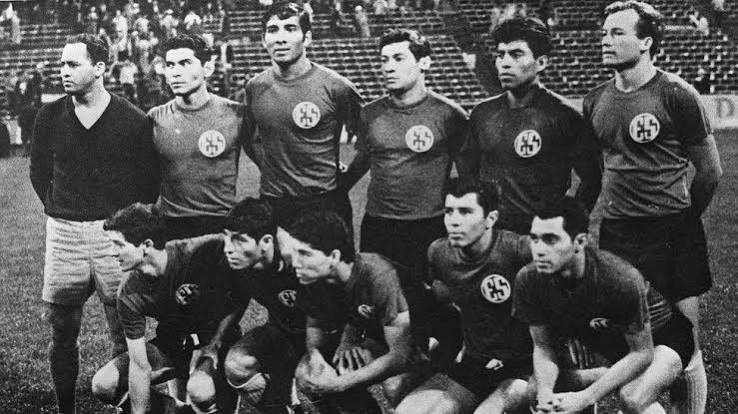
Tag: World Cup

  • The 1969 ‘Soccer War’: When a World Cup Qualifier Sparked a Real-Life Conflict

    The 1969 ‘Soccer War’: When a World Cup Qualifier Sparked a Real-Life Conflict

    In June 1969, two neighboring countries went to war over a football match. But the real battle lines were drawn decades earlier, in the soil of land reform, migration, and economic desperation. On July 14, El Salvador launched a full-scale military invasion of Honduras, triggered by riots after a World Cup qualifying game. The conflict lasted just 100 hours, but it left thousands dead and over 100,000 Salvadorans displaced.

    The ‘Soccer War’ is often remembered as an absurd footnote in sports history a moment when a game turned deadly. But that framing misses the deeper tragedy: the war was a violent eruption of long-simmering tensions over land, population, and power. What happened on the pitch was merely the spark that lit a powder keg built over decades.

    The Spark: Three Matches That Shook Central America

    The road to the 1970 FIFA World Cup in Mexico brought El Salvador and Honduras together in a three-match playoff. The stakes were high—a spot in the world’s biggest sporting event—but the atmosphere was already toxic.

    The first match, played in Tegucigalpa on June 8, 1969, ended in a 1–0 win for Honduras. Reports of a Honduran fan being killed in San Salvador followed. The second match, in San Salvador on June 15, saw El Salvador win 3–0, but the victory was marred by violent riots. Two Honduran fans were reportedly killed, and the Salvadoran players had spent the night before the game harassed by noise outside their hotel—a tactic some accounts say was used against the Honduran team in Tegucigalpa as well.

    By June 26, El Salvador had severed diplomatic relations with Honduras, citing attacks on its citizens. Border skirmishes escalated, and on July 14, the Salvadoran military invaded. The war lasted until July 18, when the Organization of American States (OAS) brokered a ceasefire. A third, decisive match—played in neutral Mexico City in October—saw El Salvador win 3–2 in extra time, qualifying for the World Cup. But by then, the damage was done.

    The Real Battlefield: Land and Migration

    The football matches were a catalyst, not a cause. The root of the conflict lay in a demographic and economic imbalance that had been building for decades.

    El Salvador was the smallest and most densely populated country in Central America, with a tiny oligarchy controlling most of the arable land. Landless peasants, pushed out by poverty and inequality, migrated en masse to Honduras, which had a much lower population density. By the 1960s, an estimated 300,000 Salvadorans were living in Honduras, many as squatters on land they farmed.

    Honduras, meanwhile, was implementing its own agrarian reform. The 1962 land reform laws threatened the land held by Salvadoran migrants, and in 1969, the Honduran government began enforcing them, expelling Salvadoran squatters and smallholders. This was a direct threat to the livelihoods of thousands of families, and it created a humanitarian crisis that El Salvador’s government could not ignore.

    The economic disparity between the two nations also fueled resentment. El Salvador was more industrialized, and Hondurans feared economic domination. Salvadoran migrants, who were often more skilled or willing to work for lower wages, were scapegoated for economic woes. Honduran media amplified these grievances, while Salvadoran media highlighted abuses against its citizens abroad. Both governments used nationalist rhetoric to deflect domestic problems and rally public support.

    The War Itself: 100 Hours of Chaos

    El Salvador’s invasion was framed as a self-defense measure to protect its citizens, but the military campaign was far from a swift victory. The Salvadoran army advanced several kilometers into Honduran territory but quickly stalled due to supply line failures and determined Honduran resistance, including air attacks on Salvadoran oil facilities and the international airport at Ilopango.

    El Salvador’s air force consisted of World War II-era P-51 Mustangs and even civilian aircraft rigged with bombs. Honduras, though less equipped, managed to hold its own. Neither side achieved a decisive military victory; the war ended in a stalemate, with estimates of 2,000 to 6,000 dead, mostly Honduran civilians and Salvadoran migrants caught in the crossfire.

    The OAS played a crucial role in ending the conflict, brokering a ceasefire on July 18. El Salvador initially resisted, but the threat of economic sanctions and pressure from the United States—wary of instability in Central America during the Cold War—forced its troops to withdraw by August. The war also severely disrupted the Central American Common Market, a regional integration effort that had been a rare success story in the region.

    The Aftermath: Displacement and a War’s Legacy

    The most lasting consequence of the war was the mass expulsion of Salvadoran migrants from Honduras. Between 100,000 and 130,000 Salvadorans were forced to flee or were deported, often leaving behind everything they owned. This created a refugee crisis in El Salvador, which was already struggling with land scarcity and poverty.

    The war also deepened the divide between the two nations, and relations remained tense for decades. The ‘Soccer War’ became a cautionary tale about how nationalism and economic desperation can turn a sporting event into a deadly conflict.

    Beyond the Absurdity: Why the ‘Soccer War’ Still Matters

    The popular narrative of the ‘Soccer War’ focuses on the absurdity of a football match sparking a war—and it is absurd, in the sense that it reveals how easily human lives can be sacrificed for nationalist pride. But the real lesson is more sobering: the war was a ‘war of the poor against the poor,’ as some historians have described it. Salvadoran peasants fleeing an oligarchic land monopoly clashed with Honduran peasants defending their own land reform, all while elites on both sides manipulated nationalist sentiment for political gain.

    The conflict remains a powerful illustration of how migration, land inequality, and economic disparity can create tinderbox conditions, waiting for any spark to ignite. And the fact that the spark was a football match—a game meant to unite—is a bitter irony that still resonates today, in a world where sports and politics are increasingly intertwined.

    The 1969 ‘Soccer War’ is not just a footnote in sports history; it is a stark reminder that wars are rarely about what they appear to be on the surface. The World Cup qualifying matches were the trigger, but the ammunition was decades of land inequality, forced migration, and nationalist manipulation. As we watch modern-day conflicts unfold, it’s worth remembering that the battlefields of the future may be ignited not by a football goal, but by any number of economic and social injustices that we fail to address.

    Summary

    • The ‘Soccer War’ (July 14–18, 1969) between El Salvador and Honduras was triggered by riots during a World Cup qualifying match, but the real causes were economic and demographic.
    • The conflict lasted roughly 100 hours, left an estimated 2,000–6,000 dead, and led to the expulsion of 100,000–130,000 Salvadoran migrants from Honduras.
    • Root causes included severe land inequality in El Salvador, Honduran agrarian reform that displaced Salvadoran squatters, and nationalist scapegoating by both governments.
    • The war ended in a stalemate, with an OAS-brokered ceasefire; El Salvador withdrew after the threat of economic sanctions.
    • The war serves as a case study in how migration, land disputes, and nationalist rhetoric can turn a sporting event into a deadly conflict.

    FAQ

    Q: Why is it called the ‘Soccer War’?
    A: Because the immediate trigger was riots following a World Cup qualifying match between El Salvador and Honduras in June 1969. The war started less than a month later.

    Q: How long did the war last?
    A: The actual military conflict lasted about 100 hours, from July 14 to July 18, 1969. It is one of the shortest interstate wars in modern history.

    Q: What were the real causes of the war?
    A: The underlying causes were economic and demographic: land inequality in El Salvador, mass migration of Salvadorans to Honduras, and Honduran land reforms that threatened their livelihoods. Both governments used nationalism to deflect domestic issues.

    Q: How many people died?
    A: Estimates range from 2,000 to 6,000 deaths, mostly Honduran civilians and Salvadoran migrants. The exact number is still debated.

    Q: Did El Salvador qualify for the 1970 World Cup?
    A: Yes. After the war, a third match was played in Mexico City in October 1969, which El Salvador won 3–2 in extra time, earning a spot in the World Cup—though they did not advance past the group stage.
  • The Azzurri’s Goalkeeping Paradox: Why Italy’s Defensive Mastery Fails in the Penalty Lottery


    For decades, Italy has been the gold standard for goalkeeping. From Dino Zoff’s 1,168-minute shutout streak to Gianluigi Buffon’s five IFFHS Goalkeeper of the Year awards, the Azzurri have built their footballing identity on defensive perfection. Yet, when matches come down to the cruel randomness of a penalty shootout, Italy has a historically catastrophic record—losing seven of nine major tournament shootouts, including two World Cup finals and a home semifinal.

    This paradox cuts to the heart of Italian football culture. A nation that prides itself on preventing goals seems almost allergic to scoring them when it matters most. But is it a genuine curse, a statistical anomaly, or a deeper psychological and tactical consequence of the catenaccio ethos? The answer is more complex than mere superstition.

    The Glittering Pedigree of Italian Goalkeeping

    Italy’s goalkeeping lineage is unmatched. Gianluigi Buffon, with 176 caps and a 2006 World Cup winners’ medal, stands as the godfather of modern shot-stoppers. Dino Zoff lifted the World Cup in 1982 at age 40, while Walter Zenga’s 518-minute clean-sheet streak at Italia ’90 remains a tournament record. Current custodian Gianluigi Donnarumma, Euro 2020’s Player of the Tournament, represents the next chapter—having already claimed the Yashin Trophy in 2021.

    This dominance extends to individual awards: Italian goalkeepers have claimed the IFFHS World’s Best Goalkeeper honor more times than any other nation, with Buffon winning it five times alone. The roots run deep in the catenaccio system, devised by Helenio Herrera at Inter Milan in the 1960s, which turned defensive solidity into a national obsession. Goalkeepers were the last line of a fortified wall, trained to position, read, and react rather than to theatrically flail.

    The Shootout Curse: A Record of Pain

    Italy’s shootout history reads like a horror reel. The 1990 World Cup semifinal at home against Argentina—Zenga had not conceded all tournament, yet the Azzurri fell in the shootout. 1994: Roberto Baggio skied the decisive penalty over the bar in the final against Brazil. 1998: Luigi Di Biagio hit the crossbar in a quarterfinal exit to France. 2008 and 2016: Spain and Germany ended Italy’s hopes from the spot. Even the 2024 Euro round-of-16 exit to Switzerland came after a goalless 90 minutes, though Italy lost 2-0 in extra time—avoiding a shootout but still succumbing to late collapse.

    Contrast that with the two shootout wins: the Euro 2000 semifinal against the Netherlands—where Italy triumphed 3-1 after a 0-0 draw—and the emotional Euro 2020 final victory over England, where Donnarumma saved two penalties. That’s a win rate of 22% in major tournaments, far below the historical average for elite nations. The absences from the 2018 and 2022 World Cups—both lost in qualifying playoffs—only deepen the sense of a team that freezes when the stakes are highest.

    The Paradox: Elite Defense, Fragile Offense

    Italy’s open-play defense is legendary. The 1,168-minute consecutive shutout streak set between 1972 and 1974 under Zoff remains a world record. In the 1990 World Cup, Italy conceded just twice in six matches before the semifinal—both goals in the shootout itself. Yet this defensive mastery creates a psychological trap: when a shootout arrives, Italy is forced into a contest of attacking precision—exactly what their training and identity de-emphasize.

    Italian youth academies historically prioritized positioning and tactical drilling over penalty technique. The prevailing belief was that penalties were a ‘lottery’, a matter of luck rather than skill. This mindset has been largely debunked by sports science, which now shows that penalty success is highly trainable through techniques like controlled breathing, routine repetition, and studying opponent tendencies. Italy’s until-recently dismissive attitude put them at a disadvantage in high-pressure moments.

    The pattern of missed penalties by star players—Baggio’s skied shot, Di Biagio’s crossbar, Graziano Pellè’s panenka gone wrong in 2016—suggests a cognitive overload. Defensive players are conditioned to react, not to initiate; when asked to step up and take a penalty, the mental shift can be overwhelming. The weight of the ‘Azzurri shirt’ amplifies the pressure, as any error is magnified by a football-crazed nation.

    Statistical Reality vs. Selective Memory

    Critics argue that the ‘curse’ is overblown. Nine shootouts is a small sample size; individual penalty conversion rates are near-average. Italy lost several shootouts to exceptional goalkeeper performances—Sergio Goycochea in 1990, Claudio Taffarel in 1994, and Jens Lehmann’s famous cheat sheet in 2006. In that 2006 final, Italy won the shootout against France, with Buffon saving one penalty—a fact often overlooked.

    Moreover, Italy’s record in shootouts at youth level and in club competitions (e.g., Juventus and AC Milan in European finals) is mixed but not dire. The narrative of a ‘curse’ gained traction because losses occurred in high-profile moments—World Cup finals, semifinals, and European Championship quarterfinals—creating a confirmation bias. Yet the 2020 Euro win under Donnarumma hints at a shift. Donnarumma’s height and reach make him a formidable penalty-saver, and his performance in the final was a masterclass in psychological warfare, including mind games with England’s players.

    Tactical Evolution: The Catenaccio Legacy

    Italy’s defensive dominance may be inherently linked to shootout vulnerability. Catenaccio emphasizes low-scoring, grind-it-out matches where a single goal can decide the tie. When such games reach shootouts, Italian attackers are often fatigued after 120 minutes of defensive work, and their offensive rhythm is cold. In contrast, teams like Brazil or Germany, which play more open, attacking football, have more practice in high-scoring scenarios.

    Additionally, Italian penalty-takers historically lacked a reliable ‘cold’ penalty specialist. The absence of a designated taker—someone who thrives on pressure—is notable. In Euro 2020, Jorginho, a midfielder with a distinctive stutter-step run, was the first-choice taker; his miss in the final could have been fatal, but Donnarumma’s saves rescued the team. Modern Italy, under Roberto Mancini and now Luciano Spalletti, has prioritized penalty practice, and veterans like Donnarumma and Barella are part of a new generation that studies opponents meticulously—a positive sign for the future.

    The Psychological Weight of the Azzurri

    The psychological angle cannot be dismissed. Italian football culture places an immense burden on national team players, especially in shootouts. The fear of becoming the next Baggio—a hero turned scapegoat—can induce anxiety. Psychologists point to ‘choking under pressure’ as a real phenomenon; when players overthink the mechanics of a penalty, performance suffers. The ‘pressione azzurra’ is unique because Italy’s identity is so deeply tied to defensive perfection; failing from the spot feels like a betrayal of that ethos.

    Yet there are counter-examples. Donnarumma appears immune to pressure—his penalty saves in the Euro 2020 final were calm and calculated. The next generation, having grown up with sports psychology and data analysis, may finally break the curse. The 2026 World Cup could be the stage where Italy exorcises its demons, provided they qualify—a task that has proven unexpectedly difficult of late.

    Italy’s shootout struggles are not a supernatural curse but a consequence of their own defensive identity. The very qualities that make them the world’s greatest goalkeeping nation—positioning, reaction, and a focus on preventing goals—leave them ill-prepared for the attacking lottery of penalties. However, the Euro 2020 triumph and the emergence of players like Donnarumma suggest a cultural shift. As Italy integrates modern penalty science and psychological training, the Azzurri may finally convert their defensive mastery into shootout success. Until then, the curse remains a haunting reminder that in football, even the best defenses must eventually face the spot-kick test.

    Summary

    • Italy has the richest goalkeeping history, with legends like Zoff, Buffon, and Donnarumma, yet loses 7 of 9 major tournament shootouts.
    • The defensive catenaccio system creates a psychological paradox: elite shot-stopping but underdeveloped penalty-taking skills.
    • Historical losses (1990, 1994, 1998) and missed World Cup qualifications (2018, 2022) amplify the ‘curse’ narrative, but small sample size and opponent goalkeeper brilliance are factors.
    • Italy’s Euro 2020 win, spearheaded by Donnarumma, signals a possible breaking of the curse through modern training and psychological preparation.
    • The curse is more tactical and cultural than supernatural—Italy’s defensive identity leaves them vulnerable in penalty shootouts.

    FAQ

    Q: Why is Italy considered the greatest goalkeeping nation?
    A: Italy has produced a remarkable lineage of elite goalkeepers—Dino Zoff, Walter Zenga, Gianluca Buffon, and Gianluigi Donnarumma—who have won numerous individual awards and set records, including Buffon’s five IFFHS World’s Best Goalkeeper titles.

    Q: How many major tournament shootouts has Italy lost?
    A: As of 2024, Italy has lost 7 of 9 shootouts in World Cups and European Championships, with notable defeats in the 1990 semifinal, 1994 final, and 2016 quarterfinal.

    Q: Is Italy’s ‘curse’ statistically significant?
    A: No. Nine shootouts is a small sample, and Italy’s individual penalty conversion rates are near average. Many losses were decided by exceptional opposing goalkeeper performances, such as Sergio Goycochea in 1990.

    Q: How does Italy’s defensive style affect their shootout performance?
    A: Italy’s catenaccio system emphasizes defensive organization and low-scoring matches, leaving attackers with less practice in high-pressure offensive scenarios. Additionally, historical training de-emphasized penalty practice, viewing it as ‘luck’ rather than skill.

    Q: Has Italy broken the curse recently?
    A: Yes, in the Euro 2020 final, Italy beat England on penalties, with Gianluigi Donnarumma saving two shots. This win, along with modern sports science integration, suggests a cultural shift toward better penalty preparation.

  • The World Cup’s Journey from 13 Teams to a Global Phenomenon

    The World Cup’s Journey from 13 Teams to a Global Phenomenon

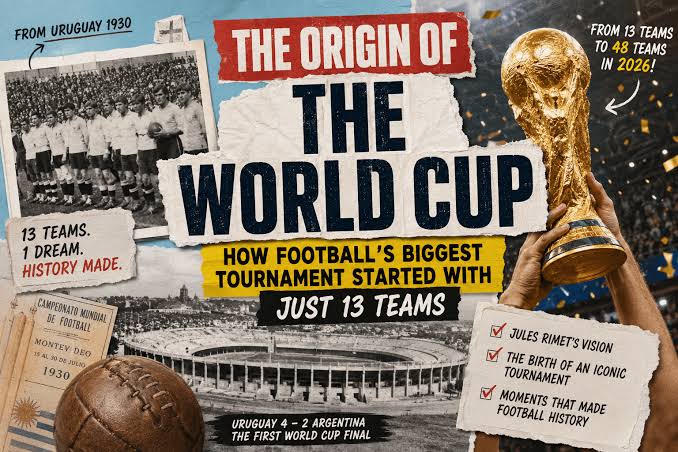
    In 1930, thirteen teams gathered in Uruguay for a tournament that would eventually captivate the planet. The first World Cup was a modest affair—no qualification rounds, a handful of European stragglers, and a final watched by a fraction of today’s audience. Fast forward to 2022, and the spectacle in Qatar drew an estimated 5 billion cumulative viewers, with the final alone attracting 1.5 billion. That trajectory—from a regional curiosity to a global behemoth—is not just a story of sports; it’s a mirror of geopolitical shifts, technological leaps, and the relentless commercialization of entertainment.

    This article breaks down the key expansions, the political undercurrents, and the commercial juggernaut that transformed a simple football competition into the world’s most-watched event. The numbers are stark: 13 teams to 48 by 2026, a prize pool of $440 million, and a host selection process that now spans three countries. Understanding this evolution requires more than a glance at the scorelines; it demands a look at the forces that shaped every edition, from fascist propaganda to satellite broadcasting.

    The Humble Beginnings: Uruguay 1930

    The first World Cup was an act of faith. FIFA, founded in 1904, had long championed a standalone professional championship, but it was only in 1928 that the organization voted to hold one. Uruguay, fresh off Olympic gold in 1924 and 1928 and celebrating its centenary of independence, was the natural host. The tournament featured 13 teams—all invited, no qualifications—divided into four groups. Only four European nations made the transatlantic journey: France, Belgium, Romania, and Yugoslavia. The long, expensive trip deterred the rest, leaving a predominantly South American field. Uruguay beat Argentina 4–2 in the final, a fitting start for a nation that had already proven its footballing pedigree on the Olympic stage.

    The Expansion Decades: 1934–1982

    The tournament quickly grew from 13 to 16 teams in 1934, a format that would hold for decades, with a notable hiccup in 1950 when 13 teams returned post-WWII. That edition also featured a round-robin final group instead of a single final—a quirk that produced one of the most iconic upsets: England’s 1–0 loss to the United States. The 1950s and 1960s saw the tournament solidify its structure, but it wasn’t until 1982 that FIFA expanded to 24 teams, introducing a second group stage that added complexity and more matches. That expansion reflected the growing number of FIFA member nations, especially from Africa and Asia, who demanded a seat at the table.

    The Modern Era: 1998 to 2022

    The 1998 World Cup in France marked a turning point. The field jumped to 32 teams, a format that remains familiar: eight groups of four, followed by a knockout stage. This structure struck a balance between inclusivity and quality, and it has been the template for the last seven tournaments. The 2022 edition in Qatar, while controversial for its host selection and human rights record, showcased the tournament’s global reach. Approximately 210 national teams competed in qualification, and the 64 matches were broadcast across every continent, with streaming platforms and social media amplifying the experience. The final between Argentina and France drew 1.5 billion viewers, a testament to the sport’s universal appeal.

    The 2026 Expansion: 48 Teams and a New Frontier

    The next World Cup, hosted jointly by the USA, Canada, and Mexico—the first three-nation host—will expand to 48 teams. This is the most significant change since 1998, and it’s not without critics. The format will feature 12 groups of four, with 32 teams advancing to the knockout stage. Proponents argue it gives more nations a chance to participate, growing the sport’s footprint. Skeptics worry about diluted quality and fixture congestion. Either way, the expansion signals FIFA’s ambition to turn the World Cup into an even more inclusive global festival, one that touches every corner of the planet.

    Political and Historical Influences: From Fascism to the Cold War

    The World Cup has never been apolitical. The 1934 and 1938 tournaments were held under the shadow of rising fascism, and Italy’s wins were exploited by Mussolini’s propaganda machine. The 1942 and 1946 editions were canceled due to World War II, with the trophy famously hidden under a bed in Italy to keep it from Nazi hands. The Cold War era brought its own tensions: in 1974, East Germany beat West Germany in a politically charged group match, and the 1978 tournament in Argentina was criticized as a cover for the military junta’s abuses. These moments remind us that the World Cup is not just a game; it’s a stage for national identity and geopolitical maneuvering.

    The Trophy and Its Lore

    The original Jules Rimet Trophy, named after the FIFA president who championed the tournament, was awarded permanently to Brazil after their third win in 1970. It was then stolen in 1983 and never recovered, likely melted down. The current trophy, designed by Silvio Gazzaniga, was introduced in 1974. It stands 36.8 cm tall, weighs 6.175 kg, and is made of solid 18-carat gold—a symbol of the tournament’s immense value and prestige. The trophy’s journey mirrors the World Cup’s own evolution from a modest prize to a priceless artifact.

    Broadcasting and Commercial Growth

    The World Cup’s transformation into a global phenomenon is inseparable from broadcasting. The 1954 tournament in Switzerland was the first to be televised. By 1966, satellite technology allowed live broadcasts to multiple continents. The 1970 edition, broadcast in color, reached an estimated 600 million viewers. Under FIFA president João Havelange in the 1980s, the sponsorship model exploded, turning the tournament into a commercial powerhouse. The 1998 World Cup rode the internet wave, and by 2010, social media had become a co-host: that tournament generated 1.2 billion Facebook interactions. The 2022 edition saw streaming platforms and short-form video dominate, making the World Cup a multi-platform experience that transcends television.

    The Global Game: Host Nations and Champions

    The list of host nations reads like a geopolitical timeline: from Uruguay in 1930 to Qatar in 2022, and now a tri-nation bid in 2026. Each host has left its mark, from Mexico in 1970 and 1986 to South Africa in 2010, the first African host, and Japan/South Korea in 2002, the first co-hosts. The champions’ list is equally telling. Brazil leads with five titles, followed by Germany and Italy with four each, Argentina with three, and France and Uruguay with two. England and Spain have one each. These nations have defined the tournament’s history, but the expansion to 48 teams will likely diversify the pool of contenders, even if the traditional powerhouses remain dominant.

    The World Cup has come a long way from its 13-team start in a small South American country. It has survived wars, boycotts, and controversies, while growing into a global event that unites billions. The expansion to 48 teams in 2026 is the latest chapter in this evolution, one that promises to bring more nations into the fold. But the core appeal remains unchanged: a simple game that, for a month every four years, makes the world feel a little smaller and a lot more connected.

    Summary

    • The first World Cup in 1930 featured 13 teams, no qualifications, and only four European participants.
    • The tournament expanded to 16 teams in 1934, 24 in 1982, 32 in 1998, and will reach 48 in 2026.
    • Political forces have shaped the World Cup, from fascist propaganda to Cold War tensions.
    • Broadcasting and sponsorship turned the World Cup into a global commercial juggernaut, with 5 billion viewers in 2022.
    • Brazil holds the record with five titles, while the trophy’s history includes a theft and a redesign.

    FAQ

    Q: Why did only 13 teams participate in the first World Cup?
    A: The 1930 tournament was held in Uruguay, and the long, expensive transatlantic journey deterred many European teams. Only four made the trip, resulting in a 13-team field.

    Q: How has the World Cup format changed over time?
    A: The tournament has expanded from a simple group stage and knockout in 1930 to a 16-team format in 1934, a 24-team format in 1982, a 32-team format in 1998, and will feature 48 teams in 2026.

    Q: What is the significance of the 2026 World Cup?
    A: The 2026 edition will be hosted by the USA, Canada, and Mexico—the first three-nation host—and will feature 48 teams, the largest field ever.

    Q: Which country has won the most World Cups?
    A: Brazil has won five titles (1958, 1962, 1970, 1994, 2002).

    Q: How has television impacted the World Cup’s popularity?
    A: Broadcasting allowed the tournament to reach a global audience, starting with the first televised World Cup in 1954 and expanding to satellite and color broadcasts by the 1960s and 1970s, culminating in 5 billion viewers in 2022.

  • From Leather to Sensors: The 94-Year Evolution of the World Cup Ball

    From Leather to Sensors: The 94-Year Evolution of the World Cup Ball

    Every four years, the world tunes in to watch the beautiful game, but few realize that the ball itself has undergone a quiet revolution. From the waterlogged leather spheres of the 1930s to the sensor-laden Al Rihla of 2022, the World Cup ball has evolved from a simple piece of equipment into a high-tech marvel that shapes how the game is played and officiated. This evolution is not just about materials and design—it’s a story of commercial ambition, aerodynamic science, and the relentless pursuit of perfection.

    For players, the ball is the most intimate piece of equipment—it’s the object they strike, trap, and caress. For fans, it’s a symbol of the tournament itself, with iconic designs like the Telstar and Tango becoming cultural touchstones. But behind the nostalgia lies a complex history of innovation, controversy, and even failure. The Jabulani’s erratic flight in 2010, for instance, sparked a global outcry and forced FIFA to rethink how balls are tested. Now, with the 2026 World Cup on the horizon, the ball is poised to become even smarter, blurring the line between equipment and data-collection device.

    The Early Days: Leather, Water, and Compromise

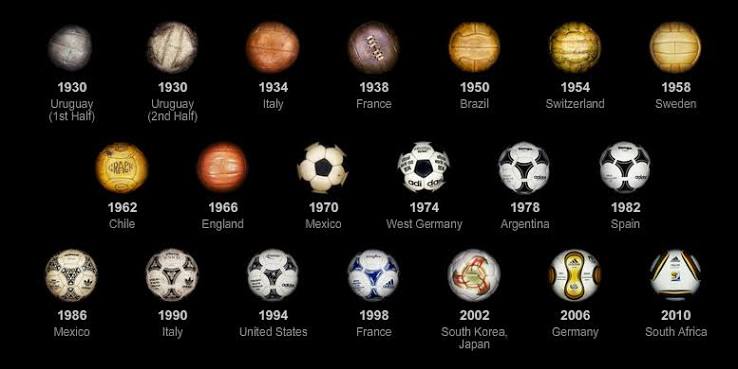
    The first World Cup in 1930 had no official ball. In the final between Uruguay and Argentina, the two teams couldn’t agree on which ball to use, so they settled on a split: Argentina’s ball for the first half, Uruguay’s for the second. Uruguay came from behind to win 4-2, and legend has it that the switch played a role. This anecdote highlights a fundamental truth: the ball matters, and its behavior can influence outcomes.

    In the 1930s and 1940s, balls were made of leather panels sewn around a rubber bladder. They were heavy, absorbed water like a sponge, and became deformed in wet conditions. The 1954 Swiss World Champion was a breakthrough with its plastic-coated surface, but it wasn’t until 1958 that the Top Star introduced PVC, a synthetic coating that offered better water resistance. Still, these were incremental changes. The real turning point came in 1966, when the Slazenger Challenge became the first ball with a white-and-black panel design, specifically to improve visibility on the newly popular black-and-white televisions. This was a harbinger of things to come: the ball was no longer just a tool; it was a broadcast asset.

    The Adidas Era: Telstar and the Birth of a Monopoly

    The 1970 World Cup in Mexico marked a seismic shift. Adidas, a German sportswear company, introduced the Telstar, the first ball with a FIFA license. Its 32-panel black-and-white design was not just aesthetically iconic—it was engineered for visibility on TV. The Telstar’s success established a template that would endure for over half a century: Adidas has supplied every World Cup ball since, a streak of 14 tournaments. This wasn’t a FIFA rule, but a commercial partnership that became de facto standard, turning the ball into a lucrative branding opportunity.

    The Telstar also introduced the use of polyurethane coatings (the Durlast version in 1974) to improve weather resistance. But the 1978 Tango went further, with a design of 20 triads that created an optical illusion of 12 circles. This design language was so successful that it was reused for decades, with variations like the Tango España in 1982, which added micro-perforations and waterproofing. By the 1980s, the shift from leather to synthetic was nearly complete. The 1986 Azteca was the first fully synthetic, machine-stitched ball, offering consistency and durability that leather could never match.

    The Science of Flight: From Jabulani to Brazuca

    As balls became lighter and smoother, they also became more unpredictable. The 2010 Jabulani, with its 8 panels and thermally bonded construction, was a disaster in the eyes of many players. Goalkeepers like Iker Casillas called it a “beach ball,” and its erratic flight at altitude (the tournament was played in South Africa’s high veld) led to a FIFA-commissioned study. The problem was aerodynamic: the smooth surface and reduced panel count caused the ball to knuckle and swerve unpredictably. This was a wake-up call for manufacturers.

    In response, Adidas went back to the drawing board. The 2014 Brazuca featured 6 panels and was extensively tested with over 600 players in 30 countries. The result was a ball that was widely praised for its stability and predictability. The 2018 Telstar 18 kept the 6-panel design but added an NFC chip, allowing fans to interact with the ball via smartphone. This was a hint of what was to come.

    The Connected Ball: Al Rihla and the Future

    The 2022 Al Rihla in Qatar was a quantum leap. It was the first ball with “connected ball technology,” featuring a CTR-CORE inertial sensor that tracks the ball 500 times per second. This data is fed to VAR for semi-automated offside decisions, reducing average review time from 70 seconds to about 25 seconds. The ball is no longer passive; it’s an active participant in officiating. This shift has profound implications for the game, from how goals are judged to how players strategize.

    But the Al Rihla also sparked debate. Goalkeepers like Alisson Becker complained about its flight, saying it moved too much. This is a recurring theme: as balls become more engineered, they also become more sensitive to spin and strike. The challenge for manufacturers is to balance performance with predictability. The 2026 World Cup ball is expected to continue this trend, with even more advanced sensors and perhaps even customizable features.

    The Player’s Perspective: A Love-Hate Relationship

    Players have always been the most vocal critics of new ball designs. Goalkeepers, in particular, have a unique vantage point—they see the ball from a different angle and are most affected by its flight. The Jabulani was vilified by keepers, while the Brazuca was praised. Outfield players often appreciate lighter, faster balls for shooting but complain about the knuckleball effect, where a ball with little spin can dip and swerve unpredictably. This is not just a matter of preference; it affects tactics. A ball that moves erratically can make it harder to play short passes, favoring long shots and set pieces.

    The Manufacturer’s Dilemma: Innovation vs. Consistency

    For Adidas, each new ball is a chance to showcase engineering prowess. But there’s a tension between innovation and consistency. A ball that’s too different can alienate players and disrupt the game. The Jabulani was a lesson in this regard. As a result, subsequent balls have been more conservative in design, focusing on incremental improvements rather than radical changes. The 2026 ball will likely continue this trend, with perhaps more integration of data and connectivity, but with a nod to the classic designs that players trust.

    The World Cup ball has come a long way from the leather spheres of 1930. It’s now a high-tech instrument that can track itself, communicate with referees, and even influence the outcome of matches. But at its core, it’s still the same object that players kick, head, and carry across the pitch. The evolution of the ball is a testament to human ingenuity, but it also raises questions: How much technology is too much? Will the ball ever become so smart that it changes the fundamental nature of the game? As we look to 2026, one thing is certain: the ball will continue to evolve, and with it, the beautiful game.

    Summary

    • The World Cup ball has evolved from leather to high-tech sensors, with Adidas supplying every official ball since 1970.
    • Key milestones include the 1970 Telstar (32 panels, TV-friendly), the 1986 Azteca (first fully synthetic), and the 2022 Al Rihla (first with inertial sensors for VAR).
    • The Jabulani (2010) was a turning point, leading to improved testing and design protocols.
    • The ball’s flight affects gameplay, with players often criticizing new designs for unpredictability.
    • The 2026 ball is expected to continue sensor integration, potentially changing how the game is officiated.

    FAQ

    Q: Why did the 2010 Jabulani ball behave so erratically?
    A: The Jabulani had only 8 panels and a smooth surface, which reduced aerodynamic stability, especially at high altitude. This caused unpredictable knuckleball effects, leading to widespread criticism from players.

    Q: How does the 2022 Al Rihla’s sensor technology work?
    A: The Al Rihla contains a CTR-CORE inertial sensor that tracks the ball 500 times per second. This data is used for semi-automated offside decisions, helping VAR make faster and more accurate calls.

    Q: Why has Adidas made every World Cup ball since 1970?
    A: It’s not a FIFA rule but a commercial partnership. Adidas has held the contract for the official match ball since 1970, making it a de facto standard.

    Q: What are the main differences between leather and synthetic balls?
    A: Leather balls absorb water, become heavy, and deform in wet conditions. Synthetic balls (PVC, polyurethane) are water-resistant, consistent, and durable, offering better performance in all weather.

    Q: Will the 2026 World Cup ball have even more technology?
    A: It’s expected. The trend is toward more sensor integration and data collection, potentially including real-time tracking for enhanced officiating and fan engagement.

  • The World Cup: A Century of Glory, Politics, and Football Evolution (1930–2022)

    The World Cup: A Century of Glory, Politics, and Football Evolution (1930–2022)

    Every four years, the world stops. For a month, borders blur, flags wave, and billions of eyes fixate on a single ball. The FIFA World Cup is more than a tournament; it is a global phenomenon that mirrors the political, cultural, and tactical shifts of its era. From its humble beginnings in 1930 with 13 invited teams to the lavish, technology-driven spectacle of Qatar 2022, the World Cup has evolved into a $7.5 billion industry and the ultimate stage for footballing immortality.

    But the tournament’s history is not just about goals and trophies. It is a story of dictators using sport for propaganda, of underdogs defying empires, of tactical revolutions that changed how the game is played, and of a world that grows more connected with each passing edition. As we look ahead to the 48-team format in 2026, understanding where the World Cup has been is essential to appreciating where it is going.

    The Birth of a Global Game: Uruguay 1930

    In 1930, football was already the world’s most popular sport, but it lacked a true global championship. The Olympics had served as a proxy, but FIFA—founded in 1904—wanted a professional, standalone event. Uruguay, the reigning Olympic champion and celebrating its centenary of independence, was the perfect host. The tournament was invitation-only, and the transatlantic journey proved prohibitive for many European nations. Only four—France, Belgium, Romania, and Yugoslavia—made the trip. In the final, Uruguay beat Argentina 4–2 in front of a passionate Montevideo crowd, cementing its place in history.

    The early tournaments were marked by European reluctance and South American dominance. Italy won back-to-back titles in 1934 and 1938, but these victories were tainted by their use as propaganda tools for Mussolini’s fascist regime. The 1938 tournament saw Uruguay boycott in protest of European bias, and the 1942 and 1946 editions were cancelled entirely due to World War II. The World Cup, like the world, was in turmoil.

    Post-War Resurgence and the Birth of Legends

    The 1950 tournament in Brazil marked the first post-war World Cup and the first with British participation. England’s debut ended in humiliation with a 1–0 loss to the United States—a result so shocking it was dubbed “The Miracle on Grass.” The final, held at the Maracanã, saw Uruguay defeat Brazil 2–1 in front of nearly 200,000 spectators, a moment that still haunts Brazilian football. That match remains the highest-attended single game in World Cup history.

    The 1950s and 1960s saw the rise of attacking football. West Germany’s “Miracle of Bern” in 1954, Hungary’s “Golden Team” that fell short, and Brazil’s emergence as a global powerhouse with Pelé in 1958 and 1962. England won on home soil in 1966, a triumph steeped in Cold War symbolism, with North Korea’s shocking upset of Italy adding a geopolitical subplot. The 1970 tournament in Mexico was the first broadcast in color, and Brazil’s team—featuring Pelé, Jairzinho, and Carlos Alberto—is often hailed as the greatest ever. Their third title earned them the Jules Rimet Trophy permanently.

    Tactical Evolution and Political Shadows

    The 1970s and 1980s brought tactical sophistication and political intrigue. The Netherlands introduced “Total Football” in 1974, but lost to West Germany in the final. Argentina’s 1978 victory was overshadowed by the military junta’s use of the tournament for propaganda, with allegations of match-fixing in their 6–0 win over Peru. The 1982 tournament expanded to 24 teams, and Italy’s Paolo Rossi led them to glory. In 1986, Diego Maradona produced the most iconic individual performance in history, scoring the “Hand of God” and the “Goal of the Century” in the same match against England—a game loaded with Falklands War subtext.

    Commercialization and Global Expansion

    The 1990s marked a turning point in the World Cup’s commercial power. The 1994 tournament in the United States saw the first final decided on penalties, with Brazil triumphing over Italy. It also demonstrated the sport’s global appeal, drawing record crowds and television audiences. The 1998 tournament expanded to 32 teams, and France won on home soil. The 2002 edition was the first held in Asia, co-hosted by South Korea and Japan, with South Korea’s controversial run to the semifinals sparking debate. In 2010, South Africa became the first African host, and Spain’s tiki-taka style dominated. Germany’s 7–1 demolition of Brazil in the 2014 semifinal was a tactical masterclass, and 2018 saw the introduction of VAR, changing the game’s officiating forever.

    Qatar 2022: A Winter Spectacle and a New Era

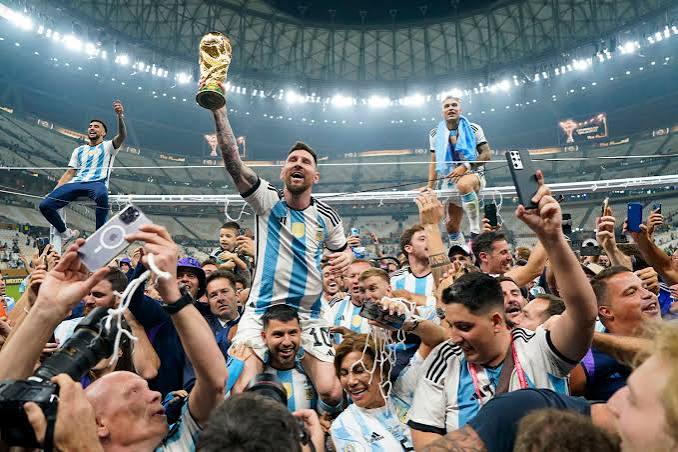
    The 2022 World Cup in Qatar was unprecedented: the first in the Middle East, the first in November–December, and the most expensive in history. It was also a lightning rod for controversy over human rights and environmental concerns. On the pitch, the tournament delivered drama, with Argentina and Lionel Messi finally lifting the trophy after a penalty shootout against France in a final that many consider the greatest ever. The tournament also saw Morocco become the first African semifinalist, a historic breakthrough. With FIFA’s revenue exceeding $7.5 billion, the World Cup has become a global economic juggernaut.

    The Road to 2026: A 48-Team Future

    As the World Cup expands to 48 teams in 2026, hosted by the United States, Canada, and Mexico, the tournament faces new challenges and opportunities. Will the expanded format dilute quality or democratize access? Can the World Cup maintain its magic in an era of club football dominance? The history suggests that the tournament has always adapted, reflecting the times while shaping them. From 13 teams to 48, from black-and-white broadcasts to 4K, from amateur players to global superstars, the World Cup remains the ultimate stage—a mirror to our world and a celebration of the beautiful game.

    The World Cup’s journey from a 13-team invitation in Montevideo to a global spectacle in Qatar is a testament to football’s unifying power. It has survived wars, boycotts, and controversies, evolving with each generation. As we look to 2026, the tournament will continue to be a stage where history is written, legends are born, and the world comes together—one match at a time.

    Summary

    • The World Cup began in 1930 with 13 teams and has grown to 32 (1998–2022), with 48 teams coming in 2026.
    • Brazil holds the record with 5 titles, followed by Germany and Italy with 4 each.
    • The tournament has been shaped by politics, from Mussolini’s propaganda to Cold War tensions and Qatar’s soft power ambitions.
    • Tactical evolution has seen shifts from attacking play to Total Football, tiki-taka, and modern high-pressing systems.
    • Commercial growth has made the World Cup a multi-billion-dollar event, with 2022 revenues exceeding $7.5 billion.

    FAQ

    Q: Why was the World Cup not held in 1942 and 1946?
    A: The tournaments were cancelled due to World War II, as global conflict made hosting and participation impossible.

    Q: Who has scored the most goals in World Cup history?
    A: Miroslav Klose of Germany scored 16 goals across four tournaments (2002–2014), the all-time record.

    Q: What was the “Hand of God” goal?
    A: In the 1986 quarterfinal, Diego Maradona scored a goal with his hand, which was allowed by the referee. He later called it “a little with the head of Maradona, and a little with the hand of God.”

    Q: Why was the 2022 World Cup held in winter?
    A: Qatar’s extreme summer heat made it unsafe to play in June–July, so the tournament was moved to November–December, breaking tradition.

    Q: How many teams will compete in the 2026 World Cup?
    A: The tournament will expand to 48 teams, hosted by the United States, Canada, and Mexico.

  • The Forgotten Legends: 10 Footballers Who Defined the 1970s

    The Forgotten Legends: 10 Footballers Who Defined the 1970s

    The 1970s were a golden era for football, a decade that gave us the beautiful game at its most expressive and competitive. While icons like Pelé, Cruyff, and Beckenbauer rightly dominate the conversation, a host of other extraordinary talents lit up the world’s biggest stages, only to fade from modern memory. This article shines a light on ten such players—elite performers whose impact on the 1970s was profound, yet whose legacies have been largely overlooked in today’s discourse.

    From World Cup heroes to European Cup champions, these are the forgotten legends who defined an era. Their stories are not just about goals and trophies, but about the artistry, resilience, and sheer footballing intelligence that made the 1970s a transformative period for the sport. Join us as we revisit the careers of these unsung greats, exploring why they mattered then and why they still deserve our recognition today.

    The Criteria: What Makes a Forgotten Legend?

    Before diving into the list, it’s essential to define what we mean by ‘forgotten.’ These are players who were unquestionably elite during the 1970s—starting for world-class teams, winning major honors, and influencing the game’s evolution—yet are rarely mentioned in modern retrospectives. They are not obscure; they are under-celebrated, often overshadowed by more famous teammates or opponents. The 1970s spanned two World Cups (1970 in Mexico, 1974 in West Germany) and one European Championship (1972 in Belgium), plus the rise of club dominance in the European Cup. Our selections reflect that rich tapestry.

    The Ten Legends

    1. Gerd Müller (West Germany)

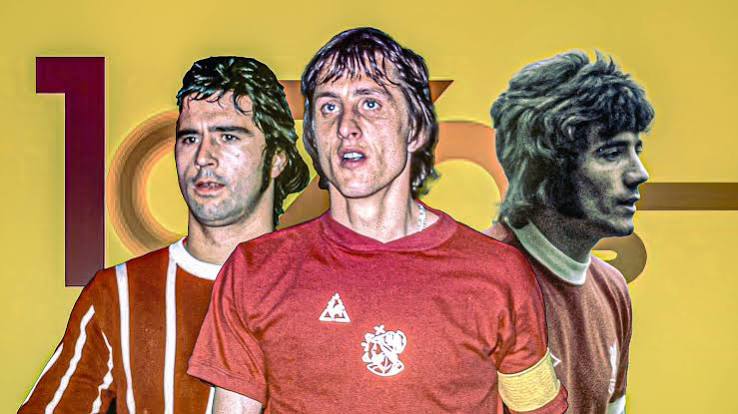
    Gerd Müller, known as ‘Der Bomber,’ was the most lethal striker of his generation. His international record is staggering: 68 goals in 62 caps, including the winning goal in the 1974 World Cup final. He was the 1970 World Cup Golden Boot winner with 10 goals, and his club career at Bayern Munich yielded four Bundesliga titles and three European Cups. Yet, he is often overshadowed by his teammate Franz Beckenbauer. Müller’s poacher’s instinct, his low center of gravity, and his ability to score from any angle made him a nightmare for defenders. His legacy is that of a pure goal-scorer, a dying breed in modern football.

    2. Jairzinho (Brazil)

    Jairzinho, ‘The Hurricane,’ was a force of nature on Brazil’s right wing. He is the only player to score in every match of a World Cup, achieving this feat in 1970 with seven goals. His pace, power, and clinical finishing were instrumental in Brazil’s third title, often cited as the greatest team ever. Despite this, he is frequently mentioned only as a footnote to Pelé’s brilliance. Jairzinho’s direct running and ability to cut inside from the flank made him a prototype for modern wingers. His 1970 performance remains one of the greatest individual displays in World Cup history.

    3. Rivelino (Brazil)

    Rivelino, with his thunderous left foot and trademark mustache, was the creative heartbeat of Brazil’s 1970 and 1974 campaigns. He scored a stunning free-kick against Czechoslovakia in 1970 and captained Brazil in 1974. His vision, dribbling, and long-range shooting earned him the nickname ‘The King of the Left Foot.’ Yet, he is often overshadowed by Pelé and Jairzinho. Rivelino’s ability to dictate play from midfield and his set-piece mastery were ahead of his time. He remains a cult figure in Brazilian football, but his global recognition is far less than his talent deserved.

    4. Tostão (Brazil)

    Tostão was the cerebral striker who partnered Pelé in Brazil’s 1970 attack. His intelligent movement and link-up play were crucial to the team’s fluidity. Tragically, a detached retina forced his retirement at just 26, cutting short a career that promised even more. He scored twice in the 1970 World Cup, including a memorable goal in the final. Tostão’s early exit from the game means his legacy is often reduced to a ‘what if.’ Yet, his contribution to that iconic team was immense, and his post-football career as a physician and columnist shows a remarkable mind.

    5. Johan Neeskens (Netherlands)

    Johan Neeskens was the engine of Johan Cruyff’s Total Football machine. As a midfielder, he combined relentless energy with technical excellence, scoring in the 1974 World Cup final against West Germany. He was a key figure in Ajax’s three consecutive European Cup wins (1971-73) and later starred for Barcelona. Despite his pivotal role, Neeskens is often overshadowed by Cruyff. His tackling, passing, and ability to arrive late in the box made him the complete midfielder. Neeskens’ penalty-taking was also legendary—he scored from the spot in the 1974 final, though it wasn’t enough to secure victory.

    6. Johnny Rep (Netherlands)

    Johnny Rep was a winger with a knack for scoring in big matches. He scored in both the 1974 and 1978 World Cup finals, a rare feat. His career spanned Ajax, Bastia, and Saint-Étienne, where he won multiple league titles. Rep’s pace and directness were vital to the Dutch style, yet he is often forgotten in discussions of that great team. His goals in finals, including a crucial equalizer in 1978, demonstrate his big-game temperament. Rep’s ability to drift past defenders and deliver precise finishes made him a constant threat.

    7. Mario Kempes (Argentina)

    Mario Kempes was the hero of Argentina’s 1978 World Cup triumph on home soil. He scored six goals to win the Golden Boot, including two in the final against the Netherlands. His powerful runs and clinical finishing made him the tournament’s standout player. Yet, outside of Argentina, his legacy is often overshadowed by Diego Maradona’s later exploits. Kempes’ performances in 1978 were a masterclass in leading a team to glory, and his club career in Spain with Valencia was equally impressive. He remains a national icon, but his global recognition is surprisingly limited.

    8. Kazimierz Deyna (Poland)

    Kazimierz Deyna was the playmaker of Poland’s golden generation. He led his country to Olympic gold in 1972 and a third-place finish at the 1974 World Cup, where he was named to the All-Star Team. Deyna’s vision, passing, and leadership were exceptional, and he scored twice in the 1974 World Cup, including a stunning free-kick against Sweden. Despite his brilliance, he is rarely mentioned in discussions of the era’s greats. Deyna’s career included stints at Legia Warsaw and Manchester City, but his legacy is firmly rooted in his international exploits.

    9. Grzegorz Lato (Poland)

    Grzegorz Lato was the Golden Boot winner of the 1974 World Cup with seven goals, a feat that remains underappreciated. His pace and finishing were crucial to Poland’s success, which included a memorable victory over Brazil in the third-place match. Lato’s club career was primarily in Poland and Belgium, which limited his exposure, but his international record—45 goals in 100 caps—is outstanding. He is often overshadowed by Deyna, but Lato’s goal-scoring prowess was equally vital. His performance in 1974 remains one of the tournament’s great individual achievements.

    10. Teófilo Cubillas (Peru)

    Teófilo Cubillas, ‘El Nene,’ was Peru’s greatest player and one of the most elegant forwards of the 1970s. He scored 10 goals across the 1970 and 1978 World Cups, including a hat-trick against Iran in 1978. His dribbling, shooting, and free-kick ability were world-class. Peru’s quarterfinal run in 1970 and second-round appearance in 1978 were largely due to his brilliance. Despite this, Cubillas is rarely mentioned alongside the era’s greats, perhaps because Peru never won a major trophy. His legacy is that of a sublime talent who shone on the biggest stage.

    The Context: Why These Players Matter

    The 1970s were a transitional period in football, moving from the defensive rigidity of the 1960s to the tactical fluidity of the modern game. These ten players were at the forefront of that evolution. They were pioneers of Total Football, counter-attacking, and set-piece mastery. Their contributions shaped the tactics we see today, from the false nine to the attacking full-back. Yet, their stories are often lost in the shadow of a few iconic names. By remembering them, we not only honor their achievements but also gain a deeper understanding of the game’s history.

    The Stakes: Why We Should Remember

    Forgetting these legends does a disservice to the sport’s rich heritage. Their achievements inspired generations of players and fans, and their innovations continue to influence modern football. In an era where the past is often reduced to a few famous names, it’s crucial to celebrate the full spectrum of talent that made the 1970s so special. These players were not just footnotes; they were protagonists in one of football’s most exciting decades. Their stories deserve to be told, not just for nostalgia, but for the lessons they offer about skill, determination, and the beautiful game.

    The 1970s were a decade of footballing brilliance, and these ten players were among its brightest stars. While they may not always be the first names that come to mind, their contributions were indispensable. By revisiting their careers, we enrich our understanding of the game and ensure that their legacies endure. Let us not forget the forgotten legends—they defined an era and deserve their place in football’s pantheon.

    Summary

    • The 1970s featured two World Cups and one European Championship, with club dominance from Ajax, Bayern Munich, and Liverpool.
    • ‘Forgotten’ means under-celebrated relative to their impact, not obscure.
    • Gerd Müller, Jairzinho, Rivelino, and Tostão were key to Brazil’s 1970 triumph and West Germany’s 1974 win.
    • Dutch stars Johan Neeskens and Johnny Rep were crucial to Total Football, scoring in World Cup finals.
    • Mario Kempes, Kazimierz Deyna, Grzegorz Lato, and Teófilo Cubillas were standout performers in the 1970s World Cups.

    FAQ

    Q: What makes a player ‘forgotten’ in this context?
    A: A player is considered ‘forgotten’ if they were elite during the 1970s but are rarely mentioned in modern mainstream discussions, unlike icons like Pelé or Cruyff. They are under-celebrated relative to their impact.

    Q: Why were these specific players chosen?
    A: They were selected based on their significant contributions to major tournaments and club competitions in the 1970s, as well as their relative absence from modern discourse. The list includes World Cup heroes, European Cup winners, and Ballon d’Or recipients.

    Q: Are there any notable exclusions?
    A: Yes, players like Zico, Platini, and Boniek were excluded because their prime years were more in the 1980s. Similarly, some 1960s legends like Eusébio were not included.

    Q: How did these players influence modern football?
    A: They were pioneers of tactical innovations like Total Football, counter-attacking, and set-piece mastery. Their styles influenced modern wingers, midfielders, and strikers.

    Q: Where can I learn more about these players?
    A: You can explore their match footage on platforms like YouTube, read biographies, or delve into World Cup archives. Many have detailed profiles on football history websites.

  • The Unfulfilled Dream: 10 Legends Who Never Lifted the World Cup

    The Unfulfilled Dream: 10 Legends Who Never Lifted the World Cup

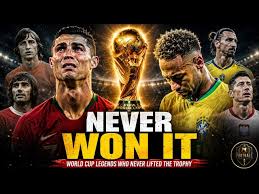
    The World Cup is football’s ultimate coronation, the stage where legends are immortalized. Yet for every Pelé or Maradona who hoists the golden trophy, there are others whose brilliance never found its ultimate reward. These are the players who dazzled us, broke our hearts, and redefined the game—but whose careers are forever marked by the one trophy that eluded them.

    This is not a list of the ‘almosts’ or the ‘what-ifs.’ It’s a tribute to the men whose greatness transcends silverware, whose impact on the sport is measured in moments, not medals. From the tragic genius of Cruyff to the eternal elegance of Maldini, these ten legends remind us that football’s beauty lies not only in victory, but in the pursuit of it.

    The Weight of the Trophy

    The World Cup is more than a tournament; it’s a cultural touchstone, a national obsession, and for many, the sole arbiter of greatness. In Brazil, a player without a World Cup is a tragedy; in Argentina, a sin. This immense pressure creates a narrative of heroes and villains, of triumph and despair. For every player who rises to the occasion, there are those who are defined by their failure to do so—not because they lacked talent, but because the margins are razor-thin. A missed penalty, a tactical error, a moment of individual brilliance from an opponent—any of these can shatter a dream that takes four years to build.

    The Tragic Heroes of 1974 and 1954

    Johan Cruyff: The Architect of Total Football

    No player embodies the ‘tragic hero’ archetype more than Johan Cruyff. His Netherlands team of 1974 was a revelation, a whirlwind of fluid positions and relentless pressing that stunned the world. Cruyff was the conductor, a player of such intelligence and grace that he seemed to be playing a different game. Yet, in the final against West Germany, the Dutch were undone by a combination of German pragmatism and their own complacency. Cruyff’s legacy is secure—he is the father of modern football, the man who taught Barcelona to play ‘the Ajax way’—but the World Cup remains the gap in his otherwise perfect resume.

    Ferenc Puskás: The Galloping Major’s Heartbreak

    Twelve years earlier, another revolutionary team met a similar fate. Hungary’s ‘Golden Team’ of 1954 was the best in the world, boasting the incomparable Ferenc Puskás, a left-footed goal machine with a cannon of a shot. They had beaten West Germany 8-3 in the group stage, and led 2-0 in the final within eight minutes. Then, the ‘Miracle of Bern’ happened. The Germans, aided by rain and a controversial selection of boots, fought back to win 3-2. Puskás, who had scored twice, was left to wonder what might have been. He never got another chance; the Hungarian Revolution of 1956 scattered the team, and Puskás spent his later years in Spain, winning European Cups with Real Madrid but never the World Cup.

    The ‘What Ifs’ of the 1980s and 1990s

    Michel Platini: The Maestro of France

    Michel Platini was the most elegant midfielder of his generation, a player who could score from free kicks with the precision of a surgeon and create chances out of nothing. He led France to the semifinals of the 1982 World Cup, where they lost a classic to West Germany on penalties, and then to third place in 1986. Platini’s France was a beautiful team, but they were denied by the Germans twice and by the brilliance of Maradona in 1986. Platini’s legacy is one of grace and intelligence, but his international career is a study in what might have been.

    Zico: The White Pelé

    In Brazil, Zico was hailed as the ‘White Pelé,’ a player of such technical ability that he was considered the heir to the throne. The 1982 Brazil team, featuring Zico, Sócrates, Falcão, and Júnior, is still regarded as one of the greatest teams never to win the World Cup. They played football as an art form, but in a match that became known as the ‘Tragedy of Sarriá,’ they lost to Italy 3-2 in the second round, a game that saw Paolo Rossi score a hat-trick. Zico’s World Cup story is one of unfulfilled promise, a reminder that even the most beautiful football can be undone by a single day.

    Roberto Baggio: The Divine Ponytail’s Penalty

    The 1994 World Cup final is etched in football lore for many reasons, but none more poignant than the image of Roberto Baggio standing over a penalty kick in the shootout. Italy and Brazil were deadlocked at 0-0, and Baggio, who had carried Italy to the final with his goals, had to score to keep his team alive. He skied it over the bar. The image of Baggio, head bowed, hands on hips, is one of the most iconic in sports history. He was the best player in the world that year, but he will forever be remembered for that miss. Baggio’s career was a tapestry of brilliance and heartbreak, and the World Cup was the thread that never quite came together.

    The Defenders and the Goalkeepers

    Paolo Maldini: The Eternal Captain

    Paolo Maldini is arguably the greatest defender in football history. For 25 years, he was the rock upon which AC Milan and Italy built their success. He played in four World Cups, reaching the final in 1994 and the semifinals in 1990 and 1998. In 2002, a controversial goal by South Korea ended Italy’s run in the round of 16. Maldini’s longevity and consistency were unmatched, but the World Cup remained elusive. He retired in 2009 with a collection of trophies that would fill a museum, but the one he coveted most was never his.

    Lev Yashin: The Black Spider

    Lev Yashin is the only goalkeeper to have won the Ballon d’Or, and he is widely considered the greatest to have ever played the position. His athleticism and reflexes were revolutionary, and he changed the way goalkeepers were perceived. Yet, his World Cup record is a tale of near-misses. The Soviet Union reached the quarterfinals in 1958, the quarterfinals again in 1962, and the semifinals in 1966, where they lost to West Germany. Yashin’s legacy is secure, but the World Cup trophy was the one prize that eluded him.

    The Lone Stars and the Unfulfilled

    George Best: The Fifth Beatle

    George Best was a genius, a player of such natural talent that he could have been the greatest of all time. But his career was plagued by personal demons and a lack of support from his national team. Northern Ireland was simply not good enough to qualify for major tournaments, and Best played in only one World Cup, in 1982, when he was past his prime. He never got the chance to shine on the biggest stage, and his legacy is one of unfulfilled potential.

    Eusébio: The Black Panther

    Eusébio was the first African-born superstar, a player of immense power and speed who lit up the 1966 World Cup with nine goals, including a stunning hat-trick against North Korea in the quarterfinals. Portugal finished third, but Eusébio’s brilliance was a revelation. He never got another chance to win the World Cup, as Portugal failed to qualify for the next two tournaments. His legacy is that of a pioneer, a player who showed the world what African football could be.

    Alfredo Di Stéfano: The Man Who Never Played

    Alfredo Di Stéfano is one of the greatest players in the history of Real Madrid, but he never played in a World Cup. His career was caught between two nations—Argentina and Spain—and his prime coincided with Spain’s weakest era. He was also denied the chance to play for Argentina in 1950 due to a strike, and by the time he became a Spanish citizen, the team was not good enough to qualify. Di Stéfano’s absence from the World Cup is one of football’s greatest injustices, a reminder that the tournament is not always a fair reflection of a player’s worth.

    Cristiano Ronaldo: The Modern Icon

    Cristiano Ronaldo has done everything in football—won multiple Champions Leagues, Ballons d’Or, and league titles in England, Spain, and Italy. But the World Cup has been a source of frustration. Portugal’s best finish was third in 2006, and they have never reached the final. Ronaldo has played in five World Cups, more than any other player in history, but he has never come close to lifting the trophy. At 39, his chances are fading, and his legacy, while immense, will always have that one gap.

    The Enduring Legacy

    These ten players represent the best of football, but they also represent the fragility of dreams. Their stories are a reminder that greatness is not always rewarded with trophies, and that the pursuit of glory is often more compelling than the achievement itself. They are the forgotten legends, the men who made us fall in love with the game, even as they suffered its cruelest heartbreaks.

    The World Cup is a fickle mistress, and these ten legends know it better than anyone. They gave us moments of pure magic, but they never got the ultimate prize. Yet, their legacies are not diminished by their failure to win. If anything, their stories are more compelling because of it. They remind us that football is not just about winning, but about the beauty of the game, the passion of the fans, and the enduring hope that one day, the dream will come true. For these players, the dream never did, but their impact on the sport is eternal.

    Summary

    • The World Cup is the ultimate prize, but many of football’s greatest players never won it.
    • Johan Cruyff and Ferenc Puskás led revolutionary teams that lost in the finals of 1974 and 1954, respectively.
    • Michel Platini, Zico, and Roberto Baggio all had heartbreaks in the 1980s and 1990s, including Baggio’s infamous missed penalty in the 1994 final.
    • Defenders and goalkeepers like Paolo Maldini and Lev Yashin were equally brilliant but fell short on the biggest stage.
    • Players like George Best and Alfredo Di Stéfano never got a fair chance due to national team limitations or political circumstances.
    • Cristiano Ronaldo’s five World Cup appearances without a title highlight the difficulty of winning the tournament.

    FAQ

    Q: Why is Diego Maradona not on this list?
    A: Diego Maradona won the World Cup with Argentina in 1986, so he does not meet the criteria of never having won the trophy.

    Q: Who is the greatest player never to win the World Cup?
    A: It’s subjective, but Johan Cruyff is often cited as the greatest, given his revolutionary impact on the game and his near-miss in 1974.

    Q: Did any of these players come close to winning the World Cup?
    A: Yes, several reached the final: Cruyff (1974), Puskás (1954), Maldini (1994), and Baggio (1994). Others reached the semifinals or third-place matches.

    Q: Why did some players like George Best never get a chance?
    A: George Best’s national team, Northern Ireland, was not strong enough to qualify for most World Cups. He played in only one, in 1982, when he was past his prime.

    Q: Are there any current players who might join this list?
    A: Cristiano Ronaldo is the most prominent current player without a World Cup, and his chances are fading at age 39. Others like Robert Lewandowski and Mohamed Salah are also in the conversation.

  • FIFA Scraps World Cup Sell-Off Plans After Backlash: What Happened and Why It Matters

    FIFA Scraps World Cup Sell-Off Plans After Backlash: What Happened and Why It Matters

    In a surprising turn of events, FIFA President Gianni Infantino announced on Friday that the organization would abandon plans to sell off or commercialize parts of the World Cup. The decision comes after a wave of criticism from fans, national federations, and even commercial partners. Infantino’s statement emphasized unity, but the reversal raises questions about FIFA’s future financial strategies and its responsiveness to stakeholder pressure.

    This article breaks down what the sell-off plans entailed, why they were proposed, and what this reversal means for the beautiful game. We’ll also explore the broader context of FIFA’s recent commercial moves and what critics say about the organization’s true motivations.

    What Were the Sell-Off Plans?

    While FIFA has not released an official detailed proposal, reports indicate that the organization was exploring the sale of commercial rights, media packages, or even a stake in future World Cup-related assets. This could have included broadcasting rights, sponsorship inventory, or a share in the newly expanded Club World Cup. The goal was to generate significant upfront revenue to fund the expanded 48-team World Cup in 2026 and the new 32-team Club World Cup in 2025.

    It’s important to clarify that the plans did not involve selling the World Cup tournament itself. Instead, they focused on monetizing the event’s commercial potential in a more aggressive way than ever before.

    Why Did FIFA Propose This?

    FIFA has been under financial pressure to fund its ambitious expansion plans. The 48-team World Cup will require more venues, more logistics, and potentially higher costs. Similarly, the new Club World Cup format is a major undertaking. To finance these, FIFA has been seeking innovative revenue streams, and selling future commercial rights seemed like a quick way to raise capital.

    However, this approach was met with immediate resistance. Fan groups like Football Supporters Europe (FSE) and player unions voiced concerns about the commercialization of the sport’s biggest event. National federations, some of whom are FIFA Council members, also objected, fearing that such a move would undermine the integrity of the World Cup and alienate fans.

    The Backlash and the Reversal

    The backlash was swift and organized. Within a short window, FIFA faced criticism from multiple fronts. Commercial partners, including sponsors and broadcasters, were reportedly uneasy about the plans, worried about brand damage and the destabilization of existing contracts. Their quiet pressure may have been a decisive factor in the reversal.

    In his statement, Infantino said: “Having listened carefully to all the views, it has become clear that the project has created divisions of a nature that, regardless of the level of support, are no longer in the interest of the objective set out in the first place.”

    This language suggests that FIFA is positioning itself as a consultative body that listens to its stakeholders. However, critics argue that this is a tactical retreat, not a change of heart. They point to FIFA’s history of proposing aggressive commercial moves, facing backlash, and then reintroducing similar ideas in modified form later. The biennial World Cup proposal, which was shelved after widespread opposition, is a prime example.

    What Does This Mean for FIFA’s Future?

    Scrapping the sell-off plans does not mean FIFA is abandoning commercial expansion. The organization is likely to continue seeking new revenue streams, but perhaps in a more cautious manner. The reversal may also be a signal to stakeholders that FIFA is willing to listen, at least when the pressure is intense.

    For fans, this is a victory for grassroots pressure, but it may be short-lived. The underlying financial pressures that led to the proposal remain, and FIFA will need to find other ways to fund its ambitious projects. Whether that involves new sponsorship deals, increased broadcasting fees, or other commercial ventures, the debate over the commercialization of football is far from over.

    The Bigger Picture

    This incident is part of a larger pattern of FIFA’s governance under Infantino. The organization has faced repeated criticism over transparency, governance, and its commercial aggressiveness, including controversial partnerships with countries like Saudi Arabia. While this reversal may be seen as a positive step, it also highlights the delicate balance FIFA must strike between financial sustainability and the sport’s integrity.

    As the 2026 World Cup approaches, all eyes will be on FIFA’s next moves. Will they continue to push the envelope on commercialization, or will they adopt a more cautious approach? Only time will tell, but one thing is certain: the backlash against the sell-off plans has sent a clear message that the football community is watching closely.

    FIFA’s decision to scrap the World Cup sell-off plans is a significant moment in the ongoing tension between commercial interests and the sport’s traditional values. While it may be a tactical retreat, it demonstrates that stakeholder pressure can influence even the most powerful football governing body. As FIFA moves forward, it will need to navigate these challenges carefully to maintain trust and unity within the global football community.

    Summary

    • FIFA President Gianni Infantino has scrapped plans to sell off or commercialize parts of the World Cup after significant backlash.
    • The plans reportedly involved selling commercial rights, media packages, or a stake in future World Cup assets to raise revenue for expanded tournaments.
    • The backlash came from fans, national federations, and commercial partners, leading to the reversal.
    • Critics view this as a tactical retreat, not a change of heart, given FIFA’s history of similar proposals.
    • FIFA will likely continue seeking new revenue streams, but this incident highlights the importance of stakeholder engagement.

    FAQ

    Q: What exactly were the sell-off plans?
    A: The plans involved selling commercial rights, media packages, or a stake in future World Cup-related assets, such as broadcasting rights or sponsorship inventory, to generate upfront revenue. The World Cup tournament itself was not for sale.

    Q: Why did FIFA propose these plans?
    A: FIFA needed funding for the expanded 48-team World Cup in 2026 and the new 32-team Club World Cup in 2025. Selling future commercial rights seemed like a quick way to raise capital.

    Q: Who opposed the plans?
    A: Fan groups like Football Supporters Europe, player unions, national federations, and even commercial partners expressed opposition. The backlash was swift and organized.

    Q: Is this the first time FIFA has retreated under pressure?
    A: No. FIFA previously shelved the biennial World Cup proposal after widespread criticism. This pattern suggests that FIFA may test the waters with aggressive proposals and then withdraw when faced with strong opposition.

    Q: What does this mean for FIFA’s future commercial strategies?
    A: FIFA will likely continue to seek new revenue streams, but may adopt a more cautious approach. The reversal does not mean FIFA is abandoning commercial expansion, but it may be more mindful of stakeholder reactions.