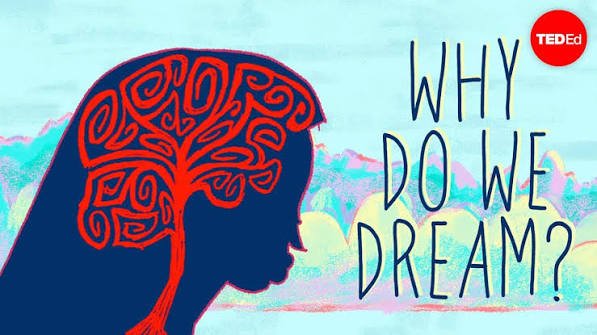
Every night, as you drift into sleep, your brain embarks on a bizarre journey—one filled with flying, falling, talking animals, or even reliving the day’s events. These vivid mental adventures are dreams, and they’ve puzzled humans for millennia. Why do we dream? Is there a purpose, or is it just random noise from a sleeping brain?
In this article, we’ll explore the leading scientific theories that attempt to explain why we dream. From the idea that dreams help us process memories and emotions to the possibility that they’re a biological threat-rehearsal system, we’ll break down the complex science into clear, everyday language. By the end, you’ll have a deeper understanding of what happens in your mind while you sleep—and why it matters.
What Are Dreams, Exactly?
Before diving into theories, let’s define what a dream is. A dream is a succession of images, ideas, emotions, and sensations that occur involuntarily in the mind during certain stages of sleep, most prominently during REM (rapid eye movement) sleep. REM sleep, discovered in 1953 by Eugene Aserinsky and Nathaniel Kleitman, is a stage characterized by rapid eye movements, increased brain activity, and temporary muscle paralysis (to keep you from acting out your dreams).
On average, humans spend about 2 hours per night dreaming, spread across 4–6 episodes. But here’s a surprising fact: about 95% of dreams are forgotten within minutes of waking. That’s why you might remember only a fragment of a dream, or none at all, most mornings.
The Brain on Dreams: A Quick Tour
To understand why we dream, it helps to know what’s happening in the brain. Neuroimaging studies (like fMRI and PET scans) show that during REM sleep, several key areas light up:
- The amygdala: the brain’s emotion center, is highly active, which explains why dreams are often emotionally charged.
- The hippocampus: involved in memory, is also active, suggesting a link between dreaming and memory processing.
- The visual association cortex: processes visual imagery, so it’s no surprise dreams are so visual.
Meanwhile, the dorsolateral prefrontal cortex—the area responsible for logical reasoning and executive control—shows reduced activity. This may explain why dreams often lack logic and why we accept bizarre scenarios without question.
Theory 1: Activation-Synthesis Hypothesis
One of the most influential modern theories is the Activation-Synthesis Hypothesis, proposed by psychiatrists J. Allan Hobson and Robert McCarley in 1977. The idea is that during REM sleep, the brainstem sends random electrical signals to the cortex—the outer layer of the brain responsible for higher-level thinking. The cortex, always trying to make sense of things, then “synthesizes” these random signals into a coherent story—a dream.
Think of it like this: if you’re sitting in a dark room and hear a series of random thumps, your brain tries to piece them together into a pattern, maybe imagining a burglar or a tree branch hitting the window. Similarly, the cortex takes random neural noise and weaves it into a narrative, even if that narrative is nonsensical.
Hobson later refined this into the AIM model, which considers three dimensions: Activation (brain energy), Input-output gating (how sensory input is blocked), and Modulation (the balance of brain chemicals). This model emphasizes that dreams reflect a unique state of consciousness, not just random noise.
Theory 2: Memory Consolidation Theory
Another leading theory is that dreams help consolidate memories. During sleep, especially REM, the brain replays and processes the day’s experiences, strengthening important memories and integrating them into existing knowledge networks. This is like a librarian sorting and shelving books after a busy day—except the librarian is your brain, and the books are memories.
Research by Robert Stickgold and Matthew Walker has shown that REM sleep is critical for emotional memory consolidation. If you learn a new skill or have an emotional experience, dreaming about it can help cement it in your memory. This theory suggests that dreams are not just random but are actually the brain’s way of deciding what to keep and what to discard.
Theory 3: Threat Simulation Theory
Evolutionary psychologist Antti Revonsuo proposed that dreams evolved as a biological defense mechanism. According to this theory, dreams simulate threatening events—like being chased, attacked, or lost—so that we can rehearse avoidance and coping strategies in a safe environment. This would have been crucial for our ancestors, who faced real dangers like predators and hostile tribes.
Evidence for this theory includes studies showing that children’s dreams contain more threats than adults’ dreams, and that people in dangerous environments have more realistic threats in their dreams. So, that dream about being chased by a monster might be your brain’s way of practicing survival skills.
Theory 4: Emotional Regulation Theory
Closely related to memory consolidation is the idea that dreams help regulate our emotions. Psychologist Rosalind Cartwright proposed that dreams allow us to process emotional experiences in a safe, simulated environment. By re-experiencing and working through negative emotions during dreams, we can wake up feeling better adjusted.
For example, if you have a stressful day at work, you might dream about the situation, but in the dream, you handle it differently or the outcome is positive. This can help you feel more prepared and less anxious in real life. Studies have shown that people who dream more about negative events show better emotional adaptation.
Theory 5: Social Simulation Theory
Revonsuo also extended his threat simulation theory to include social interactions. Most dreams involve multiple characters and social scenarios, suggesting that dreams might also serve to rehearse social skills and bonding. This could be a way to practice navigating complex social relationships without real-world consequences.
Think of it as a virtual reality training ground for social situations. You might dream about a conversation with a friend, a confrontation with a coworker, or a romantic encounter—all of which help you refine your social responses.
Theory 6: Neurocognitive Theory
Cognitive neuroscientist G. William Domhoff argues that dreams are a cognitive achievement built on waking-life memory systems. In other words, dreams reflect your concerns, personality, and developmental stage. If you’re worried about an exam, you might dream about being unprepared. If you’re a musician, you might dream about performing.
This theory is supported by findings that dream content is continuous with waking concerns. It suggests that dreams are not random or purely biological but are meaningful reflections of who we are.
Theory 7: Default Mode Network and Continual Activation
Some researchers propose that dreaming is an extension of the brain’s default mode network—the network that’s active when your mind wanders. During sleep, with no external sensory input, this network might go into overdrive, producing dreams. This is sometimes called “extreme mind-wandering.”
Similarly, the Continual Activation Theory (proposed by Jie Zhang in 2016) suggests that dreaming is a byproduct of the brain’s need to keep the mind continuously active, even during sleep. The brain is always processing information, and dreams are just what that processing looks like when there’s no real-world input.
Lucid Dreaming: When You Know You’re Dreaming
Before we wrap up, it’s worth mentioning lucid dreaming—a state where you’re aware you’re dreaming and can sometimes control the dream. About 55% of people have experienced at least one lucid dream, and about 23% have them monthly. Lucid dreaming offers a unique window into the nature of dreams, showing that the brain can be both asleep and self-aware at the same time.
Putting It All Together: Why Do We Dream?
So, which theory is correct? The truth is, there’s no single answer. Dreams likely serve multiple functions, and different theories highlight different aspects. Here’s a simple way to think about it:
- Biologically, dreams may be the brain’s way of processing neural activity and consolidating memories.
- Psychologically, they help us regulate emotions and rehearse for real-life challenges.
- Evolutionarily, they might have helped our ancestors survive by simulating threats and social situations.
In essence, dreams are a complex interplay of brain activity, memory, emotion, and evolution. They’re not just random noise—they’re a reflection of your mind’s inner workings.
How to Remember Your Dreams
If you’re curious about your own dreams, here are a few tips to improve recall:
- Keep a dream journal by your bed and write down anything you remember immediately upon waking.
- Wake up naturally (without an alarm) to increase the chance of waking from REM sleep.
- Before falling asleep, tell yourself, “I will remember my dreams.” This intention can help.
Remembering your dreams can give you insight into your subconscious mind and help you appreciate the incredible complexity of your sleeping brain.
Dreams remain one of the great mysteries of the human mind. While we don’t have a single, definitive answer to why we dream, the leading theories offer compelling explanations—from memory consolidation and emotional regulation to threat simulation and neural noise interpretation. What’s clear is that dreaming is a fundamental part of being human, and it plays a vital role in our cognitive and emotional well-being. So the next time you wake up from a bizarre dream, you can smile knowing that your brain was hard at work, sorting memories, processing emotions, and perhaps even rehearsing for life’s challenges.
Summary
- Dreams are vivid mental experiences that occur mainly during REM sleep, with most people dreaming 4–6 times per night.
- The Activation-Synthesis Hypothesis suggests dreams are the brain’s attempt to make sense of random neural signals.
- Memory Consolidation Theory posits that dreams help strengthen and integrate memories.
- Threat Simulation Theory proposes that dreams evolved to rehearse survival strategies.
- Emotional Regulation Theory indicates dreams help process and regulate emotions.
- Lucid dreaming, where you’re aware you’re dreaming, occurs in about 55% of people at least once.
FAQ
Q: How long do dreams last?
A: Dreams typically last anywhere from a few minutes to up to 30 minutes, with longer dreams occurring later in the night. On average, you spend about 2 hours per night dreaming across multiple episodes.
Q: Why do we forget most dreams?
A: About 95% of dreams are forgotten within minutes of waking. This is partly because dreams occur during REM sleep, and if you don’t wake up directly from REM, the memory of the dream may not transfer to long-term memory. Also, the brain’s chemical state during sleep may not support memory encoding.
Q: Can dreams predict the future?
A: There’s no scientific evidence that dreams can predict the future. While some people report dreams that seem to come true, this is likely due to coincidence or the brain’s tendency to find patterns. Dreams are more likely a reflection of your thoughts, worries, and experiences.
Q: Do animals dream?
A: Many animals, especially mammals, experience REM sleep and show brain activity patterns similar to humans during dreaming. For example, rats have been observed replaying maze-running sequences during sleep, suggesting they dream about their waking experiences.
Q: What is a lucid dream?
A: A lucid dream is one in which you are aware that you are dreaming. In some cases, you can even control the dream’s content. About 55% of people have had at least one lucid dream, and they occur most often during late-night REM periods.
Leave a Reply