Tag: Pearl Harbor

  • Isoroku Yamamoto: The Admiral Who Warned Japan Against War

    Isoroku Yamamoto: The Admiral Who Warned Japan Against War

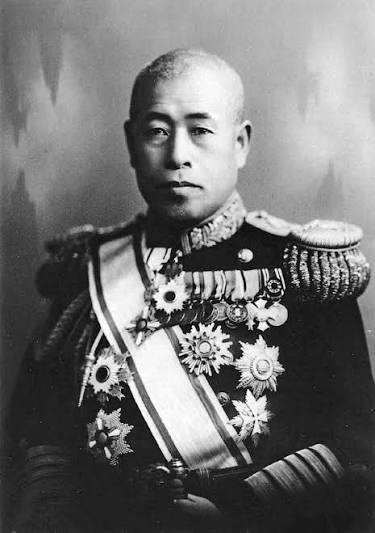
    On December 7, 1941, Japanese carrier aircraft devastated the U.S. Pacific Fleet at Pearl Harbor. The man who planned that attack, Admiral Isoroku Yamamoto, had spent years warning his own government that such a war would end in disaster. He knew America’s industrial might firsthand—he had studied at Harvard and served as a naval attaché in Washington. Yet he followed orders, launching a war he believed Japan could not win.

    Yamamoto’s life is a study in contradictions. He was a gambler who calculated odds with cold precision, a samurai descendant who embraced modern aviation, and a reluctant warrior who became his nation’s most famous naval commander. His story offers a window into how Japan hurtled toward war, and why one of its most brilliant military minds couldn’t stop it.

    The Making of a Naval Strategist

    Isoroku Yamamoto was born in 1884 into a low-ranking samurai family in Nagaoka, Japan. His birth name was Isoroku Takano, but he was later adopted into the Yamamoto clan—a traditional practice to preserve a family name. From an early age, he was shaped by the strict values of the samurai class: discipline, honor, and loyalty to the emperor.

    He entered the Imperial Japanese Naval Academy in 1901, graduating in the midst of the Russo-Japanese War. At the Battle of Tsushima in 1905, he lost two fingers on his left hand—a wound that earned him the nickname “Eighty Sen” from geisha and gamblers, mocking the cost of a manicure. But the battle also taught him a lesson that would define his career: modern naval warfare was changing, and those who adapted would prevail.

    After the war, Yamamoto rose through the ranks, attending the Naval War College and then serving as a naval attaché in Washington, D.C., from 1919 to 1921. He even took courses at Harvard University. This American experience left a lasting impression. He traveled widely, studied the country’s industries and shipyards, and understood that the United States had vast resources Japan simply couldn’t match.

    The Reluctant Advocate for Aviation

    Back in Japan, Yamamoto became a vocal proponent of naval aviation. In the 1920s and 1930s, most senior officers still worshipped the battleship, seeing it as the ultimate weapon. Yamamoto argued otherwise. He pushed for the development of aircraft carriers and long-range bombers, insisting that airpower would dominate future conflicts.

    His advocacy put him at odds with the navy’s traditionalists. But Yamamoto’s record and intellect earned him respect. By 1939, he was appointed Commander-in-Chief of the Combined Fleet, Japan’s main battle force.

    He also opposed the Tripartite Pact with Nazi Germany and fascist Italy, signed in 1940. Yamamoto believed that aligning with these powers would inevitably drag Japan into a war with the United States and Britain—a conflict he was convinced Japan would lose. His opposition made him enemies among ultranationalist military officers and civilians. He received death threats and required a personal bodyguard.

    The Plan for Pearl Harbor

    Despite his misgivings, when the decision to go to war was made, Yamamoto threw his skill behind it. He conceived the attack on Pearl Harbor as a preemptive strike to cripple the U.S. Pacific Fleet. His goal wasn’t to conquer America—it was to buy Japan six months to a year of free rein in Southeast Asia, time to fortify its conquests and hopefully negotiate a favorable peace.

    He reportedly told Prime Minister Fumimaro Konoe, “If I am told to fight regardless of the consequences, I shall run wild for the first six months or a year, but I have utterly no confidence for the second or third year.”

    On December 7, 1941, the plan unfolded with devastating precision. Japanese carrier aircraft sank or damaged eight battleships, destroyed nearly 200 aircraft, and killed over 2,400 Americans. The attack achieved its immediate objective, but it also galvanized the United States. Instead of negotiating, America declared war and entered World War II with a fury Yamamoto had feared.

    The Turning Point: Midway

    Yamamoto’s next major operation was the Battle of Midway in June 1942. His plan was complex, designed to lure the U.S. carriers into a trap. It backfired catastrophically. On June 4, 1942, American dive bombers found the Japanese fleet with its aircraft rearming and refueling. In a single day, Japan lost four aircraft carriers—the heart of its naval aviation.

    The defeat at Midway is often cited as the turning point of the Pacific War. Yamamoto was not solely responsible; the plan was a product of the naval staff’s overconfidence. But his reputation as a flawless strategist suffered. From then on, Japan was on the defensive, fighting a grinding war of attrition in the Solomon Islands.

    The Final Mission

    By April 1943, Yamamoto was directing operations around Guadalcanal. He decided to make an inspection tour of forward bases to boost morale. American intelligence intercepted and decrypted his travel schedule. President Franklin D. Roosevelt reportedly approved a mission to shoot him down—Operation Vengeance.

    On April 18, 1943, a squadron of U.S. Army P-38 Lightning fighters ambushed Yamamoto’s transport aircraft near Bougainville Island. The plane was shot down, killing Yamamoto and several others. He was 59 years old.

    His death was a significant blow to Japanese morale. Ironically, some Japanese hardliners who had once threatened his life saw his demise as a blessing. They had considered him too moderate, too willing to compromise with the West.

    Admiral Chester Nimitz, commander of the U.S. Pacific Fleet, later paid tribute to his fallen adversary: “He was one of the ablest officers in the Japanese Navy.” Nimitz understood that Yamamoto’s death was more than a tactical victory—it was the removal of a brilliant mind from an enemy that could ill afford to lose him.

    A Contradictory Legacy

    Isoroku Yamamoto remains one of the most enigmatic figures of World War II. He was a man who loved gambling but faced the ultimate stakes of war. He warned against a conflict he knew was unwinnable, yet he fought with uncompromising resolve. He embraced modern aviation while honoring ancient samurai traditions.

    His story is not just a military biography. It’s a lesson in how individuals can be caught in the machinery of history, forced to choose between their conscience and their duty. Yamamoto chose duty, and in doing so, he helped write one of the most tragic chapters of the 20th century.

    Yamamoto’s prediction proved tragically accurate. Japan ran wild for six months, but after two years, the industrial might of America overwhelmed it. His death in 1943 spared him from witnessing his nation’s ruin, but it also robbed him of the chance to see his warnings fully vindicated. Today, he is remembered not only as a brilliant tactician but as a man who saw the abyss clearly—and was powerless to pull his country back from its edge.

    Summary

    • Isoroku Yamamoto was the Japanese admiral who planned the attack on Pearl Harbor, despite warning that Japan couldn’t win a long war against the U.S.
    • He was a visionary advocate for naval aviation, pushing for carrier-based airpower when battleships still dominated naval thinking.
    • He opposed Japan’s alliance with Germany and Italy, leading to death threats from ultranationalists.
    • The Battle of Midway in 1942 was a decisive Japanese defeat, often blamed in part on Yamamoto’s overly complex plan.
    • He was killed in 1943 when American fighters shot down his transport plane, a mission code-named Operation Vengeance.

    FAQ

    Q: Why did Yamamoto plan the attack on Pearl Harbor if he opposed war with the U.S.?
    A: Yamamoto believed that if Japan went to war, it had to strike first and hard to disable the U.S. Pacific Fleet. He hoped a surprise attack would buy time for Japan to secure its conquests and negotiate a favorable peace. Despite his personal opposition, he followed orders and executed the plan with full commitment.

    Q: How did Yamamoto lose his fingers?
    A: He lost two fingers on his left hand during the Battle of Tsushima in 1905, a major naval victory against Russia. The injury was a badge of honor and also gave him the nickname “Eighty Sen,” referring to the cost of a manicure at the time.

    Q: What was Operation Vengeance?
    A: Operation Vengeance was the American mission to shoot down Yamamoto’s aircraft. U.S. intelligence intercepted and decoded his travel plans, and on April 18, 1943, P-38 Lightning fighters ambushed and killed him near Bougainville Island.

    Q: How did Yamamoto’s death affect the war?
    A: Yamamoto’s death was a major morale blow to Japan. He was highly respected as a brilliant strategist, and his loss weakened the Imperial Japanese Navy’s leadership. Some historians also argue it deprived Japan of one of its most capable commanders during a critical phase of the war.

    Q: What was Yamamoto’s view on the Tripartite Pact?
    A: Yamamoto strongly opposed Japan’s alliance with Germany and Italy in 1940. He believed it would inevitably lead to war with the United States and Britain, a conflict he thought Japan could not win. His opposition made him a target for ultranationalist extremists.
  • The Day of Infamy: Pearl Harbor, December 7, 1941

    The Day of Infamy: Pearl Harbor, December 7, 1941

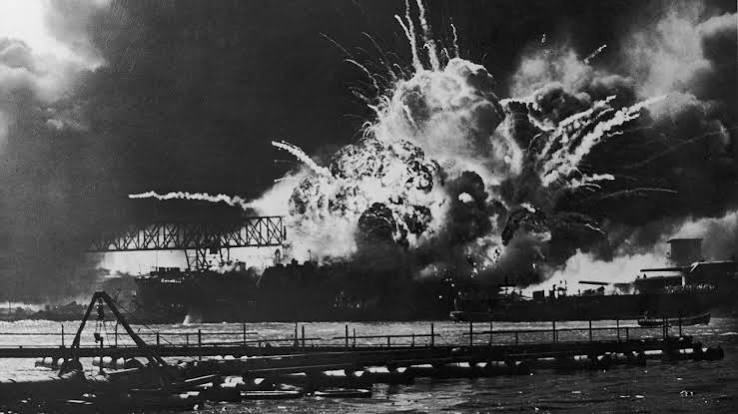
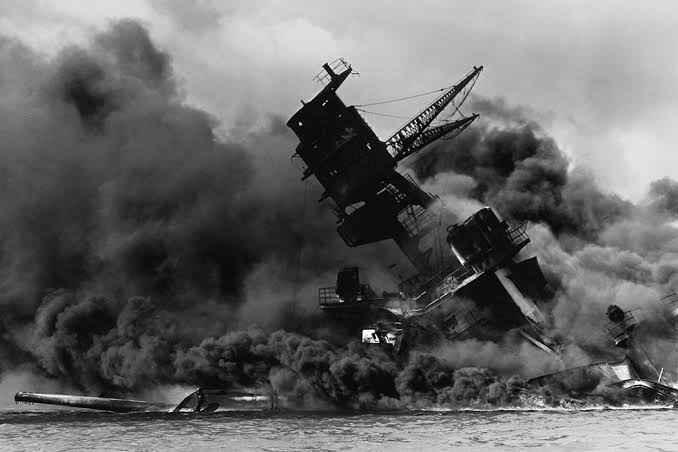
    At 7:48 a.m. on a quiet Sunday, the sky above Oahu filled with the roar of 353 Japanese aircraft. The first bombs fell on Battleship Row, and within minutes, the U.S. Pacific Fleet lay in flames. The attack on Pearl Harbor lasted just 110 minutes, but it killed 2,403 Americans, sunk or damaged 21 ships, and permanently altered the course of World War II.

    This was not a random act of aggression, but the culmination of a decade of rising tensions, economic sanctions, and a desperate gamble by an empire that saw no other way out. The story of Pearl Harbor is one of strategic miscalculation, human courage, and the moment that propelled the United States into a global conflict.

    A Sunday Morning Turned to Ash

    December 7, 1941, began as a typical Sunday at Pearl Harbor. Sailors were at breakfast, church services were underway, and the fleet lay at anchor in what was considered a safe haven. The first wave of 183 Japanese aircraft, led by Commander Mitsuo Fuchida, arrived at 7:48 a.m. They came in two waves, targeting battleships, airfields, and aircraft.

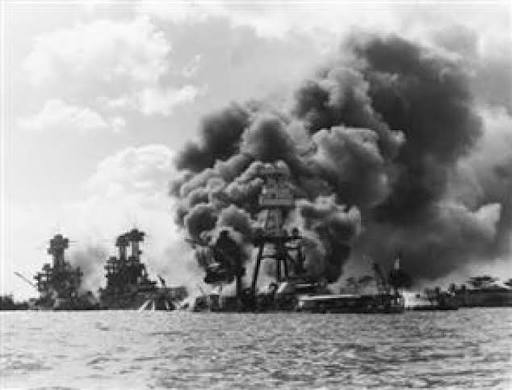
    The attack was over by 9:45 a.m. When the smoke cleared, the U.S. had lost 188 aircraft and seen all eight of its Pacific Fleet battleships damaged, four of them sunk. The USS Arizona alone took 1,177 of her crew with her, and the USS Oklahoma capsized, trapping hundreds below deck.

    Japan’s losses were comparatively light: 29 aircraft, 55 airmen, and five midget submarines. But the strategic victory was hollow. The attack missed the U.S. aircraft carriers (which were at sea), the oil storage tanks, and the submarine base—all of which would prove vital in the Pacific War.

    Pearl Harbor was a day of infamy that galvanized a nation. The memory of that morning—the burning ships, the fallen sailors, the cries for vengeance—propelled the United States into a war that would end with Japan’s surrender in 1945. The attack failed to break American will; instead, it forged a resolve that would carry the Allies to victory.

    Summary

    • The attack on Pearl Harbor occurred on December 7, 1941, at 7:48 a.m., lasting 110 minutes.
    • Japan launched 353 aircraft from six carriers, sinking or damaging 21 U.S. ships and destroying 188 aircraft.
    • U.S. casualties: 2,403 dead, 1,178 wounded; Japan lost 29 aircraft and 55 airmen.
    • The attack was a preemptive strike to neutralize the U.S. Pacific Fleet and secure Japan’s oil supply in Southeast Asia.
    • The following day, the U.S. declared war on Japan, and on December 11, Germany and Italy declared war on the U.S., bringing America into World War II.

    FAQ

    Q: Why did Japan attack Pearl Harbor?
    A: Japan sought to cripple the U.S. Pacific Fleet to buy time to seize oil-rich territories in Southeast Asia, which were essential for its war effort in China. The U.S. oil embargo and asset freeze threatened Japan’s strategic survival.

    Q: How many waves of aircraft attacked?
    A: Two waves. The first wave of 183 aircraft hit at 7:48 a.m.; the second wave of 170 arrived about an hour later. The attack was over by 9:45 a.m.

    Q: What was the U.S. intelligence failure?
    A: While the U.S. had broken Japan’s diplomatic code (Purple), it had not cracked the naval code (JN-25). Washington sent a ‘war warning’ on November 27 but did not anticipate an attack on Hawaii, focusing instead on the Philippines or Southeast Asia.

    Q: Did any U.S. ships survive the attack?
    A: All eight battleships were damaged, but four were repaired and returned to service. The USS Arizona and USS Oklahoma were permanently lost. The aircraft carriers, the primary targets, were not in port and were never hit.

    Q: What was the immediate U.S. reaction?
    A: On December 8, President Franklin D. Roosevelt delivered his ‘Day of Infamy’ speech, and Congress declared war on Japan with only one dissenting vote. Three days later, Germany and Italy declared war on the U.S., thrusting America into both the Pacific and European theaters.

  • The Pacific War: A Chronicle of Fire, Ash, and the Shape of the Modern World

    The Pacific War: A Chronicle of Fire, Ash, and the Shape of the Modern World

    At 7:48 a.m. on December 7, 1941, the first wave of Japanese aircraft descended on Pearl Harbor. Within two hours, 2,403 Americans were dead, eight battleships were sunk or damaged, and the United States was irrevocably at war. But the attack on Hawaii was only one stroke in a coordinated sweep across the Pacific—Japanese troops were simultaneously landing in Malaya, the Philippines, and Hong Kong. The war that followed would last nearly four years, consume millions of lives, and redraw the map of Asia and the Pacific.

    This is not a story of clean battle lines or simple heroes. It is a story of island hopping through coral and jungle, of firebombed cities and atomic flashes, of empires crumbling and new nations rising. To understand the Pacific War is to understand how the modern world took shape—through the roar of carrier aircraft, the silence of a surrendered fleet in Tokyo Bay, and the long shadows cast by decisions made in smoke-filled rooms on both sides of the ocean.

    The Road to War: An Empire’s Gamble

    Japan’s path to Pearl Harbor was paved with decades of ambition and desperation. After the Meiji Restoration of 1868, Japan industrialized at a breathtaking pace, but it lacked the raw materials to sustain its growth. The Great Depression of the 1930s only sharpened the crisis, pushing Tokyo toward expansion as a solution. In 1931, Japan occupied Manchuria, establishing the puppet state of Manchukuo. Six years later, it launched a full-scale invasion of China, plunging the region into a brutal conflict that would last until 1945.

    The Western powers watched with growing alarm. The United States, Britain, and the Netherlands—the colonial rulers of Southeast Asia—controlled the oil, rubber, and tin that Japan so desperately needed. When Japan joined Germany and Italy in the Tripartite Pact in 1940, the Western response was swift: embargoes on oil, steel, and scrap metal. Japan’s oil reserves were estimated at only two years’ worth. Facing economic strangulation, Tokyo chose war.

    The strategic logic was simple: strike the U.S. Pacific Fleet at Pearl Harbor to buy time, then seize the Southern Resource Area—the oil fields of the Dutch East Indies, the rubber of Malaya, the rice of Burma—and fortify a defensive perimeter across the Pacific. The plan was a gamble, but Japanese leaders saw it as a necessity. As Admiral Isoroku Yamamoto, who opposed the war, reportedly said, “I shall run wild considerably for the first six months or a year, but I have utterly no confidence for the second and third years.”

    The First Six Months: The Japanese Blitzkrieg

    Yamamoto’s prediction proved accurate. In the months after Pearl Harbor, Japanese forces swept through Southeast Asia and the Pacific with shocking speed. Hong Kong fell on Christmas Day 1941. Singapore, the supposedly impregnable British fortress, surrendered on February 15, 1942, with 80,000 troops captured. The Philippines—where American and Filipino forces under General Douglas MacArthur fought a desperate delaying action—fell by May. The Dutch East Indies, with its vital oil, was overrun in March. By the summer of 1942, Japan controlled a vast empire stretching from the Aleutians to the Solomon Islands.

    The brutality of the occupation was immediate. In the Philippines, the Bataan Death March in April 1942 forced 75,000 prisoners on a 65-mile trek; thousands died from starvation, disease, and execution. In Burma, Allied POWs and Asian laborers were conscripted to build the Death Railway, where an estimated 12,000 POWs and 90,000 laborers perished. The Japanese military, guided by the Bushido code that forbade surrender, treated its captives with a contempt that shocked the Western world.

    The Tide Turns: Midway and Guadalcanal

    Japan’s expansion had to stop somewhere. It stopped at Midway.

    In June 1942, the Japanese fleet—four heavy aircraft carriers, dozens of support ships—steamed toward Midway Atoll, intending to lure the U.S. Navy into a decisive battle. But American codebreakers had cracked Japanese naval codes. Admiral Chester Nimitz knew the plan in advance. On June 4, dive bombers from USS Enterprise and USS Yorktown caught the Japanese carriers rearming and refueling their aircraft. Within five minutes, three of the four carriers were burning wrecks. The fourth was sunk later that day. Japan lost 3,000 men and the core of its naval aviation. The battle halted Japanese expansion in the Pacific—permanently.

    But Midway was not the end. The Allies needed to go on the offensive, and their first target was Guadalcanal, a jungle-covered island in the Solomon Islands where the Japanese were building an airfield. In August 1942, U.S. Marines landed, beginning a six-month campaign of attrition that would define the war in the Pacific. The battles around Guadalcanal—on land, at sea, and in the air—were brutal and costly. The Japanese called it “Starvation Island” as supply lines were cut and troops withered. The Americans held, and by February 1943, the Japanese had evacuated. The first major Allied land offensive had succeeded, but at a terrible price: over 7,000 Allied dead, and over 19,000 Japanese dead, most from starvation and disease.

    Island Hopping: The Road to Tokyo

    After Guadalcanal, the Allies adopted a strategy of “island hopping”: bypass heavily fortified Japanese positions, seize lightly defended islands to build airfields and naval bases, and let the isolated garrisons “wither on the vine.” Admiral Nimitz advanced across the central Pacific, while General MacArthur pushed up from the southwest. The pace was relentless: Tarawa in November 1943, where 1,000 Marines died in 76 hours; the Marshalls in early 1944; then the Marianas—Saipan, Tinian, Guam—in June and July 1944.

    Saipan was a turning point. Its capture brought Japan’s home islands within range of American B-29 bombers. The Japanese knew it, and they defended the island with desperation. When defeat was inevitable, hundreds of civilians threw themselves from the cliffs at Marpi Point rather than surrender. The battle for Saipan cost over 3,000 U.S. dead and over 29,000 Japanese dead.

    The largest naval battle in history occurred on October 23–26, 1944, in Leyte Gulf, in the Philippines. The Imperial Japanese Navy deployed nearly its entire remaining fleet in a desperate bid to destroy the U.S. invasion force. The result was a disaster for Japan: three battleships, four carriers, and ten cruisers were sunk, effectively destroying the Japanese fleet as a fighting force. It was also at Leyte Gulf that the Japanese first used kamikaze attacks—suicide pilots who crashed their planes into American ships. They would become a chilling symbol of Japan’s defiance in the face of inevitable defeat.

    The Bloody Islands: Iwo Jima and Okinawa

    By early 1945, the war had moved to Japan’s doorstep. The first target was Iwo Jima, a volcanic island 750 miles from Tokyo, needed as an emergency landing strip for B-29s. The Japanese had fortified the island with 21,000 troops in an elaborate network of tunnels and bunkers. The U.S. Marine assault, starting on February 19, 1945, was supposed to last five days. It took over a month. The iconic photograph of Marines raising the flag on Mount Suribachi became a symbol of American valor, but the cost was staggering: 6,821 U.S. dead and over 18,000 wounded. Of the 21,000 Japanese defenders, only 216 were taken prisoner.

    Okinawa, in April 1945, was even worse. The island was the last defensive ring before the Japanese home islands. The Japanese garrison of over 100,000 troops fought with a fury that stunned the Americans. The battle dragged on for 82 days, the longest and bloodiest in the Pacific theater. The U.S. lost over 12,000 dead; the Japanese lost about 100,000 military dead. But the most tragic casualties were Okinawan civilians—about 150,000, roughly one-third of the island’s population, were killed in the crossfire, forced to commit suicide, or used as human shields.

    Fire from the Sky: The Bombing of Japan

    Even before Iwo Jima and Okinawa, the U.S. had begun a strategic bombing campaign against Japan’s cities. From late 1944, B-29s flew from bases in the Marianas, striking factories, railways, and urban areas. In March 1945, Major General Curtis LeMay ordered a change in tactics: low-altitude night raids using incendiary bombs. The first such raid on Tokyo on March 9–10, 1945, killed an estimated 100,000 people and destroyed 16 square miles of the city. Over the next five months, similar firebombing raids devastated 67 Japanese cities. The raids were horrifically effective, but Japan showed no sign of surrender.

    The firebombing raids were a prelude to something even more terrible. On August 6, 1945, a B-29 named Enola Gay dropped an atomic bomb on Hiroshima, instantly killing an estimated 70,000 people. Three days later, a second bomb was dropped on Nagasaki, killing another 40,000. The long-term effects of radiation would raise the death toll to 200,000 by the end of 1945. On August 8, the Soviet Union declared war on Japan and invaded Manchuria, shattering any hope of a negotiated peace. On August 15, Emperor Hirohito—in a radio broadcast that was the first time most Japanese had heard his voice—announced Japan’s surrender. The formal ceremony took place on September 2, 1945, aboard the battleship USS Missouri in Tokyo Bay.

    The Wider War: China, Southeast Asia, and the Colonial Collapse

    While the U.S. and Japan fought across the Pacific, the war in China raged on. For the Chinese, the war had begun in 1937, not 1941. The conflict between Nationalists under Chiang Kai-shek and Communists under Mao Zedong had been interrupted by a fragile united front against the Japanese, but the two factions also fought each other. China suffered catastrophic losses: an estimated 10 to 20 million military and civilian deaths. The Rape of Nanjing in December 1937, where Japanese troops massacred hundreds of thousands of civilians and committed widespread sexual violence, remains one of the most horrific events of the war.

    In Southeast Asia, the Japanese occupation had a dual legacy. It brutally exploited the region’s resources and peoples: forced labor on the Burma Railway, forced farming of crops for the Japanese war effort, and systematic starvation in the Dutch East Indies, where an estimated 4 million civilians died. But it also shattered the myth of white colonial invincibility. The Japanese defeated British, Dutch, and American colonial powers with stunning ease, and their propaganda of “Asia for the Asiatics” resonated with many who had long resented European rule. When the Japanese surrendered, they left a power vacuum. Independence movements in Indonesia, Vietnam, and the Philippines surged forward, leading to the end of Western colonialism in Asia within a decade.

    The Pacific Islands themselves bore the brunt of the fighting. Tens of thousands of islanders were killed, displaced, or conscripted as laborers by both sides. The war’s end did not bring peace to the islands: the U.S. military continued to occupy and test nuclear weapons in the Marshall Islands, beginning with the Bikini Atoll tests in 1946, a continuation of militarization that would have lasting health and environmental consequences.

    Legacy: The Shape of the Modern World

    The Pacific War remade the world in ways that are still visible today. It ended the Japanese Empire and led to the transformation of Japan into a pacifist democracy under the American occupation. It raised the United States to superpower status, with a network of military bases across the Pacific. It accelerated the collapse of European colonialism and the emergence of new nations. It also left deep scars: the occupation of the Korean peninsula by the U.S. and Soviet Union set the stage for the Korean War; the division of Vietnam led to the Vietnam War; and the unresolved grievances of the war continue to shape relations between Japan, China, and Korea today.

    The war also raised profound moral questions. The atomic bombings of Hiroshima and Nagasaki, the firebombing of Tokyo, the internment of 120,000 Japanese-Americans, the use of kamikaze attacks, and the systematic sexual slavery of “comfort women” all remain subjects of intense debate. Were the atomic bombs necessary? Did the firebombing of cities cross a moral line? These questions have no easy answers, but they are essential to understanding the war’s true cost.

    In the end, the Pacific War was a war of extremes—of islands that were little more than specks on a map, of battles that turned on a few minutes of carrier aircraft, of civilian suffering on a scale that defies imagination. It was a war that began with a surprise attack on a quiet Sunday morning and ended with the flash of an atomic bomb over a city. Its legacy is written in the skyline of modern Tokyo, the independence of former colonies, and the memorials that dot the Pacific—from the USS Arizona in Pearl Harbor to the Peace Memorial in Hiroshima. To walk these sites is to remember that the modern world was forged in fire and ash.

    The Pacific War ended on September 2, 1945, but its consequences have not ended. The war’s battles are re-fought in the history books, its wounds are re-opened in diplomatic disputes, and its lessons are re-examined in every new crisis. The war’s veterans are nearly gone, but the memory of what they did—and what was done in their name—remains. To understand the Pacific War is to understand the price of empire, the fragility of peace, and the enduring power of human resilience. It is a story that deserves to be told, not as a distant relic, but as a living part of our shared history.

    Summary

    • The Pacific War began on December 7/8, 1941, with the attack on Pearl Harbor and simultaneous invasions across Southeast Asia, and ended on September 2, 1945, with the formal surrender ceremony aboard USS Missouri.
    • Key turning points included the Battle of Midway (June 1942), which halted Japanese expansion; Guadalcanal (1942–43), the first major Allied offensive; and Leyte Gulf (October 1944), the largest naval battle in history, which effectively destroyed the Japanese fleet.
    • The war was fought with extreme brutality, including kamikaze attacks, firebombing of Japanese cities, the Bataan Death March, the Burma Railway, and the atomic bombings of Hiroshima and Nagasaki.
    • The war had a devastating human cost: an estimated 2.1–2.5 million Japanese military dead, ~104,000 U.S. military dead, 10–20 million Chinese deaths, and millions of civilian deaths across Southeast Asia, including ~150,000 Okinawan civilians.
    • The war’s end accelerated the collapse of European colonialism in Asia, leading to independence movements in Indonesia, Vietnam, and the Philippines, and set the stage for the Cold War in the Pacific.

    FAQ

    Q: Why did Japan attack Pearl Harbor?
    A: Japan’s attack was a preventive strike to neutralize the U.S. Pacific Fleet, which threatened Japan’s ability to seize oil-rich territories in Southeast Asia. The U.S. had imposed embargoes on oil and steel, and Japan’s reserves were dwindling. The attack was designed to buy time for Japan to fortify its defensive perimeter.

    Q: What was the “island hopping” strategy?
    A: Island hopping was the Allied strategy of bypassing heavily fortified Japanese islands and instead seizing lightly defended islands to build airfields and naval bases. This allowed the Allies to advance toward Japan more quickly, while isolating and starving out Japanese garrisons that were cut off from supply lines.

    Q: How many people died in the atomic bombings of Hiroshima and Nagasaki?
    A: The immediate death toll was an estimated 70,000 in Hiroshima (August 6, 1945) and 40,000 in Nagasaki (August 9, 1945). By the end of 1945, the toll had risen to about 200,000 due to injuries and radiation sickness.

    Q: What role did China play in the Pacific War?
    A: China was a major battleground long before Pearl Harbor. The Second Sino-Japanese War began in 1937, and China suffered 10–20 million deaths, making it one of the largest contributors to the Allied cause. China’s resistance tied down millions of Japanese troops, preventing them from being deployed elsewhere.

    Q: What were the “comfort women”?
    A: “Comfort women” were an estimated 50,000 to 200,000 women, mostly Korean, who were forced into sexual slavery by the Japanese military during the war. The issue remains a major point of friction between Japan and its neighbors, as Japan has not fully acknowledged responsibility.

  • The Night Churchill Learned of Pearl Harbor: Shock, Relief, and the Question of Foreknowledge

    The Night Churchill Learned of Pearl Harbor: Shock, Relief, and the Question of Foreknowledge

    On the evening of December 7, 1941, at Chequers, the British Prime Minister’s country retreat, Winston Churchill was at dinner with two American guests: U.S. Ambassador John Winant and W. Averell Harriman, President Roosevelt’s special envoy. The conversation was likely tense; the world was at war, but the United States remained on the sidelines. Then the BBC interrupted its broadcast with a terse bulletin: Japanese aircraft had attacked the U.S. Pacific Fleet at Pearl Harbor.

    Churchill later wrote that he went to bed that night and “slept the sleep of the saved and thankful.” That reaction relief as much as shock has fueled a persistent conspiracy theory: that Churchill knew the attack was coming and deliberately withheld the intelligence to drag America into the war. But the historical record, including Churchill’s own memoirs and the findings of multiple official inquiries, paints a more complex picture of surprise, strategic desperation, and a failure of intelligence that was shared across both nations.

    The Scene at Chequers

    Churchill was not in London that night. He had retreated to Chequers, the 16th-century manor in Buckinghamshire that serves as the Prime Minister’s country residence, for a working dinner with Winant and Harriman. The trio had just finished their meal when a butler named Sawyers entered the dining room. According to Churchill’s account, he switched on a small wireless set in the room. The BBC was broadcasting news of the attack on Pearl Harbor.

    Churchill immediately placed a transatlantic call to the White House. Roosevelt came on the line and told him directly: “They have attacked us. We are all in the same boat now.” The American President’s voice was calm, but the weight of the words was immense. For Churchill, it was the moment he had been waiting for since the fall of France in 1940.

    Eyewitnesses describe Churchill’s initial reaction as one of genuine surprise. Harriman later said that Churchill was stunned by the news, though he quickly grasped its implications. The Prime Minister’s own memoirs confirm this: he wrote that he was “thankful” that the United States was finally in the war, but he did not claim to have anticipated the attack on Pearl Harbor specifically.

    The Intelligence Picture: What Britain Knew

    By late 1941, British codebreakers at Bletchley Park had cracked the German Enigma cipher, giving them access to significant German military communications. But Japanese naval codes were a different story. The Imperial Japanese Navy’s main operational code, JN-25, was only partially broken, and the British were largely reliant on diplomatic intercepts—decrypted by the Americans and shared with London—and on signals intelligence from their Far East stations.

    Britain’s Far East Combined Bureau in Singapore had been tracking Japanese fleet movements for weeks. There were clear indications that Japan was preparing for a major offensive. But the consensus among British and American intelligence analysts was that the most likely targets were Britain’s own colonies—Malaya, Singapore, or the Dutch East Indies—or perhaps the American-held Philippines. Pearl Harbor, 4,000 miles from Japan, seemed an unlikely target, protected by its distance and by the assumption that the U.S. Pacific Fleet would deter any attack.

    Churchill was aware of the deteriorating diplomatic situation between the U.S. and Japan. Roosevelt had kept him informed through their secret correspondence, in which Churchill signed as “Former Naval Person.” The Prime Minister knew that war in the Pacific was likely, but he did not know when or where it would break out. He certainly had no specific warning of the attack on Pearl Harbor.

    The “Germany First” Strategy: A Matter of Policy, Not Deception

    One of the pillars of the conspiracy theory is the claim that Churchill had a motive to trick the U.S. into war. But the historical record shows that the U.S. and Britain had already agreed on a “Germany First” strategy in secret staff talks held in early 1941, known as the ABC-1 talks. The U.S. military had formally adopted the policy that if America entered the war, the priority would be defeating Germany before Japan.

    Churchill did not need to deceive Roosevelt into joining the war in Europe; the U.S. was already committed to that strategy in principle. What Churchill wanted was for the U.S. to become a full belligerent, and Pearl Harbor achieved that. But the idea that he withheld specific intelligence about the attack requires evidence that simply does not exist in the archives.

    The Conspiracy Theory and Its Flaws

    Proponents of the “Churchill knew” theory point to a few pieces of circumstantial evidence: Churchill’s relief at the news, the presence of British intelligence officers in the Pacific, and the claim that British codebreakers had intercepted Japanese signals indicating an attack on Pearl Harbor. Authors like James Rusbridger in Betrayal at Pearl Harbor and Robert Stinnett in Day of Deceit have argued that the British (or, in Stinnett’s case, the Americans) deliberately suppressed intelligence about the attack.

    But these claims collapse under scrutiny. The Roberts Commission, established in 1941, and the later Joint Committee on the Investigation of the Pearl Harbor Attack (1945–46) examined the intelligence failures in exhaustive detail. Neither found any evidence of British foreknowledge. The Japanese fleet that attacked Pearl Harbor maintained strict radio silence during its transit, and the U.S. Navy’s own intelligence community—which had broken Japanese diplomatic codes but not the naval code—was caught off guard. The British were no better positioned.

    Churchill’s relief was real, but it was the relief of a leader who had just seen his greatest strategic hope realized. He had spent two years trying to bring the United States into the war. The attack on Pearl Harbor did not merely bring America in; it united the American people behind the war effort in a way no political maneuvering could have achieved. Churchill’s own words on the night of the attack capture his state of mind: “I went to bed and slept the sleep of the saved and thankful.” Those are not the words of a man surprised by a plan gone right; they are the words of a man who had just been handed a lifeline.

    The Immediate Aftermath

    The day after the attack, Churchill convened Parliament and declared that Britain and the United States were now “in this together.” He immediately began planning a trip to Washington, which took place in late December 1941 under the codename ARCADIA. At that conference, the “Germany First” strategy was formally confirmed, and the Allied war effort was locked into a unified command structure.

    For Churchill, the road to victory was now clear. But the path to Pearl Harbor had been paved with misjudgments and missed signals on both sides of the Atlantic. The attack was a surprise not because some grand conspiracy was in play, but because the intelligence systems of two great powers—both struggling to process a flood of information—failed to anticipate a single, audacious move.

    The question of whether Churchill knew about Pearl Harbor in advance has a clear answer: no. The evidence is overwhelming that he was surprised by the attack, even if he was not surprised that Japan was going to war. His relief was not a sign of complicity but of desperation, as a man who had been fighting alone against Hitler saw the world’s greatest industrial power finally join the fight. The conspiracy theory persists because it offers a tidy explanation for a messy event, but the historical record shows a more human story of intelligence failures, misperceptions, and a leader who, like the rest of the world, was caught off guard by the audacity of the Japanese attack.

    Summary

    • Churchill learned of the Pearl Harbor attack from a BBC bulletin at Chequers, not from a private intelligence channel.
    • He expressed shock, then relief, because U.S. entry into the war guaranteed eventual Allied victory.
    • British intelligence had warnings of a Japanese strike, but the consensus was that targets would be British Malaya, the Philippines, or the Dutch East Indies—not Pearl Harbor.
    • The U.S. and Britain had already agreed on a “Germany First” strategy in secret talks, undermining the claim that Churchill needed to deceive Roosevelt.
    • Official inquiries (Roberts Commission, Joint Committee) found no evidence of British foreknowledge.

    FAQ

    Q: Did Churchill have specific warning of the Pearl Harbor attack?
    A: No. Churchill was aware that Japan was preparing for war, but there is no credible evidence that he knew the specific target or timing of the Pearl Harbor attack. The intelligence available to Britain pointed to likely targets in Southeast Asia, not Hawaii.

    Q: Why did Churchill feel relief after the attack?
    A: Churchill had spent two years trying to bring the United States into the war, as Britain was fighting alone against Germany. The attack on Pearl Harbor achieved that goal, and Churchill believed that U.S. entry guaranteed Allied victory. His relief was a strategic, not conspiratorial, reaction.

    Q: What was the “Germany First” strategy, and how does it relate to the conspiracy theory?
    A: “Germany First” was a strategy agreed upon in secret U.S.-British staff talks in early 1941, stating that if America entered the war, the priority would be defeating Germany before Japan. This makes the claim that Churchill needed to trick the U.S. into the war less plausible, as the U.S. was already committed to that strategy.

    Q: Have any official investigations found evidence of British foreknowledge?
    A: No. The Roberts Commission (1941–42) and the Joint Committee on the Investigation of the Pearl Harbor Attack (1945–46) thoroughly examined the intelligence failures and found no evidence that the British (or anyone else) knew the attack was coming.

    Q: Why does the conspiracy theory persist?
    A: The theory persists because it offers a simple explanation for a complex event, and because Churchill’s relief at the news can be misread as confirmation of a plan. However, the historical record shows a surprise attack that was the result of intelligence failures, not deliberate deception.

  • Hitler’s Fatal Gamble: Why Germany Declared War on America After Pearl Harbor

    Hitler’s Fatal Gamble: Why Germany Declared War on America After Pearl Harbor

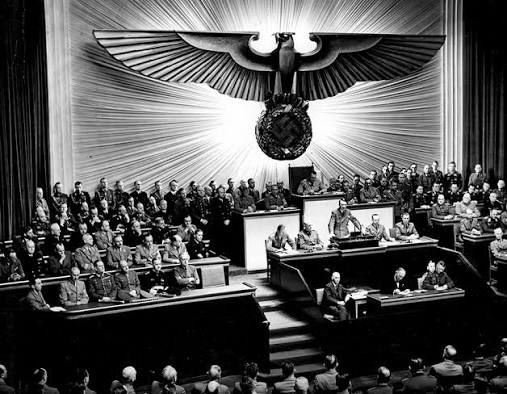
    On December 11, 1941, four days after Japanese bombers devastated the U.S. Pacific Fleet at Pearl Harbor, Adolf Hitler stood before the Reichstag in Berlin and declared war on the United States. It was a decision that would seal the fate of the Third Reich, yet at the time, it seemed to many including Hitler himself like a calculated, even inevitable, move. But why did Hitler, already bogged down in a brutal war against the Soviet Union and Britain, willingly add the industrial might of America to his list of enemies? The answer lies in a toxic mix of ideology, miscalculation, and strategic desperation.

    To understand Hitler’s decision, one must look beyond the formal texts of treaties and into the Führer’s own racial fantasies and geopolitical delusions. He saw America as a weak, mongrelized nation, incapable of fighting a real war. He believed that war with the U.S. was coming anyway, so why not seize the moment? Yet his gamble backfired catastrophically, uniting the world’s greatest powers against Germany and ensuring its ultimate defeat. This is the story of how Hitler’s hubris turned a tactical opportunity into a strategic disaster.

    The Pact That Didn’t Bind

    When Japan attacked Pearl Harbor on December 7, 1941, Hitler had no legal obligation to join the war. The Tripartite Pact, signed in September 1940, committed Germany, Italy, and Japan to defend one another only if one of them was attacked. Japan was the aggressor, not the victim. Germany’s ambassador to Japan, Eugen Ott, had even been instructed to urge Japan to avoid war with the U.S. unless absolutely necessary. Yet within hours of the attack, Hitler’s Foreign Minister, Joachim von Ribbentrop, began pressing for a declaration of war, and Hitler was eager to comply.

    Why? For Hitler, the pact was never just a legal instrument; it was a declaration of solidarity among the “have-not” nations against the Anglo-American world order. In his December 11 speech, he framed the war as a cosmic struggle between the “Jewish-capitalist” world, led by Roosevelt, and National Socialist Germany. He listed grievances: U.S. violations of neutrality, the Lend-Lease program, and Roosevelt’s “warmongering.” He wanted to show that Germany stood by its Axis partners, even at the cost of plunging into a two-front war.

    But there was more than ideology at play. Hitler and his generals genuinely believed that the United States was a paper tiger. They thought the U.S. was militarily weak, politically divided, and would take years to mobilize its industrial might. In Hitler’s racial worldview, America was a “mongrel” nation, dominated by Jews and incapable of true military greatness. He once told his generals, “The American is like a child—he needs to be led, and he has no idea what he wants.” Such contempt blinded him to the reality of American production capacity.

    The Atlantic Undeclared War

    The formal declaration was, in many ways, just a formality. The U.S. and Germany had been fighting an undeclared naval war in the Atlantic for months. U.S. destroyers were escorting convoys to Britain, and they had exchanged fire with German U-boats. In September 1941, the USS Greer was attacked by a German submarine after being tracked by a British plane. In October, the USS Reuben James was torpedoed and sunk with the loss of 100 American sailors. Hitler had ordered his U-boats to avoid provoking the U.S., but Roosevelt was pushing the envelope, ordering the Navy to “shoot on sight” any German warships in U.S. defensive zones.

    Hitler’s restraint was a strategic choice. He hoped to keep America out of the war until the Soviet Union was conquered. But by late 1941, Operation Barbarossa had stalled before Moscow, and the Wehrmacht was suffering massive casualties. The war in the East was not going as planned, and Hitler needed a victory somewhere. Declaring war on America gave him the chance to unleash unrestricted submarine warfare in the Atlantic, cutting Britain’s lifeline before the U.S. could intervene effectively. He also hoped that tying down American forces in the Pacific would relieve pressure on Germany.

    The Great Miscalculation

    Hitler’s decision was based on a profound misreading of the situation. He believed that the U.S. could not project meaningful military power into Europe before 1944 or 1945, by which time he expected to have conquered the USSR and secured Europe. He was convinced that Roosevelt would have entered the war eventually anyway, so why not act first and appear decisive? In his mind, the declaration was a preemptive strike, not a gamble.

    But Hitler underestimated the U.S. in every way. He failed to grasp the speed and scale of American mobilization. Within months, U.S. factories were producing more war materiel than Germany, Japan, and Italy combined. He also misjudged the political will of the American people. While isolationism had been strong before Pearl Harbor, the attack—and Germany’s declaration—united the country behind the war effort. Roosevelt and Churchill were relieved; Churchill later wrote that he “slept the sleep of the saved” upon hearing the news. The German declaration solved the political problem of how to bring the U.S. into the European war when public opinion was focused on revenge against Japan.

    The Aftermath: A United Enemy

    The declaration on December 11, 1941, formally merged the European and Pacific theaters into one global conflict. The U.S. Congress reciprocated with a declaration of war against Germany on the same day. For Hitler, the move was meant to solidify the Axis and encourage Japan to tie down British and American forces. But it had the opposite effect: it ensured that the U.S., Britain, and the Soviet Union would fight as allies against Germany, with the full weight of American industrial power committed to Europe.

    Historians have long viewed Hitler’s declaration as one of the greatest strategic blunders of the war. It was a miscalculation so profound that it turned a difficult war into an impossible one. Hitler’s racial ideology and his contempt for American democracy blinded him to the facts. He saw the U.S. as a weak, divided nation, but in reality, it was a sleeping giant. When it awakened, it destroyed the Third Reich.

    Hitler’s declaration of war on America was not a rational act of statecraft but a product of his ideological delusions and strategic desperation. He believed he was being decisive, but he was actually signing his own death warrant. The decision unified the Allies, unleashed American industrial might against Germany, and ultimately ensured the fall of the Third Reich. It remains a chilling example of how hubris and miscalculation can turn a moment of opportunity into a catastrophe.

    Summary

    • Germany was not obligated by the Tripartite Pact to declare war on the U.S., as Japan was the aggressor at Pearl Harbor.
    • Hitler viewed war with America as inevitable and wanted to appear decisive, while also seeking to unleash unrestricted submarine warfare.
    • Hitler’s racial ideology led him to underestimate American military capability and resolve.
    • The U.S. and Germany were already engaged in an undeclared naval war in the Atlantic before the formal declaration.
    • The declaration backfired strategically, uniting the U.S., Britain, and the USSR against Germany and ensuring American industrial might was turned against the Third Reich.

    FAQ

    Q: Was Germany forced to declare war on the U.S. by the Tripartite Pact?
    A: No. The pact required mutual assistance only if a member was attacked. Japan was the aggressor at Pearl Harbor, so Germany had no legal obligation to declare war.

    Q: Why did Hitler believe the U.S. was weak?
    A: Hitler held a racialized view of America, seeing it as a ‘mongrel nation’ dominated by Jews and incapable of true military greatness. He also believed the U.S. would take years to mobilize and was politically divided by isolationism.

    Q: What was the immediate impact of Hitler’s declaration?
    A: The U.S. Congress declared war on Germany on the same day, formally merging the European and Pacific theaters into one global conflict. It also relieved Roosevelt and Churchill, who saw it as a solution to bringing the U.S. into the European war.

    Q: Did the U.S. and Germany have any prior hostilities before Pearl Harbor?
    A: Yes. The U.S. and Germany were engaged in an undeclared naval war in the Atlantic, with U.S. destroyers escorting convoys and exchanging fire with German U-boats, including incidents like the USS Greer and the sinking of the USS Reuben James.

    Q: How do historians view Hitler’s decision?
    A: Most historians view it as one of the greatest strategic blunders of the war, as it united the U.S., Britain, and the USSR against Germany and ensured the full weight of American industrial power would be brought to bear on the Third Reich.

  • Hideki Tojo: The General Who Led Japan into Pearl Harbor and Paid the Ultimate Price

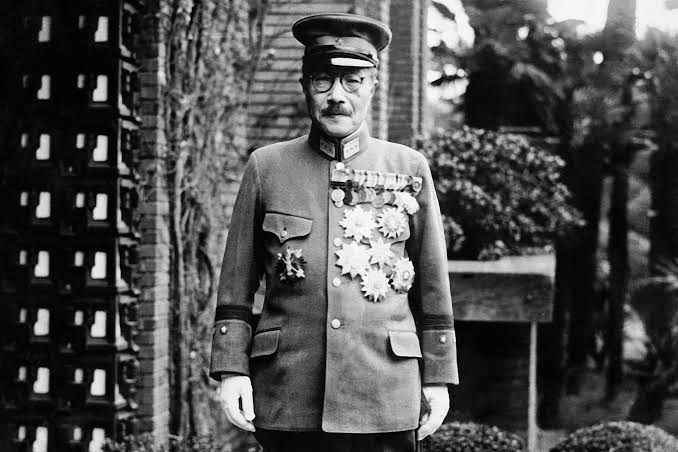
    Hideki Tojo: The General Who Led Japan into Pearl Harbor and Paid the Ultimate Price

    On December 7, 1941, Japanese carrier aircraft devastated the U.S. Pacific Fleet at Pearl Harbor, killing over 2,400 Americans and dragging the United States into World War II. The man who authorized that attack was Hideki Tojo, Japan’s Prime Minister and a general whose name became synonymous with wartime atrocities. But Tojo was not simply a cartoon villain; he was a product of a militarized state, a dogged bureaucrat who rose through the ranks by embracing expansionism, and a leader whose legacy remains fiercely contested in Japan today.

    Tojo’s story is not just about one man’s ambition. It’s about how a nation’s political system can be hijacked by military hardliners, how a single decision can reshape the global order, and how the aftermath of war forces us to confront questions of guilt, responsibility, and justice. From his samurai lineage to his execution by hanging in 1948, Tojo’s life offers a stark lens into the darkest chapters of the 20th century.

    From Samurai Son to Military Hardliner

    Hideki Tojo was born on December 30, 1884, in Tokyo’s Kōjimachi district, into a family with deep military roots. His father, Hidenori Tojo, was a lieutenant general in the Imperial Japanese Army, and young Hideki was groomed for a martial career from the start. He graduated from the Imperial Japanese Army Academy in 1915 and later the Army War College, quickly distinguishing himself as a disciplined, no-nonsense officer.

    Tojo’s early career included a stint in the Siberian Intervention (1918–1922), where Japanese forces joined an international effort to topple the Bolsheviks. But it was his time as a military attaché in Germany in the early 1920s that left a lasting impression. He observed firsthand the rise of Nazi militarism its discipline, its aggression, and its ideological fervor. These lessons would later shape his own worldview.

    Back in Japan, Tojo aligned himself with the Kōdōha, or Imperial Way faction, a group of ultranationalist officers who believed in aggressive expansionism and spiritual discipline over the more cautious, pragmatic approach of the rival Tōseiha (Control) faction. The Imperial Way saw Japan as destined to lead Asia, by force if necessary. Tojo’s rise was steady: he became Chief of the Kempeitai (military police) in Manchuria in 1935, where he ruthlessly suppressed dissent and oversaw harsh occupation policies. By 1938, he was Vice-Minister of War, and in 1940, he became Army Minister under Prime Minister Fumimaro Konoe.

    The Road to Pearl Harbor

    As Army Minister, Tojo was a driving force behind Japan’s aggressive foreign policy. He pushed for the Tripartite Pact with Nazi Germany and Fascist Italy in September 1940, formally aligning Japan with the Axis powers. He also championed the “Greater East Asia Co-Prosperity Sphere,” a propaganda slogan that masked Japanese imperial domination over Southeast Asia and the Pacific.

    But the critical issue was China. Japan had been bogged down in a brutal war there since 1937, and the United States, alarmed by Japanese expansion, imposed oil and steel embargoes in 1941. Tojo saw these embargoes as a threat to Japan’s very survival. Negotiations with Washington stalled, and the Japanese military leadership including Tojo concluded that war with the West was inevitable.

    In October 1941, Tojo replaced Konoe as Prime Minister, largely because he was seen as the strongest advocate for war. He also held the portfolios of Army Minister and Home Minister, accumulating unprecedented power. On December 7, 1941, he authorized the attack on Pearl Harbor, along with simultaneous strikes on Malaya, Singapore, Hong Kong, and the Philippines. The goal was to cripple the U.S. Pacific Fleet and give Japan a free hand to conquer resource-rich territories.

    Wartime Dictator and Brutal Policies

    In the first six months after Pearl Harbor, Japanese forces swept across the Pacific, achieving a string of stunning victories. Tojo wielded more power than any civilian leader in modern Japanese history, effectively becoming a dictator. He also authorized some of the most brutal policies of the war.

    The Bataan Death March in the Philippines, where thousands of American and Filipino POWs died from abuse and starvation, happened under his watch. He implemented the sankō sakusen, or “kill-all, burn-all, loot-all” policy in China, which caused the deaths of countless civilians. He also oversaw the forced labor of POWs and Asian civilians on projects like the Burma Railway, and he failed to apply the Geneva Conventions to POWs, leading to widespread mistreatment.

    But Tojo’s military fortunes turned after the Battle of Midway in June 1942, when the U.S. Navy dealt a devastating blow to Japanese carrier forces. The subsequent Allied island-hopping campaign, culminating in the fall of Saipan in July 1944, made Japan’s defeat inevitable. Tojo resigned on July 22, 1944, taking responsibility for the war’s failures, but he remained a powerful figure until Japan’s surrender in August 1945.

    The Attempted Suicide and the Tokyo Trials

    After Japan surrendered, Tojo knew his fate was sealed. On September 11, 1945, as U.S. military police approached his home, he shot himself in the chest with a pistol. The bullet missed his heart, and he survived—only to be arrested, tried, and convicted.

    The International Military Tribunal for the Far East, known as the Tokyo Trials, began in 1946. Tojo was charged with war crimes, crimes against peace, and crimes against humanity. He accepted responsibility for Japan’s wartime actions but argued that he was following orders from Emperor Hirohito and acting in Japan’s self-defense. The court rejected his defense, and he was convicted on seven of 55 counts, including waging aggressive war.

    On December 23, 1948, Tojo was hanged at Sugamo Prison in Tokyo. His ashes were scattered at sea, though some remains were reportedly taken by supporters and enshrined at Yasukuni Shrine, Japan’s controversial war memorial.

    Three Perspectives on Tojo’s Legacy

    Tojo’s legacy is not monolithic. In the West, he is almost universally condemned as the architect of the Pacific War—a militaristic, expansionist leader who personally ordered Pearl Harbor and authorized atrocities. This perspective sees his execution as justice.

    Some historians, however, offer a more structuralist view. They argue that Tojo was not a lone madman but a product of a militarized state. The decision for war was collective—the Emperor, the Privy Council, and the military leadership all shared responsibility. Tojo was more of an administrator than a strategic genius, and he inherited a war machine already in motion. This perspective doesn’t excuse his actions but complicates the simple villain narrative.

    In Japan, a vocal minority of nationalists and revisionists, associated with groups like Nippon Kaigi, portray Tojo as a tragic patriot who defended Japan against Western imperialism. They argue that his actions, while misguided, were motivated by a desire to protect Japan’s interests. This view is deeply contested, and many Japanese and international observers reject it as a whitewash of war crimes.

    Why Tojo Still Matters

    The story of Hideki Tojo is a reminder of how quickly a nation can descend into militarism and how individual leaders can bear immense responsibility for catastrophic decisions. It also highlights the ongoing struggle over historical memory—how we remember wartime leaders and their actions shapes national identity and international relations.

    Today, visits by Japanese politicians to Yasukuni Shrine, where Tojo is enshrined, continue to provoke diplomatic tensions with China and South Korea. The question of whether Tojo was a criminal or a patriot remains unresolved in some quarters, but the historical record is clear: his decisions led to the deaths of millions and the suffering of countless others. That is not a matter of interpretation; it is a fact.

    Hideki Tojo was neither a genius nor a madman—he was a product of a militarized system that he helped to strengthen, and he made choices that had devastating consequences. His execution in 1948 marked the end of an era, but his legacy continues to shape debates about war, responsibility, and justice. As we reflect on Tojo’s life, we are reminded that leadership carries a heavy weight, and that the decisions made in times of crisis can echo for generations.

    Summary

    • Hideki Tojo was Prime Minister of Japan from 1941 to 1944 and ordered the attack on Pearl Harbor.
    • He held multiple portfolios simultaneously, effectively becoming a dictator during wartime.
    • Tojo authorized brutal policies, including the Bataan Death March and the ‘kill-all, burn-all, loot-all’ strategy in China.
    • After Japan’s surrender, he attempted suicide but survived and was tried by the International Military Tribunal for the Far East.
    • He was convicted of war crimes and executed on December 23, 1948.
    • His legacy remains contested: condemned internationally, but viewed by some Japanese nationalists as a tragic patriot.

    FAQ

    Q: What was Hideki Tojo’s role in the attack on Pearl Harbor?
    A: As Prime Minister of Japan, Tojo authorized the attack on Pearl Harbor on December 7, 1941, which brought the United States into World War II.

    Q: Why did Tojo attempt suicide after the war?
    A: Tojo attempted suicide on September 11, 1945, to avoid capture and trial by the Allied forces. He shot himself in the chest but survived and was later arrested.

    Q: What crimes was Tojo convicted of?
    A: Tojo was convicted on seven of 55 counts at the Tokyo Trials, including waging aggressive war and crimes against humanity, and was sentenced to death.

    Q: How is Tojo viewed in Japan today?
    A: In Japan, Tojo’s legacy is contested. Some nationalists view him as a patriot who defended Japan against Western imperialism, while others and the international community condemn him as a war criminal.

    Q: Why is Tojo enshrined at Yasukuni Shrine?
    A: Tojo’s remains were reportedly taken by supporters and enshrined at Yasukuni Shrine, a war memorial that has become a source of diplomatic tension because it honors convicted war criminals.

  • The Warning That Wasn’t Heard: How Intelligence Failures Doomed Pearl Harbor

    The Warning That Wasn’t Heard: How Intelligence Failures Doomed Pearl Harbor

    At 7:48 a.m. on December 7, 1941, the first wave of Japanese aircraft descended on Pearl Harbor, turning a quiet Sunday morning into a scene of fire and steel. When the attack ended, 2,403 Americans lay dead, eight battleships were sunk or damaged, and the U.S. Pacific Fleet was in ruins. The question that has haunted historians ever since is not how Japan managed such a feat, but why the United States with its codebreakers, its spies, and its warnings was so completely unprepared.

    The answer lies not in a single failure, but in a cascade of them: fragmented intelligence, bureaucratic rivalry, and a stubborn belief that Pearl Harbor was an impossible target. The pieces of the puzzle were on the table, but no one assembled them in time.

    The Morning of December 7, 1941

    The first wave of 183 Japanese aircraft fighters, bombers, and torpedo planes came in low over the Ko’olau Range, catching the U.S. Pacific Fleet at anchor in Battleship Row. Within minutes, the USS Arizona was ripped apart by a 1,760-pound armor-piercing bomb that ignited its forward magazine, killing 1,177 crewmen. The USS Oklahoma capsized after multiple torpedo hits, trapping hundreds below deck. By 9:45 a.m., when the second wave of 170 aircraft withdrew, the harbor was a graveyard of smoke and oil fires.

    The official toll: 2,403 dead, 1,178 wounded, 188 aircraft destroyed. All eight battleships were either sunk or damaged though six would later be raised and refitted. The attack was a tactical masterpiece, but strategically it was a blunder: the U.S. aircraft carriers were at sea, the oil storage tanks were untouched, and the shipyards remained operational. Yet on that day, the United States had suffered its worst military disaster in history.

    The Intelligence That Was There

    The story of the intelligence failures begins long before the first bomb fell. By 1941, American cryptanalysts had achieved a remarkable feat: they had broken Japan’s highest-level diplomatic cipher, codenamed MAGIC. This gave Washington the ability to read secret messages between Tokyo and its embassies, including the Japanese embassy in Washington, D.C.

    MAGIC was a goldmine, but it had a critical blind spot: it covered diplomacy, not military operations. The Japanese Navy’s operational code, JN-25, remained largely unbroken. American codebreakers had made some progress on JN-25, but not enough to read fleet movements in real time. As a result, the U.S. could see the diplomatic tea leaves but not the naval battle fleet.

    What the U.S. did have were other clues. In late November 1941, traffic analysts at the Navy’s radio intelligence stations noticed something alarming: Japanese aircraft carriers and battleships had gone silent. The Japanese fleet had been emitting a steady stream of radio signals; suddenly, nothing. This was a classic sign of a major operation ships observing strict radio silence to hide their movement. But where were they going? The analysts couldn’t say.

    The Japanese strike force, under Vice Admiral Chuichi Nagumo, had departed Japan on November 26, taking a northern Pacific route far from commercial shipping lanes and U.S. patrols. The fleet maintained absolute radio silence throughout the 3,500-mile journey. The U.S. had no radar network in Hawaii only a mobile SCR-270 radar unit in training so there was no electronic tripwire.

    The Warnings That Were Ignored

    Between late November and December 7, a series of warnings were sent to U.S. commanders, but each was diluted by assumptions and miscommunication.

    November 27, 1941: Chief of Naval Operations Harold Stark sent a “war warning” to Pacific commanders, including Admiral Husband Kimmel in Hawaii. The message stated: “This dispatch is to be considered a war warning. Negotiations with Japan have ceased… An aggressive move by Japan is expected within the next few days.” The message went on to say that Japan might attack the Philippines, Malaya, or the Dutch East Indies—but made no mention of Pearl Harbor. Kimmel, like most officers, took the warning seriously but focused on the likely targets in Southeast Asia.

    December 6, 1941: The first 13 parts of a 14-part Japanese diplomatic message—a final note breaking off negotiations—were intercepted and decoded by U.S. intelligence. By 9:30 p.m., they were on President Roosevelt’s desk. The President read them and remarked to an aide, “This means war.” But the final, 14th part—the actual declaration of war—was not decoded until the morning of December 7. It was delivered to the White House at around 2:00 p.m., hours after the attack had begun.

    The “Winds” message was another missed signal. The Japanese had coded a hidden phrase in their radio broadcasts that would indicate whether war was imminent with the United States, Britain, or the Soviet Union. The phrase for the United States was “east wind, rain.” On December 6, American intercept stations picked up a broadcast containing the phrase, but the decoding and translation were delayed. By the time it was fully understood, the attack was already underway.

    The Fog of Bureaucracy

    Even when intelligence was available, it was siloed. The Army and Navy had separate intelligence systems that rarely shared information. In Washington, the FBI, the Office of Naval Intelligence (ONI), and Army G-2 each worked independently. In Hawaii, Admiral Kimmel and Lieutenant General Walter Short—the Army commander—had a strained relationship and communicated sparingly.

    One of the most glaring examples of this fragmentation occurred on the morning of December 7. At 7:02 a.m., a radar operator at the Opana Point mobile unit detected a large formation of aircraft approaching from the north—the first wave of the Japanese attack. The operator called the Army’s Information Center, but the officer on duty, Lieutenant Kermit Tyler, assumed it was a flight of B-17 bombers scheduled to arrive from the mainland. He told the operator, “Don’t worry about it.” The warning was never passed to the Navy. The radar contact was the last, clearest signal, and it was dismissed.

    The Investigations and the Verdict

    In the aftermath, the U.S. government launched at least nine official investigations between 1941 and 1946. The first was the Roberts Commission, appointed by Roosevelt in December 1941. It concluded that there had been “dereliction of duty” by Kimmel and Short, but it did not find a conspiracy.

    Subsequent investigations—including the Army Pearl Harbor Board, the Navy Court of Inquiry, and the Joint Congressional Committee (1945–46)—produced similar findings. They cited failures of command, communication, and judgment. The Army and Navy commanders had not taken adequate precautions, and Washington had failed to provide them with clear, actionable intelligence. But the investigations were unanimous on one point: there was no evidence that Roosevelt or other top officials had prior knowledge of the attack and deliberately withheld it.

    The “conspiracy theory” that FDR knew and allowed the attack to happen has been thoroughly debunked by historians. No credible evidence has ever surfaced to support it. The reality is more mundane and more tragic: a series of errors, assumptions, and missed signals compounded into catastrophic surprise.

    Lessons That Went Unlearned—Until Later

    The Pearl Harbor failures led to a major overhaul of U.S. intelligence. The military and civilian intelligence agencies were reorganized, and a unified command structure was created in the Pacific. The CIA was established in 1947, in part to ensure that intelligence was centralized and shared.

    But the deeper lesson—that intelligence is only as good as the people who act on it—remains as relevant today as it was in 1941. The attack on Pearl Harbor was not a failure of collection; it was a failure of analysis, communication, and imagination. The United States had the pieces, but it could not see the picture.

    The attack on Pearl Harbor was a tragedy of misjudgment, not a conspiracy. The intelligence failures that allowed the Japanese strike to succeed were rooted in human error, bureaucratic rivalry, and a strategic assumption that Pearl Harbor was an unlikely target. The lessons of December 7, 1941, are not just historical footnotes; they are a sobering reminder that even the best intelligence can be rendered useless if it is not shared, analyzed, and acted upon.

    Summary

    • The U.S. had broken Japanese diplomatic codes (MAGIC) but not the naval operational code (JN-25), leaving a critical gap in intelligence.
    • Multiple warnings were sent in late November 1941, but they focused on Southeast Asian targets, not Pearl Harbor.
    • The “Winds” message and the 14-part diplomatic note were intercepted but not fully acted upon in time.
    • A radar contact on the morning of December 7 was dismissed as a flight of B-17s.
    • Nine official investigations concluded there were failures of command and communication, but no conspiracy.

    FAQ

    Q: Did the U.S. have any warning that Japan would attack Pearl Harbor?
    A: Yes, but the warnings were indirect. The U.S. had intercepted Japanese diplomatic messages indicating a breakdown in negotiations, and a “war warning” was sent to Pacific commanders on November 27, 1941. However, none of these warnings specifically mentioned Pearl Harbor, and the U.S. military assumed Japan would strike Southeast Asia.

    Q: What was MAGIC intelligence?
    A: MAGIC was the code name for U.S. intelligence derived from breaking the Japanese diplomatic cipher machine, known as Purple. It allowed the U.S. to read high-level diplomatic messages between Tokyo and its embassies, but it did not include military or naval operational traffic.

    Q: Did President Roosevelt know about the attack in advance?
    A: No. Claims that FDR deliberately withheld intelligence to force the U.S. into war are a conspiracy theory with no supporting evidence. Multiple investigations concluded that while there were intelligence failures, there was no prior knowledge of the attack on Pearl Harbor.

    Q: Why did the U.S. not expect an attack on Pearl Harbor?
    A: The prevailing assumption was that Japan would attack British or Dutch possessions in Southeast Asia—such as Malaya or the Dutch East Indies—to secure oil and resources. Pearl Harbor was considered too far from Japan and too heavily defended for a carrier raid, so it was ruled out as a likely target.

    Q: What were the main intelligence failures?
    A: The main failures were: the inability to read JN-25, the naval code; poor communication between Army and Navy intelligence; the dismissal of the radar contact on December 7; and the delay in decoding the “Winds” message and the final part of the Japanese diplomatic note.