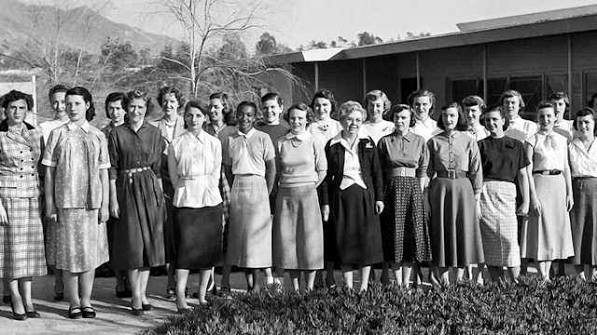
When we picture the Apollo missions, we often see astronauts in bulky suits or a sea of white shirts and ties in Mission Control. But behind the scenes, a cadre of women many of them Black, some Native American, and all fighting against the era’s sexism did the mathematical heavy lifting that made lunar travel possible. They were called ‘human computers,’ and without them, the Moon landing would have remained a science fiction dream.
Their stories were largely invisible for decades, buried in archives and overshadowed by the men who took the credit. But recent years have brought some of these women into the spotlight, thanks to books like Hidden Figures and the Presidential Medals of Freedom awarded to Katherine Johnson and Margaret Hamilton. Yet the full scope of their contributions remains underappreciated. This article uncovers the overlooked women of spaceflight the mathematicians, engineers, and software pioneers who turned the Space Race from a Cold War rivalry into a triumph of human ingenuity.
The Human Computers: A Hidden Army of Mathematicians
Before IBM mainframes and microchips, NASA had a different kind of computing power: women with slide rules and a talent for numbers. Starting in the 1930s, the National Advisory Committee for Aeronautics (NACA)—NASA’s predecessor—hired hundreds of women to perform complex calculations by hand. They were called ‘computers,’ a job title that referred to the person, not the machine.
These women were often college graduates with degrees in mathematics, but they were classified as ‘sub-professional’ and paid less than male engineers. During World War II, the labor shortage opened doors for women and minorities, but segregation remained institutional. At Langley Research Center in Virginia, Black women were forced to work in a separate ‘West Area Computers’ unit, with their own bathrooms and cafeteria tables.
Dorothy Vaughan was one of the first Black women hired by NACA, and she quickly rose to become the first Black supervisor. She was a self-taught programmer who saw the future in electronic computers. When the IBM mainframe arrived, Vaughan learned FORTRAN and taught her team, ensuring their skills remained relevant. Her leadership smoothed the transition from human to machine computing, a shift that could have left many women unemployed.
Katherine Johnson: The Mathematician Who Made John Glenn Fly
Among the West Area Computers, one name stands out: Katherine Johnson. Born in 1918, Johnson showed early brilliance, graduating from high school at 14 and college at 18. She began working at NACA in 1953, where her accuracy and speed quickly caught the attention of engineers.
Johnson’s calculations were critical to the first American in space. In 1961, she plotted the trajectory for Alan Shepard’s suborbital flight. The next year, when John Glenn prepared to orbit the Earth, the new electronic computers had generated the numbers, but Glenn was wary. He famously refused to fly unless Katherine Johnson verified the calculations by hand. ‘If she says they’re good,’ Glenn said, ‘then I’m ready to go.’
Johnson’s work extended beyond the Mercury program. She calculated the trajectory for Apollo 11’s lunar landing and the abort scenarios for Apollo 13. Yet her name was absent from many key reports, a common erasure for women of that era. Only in 2015, at age 97, did she receive the Presidential Medal of Freedom for her contributions.
Mary Jackson: Breaking the Color and Gender Barriers in Engineering
Mary Jackson started as a human computer in 1951 but set her sights higher. She took graduate-level physics courses at night, often with special permission to attend classes at the segregated University of Virginia. In 1958, she became NASA’s first African American female engineer.
Jackson’s work focused on the aerodynamics of aircraft and spacecraft, but she eventually hit a glass ceiling. Rather than fight further, she took a demotion to manage the Federal Women’s Program, where she helped other women and minorities advance. Her legacy is one of perseverance, showing that talent could overcome systemic barriers, though not without personal cost.
Margaret Hamilton: The Software Pioneer Who Saved Apollo 11
If the human computers were the unsung heroes of the math, Margaret Hamilton was the unsung hero of the code. In the 1960s, software was not considered a serious engineering discipline. It was often seen as ‘women’s work’—low-status, tedious, and secondary to the hardware. Hamilton, a mathematician and programmer, led the team at MIT that developed the Apollo Guidance Computer.
Hamilton coined the term ‘software engineering’ to give her field legitimacy, but she faced constant skepticism from male engineers who doubted the importance of code. That changed during Apollo 11’s descent to the Moon. With minutes to go before landing, the computer’s alarms went off, signaling an overload. Hamilton’s team had designed the software to prioritize the most critical tasks and ignore non-essential data. Against the advice of some engineers who wanted to abort, the software’s decision to keep working allowed the landing to proceed.
Hamilton’s error-detection software was so robust that it prevented an abort during Apollo 11’s final descent. She later received the Presidential Medal of Freedom in 2016, a recognition that came decades after her work.
Frances ‘Poppy’ Northcutt: The First Female Engineer in Mission Control
While Hamilton worked behind the scenes, Frances ‘Poppy’ Northcutt was in the spotlight—or at least, as much as a woman could be in the male-dominated Mission Control. Northcutt joined NASA in 1965 as a ‘computress,’ a title that grated on her. She quickly rose to become the first female engineer in Mission Control, working on the Apollo program.
Northcutt’s calculations were crucial to Apollo 8, the first mission to orbit the Moon. She designed the return trajectory that brought the astronauts home. But her most famous work came during Apollo 13, when an oxygen tank exploded mid-mission. Northcutt and her team had to calculate a rescue trajectory that would slingshot the damaged spacecraft around the Moon and back to Earth. Her work was instrumental in bringing the crew home safely.
After Apollo, Northcutt became a women’s rights attorney, but her contributions to spaceflight remain a testament to the overlooked role of women in the Space Race.
The Invisible Work of Native American and Other Women Engineers
The story of women in spaceflight is not just Black and white. Mary Golda Ross, a Cherokee engineer, was one of the first Native American engineers in the aerospace industry. She worked at Lockheed on the Agena rocket, which was used in the Gemini program. Ross was a founding member of the Society of Women Engineers and served as a mentor to younger women, but her name is rarely mentioned alongside her male counterparts.
Similarly, many white women computers at Langley and other centers were invisible, their work subsumed under male authorship. The 2016 film Hidden Figures brought the Black women’s story to a wide audience, but it also compressed timelines and dramatized events for Hollywood effect. Some historians note that the film underplays the role of white women and overstates certain confrontations, but its impact in raising awareness is undeniable.
The Astronauts vs. The Engineers: A Persistent Distinction
When we think of women in space, names like Sally Ride and Judith Resnik come to mind. Ride became the first American woman in space in 1983, and Resnik followed in 1984. They were pioneers, but they were astronauts—visible, heroic figures who flew the missions. The women who made those flights possible—the mathematicians, engineers, and software developers—were invisible, their contributions buried in technical reports.
This pattern persists today. We celebrate the few women who reach the top, but we forget the many who do the essential work behind the scenes. The Space Race was a massive undertaking, employing about 400,000 people. Women were a small fraction of engineers but a large fraction of support roles. Their work was often classified as clerical, even when it required advanced degrees.
The Soviet Parallel: Tereshkova and Hidden Engineers
The United States was not alone in overlooking its female talent. The Soviet Union put Valentina Tereshkova in space in 1963, making her the first woman to orbit the Earth. But the Soviet space program also had female engineers, though documentation is sparse. The Cold War rivalry meant that both nations prioritized speed over equity, but they also couldn’t afford to ignore talent. This created openings for women and minorities, even as the systems remained discriminatory.
Why Were They Overlooked?
The reasons are complex. Institutional sexism and racism meant that women were often classified as ‘sub-professional’ regardless of their education. Pay was lower than men’s for identical work. Credit was attributed to male supervisors, and reports rarely listed women as authors. Cultural norms dictated that women’s contributions were seen as support, not leadership.
Even when women like Katherine Johnson or Margaret Hamilton received recognition, it came late. Johnson was 97 when she got the Presidential Medal of Freedom. Hamilton was 80. These honors were just, but they highlight a lifetime of unrecognized work.
The Cold War urgency also played a role. NASA needed the best minds, but it was not willing to overturn social norms. So women worked, but they worked in the shadows, their achievements measured not by personal glory but by the success of the missions they helped fly.
The Post-Apollo Fade
After the Apollo program ended, many women engineers were laid off. The space program shrank, and the doors that had opened for women during the Space Race closed again. Some, like Mary Jackson, stayed and fought for equality. Others, like Frances Northcutt, left for other fields. The ‘hidden figures’ returned to obscurity, their stories waiting decades to be told.
The recent resurgence of interest in these women is heartening, but it is also a reminder of how much we still don’t know. For every Katherine Johnson or Margaret Hamilton who has been recognized, there are countless others whose names we may never know. They were the human computers, the software pioneers, the trajectory calculators—the overlooked women who got us to the Moon.
The story of spaceflight is not just about astronauts and presidents; it is about the thousands of unseen workers who made the impossible possible. The women of NASA—Black, white, Native American—were not just ‘hidden figures’ but essential figures. They calculated trajectories, wrote code, and broke barriers in a world that refused to see their worth. Their stories remind us that progress is never the work of a single hero, but of a collective effort that often goes unrecognized. As we look to the next era of space exploration, we must ensure that the contributions of women and minorities are not just acknowledged, but celebrated—so that no one is ever overlooked again.
Summary
- Before electronic computers, NASA employed hundreds of women as ‘human computers’ to perform complex calculations by hand.
- Katherine Johnson’s manual verification of John Glenn’s orbit calculations was so trusted that Glenn refused to fly without her sign-off.
- Margaret Hamilton coined the term ‘software engineering’ and led the team that developed the Apollo Guidance Computer, whose error-detection software was crucial to Apollo 11’s success.
- Frances ‘Poppy’ Northcutt, the first female engineer in Mission Control, calculated the rescue trajectory for Apollo 13.
- Many of these women faced systemic sexism and racism, and their contributions were often omitted from reports and credit.
- Recognition came late: Johnson and Hamilton both received the Presidential Medal of Freedom decades after their work.
FAQ
Q: Who were the ‘human computers’ at NASA?
A: They were women, many with math degrees, who performed complex calculations by hand before electronic computers. They were called ‘computers’ because that was the job title for a person who did calculations.
Q: Why was Katherine Johnson so important to John Glenn’s mission?
A: In 1962, John Glenn was preparing to orbit the Earth, but he distrusted the new electronic computers. He asked Katherine Johnson to verify the calculations by hand, saying, ‘If she says they’re good, then I’m ready to go.’ Her work was crucial to the mission’s success.
Q: What did Margaret Hamilton do for Apollo 11?
A: Margaret Hamilton led the team that developed the Apollo Guidance Computer software. During the lunar descent, her error-detection software prevented an abort by prioritizing critical tasks, which was essential to the successful landing.
Q: Were there women of color besides the ‘hidden figures’ who contributed to spaceflight?
A: Yes, Mary Golda Ross, a Cherokee engineer, worked on the Agena rocket used in the Gemini program. There were also many white women computers and engineers whose contributions were overlooked.
Q: Why were these women overlooked for so long?
A: Systemic sexism and racism meant women were often classified as ‘sub-professional,’ paid less, and excluded from reports. Cultural norms saw their work as support, not engineering, and credit often went to male supervisors.
Leave a Reply