Before NASA had supercomputers, it had a team of brilliant women with pencils, paper, and an unerring ability to calculate the path to orbit. Their job title was ‘computer’—a human one. From the segregated West Area Computing pool at Langley to the rocket trajectory teams at JPL, these women performed the complex math that made early spaceflight possible, yet their stories remained largely untold for decades.
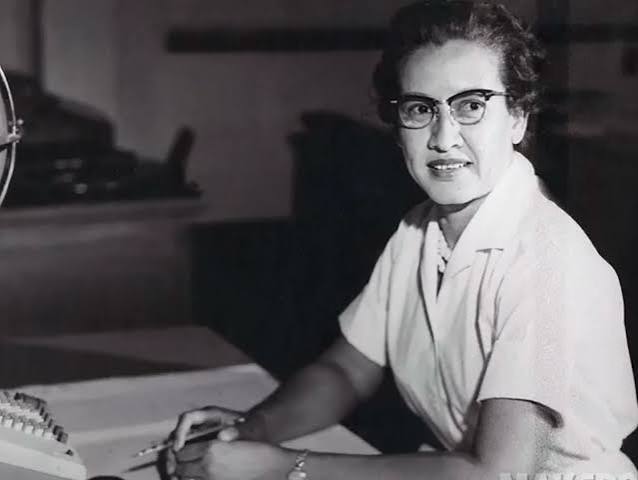
Their work wasn’t just about number-crunching. It was about accuracy when failure meant disaster. In 1962, astronaut John Glenn reportedly refused to fly unless Katherine Johnson, a Black mathematician, personally verified the orbital equations that a new IBM computer had produced—he didn’t trust the machine. Her handwritten calculations were the final check before he became the first American to orbit Earth.
This article uncovers who these women were, why they were hired, the obstacles they faced, and how their contributions shaped the space race—and the field of STEM itself.
The ‘Computer’ Was a Person
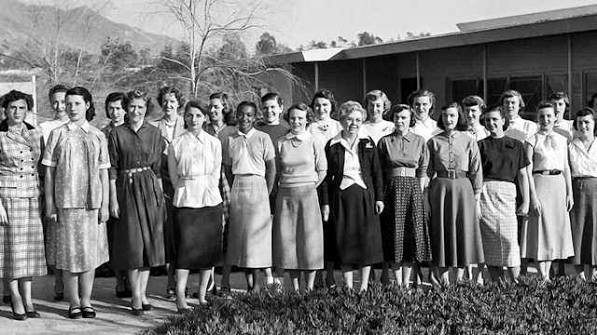
Today, ‘computer’ means a machine. But from the 1940s through the 1960s, it was a job title. At NACA (the National Advisory Committee for Aeronautics, NASA’s predecessor) and later at NASA, women with mathematics degrees were hired to perform complex calculations by hand. They computed trajectory equations, orbital mechanics, and aerodynamic data—the mathematical backbone of early spaceflight.
This practice wasn’t new. In the late 1800s, astronomers at Harvard employed women like Henrietta Swan Leavitt to catalog stars—they were called ‘Pickering’s Harem.’ The space race was the final chapter of this tradition, as electronic computers gradually took over.
But why women? During World War II, men were deployed overseas, creating a labor shortage. NACA and military labs turned to women with math degrees. The work was considered detail-oriented and clerical, and thus ‘women’s work,’ even though it required advanced mathematical skill. It was also cheap: women were paid roughly half what men earned for comparable roles. Cost efficiency, not altruism, drove the hiring.
The West Area Computers: Breaking Barriers at Langley
At Langley, Virginia, a group of Black women mathematicians formed a segregated pool known as the West Area Computers. They were housed separately, used separate restrooms and dining facilities, and were initially excluded from projects assigned to white women. Despite this, their brilliance couldn’t be contained.
Dorothy Vaughan joined Langley in 1943 and became NACA’s first Black supervisor in 1949, managing the West Area Computers. She was a forward-thinker: when IBM mainframes arrived in the early 1960s, she taught herself and her team FORTRAN, the programming language of the new machines. This proactive move saved many of their jobs when electronic computing replaced manual calculation.
Mary Jackson, another West Area Computer, aspired to be an engineer. But to take graduate courses in engineering, she needed permission to attend classes at a whites-only school in Hampton, Virginia. She petitioned the city and won, becoming NASA’s first Black female engineer in 1961.
And then there was Katherine Johnson. Her trajectory calculations were critical to John Glenn’s 1962 Friendship 7 mission, and she later helped calculate the trajectory for Apollo 11’s lunar landing in 1969. Her story, along with Vaughan’s and Jackson’s, was brought to mainstream attention by the 2016 film Hidden Figures, based on Margot Lee Shetterly’s book. In 2019, Johnson received the Congressional Gold Medal.
The JPL Women: Calculating Paths to the Planets
While the West Area Computers worked on aeronautics and Earth orbit, women at the Jet Propulsion Laboratory (JPL) in Pasadena, California, tackled the even more complex mathematics of deep-space navigation. They calculated rocket trajectories for missions to the Moon, Mars, and beyond.
Barbara Paulson, Helen Ling, and Sue Finley were among the key figures. Finley would become one of the longest-serving JPL employees, working there for over 60 years. These women didn’t just compute; they developed methods for navigating spacecraft across millions of miles, methods that are still used today.
At its peak in the 1960s, NASA employed hundreds of female computers across multiple centers. They were a critical workforce, yet they were paid less than male mathematicians and had restricted promotion paths. Their contributions were often invisible, subsumed under the names of their male supervisors.
The Unreliable Machine: Why Human Verification Mattered
By the early 1960s, IBM mainframes were faster than any human. But they were also unreliable. Early computers were prone to errors, and a single mistake could mean a rocket veering off course. Engineers knew this, which is why they still trusted human verification.
John Glenn’s request for Katherine Johnson to check the IBM’s numbers was not an anomaly. It was standard practice to have a human computer double-check the machine’s work. Johnson’s calculations were not just a formality; she was checking the very equations that would determine whether Glenn would return safely from orbit.
This trust in human computers was a testament to their skill—and a practical necessity. Until machines could be fully trusted, human minds were the final safety net.
The End of an Era: Transition to Electronic Computing
The arrival of electronic computers spelled the end of the human computer era. But it didn’t happen overnight. The transition was gradual, and many female computers were retrained as programmers. Dorothy Vaughan’s foresight in learning FORTRAN ensured that her team was ready for the change.
Others were not so fortunate. Some were laid off as machines took over. But the legacy of these women endures. They proved that women could handle the most demanding mathematical work, breaking down gender and racial barriers in the process.
Why This History Matters
The story of the female computers intersects with two major struggles of mid-20th-century America: gender discrimination and racial segregation. These women were often doubly marginalized, yet they contributed to some of the greatest achievements in human history.
Their story is part of a broader hidden history of women in STEM, alongside figures like Rosalind Franklin and the ENIAC programmers. The Cold War urgency of the space race created unusual opportunities for marginalized groups—not out of a sense of fairness, but out of necessity. The nation needed the best minds it could get, and it found them in women like Johnson, Vaughan, Jackson, and Finley.
Today, their names are finally being recognized. But there were hundreds of others, nameless calculators who helped put humans on the Moon. Their work, done by hand, laid the foundation for the digital age we live in now.
The human computers of the space race were not just assistants; they were essential contributors to some of the most complex engineering feats in history. They faced discrimination based on both their gender and their race, yet they persevered, driven by a love of mathematics and a sense of duty to their country. As we look back on the Apollo missions and the early days of space exploration, we should remember that behind every successful launch was a room full of women, pencils in hand, calculating the way to the stars.
Summary
- From the 1940s to the 1960s, women employed as ‘computers’ performed complex math by hand for NACA and NASA, including trajectory and orbital calculations.
- The West Area Computers at Langley were a segregated pool of Black women mathematicians, including Katherine Johnson, Dorothy Vaughan, and Mary Jackson.
- JPL women like Sue Finley calculated deep-space trajectories, contributing to planetary missions.
- Human computers were often used to verify the calculations of early electronic computers, which were prone to errors.
- The transition to electronic computing led to the end of the human computer role, but many women were retrained as programmers.
- Their stories highlight the intersection of gender and racial discrimination in STEM, and their contributions were finally brought to light by the 2016 film Hidden Figures.
FAQ
Q: What exactly did a ‘human computer’ do?
A: A human computer performed mathematical calculations by hand, often for engineering and scientific projects. In the context of the space race, they calculated things like rocket trajectories, orbital mechanics, and aerodynamic data. This was a job title, not a reference to a machine.
Q: Why were women hired as computers?
A: During World War II, many men were deployed, creating a labor shortage. NACA and military labs hired women with math degrees to fill the gap. It was also cost-effective, as women were paid less than men. The work was seen as detail-oriented and clerical, fitting the era’s gender stereotypes, even though it required advanced math.
Q: Who were the ‘Hidden Figures’?
A: The term refers to a group of Black women mathematicians at NASA’s Langley Research Center, including Katherine Johnson, Dorothy Vaughan, and Mary Jackson. They worked as ‘computers’ and faced both racial segregation and gender discrimination. Their story was popularized by the 2016 film Hidden Figures.
Q: Why did John Glenn insist on Katherine Johnson checking the calculations?
A: John Glenn trusted Katherine Johnson’s mathematical abilities. Early electronic computers were prone to errors, and Glenn didn’t want to risk his life on a machine’s output without human verification. Johnson’s calculations confirmed the IBM’s numbers, and he flew successfully.
Q: What happened to the human computers when electronic computers came?
A: The transition was gradual. Some human computers were retrained as programmers, like Dorothy Vaughan who learned FORTRAN and taught her team. Others were laid off as machines became more reliable. By the late 1960s, the role of the human computer had largely disappeared.