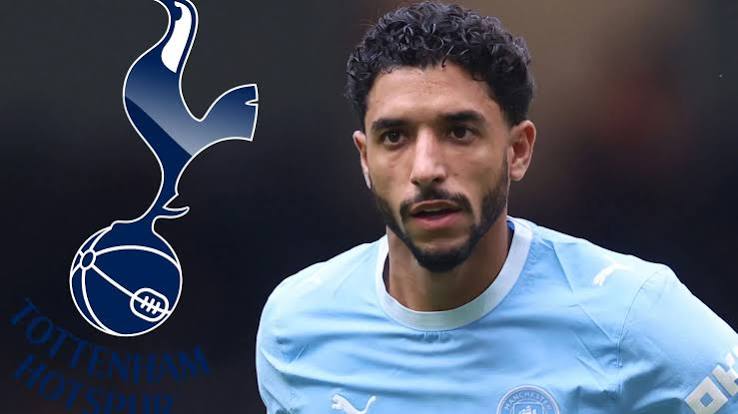
Tottenham Hotspur are reportedly on the verge of signing Omar Marmoush on loan from Manchester City. The 26-year-old Egyptian forward arrived at the Etihad with a big reputation and a €75 million price tag, but his first half-season in England has been a quiet one. Now, with Spurs’ attack misfiring and a summer spending spree already under way, this loan could be either a shrewd piece of business or a costly distraction.
Marmoush’s profile is tantalizing: pace, directness, and a left foot that can punish defenders from distance. But his time at City has raised questions about his fit in a possession-dominant system. Tottenham, under Ange Postecoglou, play a different brand of football—one built on transitions and high pressing. Could this be the perfect match? Or is it a short-term gamble that exposes deeper issues in Spurs’ squad building?
The Context: Spurs’ Goalscoring Woes
Tottenham’s 2024–25 season was a study in frustration. They finished outside the Champions League places, and their attack often looked toothless. Dominic Solanke, the club-record signing from Bournemouth, has been serviceable but injury-prone. Son Heung-min, now 33, is no longer the lethal central striker he once was. Richarlison has spent more time on the treatment table than the pitch, and young prospects like Mikey Moore and Will Lankshear are promising but raw.
The numbers back up the eye test. Spurs’ expected goals (xG) and shot conversion rates were below the top-four standard. They created chances but lacked a clinical finisher. When Solanke was out, there was no reliable backup. When Son played centrally, he drifted wide, leaving a void in the box. The need for another forward was obvious.
Marmoush: The Frankfurt Star Who Faded at City
Omar Marmoush’s trajectory is a rollercoaster. He started at Stuttgart’s youth academy, bounced around St. Pauli and Wolfsburg, then exploded at Eintracht Frankfurt. In the first half of the 2024–25 season, he scored 27 goals in all competitions—a haul that convinced Manchester City to splash out €70–75 million in January 2025.
But at City, he has been a peripheral figure. With Haaland, Foden, Doku, Savinho, and Grealish ahead of him, Marmoush has struggled for minutes. His confidence has dipped, and his goal tally has stalled. The talent is undeniable—his dribbling, his finishing from range, his ability to run in behind—but it hasn’t translated to the Premier League yet.
City’s willingness to loan him out makes sense. They need to protect his market value and give him game time ahead of the 2026 World Cup, where Egypt will expect him to be a key player. A loan to a Premier League rival like Tottenham keeps him in England, acclimatized to the league’s demands, and potentially increases his resale value.
The Optimistic Case: A Perfect Fit for Postecoglou
Ange Postecoglou’s system is built on speed and transition. He wants his attackers to press relentlessly, win the ball high, and attack with pace. Marmoush is a direct, high-energy forward who thrives in exactly those situations. He’s not a hold-up striker like Solanke; he’s a runner and finisher who can play across the front line—central, left, or as a second striker.
This versatility is a huge asset. It allows Postecoglou to switch formations mid-game, to rest Solanke without losing potency, and to use Son in his preferred wide-left role. Marmoush’s set-piece ability adds another dimension—Spurs have been inconsistent from dead balls. And at 26, he’s entering his prime, hungry to prove he belongs at a top club.
Critically, he already has half a season of Premier League experience, albeit limited. That reduces the adaptation risk compared to a player coming from abroad. He knows the pace, the physicality, the officiating. The question is whether he can rediscover his Frankfurt form in a team that actually suits his style.
The Skeptical Case: A Loan That Helps City More Than Spurs
There are real reasons for caution. First, if the loan has no option or obligation to buy, Tottenham are essentially developing a player for Manchester City’s benefit. They’d be giving Marmoush the platform to rebuild his value, only for him to return to the Etihad or be sold elsewhere—possibly back to Spurs at a premium.
Second, Marmoush’s confidence is fragile. His City spell was a disaster in terms of output. Can he recapture the form that made him one of Europe’s hottest properties? A loan move is a pressure situation, especially at a club like Spurs where the fans demand goals. If he starts slowly, the scrutiny could crush him.
Third, tactical fit is not guaranteed. Postecoglou’s striker must press with intensity and link play. Marmoush is more of a runner than a link man. He’s not a natural target man, and his hold-up play is average. If Spurs expect him to lead the line alone in the Premier League, they might be disappointed.
Finally, the financials. City could demand a hefty loan fee and full wage coverage. That money could be better spent on a permanent signing. Spurs have been cautious spenders historically, but this summer’s “remarkable spending spree” suggests they have funds. Is a loan the best use of them?
The Structural Angle: What Does This Mean for the Squad?
This loan raises bigger questions about Tottenham’s squad planning. If Solanke remains the first-choice striker, Marmoush would be a backup or a wide option. That’s fine, but it could stunt the development of young players like Moore and Lankshear. If Richarlison leaves (as has been rumored), Marmoush would be his replacement—a like-for-like in terms of profile, but with more upside.
Son’s role is another factor. At 33, he can’t play every game. Marmoush’s arrival could allow Son to be managed more carefully, preserving his energy for the biggest matches. But it could also push Son out of the starting lineup, a delicate situation given his status as club captain and fan favorite.
The Financial/FFP Angle: Loans as a Strategic Tool
Loan deals are often used to manage Profit and Sustainability Rules (PSR). By loaning Marmoush, Spurs could delay a big permanent outlay, spreading the cost over multiple windows. This is a smart move if they’ve already spent heavily this summer. It also gives them a chance to evaluate the player before committing.
But it’s a short-term fix. If Marmoush performs well, City will demand a high transfer fee. If he flops, Spurs have wasted a season of development on a player who isn’t theirs. The risk is asymmetric.
The Verdict: A Calculated Gamble
Marmoush is not a flop. His City numbers are poor, but he’s been misused and underplayed. At Frankfurt, he was a star. At Tottenham, he’d be the focal point of a system that suits his strengths. The loan is a low-risk, high-reward move for Spurs—if they negotiate a favorable structure.
The key is the purchase clause. If Spurs can secure an option to buy at a reasonable price, this becomes a savvy deal. If not, they’re just doing City a favor. The coming weeks will reveal the details. For now, Spurs fans should be cautiously optimistic. Marmoush has the talent to solve their goalscoring problems. The question is whether he can rediscover it in a Tottenham shirt.
Omar Marmoush’s loan to Tottenham is a classic Premier League gamble: a talented player who needs a fresh start, a manager who needs goals, and a club that must decide if he’s a short-term fix or a long-term investment. If Postecoglou can unlock the Frankfurt version of Marmoush, Spurs could have one of the smartest signings of the window. If not, they’ll be left wondering what might have been. Either way, this is a move worth watching.
Summary
- Marmoush is a 26-year-old Egyptian forward who shone at Eintracht Frankfurt but struggled for minutes at Manchester City.
- Tottenham need a reliable goalscorer to support Solanke and cover for injuries to Son and Richarlison.
- The loan could be a perfect fit for Postecoglou’s high-pressing, transition-based system.
- Risks include a lack of purchase clause, confidence issues, and potential tactical mismatch as a lone striker.
- The deal’s success hinges on the loan terms and whether Marmoush can rediscover his Frankfurt form.
FAQ
Q: Is Omar Marmoush a good fit for Tottenham’s playing style?
A: On paper, yes. His pace, directness, and finishing ability align well with Ange Postecoglou’s transition-heavy approach. He can play across the front line, offering tactical flexibility.
Q: Why would Manchester City loan him to a Premier League rival?
A: City have a deep squad and Marmoush isn’t getting minutes. A loan to a Premier League club keeps him in England, maintains his market value, and gives him game time ahead of the 2026 World Cup.
Q: What are the financial implications for Tottenham?
A: Loan fees and wage coverage could be significant, but the deal allows Spurs to delay a permanent transfer, helping them manage PSR headroom. The key is whether they secure an option to buy.
Q: What happens to Dominic Solanke if Marmoush arrives?
A: Solanke is likely to remain first-choice striker, with Marmoush as a backup or wide option. This provides cover for injuries and allows for rotation without losing attacking potency.
Q: Does this mean Richarlison is leaving?
A: Not necessarily, but it’s a possibility. If Richarlison departs, Marmoush could be his direct replacement, which would make the loan more of a like-for-like swap.
Leave a Reply