Tag: transfer news

  • Fulham’s €40m Bet on Gonzalo García: A Record Fee for a Promise, Not a Proven Star

    A dynamic action shot of Gonzalo García in a Real Madrid Castilla kit, striking a ball with intensity, conveying youthful promise and the high-stakes nature of his transfer.

    Fulham have agreed a €40 million deal with Real Madrid for 21-year-old striker Gonzalo García, a fee that matches the club’s record transfer spend. On the surface, it’s a bold statement of intent from a club looking to solidify its Premier League status. But dig deeper, and this transfer is a fascinating study in modern football economics: a sale based on potential, a buy-back clause as insurance, and a young player betting on himself to make the leap from Spain’s third tier to the world’s most demanding league.

    For Real Madrid, it’s a calculated business move — cashing in on an academy product who couldn’t break into a star-studded attack. For Fulham, it’s a risk wrapped in data and ambition. And for García himself, it’s the chance to trade the fringes of the Bernabéu for the spotlight of Craven Cottage. Here’s why this deal matters, what it says about the transfer market, and what García must do to justify the price tag.

    The Player: More Than a Castilla Star

    Gonzalo García Torres is not a household name, but among those who follow Real Madrid’s youth setup, he’s long been considered one of the brightest prospects to emerge from La Fábrica. A 21-year-old centre-forward, García has been prolific for Real Madrid Castilla in the Primera Federación, Spain’s third tier. His movement off the ball, clinical finishing, and ability to hold up play have drawn comparisons to a young Álvaro Morata — another Madrid academy product who had to leave to fulfill his potential.

    García’s first-team opportunities at Real Madrid have been scarce, and for good reason. The attacking trio of Kylian Mbappé, Vinícius Júnior, and Rodrygo is arguably the most formidable in world football. Even with injuries and rotation, García found himself behind not just those stars but also experienced backups. His handful of appearances in La Liga and the Copa del Rey were cameos, not auditions. At 21, he needs regular football, and that’s exactly what Fulham can offer.

    The Fee: Record-Equalling, But Is It Fair?

    €40 million is a significant sum for a player who has never played in a top-five European league. It matches the fee Fulham paid Arsenal for Emile Smith Rowe in 2024, a player with Premier League experience and international caps. On paper, García’s price tag looks like a gamble. But context matters.

    The market for young strikers with European pedigree has inflated. Brighton paid €34 million for João Pedro, and Evan Ferguson’s valuation has soared past €50 million despite a relatively small sample size. Fulham’s recruitment under Marco Silva has been data-driven, and the club clearly sees something in García’s underlying numbers — his goals per 90, xG, and shot creation metrics in Castilla are exceptional. The fee reflects the potential ceiling, not the current floor.

    Why Fulham? The Silva Project

    Fulham’s ambition under Silva is clear. They’ve invested in young, high-potential players like Smith Rowe, Sander Berge, and Joachim Andersen, all of whom were brought in to be developed and potentially sold for profit. García fits this model perfectly. He’s a mobile, technical forward who can press from the front — a key requirement in Silva’s system. And with Raúl Jiménez now 33, Fulham need a long-term successor. García is being brought in to learn, compete, and eventually lead the line.

    There’s also a strategic angle: Fulham are betting on the Premier League’s global visibility to accelerate García’s development. If he thrives, his value could double or triple in a few years. If he struggles, the club has the coaching infrastructure to help him adapt. It’s a calculated risk, but one that could pay off handsomely.

    Real Madrid’s Perspective: Selling High, Protecting the Future

    Real Madrid rarely sell young talents outright without protections, and this deal is no exception. The reported buy-back clause (around €60–70 million) and a sell-on percentage ensure that if García develops into a top-tier striker, Madrid can bring him back — at a premium. This is standard practice for the club, which has seen the likes of Morata and Marcos Llorente leave and return or be sold for profit.

    Some Madridistas may lament another canterano leaving too early, especially given the club’s recent reliance on expensive signings like Mbappé and Jude Bellingham. But from a business perspective, selling a player who hasn’t broken into the first team for €40 million is excellent value. It’s a win-win: Fulham get a promising striker, Madrid get a cash injection and a safety net.

    The Risk: Adapting to the Premier League

    The biggest question mark is whether García can handle the physicality and pace of the Premier League. The jump from the Primera Federación to the English top flight is enormous. Defenders are faster, stronger, and more organized. The pressing is more intense, and the schedule is relentless. García’s technical ability should serve him well, but he’ll need time to adjust.

    Fulham’s coaching staff will be crucial here. Silva has a track record of improving players, and the club’s data-driven approach suggests they’ve done their homework on García’s adaptability. But there’s no guarantee. The Premier League is littered with talented players who couldn’t make the transition. For every Moisés Caicedo, there’s a Mykhailo Mudryk.

    The Bigger Picture: Premier League’s Pull

    This deal is also a microcosm of the Premier League’s financial dominance. English clubs continue to poach promising talent from La Liga and other European leagues, leveraging their broadcast revenue and global appeal. For a player like García, the Premier League offers a platform that Spain’s third tier simply can’t match. It’s a rational choice, but it raises questions about competitive balance in European football. As the gap widens, the rich get richer, and the rest scramble to hold onto their best young players.

    What’s Next for García?

    García will join Fulham in January 2025, with the deal expected to be completed immediately rather than on loan. He’ll likely be eased into the squad, given the physical demands of the Premier League. But the expectation is that he’ll eventually become the club’s starting striker. If he hits the ground running, this could be one of the smartest pieces of business in recent Premier League history. If he struggles, it’ll be a cautionary tale about paying for potential.

    Fulham’s €40 million move for Gonzalo García is a bold, calculated gamble that reflects the modern transfer market’s obsession with potential. For Real Madrid, it’s a smart sale with protections. For García, it’s the opportunity of a lifetime. Whether it works out depends on adaptation, coaching, and a little bit of luck. But one thing is certain: this is a transfer that will be scrutinized for years to come.

    Summary

    • Fulham have agreed a €40m deal with Real Madrid for 21-year-old striker Gonzalo García, matching their club-record fee.
    • García is a Real Madrid academy product who has starred for Castilla but made only sporadic first-team appearances.
    • The deal includes a buy-back clause and sell-on percentage for Real Madrid, protecting their long-term interests.
    • Fulham see García as the long-term successor to Raúl Jiménez, fitting Marco Silva’s pressing system.
    • The biggest risk is García’s adaptation from Spain’s third tier to the Premier League’s physicality and pace.

    FAQ

    Q: Who is Gonzalo García?
    A: Gonzalo García Torres is a 21-year-old Spanish striker from Real Madrid’s youth academy. He has been prolific for Real Madrid Castilla in the third tier but has limited first-team experience.

    Q: Why is the fee considered a risk for Fulham?
    A: The €40m fee is based on potential, not proven top-level output. García has never played in a top-five European league, so there’s uncertainty about how he’ll adapt to the Premier League.

    Q: Does Real Madrid have any protections in the deal?
    A: Yes, Real Madrid reportedly included a buy-back clause (around €60-70m) and a sell-on percentage, allowing them to re-sign García if he develops into a top-tier player.

    Q: What does this mean for Fulham’s squad?
    A: García is expected to be a long-term successor to 33-year-old Raúl Jiménez, providing a young, mobile option in attack under Marco Silva.

    Q: When will the transfer be completed?
    A: The deal is expected to be completed in the January 2025 transfer window, with García joining immediately rather than on loan.

  • Bruno Guimarães to Arsenal: The £100m Question That Defines the Summer

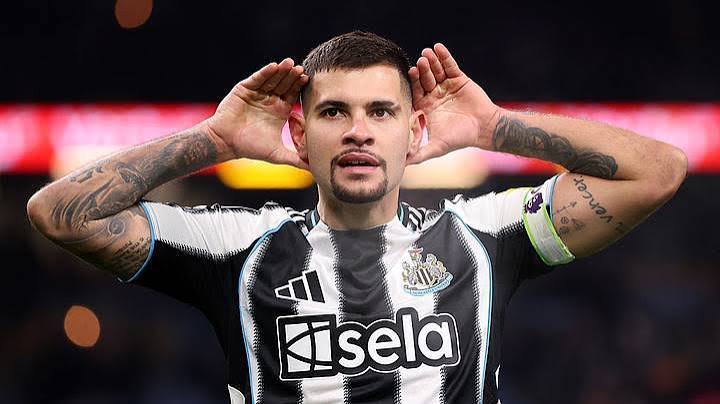
    A split image showing Bruno Guimarães in a Newcastle United kit on one side and an Arsenal-themed background on the other, with a large ‘£100m’ price tag in the middle.

    The summer transfer window is a theatre of speculation, and this year’s stage is set for one of its most compelling dramas: Bruno Guimarães and Arsenal. The Brazilian midfielder has been the heartbeat of Newcastle United’s resurgence, and now the Gunners are circling. But this isn’t just a simple transfer story—it’s a clash of ambition, financial constraints, and timing that could reshape the Premier League’s balance of power.

    While the headline screams ‘Bruno Guimarães to Arsenal,’ the subplot is just as intriguing: Newcastle are ‘clinching deals’ of their own, quietly strengthening their squad. The two narratives are intertwined, revealing the complex chess game that defines modern football’s transfer market. As the window heats up, the question isn’t just whether Arsenal can land their man—it’s whether they should, and at what cost.

    The Midfield Maestro: Why Bruno Guimarães Is Worth the Hype

    Bruno Guimarães isn’t just another midfielder; he’s a transformative presence. At 25, he’s already established himself as one of the Premier League’s most complete central players. His press resistance is elite—he can receive the ball under pressure and pivot away from trouble with a grace that belies his combative edge. His passing range allows Newcastle to transition from defence to attack in a heartbeat, and his tackling is relentless. He’s the kind of player who makes everyone around him better, a rare commodity in today’s game.

    Since joining Newcastle in January 2022 for £40 million, Guimarães has been the catalyst for their revival. He helped them secure a top-four finish and a Champions League spot in 2022-23, and his performances have earned him a contract extension that keeps him at St James’ Park until 2028. But that contract also contains a release clause—reportedly around £100 million—that becomes active in the summer of 2025. That clause is the ticking clock in this transfer saga.

    Arsenal’s Need: The Missing Piece in Arteta’s Puzzle

    Mikel Arteta has built a young, high-energy squad that pushed Manchester City to the wire last season, finishing second. But there’s a sense that something is missing—a midfielder who can control games against the best, who can break lines and also put out fires. Declan Rice has been a revelation, and Martin Ødegaard is a creative genius, but Arteta wants more depth and a different profile. Guimarães fits the bill perfectly: a box-to-box presence who can play as a deep-lying playmaker or as a more advanced disruptor.

    Arsenal’s interest is not new; they’ve been linked with Guimarães for months. But the timing is crucial. This summer, they’ve already made David Raya’s loan permanent, and they’ll need to sell players like Emile Smith Rowe or Eddie Nketiah to fund a big move. The financial reality is that Arsenal can’t just splash £100 million without balancing the books, especially with Profit and Sustainability Rules (PSR) looming large.

    Newcastle’s Dilemma: Ambition vs. Financial Reality

    Newcastle’s Saudi-backed ownership has deep pockets, but PSR is the great equalizer. The rules restrict clubs to losses of £105 million over three years, and Newcastle’s spending spree has brought them close to that limit. They need to raise funds, and selling a high-value asset is the most efficient way. But Guimarães is not just an asset; he’s the symbol of their project. Selling him would send a message that they’re not ready to compete with the elite, a message that could demoralize fans and players alike.

    Instead, Newcastle are looking to offload other players—Callum Wilson, Miguel Almirón, or even Kieran Trippier—to balance the books. They’re also ‘clinching deals’ of their own, as the headline suggests. The free transfer of Lloyd Kelly from Bournemouth and the permanent signing of Lewis Hall from Chelsea are smart, low-cost moves that strengthen the squad without breaking the bank. These deals show that Newcastle are thinking long-term, building depth while maintaining their core.

    The £100 Million Question: To Sell or Not to Sell?

    For Newcastle, the decision is stark: sell Guimarães now for a fee in excess of £100 million, or risk losing him for the same amount next summer when his release clause activates. The latter would give them time to find a replacement, but it also means a year of uncertainty and potential disruption. The former would provide immediate funds to reinvest, but it would be a PR disaster.

    For Arsenal, the question is whether to pay over the odds now or wait until 2025. Waiting would be financially prudent, but it’s a gamble—another club could swoop in, or Guimarães could sign a new contract without a release clause. The Gunners have been burned before by hesitation, and Arteta is keen to strike while the iron is hot.

    The Player’s Perspective: Ambition vs. Loyalty

    Guimarães has publicly stated he’s happy at Newcastle, and the fans adore him. But he’s also ambitious. He wants to play in the Champions League regularly, and Arsenal offer that stage. Newcastle are in the Europa Conference League this season, a step down from the elite competition. A move to Arsenal would likely mean a significant wage increase and a genuine shot at titles. The lure is strong, but so is the bond he’s formed with the Toon Army.

    His comments have been carefully measured—he’s not agitating for a move, but he’s not ruling one out either. That’s the stance of a player who knows his value and is waiting for the right moment. The ball is in the clubs’ courts.

    The Media Circus: Separating Fact from Speculation

    The ‘LIVE’ nature of transfer news means a constant stream of updates, many of them based on unnamed sources and educated guesses. It’s easy to get caught up in the frenzy, but it’s important to separate fact from fiction. The reality is that no formal bid has been made, and Newcastle have repeatedly stated they don’t want to sell. The ‘Newcastle clinch deal’ part of the headline is likely a reference to a separate signing, not a Guimarães sale.

    As the window progresses, expect more twists and turns. Arsenal may test the waters with a bid, but Newcastle will hold firm unless an astronomical offer comes in. The £100 million figure is a psychological barrier, and it’s unlikely to be broken this summer. The more probable scenario is that Guimarães stays, and Arsenal turn their attention elsewhere—or wait for 2025.

    The Bigger Picture: PSR and the New Financial Landscape

    The Guimarães saga is a microcosm of the modern transfer market. PSR has changed the game, forcing clubs to be more strategic with their spending. Even the wealthiest clubs can’t just throw money around; they have to balance the books. This has led to a rise in player swaps, free transfers, and loan deals with obligations to buy. Newcastle’s ‘clinched deals’ are a perfect example of this new reality.

    For Arsenal, the challenge is to compete with the likes of Manchester City while adhering to the rules. They’ve done well so far, but a marquee signing like Guimarães would be a statement of intent. It would show that they’re not just contenders but serious about dethroning the champions.

    What Happens Next?

    The transfer window closes on August 30, and there’s plenty of time for drama. Arsenal could make a move, but they’ll need to sell first. Newcastle will resist, but they might be forced to listen if the price is right. Guimarães will continue to play his cards close to his chest, keeping his options open.

    One thing is certain: this story is far from over. Whether it ends with Guimarães in an Arsenal shirt or staying at St James’ Park, it will have a lasting impact on both clubs and the Premier League landscape.

    The Bruno Guimarães transfer saga is a classic tale of ambition versus pragmatism, loyalty versus opportunity. Arsenal want a statement signing, Newcastle want to hold onto their crown jewel, and the player wants to win. The £100 million price tag is a barrier, but it’s not insurmountable. As the summer unfolds, keep an eye on the smaller deals—Newcastle’s ‘clinched’ signings—because they reveal the true strategy. In the end, this is about more than one player; it’s about the future direction of two ambitious clubs.

    Summary

    • Arsenal are interested in Bruno Guimarães, but Newcastle don’t want to sell and would demand £100m+.
    • Guimarães has a release clause of ~£100m that activates in 2025, making a deal this summer unlikely.
    • Newcastle are making smart, low-cost signings (Lloyd Kelly, Lewis Hall) to strengthen depth under PSR constraints.
    • Arsenal may need to sell players to fund a big move, and waiting until 2025 could be more financially prudent.
    • The player is happy at Newcastle but ambitious, leaving the door open for a future move to a Champions League club.

    FAQ

    Q: Is Bruno Guimarães definitely joining Arsenal this summer?
    A: No. While Arsenal are interested, Newcastle have no intention of selling, and any deal would require a fee in excess of £100 million. The release clause in his contract doesn’t activate until 2025, so a transfer this summer is unlikely unless a massive bid comes in.

    Q: What does ‘Newcastle clinch deal’ mean in the headline?
    A: It likely refers to a separate Newcastle signing, such as Lloyd Kelly on a free transfer or Lewis Hall on a permanent deal from Chelsea, not the sale of Guimarães.

    Q: Why is Bruno Guimarães so highly rated?
    A: He’s a complete midfielder—excellent at pressing, passing, and tackling. He’s been a key player in Newcastle’s resurgence and is considered one of the best in the Premier League in his position.

    Q: What are Profit and Sustainability Rules (PSR)?
    A: PSR are financial regulations that limit how much a club can lose over a three-year period. They restrict spending, forcing clubs to balance transfers and wages with revenue.

    Q: Could Arsenal wait until 2025 to sign Guimarães?
    A: Yes, they could. His release clause becomes active in 2025, which would make the fee more predictable. However, waiting carries risks, such as competition from other clubs or a new contract for the player.