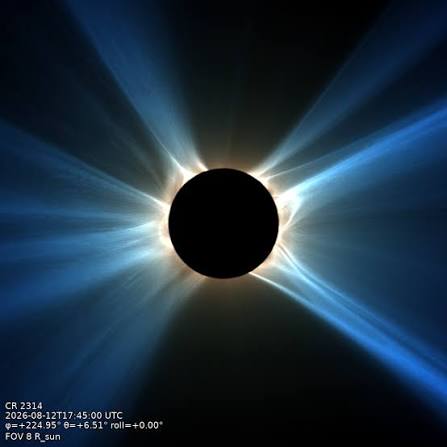
On Wednesday, August 12, the Moon will slide directly between the Sun and Earth, casting a shadow that will sweep across the Arctic and parts of Europe. For those lucky enough to be in the narrow path of totality—stretching from Greenland to Spain—the sky will darken, stars will appear, and the Sun’s ghostly corona will shimmer into view. But if you’re not in that path, you don’t have to miss out. NASA is gearing up to bring this celestial spectacle to screens worldwide with live coverage, expert commentary, and stunning views from along the eclipse’s route.
This isn’t just a pretty sight; it’s a rare scientific opportunity. The 2026 eclipse occurs near solar maximum, when the Sun is at its most active, meaning the corona could be especially dramatic. Plus, for Spain, this is the first total solar eclipse in over a century—a historic event that’s already generating excitement. Whether you’re a seasoned skywatcher or a curious newcomer, here’s everything you need to know about this eclipse and how to watch it safely, both in person and online.
What Is a Total Solar Eclipse?
A total solar eclipse happens when the Moon passes directly between the Sun and Earth, blocking the Sun’s light completely in a narrow corridor called the path of totality. During those precious minutes, the sky darkens, temperatures drop, and the Sun’s outer atmosphere—the corona—becomes visible to the naked eye. It’s a surreal experience that has captivated humans for millennia.
Think of it like a cosmic game of shadow tag: the Moon is the player, and its shadow races across Earth’s surface at thousands of miles per hour. Only those standing in that shadow’s path get to see the full show. Everyone else sees a partial eclipse, where the Sun looks like a crescent or a bite has been taken out of it.
Where Will the Eclipse Be Visible?
The path of totality for the August 12 eclipse is a ribbon of land and sea that begins in the Arctic, crosses Greenland and Iceland, then dips down through the Atlantic Ocean, finally reaching Europe. The most accessible viewing spots are in Spain and a small corner of Portugal, where cities like Valencia and Zaragoza will experience totality. In Spain, this is the first total solar eclipse since 1905, making it a once-in-a-lifetime event for locals and tourists alike.
But totality is a narrow path—only about 100-150 miles wide. For example, in Iceland, only the northernmost regions, like the island of Grímsey, will see totality; the rest of the country will get a partial eclipse. Similarly, in Russia, only parts of Siberia are in the path. So, if you’re planning to watch in person, you need to be exactly in that path. If you’re not, don’t worry—NASA’s got you covered.
NASA’s Live Coverage: What to Expect
NASA will provide live streaming coverage of the eclipse, with multiple camera feeds from different locations along the path of totality. You’ll see the Moon gradually creep across the Sun, the dramatic moment of totality, and then the Sun’s reappearance. Alongside the visuals, NASA experts will offer commentary, explaining the science behind the eclipse and what you’re seeing.
The coverage will be available on a variety of NASA platforms, including NASA+, NASA TV, YouTube, and social media channels like Facebook and X (formerly Twitter). You can also check the NASA website for a direct link. The exact start time will be announced closer to the date, but typically, coverage begins about an hour before the first location reaches totality and continues until the last location’s totality ends.
One of the highlights of NASA’s coverage is the expert interviews. You’ll hear from solar physicists, space weather scientists, and educators who can break down complex concepts into understandable terms. For instance, they might explain why the corona appears as a white halo—it’s the Sun’s outer atmosphere, which is normally hidden by the Sun’s bright surface but becomes visible when the Moon blocks that light.
Why This Eclipse Matters to Science
Eclipses are not just beautiful; they’re scientific goldmines. The corona is the source of the solar wind, a stream of charged particles that affects space weather and can disrupt satellites and power grids on Earth. By studying the corona during an eclipse, scientists can learn more about its structure and how it changes over time.
The 2026 eclipse is particularly exciting because it occurs near solar maximum, the peak of the Sun’s 11-year activity cycle. That means the Sun is more likely to have sunspots, prominences, and dramatic coronal structures. You might see pinkish loops of plasma (prominences) around the edge of the Moon during totality—a sight that’s both beautiful and scientifically valuable.
NASA has a history of using eclipses for research. In past eclipses, they’ve flown instruments on high-altitude aircraft to observe the corona from above the clouds. While specific missions for this eclipse haven’t been announced, you can bet that scientists will be taking advantage of this rare opportunity.
How to Watch Safely
If you’re lucky enough to be in the path of totality, you need to protect your eyes. Never look directly at the Sun without proper eye protection—except during the brief moments of totality when the Sun is completely covered. For the partial phases, you must use certified eclipse glasses that meet the ISO 12312-2 international safety standard. Regular sunglasses are not safe; they don’t block enough harmful radiation.
If you’re watching online, you don’t need any special equipment—just a screen. But if you’re outside the path, you can still see a partial eclipse, and you’ll need eclipse glasses for that too. Remember, even a tiny sliver of the Sun’s surface can damage your eyes.
What You’ll See During Totality
During totality, the sky darkens to a deep twilight, and the Sun’s corona appears as a pearly white halo around the black disk of the Moon. You might also see bright planets like Venus and Jupiter pop into view, and the temperature can drop noticeably. Animals may behave strangely, thinking it’s dusk. It’s a multi-sensory experience that’s hard to describe—you have to see it for yourself.
But remember, totality lasts only a few minutes—typically 2 to 4 minutes, depending on your location. So, if you’re in the path, make sure you’re ready. Have your glasses on for the partial phases, then take them off only when the Sun is completely covered, and put them back on as soon as the first bit of sunlight reappears.
How to Make the Most of NASA’s Coverage
NASA’s live stream is more than just a video feed. It’s an educational event. You can watch with your family, students, or friends, and use it as a springboard for learning about astronomy. NASA often provides educational resources, like activity guides and fact sheets, that you can download before the event.
You can also participate in citizen science projects. For example, the Eclipse Soundscapes project collects audio recordings from eclipse viewers to study how animals react. Or you can use apps like Globe Observer to report temperature changes. These projects help scientists gather data from many locations, and they’re a great way to feel involved even if you’re not in the path.
Follow NASA’s social media channels for updates, behind-the-scenes content, and live Q&A sessions. Use the official hashtag to join the global conversation and share your own photos (if you have the proper equipment to photograph the eclipse safely).
A Historic Event for Europe
For Spain, this eclipse is a big deal. The last total solar eclipse visible from mainland Spain was in 1905, so this is a once-in-a-century event. Expect crowds, festivals, and special viewing events in cities along the path. If you’re planning to travel, book early—hotels are likely to fill up fast.
In Iceland, the eclipse is also significant, though totality is limited to a few northern islands. Still, the partial eclipse will be visible across the country, and many locals and tourists will gather to watch the sky darken.
The Bottom Line
Whether you’re in the path of totality or watching from afar, the August 12 total solar eclipse is a reminder of our place in the solar system. It’s a chance to witness the precise mechanics of celestial motion and to feel a sense of wonder that connects us all. NASA’s live coverage ensures that no one is left out, bringing the eclipse to your screen with expert insight and breathtaking views.
So mark your calendar, set your alarm, and get ready to look up—or log on. This is one show you won’t want to miss.
The August 12 total solar eclipse is a rare and thrilling event, and NASA’s comprehensive live coverage makes it accessible to everyone, regardless of location. Whether you’re in the path of totality or watching from home, you’ll have the opportunity to see the Sun’s corona, learn from experts, and join a global community of skywatchers. Don’t forget to protect your eyes if you’re viewing in person, and tune in to NASA’s platforms for an unforgettable experience.
Summary
- A total solar eclipse will occur on August 12, with the path of totality crossing Greenland, Iceland, northern Russia, the Atlantic, Spain, and Portugal.
- NASA will provide live streaming coverage with multiple camera feeds, expert interviews, and educational commentary on platforms like NASA+, YouTube, and social media.
- The eclipse is scientifically significant because it occurs near solar maximum, offering a chance to study the Sun’s corona and space weather.
- Safety is crucial: use certified eclipse glasses for partial phases; only during totality can you look without protection.
- For Spain, this is the first total solar eclipse in over a century, making it a historic and popular event.
FAQ
Q: When is the total solar eclipse?
A: The eclipse occurs on Wednesday, August 12. The exact time of totality varies by location, so check local times for your area.
Q: Where can I watch NASA’s live coverage?
A: NASA will stream the eclipse on NASA+, NASA TV, YouTube, and its social media channels. A direct link will be available on the NASA website.
Q: Do I need eclipse glasses to watch online?
A: No, if you’re watching the live stream on a screen, you don’t need any eye protection. Glasses are only needed for direct viewing of the Sun.
Q: What is the path of totality?
A: It’s the narrow strip of Earth where the Moon completely covers the Sun. For this eclipse, it includes parts of Greenland, Iceland, Russia, Spain, and Portugal.
Q: Why is this eclipse special for Spain?
A: It’s the first total solar eclipse visible from mainland Spain since 1905, making it a historic event that’s drawing significant attention and tourism.
Leave a Reply