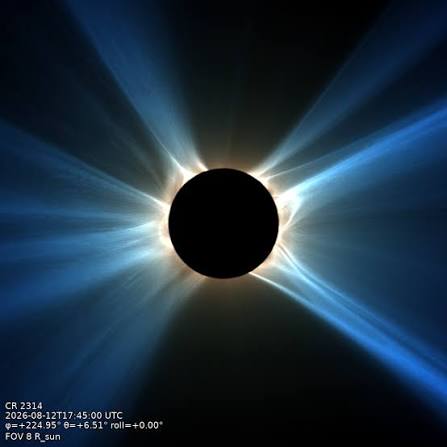
On Wednesday, August 12, a total solar eclipse will sweep across the Northern Hemisphere, offering a rare celestial spectacle for skywatchers in Greenland, Iceland, Spain, and beyond. While the path of totality—where the Moon completely hides the Sun—is narrow, NASA is bringing the experience to a global audience with live coverage and expert commentary. Whether you’re in the path or watching from afar, here’s everything you need to know about this awe-inspiring event and how to catch it.
What Is a Total Solar Eclipse?
A total solar eclipse happens when the Moon passes directly between Earth and the Sun, casting a shadow that completely blocks the Sun’s light. For a few precious minutes, the sky darkens, temperatures drop, and the Sun’s outer atmosphere—the corona—becomes visible to the naked eye. It’s a moment that has fascinated humans for millennia, and it’s one of nature’s most dramatic spectacles.
The August 12 eclipse is particularly special because its path crosses remote Arctic regions and then sweeps into southern Europe. Totality will be visible in parts of Greenland, Iceland, northern Russia, the Atlantic Ocean, Spain, and a small corner of Portugal. For Spain, this is the first total solar eclipse since 1905, making it a historic event for the country and a major draw for eclipse chasers.
NASA’s Live Coverage: How to Watch
NASA will provide live streaming coverage of the eclipse, with views from multiple locations along the path of totality and interviews with subject matter experts. This means you don’t have to be in the path to experience the eclipse—you can watch it from anywhere with an internet connection.
Coverage will be available on a variety of NASA platforms, including NASA+, YouTube, NASA TV, and social media channels. The broadcast will feature multiple camera feeds, expert commentary, and educational segments to help you understand what you’re seeing. NASA’s goal is to make the eclipse accessible to a global audience and to provide scientific context that enhances the experience.
What to Expect During Totality
During totality, the Sun’s corona—a halo of plasma that extends millions of miles into space—becomes visible. This is a rare opportunity to see the Sun’s outer atmosphere, which is usually hidden by the Sun’s bright surface. The 2026 eclipse occurs near solar maximum, a period of high solar activity, so you might see dramatic coronal structures, prominences, and even sunspots.
For those in the path of totality, the experience is unforgettable: the sky darkens to a deep twilight, stars appear, and animals may behave as if it’s dusk. But for those watching online, NASA’s coverage will bring these sights to your screen, with experts explaining the science behind the spectacle.
Safety First: Protecting Your Eyes
If you’re lucky enough to be in the path of totality, you must use proper eye protection during the partial phases. Looking at the Sun without certified eclipse glasses can cause permanent eye damage. Only during the brief moment of totality—when the Moon completely covers the Sun—is it safe to look without glasses. If you’re watching online, you don’t need any special equipment, but if you’re outside, make sure you have ISO-certified eclipse glasses.
The Science Behind the Eclipse
Eclipses are more than just beautiful; they’re valuable scientific opportunities. They allow researchers to study the Sun’s corona, solar wind, and space weather. NASA and other institutions often conduct special observations during eclipses, using ground-based telescopes and even aircraft to get a closer look. The 2026 eclipse is particularly interesting because it occurs near solar maximum, when the Sun’s magnetic activity is at its peak, offering a chance to study dynamic features like prominences and coronal mass ejections.
Why This Eclipse Matters
The August 12 eclipse is a milestone for many reasons. For Spain, it’s the first total solar eclipse in over a century, drawing tourists and astronomers from around the world. For Iceland and Greenland, it’s a chance to see totality in some of the most remote and beautiful landscapes on Earth. And for everyone else, it’s a reminder of our place in the universe—a moment when the Moon and Sun align in a cosmic dance that has captivated humanity for ages.
NASA’s coverage ensures that no matter where you are, you can be part of this global event. So mark your calendar, tune in, and get ready to witness one of nature’s most incredible shows.
The August 12 total solar eclipse is a rare and exciting event, and NASA’s live coverage makes it accessible to everyone. Whether you’re in the path of totality or watching from home, you’ll have the chance to see the Sun’s corona and learn from experts. Remember to prioritize eye safety if you’re viewing in person, and enjoy the spectacle—it’s a reminder of the wonders of our universe.
Summary
- A total solar eclipse will occur on August 12, visible in parts of Greenland, Iceland, Russia, Spain, and Portugal.
- NASA will provide live streaming coverage with expert commentary, available on NASA+, YouTube, and social media.
- Totality offers a rare view of the Sun’s corona, especially dramatic near solar maximum.
- Safety is crucial: use certified eclipse glasses during partial phases; only totality is safe to view without them.
- This is Spain’s first total solar eclipse since 1905, making it a historic event.
FAQ
Q: When is the total solar eclipse?
A: The eclipse occurs on Wednesday, August 12. The exact time of totality varies by location, so check local resources for precise times.
Q: Where can I watch NASA’s live coverage?
A: NASA will stream the eclipse on NASA+, YouTube, NASA TV, and social media channels. Check NASA’s website for links and schedule.
Q: Is it safe to look at the eclipse without glasses?
A: Only during totality—the brief period when the Moon completely covers the Sun—is it safe to look without special glasses. During partial phases, you must use ISO-certified eclipse glasses to protect your eyes.
Q: What is the path of totality?
A: The path includes parts of Greenland, Iceland, northern Russia, the Atlantic Ocean, Spain, and a small corner of Portugal. Only those within this narrow path will see totality; others will see a partial eclipse.
Q: Why is this eclipse significant?
A: It’s the first total solar eclipse in Spain since 1905, and it occurs near solar maximum, offering a chance to see dramatic solar activity. NASA’s coverage makes it accessible globally.