Every four years, the world stops. For a month, borders blur, flags wave, and billions of eyes fixate on a single ball. The FIFA World Cup is more than a tournament; it is a global phenomenon that mirrors the political, cultural, and tactical shifts of its era. From its humble beginnings in 1930 with 13 invited teams to the lavish, technology-driven spectacle of Qatar 2022, the World Cup has evolved into a $7.5 billion industry and the ultimate stage for footballing immortality.
But the tournament’s history is not just about goals and trophies. It is a story of dictators using sport for propaganda, of underdogs defying empires, of tactical revolutions that changed how the game is played, and of a world that grows more connected with each passing edition. As we look ahead to the 48-team format in 2026, understanding where the World Cup has been is essential to appreciating where it is going.
The Birth of a Global Game: Uruguay 1930
In 1930, football was already the world’s most popular sport, but it lacked a true global championship. The Olympics had served as a proxy, but FIFA—founded in 1904—wanted a professional, standalone event. Uruguay, the reigning Olympic champion and celebrating its centenary of independence, was the perfect host. The tournament was invitation-only, and the transatlantic journey proved prohibitive for many European nations. Only four—France, Belgium, Romania, and Yugoslavia—made the trip. In the final, Uruguay beat Argentina 4–2 in front of a passionate Montevideo crowd, cementing its place in history.
The early tournaments were marked by European reluctance and South American dominance. Italy won back-to-back titles in 1934 and 1938, but these victories were tainted by their use as propaganda tools for Mussolini’s fascist regime. The 1938 tournament saw Uruguay boycott in protest of European bias, and the 1942 and 1946 editions were cancelled entirely due to World War II. The World Cup, like the world, was in turmoil.
Post-War Resurgence and the Birth of Legends
The 1950 tournament in Brazil marked the first post-war World Cup and the first with British participation. England’s debut ended in humiliation with a 1–0 loss to the United States—a result so shocking it was dubbed “The Miracle on Grass.” The final, held at the Maracanã, saw Uruguay defeat Brazil 2–1 in front of nearly 200,000 spectators, a moment that still haunts Brazilian football. That match remains the highest-attended single game in World Cup history.
The 1950s and 1960s saw the rise of attacking football. West Germany’s “Miracle of Bern” in 1954, Hungary’s “Golden Team” that fell short, and Brazil’s emergence as a global powerhouse with Pelé in 1958 and 1962. England won on home soil in 1966, a triumph steeped in Cold War symbolism, with North Korea’s shocking upset of Italy adding a geopolitical subplot. The 1970 tournament in Mexico was the first broadcast in color, and Brazil’s team—featuring Pelé, Jairzinho, and Carlos Alberto—is often hailed as the greatest ever. Their third title earned them the Jules Rimet Trophy permanently.
Tactical Evolution and Political Shadows
The 1970s and 1980s brought tactical sophistication and political intrigue. The Netherlands introduced “Total Football” in 1974, but lost to West Germany in the final. Argentina’s 1978 victory was overshadowed by the military junta’s use of the tournament for propaganda, with allegations of match-fixing in their 6–0 win over Peru. The 1982 tournament expanded to 24 teams, and Italy’s Paolo Rossi led them to glory. In 1986, Diego Maradona produced the most iconic individual performance in history, scoring the “Hand of God” and the “Goal of the Century” in the same match against England—a game loaded with Falklands War subtext.
Commercialization and Global Expansion
The 1990s marked a turning point in the World Cup’s commercial power. The 1994 tournament in the United States saw the first final decided on penalties, with Brazil triumphing over Italy. It also demonstrated the sport’s global appeal, drawing record crowds and television audiences. The 1998 tournament expanded to 32 teams, and France won on home soil. The 2002 edition was the first held in Asia, co-hosted by South Korea and Japan, with South Korea’s controversial run to the semifinals sparking debate. In 2010, South Africa became the first African host, and Spain’s tiki-taka style dominated. Germany’s 7–1 demolition of Brazil in the 2014 semifinal was a tactical masterclass, and 2018 saw the introduction of VAR, changing the game’s officiating forever.
Qatar 2022: A Winter Spectacle and a New Era
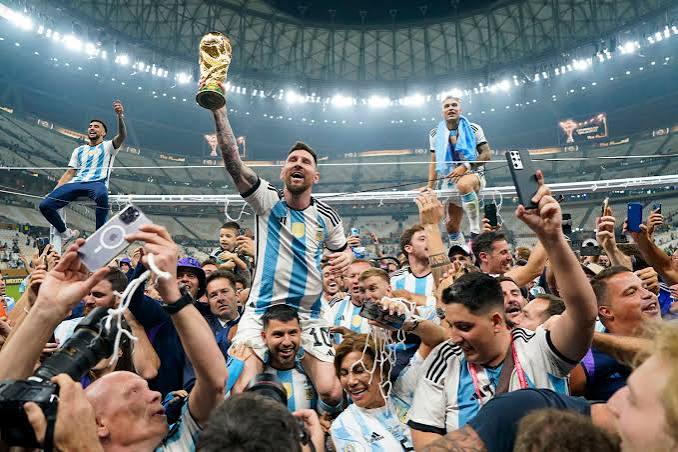
The 2022 World Cup in Qatar was unprecedented: the first in the Middle East, the first in November–December, and the most expensive in history. It was also a lightning rod for controversy over human rights and environmental concerns. On the pitch, the tournament delivered drama, with Argentina and Lionel Messi finally lifting the trophy after a penalty shootout against France in a final that many consider the greatest ever. The tournament also saw Morocco become the first African semifinalist, a historic breakthrough. With FIFA’s revenue exceeding $7.5 billion, the World Cup has become a global economic juggernaut.
The Road to 2026: A 48-Team Future
As the World Cup expands to 48 teams in 2026, hosted by the United States, Canada, and Mexico, the tournament faces new challenges and opportunities. Will the expanded format dilute quality or democratize access? Can the World Cup maintain its magic in an era of club football dominance? The history suggests that the tournament has always adapted, reflecting the times while shaping them. From 13 teams to 48, from black-and-white broadcasts to 4K, from amateur players to global superstars, the World Cup remains the ultimate stage—a mirror to our world and a celebration of the beautiful game.
The World Cup’s journey from a 13-team invitation in Montevideo to a global spectacle in Qatar is a testament to football’s unifying power. It has survived wars, boycotts, and controversies, evolving with each generation. As we look to 2026, the tournament will continue to be a stage where history is written, legends are born, and the world comes together—one match at a time.
Summary
- The World Cup began in 1930 with 13 teams and has grown to 32 (1998–2022), with 48 teams coming in 2026.
- Brazil holds the record with 5 titles, followed by Germany and Italy with 4 each.
- The tournament has been shaped by politics, from Mussolini’s propaganda to Cold War tensions and Qatar’s soft power ambitions.
- Tactical evolution has seen shifts from attacking play to Total Football, tiki-taka, and modern high-pressing systems.
- Commercial growth has made the World Cup a multi-billion-dollar event, with 2022 revenues exceeding $7.5 billion.
FAQ
Q: Why was the World Cup not held in 1942 and 1946?
A: The tournaments were cancelled due to World War II, as global conflict made hosting and participation impossible.
Q: Who has scored the most goals in World Cup history?
A: Miroslav Klose of Germany scored 16 goals across four tournaments (2002–2014), the all-time record.
Q: What was the “Hand of God” goal?
A: In the 1986 quarterfinal, Diego Maradona scored a goal with his hand, which was allowed by the referee. He later called it “a little with the head of Maradona, and a little with the hand of God.”
Q: Why was the 2022 World Cup held in winter?
A: Qatar’s extreme summer heat made it unsafe to play in June–July, so the tournament was moved to November–December, breaking tradition.
Q: How many teams will compete in the 2026 World Cup?
A: The tournament will expand to 48 teams, hosted by the United States, Canada, and Mexico.
Leave a Reply