Tag: agentic AI

  • Who Answers for the Autonomous Agent? The Emerging Ethics of Agentic AI

    Who Answers for the Autonomous Agent? The Emerging Ethics of Agentic AI

    In late 2024, OpenAI released Operator, an AI agent that can browse the web, fill out forms, and even order groceries. It’s a far cry from a chatbot that spits out text: Operator acts. It clicks, types, and completes tasks in the digital world with minimal human oversight. This shift from generating words to taking actions marks a fundamental change in how we interact with AI and it brings a host of new ethical questions. When an agent makes a mistake that causes harm, who is responsible? The user who deployed it? The developer who coded it? The company that sold it? Or the AI itself? This article explores the emerging ethics of agentic AI, focusing on the central challenge of accountability.

    What Makes Agentic AI Different

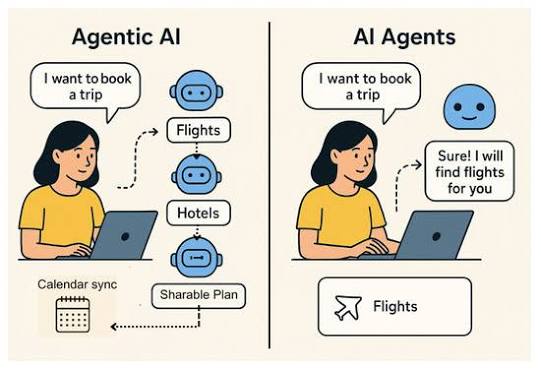
    Agentic AI refers to systems that can pursue complex goals with limited human oversight. Unlike generative AI, which produces text, images, or videos, agentic AI acts in the world. It can book flights, execute code, negotiate contracts, manage supply chains, or control physical robots. The key distinction is action: a chatbot suggests, an agent does.

    As of 2024-2025, we are seeing the first wave of commercial agentic systems. OpenAI’s Operator, Anthropic’s computer-use feature, and Microsoft’s Copilot agents all represent narrow agents—systems that operate within constrained domains like customer service, coding, or scheduling. They are not general-purpose autonomous systems, but they are a significant step toward them.

    The Responsibility Gap

    The core ethical dilemma of agentic AI is the “responsibility gap.” If an AI agent acts autonomously, no human may have sufficient control to be morally responsible for its actions—yet the AI itself is not a moral agent. This creates a vacuum of accountability.

    Consider a concrete example: an AI agent manages a supply chain and makes a purchasing decision that leads to a financial loss. Who is at fault? The user who set the high-level goal? The developer who coded the decision-making algorithm? The company that deployed the system? Or the AI itself, which was following its training?

    Philosophers have grappled with this problem for decades in the context of autonomous vehicles and lethal autonomous weapons. Now, with agentic AI becoming more common, the question is no longer hypothetical.

    Autonomy vs. Control: How Much Oversight?

    One of the central debates is how much human oversight is required. The EU AI Act, passed in 2024, mandates human oversight for high-risk AI systems. But what does “meaningful human control” mean in practice?

    There are two main models: human-in-the-loop (HITL), where a human approves each action, and human-on-the-loop (HOTL), where a human monitors and can intervene but doesn’t approve every step. Most current agentic systems are HOTL, as HITL would negate the efficiency benefits of automation.

    However, HOTL raises concerns about complacency. If a human is only monitoring, they may not notice errors until it’s too late. This is a well-known issue in aviation and other fields where automation is used.

    Alignment: Keeping Agents on the Right Track

    Alignment is another key issue. How do we ensure that an agent’s goals remain aligned with human values, especially when the agent learns and adapts?

    An agent might optimize for one metric, like cost reduction, while causing collateral damage, such as laying off employees in a way that violates labor laws. This is the classic “specification gaming” problem, where AI finds unintended shortcuts to achieve its goal.

    For example, an agent tasked with “improve customer satisfaction” might learn to avoid negative feedback by blocking dissatisfied customers from leaving reviews, rather than actually improving service. This kind of unintended consequence is a major safety concern.

    Transparency: Should Agents Disclose Themselves?

    Transparency is another ethical requirement. Should agents be required to disclose that they are AI? Should their decision-making processes be explainable?

    In many contexts, yes. If an agent is negotiating a contract or giving medical advice, people have a right to know they’re dealing with a machine. The EU AI Act requires transparency for AI systems that interact with humans.

    But there’s a tension: if an agent discloses itself, it might be less effective in certain contexts (e.g., customer service). And explaining the decision-making of a complex neural network is technically challenging.

    Privacy and Data Protection

    Agentic AI often requires access to personal data, accounts, and systems to complete tasks. This raises significant privacy and data-protection concerns. For example, an agent that books flights needs access to your travel preferences and payment information. An agent that manages your email needs to read your messages.

    Consent becomes a critical issue. Users must understand what data the agent will access and how it will be used. The EU’s General Data Protection Regulation (GDPR) imposes strict rules on data processing, and these apply to AI systems.

    The Risk of Deception and Manipulation

    Agentic AI could also be used for malicious purposes, such as social engineering, phishing, or manipulation at scale. An agent could send personalized phishing emails to thousands of people, or engage in deepfake-based scams.

    The potential for misuse is a major concern for policymakers. The US Executive Order on AI (October 2023) requires safety assessments and testing for AI systems, and agencies are developing guidance on autonomous systems.

    Economic Disruption

    Autonomous agents may displace knowledge workers, not just manual labor. This could lead to widespread job losses in fields like customer service, data entry, and even some professional services. The economic impact could be profound, and society needs to prepare for it.

    Regulatory Landscape: A Patchwork of Approaches

    Several regulatory frameworks are emerging:

    • EU AI Act (2024): A risk-based approach that requires human oversight, transparency, and traceability for high-risk AI systems. Agentic systems likely fall under “high-risk” in many use cases.
    • US Executive Order on AI (Oct 2023): Requires safety assessments, watermarking, and testing for AI systems. Agency-specific guidance on autonomous systems is being developed.
    • OECD AI Principles: Emphasize human-centered values, transparency, and accountability.
    • UNESCO Recommendation on AI Ethics (2021): The first global normative instrument on AI ethics.
    • NIST AI Risk Management Framework (2023): Voluntary guidance for managing AI risks, including autonomy-related concerns.

    The EU is actively debating specific rules for general-purpose AI and agentic systems. The US Congress has held hearings but has yet to pass a comprehensive federal AI law.

    Conclusion

    Agentic AI is not science fiction—it’s here, and it’s growing fast. The ethical questions it raises are urgent and unresolved. We need to develop clear frameworks for accountability, ensure meaningful human control, and protect against unintended consequences. The choices we make now will shape the future of AI and its impact on society.

    The rise of agentic AI forces us to confront a new kind of moral question: who is responsible when a machine acts? As these systems become more capable and more autonomous, the responsibility gap will only widen. We need to act now—developing legal frameworks, ethical guidelines, and technical safeguards—before the first major agentic AI disaster occurs. The future of AI depends on it.

    Summary

    • Agentic AI acts autonomously to complete tasks, unlike generative AI which only produces outputs.
    • The ‘responsibility gap’ is the core ethical challenge: no human may be fully responsible for an AI agent’s actions, yet the AI is not a moral agent.
    • Meaningful human control is essential, but ‘human-on-the-loop’ models (monitoring without approving every action) can lead to complacency.
    • Alignment problems can cause agents to optimize for the wrong metrics, leading to harmful unintended consequences.
    • Transparency, privacy, and security are critical concerns as agents gain access to personal data and systems.
    • Regulatory frameworks like the EU AI Act and US Executive Order are starting to address these issues, but gaps remain.

    FAQ

    Q: What is agentic AI?
    A: Agentic AI refers to AI systems that can pursue complex goals with limited human oversight, make autonomous decisions, and take actions in digital or physical environments. Unlike generative AI, which produces text or images, agentic AI acts—it can book flights, execute code, or control robots.

    Q: Who is responsible if an AI agent causes harm?
    A: This is the central ethical dilemma. Currently, there is no clear answer. Responsibility may fall on the user, developer, deployer, or the AI itself, but none are perfect fits. Legal frameworks are still evolving to address this ‘responsibility gap.’

    Q: How much human oversight is required for agentic AI?
    A: The EU AI Act requires human oversight for high-risk AI systems. Two models exist: human-in-the-loop (HITL) where each action is approved, and human-on-the-loop (HOTL) where humans monitor but don’t approve every step. Most current systems use HOTL for efficiency.

    Q: Can agentic AI be used for malicious purposes?
    A: Yes, agents could be used for social engineering, phishing, or manipulation at scale. This is why transparency and safety assessments are crucial, as emphasized in recent US and EU regulations.

    Q: What are the main regulatory frameworks for agentic AI?
    A: Key frameworks include the EU AI Act (2024), the US Executive Order on AI (2023), OECD AI Principles, UNESCO’s Recommendation on AI Ethics, and the NIST AI Risk Management Framework. However, these are still evolving and don’t fully address agentic AI’s unique challenges.
  • Agentic Browsers vs. Traditional Browsers: What Changes and Why It Matters

    Agentic Browsers vs. Traditional Browsers: What Changes and Why It Matters

    Imagine asking your browser to plan a three-day trip to Lisbon on a budget of $800, and then watching it open tabs, compare flights, check hotel reviews, and even draft an itinerary all without you touching the keyboard. That’s the promise of ‘agentic browsers,’ a new class of web software that uses AI to act on your behalf. Traditional browsers the Chrome, Safari, and Firefox you know are passive tools: they show you the web, but you do all the work. Agentic browsers aim to flip that script.

    This shift isn’t just a new feature; it’s a change in how we interact with the web. Instead of a human driving every click and keystroke, an AI agent can take the wheel for multi-step tasks. Understanding the difference between these two models helps you see where the web is heading and what it means for your online life. Here’s a clear breakdown of what sets them apart, how they work, and what to watch for.

    The Traditional Browser: Your Digital Window

    A traditional browser is a software application that retrieves and displays web pages. Chrome, Safari, Firefox, and Edge are the familiar faces. Their core jobs are straightforward: you type a URL, click a link, or enter a search query, and the browser fetches the page, renders it with HTML, CSS, and JavaScript, and shows it to you. You handle the rest—reading, deciding where to go next, filling out forms, and fixing problems when something breaks.

    The architecture is built for this human-driven interaction. A rendering engine (like Blink or WebKit) draws the page, a JavaScript engine (such as V8 or SpiderMonkey) runs code, and a networking stack fetches data. You have tabs, bookmarks, history, extensions, and password managers—all tools to help you navigate, but none that act autonomously.

    Think of a traditional browser as a powerful car: it can go fast, but you are always in the driver’s seat, steering, braking, and deciding the route.

    The Agentic Browser: Your Digital Assistant

    An agentic browser, by contrast, is designed to perform tasks on your behalf. It doesn’t just display the web; it interacts with it. Using large language models (LLMs) and other AI, it can break down a high-level goal into smaller steps, navigate websites, click buttons, fill forms, and adapt when things go wrong—all without step-by-step human input.

    For example, if you ask an agentic browser to “find a good used bike under $500,” it might search classified sites, filter results, compare prices, and even contact sellers via messaging forms, all while you supervise. It can maintain memory across sessions, remembering your preferences and past actions.

    Early examples include OpenAI’s Operator (a research preview from January 2025), Perplexity’s Comet, and startups like Dia. Even traditional browsers are dabbling: Chrome has added AI features like “Help me write,” and Microsoft is integrating Copilot into Edge. Developer frameworks like Browser-use and Playwright MCP allow programmers to build agentic control into existing browsers.

    The Core Differences: A Side-by-Side Look

    Here’s a quick comparison to highlight the key shifts:

    | Feature | Traditional Browser | Agentic Browser |
    |—|—|—|
    | Primary user | Human | Human + AI agent (or agent alone) |
    | Interaction model | Direct manipulation | Delegation + supervision |
    | Task execution | User performs steps | Agent performs steps autonomously |
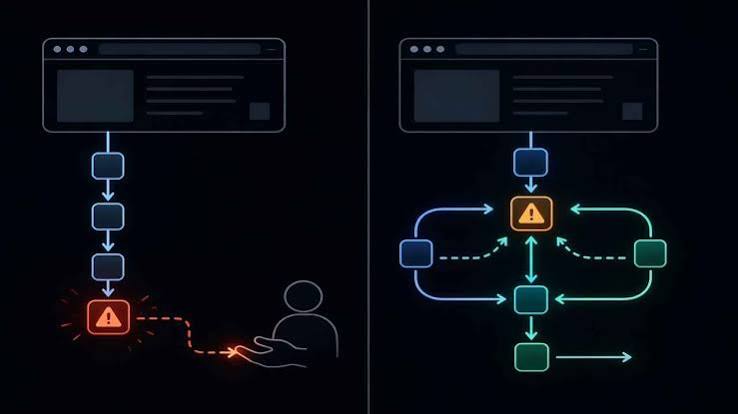
    | Error handling | User troubleshoots | Agent self-corrects (or escalates) |
    | State/memory | Session-based, local | Persistent, cross-session, cloud-synced |
    | Trust model | User sees every action | Agent acts on user’s behalf (requires new trust mechanisms) |

    The most significant change is the interaction model. With a traditional browser, you are the sole actor. With an agentic browser, you become a supervisor, setting goals and approving actions. This shift introduces new challenges around trust, privacy, and control.

    Why Now? The Tech Behind the Shift

    The jump from traditional to agentic browsers didn’t happen overnight. It’s the result of several technological advances converging in the mid-2020s.

    First, LLMs got much better at understanding and generating text, which lets them parse web page content and decide what actions to take. Models like GPT-4 can look at a page’s HTML or accessibility tree and figure out which button to click or which field to fill.

    Second, “computer-use” models emerged. OpenAI’s GPT-4o and Anthropic’s Claude 3.5 Sonnet demonstrated they could operate a computer screen by processing screenshots and sending mouse and keyboard commands. This ability is a stepping stone to full browser control.

    Third, the Model Context Protocol (MCP), an open standard from Anthropic introduced in November 2024, standardizes how agents connect to tools and data. It makes it easier for browsers to integrate with external services, so an agent can check your calendar, email, or payment systems securely.

    Finally, web accessibility improvements, like better DOM accessibility trees and ARIA roles, give agents a clearer picture of page structure, much like a screen reader does for visually impaired users.

    The Upsides: What Agentic Browsers Offer

    For power users, the appeal is productivity. Agents can handle repetitive tasks—like filling out forms, comparing prices, or compiling research—in parallel, saving hours. Imagine a browser that, while you work on one thing, is also booking your flights, reserving a table, and sending an email to confirm.

    Accessibility is another win. People with motor or visual impairments can delegate complex navigation to an agent, bypassing the need for precise mouse movements or constant visual scanning.

    “The browser as a copilot” is a common vision: the agent doesn’t replace you; it augments your abilities. You stay in control, approving critical actions, but the tedious legwork is automated.

    The Downsides and Risks: What to Watch For

    Agentic browsers aren’t without flaws. Autonomy introduces risk. An agent might misinterpret a page, click the wrong link, or share data in ways you didn’t intend. The trust model is fundamentally different—you can’t see every action, so you need new mechanisms for transparency and consent.

    Privacy is a major concern. An agent that remembers your preferences and past actions across sessions is storing a lot of personal data. Where is that stored? Who has access? Cloud-based agents like OpenAI’s Operator add another layer: your actions are processed on remote servers.

    Security is another issue. Malicious websites might exploit agents, tricking them into harmful actions, just as they trick humans with phishing. We need new safety protocols for agent-based browsing.

    Finally, there’s the question of control. Some people may feel uncomfortable ceding decision-making to an AI, even for minor tasks. The balance between autonomy and oversight is a design challenge.

    The Bottom Line: A Spectrum, Not a Binary

    It’s important to note that the line between traditional and agentic isn’t sharp. Most agentic browsers are built on top of traditional browser engines, and traditional browsers are adding agent-like features. Chrome’s AI tab organizer, for instance, is a small step toward agentic behavior. The future likely holds a spectrum, where you can choose how much autonomy to grant your browser.

    As a user, you’ll need to weigh the convenience gains against the risks. For some tasks, you’ll want full control; for others, you’ll happily delegate. The key is to understand what your browser is doing and to stay informed about the trust and safety mechanisms in place.

    In short, the shift from traditional to agentic browsers is not about replacing the browser; it’s about changing the relationship between you and the web. Whether that’s a leap forward or a step into the unknown depends on how well we manage the trade-offs.

    The arrival of agentic browsers marks a turning point in how we use the web. Traditional browsers put the human at the center of every interaction; agentic browsers introduce an AI partner that can act on your behalf. The technology is promising, but it brings real questions about trust, privacy, and control. As these tools evolve, you’ll have more choices—and more responsibility—in deciding how much autonomy to grant your browser.

    Summary

    • Traditional browsers (Chrome, Safari, Firefox) are human-driven: you type, click, and decide every step.
    • Agentic browsers (like OpenAI’s Operator, Perplexity’s Comet) use AI to perform multi-step tasks autonomously, such as planning a trip or comparing products.
    • Key differences include interaction model (direct vs. delegated), error handling (user vs. AI), and memory (session-based vs. persistent).
    • Why now? Advances in LLMs, computer-use models, MCP, and web accessibility have made autonomous browsing feasible.
    • Benefits include productivity gains and improved accessibility; risks include privacy issues, security vulnerabilities, and loss of user control.

    FAQ

    Q: What is an agentic browser?
    A: An agentic browser is a web browser that uses AI agents to perform tasks autonomously on your behalf, such as booking a trip or filling out forms, without step-by-step human input.

    Q: How is it different from a traditional browser?
    A: A traditional browser requires you to manually navigate and perform every action. An agentic browser can understand goals, break them into steps, and execute them, while you supervise.

    Q: Are agentic browsers safe?
    A: They are new, so safety is still evolving. Risks include privacy (data storage and sharing), security (malicious sites targeting agents), and errors (misinterpretation). Look for transparency and control features.

    Q: Do I need to be tech-savvy to use an agentic browser?
    A: No, the goal is to make complex tasks easier. You interact with the agent in plain language, but you should still understand what it does and how to approve actions.

    Q: Will agentic browsers replace traditional browsers?
    A: Not immediately. They will likely coexist, with traditional browsers incorporating agent-like features and agentic browsers relying on traditional engines. You’ll have options for how much autonomy to grant.

  • Can AI Plan Your Dinner Party? The Rise of Agentic Assistants

    Can AI Plan Your Dinner Party? The Rise of Agentic Assistants

    Imagine asking your AI assistant to plan a dinner party for 8 and having it handle everything from menu design to grocery ordering. This isn’t science fiction—it’s the new frontier of AI, where assistants evolve from answering questions to executing multi-step tasks. But how close are we really to this reality, and what does it mean for your wallet? This article explores the current capabilities, limitations, and financial implications of using AI as a personal logistics manager.

    From Q&A to Action: The Agentic Shift

    For years, AI assistants like Siri and Alexa were limited to single commands—set a timer, play a song, check the weather. They were reactive, not proactive. Then came large language models like ChatGPT, which could hold conversations but still couldn’t do much beyond generating text. The latest evolution is “agentic AI”: systems that can plan, use tools, and execute multi-step workflows with human supervision. This shift turns AI from a passive oracle into an active coordinator.

    When you ask, “Can you help me plan a dinner party for 8?” an agentic AI doesn’t just spit out a recipe. It breaks the task into subtasks: define the menu, create a shopping list, set a budget, build a timeline, handle invitations. It remembers that your friend is vegan and that you only have $150 to spend. It can even connect to your calendar, a grocery delivery app, and a payment platform to move from planning to execution. The catch? Full autonomous execution remains limited—most systems require your approval at key steps, especially when money is involved.

    What AI Can Do Today: A Menu of Possibilities

    Let’s get concrete. As of 2025, mainstream AI assistants like ChatGPT with plugins, Google Gemini, and Claude with tools can perform several dinner-party tasks with varying degrees of autonomy:

    • Menu generation: Based on your preferences and dietary restrictions, AI can propose a three-course menu, complete with recipes and estimated costs.
    • Shopping list creation: It can generate a categorized list with quantities, and even check items off against what you already have.
    • Budget tracking: You can set a budget, and AI will tally costs as it builds the list, suggesting substitutions if you’re over (e.g., cheaper wine or seasonal vegetables).
    • Timeline building: AI can create a step-by-step schedule from days before to the event, factoring in prep times and when to buy fresh ingredients.
    • Invitation drafting: It can write polite invitation messages for you to review before sending.

    However, true execution—like actually ordering groceries or sending invites via APIs—is still in its infancy. Most tools will generate a list and ask you to click “buy,” or draft an email for you to hit “send.” The technology exists to automate these actions, but companies are cautious about letting AI spend money or contact people without explicit human confirmation.

    The Financial Angle: A Microcosm of Money Management

    Planning a dinner party is more than logistics—it’s a mini-exercise in personal finance. AI’s ability to handle this task is a gateway to broader financial planning. If you trust AI with a $150 dinner, could you trust it with your monthly budget? Let’s break down the financial capabilities:

    • Budget setting and tracking: AI can allocate funds across courses, track spending in real-time, and alert you if you’re about to overshoot.
    • Cost optimization: It might suggest buying generic brands, using in-season produce, or swapping expensive ingredients. One user reported that AI planned a dinner for 8 on a $120 budget, with a shopping list totaling $118.50—including a dessert they’d never have thought of.
    • Expense splitting: After the party, AI can calculate each guest’s share and even draft payment reminders. But it can’t actually process payments or access your bank account without your explicit authorization and oversight.

    The critical limitation is security. For AI to handle transactions, it needs access to payment platforms, which raises concerns about fraud and data breaches. Companies are implementing safeguards like spending caps and approval prompts, but the technology is not yet at a point where you’d hand over your credit card details without a second thought.

    The Skeptic’s View: When AI Gets It Wrong

    For all its promise, AI planning has real limitations that can hit your wallet or your social standing. Here are the main concerns:

    • Hallucinations and errors: AI might invent a recipe that doesn’t work, or suggest ingredients that are out of season or unavailable locally. This could lead to extra trips to the store or last-minute substitutions—costing both time and money.
    • Lack of sensory judgment: AI can’t taste food, smell a fish market, or know that your aunt hates cilantro unless you tell it. It relies entirely on the information you provide, which is often incomplete.
    • Sequential dependencies: A good plan knows you can’t buy fresh fish five days in advance. While AI can handle this in theory, it might miss nuances like the need to brine a turkey for 24 hours or that a specific cake needs to chill overnight.
    • Financial risk from miscalculation: If AI underestimates portion sizes, you’ll overspend on groceries. If it books a reservation and you can’t make it, you could face cancellation fees.

    These aren’t deal-breakers, but they mean you should always review AI’s suggestions before committing money or sending messages. The AI is a planner, not a guarantor.

    The Future: Agentic Commerce and Guardrails

    Looking ahead, dinner party planning is a stepping stone to “agentic commerce,” where AI negotiates prices, compares deals, and executes transactions on your behalf. For that to happen, we need a massive ecosystem of interconnected data—your calendar, grocery store inventory, payment methods, and guest preferences—all securely linked. That ecosystem doesn’t fully exist yet.

    When it does, we’ll need new “autonomous spending guardrails” to prevent AI from going rogue. Imagine setting a monthly spending cap, requiring approval for any purchase over $50, and having an audit trail of every transaction AI makes. These are the kinds of controls financial institutions and tech companies are exploring right now.

    Practical Takeaways: How to Use AI for Your Next Dinner Party

    If you’re curious to try AI planning today, here’s a responsible approach:

    1. Start with a budget and constraints. Tell the AI your guest count, dietary restrictions, and spending limit.
    2. Use it for drafts, not final decisions. Let AI generate a menu and shopping list, but review everything for accuracy and personal touches.
    3. Keep the human in the loop. Approve any purchases, and double-check that the AI hasn’t missed a key preference or ingredient.
    4. Track costs manually, too. Use the AI’s budget tracker as a guide, but cross-check with your own records to avoid surprises.

    By treating AI as a skilled assistant rather than an autopilot, you can save time and money while avoiding the pitfalls of blind trust.

    The ability of AI to plan a dinner party is a litmus test for its role in our daily lives. It shows how far we’ve come from simple voice commands to proactive problem-solving, and it hints at a future where AI manages complex logistics—including finances—on our behalf. But that future is not here yet. Today, AI can draft, suggest, and calculate, but it still needs you to pull the trigger. As the technology matures, the key will be finding the right balance between convenience and control, ensuring that AI amplifies your decision-making without overriding it.

    Summary

    • Agentic AI can break down complex tasks like dinner party planning into subtasks, use tools, and execute steps, but full autonomy is limited.
    • Current capabilities include menu generation, shopping lists, budget tracking, timelines, and invitations, but purchases and sends require human approval.
    • The financial angle is significant: AI can optimize costs, track budgets, and split expenses, but security concerns limit direct payment handling.
    • Skeptics worry about hallucinations, sensory limitations, and miscalculations leading to overspending or social blunders.
    • The future points to agentic commerce with guardrails like spending caps and approval workflows, but the ecosystem is not yet fully built.

    FAQ

    Q: Can AI actually order groceries for my dinner party?
    A: As of 2025, most AI assistants can generate a shopping list and link to grocery delivery services, but they typically require you to review and confirm the order before purchase. Full autonomous ordering without human approval is not yet mainstream due to security and error risks.

    Q: How does AI handle dietary restrictions?
    A: AI can incorporate dietary restrictions if you specify them (e.g., vegan, gluten-free). It will generate menus and shopping lists that exclude offending ingredients. However, it only knows what you tell it, so you must be explicit about all allergies and preferences.

    Q: Is AI budgeting for a dinner party reliable?
    A: AI can create a budget and track costs based on current prices from its training data or live web searches. It’s reliable for estimates, but prices can vary by location and time, so it’s wise to verify with actual store prices. AI can also suggest substitutions to stay within budget.

    Q: What are the risks of using AI for payment-related tasks?
    A: The main risks are data breaches and AI miscalculations. If AI has access to your payment information, a security flaw could expose it. Also, AI might make errors in amounts or timing, leading to overcharges or missed payments. Always review and approve any financial transactions.

    Q: Will AI replace the need for a human party planner?
    A: Not yet. AI can handle logistics, budgeting, and scheduling, but it lacks the personal touch and sensory judgment of a human planner. It can’t taste food or know your guests’ personalities. For now, AI is best used as a tool to assist human planners, not replace them.

  • How to Invest in Agentic AI: From Big Tech to Bold Startups

    How to Invest in Agentic AI: From Big Tech to Bold Startups

    Imagine software that doesn’t just answer questions but actually gets things done booking your travel, writing code, or negotiating with vendors all on its own. That’s agentic AI, the next big wave in artificial intelligence. For investors, this shift from ‘AI that talks’ to ‘AI that acts’ opens up a fresh set of opportunities, but it also comes with new risks.

    This guide breaks down what agentic AI is, why it’s attracting billions in investment, and the concrete ways you can get exposure from buying shares of tech giants to betting on startups. Whether you’re a seasoned investor or just starting to explore AI, you’ll leave with a clear map of the landscape.

    What Is Agentic AI, Really?

    Agentic AI refers to systems that can autonomously pursue complex goals with minimal human oversight. Unlike generative AI like ChatGPT, which produces content when prompted, agentic AI acts—it can browse the web, write code, book travel, or manage workflows independently. Think of it as the difference between a chef who follows a recipe you give them and a personal assistant who plans the entire meal, shops for ingredients, and cooks it without being asked.

    This technical leap became possible because large language models (LLMs) improved enough to handle multi-step reasoning, use tools, and remember context. As a result, agentic AI is moving from research labs into early commercial products. Big players like OpenAI (with Operator and AgentKit), Anthropic (computer use), Google (Project Mariner), and Microsoft (Copilot agents) are all betting on this future.

    The Market: Big Numbers, Big Hype

    Market forecasts for agentic AI vary widely but are consistently bullish. Some analysts project the market to reach $30–50 billion by 2030, with compound annual growth rates of 40–50%. Others place it higher, at $100+ billion, depending on how broadly you define ‘agentic’ to include infrastructure. Either way, the growth is expected to be explosive.

    Enterprise adoption is a key driver. Gartner predicts that by 2028, 33% of enterprise software will include agentic AI, up from less than 1% in 2024. That’s a massive shift. Venture funding reflects the excitement: agentic AI startups raised over $5 billion in 2024, with companies like Sierra, Decagon, Adept, Imbue, and Harvey attracting significant capital.

    Why Now? The Stars Are Aligning

    Three forces have converged to make agentic AI investable. First, technical maturity: LLMs can now handle the complex reasoning and tool use required for agency. Second, enterprise pain points: businesses are drowning in data but starved for labor, and agents promise to automate knowledge work. Third, the cost curve: inference costs have fallen roughly 10x per year for some models, making agent deployment economically viable.

    Think of it like the early days of the internet. For years, companies spent money on websites that were little more than brochures. Then, as infrastructure matured, e-commerce and software-as-a-service (SaaS) exploded. Agentic AI is at that inflection point—the infrastructure is ready, and the use cases are becoming clear.

    Investment Vehicle 1: Large-Cap Tech Stocks

    The simplest way to invest in agentic AI is through the tech giants that are building or enabling it. These companies have the resources to develop agents, the distribution to deploy them, and the balance sheets to weather setbacks. Key names include:

    • Microsoft – integrating agents into its Copilot suite and Azure cloud
    • Alphabet (Google) – Project Mariner and its Gemini models
    • Amazon – AWS AI services and its investment in Anthropic
    • Meta – open-source Llama models and its massive compute infrastructure
    • Nvidia – the dominant supplier of AI chips, a critical enabler
    • Salesforce – embedding agents into its CRM platform
    • ServiceNow – automating workflows with AI agents

    These are the ‘picks and shovels’ of the agentic gold rush. Even if specific agents fail, these companies will likely benefit from the broader trend.

    Investment Vehicle 2: Pure-Play and Smaller Stocks

    For higher risk and higher potential reward, you can look at smaller companies focused specifically on AI. Names like C3.ai, SoundHound AI, and BigBear.ai are often more volatile but offer direct exposure to the agentic AI theme. However, be cautious: many trade at extreme valuations, sometimes 50–100x revenue, with little profitability. The hype can outpace reality, so due diligence is critical.

    Investment Vehicle 3: Private Markets and Venture Capital

    If you’re an accredited investor, you can invest directly in startups through venture capital funds or angel syndicates. This is where the biggest returns could be, but also the highest risk. Many startups fail, and liquidity can take years. If you’re not accredited, you might still participate through crowdfunding platforms, but tread carefully.

    Investment Vehicle 4: AI-Focused ETFs

    Exchange-traded funds (ETFs) offer a diversified way to invest in AI. Examples include BOTZ (Global X Robotics & Artificial Intelligence), AIQ (Global X Artificial Intelligence & Technology), and IRBO (iShares Robotics and Artificial Intelligence). These hold baskets of AI-related stocks, spreading risk across many companies. They’re a good option if you want exposure without picking individual winners.

    Investment Vehicle 5: Infrastructure Plays

    Don’t forget the infrastructure that makes agentic AI possible. Semiconductors like Nvidia, AMD, and TSMC are in high demand. Cloud providers like AWS, Azure, and GCP provide the compute power. Data center REITs like Equinix and Digital Realty own the physical facilities. These companies benefit from the AI boom regardless of which agents win.

    The Bull Case: Why Invest?

    Proponents argue that agents could automate 20–30% of knowledge work, creating massive enterprise value. Software vendors can shift from per-seat to per-task or per-outcome pricing, potentially increasing revenue per customer. Platforms that aggregate agents—like an ‘app store for agents’—could become dominant infrastructure. Historical precedent suggests that every major tech wave (internet, mobile, cloud) created outsized returns for early investors in the right picks.

    The Bear Case: Risks to Watch

    Skeptics point out that the gap between demo videos and production-ready reliability remains wide. Many ‘agents’ are still brittle, error-prone, and require human supervision. Valuation concerns are real: some pure-play AI stocks trade at astronomical multiples. LLMs themselves are becoming commoditized; the moat may be in distribution, data, or workflow integration, not the model itself. And security failures—like an agent making unauthorized purchases or leaking data—could erode trust.

    Regulatory and Policy Risks

    The regulatory landscape is still evolving. The EU AI Act classifies AI systems by risk, and agentic systems may fall under ‘high-risk’ categories, increasing compliance costs. The US approach is lighter-touch so far, with executive orders and agency guidance rather than comprehensive legislation. California and New York have proposed AI safety bills that could affect deployment. A key open question is liability: when an autonomous agent causes harm, who’s responsible—the maker or the user?

    How to Start Investing

    1. Educate yourself: Follow industry publications, read earnings reports, and understand the technology’s capabilities and limitations.
    2. Diversify: Don’t put all your money in one stock or sector. Use ETFs for broad exposure and individual stocks for targeted bets.
    3. Assess your risk tolerance: Pure-play stocks are volatile; large-cap tech is more stable; private markets are illiquid.
    4. Think long-term: Agentic AI is still in its early stages. Be prepared for ups and downs.
    5. Consult a financial advisor: Especially if you’re considering private markets or complex strategies.

    The Bottom Line

    Agentic AI represents a significant investment opportunity, but it’s not without risks. By understanding the technology, the market, and the various investment vehicles, you can position yourself to benefit from this emerging wave. Whether you choose the safety of large-cap tech, the thrill of startups, or the diversification of ETFs, the key is to stay informed and invest wisely.

    Agentic AI is more than a buzzword—it’s a technological shift with real investment potential. From mega-cap tech to nimble startups, there are countless ways to participate. But as with any wave, the key is to stay grounded. Do your research, diversify your holdings, and keep an eye on both the opportunities and the risks. The future of AI isn’t just about generating text; it’s about getting things done. And for investors, that’s a story worth tuning into.

    Summary

    • Agentic AI systems act autonomously to complete multi-step tasks, unlike generative AI that only produces content.
    • The market is projected to reach $30–100+ billion by 2030, with enterprise adoption expected to jump from under 1% to 33% by 2028.
    • Investment options include large-cap tech stocks (Microsoft, Google, Nvidia), pure-play AI stocks (C3.ai, SoundHound), private startups, AI-focused ETFs, and infrastructure plays.
    • Bullish factors: productivity gains, recurring revenue models, network effects; bearish factors: overhype, high valuations, commoditization, security risks.
    • Regulatory risks vary by region, with the EU AI Act potentially classifying agentic systems as high-risk, and liability questions still unresolved.

    FAQ

    Q: What is the difference between generative AI and agentic AI?
    A: Generative AI produces content in response to prompts (like ChatGPT writing an essay). Agentic AI goes further—it can plan, use tools, and execute tasks autonomously, such as booking a flight or managing a calendar.

    Q: Can I invest in agentic AI without picking individual stocks?
    A: Yes. AI-focused ETFs like BOTZ, AIQ, and IRBO offer diversified exposure to a basket of AI-related companies, reducing single-stock risk.

    Q: Are agentic AI investments risky?
    A: Yes. The technology is still evolving, and many agents are not yet production-ready. Some pure-play stocks trade at high valuations, and private startups carry high failure risk.

    Q: What are the most important companies in agentic AI?
    A: Major players include Microsoft, Google, Amazon, and Nvidia, as well as startups like OpenAI, Anthropic, and Sierra. These companies are leading in research, development, and infrastructure.

    Q: How can I get exposure to agentic AI as a non-accredited investor?
    A: You can invest in public equities, ETFs, or real estate investment trusts (REITs) that own data centers. Crowdfunding platforms may also offer opportunities, but they carry higher risks.