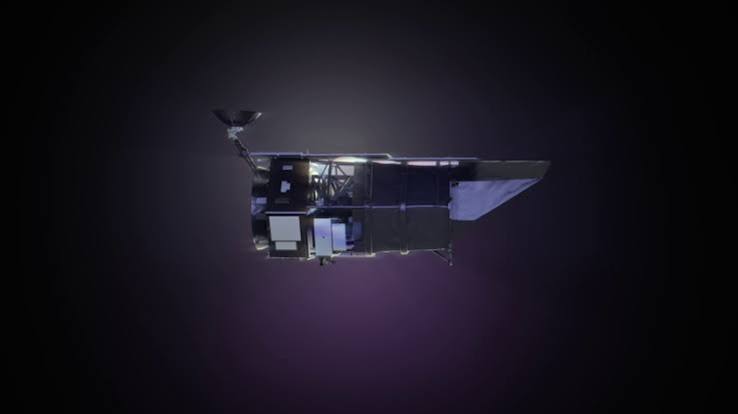
NASA’s next big space observatory, the Nancy Grace Roman Space Telescope, is set to launch on August 30, 2025. Named after the ‘Mother of Hubble,’ this telescope will have a field of view 100 times wider than Hubble’s, making it a cosmic survey machine. Here are nine key things to understand about this ambitious mission.
1. A Wide View of the Cosmos
The Roman Space Telescope’s superpower is its wide field of view. While Hubble provides deep, narrow views of the universe, Roman will capture images that cover an area of sky roughly the size of the full Moon in a single shot. That’s about 100 times wider than Hubble’s near-infrared view. This wide-angle capability allows Roman to survey enormous swaths of the sky quickly, making it ideal for studying large-scale cosmic structures and finding rare objects.
2. Same Mirror as Hubble, But Built for Surveys
Roman’s primary mirror is 2.4 meters in diameter—the same size as Hubble’s. But don’t let that similarity fool you. Roman is designed for surveys, not just close-up observations. Its camera, the Wide Field Instrument, is a 288-megapixel near-infrared camera that can capture a large patch of sky in one exposure. This means Roman can map the universe 1,000 times faster than Hubble for equivalent depth in near-infrared.
3. The Quest to Understand Dark Energy
One of Roman’s main goals is to probe dark energy, the mysterious force driving the universe’s accelerating expansion. Roman will measure the effects of dark energy using multiple techniques, including weak lensing (the bending of light by matter), baryon acoustic oscillations (ripples in the distribution of galaxies), and supernovae. These observations will help astronomers pin down the nature of dark energy and how it has changed over cosmic time.
4. A Coronagraph to Image Exoplanets
Roman carries a technology demonstration called the Coronagraph Instrument. This device will test techniques to block starlight, allowing scientists to directly image giant exoplanets. This is a stepping stone for future missions that aim to capture images of Earth-like planets. The coronagraph will also study the atmospheres of these worlds, searching for signs of habitability.
5. A Microlensing Survey to Find New Worlds
In addition to direct imaging, Roman will conduct a microlensing survey. This technique uses the gravity of a foreground star to magnify the light of a background star, revealing planets that might otherwise be invisible. Roman’s wide field and rapid survey capabilities make it perfect for this method, potentially finding thousands of exoplanets, including some that could be habitable.
6. A Time Machine for Cosmic History
Roman’s infrared vision allows it to see through dust and observe light that has traveled for billions of years. By surveying galaxies across cosmic time, Roman will help astronomers understand how galaxies formed and evolved. It will also study the large-scale structure of the universe, mapping dark matter distribution and providing clues about the early universe.
7. Honoring the ‘Mother of Hubble’
The telescope is named after Nancy Grace Roman, NASA’s first Chief of Astronomy. In the 1960s and 1970s, she was instrumental in developing the Hubble Space Telescope concept, earning her the nickname ‘Mother of Hubble.’ Roman was a tireless advocate for space-based astronomy and for making scientific data accessible to all. The telescope honors her legacy of expanding our view of the universe.
8. A Collaborative Effort with Global Reach
Roman is a NASA mission with international partnerships, including contributions from the European Space Agency and the Japan Aerospace Exploration Agency. The mission’s data will be publicly available immediately, allowing scientists worldwide to dive into the archives. This open-access policy is a nod to Roman’s belief that science belongs to everyone.
9. Launch and Beyond
Roman is scheduled to launch on a SpaceX Falcon Heavy rocket from NASA’s Kennedy Space Center on August 30, 2025. It will travel to the Sun-Earth L2 Lagrange point, about 1.5 million kilometers from Earth. The primary mission is planned for five years, with the potential for extension. Once operational, Roman will begin its surveys, expected to produce a treasure trove of data that could lead to discoveries we can’t even imagine today.
The Nancy Grace Roman Space Telescope is poised to transform our understanding of the universe. With its wide field, infrared vision, and suite of scientific instruments, it will tackle some of the biggest questions in cosmology and exoplanet science. As we await its launch, the excitement is building—Roman is ready to write a new chapter in space exploration.
Summary
- Wide Field: Roman’s field of view is 100 times wider than Hubble’s, enabling large-scale surveys.
- Mirror: Its 2.4-meter mirror matches Hubble’s, but it’s optimized for wide-field imaging.
- Dark Energy: Roman will study dark energy through weak lensing, baryon acoustic oscillations, and supernovae.
- Exoplanets: It will directly image giant planets with its coronagraph and find more via microlensing.
- Legacy: Named after Nancy Grace Roman, the ‘Mother of Hubble,’ it continues her vision of open science.
FAQ
Q: When will the Roman Space Telescope launch?
A: It is scheduled to launch on August 30, 2025, aboard a SpaceX Falcon Heavy rocket from Kennedy Space Center.
Q: How is Roman different from Hubble?
A: Roman has a similar mirror size but a much wider field of view (100 times larger), making it a survey telescope. Hubble is better for deep, narrow observations.
Q: What is the Coronagraph Instrument?
A: It’s a technology demonstration that blocks starlight to directly image exoplanets. It will help develop techniques for future Earth-like planet imaging missions.
Q: Why is it named after Nancy Grace Roman?
A: She was NASA’s first Chief of Astronomy and a key figure in developing Hubble. The telescope honors her contributions to space science.
Q: Will Roman’s data be public?
A: Yes, all data will be publicly available immediately, allowing scientists worldwide to access and analyze it.
Leave a Reply