Tag: dark energy

  • NASA’s Roman Space Telescope Launches to Uncover the Universe’s Dark Secrets


    On a Sunday morning in May 2027, a SpaceX Falcon Heavy rocket will thunder off Launch Complex 39A at NASA’s Kennedy Space Center in Florida. Aboard is the Nancy Grace Roman Space Telescope, a mission that will spend five years surveying the cosmos in infrared light, tackling some of the biggest questions in astronomy: What is dark energy? Where is dark matter? Are there other planets like ours?

    Roman is not just another telescope. It’s a surveyor, designed to capture vast swaths of sky in a single image an area about the size of the full Moon. That’s a field of view 100 times larger than the Hubble Space Telescope’s infrared camera. This wide-angle capability will allow Roman to map the distribution of dark matter, measure the expansion of the universe, and find thousands of exoplanets, all in unprecedented detail.

    A Telescope Named After a Pioneer

    The mission honors Nancy Grace Roman, NASA’s first Chief of Astronomy, who played a pivotal role in the development of the Hubble Space Telescope. Known as the ‘Mother of Hubble,’ Roman fought for space-based observatories when the idea was still controversial. She passed away in 2018, but her legacy continues. The telescope that now bears her name will build on Hubble’s discoveries, but with a fundamentally different approach.

    Why Roman Is a Game-Changer (in a Good Way)

    Hubble gave us deep, narrow views of the universe, like looking through a soda straw. The James Webb Space Telescope (JWST) goes even deeper, peering at the first galaxies. But Roman is different: it’s a wide-angle surveyor. Think of it as moving from a zoom lens to a panoramic camera. Each Roman image captures an area of sky as large as the full Moon, revealing hundreds of thousands of galaxies in a single shot.

    This design is perfect for studying dark energy—the mysterious force accelerating the expansion of the universe. Roman will use multiple techniques to measure this acceleration, including Type Ia supernovae and weak gravitational lensing. By watching how light from distant galaxies bends around invisible mass, Roman will create 3D maps of dark matter, the unseen scaffolding that holds galaxies together.

    The Coronagraph: Blocking Starlight to See Planets

    One of Roman’s most exciting instruments is the Coronagraph Instrument (CGI). This technology demonstration aims to directly image exoplanets by blocking the blinding light of their host stars. Using advanced deformable mirrors and charge-injection devices, the coronagraph can suppress starlight by a factor of a billion, revealing the faint glow of giant planets.

    This is a pathfinder for future missions, like the proposed Habitable Worlds Observatory, which might one day image Earth-like planets and search for signs of life. Roman’s coronagraph will test these techniques in space, proving they work before we invest in even larger telescopes.

    Microlensing: Finding Planets by Gravity

    Roman will also hunt for exoplanets using gravitational microlensing. When a planet passes in front of a distant star, its gravity bends and magnifies the star’s light, creating a brief brightening. Roman will watch hundreds of millions of stars, catching these microlensing events to find planets as small as Mars. This complements other methods like Kepler’s transit technique, filling in the demographics of planets across the galaxy.

    The Journey to L2

    Roman will travel to the Sun-Earth L2 Lagrange point, a gravitationally stable spot about 1 million miles from Earth. It will take about three months to get there, then another few months to commission the instruments. Science operations are expected to begin about six months after launch.

    The telescope uses a 2.4-meter mirror, the same size as Hubble’s, but it was originally a spy satellite mirror donated by the National Reconnaissance Office in 2012. This heritage hardware saved money, but Roman’s instruments are entirely new, optimized for infrared surveys.

    A Mission That Almost Didn’t Happen

    Roman’s path to the launch pad was rocky. Proposed in the 2010 Decadal Survey as WFIRST, the mission faced multiple cancellation attempts in Congress and the White House. But astronomers lobbied hard, and Congress consistently restored funding. Finally, in 2020, it was renamed for Nancy Grace Roman, securing its legacy.

    Complementary to JWST

    Roman and JWST are a powerful pair. JWST explores a few targets in exquisite detail, while Roman surveys millions of galaxies. Astronomers will use Roman’s wide surveys to identify interesting targets for JWST to follow up. For example, Roman will find distant supernovae, and JWST can then examine their spectra to understand the physics of the explosions.

    What We Hope to Learn

    By the end of its primary mission, Roman will have imaged over a billion galaxies. It will measure the expansion history of the universe with incredible precision, testing whether dark energy is a constant, as Einstein proposed, or something that evolves over time. Its dark matter maps will reveal the large-scale structure of the cosmos, showing how galaxies cluster along filaments of invisible matter.

    Roman will also answer basic questions about our own galaxy. It will find thousands of exoplanets, from gas giants to rocky worlds, and measure the demographics of planetary systems. And it will peer back to the epoch of reionization, when the first stars and galaxies turned on, helping us understand the early universe.

    A New Era of Survey Astronomy

    The launch of Roman marks a shift in astronomy toward large-scale surveys. With its 300-megapixel camera, it will produce the largest astronomical images ever taken. Each exposure covers 0.28 square degrees, and a single image may contain tens of thousands of galaxies. This data will be a treasure trove for astronomers for decades, complementing not just JWST but also ground-based observatories like the Vera Rubin Observatory.

    Roman is not just a telescope; it’s a time machine. By looking at distant galaxies, it sees them as they were billions of years ago. And by mapping dark matter, it will help us understand the invisible forces that shape our universe. As Roman begins its journey, scientists and space enthusiasts alike will be watching, eager to see what secrets the universe reveals.

    The Nancy Grace Roman Space Telescope is more than a mission; it’s a bridge to the unknown. With its vast surveys and cutting-edge instruments, it will tackle the twin mysteries of dark energy and dark matter, while also charting new worlds. As it travels to L2, we’re not just launching a telescope—we’re opening a new window on the cosmos.

    Summary

    • Roman will launch in May 2027 on a Falcon Heavy rocket, heading to the L2 Lagrange point.
    • It has a 2.4-meter mirror and a field of view 100 times larger than Hubble’s infrared camera.
    • Key goals include studying dark energy, mapping dark matter, and directly imaging exoplanets.
    • The Coronagraph Instrument is a tech demo for future habitable planet imaging missions.
    • Roman will complement JWST by surveying vast sky areas to find targets for detailed study.

    FAQ

    Q: When is the Roman Space Telescope launching?
    A: The launch is scheduled for May 2027 at 7:26 a.m. EDT from Kennedy Space Center, Florida.

    Q: How is Roman different from Hubble or James Webb?
    A: Roman has a much wider field of view, allowing it to survey large sky areas quickly, whereas Hubble and Webb focus on smaller regions in greater detail.

    Q: What is dark energy, and how will Roman study it?
    A: Dark energy is a mysterious force causing the universe’s expansion to accelerate. Roman will measure this acceleration using supernovae and weak lensing to map how dark energy behaves over time.

    Q: Can Roman see exoplanets directly?
    A: Yes, using its Coronagraph Instrument, which blocks starlight to reveal giant planets around nearby stars. This is a technology test for future missions.

    Q: Why is it named after Nancy Grace Roman?
    A: Nancy Grace Roman was NASA’s first Chief of Astronomy and a key advocate for the Hubble telescope. The mission honors her contributions to space astronomy.
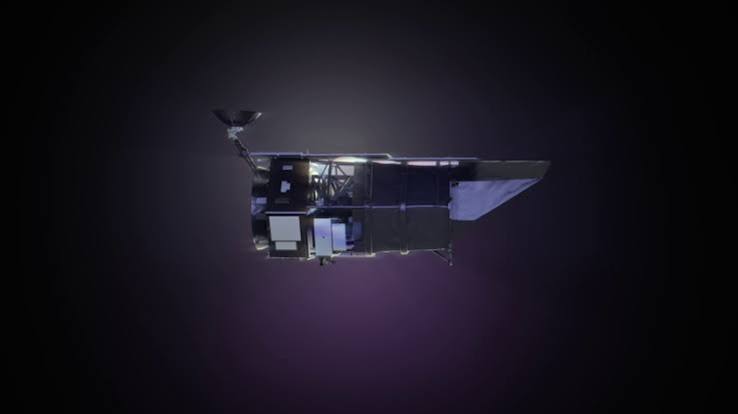
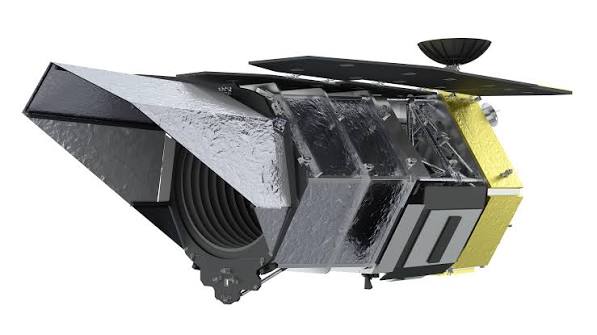
  • Roman Space Telescope Launch: A New Wide-Field Eye on the Cosmos


    On August 31, 2026, NASA plans to launch the Nancy Grace Roman Space Telescope, a flagship observatory that will survey the infrared sky with a field of view 100 times wider than Hubble’s. This mission is designed to tackle some of the biggest questions in cosmology and exoplanet science.

    Named after Nancy Grace Roman, NASA’s first Chief of Astronomy, the telescope will build on the legacies of Hubble and Spitzer, but with a unique approach: instead of peering deeply at small patches of sky, Roman will map vast regions quickly. Its launch marks a new chapter in space-based astronomy, promising breakthroughs in our understanding of dark energy, exoplanets, and the structure of the universe.

    A Wide-Field Revolution

    Imagine trying to map a vast forest by looking through a narrow tube—you’d see trees one at a time. Hubble does something similar: its sharp vision covers a tiny patch of sky, like a pinpoint. Roman, on the other hand, uses a 2.4-meter mirror—the same size as Hubble’s—but its camera captures an area 100 times larger in a single shot. That’s like switching from a telescope to a wide-angle lens. This design allows Roman to conduct large-scale surveys that would take Hubble centuries to complete.

    The Wide Field Instrument (WFI) is a 288-megapixel camera with 18 detectors, sensitive to visible and near-infrared light (0.48–2.3 micrometers). It will map the sky 1,000 times faster than Hubble, enabling astronomers to study everything from nearby asteroids to galaxies billions of light-years away.

    Unraveling Dark Energy

    One of Roman’s primary missions is to understand dark energy, the mysterious force causing the universe’s expansion to accelerate. Roman will use three methods: supernovae, weak gravitational lensing, and baryon acoustic oscillations.

    • Supernovae: By finding thousands of Type Ia supernovae across cosmic time, Roman can measure how expansion has changed.
    • Weak lensing: The gravity of dark matter bends light from distant galaxies, distorting their shapes. By measuring this distortion over wide areas, Roman can map dark matter and infer dark energy’s influence.
    • Baryon acoustic oscillations: These are ripples in the distribution of galaxies, left over from the early universe. Measuring their scale at different distances provides another expansion yardstick.

    These techniques will complement ESA’s Euclid mission, which launched in 2023 and is also studying dark energy. Roman’s larger mirror gives it sharper resolution, while Euclid’s wider field covers more sky. Together, they’ll provide cross-checks and deeper insights.

    Exoplanet Demographics and Direct Imaging

    Roman will also revolutionize exoplanet science. Its microlensing survey will detect planets by watching for a brief brightening when a foreground star’s gravity magnifies the light of a background star—if a planet is orbiting the foreground star, it adds a small blip to the signal. This method is sensitive to planets down to Mars mass and can find free-floating planets not tied to any star. Over its primary mission, Roman expects to discover thousands of exoplanets, vastly expanding our census of planetary systems.

    The Coronagraph Instrument (CGI) is a technology demonstrator for direct imaging. It blocks starlight using a combination of masks and deformable mirrors to achieve a contrast of about 10⁻⁹—that’s seeing a planet 100 million times fainter than its star. If successful, it will capture images of giant exoplanets and debris disks, paving the way for future missions like the Habitable Worlds Observatory.

    A Historic Namesake: Nancy Grace Roman

    Roman is named after Dr. Nancy Grace Roman (1925–2018), NASA’s first Chief of Astronomy. She was a tireless advocate for space-based observatories, playing a key role in developing the Hubble Space Telescope. In an era when few women led in science, she broke barriers and earned the nickname “Mother of Hubble.” Her legacy lives on in this mission, which continues her vision of exploring the universe from space.

    Technical Marvels and Challenges

    Building Roman was no small feat. The WFI’s 288-megapixel sensor array had to be painstakingly assembled and tested. The coronagraph operates with precision that would be impossible without advanced wavefront sensing and control. The spacecraft itself weighs about 4.2 tons and will launch on a SpaceX Falcon Heavy from Cape Canaveral, heading to the Sun-Earth L2 Lagrange point, 1.5 million kilometers from Earth.

    But the journey hasn’t been smooth. The mission, originally proposed as WFIRST in the 2010 Decadal Survey, faced multiple cancellation threats in Congress and experienced cost overruns and schedule slips. The total cost is now estimated at $3.2–4 billion. The launch date itself has slipped from the mid-2020s to no earlier than October 2026, though the APOD entry for August 31, 2026, suggests a planned launch attempt around that time. Verification of the exact date is necessary closer to the event.

    Public Data and Community Impact

    Unlike Hubble and JWST, Roman’s data will be publicly available immediately with no proprietary period. This shift is debated among astronomers—some worry that observers who propose specific targets won’t get exclusive access, while others argue it accelerates science and broadens participation. Roman’s surveys will generate enormous datasets, which will be processed and made available to the community, enabling discoveries beyond the core team.

    Complementing JWST and Ground-Based Observatories

    Roman is designed to work with other facilities. JWST sees deep, narrow fields; Roman sees wide, shallow fields. For example, Roman can identify interesting objects—like distant galaxies or exoplanet hosts—that JWST can then study in detail. Similarly, Roman’s time-domain surveys will find transient events that ground-based telescopes like the Vera Rubin Observatory can follow up. This synergy will maximize scientific return.

    The Road to Launch

    As of now, Roman is in its final integration and testing phase. The components have been built by partners including Ball Aerospace (now BAE Systems) for the WFI, and JPL for the coronagraph. The launch on Falcon Heavy will place Roman into a direct trajectory to L2, where it will begin a 5-year primary mission, with enough propellant for over 6 years.

    The August 31, 2026 date in the APOD title likely marks the planned launch day or a related milestone. Keep an eye on NASA’s updates for the most accurate schedule.

    The Roman Space Telescope is poised to transform our view of the universe. With its unprecedented survey speed and advanced instruments, it will address fundamental questions about dark energy, dark matter, and exoplanets. As it launches, it carries the legacy of Nancy Grace Roman and the hopes of astronomers worldwide. The countdown is on.

    Summary

    • Roman Space Telescope (formerly WFIRST) is NASA’s next flagship observatory, launching no earlier than October 2026.
    • Its 2.4-meter mirror and 288-megapixel camera capture a field of view 100 times wider than Hubble’s.
    • Key science: dark energy measurements, exoplanet microlensing surveys, and direct imaging via a coronagraph.
    • Named after Nancy Grace Roman, NASA’s first Chief of Astronomy and ‘Mother of Hubble’.
    • Data will be public immediately, a departure from Hubble/JWST norms.

    FAQ

    Q: When will the Roman Space Telescope launch?
    A: As of the knowledge cutoff, the official launch window is no earlier than October 2026, on a SpaceX Falcon Heavy from Cape Canaveral. The APOD title for August 31, 2026, may indicate a planned launch attempt or a commemorative date. Check NASA’s website for the latest schedule.

    Q: How is Roman different from Hubble?
    A: Roman has the same size mirror as Hubble (2.4 meters), but its primary camera has a field of view 100 times wider, allowing it to survey large areas of sky quickly. Hubble provides high-resolution images of small patches, while Roman conducts wide-field surveys.

    Q: What is the coronagraph instrument on Roman?
    A: The Coronagraph Instrument (CGI) is a technology demonstration designed to block starlight and directly image exoplanets. It aims to achieve a contrast of about 10⁻⁹, making it possible to see planets 100 million times fainter than their stars.

    Q: Why is it named after Nancy Grace Roman?
    A: Nancy Grace Roman was NASA’s first Chief of Astronomy and a key figure in developing the Hubble Space Telescope. She championed space-based observatories, and the mission honors her contributions to astronomy.

    Q: Will Roman’s data be public?
    A: Yes, unlike Hubble and JWST, Roman’s data will have no proprietary period. It will be made available to the public immediately, allowing any astronomer to use it, which is a shift in how major observatory data are handled.

  • 9 Things to Know About NASA’s Nancy Grace Roman Space Telescope

    9 Things to Know About NASA’s Nancy Grace Roman Space Telescope

    NASA’s next big space observatory, the Nancy Grace Roman Space Telescope, is set to launch on August 30, 2025. Named after the ‘Mother of Hubble,’ this telescope will have a field of view 100 times wider than Hubble’s, making it a cosmic survey machine. Here are nine key things to understand about this ambitious mission.

    1. A Wide View of the Cosmos

    The Roman Space Telescope’s superpower is its wide field of view. While Hubble provides deep, narrow views of the universe, Roman will capture images that cover an area of sky roughly the size of the full Moon in a single shot. That’s about 100 times wider than Hubble’s near-infrared view. This wide-angle capability allows Roman to survey enormous swaths of the sky quickly, making it ideal for studying large-scale cosmic structures and finding rare objects.

    2. Same Mirror as Hubble, But Built for Surveys

    Roman’s primary mirror is 2.4 meters in diameter—the same size as Hubble’s. But don’t let that similarity fool you. Roman is designed for surveys, not just close-up observations. Its camera, the Wide Field Instrument, is a 288-megapixel near-infrared camera that can capture a large patch of sky in one exposure. This means Roman can map the universe 1,000 times faster than Hubble for equivalent depth in near-infrared.

    3. The Quest to Understand Dark Energy

    One of Roman’s main goals is to probe dark energy, the mysterious force driving the universe’s accelerating expansion. Roman will measure the effects of dark energy using multiple techniques, including weak lensing (the bending of light by matter), baryon acoustic oscillations (ripples in the distribution of galaxies), and supernovae. These observations will help astronomers pin down the nature of dark energy and how it has changed over cosmic time.

    4. A Coronagraph to Image Exoplanets

    Roman carries a technology demonstration called the Coronagraph Instrument. This device will test techniques to block starlight, allowing scientists to directly image giant exoplanets. This is a stepping stone for future missions that aim to capture images of Earth-like planets. The coronagraph will also study the atmospheres of these worlds, searching for signs of habitability.

    5. A Microlensing Survey to Find New Worlds

    In addition to direct imaging, Roman will conduct a microlensing survey. This technique uses the gravity of a foreground star to magnify the light of a background star, revealing planets that might otherwise be invisible. Roman’s wide field and rapid survey capabilities make it perfect for this method, potentially finding thousands of exoplanets, including some that could be habitable.

    6. A Time Machine for Cosmic History

    Roman’s infrared vision allows it to see through dust and observe light that has traveled for billions of years. By surveying galaxies across cosmic time, Roman will help astronomers understand how galaxies formed and evolved. It will also study the large-scale structure of the universe, mapping dark matter distribution and providing clues about the early universe.

    7. Honoring the ‘Mother of Hubble’

    The telescope is named after Nancy Grace Roman, NASA’s first Chief of Astronomy. In the 1960s and 1970s, she was instrumental in developing the Hubble Space Telescope concept, earning her the nickname ‘Mother of Hubble.’ Roman was a tireless advocate for space-based astronomy and for making scientific data accessible to all. The telescope honors her legacy of expanding our view of the universe.

    8. A Collaborative Effort with Global Reach

    Roman is a NASA mission with international partnerships, including contributions from the European Space Agency and the Japan Aerospace Exploration Agency. The mission’s data will be publicly available immediately, allowing scientists worldwide to dive into the archives. This open-access policy is a nod to Roman’s belief that science belongs to everyone.

    9. Launch and Beyond

    Roman is scheduled to launch on a SpaceX Falcon Heavy rocket from NASA’s Kennedy Space Center on August 30, 2025. It will travel to the Sun-Earth L2 Lagrange point, about 1.5 million kilometers from Earth. The primary mission is planned for five years, with the potential for extension. Once operational, Roman will begin its surveys, expected to produce a treasure trove of data that could lead to discoveries we can’t even imagine today.

    The Nancy Grace Roman Space Telescope is poised to transform our understanding of the universe. With its wide field, infrared vision, and suite of scientific instruments, it will tackle some of the biggest questions in cosmology and exoplanet science. As we await its launch, the excitement is building—Roman is ready to write a new chapter in space exploration.

    Summary

    • Wide Field: Roman’s field of view is 100 times wider than Hubble’s, enabling large-scale surveys.
    • Mirror: Its 2.4-meter mirror matches Hubble’s, but it’s optimized for wide-field imaging.
    • Dark Energy: Roman will study dark energy through weak lensing, baryon acoustic oscillations, and supernovae.
    • Exoplanets: It will directly image giant planets with its coronagraph and find more via microlensing.
    • Legacy: Named after Nancy Grace Roman, the ‘Mother of Hubble,’ it continues her vision of open science.

    FAQ

    Q: When will the Roman Space Telescope launch?
    A: It is scheduled to launch on August 30, 2025, aboard a SpaceX Falcon Heavy rocket from Kennedy Space Center.

    Q: How is Roman different from Hubble?
    A: Roman has a similar mirror size but a much wider field of view (100 times larger), making it a survey telescope. Hubble is better for deep, narrow observations.

    Q: What is the Coronagraph Instrument?
    A: It’s a technology demonstration that blocks starlight to directly image exoplanets. It will help develop techniques for future Earth-like planet imaging missions.

    Q: Why is it named after Nancy Grace Roman?
    A: She was NASA’s first Chief of Astronomy and a key figure in developing Hubble. The telescope honors her contributions to space science.

    Q: Will Roman’s data be public?
    A: Yes, all data will be publicly available immediately, allowing scientists worldwide to access and analyze it.

  • NASA’s Roman Space Telescope: A Wide-Eyed Explorer Set to Launch from Florida

    NASA’s Roman Space Telescope: A Wide-Eyed Explorer Set to Launch from Florida

    On the morning of August 30, 2025, NASA plans to launch its next major space observatory, the Nancy Grace Roman Space Telescope, from Kennedy Space Center in Florida. The launch window opens at 7:26 a.m. EDT, and the mission will ride a SpaceX Falcon Heavy rocket from Launch Complex 39A. This is a big deal not just because it’s another telescope heading to space, but because Roman is designed to see the universe in a way no telescope has before.

    Named after Dr. Nancy Grace Roman, NASA’s first chief of astronomy often called the ‘Mother of Hubble’ for her role in making the Hubble Space Telescope a reality Roman will tackle some of the biggest questions in cosmology: What is dark energy? How do galaxies form? Are there planets like Earth out there? To answer these, it will take a giant survey of the sky in infrared light, mapping billions of galaxies and probing the very fabric of the cosmos.

    NASA has set a comprehensive coverage plan for the launch, including media briefings, live broadcasts, and post-launch press conferences. Whether you’re a space enthusiast, a student, or just curious about the universe, here’s what you need to know about this mission and how to follow its journey.

    The Mission That Almost Didn’t Happen

    Roman’s path to the launch pad has been long and winding. Originally proposed as the Wide Field Infrared Survey Telescope (WFIRST) in the 2010s, it faced budget cuts and cancellation threats multiple times. But the scientific community rallied, and in 2020, NASA renamed it after Dr. Roman, cementing its legacy. The telescope is now scheduled for launch no earlier than (NET) August 30, 2025, after several delays due to technical issues, the COVID-19 pandemic, and supply chain challenges.

    This isn’t just another telescope. Roman’s primary mirror is 2.4 meters across—the same size as Hubble’s—but it’s designed for a completely different job. While Hubble and JWST look at small patches of sky in incredible detail, Roman will sweep across vast swaths of the cosmos, capturing images 100 times larger than Hubble’s infrared view in a single shot. Think of it as the difference between a telephoto lens and a wide-angle lens on a camera. Both are powerful, but they serve different purposes.

    A Wide Field of View for Big Questions

    So what will Roman do with that wide field of view? Its main goals are to investigate dark energy, dark matter, and exoplanets. Dark energy is the mysterious force that’s causing the universe’s expansion to accelerate. It makes up about 68% of the universe, but we don’t know what it is. Roman will map the distribution of galaxies and measure how light from distant objects is bent by gravity—a technique called weak gravitational lensing—to see how dark energy has shaped cosmic structure over time.

    Dark matter, on the other hand, is invisible stuff that makes up about 27% of the universe. It doesn’t emit light, but it gravitationally affects visible matter. By observing how galaxies cluster and how light is distorted by dark matter’s gravity, Roman will create detailed maps that help us understand its distribution and evolution.

    For exoplanets, Roman will use two methods. First, microlensing: when a star passes in front of a more distant star, its gravity can magnify the background star’s light, and any planets around the foreground star will cause a brief blip in that brightening. This method can find planets that are too far from their star or too faint to be seen directly. Second, its Coronagraph Instrument (CGI) will block out a star’s light to directly image giant planets orbiting nearby stars—a technological feat that could pave the way for future missions to image Earth-like worlds.

    A Complementary Eye to Webb

    Roman is often compared to the James Webb Space Telescope (JWST), but they’re not rivals—they’re partners. JWST is a deep-space explorer that peers into the early universe, seeing faint galaxies in great detail. Roman is a surveyor that covers huge areas of sky quickly, finding targets that JWST can then study in depth. Together, they’ll provide a more complete picture of the cosmos. Roman will be stationed at the Sun-Earth L2 Lagrange point, about 1.5 million kilometers from Earth, same as JWST, but it will survey the sky in a wide, sweeping pattern.

    This synergy means Roman’s data will be a treasure trove for astronomers worldwide. It will produce petabytes of data—so much that citizen science projects may be involved in analyzing it. The mission is managed by NASA’s Goddard Space Flight Center, with contributions from industry partners like Ball Aerospace, Harris Corporation, and SpaceX, which provides the launch. There may also be international collaborations, but the core focus is on delivering a dataset that the entire scientific community can use.

    Watch the Launch Live

    NASA has announced a full slate of prelaunch and launch activities. You can expect a prelaunch news conference, where mission managers will discuss the launch readiness and any last-minute adjustments. Then, on launch day, live coverage will begin early in the morning, well before the 7:26 a.m. EDT window. The broadcast will include commentary from NASA experts, views of the rocket on the pad, and the breathtaking moment of liftoff.

    One of the most exciting parts of a Falcon Heavy launch is the return of the side boosters. After launch, they’ll separate and fly back to Cape Canaveral, performing synchronized vertical landings. It’s a spectacle you won’t want to miss, and NASA’s coverage will likely show it from multiple angles.

    After the launch, there will be a post-launch press conference to confirm the spacecraft’s health and orbit. The timeline for these events will be detailed on NASA’s website and social media channels. If you’re in Florida, you might even be able to watch from a nearby beach or park, but check local advisories for the best viewing spots.

    What Could Go Wrong? Understanding ‘No Earlier Than’

    It’s important to remember that “no earlier than” means the date can slip. Weather is a common factor—lightning, high winds, or thick clouds can delay a launch. Technical issues with the rocket or spacecraft could also cause a scrub. If a delay happens, NASA will announce a new target date, and the coverage schedule will adjust accordingly. So don’t set your alarm too firmly until you’ve checked the latest updates on launch day.

    Another common misconception is confusing Roman with Hubble or JWST. Roman isn’t a replacement for either. It’s a different tool for a different job. And while Roman will help us understand dark energy, it won’t “find” dark energy in the sense of isolating it. Instead, it will measure its effects on the universe’s expansion and structure, providing the best constraints yet on what dark energy might be.

    The Legacy of Nancy Grace Roman

    Dr. Nancy Grace Roman was instrumental in the development of the Hubble Space Telescope. She championed the idea of a space-based observatory at a time when it seemed impossible, and she fought for the funding and support to make it happen. Naming this telescope after her is a fitting tribute to a woman who opened our eyes to the universe. Her legacy lives on in the mission’s goal to see the cosmos in a new light.

    As launch day approaches, the excitement is building. Whether you’re a scientist eagerly awaiting the data, a student inspired by the possibilities, or just someone who loves a good rocket launch, the Roman Space Telescope promises to deliver. It’s a new chapter in our exploration of the universe, and it’s launching from Florida’s Space Coast.

    The Roman Space Telescope is set to launch on August 30, 2025, from Kennedy Space Center, and NASA’s coverage will bring the excitement to you no matter where you are. This mission will transform our understanding of dark energy, dark matter, and exoplanets, and it will do so by looking at the sky in a way we’ve never done before. Keep an eye on NASA’s updates as the date approaches, and get ready to witness history in the making.

    Summary

    • NASA’s Roman Space Telescope, named after the ‘Mother of Hubble,’ will launch on a SpaceX Falcon Heavy from Florida’s Kennedy Space Center on August 30, 2025, at 7:26 a.m. EDT.
    • The telescope has a 2.4-meter mirror and a wide field of view, enabling it to survey the sky 100 times faster than Hubble in infrared light.
    • Its primary goals are to study dark energy, dark matter, and exoplanets, using techniques like weak gravitational lensing and microlensing.
    • Roman will complement the James Webb Space Telescope, working together to provide a broader and deeper understanding of the cosmos.
    • NASA will provide extensive launch coverage, including prelaunch briefings, live launch commentary, and post-launch press conferences, with the rocket’s side boosters landing back on Earth as a visual highlight.

    FAQ

    Q: What is the Nancy Grace Roman Space Telescope?
    A: It is a next-generation space observatory that will survey the universe in infrared light to study dark energy, dark matter, and exoplanets. It’s named after Dr. Nancy Grace Roman, a key figure in the development of the Hubble Space Telescope.

    Q: How does Roman differ from Hubble and Webb?
    A: Roman has a much wider field of view than Hubble, allowing it to survey large areas of sky quickly. Webb is designed for deep, detailed observations of small patches. Roman will complement both by finding targets for them to study in detail.

    Q: When exactly will the launch happen?
    A: The launch is targeted for no earlier than August 30, 2025, at 7:26 a.m. EDT. However, ‘NET’ means the date could change due to weather or technical issues, so always check NASA’s latest updates.

    Q: How can I watch the launch?
    A: NASA will provide live coverage on its website and social media channels, starting early in the morning on launch day. You can also watch from public viewing areas near Kennedy Space Center if you’re in Florida.

    Q: Will Roman help find Earth-like planets?
    A: Roman will use microlensing to find exoplanets, including some that are far from their stars. Its Coronagraph will directly image giant planets. While it won’t find Earth-like planets directly, it will provide data that helps identify promising targets for future missions.