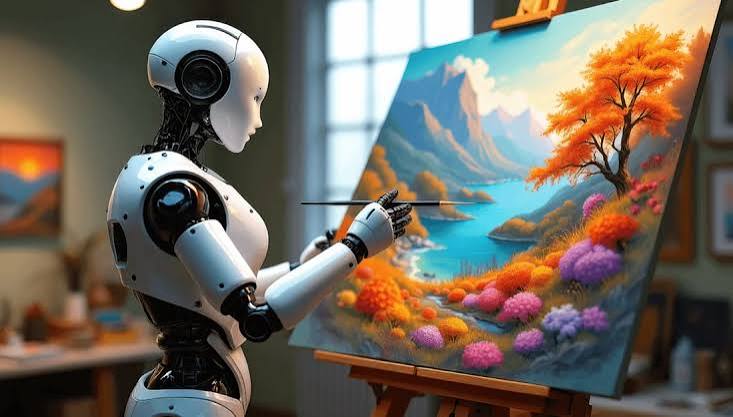
In the blink of an eye, artificial intelligence has moved from the lab to our screens, generating images, text, and videos that are increasingly hard to distinguish from human-made content. But as AI-generated media floods the internet, a curious thing has happened: a distinct visual and textual style has emerged—a kind of ‘AI look’ that we’ve all come to recognize, even if we can’t quite articulate it. This is the AI aesthetic, and it’s more than just a passing trend; it’s a cultural phenomenon that reflects how we create, consume, and value art in the age of algorithms.
From hyper-saturated colors and glossy surfaces to a certain dreamlike distortion, the AI aesthetic is everywhere. It’s in the images that populate your social media feed, the articles you read, and even the way some companies write their marketing copy. Understanding this aesthetic is crucial because it shapes not only what we see but also how we think about creativity and authenticity. In this article, we’ll explore what the AI aesthetic is, why it emerged, and what it means for artists, designers, and everyday consumers.
What Exactly Is the AI Aesthetic?
The AI aesthetic refers to the distinctive visual style and design language that characterizes content generated by artificial intelligence. It’s the look and feel of AI-generated images, text, video, and interactive experiences. While it’s not a single, monolithic style, certain markers have become widely associated with it.
Visual Markers:
– Hyper-saturated colors: AI-generated images often feature vibrant, intense colors that pop off the screen.
– Glossy, smooth surfaces: Everything looks polished, almost plastic-like, with a high-gloss finish.
– Uncanny photorealism: Images can look almost real but with subtle distortions that make them feel off.
– Dreamlike distortions: Objects may morph or blend into each other, creating surreal, fluid scenes.
– Liquid textures: Many AI images have a melting or flowing quality, as if the subjects are made of liquid.
– Soft-focus ethereal glow: A gentle, hazy light often surrounds subjects, giving images a dreamy, otherworldly feel.
Textual Markers:
In writing, the AI aesthetic manifests as a recognizable prose style. It’s fluent and grammatically correct, but often generic and formulaic. Common features include:
– Overused transitions: Words like ‘delve,’ ‘tapestry,’ and ‘it’s important to note’ appear frequently.
– Bullet-point summaries: AI-generated articles often break down complex topics into tidy lists.
– Safe, balanced language: The tone is neutral and avoids controversy, aiming to please everyone.
– Lack of distinctive voice: The writing is competent but forgettable, lacking personality or risk.
Why Did the AI Aesthetic Emerge?
The AI aesthetic didn’t appear out of nowhere. It’s the result of several factors working together.
Technical Constraints:
Diffusion models, the technology behind many AI image generators, produce certain artifacts. For example, they often struggle with hands, creating distorted fingers or extra digits. They also tend to oversharpen textures and create melting backgrounds. These technical quirks became recognizable ‘tells’ that an image was AI-generated.
Training Data Bias:
AI models are trained on vast datasets scraped from the internet. These datasets are dominated by certain styles—glossy stock photography, digital art trends, and popular social media content. As a result, the AI learns to produce a homogenized ‘average’ look, which becomes the default AI aesthetic.
Prompt Culture:
Users quickly discovered that certain keywords reliably produce appealing results. Phrases like ‘cinematic lighting,’ ‘octane render,’ and ‘intricate details’ became staples in prompts. This shared vocabulary led to a consistent style across different users and platforms.
Platform Feedback Loops:
Social media algorithms reward visually striking content. AI-generated images that fit the aesthetic tend to perform well, encouraging creators to optimize for that look. This creates a feedback loop where the AI aesthetic is reinforced and spread.
The AI Aesthetic in Text: The Rise of ‘GPT-isms’
Just as AI has a visual style, it also has a textual one. If you’ve read an article that feels a bit too polished, a bit too generic, you might have encountered the AI aesthetic in writing. Critics have dubbed these telltale phrases ‘GPT-isms’—words and structures that AI language models overuse.
Common GPT-isms include:
– ‘Delve into’
– ‘It’s important to note’
– ‘In today’s fast-paced world’
– ‘A tapestry of’
– ‘Navigating the complexities’
These phrases aren’t inherently bad, but when used repeatedly, they flatten writing into a uniform, pleasant, and forgettable register. This is particularly concerning in fields like journalism and academia, where a distinctive voice is valued.
The Debate: Is the AI Aesthetic a Good Thing?
Opinions on the AI aesthetic are sharply divided. Let’s look at the main perspectives.
The Enthusiast View:
For many artists and creators, the AI aesthetic is a new creative tool. It enables rapid prototyping, democratizes visual creation, and opens up possibilities that were previously impossible. Proponents argue that the ‘AI look’ is just the early stage, similar to how early photography imitated painting before developing its own language. Some artists deliberately embrace the AI aesthetic as a conscious choice, treating it as a genre in its own right—’AI-core’ art.
The Critic View:
Critics see the AI aesthetic as a homogenizing force that flattens human creativity into statistically average output. They worry about cultural amnesia: as AI-generated content floods the internet, it may crowd out human-made work and degrade the visual and textual ecosystem. The aesthetic is often described as ‘soulless’—technically impressive but emotionally hollow, lacking intentionality, imperfection, and human context.
The Designer View:
For designers, the AI aesthetic raises practical questions. How do you integrate AI output into professional work without it looking generic? Some argue that the uniformity is a feature, not a bug—it’s useful for placeholder content, mood boards, and rapid iteration. Others worry about brand dilution: if every company uses AI-generated visuals, how do brands differentiate themselves?
The Future of the AI Aesthetic
As AI technology evolves, the aesthetic will likely change too. Models are getting better at avoiding the telltale artifacts, and users are becoming more sophisticated in their prompting. Some artists are intentionally subverting the AI aesthetic, using it in unexpected ways or combining it with traditional techniques.
The AI aesthetic is not a monolith; it varies by model, platform, and user. It’s a living, evolving phenomenon that reflects our relationship with technology. Whether you love it or hate it, the AI aesthetic is here to stay, and understanding it is key to navigating the creative landscape of the future.
The AI aesthetic is more than just a visual or textual style—it’s a mirror reflecting our collective creativity, technological constraints, and cultural values. As AI becomes increasingly integrated into our creative processes, the aesthetic will continue to evolve, challenging our notions of art, authenticity, and human expression. Whether we embrace it, critique it, or subvert it, the AI aesthetic is a defining feature of our digital age, and its impact will be felt for years to come.
Summary
- The AI aesthetic refers to the distinctive visual and textual style of AI-generated content, characterized by hyper-saturated colors, glossy surfaces, dreamlike distortions, and generic prose.
- It emerged from technical constraints, training data bias, prompt culture, and platform feedback loops.
- In text, the AI aesthetic manifests as ‘GPT-isms’—overused phrases and a generic, safe writing style.
- There is ongoing debate about whether the AI aesthetic is a creative tool or a homogenizing force that degrades human creativity.
- The aesthetic is not monolithic and will continue to evolve as AI technology advances.
FAQ
Q: What is the AI aesthetic?
A: The AI aesthetic is the distinctive visual and textual style associated with AI-generated content, including images, text, and video. It includes markers like hyper-saturated colors, glossy surfaces, dreamlike distortions, and, in writing, generic prose with overused phrases.
Q: Why does AI-generated content have a recognizable style?
A: The style emerges from technical constraints (like distorted hands in images), training data bias (models learn from dominant internet styles), prompt culture (users share effective keywords), and platform feedback loops (algorithms reward visually striking content).
Q: Is the AI aesthetic a bad thing?
A: It depends on your perspective. Some see it as a new creative tool that democratizes art, while others view it as homogenizing and soulless. It’s a subject of active debate in design and cultural criticism.
Q: Can the AI aesthetic be avoided?
A: Yes, to some extent. By using different models, adjusting prompts, and post-processing, creators can produce AI content that deviates from the typical look. Some artists intentionally subvert the aesthetic.
Q: Will the AI aesthetic change over time?
A: Yes, as AI models improve and users become more sophisticated, the aesthetic will evolve. It’s not static; it’s a living phenomenon shaped by technology and culture.
Leave a Reply