Spiders are tiny factories of a remarkable material: silk that’s stronger than steel by weight and stretches like rubber. For decades, scientists have dreamed of using this fiber in medicine for stitches that dissolve on their own, dressings that speed healing, and implants that release drugs over months. The catch? You can’t farm spiders. They’re territorial, cannibalistic, and produce only drops of silk. But biotech is cracking the code, turning spider silk into a real clinical option.
The Biological Marvel of Spider Silk
Spider silk is a protein fiber with a combination of properties that synthetic materials can’t match. Dragline silk the type spiders use for the frame of their webs has a tensile strength comparable to steel on a weight-for-weight basis, yet it can stretch up to 40% before breaking. It’s also biocompatible: human cells happily attach to it, and it doesn’t trigger a strong immune response. Over weeks or months, the body slowly degrades it, which makes it ideal for temporary implants.
But here’s the problem: spiders are solitary predators. They fight and eat each other if kept together. Even if you could farm them, each spider produces only a tiny amount of silk. That’s why, since the 1990s, scientists have been inserting spider silk genes into other organisms bacteria, yeast, plants, even goats to mass-produce the proteins in a lab.
From Spider Glands to Lab Reactors
The most successful approach uses recombinant DNA technology. Researchers take the gene for a spider silk protein, called a spidroin, and insert it into a host organism. The host then churns out the protein, which is purified and spun into fibers. The challenge is that the spider’s natural spinning process is incredibly precise: the liquid protein in the gland turns into a solid fiber through a controlled change in pH, salt concentration, and mechanical force. Replicating that in a lab is like trying to bake a soufflé with a blindfold on. Early attempts produced weak, brittle fibers; it’s taken decades to get close to the real thing.
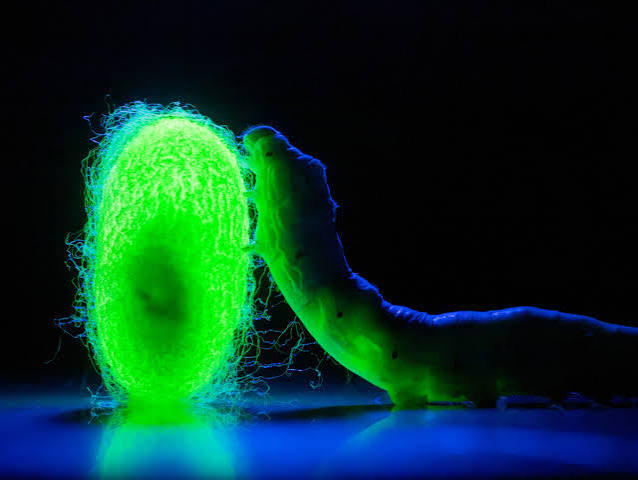
One famous experiment at Utah State University created “spider goats”—goats genetically modified to produce spider silk proteins in their milk. While the idea of milking silk from goats captured the public’s imagination, it’s not the most practical route. Instead, companies like AMSilk in Germany and Kraig Biocraft Laboratories in the US are using bacteria or silkworms. Transgenic silkworms are particularly promising: they already spin silk naturally, so scientists just need to give them the spider gene, and they produce a hybrid fiber that’s nearly as strong as spider silk but in the massive quantities that silkworm farming allows.
Wound Dressings That Heal Faster
The first medical applications to reach the clinic are likely to be wound dressings. Silk can be formed into hydrogels, films, or nanofiber mats that cover a wound and promote healing. Unlike traditional gauze, these dressings can be loaded with antimicrobial agents or growth factors, releasing them directly to the wound site. In animal studies, silk-based dressings have reduced scarring and accelerated tissue regeneration. Because silk is biodegradable, the dressing can be left in place and slowly absorbed, eliminating painful dressing changes.
AMSilk, for instance, has developed a silk-based wound dressing called Silk’n’Spray that’s applied as a liquid and forms a protective film over the wound. It’s already used in veterinary medicine and is in trials for human use. The key advantage is that silk doesn’t cause inflammation like some synthetic materials, and it keeps the wound moist—a known factor in faster healing.
Drug Delivery: A Slow Release That Lasts Months
Another exciting application is drug delivery. Silk proteins can be formed into nanoparticles or microspheres that encapsulate drugs. Because silk degrades slowly, these particles release their payload over weeks or months, depending on how they’re processed. This could transform treatments that require frequent injections, like insulin or certain cancer therapies. Instead of a daily shot, a patient could get a single injection of silk microspheres that releases the drug gradually over a month.
Researchers at Tufts University, led by David Kaplan, have been at the forefront of this. They’ve shown that silk nanoparticles can carry a variety of drugs—from small molecules to large proteins—and that the release rate can be tuned by altering the silk’s crystallinity. This isn’t just theoretical: several of these systems are in preclinical development, with some heading toward clinical trials.
Beyond Dressings and Drugs: Scaffolds for Regeneration
Silk is also being used to build 3D scaffolds for bone and cartilage regeneration. These porous structures support the growth of new tissue, then degrade as the body rebuilds itself. Because silk is strong, it can bear weight during early healing, making it ideal for bone grafts. In one study, silk scaffolds seeded with stem cells were able to repair critical-sized bone defects in rats—a result that has researchers optimistic about human applications.
And then there are sutures. Silk sutures have been used for centuries, but traditional silkworm silk can cause immune reactions. Recombinant spider silk sutures, by contrast, are more biocompatible and can be engineered to dissolve at a specific rate. They’re also incredibly strong, reducing the risk of breakage during surgery.
The Road Ahead: Challenges and Promise
Despite the progress, there are hurdles. The cost of producing recombinant spider silk is still high—far more than synthetic polymers like nylon. Scaling up from lab to industrial production has been slow, and regulatory approval for new biomaterials is rigorous. No recombinant spider silk product has been approved by the FDA yet, though several are in clinical trials. But the potential payoff is enormous. The wound care market alone is worth over $20 billion, and a silk-based product that heals better and reduces scarring could capture a significant share.
Moreover, the environmental angle is appealing: spider silk is biodegradable and made from renewable resources, unlike petroleum-based plastics. As the technology matures and production costs drop, spider silk could become a staple of regenerative medicine.
For now, the dream of a spider-silk supermaterial is becoming a reality—not in a lab of webbed-up superheroes, but in the careful work of genetic engineers and materials scientists. The spiders remain the masters, but we’re finally learning their secrets.
Spider silk isn’t just a curiosity—it’s a biomaterial with real clinical potential. From wound dressings that vanish as they heal you to drug-loaded microspheres that work for months, the applications are moving from the lab to the clinic. The biggest hurdle—producing silk without spiders—has been cracked, and now it’s a matter of scaling up and proving safety. The next decade could see spider silk in your doctor’s office, not just in your garden.
Summary
- Spider silk combines high strength and elasticity, making it ideal for medical use.
- Recombinant DNA technology lets scientists produce spider silk proteins in bacteria, yeast, or silkworms.
- Silk-based wound dressings promote healing and reduce scarring, with some already in veterinary use.
- Silk nanoparticles can deliver drugs slowly over weeks or months, reducing injection frequency.
- Challenges remain in cost and regulation, but clinical trials are underway.
FAQ
Q: Can spider silk really be stronger than steel?
A: Yes, on a weight-for-weight basis. Dragline silk has a tensile strength comparable to steel, but it’s much lighter and more elastic.
Q: How do scientists produce spider silk without spiders?
A: They insert spider silk genes into host organisms like bacteria, yeast, or silkworms. The host then produces the silk proteins, which are harvested and spun into fibers.
Q: What are the main medical applications of spider silk?
A: Wound dressings, drug delivery systems, surgical sutures, and scaffolds for tissue regeneration.
Q: Is spider silk safe for the human body?
A: Yes, it’s biocompatible and biodegradable. It doesn’t cause significant immune responses and breaks down slowly in the body.
Q: When will spider silk products be available to patients?
A: Some veterinary products are already available. Human products are in clinical trials, and the first approvals could come within the next few years.
Leave a Reply