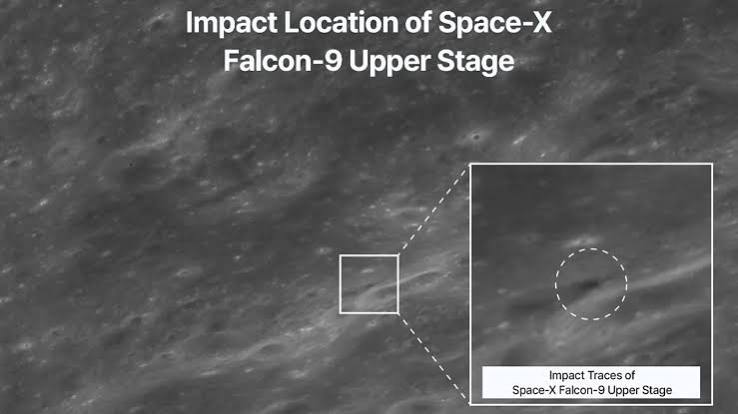
On March 4, 2022, a spent SpaceX Falcon 9 upper stage will slam into the far side of the Moon at roughly 5,700 mph. The impact is a first—no human-made object has ever unintentionally crashed into the lunar surface. But despite the dramatic headlines, you won’t see a fiery explosion from your backyard. Here’s what scientists expect, why it’s happening, and what it means for the future of lunar exploration.
A Seven-Year Journey Ends in a Crash
The rocket stage that’s about to hit the Moon began its journey in February 2015, when it launched NOAA’s DSCOVR satellite toward the Sun-Earth L1 Lagrange point—a gravitational sweet spot about 1.5 million km from Earth. After deploying the satellite, the upper stage was left in a highly elliptical Earth orbit. Over the next seven years, gravitational nudges from the Sun, Earth, and Moon gradually morphed that orbit. Now, the 4-metric-ton chunk of metal is on a collision course with the lunar surface.
Bill Gray, an independent astronomer who tracks near-Earth objects, first flagged the trajectory. His calculations were later confirmed by NASA’s Jet Propulsion Laboratory. The impact is expected at 7:25 a.m. EST (12:25 UTC) on March 4, near the Hertzsprung crater on the Moon’s far side.
The Impact: A 10-20 Meter Crater and a Brief Flash
When the rocket hits, it will be traveling at 2.58 km/s relative to the Moon—about 5,700 mph. The energy released will be equivalent to 2-3 tons of TNT, carving out a crater roughly 10-20 meters (30-65 feet) in diameter. Lunar soil and rock will be ejected, but the event itself will be invisible from Earth because it happens on the far side.
“The impact flash may be visible with telescopes, but it will be brief—a fraction of a second—and faint,” says planetary scientist Dr. Sarah Noble. The flash occurs just over the lunar limb, so some light may scatter into view, but don’t expect to see anything with the naked eye.
Why the Far Side Matters
The far side of the Moon always faces away from Earth, making direct observation impossible. But that doesn’t mean we’ll miss all the science. NASA’s Lunar Reconnaissance Orbiter (LRO) and India’s Chandrayaan-2 orbiter may be able to image the new crater after the impact, though timing and lighting conditions may delay clear views.
This is a rare opportunity to study crater formation under known conditions. “We know the mass and velocity of the impactor, so we can refine our models of how impacts shape the lunar surface,” explains Dr. Noble. That knowledge is vital for future lunar missions, from Artemis landings to permanent bases.
A Wake-Up Call for Space Debris Policy
The Moon isn’t covered by international space debris treaties. This accidental impact is a stark reminder that our space junk extends beyond Earth’s orbit. As missions to the Moon increase—NASA’s Artemis program, commercial landers, and more—the risk of unintended crashes grows.
“We need to think about planetary protection and preserving lunar heritage sites,” says space policy expert Dr. Laura Delgado López. “This event is a catalyst for discussions about responsible deep-space operations.”
Separating Fact from Fiction
Early reports misidentified the rocket as a Chinese booster; that was corrected—it’s definitely a SpaceX Falcon 9 from the DSCOVR mission. Some headlines have hyped the event as a ‘runaway rocket’ on a crash course, but it’s simply a piece of space debris following the laws of orbital mechanics.
What’s not true: you won’t see the impact with your naked eye, and it poses no threat to Earth or the Moon’s habitability. What is true: it’s a scientific gift, a policy wake-up call, and a reminder that our reach into space leaves a lasting footprint.
As the Falcon 9 stage becomes a crater on the Moon’s far side, it marks a quiet milestone in space exploration. For scientists, it’s a natural experiment; for policymakers, it’s a nudge to update rules that haven’t caught up with our ambitions. For the rest of us, it’s a chance to look up—not to see a flash, but to appreciate the vastness of space and the unexpected paths our hardware takes.
Summary
- A SpaceX Falcon 9 upper stage will hit the Moon’s far side on March 4, 2022, at ~5,700 mph, creating a 10-20 meter crater.
- The impact is invisible from Earth with the naked eye, but telescopes may capture a brief flash.
- This is the first known unintentional human-made object impact on the Moon.
- The event offers a unique scientific opportunity to study crater formation and lunar regolith.
- It highlights gaps in space debris regulation and raises questions about future lunar missions.
FAQ
Q: Will I be able to see the impact from Earth?
A: No—the impact occurs on the far side of the Moon, so it’s not visible with the naked eye. A brief impact flash might be observable with telescopes, but it will be faint and short.
Q: Why is the rocket hitting the Moon now?
A: After launching the DSCOVR satellite in 2015, the Falcon 9 upper stage was left in a highly elliptical Earth orbit. Over seven years, gravitational pulls from the Sun, Earth, and Moon altered its path, eventually placing it on a collision course with the Moon.
Q: Is the impact dangerous?
A: No. The rocket is about 4 metric tons, and the impact energy is equivalent to 2-3 tons of TNT—enough to create a crater but not to cause any threat to Earth or the Moon.
Q: Who discovered the collision course?
A: Bill Gray, an independent astronomer, first flagged the trajectory using his Project Pluto software. NASA’s Jet Propulsion Laboratory later confirmed it.
Q: What happens after the impact?
A: Lunar orbiters like NASA’s LRO and India’s Chandrayaan-2 may image the new crater. Scientists will study the crater to refine models of impact processes on the Moon.
Leave a Reply