Tag: Moon

  • The Moon’s Hidden Ocean: Why the Lunar South Pole’s Permanently Shadowed Craters Are the Next Frontier

    The Moon’s Hidden Ocean: Why the Lunar South Pole’s Permanently Shadowed Craters Are the Next Frontier

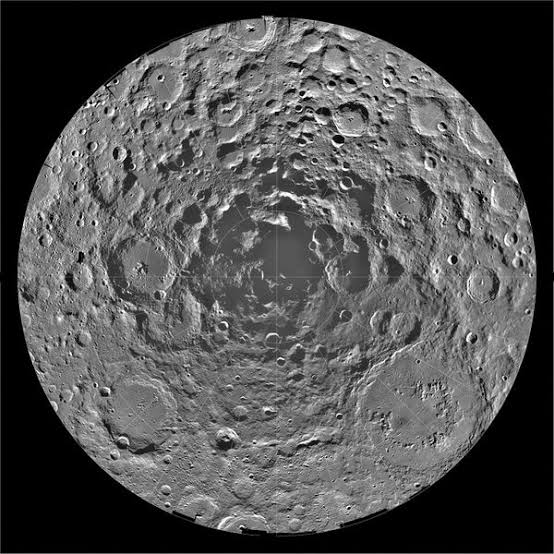
    Imagine a place where the sun never rises, where temperatures plunge to -230°C, and where ice has sat untouched for billions of years. That place is real: it’s the floor of craters at the Moon’s south pole. Scientists call these regions ‘permanently shadowed’ because the Moon’s tilt is so slight that sunlight never reaches the bottom of these deep, ancient impact sites.

    For decades, the Moon was thought to be a dry, barren world. But missions like LCROSS and Lunar Prospector have revealed a different story: hidden reservoirs of water ice, perhaps amounting to billions of metric tons. This isn’t a liquid ocean — it’s a frozen one, locked in the lunar soil. And it’s precisely this ice that makes the south pole the most coveted real estate in the solar system.

    Why does this matter? Because water is the key to sustainable human presence on the Moon. Split it into hydrogen and oxygen, and you have rocket fuel. Drink it, and you have life support. The south pole offers both the ice and near-constant sunlight on nearby ridges for solar power — a combination that could turn the Moon from a destination into a launchpad for Mars. This is why every major space agency is racing to the south pole, and why the next footprints on the Moon will be there, not at the equator.

    The Coldest Shadows in the Solar System

    The Moon’s axis is tilted by only about 1.5 degrees, almost upright. As a result, sunlight grazes the poles at a low angle, leaving the floors of deep craters like Shackleton, Cabeus, and Shoemaker in permanent darkness. These are the Permanently Shadowed Regions, or PSRs. Within them, temperatures never rise above -230°C, cold enough to trap water molecules and other volatile compounds like a deep freeze.

    This isn’t just cold for cold’s sake. That extreme chill acts like a vault, preserving ice that may have arrived via comet impacts or volcanic outgassing billions of years ago. The ice is a time capsule, holding clues to the early solar system and the origin of Earth’s water.

    The Evidence: From Hydrogen Signals to a Deliberate Crash

    Scientists first suspected ice at the poles in 1998, when NASA’s Lunar Prospector detected elevated hydrogen levels. But the smoking gun came in 2009. NASA’s LCROSS mission sent a rocket stage crashing into Cabeus Crater, kicking up a plume of debris. Spectroscopic analysis of that plume found water ice at about 5.6% by mass, along with carbon monoxide, methane, and ammonia. It was a direct, undeniable measurement.

    Later missions confirmed and expanded the picture. In 2018, data from NASA’s Lunar Reconnaissance Orbiter (LRO) showed surface water ice in PSRs. Then, in 2020, SOFIA (a flying infrared observatory) detected molecular water on sunlit lunar surface — though in much smaller amounts than in the shadows. And India’s Chandrayaan-3 lander, which touched down near the south pole in 2023, measured temperatures and found sulfur, adding to the chemical inventory.

    Why ‘Ocean’ Is a Metaphor

    Calling it a hidden ocean might conjure images of liquid water, but the reality is more like a frosty desert. The water exists as ice grains, frost, or possibly buried layers mixed with regolith — the Moon’s dusty soil. Estimates of total ice range from hundreds of millions to billions of metric tons, but no one knows exactly how much is there. Some scientists hypothesize that deeper deposits, meters to tens of meters thick, could be preserved from ancient impacts.

    That uncertainty is part of the excitement. The ice could be patchy and shallow, or it could be a substantial resource. We won’t know until we actually go and dig.

    The Race to the South Pole

    The south pole is not just a scientific curiosity; it’s strategic. NASA’s Artemis III mission, planned for 2026–2027, will land humans near the pole, targeting a site adjacent to a PSR. Meanwhile, robotic missions are paving the way. India’s Chandrayaan-3 made the southernmost landing in 2023. Japan’s SLIM lander demonstrated precision landing in 2024. Russia’s Luna-25 tried and failed in 2023. And commercial missions like Intuitive Machines’ IM-2 are planning to drill for ice as soon as 2025.

    But it’s not just about landing. The south pole offers something unique: peaks of eternal light. These are ridges that catch near-constant sunlight, ideal for solar power generation. So you have shadowed craters holding ice and sunlit peaks generating energy — a perfect pairing for a sustainable base.

    The Scientific Stakes: A Time Capsule

    Why study this ice? Because it’s a record of the past. The isotopic signatures in the ice can tell us whether Earth’s water came from comets, asteroids, or solar wind interactions. By understanding the distribution of ice on the Moon, we can also model how volatiles migrate on airless bodies like Mercury and Ceres. And from an astrobiology perspective, PSRs are among the most extreme environments in the solar system — studying them helps us understand the limits of life and how it might survive on other worlds.

    The Resource Stakes: Fuel for Mars

    Practically, water ice is the key to in-situ resource utilization, or ISRU. Split water into hydrogen and oxygen via electrolysis: oxygen for astronauts to breathe, hydrogen for rocket fuel. That turns the Moon into a refueling station. Instead of hauling fuel from Earth, we could manufacture it on the lunar surface. This is considered essential for a sustainable lunar base and for missions to Mars.

    The Geopolitical and Legal Dimension

    The south pole is also a geopolitical flashpoint. The Outer Space Treaty of 1967 prohibits national appropriation of celestial bodies, but it’s vague on resource extraction. The Artemis Accords, signed by over 40 nations, provide a framework for lunar resource use, but China and Russia have not signed. China’s Chang’e-7 and Chang’e-8 missions, planned for 2026–2029, also target the south pole. The race isn’t just scientific; it’s about who gets to establish norms and presence first.

    The Road Ahead: What’s Next?

    The future of lunar exploration will be defined by the south pole. NASA’s VIPER rover, designed to map ice, faced cancellation in 2024, but there’s political pressure to revive it. Other missions are in the pipeline. The challenges are immense: extreme cold, rough terrain, and communication blackouts in the shadows. But the potential rewards — scientific, economic, and strategic — are equally immense.

    In the coming years, we’ll see landers, rovers, and eventually humans working in these frozen shadows. The ‘hidden ocean’ won’t stay hidden for long.

    The permanently shadowed craters at the lunar south pole are more than just cold, dark holes. They are a treasure trove of water ice that could sustain human exploration and reshape our understanding of the solar system. As missions like Artemis and Chandrayaan-3 push the boundaries, the Moon’s hidden ocean is set to become the next great frontier. The ice is there, waiting. All we have to do is go get it.

    Summary

    • Permanently Shadowed Regions (PSRs) are areas near the lunar south pole where sunlight never reaches, with temperatures below -230°C.
    • Evidence for water ice includes 1998 hydrogen detections, the 2009 LCROSS impact plume (5.6% water), and 2018 LRO surface ice observations.
    • The water is not a liquid ocean but ice grains, frost, or buried layers mixed with regolith, totaling hundreds of millions to billions of metric tons.
    • The south pole also has ‘peaks of eternal light’ for solar power, making it ideal for a sustainable lunar base and resource extraction.
    • Multiple missions are racing to the south pole: Artemis III (2026–2027), Chandrayaan-3 (2023), SLIM (2024), and commercial efforts like IM-2 (2025).

    FAQ

    Q: What exactly is a permanently shadowed region (PSR)?
    A: A PSR is an area on the Moon where sunlight never directly reaches because of the Moon’s very low axial tilt. The floors of deep craters near the poles are permanently in shadow, making them extremely cold and capable of trapping water ice and other volatile compounds.

    Q: How do we know there’s water ice in these craters?
    A: We have direct evidence from several missions. In 1998, Lunar Prospector detected elevated hydrogen. In 2009, the LCROSS mission crashed a rocket into Cabeus Crater and analyzed the plume, finding water ice at about 5.6% by mass. Later, LRO in 2018 confirmed surface water ice, and SOFIA in 2020 found molecular water on sunlit areas, though in smaller amounts.

    Q: Is the ‘hidden ocean’ actually a liquid ocean?
    A: No. It’s a metaphor. The water exists as ice grains, frost, or possibly buried ice layers mixed with lunar soil. There’s no liquid water on the Moon’s surface because the vacuum and extreme cold make it impossible.

    Q: Why is the south pole more important than the equator?
    A: The equator, where Apollo landed, is dry and geologically simple. The south pole has two unique resources: water ice in permanently shadowed craters and nearly constant sunlight on high ridges for solar power. This combination is ideal for a sustainable base and for producing rocket fuel via water electrolysis.

    Q: What missions are heading to the south pole?
    A: NASA’s Artemis III (2026–2027) will land humans near the pole. Robotic missions include India’s Chandrayaan-3 (landed 2023), Japan’s SLIM (2024), and commercial missions like Intuitive Machines’ IM-2 (planned 2025). China’s Chang’e-7 and Chang’e-8 are also targeting the south pole in the late 2020s.

  • The Great Moon Hoax of 1835: How a Newspaper Faked Lunar Life and Fooled a Nation

    The Great Moon Hoax of 1835: How a Newspaper Faked Lunar Life and Fooled a Nation

    In August 1835, the New York Sun published a series of articles claiming that the famous astronomer Sir John Herschel had discovered life on the Moon using a powerful new telescope. The articles described trees, oceans, and strange animals, including bison-like creatures and a ‘man-bat’ with bat-like wings. The story was a complete fabrication, but it fooled many readers and boosted the paper’s circulation from 8,000 to nearly 20,000 copies per day, making it the best-selling newspaper in the world at the time.

    This episode is a landmark in the history of journalism, illustrating the power of sensationalism and the tension between circulation and truth. It also reflects the scientific and cultural context of the 1830s, when the Moon was a subject of genuine curiosity and the idea of lunar life was not considered absurd by many. The hoax was revealed as a fabrication within two weeks, but its legacy endures as a cautionary tale about fake news and the importance of verification.

    The Penny Press and the Hunger for Sensation

    The 1830s saw the rise of the ‘penny press’—cheap, mass-circulation newspapers aimed at working-class readers. The New York Sun, founded in 1833 by Benjamin Day, was a pioneer of this model, selling papers for one cent instead of the traditional six cents. This created intense competition for readership, and editors quickly learned that sensational stories sold papers. The Moon hoax was a product of this environment, where the line between news and entertainment was often blurred.

    The Hoax Unfolds: A Six-Part Series

    The series ran from August 21 to August 31, 1835, as a supplement to the regular edition. It claimed that Sir John Herschel, a real and respected astronomer, had made incredible discoveries using a telescope with a 24-foot lens and magnification of 42,000x—technology far beyond anything that existed. The articles described:

    • Trees, oceans, and vegetation on the lunar surface
    • Strange animals, including bison-like creatures and a ‘man-bat’ (a humanoid creature with bat-like wings)
    • Blue-tinted, goat-like unicorns
    • A temple made of polished sapphire
    • The claim that Herschel had named the discovery the ‘Vespertilio-homo’ (bat-man)

    These details were presented with scientific precision, complete with technical descriptions and references to Herschel’s real work. The fact that Herschel was in South Africa at the time made it difficult for him to respond quickly, adding to the hoax’s credibility.

    The Scientific and Cultural Context

    Why did so many people believe the story? In the 1830s, the ‘plurality of worlds’ theory—that other celestial bodies might harbor life—was widely discussed. Some respected scientists, including William Herschel (John’s father), had speculated about life on the Moon. The concept of ‘selenites’ (lunar inhabitants) had appeared in earlier speculative works, such as those by the German astronomer Johann Schröter. So the idea of lunar life was not absurd to many readers.

    The hoax also touched on theological questions: If life existed on the Moon, did it have souls? Were they descended from Adam? These questions were debated in the press, and some religious publications initially took the story seriously, while others condemned it as blasphemous.

    The Author: Richard Adams Locke

    Richard Adams Locke, a British-born journalist and editor at the Sun, is widely credited as the author of the hoax. Some historians argue that Locke intended the story as a satire of contemporary scientific speculation and religious credulity, not a malicious deception. His targets may have included the astronomer John Herschel and the popular press’s tendency to sensationalize science. The Sun never formally retracted the story; when the hoax was exposed, the paper’s response was muted and defensive.

    The Public’s Reaction: Gullibility or Skepticism?

    Contemporary accounts suggest many readers were genuinely fooled, but some historians argue that the public was more skeptical than later retellings suggest. The hoax was exposed relatively quickly—within about two weeks—partly because readers and rival papers began questioning the details. Some evidence suggests that many readers understood it as entertainment or satire, not literal truth. Still, the circulation jump from 8,000 to nearly 20,000 copies per day indicates that the story captured the public’s imagination.

    The Scientific Community’s Response

    Real astronomers were initially puzzled and then outraged. Some wrote letters to other papers denouncing the claims. The hoax damaged public trust in scientific reporting, though it also sparked genuine public interest in astronomy. Some scientists used the hoax as a cautionary tale about the need for rigorous verification in scientific communication.

    The Herschel Family’s Perspective

    Sir John Herschel reportedly found the hoax amusing when he learned of it, though he was initially annoyed. His reputation was not permanently damaged; he continued his work and later became a respected figure in British science. The hoax has been called ‘The Great Moon Hoax’ only in retrospect; at the time it was sometimes called ‘The Lunar Hoax’ or ‘The Astronomical Hoax.’

    Legacy and Lessons

    The Great Moon Hoax remains a powerful example of ‘fake news’ long before the term existed. It highlights the ethical responsibilities of journalists and the dangers of prioritizing circulation over truth. It also shows how scientific ignorance and cultural beliefs can make people vulnerable to misinformation. In an era of rapid technological change and intense media competition, the lessons of 1835 are still relevant today.

    The Great Moon Hoax of 1835 was a pivotal moment in the history of journalism, demonstrating both the power of the press and its capacity for deception. While the hoax was short-lived, its impact on public trust and its role as a cautionary tale continue to resonate. As we navigate our own era of misinformation, the story of the New York Sun and its fabricated lunar life serves as a reminder of the importance of critical thinking and responsible reporting.

    Summary

    • In August 1835, the New York Sun published a six-part series falsely claiming that astronomer Sir John Herschel had discovered life on the Moon.
    • The hoax described bizarre creatures like man-bats and unicorns, and boosted the paper’s circulation from 8,000 to nearly 20,000 copies per day.
    • The story was likely written by Richard Adams Locke, possibly as a satire of scientific speculation and credulity.
    • The hoax was exposed within two weeks, but it damaged public trust in scientific reporting and remains a classic example of fake news.
    • The episode highlights the tension between sensationalism and truth in journalism, a lesson still relevant today.

    FAQ

    Q: Was the Great Moon Hoax a deliberate deception?
    A: Yes, the articles were fabricated, but some historians argue that the author, Richard Adams Locke, intended it as a satire of scientific speculation and religious credulity, not a malicious lie.

    Q: How did the public react when the hoax was revealed?
    A: Many readers were initially fooled, but within two weeks, rival papers and skeptical readers began questioning the details, leading to exposure. Some readers may have understood it as entertainment from the start.

    Q: Did the hoax damage Sir John Herschel’s reputation?
    A: No, Herschel reportedly found it amusing and his reputation was not permanently harmed. He continued his scientific work and remained respected.

    Q: Why did so many people believe the story?
    A: The idea of lunar life was not considered absurd in the 1830s, and Herschel’s real work in South Africa added credibility. The detailed, scientific tone of the articles also helped.

    Q: What is the legacy of the Great Moon Hoax?
    A: It is a landmark example of fake news and a cautionary tale about the dangers of sensationalism in journalism. It also sparked public interest in astronomy and highlighted the need for verification in science reporting.

  • A SpaceX Rocket Will Hit the Moon at 5,700 mph: Here’s What You Can Actually See

    A SpaceX Rocket Will Hit the Moon at 5,700 mph: Here’s What You Can Actually See

    On March 4, 2022, a spent SpaceX Falcon 9 upper stage will slam into the far side of the Moon at roughly 5,700 mph. The impact is a first—no human-made object has ever unintentionally crashed into the lunar surface. But despite the dramatic headlines, you won’t see a fiery explosion from your backyard. Here’s what scientists expect, why it’s happening, and what it means for the future of lunar exploration.

    A Seven-Year Journey Ends in a Crash

    The rocket stage that’s about to hit the Moon began its journey in February 2015, when it launched NOAA’s DSCOVR satellite toward the Sun-Earth L1 Lagrange point—a gravitational sweet spot about 1.5 million km from Earth. After deploying the satellite, the upper stage was left in a highly elliptical Earth orbit. Over the next seven years, gravitational nudges from the Sun, Earth, and Moon gradually morphed that orbit. Now, the 4-metric-ton chunk of metal is on a collision course with the lunar surface.

    Bill Gray, an independent astronomer who tracks near-Earth objects, first flagged the trajectory. His calculations were later confirmed by NASA’s Jet Propulsion Laboratory. The impact is expected at 7:25 a.m. EST (12:25 UTC) on March 4, near the Hertzsprung crater on the Moon’s far side.

    The Impact: A 10-20 Meter Crater and a Brief Flash

    When the rocket hits, it will be traveling at 2.58 km/s relative to the Moon—about 5,700 mph. The energy released will be equivalent to 2-3 tons of TNT, carving out a crater roughly 10-20 meters (30-65 feet) in diameter. Lunar soil and rock will be ejected, but the event itself will be invisible from Earth because it happens on the far side.

    “The impact flash may be visible with telescopes, but it will be brief—a fraction of a second—and faint,” says planetary scientist Dr. Sarah Noble. The flash occurs just over the lunar limb, so some light may scatter into view, but don’t expect to see anything with the naked eye.

    Why the Far Side Matters

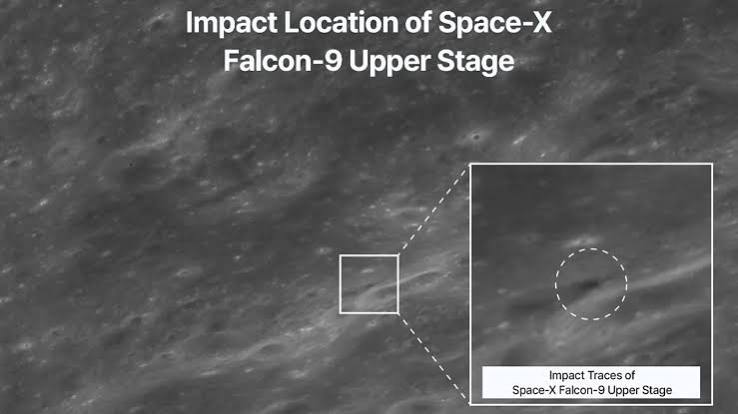
    The far side of the Moon always faces away from Earth, making direct observation impossible. But that doesn’t mean we’ll miss all the science. NASA’s Lunar Reconnaissance Orbiter (LRO) and India’s Chandrayaan-2 orbiter may be able to image the new crater after the impact, though timing and lighting conditions may delay clear views.

    This is a rare opportunity to study crater formation under known conditions. “We know the mass and velocity of the impactor, so we can refine our models of how impacts shape the lunar surface,” explains Dr. Noble. That knowledge is vital for future lunar missions, from Artemis landings to permanent bases.

    A Wake-Up Call for Space Debris Policy

    The Moon isn’t covered by international space debris treaties. This accidental impact is a stark reminder that our space junk extends beyond Earth’s orbit. As missions to the Moon increase—NASA’s Artemis program, commercial landers, and more—the risk of unintended crashes grows.

    “We need to think about planetary protection and preserving lunar heritage sites,” says space policy expert Dr. Laura Delgado López. “This event is a catalyst for discussions about responsible deep-space operations.”

    Separating Fact from Fiction

    Early reports misidentified the rocket as a Chinese booster; that was corrected—it’s definitely a SpaceX Falcon 9 from the DSCOVR mission. Some headlines have hyped the event as a ‘runaway rocket’ on a crash course, but it’s simply a piece of space debris following the laws of orbital mechanics.

    What’s not true: you won’t see the impact with your naked eye, and it poses no threat to Earth or the Moon’s habitability. What is true: it’s a scientific gift, a policy wake-up call, and a reminder that our reach into space leaves a lasting footprint.

    As the Falcon 9 stage becomes a crater on the Moon’s far side, it marks a quiet milestone in space exploration. For scientists, it’s a natural experiment; for policymakers, it’s a nudge to update rules that haven’t caught up with our ambitions. For the rest of us, it’s a chance to look up—not to see a flash, but to appreciate the vastness of space and the unexpected paths our hardware takes.

    Summary

    • A SpaceX Falcon 9 upper stage will hit the Moon’s far side on March 4, 2022, at ~5,700 mph, creating a 10-20 meter crater.
    • The impact is invisible from Earth with the naked eye, but telescopes may capture a brief flash.
    • This is the first known unintentional human-made object impact on the Moon.
    • The event offers a unique scientific opportunity to study crater formation and lunar regolith.
    • It highlights gaps in space debris regulation and raises questions about future lunar missions.

    FAQ

    Q: Will I be able to see the impact from Earth?
    A: No—the impact occurs on the far side of the Moon, so it’s not visible with the naked eye. A brief impact flash might be observable with telescopes, but it will be faint and short.

    Q: Why is the rocket hitting the Moon now?
    A: After launching the DSCOVR satellite in 2015, the Falcon 9 upper stage was left in a highly elliptical Earth orbit. Over seven years, gravitational pulls from the Sun, Earth, and Moon altered its path, eventually placing it on a collision course with the Moon.

    Q: Is the impact dangerous?
    A: No. The rocket is about 4 metric tons, and the impact energy is equivalent to 2-3 tons of TNT—enough to create a crater but not to cause any threat to Earth or the Moon.

    Q: Who discovered the collision course?
    A: Bill Gray, an independent astronomer, first flagged the trajectory using his Project Pluto software. NASA’s Jet Propulsion Laboratory later confirmed it.

    Q: What happens after the impact?
    A: Lunar orbiters like NASA’s LRO and India’s Chandrayaan-2 may image the new crater. Scientists will study the crater to refine models of impact processes on the Moon.