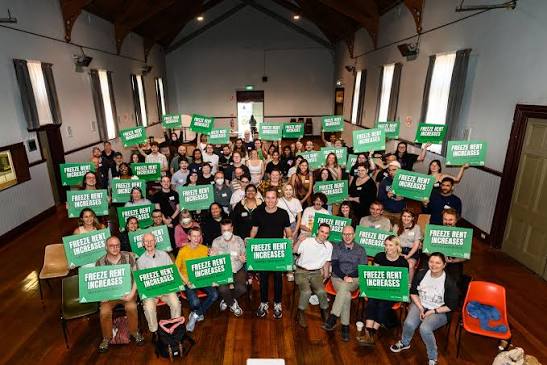
For decades, Australian politics was a simple story of class and suburbia. Homeownership was the great Australian dream, and the major parties knew exactly who they were courting: the aspirational mortgage-belt voters. But a quiet demographic shift has been underway, and a new study reveals it has fundamentally redrawn the electoral map. Renters now make up roughly a third of Australian households, and they are voting in a bloc that is reshaping party strategies from Canberra to the state capitals.
The Study That Quantified the Divide
A 2025 academic study, analysing over 25 years of Australian Election Study (AES) data from 1996 to 2022, has confirmed what many suspected: housing tenure has become a powerful predictor of how Australians vote. Even after controlling for income, age, education, and geography, renters are measurably more likely to vote for Labor or the Greens than otherwise-similar homeowners. The gap is not trivial—renters are roughly 10 to 15 percentage points more likely to support progressive parties. That is a swing larger than the urban–rural divide or union membership, and it is growing.
The Housing Class Divide
The study’s authors argue that this “renter divide” is now as significant as the traditional class divide that structured Australian politics for a century. Occupation used to be the best clue to a person’s vote; now, housing tenure—whether you own a home or rent—offers a sharper lens. This is because renters and owners have fundamentally different material interests. Renters benefit from policies that expand housing supply, regulate rents, and limit negative gearing. Homeowners, particularly those with investment properties, have a stake in capital growth and tax concessions. As one political scientist put it, Australia has developed “housing classes” with conflicting agendas.
The trend is not unique to Australia. In the United Kingdom and the United States, “generation rent” has already shifted voting patterns. But the Australian case is striking because of the speed of the change. In the mid-1990s, the voting gap between renters and owners was modest—perhaps a few percentage points. Today, it is a chasm.
Who Are the Renter Voters?
Renters are not a monolithic group. They include young professionals in Sydney and Melbourne, families in outer suburbs struggling with rising rents, and older Australians who never managed to buy. The study’s analysis shows that age alone does not explain the trend: even older renters lean more progressive than older owners. The effect is consistent across age cohorts, which suggests it is about the experience of renting, not just the stage of life.
Geographically, renters are concentrated in inner-city electorates like Sydney’s Grayndler, Melbourne’s Melbourne, and Brisbane’s Griffith—already Labor or Greens strongholds. But the study claims that tenure adds explanatory power beyond geography. In other words, a renter in a mortgage-belt seat is still more likely to vote progressive than a homeowner in the same electorate.
The Policy Feedback Loop
This shift is both a cause and a consequence of policy changes. As renters have become more numerous and politically active, parties have responded. The federal Albanese government’s “Help to Buy” scheme and the Housing Australia Future Fund (HAFF) were direct attempts to court renter voters. State-level reforms—such as ending “no-grounds” evictions in Victoria and NSW, and introducing rent caps in the ACT—reflect the growing political weight of renters.
Political scientists point to a feedback loop: as parties adopt renter-friendly policies, they mobilise renters further, which in turn pushes parties to do more. This could accelerate the realignment. Yet there is a countervailing force. Homeowners still turn out to vote in higher numbers, are older, and are more engaged in politics. They remain a formidable bloc, and parties will not abandon them lightly.
The Electoral Math
With renters comprising about one-third of households, their voting power is undeniable. In a tight election, a 10-point swing among renters could decide dozens of seats. The 2022 federal election already showed housing affordability ranking in the top three voter concerns, and the teal independents built their campaigns on it. The new study suggests this is not a passing fad but a structural change.
For the Liberal–National Coalition, historically the party of homeowners, this presents a dilemma. Their traditional base is shrinking, and their housing policies—focused on supply and tax reform—have not resonated with renters. For Labor and the Greens, the opportunity is clear, but so is the risk of over-promising. The next federal election will be a test of how well parties can navigate the new housing class divide.
The renter–owner divide is not just a statistical curiosity; it is a fundamental shift in Australian democracy. As the study shows, housing tenure has joined income and class as a key cleavage in our politics. The parties that understand this—and craft policies that speak to the lived experience of renters—will be the ones that win the future.
Summary
- Renters now make up ~33% of Australian households, up from ~25% in the mid-1990s.
- A 2025 study of 25 years of voting data finds renters are 10–15 points more likely to vote Labor/Greens.
- The tenure effect persists even after controlling for income, age, education, and geography.
- Housing policy has become a decisive electoral issue, driving reforms at federal and state levels.
- This “housing class” divide may be as important as the traditional class divide in Australian politics.
FAQ
Q: How many Australian households are renters?
A: Roughly one-third (31–33%) of households, up from about 25–27% in the mid-1990s.
Q: What did the study find about the voting gap between renters and homeowners?
A: Renters are about 10–15 percentage points more likely to vote for Labor or the Greens, even after controlling for other factors like income and age.
Q: Does the renter effect hold for older renters?
A: Yes, the study found the tenure effect persists within age cohorts—older renters also lean more progressive than older owners.
Q: How have parties responded to this shift?
A: The federal government introduced the Housing Australia Future Fund and “Help to Buy” schemes, while states have enacted rental reforms like banning no-grounds evictions and introducing rent caps.
Q: Is this trend unique to Australia?
A: No, similar shifts have been observed in the UK and US, but the Australian case is notable for its speed and the size of the divide.
Leave a Reply