Tag: elections

  • Crooked Media Revives FiveThirtyEight Politics Podcast as ‘Still Counting’ Ahead of 2026 Midterms

    Crooked Media Revives FiveThirtyEight Politics Podcast as ‘Still Counting’ Ahead of 2026 Midterms

    Crooked Media has acquired the rights to bring back the beloved ‘FiveThirtyEight Politics’ podcast, reuniting hosts Nate Silver, Clare Malone, and Galen Druke under a new name: ‘Still Counting.’ The relaunch, scheduled for next month, arrives just as the 2026 midterm election cycle heats up, positioning the show as a data-driven counterpoint to partisan commentary.

    The original podcast, which ran from 2016 until Disney shuttered FiveThirtyEight in April 2023, built a loyal following for its rigorous polling analysis and election forecasting. Its revival marks a strategic move by Crooked Media to capture an audience hungry for quantitative political coverage, while giving Silver a chance to reclaim his brand after a messy corporate exit.

    A Phoenix from the Ashes

    The revival of ‘FiveThirtyEight Politics’ as ‘Still Counting’ is a striking turnaround for a show that seemed permanently shelved when Disney/ABC News cut FiveThirtyEight in April 2023, part of broader cost-cutting that included layoffs across the company. Nate Silver, who founded FiveThirtyEight in 2008 and gained fame for correctly predicting 49 of 50 states in the 2008 presidential election, left the organization amid public criticism of its corporate structure.

    Now, under Crooked Media’s umbrella, Silver, Malone, and Druke are back together. The new name plays on the election-night phrase ‘still counting votes,’ signaling resilience and persistence. For Silver, the deal represents a vindication: he can now operate with editorial independence, free from the constraints he blamed for stifling his work at Disney.

    The Data vs. Punditry Divide

    ‘Still Counting’ will enter a crowded podcast market, competing with heavyweights like ‘The Daily,’ ‘Pod Save America,’ and ‘The Ezra Klein Show.’ But its niche is distinct: rigorous, quantitative analysis of polls, elections, and political strategy. In an era of widespread polling skepticism and misinformation, the show’s data-centric approach could resonate with listeners seeking grounded, evidence-based reporting.

    However, skeptics may question whether Silver’s models have lost credibility after misses in the 2016 and 2020 presidential elections. The show will need to address these critiques head-on, perhaps by evolving its methodology or being more transparent about uncertainty. Whether it meaningfully innovates or recycles old formats remains to be seen.

    Crooked Media’s Progressive Alignment

    Crooked Media, founded in 2017 by former Obama staffers Jon Favreau, Jon Lovett, and Tommy Vietor, is known for progressive political commentary. Its acquisition of a ‘neutral’ data brand raises questions about perceived bias. Will ‘Still Counting’ maintain FiveThirtyEight’s nonpartisan reputation, or will it lean left to fit Crooked’s ecosystem?

    Silver himself has been critical of both parties and has clashed with progressive activists, making his fit within Crooked Media a point of curiosity. The company’s leadership has emphasized editorial independence, but listeners will watch closely for any signs of political slant.

    The Business of Podcast Revivals

    The deal reflects a broader trend in podcasting: media companies acquiring proven intellectual property with built-in audiences. As election season approaches, political content becomes increasingly valuable for ad revenue and subscriber growth. Crooked Media’s strategic timing—relaunching ahead of the 2026 midterms—allows the show to capitalize on heightened interest in primaries, polling trends, and House/Senate races.

    The competitive landscape is fierce, but ‘Still Counting’ brings a recognizable name and a dedicated fanbase from the original show’s run. If the hosts can recapture their chemistry and deliver the same level of analysis, the show has strong potential to carve out a loyal audience in the crowded political podcast space.

    What to Expect Next Month

    With the relaunch scheduled for next month, details on the show’s format are still emerging. It will be a weekly podcast, a departure from the more frequent episodes of the original. The hosts are expected to cover the 2026 midterm cycle in depth, leveraging their combined expertise in polling, data analysis, and political strategy.

    For fans of the original show, the return of Silver, Malone, and Druke is a nostalgic moment. For Crooked Media, it’s a strategic expansion into the data-driven political niche. For the broader media landscape, it’s a test of whether a revived brand can thrive outside its original corporate home.

    The revival of ‘FiveThirtyEight Politics’ as ‘Still Counting’ is a bold move that reunites a beloved team and brings data-driven analysis back to the podcasting forefront. As the 2026 midterms approach, the show’s success will depend on its ability to retain its nonpartisan credibility while adapting to a new home and a changing media environment.

    Summary

    • Crooked Media has acquired the rights to revive the ‘FiveThirtyEight Politics’ podcast, renaming it ‘Still Counting.’
    • The show will relaunch next month, ahead of the 2026 midterm elections, as a weekly podcast.
    • Original hosts Nate Silver, Clare Malone, and Galen Druke will reunite for the project.
    • The revival raises questions about data journalism credibility, progressive media bias, and the business of podcast IP.
    • The show will compete with major political podcasts while aiming to fill a niche for quantitative analysis.

    FAQ

    Q: When will the ‘Still Counting’ podcast relaunch?
    A: The relaunch is scheduled for next month, though an exact date has not been announced.

    Q: Who are the hosts of the revived podcast?
    A: Nate Silver, Clare Malone, and Galen Druke will reunite as hosts.

    Q: Why was the original ‘FiveThirtyEight Politics’ podcast canceled?
    A: Disney/ABC News shut down FiveThirtyEight in April 2023 as part of broader cost-cutting measures and layoffs.

    Q: How will ‘Still Counting’ differ from the original show?
    A: It will be a weekly podcast, and the new name reflects a focus on resilience and ongoing vote counting. The format will likely maintain the data-driven approach of the original.

    Q: Is Crooked Media a progressive outlet, and could that affect the show’s neutrality?
    A: Crooked Media is known for progressive commentary, but the company has stated it will respect editorial independence. Whether the show maintains nonpartisan analysis remains to be seen.
  • Renters Are Now a Political Force That Australian Parties Can’t Ignore

    Renters Are Now a Political Force That Australian Parties Can’t Ignore

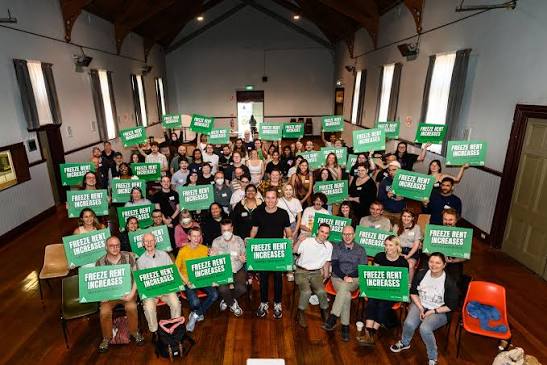
    For decades, Australian politics was a simple story of class and suburbia. Homeownership was the great Australian dream, and the major parties knew exactly who they were courting: the aspirational mortgage-belt voters. But a quiet demographic shift has been underway, and a new study reveals it has fundamentally redrawn the electoral map. Renters now make up roughly a third of Australian households, and they are voting in a bloc that is reshaping party strategies from Canberra to the state capitals.

    The Study That Quantified the Divide

    A 2025 academic study, analysing over 25 years of Australian Election Study (AES) data from 1996 to 2022, has confirmed what many suspected: housing tenure has become a powerful predictor of how Australians vote. Even after controlling for income, age, education, and geography, renters are measurably more likely to vote for Labor or the Greens than otherwise-similar homeowners. The gap is not trivial—renters are roughly 10 to 15 percentage points more likely to support progressive parties. That is a swing larger than the urban–rural divide or union membership, and it is growing.

    The Housing Class Divide

    The study’s authors argue that this “renter divide” is now as significant as the traditional class divide that structured Australian politics for a century. Occupation used to be the best clue to a person’s vote; now, housing tenure—whether you own a home or rent—offers a sharper lens. This is because renters and owners have fundamentally different material interests. Renters benefit from policies that expand housing supply, regulate rents, and limit negative gearing. Homeowners, particularly those with investment properties, have a stake in capital growth and tax concessions. As one political scientist put it, Australia has developed “housing classes” with conflicting agendas.

    The trend is not unique to Australia. In the United Kingdom and the United States, “generation rent” has already shifted voting patterns. But the Australian case is striking because of the speed of the change. In the mid-1990s, the voting gap between renters and owners was modest—perhaps a few percentage points. Today, it is a chasm.

    Who Are the Renter Voters?

    Renters are not a monolithic group. They include young professionals in Sydney and Melbourne, families in outer suburbs struggling with rising rents, and older Australians who never managed to buy. The study’s analysis shows that age alone does not explain the trend: even older renters lean more progressive than older owners. The effect is consistent across age cohorts, which suggests it is about the experience of renting, not just the stage of life.

    Geographically, renters are concentrated in inner-city electorates like Sydney’s Grayndler, Melbourne’s Melbourne, and Brisbane’s Griffith—already Labor or Greens strongholds. But the study claims that tenure adds explanatory power beyond geography. In other words, a renter in a mortgage-belt seat is still more likely to vote progressive than a homeowner in the same electorate.

    The Policy Feedback Loop

    This shift is both a cause and a consequence of policy changes. As renters have become more numerous and politically active, parties have responded. The federal Albanese government’s “Help to Buy” scheme and the Housing Australia Future Fund (HAFF) were direct attempts to court renter voters. State-level reforms—such as ending “no-grounds” evictions in Victoria and NSW, and introducing rent caps in the ACT—reflect the growing political weight of renters.

    Political scientists point to a feedback loop: as parties adopt renter-friendly policies, they mobilise renters further, which in turn pushes parties to do more. This could accelerate the realignment. Yet there is a countervailing force. Homeowners still turn out to vote in higher numbers, are older, and are more engaged in politics. They remain a formidable bloc, and parties will not abandon them lightly.

    The Electoral Math

    With renters comprising about one-third of households, their voting power is undeniable. In a tight election, a 10-point swing among renters could decide dozens of seats. The 2022 federal election already showed housing affordability ranking in the top three voter concerns, and the teal independents built their campaigns on it. The new study suggests this is not a passing fad but a structural change.

    For the Liberal–National Coalition, historically the party of homeowners, this presents a dilemma. Their traditional base is shrinking, and their housing policies—focused on supply and tax reform—have not resonated with renters. For Labor and the Greens, the opportunity is clear, but so is the risk of over-promising. The next federal election will be a test of how well parties can navigate the new housing class divide.

    The renter–owner divide is not just a statistical curiosity; it is a fundamental shift in Australian democracy. As the study shows, housing tenure has joined income and class as a key cleavage in our politics. The parties that understand this—and craft policies that speak to the lived experience of renters—will be the ones that win the future.

    Summary

    • Renters now make up ~33% of Australian households, up from ~25% in the mid-1990s.
    • A 2025 study of 25 years of voting data finds renters are 10–15 points more likely to vote Labor/Greens.
    • The tenure effect persists even after controlling for income, age, education, and geography.
    • Housing policy has become a decisive electoral issue, driving reforms at federal and state levels.
    • This “housing class” divide may be as important as the traditional class divide in Australian politics.

    FAQ

    Q: How many Australian households are renters?
    A: Roughly one-third (31–33%) of households, up from about 25–27% in the mid-1990s.

    Q: What did the study find about the voting gap between renters and homeowners?
    A: Renters are about 10–15 percentage points more likely to vote for Labor or the Greens, even after controlling for other factors like income and age.

    Q: Does the renter effect hold for older renters?
    A: Yes, the study found the tenure effect persists within age cohorts—older renters also lean more progressive than older owners.

    Q: How have parties responded to this shift?
    A: The federal government introduced the Housing Australia Future Fund and “Help to Buy” schemes, while states have enacted rental reforms like banning no-grounds evictions and introducing rent caps.

    Q: Is this trend unique to Australia?
    A: No, similar shifts have been observed in the UK and US, but the Australian case is notable for its speed and the size of the divide.