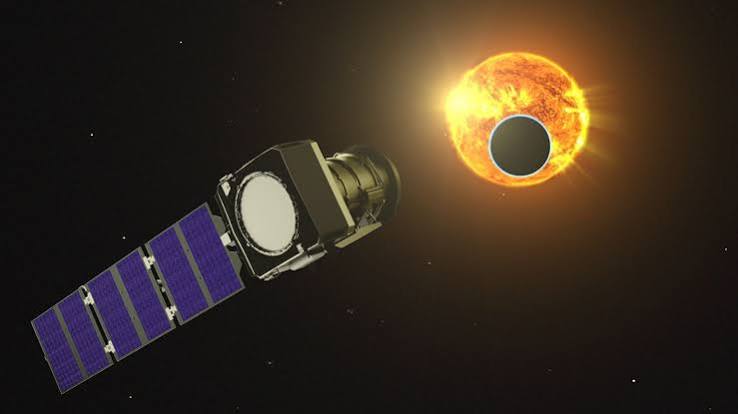
In the quest to find worlds beyond our solar system, a tiny satellite named Pandora is taking on a giant problem: the stars themselves. The mission, which is now operational, aims to study the atmospheres of at least 20 known exoplanets by watching them pass in front of their host stars. But what makes Pandora special is not just its scientific goal—it’s how it plans to achieve it, by staring at both the planet and its star simultaneously, a technique that could clean up the messy data that has long plagued exoplanet research.
Pandora is the first satellite to launch through NASA’s Astrophysics Pioneers program, a bold experiment in doing high-impact science on a small budget. While the James Webb Space Telescope (JWST) can study exoplanet atmospheres in exquisite detail, its time is precious and often too limited to monitor a star’s variability. Pandora, on the other hand, can dedicate long stretches to watch the same star-planet system, making it a perfect complement to JWST and a pathfinder for future small missions.
The Problem: Stars That Masquerade as Planets
When a planet passes in front of its star—an event called a transit—some of the starlight filters through the planet’s atmosphere. That light carries the fingerprints of molecules like water, which absorb specific colors. By analyzing this light, astronomers can figure out what the atmosphere is made of. This technique, called transit spectroscopy, has revealed water vapor on many exoplanets.
However, there’s a catch. Stars are not uniform; they have spots, like sunspots, and bright regions called faculae. As the star rotates, these features come and go, causing the star’s brightness to change slightly. Those changes can mimic the subtle signals from a planet’s atmosphere, creating false positives or washing out real ones. For example, a star spot might make a planet look like it has more water than it actually does, or hide a water signal entirely.
Pandora is designed to solve this by measuring both the planet and the star at the same time, using a single instrument. It has a visible-light channel that monitors the star’s brightness and activity, and a near-infrared channel that looks for water absorption in the planet’s atmosphere. By simultaneously recording both, astronomers can separate the star’s contributions from the planet’s, effectively subtracting the noise and revealing the true atmospheric signal.
The Mission: Small Satellite, Big Goals
Pandora is a small satellite, roughly the size of a shoebox, but it carries a telescope with a 45-centimeter mirror. It orbits Earth in a low-Earth orbit, and its primary goal is to observe at least 20 known exoplanets, many of them “hot Jupiters”—gas giants that orbit very close to their stars. These planets are not habitable, but they serve as perfect testbeds for understanding atmospheric processes.
Each target requires multiple transits to build up a reliable signal. Pandora will watch each planet transit its star several times, gathering data over months. The mission’s lifetime is expected to be about a year, but it could be extended if it continues to perform well.
One of the key scientific questions Pandora will address is: How common is water in exoplanet atmospheres? Water is a key ingredient for life as we know it, so knowing how often it appears is a crucial step toward assessing habitability. Pandora will also look for hazes and clouds, which can obscure the atmospheric signatures of molecules. By studying these features, scientists hope to understand the diversity of exoplanet atmospheres and how they form and evolve.
A Complementary Role to JWST
The James Webb Space Telescope is the most powerful space observatory ever built, and it has already made headlines with its exoplanet observations. However, JWST’s time is scarce, and it often cannot afford to monitor a single star for hours to correct for stellar activity. Pandora can do exactly that. By providing long-term monitoring of the same targets, Pandora’s data will help calibrate JWST observations, improving the accuracy of both missions.
For example, if JWST observes an exoplanet’s atmosphere and finds water, astronomers can use Pandora’s simultaneous star-monitoring data to confirm that the signal is real and not caused by stellar spots. This synergy will maximize the scientific return from both missions.
A New Approach to Space Science
Pandora is the first satellite to launch through NASA’s Astrophysics Pioneers program, which aims to support small, focused missions that can be built quickly and at low cost. The program is a departure from the traditional, large-scale missions that have dominated NASA’s astrophysics portfolio. Pandora’s total cost is about $20 million, a fraction of JWST’s $10 billion. Yet, it promises to deliver high-impact science.
This mission is a test case for whether “small” can be “mighty” in astrophysics. If Pandora succeeds, it could open the door for more such missions, enabling a steady stream of discoveries at a fraction of the cost of flagship observatories.
What Pandora Won’t Do
It’s important to clarify what Pandora is not. It will not search for new planets; it will study known ones. It will not assess habitability; it will look for water and clouds. And it will not find life; water is a necessary but not sufficient ingredient for life. Pandora’s findings will be a piece of the puzzle, not the whole picture.
Also, Pandora will not observe 20 planets at once. It will observe them one at a time, each over multiple transits. The mission’s name, Pandora, evokes the myth of opening a box of wonders, but the wonders here are not new worlds—they are new insights into the atmospheres of worlds we already know.
The Road Ahead
Pandora has just begun its science operations, and the first data are still being processed. It will take months to years to analyze the observations and tease out the atmospheric signals. But the mission’s early success is already a win for the Astrophysics Pioneers program, demonstrating that a small satellite can do meaningful exoplanet science.
The data Pandora collects will not only inform us about individual planets but also about the stars they orbit. By cataloging stellar activity, Pandora will provide a resource for future studies of star-planet interactions. And by observing 20+ planets, it will allow scientists to look for trends—for example, does cloud cover correlate with a planet’s temperature? Such comparative planetology is a powerful tool for understanding the diversity of worlds.
In the coming years, Pandora’s results will be combined with those from JWST and other observatories to build a more complete picture of exoplanet atmospheres. The mission may be small, but its impact could be enormous.
Pandora is a small mission with a clear, focused goal: to separate the signals of stars and planets in the study of exoplanet atmospheres. By doing so, it will not only improve our understanding of these distant worlds but also demonstrate a new way of doing space science. As the first of NASA’s Astrophysics Pioneers, Pandora is a reminder that big discoveries can come in small packages.
Summary
- Pandora is NASA’s first Astrophysics Pioneers satellite, designed to study exoplanet atmospheres.
- It observes both the exoplanet and its host star simultaneously to separate stellar and planetary signals.
- The mission will look for water vapor, hazes, and clouds in the atmospheres of at least 20 known exoplanets.
- Pandora complements JWST by providing long-term monitoring of target stars, improving the accuracy of both missions.
- It is a low-cost mission ($20 million) that could pave the way for more small, high-impact astrophysics missions.
FAQ
Q: Will Pandora find habitable planets?
A: No. Pandora studies the atmospheres of known exoplanets. It does not search for new planets or assess habitability directly.
Q: Is Pandora a replacement for the James Webb Space Telescope?
A: No, it is complementary. Pandora’s focus on stellar contamination correction and long-term monitoring helps improve JWST’s observations of the same targets.
Q: Does detecting water mean life?
A: Water is a necessary ingredient for life as we know it, but it is not sufficient. Pandora’s water detections will not be evidence of biology.
Q: How many planets does Pandora observe at once?
A: It observes one planet at a time, with each target requiring multiple transits. It will study at least 20 over its lifetime.
Q: Is Pandora’s data quality lower because it’s a small satellite?
A: Pandora is optimized for its specific task, so the data quality for its purpose is expected to be high, though not at JWST’s level of detail.
Leave a Reply