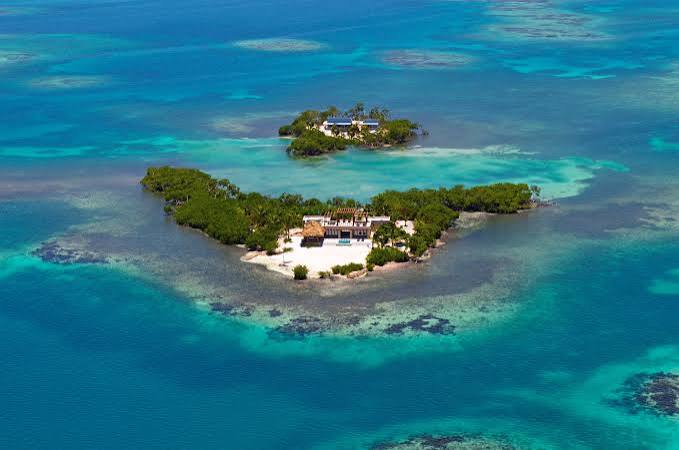
Imagine a place where the nearest neighbor is hundreds of miles away, where the ocean is both a barrier and a highway. Islands have long fascinated explorers, scientists, and travelers alike, not just for their breathtaking landscapes but for the extraordinary cultures and languages that have evolved in isolation. From the undeciphered script of Easter Island to the hundreds of languages spoken on a single Pacific archipelago, islands are living laboratories of human diversity.
But why do islands produce such unique cultural and linguistic traits? The answer lies in the interplay of geography, history, and human ingenuity. This article explores how physical isolation has shaped the cultures and languages of islands, from the remote shores of Rapa Nui to the rugged fjords of Iceland, and how these unique societies are navigating the forces of globalization today.
The Island Effect: A Natural Laboratory
The concept of island biogeography, borrowed from ecology, explains how physical isolation affects the evolution of species. On islands, species often evolve into new forms, a phenomenon known as endemism. The same principle applies to human societies: smaller, more remote landmasses tend to develop distinct cultural traits, languages, and social structures. This is because isolation reduces the flow of genes, ideas, and words, allowing local innovations to take root and diverge from mainland counterparts.
Take language, for example. Islands account for a disproportionate share of the world’s languages relative to their land area. Vanuatu, an archipelago in the South Pacific with a population of about 300,000, boasts over 100 actively spoken indigenous languages—the highest language density per capita on Earth. Each island, and sometimes each valley, has its own tongue, a testament to centuries of independent development.
Case Studies: Islands of Unique Culture
Easter Island (Rapa Nui)
Easter Island, one of the most isolated inhabited places on Earth, lies about 3,700 kilometers from Chile and 2,000 kilometers from its nearest Polynesian neighbor, Pitcairn Island. This isolation gave rise to the famous moai statues—massive stone figures carved between the 13th and 16th centuries. The island also produced the Rongorongo script, a system of glyphs that remains undeciphered to this day. The island’s history is often cited as a cautionary tale of ecological collapse, but recent scholarship suggests a more nuanced story of resilience and adaptation.
Madagascar
Madagascar, the world’s fourth-largest island, sits just 400 kilometers off the coast of Africa, yet its people speak Malagasy, an Austronesian language with roots in Borneo, over 8,000 kilometers away. This linguistic anomaly is a result of settlement by seafarers from Southeast Asia around 1,500 years ago, who brought their language and culture with them. The island’s long isolation—it separated from mainland Africa about 88 million years ago—also fostered unique biodiversity, which in turn shaped the cultural practices of its inhabitants.
Iceland
Iceland was settled by Norse Vikings in 874 CE, and its relative isolation for centuries allowed the Old Norse language to evolve into modern Icelandic with remarkably little change. Today, Icelanders can read medieval sagas written a thousand years ago with relative ease, a feat impossible for speakers of most other Germanic languages. The preservation of archaic linguistic features is a direct result of limited contact with other languages, a phenomenon known as linguistic drift.
North Sentinel Island
The Sentinelese people of North Sentinel Island, part of the Andaman Islands, are perhaps the most isolated community on Earth. They have consistently rejected contact with outsiders, and the Indian government enforces a protective buffer zone around their island. As a result, their language and culture remain largely unknown, a living testament to the power of isolation to preserve a way of life untouched by modernity.
Papua New Guinea
While not a single island but a large island nation, Papua New Guinea exemplifies extreme linguistic fragmentation. With over 800 languages spoken by a population of about 9 million, it is the most linguistically diverse country in the world. The rugged terrain and island geography have created isolated communities that developed distinct languages over millennia.
The Mechanisms of Linguistic Divergence
How exactly does isolation shape language? One key mechanism is drift—the random accumulation of changes in pronunciation, grammar, and vocabulary over time. In isolated populations, these changes are not diluted by contact with other languages, so they can become fixed and accumulate. For example, Faroese, spoken on the Faroe Islands, retains more Old Norse grammar than mainland Scandinavian languages, which have undergone simplification due to contact and trade.
However, isolation is not the only force at play. Some islands, such as Haiti and Mauritius, developed creole languages as a result of colonial contact and the mixing of African, European, and Asian languages. These exceptions show that history and human agency are just as important as geography.
The Sea of Islands: Challenging the Isolation Narrative
While the isolation narrative is compelling, some scholars argue that it overstates the case. Anthropologist Epeli Hau’ofa coined the term “sea of islands” to describe the Pacific as a connected world, where voyaging, trade, and intermarriage linked distant communities long before European contact. The Polynesian expansion, which reached Hawaii, New Zealand, and Easter Island by 1200 CE, demonstrates extraordinary maritime skills and a deliberate exploration of the ocean, not just accidental drift.
Similarly, anthropologist Nicholas Thomas has critiqued the notion of isolation, pointing out that many island cultures were dynamic and interconnected. The Pacific was not a set of isolated dots but a network of relationships. This perspective challenges the romantic view of islands as “living museums” and emphasizes their historical dynamism.
The Impact of Globalization
Today, the forces of globalization—satellite internet, tourism, migration—are eroding the isolation that once shaped island cultures. Many island languages are endangered; UNESCO lists hundreds as vulnerable or critically endangered. For example, the Ainu language of Japan’s northern islands has only a handful of fluent speakers left.
But there is hope. Revitalization movements are underway across the globe. In Hawaii, language immersion schools are producing a new generation of Hawaiian speakers. In New Zealand, Māori kohanga reo (language nests) have been instrumental in reviving the Māori language. These efforts show that while geography may have created unique cultures, human determination can preserve them in the face of change.
Conclusion
Islands are more than just landmasses surrounded by water; they are crucibles of human diversity. The isolation that once fostered unique languages and cultures is now giving way to global interconnectedness, but the legacy of that isolation remains. By understanding how geography shapes culture, we can better appreciate the richness of human experience and the importance of preserving it for future generations.
Summary
- Islands are natural laboratories for cultural and linguistic evolution, with physical isolation leading to unique traits.
- Examples include Easter Island’s undeciphered Rongorongo script, Madagascar’s Austronesian language, and Iceland’s preserved Old Norse.
- Linguistic drift and limited contact allow isolated languages to retain archaic features, as seen in Faroese.
- The isolation narrative is challenged by scholars who emphasize Pacific interconnectedness and historical dynamism.
- Globalization threatens island languages, but revitalization movements are working to preserve them.
FAQ
Q: Why do islands have so many unique languages?
A: Islands often have high linguistic diversity because physical isolation reduces contact between communities, allowing languages to diverge independently. For example, Vanuatu has over 100 languages for a population of just 300,000.
Q: Are all island cultures isolated?
A: No, many island cultures were connected through trade, voyaging, and intermarriage. The Pacific, for instance, was a “sea of islands” with extensive networks, as highlighted by anthropologist Epeli Hau’ofa.
Q: What is linguistic drift?
A: Linguistic drift is the gradual, random change in a language over time. In isolated populations, these changes accumulate without being influenced by other languages, leading to distinct dialects or languages.
Q: How does globalization affect island languages?
A: Globalization can erode isolation, leading to language shift and endangerment. However, revitalization efforts, such as Hawaiian immersion schools, are helping to preserve and revive these languages.
Q: Can geography alone explain cultural differences?
A: Geography is a significant factor, but it doesn’t determine culture. History, human agency, and contact with other societies also play crucial roles, as seen in the development of creole languages on some islands.
Leave a Reply