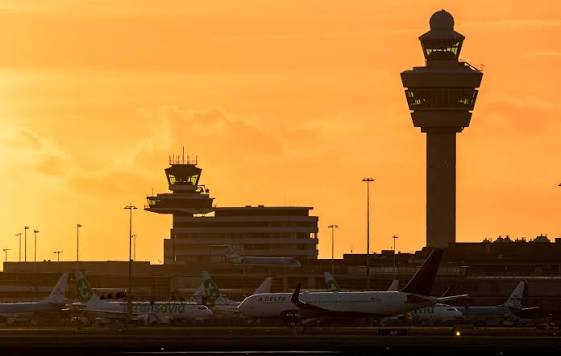
Every day, over 45,000 flights crisscross U.S. airspace, carrying millions of passengers to their destinations. Most of us never think about the people who make sure those flights don’t collide. They work in darkened rooms, staring at radar screens, speaking in calm, clipped phrases. They are air traffic controllers, and their job is one of the most stressful in the world.
A single mistake can cost hundreds of lives. Yet, by design, their stress is invisible. Controllers are trained to sound calm even when their hearts are racing. They receive no applause for a safe landing; it’s simply expected. But the pressure takes a toll—on their bodies, their minds, and their careers.
The Job: A High-Stakes Puzzle
Air traffic controllers coordinate the safe movement of aircraft on the ground and in the air. They manage takeoffs, landings, and en-route traffic, ensuring that planes maintain strict separation standards—typically 1,000 feet vertically and 3 to 5 nautical miles horizontally in terminal areas. In busy sectors, a controller may juggle 10 to 20 aircraft at once, holding their positions, speeds, and altitudes in working memory while predicting where they’ll be in the next few minutes.
The work demands intense concentration. A controller’s day is a series of split-second decisions, each with life-or-death consequences. It’s a cognitive load that few other professions match.
The Hidden Stressors
Cognitive Overload
The brain is constantly multitasking: monitoring radar, communicating with pilots, coordinating with other controllers, and adjusting for weather and traffic. The mental effort is exhausting. Controllers must think several steps ahead, anticipating conflicts before they arise. One lapse in attention can lead to a mid-air collision.
Shift Work and Fatigue
Controllers work rotating shifts, including overnights, weekends, and holidays. This wreaks havoc on the body’s circadian rhythm. Fatigue is a documented safety risk. The FAA mandates rest periods—at least 9 hours between shifts and 10 hours before a midnight shift—but even with these rules, many controllers report chronic exhaustion. The combination of high cognitive demand and irregular sleep is a recipe for burnout.
The Pressure to Be Perfect
The job leaves no room for error. A near-miss triggers an investigation and can lead to disciplinary action. The fear of making a mistake is a constant companion. Many controllers describe a state of hypervigilance that doesn’t switch off when they leave the control room. They replay scenarios in their heads, worry about decisions, and sometimes have nightmares about collisions.
The Toll on Health and Well-Being
Studies show that controllers have elevated rates of hypertension, gastrointestinal issues, and mental health struggles—anxiety and depression—compared to the general population. The FAA’s medical certification process is strict; conditions like diabetes or certain cardiac issues can disqualify a controller. But the stress itself may contribute to these health problems.
Burnout is common. Many controllers report feeling exhausted and cynical within the first five years. The mandatory retirement age in the U.S. is 56, but some don’t make it that long. The high-stress environment, combined with the shift work and the emotional labor, pushes many to leave earlier.
A Culture of Silence
The job is invisible by nature. Controllers work in darkened, windowless rooms, or in towers where they see only a small part of the airport. Their work is unknown to most passengers. But the invisibility is also cultural. Controllers are trained to remain calm and emotionless on the radio. Pilots and passengers never hear the stress in their voices. This emotional labor—suppressing fear, frustration, and exhaustion—is a core part of the job.
There’s also a strong “machismo” culture. Admitting stress or seeking help is often seen as weakness. This is slowly changing, but the stigma remains. Many controllers suffer in silence rather than risk being seen as unable to handle the job.
The Path to the Control Room
Becoming a controller is grueling. The FAA Academy lasts 2 to 4 months, with pass rates historically around 50% or less. Then comes on-the-job training, which takes 2 to 4 years. Trainees work with certified controllers, handling live traffic. Many wash out during this phase—the stress of real traffic is a major filter.
Only after passing a “check ride”—a live evaluation—does a controller become fully certified. Even then, they must pass annual medical and proficiency checks. The training pipeline is designed to weed out those who can’t handle the pressure, but it also reinforces the culture of silence.
The Evolution of the Job
Before radar, controllers used paper strips and mental math to track flights. The job was less intense but still stressful. The 1981 PATCO strike, when President Reagan fired over 11,000 striking controllers, reshaped the profession. It increased the workload for remaining staff and created a lasting culture of “no complaining.”
Modernization has brought digital radar, automation, and data-link communications. These tools reduce some manual workload but increase monitoring demands. Controllers must now watch automated systems, ready to intervene when they fail. This can lead to “automation complacency,” where controllers trust the system too much and lose their edge.
Why They Stay
Despite the stress, many controllers love their job. They describe a “flow state”—a high-stakes puzzle that demands total focus. For some, the stress is addictive. The job offers a sense of purpose and camaraderie that is rare in other professions. Controllers often cite the team atmosphere and the thrill of the work as reasons they stay.
But the toll is real. The job changes people. Many controllers report becoming more irritable and less patient at home. The hypervigilance doesn’t turn off. It’s a hidden cost that passengers never see.
The Future of the Profession
The FAA employs roughly 14,000 controllers, and worldwide there are between 200,000 and 250,000. As air traffic grows, the demand for controllers will increase. But the profession faces challenges: an aging workforce, high burnout rates, and the difficulty of recruiting and training new controllers. The hidden stress of the job is a barrier to entry, and the culture of silence makes it hard for those who struggle to get help.
Slowly, the conversation is changing. Some facilities are starting to encourage open discussions about mental health. But there’s a long way to go. For now, the stress remains hidden, and the controllers remain silent.
Air traffic controllers are the invisible guardians of the skies. Their work is essential, their stress is immense, and their sacrifices are largely unseen. We might never know their names, but every safe landing is a testament to their skill—and their resilience.
Summary
- Air traffic controllers manage thousands of flights daily, with a single mistake potentially causing catastrophic loss of life.
- The job involves intense cognitive load, juggling 10–20 aircraft at a time, and requires split-second decisions.
- Shift work and fatigue are major stressors, with FAA-mandated rest periods still not enough to prevent chronic exhaustion.
- Controllers face elevated rates of health issues like hypertension and anxiety, but a culture of silence discourages seeking help.
- The profession is changing, but the hidden stress remains a significant challenge for recruitment and retention.
FAQ
Q: How many air traffic controllers are there?
A: The FAA employs about 14,000 controllers in the U.S., managing over 45,000 flights per day. Worldwide, there are approximately 200,000–250,000 controllers.
Q: What is the most stressful part of the job?
A: The combination of high cognitive load, the zero-error environment, and irregular shift work. Controllers must constantly predict and prevent conflicts, which leads to chronic hypervigilance and fatigue.
Q: Do air traffic controllers have to retire early?
A: In the U.S., controllers are required to retire by age 56. Many report burnout well before that, and some leave even earlier.
Q: Why don’t controllers talk about their stress?
A: There’s a strong culture of “machismo” in the profession. Admitting stress or seeking help is often seen as a sign of weakness, so many suffer in silence.
Q: How does the training process work?
A: Trainees attend the FAA Academy for 2–4 months, then undergo 2–4 years of on-the-job training. Many wash out during this phase because of the stress of live traffic.
Leave a Reply