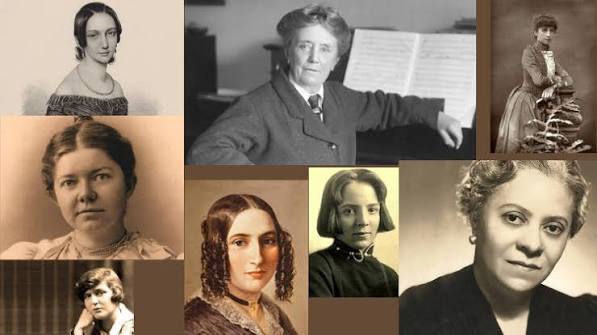
When we picture the Baroque era, names like Bach, Handel, and Vivaldi dominate. Yet a vibrant countercurrent existed women who composed operas, cantatas, and sonatas despite formidable barriers. Their stories are not footnotes but essential chapters in the history of music, revealing how creativity thrives even under constraint.
Meet Barbara Strozzi, whose published output rivaled any male composer of her day; Francesca Caccini, who wrote the first opera by a woman; and Élisabeth Jacquet de La Guerre, who dazzled the court of Louis XIV. Their music survived, but for centuries, it was largely ignored. Only recent scholarship has begun to restore their rightful place.
The Baroque Stage: A World Built for Men
The Baroque era (c. 1600–1750) was a time of explosive musical invention: opera was born, tonality crystallized, and instrumental virtuosity soared. But this revolution was largely financed by courts, churches, and wealthy patrons—institutions that systematically excluded women from professional composition.
Formal training in counterpoint and composition was confined to conservatories and apprenticeships, all closed to women. Even the church, which might have offered a haven, restricted elaborate music in convents after the Council of Trent. For aristocratic women, composing for private entertainment was acceptable, but public performance and publication were seen as unseemly. How, then, did women compose at all? They did so through extraordinary circumstances: family connections, religious vocation, or sheer force of will.
Barbara Strozzi: The Venetian Voice
Barbara Strozzi (1619–1677) was adopted by the poet Giulio Strozzi, who nurtured her talents and showcased her as a singer in his Accademia degli Unisoni—a rare platform for a woman. She went on to publish eight volumes of secular vocal music, more than any composer of her era. Her over 125 works include cantatas and arias that explore deep emotion with startling originality. Strozzi’s music is not a curiosity; it stands confidently beside the output of her male peers.
Francesca Caccini: The Opera Pioneer
Francesca Caccini (1587–c. 1641) was the daughter of Giulio Caccini, a key figure in early opera. She served the Medici court in Florence, where she composed and performed. In 1625, she produced La liberazione di Ruggiero, widely considered the first opera by a woman. This work is not merely a historical marker; it showcases her skill in blending dramatic narrative with musical expression. Caccini also composed other stage works, though many are lost.
Élisabeth Jacquet de La Guerre: The French Exception
France, with its salon culture and royal patronage, offered a more welcoming path for female artists. Élisabeth Jacquet de La Guerre (1665–1729) was a child prodigy on the harpsichord who performed for Louis XIV. In 1694, she composed Céphale et Procris, the first opera by a woman in France. She also published trio sonatas, cantatas, and harpsichord suites, combining French and Italian styles. Her work earned her a pension from the king—evidence that talent could override gender when circumstances aligned.
Nuns, Courts, and Hidden Gems
Other women composed in less visible spheres. Isabella Leonarda (1620–1704) was an Ursuline nun in Novara who published over 200 works, including the first sonatas by a woman (Op. 16, 1693). Her music was performed within her convent, yet it reached publication—a rare achievement for a nun. Antonia Bembo (c. 1640–c. 1720) left Venice for Paris, where she produced sacred and secular works under royal patronage. Diomira Pappi, about whom little is known, composed Sant’Alessio (1677), one of the earliest operas by a woman. Even Maddalena Casulana, though technically Renaissance, set a precedent by being the first woman to publish her own music in 1566.
Why Were They Erased?
The music of these women survived, but it was ignored for centuries. Works were often published under initials or male pseudonyms, or attributed to male relatives. Institutional bias meant that even when women composed, their music was rarely performed or preserved as seriously as men’s. The modern revival began in the 1970s with feminist musicologists like Jane Bowers and Judith Tick, who unearthed scores and challenged the canon. Since the 1990s, recordings and modern editions have multiplied, allowing us to hear these works.
The Venetian ospedali—orphanages that trained girls to professional standards—produced exceptional musicians, though most compositions by women were performed only within those walls. Anna Bon emerged from this system, but her male instructors, like Vivaldi, received the acclaim.
The Music They Left Behind
What does this music sound like? Strozzi’s cantatas are intimate and expressive, with daring harmonic shifts. Caccini’s opera is lively and theatrical, with a strong role for the orchestra. Jacquet de La Guerre’s suites are elegant, showcasing keyboard virtuosity. Leonarda’s sonatas are structurally sophisticated, proving that distance from the male canon did not mean inferior craft. These works are not merely ‘forgotten treasures’; they are vital pieces of the Baroque repertoire.
The Legacy and The Work Left to Do
A substantial portion of music by female Baroque composers survives, but much remains unperformed, unrecorded, or unedited. Modern ensembles specializing in historical performance have championed this repertoire, but it still lags in concert programming. The recovery is ongoing: scholars continue to attribute works, discover manuscripts, and analyze how gender shaped musical choices. The question is not just whether these women composed—they did, prolifically—but why their contributions were erased and how we can ensure they are heard.
The women who composed during the Baroque era did so against a backdrop of exclusion, yet their music speaks with authority and beauty. By bringing their works to light, we enrich our understanding of the period and challenge the assumption that genius is male. The next step is simple: listen, perform, and record their music so it can never be forgotten again.
Summary
- Barbara Strozzi published more secular vocal music than any composer of her era, with over 125 works.
- Francesca Caccini composed the first opera by a woman, La liberazione di Ruggiero (1625).
- Élisabeth Jacquet de La Guerre was the first woman to compose an opera in France, Céphale et Procris (1694).
- Isabella Leonarda published the first sonatas by a woman (Op. 16, 1693), while a nun.
- Many works by female composers were published under pseudonyms or attributed to men; modern scholarship has revived them since the 1990s.
FAQ
Q: Who was the first woman to compose an opera?
A: Francesca Caccini is widely credited with the first opera by a woman, La liberazione di Ruggiero, premiered in 1625 in Florence.
Q: How did women compose if they couldn’t access formal training?
A: Women often received private instruction from male relatives or patrons. Some, like nuns, composed within convents. Others, like Strozzi, were championed by adoptive fathers or mentors.
Q: Why were these composers forgotten?
A: Institutional barriers meant their works were rarely published or performed. When they were, attribution was often obscured. The feminist musicology movement since the 1970s has worked to recover and credit them.
Q: Is there a lot of surviving music by female Baroque composers?
A: Yes, a substantial portion survives, but much remains unperformed or unrecorded. Since the 1990s, modern editions and recordings have increased.
Q: What did the Venetian ospedali have to do with female composers?
A: These orphanages trained girls in music, producing skilled performers and occasionally composers like Anna Bon, but most music was confined within the institutions.
Leave a Reply