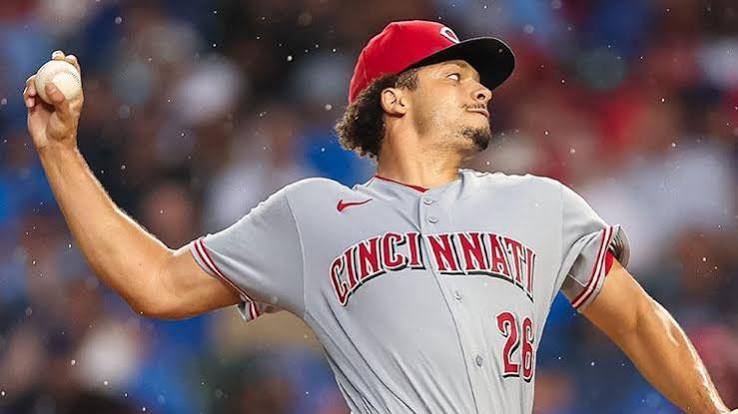
In the seventh inning of a Sunday night showdown at Wrigley Field, the Cincinnati Reds’ most dynamic player walked off the field. Elly De La Cruz, the 23-year-old shortstop who redefined the stolen base last season, had exited with left quad tightness. The Reds would go on to win 7-5 against the Cubs, but the victory felt secondary. For a franchise banking its resurgence on De La Cruz’s otherworldly tools, any lower-body issue sends a jolt through the organization and its fanbase.
This isn’t just another injury report. De La Cruz is coming off a historic 2024 campaign where he became the first player in MLB history to hit 25+ home runs and steal 65+ bases in a single season. He’s the kind of player who makes you watch every at-bat, every sprint down the line. His blend of speed and power is unprecedented, and it’s precisely that reliance on explosive movement that makes a quad issue worth scrutinizing. The term ‘tightness’ is deliberately vague, but the stakes are anything but.
The Moment of Concern
De La Cruz’s exit wasn’t accompanied by a dramatic collapse or a visible grimace. He simply left in the seventh, replaced on defense, and didn’t return. The broadcast didn’t capture an obvious injury moment, leaving fans and analysts to piece together what happened. Was it on a swing? A throw? A sprint to first? The lack of a clear mechanism is common with muscle tightness—it often builds gradually, a nagging sensation that finally forces a player out.
For a player whose game is built on max-effort bursts, even mild tightness in the quadriceps warrants immediate caution. The quad is the engine for acceleration, deceleration, and the kind of explosive first steps that make De La Cruz a basestealing threat every time he reaches base. Pushing through tightness risks turning a minor issue into a Grade 2 or 3 strain, which would cost him weeks, not days.
The Reds’ medical staff will almost certainly order an MRI to rule out a tear. Until those results come back, the team’s language will remain carefully non-committal. ‘Day-to-day’ is the best-case scenario; an injured list stint is the worst. The spectrum between is wide, and the team’s next few days will be dictated by imaging and how De La Cruz feels when he reports to the ballpark.
The Context of a Cornerstone Player
De La Cruz isn’t just another talented shortstop. He’s a generational talent who finished third in NL Rookie of the Year voting in 2023 and then obliterated expectations in 2024. His 25 homers and 67 stolen bases (the 65+ threshold was cleared with room to spare) made him the first player to hit those marks in a single season. That combination of power and speed hasn’t been seen since the days of Rickey Henderson and Barry Bonds, and De La Cruz does it from both sides of the plate.
The Reds entered 2025 with legitimate playoff hopes in a competitive NL Central. Their lineup revolves around De La Cruz’s ability to change a game with one swing or one stolen base. His defense at shortstop, highlighted by a cannon arm and surprising range for a 6’5″ frame, adds another layer of value. Losing him for any extended period would be a seismic blow to a team that doesn’t have a ready-made replacement of similar caliber.
Manager Terry Francona, who took the helm in 2025, has a well-documented history of being cautious with young stars. He learned long ago that protecting a player’s long-term health outweighs the short-term cost of a few games. Expect Francona to err on the side of caution, even if the MRI comes back clean. The Reds have a schedule that includes days off and a deep enough roster to survive a brief absence without panic.
The Injury History and Risk Profile
De La Cruz has generally been durable, but he’s had minor lower-body issues before. Hamstring tightness has cropped up in the past, though the quad is a different muscle group. Soft-tissue injuries are an occupational hazard for players who run at maximum effort, and De La Cruz’s sprinting style is as aggressive as it gets. He doesn’t glide; he explodes. That explosiveness is what makes him must-see TV, but it also puts significant stress on his legs.
There’s an inherent tension here: the very traits that make De La Cruz a superstar—the all-out sprints, the daring baserunning, the range in the field—also make him more susceptible to these kinds of injuries. The Reds know this, and they’ve managed his workload carefully. He’s still young, just 23, and his body hasn’t yet endured the cumulative grind of a decade in the majors. But this incident serves as a reminder that his playing style carries risk.
For fantasy managers and fans alike, the concern is immediate. De La Cruz is a consensus top-5 shortstop in fantasy leagues, and any IL stint would create a significant hole. The national media will track every update, given his star power and the spotlight of Sunday Night Baseball. The Reds’ training staff will be under pressure to provide clarity, but they’ll also be careful not to rush a player whose value depends on his legs.
What the Reds Have Behind Him
The Reds’ depth at shortstop is a relevant subplot. Santiago Espinal, who has experience at multiple infield positions, would likely see increased playing time if De La Cruz misses games. He’s a solid defender and a contact hitter, but he doesn’t offer anywhere near the same offensive ceiling. The drop-off is substantial, which only underscores how critical De La Cruz’s health is to the team’s aspirations.
The Reds could also look to external options if the injury proves serious, but that’s a decision for later. For now, the team will likely wait for imaging results before making any roster moves. An off day in the schedule could buy them time, allowing them to carry De La Cruz as day-to-day rather than placing him on the IL retroactively.
The Bigger Picture
Injuries are a part of baseball, but they hit differently when they involve a player of De La Cruz’s magnitude. Reds fans have seen promising careers derailed before—Nick Senzel’s battle with injuries comes to mind—and there’s an understandable anxiety whenever a young star limps off the field. The ‘tightness’ designation offers some hope, but it’s far from a clean bill of health.
The team’s medical staff will likely take a conservative approach, especially given De La Cruz’s reliance on his legs. Even if the MRI shows no structural damage, they may hold him out for a few games as a precaution. The goal is to prevent a minor issue from becoming a major one, and that means being smart about how they handle the next week.
For now, the Reds and their fans wait. The win over the Cubs was nice, but the real story is De La Cruz’s quad and what it means for a team with legitimate postseason aspirations. The coming days will bring answers, but until then, the uncertainty is the only certainty.
Elly De La Cruz’s early exit with quad tightness is a story that will dominate Reds headlines until he’s back on the field. The term ‘tightness’ leaves room for optimism, but it also carries the weight of caution. For a player whose game is defined by explosive movement, even a minor lower-body issue demands respect. The Reds’ cautious approach, coupled with Francona’s history, suggests they’ll prioritize long-term health over short-term wins. As imaging results come in, the picture will clarify, but for now, the baseball world holds its breath, hoping the electric young shortstop’s exit was nothing more than a precautionary move on a Sunday night in Chicago.
Summary
- Elly De La Cruz exited Sunday’s game against the Cubs in the seventh inning with left quad tightness; the Reds won 7-5.
- The injury is described as ‘tightness,’ not a strain or tear, but severity is unknown pending further evaluation.
- De La Cruz is a cornerstone player for the Reds, coming off a historic 2024 season with 25+ HR and 65+ SB.
- The Reds will likely order an MRI and may take a cautious approach, given De La Cruz’s reliance on his legs.
- Manager Terry Francona’s history suggests he’ll be conservative with De La Cruz’s health, even if the injury is minor.
FAQ
Q: How serious is Elly De La Cruz’s quad injury?
A: At the time of reporting, the injury is described as ‘left quad tightness.’ This is a vague term that could range from minor cramping to a precursor of a strain. The team will likely conduct an MRI to rule out a tear, and his status will become clearer after that.
Q: When did De La Cruz get hurt?
A: He exited in the seventh inning of the game against the Cubs, but the exact moment of injury wasn’t clearly visible. It’s possible the tightness developed gradually or was felt on a specific play earlier in the game.
Q: Will De La Cruz go on the injured list?
A: It’s too early to say. If the MRI shows a strain, an IL stint is likely. If it’s just tightness, he could be day-to-day. The team’s schedule and roster flexibility will also factor into the decision.
Q: How does this affect the Reds’ season?
A: De La Cruz is central to the Reds’ playoff hopes. Any extended absence would be a significant blow, as his combination of power and speed is irreplaceable. The team will hope for a quick return, but they’ll prioritize his long-term health.
Q: What does this mean for fantasy baseball players?
A: De La Cruz is a top-tier fantasy shortstop. If he misses time, managers will need to find a replacement. The severity of the injury will determine whether it’s a short-term or long-term absence, so monitoring updates is crucial.
Leave a Reply