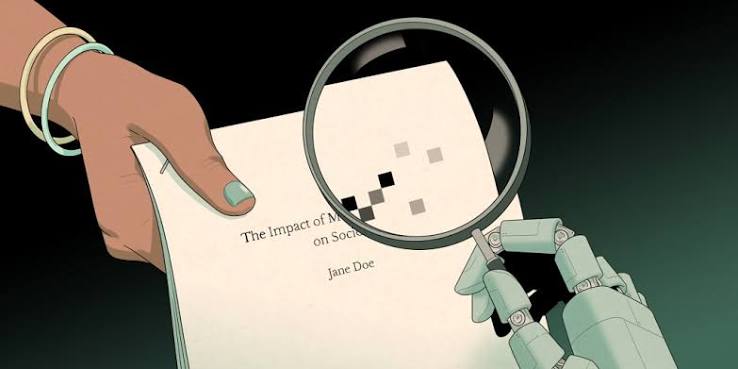
In late 2022, a new kind of digital arms race began. On one side, tools like GPTZero and Turnitin claimed they could spot text written by AI with near-perfect accuracy. On the other, services like Undetectable.ai and StealthGPT promised to rewrite that text so it would slip past those detectors. Both sides are selling the same thing: a definition of what is authentic.
The stakes are not just about grades or Google rankings. This is a cultural conflict about what we mean when we say something is written by a human. If machines can imitate human expression closely enough to fool us, then the very idea of authorship, originality, and voice is up for grabs. This article unpacks the technology, the players, and the deeper questions behind the fight over your words.
The Technology: How Detectors and Humanizers Work
AI detectors like GPTZero and Originality.ai rely on two statistical fingerprints: perplexity and burstiness. Perplexity measures how predictable a piece of text is. Humans tend to write in surprising ways, so a low perplexity score (meaning the text is very predictable) is a telltale sign of AI. Burstiness looks at variation in sentence length and structure. Human writing has natural rhythm, mixing long, meandering sentences with short, punchy ones. AI tends to produce more uniform sentences, so low burstiness is another red flag.
Humanizers, on the other hand, are designed to manipulate these very metrics. They rewrite AI output by injecting unexpected word choices, varying sentence lengths, and adding a few deliberate grammatical quirks—all to raise the perplexity and burstiness scores. The irony is that humanizers are themselves AI tools. They are using machine intelligence to make machine text look more human.
But here is the catch: detection accuracy is far from perfect. A 2023 Stanford study found that detectors incorrectly flagged essays by non-native English speakers as AI-generated at much higher rates than those by native speakers. OpenAI itself shut down its own AI classifier in July 2023, citing a “low rate of accuracy.” Detector companies like Turnitin claim 95–99% accuracy on their own benchmarks, but independent evaluations, such as one by the Center for Countering Digital Hate in 2024, show that real-world accuracy drops sharply, especially when text has been edited or paraphrased.
The Two Camps: Control vs. Freedom
The debate is not just technical; it is a clash of worldviews.
The detection camp argues that AI content must be labeled or removed to preserve trust in education, journalism, and online information. They see it as a public-safety issue: undisclosed AI can spread misinformation, enable academic fraud, and flood the internet with spam. For them, detectors are a necessary shield.
The humanization camp counters that detectors are unreliable and punitive. They point to false accusations against students, particularly those who are not native English speakers, who have been threatened with disciplinary action for work they genuinely wrote. They also argue that AI is a legitimate tool for people who struggle with writing due to disabilities, neurodivergence, or language barriers. The “authenticity” standard, they say, is culturally biased—it privileges a certain style of writing that is not universal.
The Economic Stakes: Who Profits from Authenticity
This is not a philosophical debate happening in a vacuum. There is real money at stake.
In the content marketing world, Google’s March 2024 update made clear that it does not penalize AI content per se; it rewards “helpful content” regardless of origin. That stance undercuts the entire value proposition of AI detectors for SEO purposes. Yet, agencies still fear de-indexing if their AI-generated articles are detected, so they spend thousands on humanization services to make the text appear more natural.
In academia, Turnitin’s AI detector is used by roughly 10,000 institutions. False positives have led to student disciplinary cases, including a widely publicized incident at UC Davis in 2023, where a student was accused of cheating based on the detector’s flawed output. The fear of being falsely accused creates a “guilty until proven innocent” environment, especially for ESL students who already face biases.
In journalism, outlets like CNET and Sports Illustrated suffered credibility damage when they were caught publishing undisclosed AI content. The pressure to produce more content with fewer resources clashes with the need for transparency to maintain reader trust.
The Deeper Question: What Does Authenticity Mean?
Underneath the technical arms race and the economic incentives lies a cultural anxiety. Before 2022, we assumed that a piece of writing came from a human mind. That assumption was the foundation of trust in public discourse. When we read an essay, a news article, or a social media post, we implicitly trust that a human thought it, felt it, and chose those words to express it.
AI collapses that assumption. If a machine can produce text that passes as human, then human writing is no longer a reliable signal of human thought. This is not just a problem for plagiarism detection; it is a challenge to the very idea of authorship and voice.
Some argue that this anxiety is overblown. They say that writing has always been a tool, and AI is just a new tool in the writer’s kit. The authenticity of a piece of writing should be judged by its content, not its origin. Others insist that provenance matters—that knowing who (or what) wrote something is essential for evaluating its reliability and value.
The battle between AI detectors and humanizers is not going to end with a decisive victory. The technology will keep evolving, and the cultural debate over authenticity will continue. But the next time you see a claim that a text is “AI-free” or “human-written,” remember that those labels are not neutral descriptions. They are weapons in a fight over what we can trust, and who gets to decide.
Summary
- AI detectors use perplexity and burstiness to identify machine-generated text, but their accuracy is contested, especially for non-native English speakers.
- Humanizers use AI to rewrite text and evade detection, creating an arms race that undermines trust in both tools.
- The debate reflects a cultural conflict over the meaning of authenticity, with implications for education, journalism, and online discourse.
- Economic pressures in SEO, academia, and media drive the demand for both detection and humanization services.
- The real question is not just technological but philosophical: what does it mean for a text to be authentic?
FAQ
Q: Are AI content detectors accurate?
A: Accuracy varies. Detector companies claim high accuracy on their own benchmarks, but independent studies show real-world performance drops significantly, especially with edited or paraphrased text. A 2023 Stanford study found bias against non-native English speakers.
Q: What is perplexity and burstiness?
A: Perplexity measures how predictable text is; humans tend to be less predictable than AI. Burstiness is variation in sentence length and structure; humans mix long and short sentences, while AI tends to be more uniform. Detectors use these metrics to flag AI text.
Q: Why would someone use a humanizer?
A: People use humanizers to make AI-generated text appear more natural and avoid detection, often to bypass detectors in academic or professional settings. Some argue it is a legitimate tool for non-native speakers or those with writing difficulties.
Q: Does Google penalize AI content?
A: No. Google’s March 2024 update states it rewards “helpful content” regardless of origin, focusing on quality and relevance rather than whether AI or a human wrote it.
Q: What are the ethical concerns with AI detectors?
A: Detectors can falsely accuse students of cheating, especially ESL students, and create a chilling effect. They are also surveillance tools that can be used to police writing, raising concerns about privacy and fairness.
Leave a Reply