Tag: content creation

  • Stop Using Grammarly: This New Tool Spots the ‘AI Tone’ That Gets You Ignored

    Stop Using Grammarly: This New Tool Spots the ‘AI Tone’ That Gets You Ignored

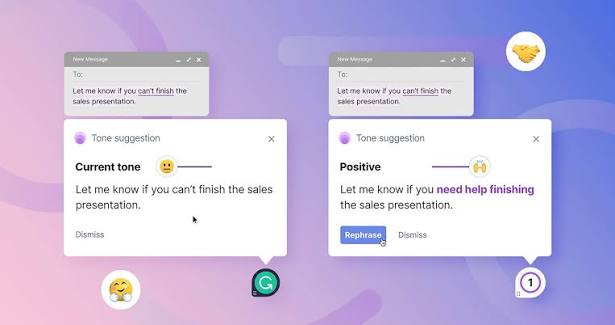
    You’ve felt it. You write an email, run it through Grammarly, hit send and then silence. Or worse, a polite brush-off. It’s not your ideas. It’s your voice. Grammarly, used by 30 million people daily, has a hidden side effect: it flattens your writing into a generic, instantly recognizable ‘AI tone.’ Readers have developed a sixth sense for this style, and they tune it out.

    A new breed of tool promises to spot this tone and help you sound human again. But which tool actually works? And is ‘AI tone’ a real problem or just a marketing bogeyman? Let’s dig into the research.

    The Grammarly Problem: When ‘Correct’ Becomes ‘Forgettable’

    Grammarly isn’t a villain. It’s a brilliant grammar checker that has saved millions from embarrassing typos. But its suggestions often push you toward the most probable phrasing, not the most distinctive. The result is text that’s perfectly correct and utterly colorless.

    Linguists call this ‘statistical averaging.’ Large language models and grammar tools optimize for what most people would say, which means your writing starts to sound like everyone else’s. Add in a safety bias—models trained to avoid offense—and you get hedged, non-committal language that saps your authority.

    Recruiters have caught on. Surveys from ResumeBuilder and Canva in 2023–2024 found that a majority of hiring managers say they can spot AI-written cover letters and often discard them instantly. The tell isn’t grammar—it’s the rhythm. The overuse of ‘delve,’ ‘landscape,’ and ‘it’s important to note.’ The perfectly balanced sentences that feel like they were assembled, not written.

    The Rise of the ‘AI Tone’ Detector-Humanizer

    In response, a cottage industry of tools has emerged. Some, like GPTZero and Originality.ai, focus on detection—telling you if a text was AI-written. Others, like StealthGPT, HIX Bypass, and Humanize AI, claim to rewrite AI text so it sounds more natural and bypasses detectors.

    But here’s the catch: many of these tools are low-quality, SEO-driven products with dubious efficacy. They often swap one set of clichés for another. Blind tests have shown that readers can’t reliably distinguish ‘humanized’ AI text from regular AI text. The tools may fool a detector, but they won’t fool a discerning human reader.

    What Actually Makes Writing Sound ‘AI’?

    Before you ditch Grammarly, it’s worth understanding what we mean by ‘AI tone.’ Researchers and editors point to several markers:

    • Overused transition words: ‘Moreover,’ ‘furthermore,’ ‘in addition’—these appear far more often in AI text than in human writing.
    • Hedging: ‘It’s worth noting,’ ‘arguably,’ ‘in some cases’—language that covers the author’s bases but sounds indecisive.
    • Formulaic structure: Every paragraph starts with a topic sentence, followed by two supporting sentences, and ends with a transition. Humans vary their rhythm; AI often doesn’t.
    • Neutral vocabulary: AI avoids strong words like ‘terrible’ or ‘amazing,’ favoring safe adjectives like ‘important’ and ‘significant.’

    The root cause is statistical averaging. When you accept Grammarly’s suggestion to replace ‘a lot of’ with ‘numerous,’ you’re not just fixing grammar—you’re conforming to the most common phrasing in the model’s training data.

    The New Tool: What to Look For

    So, should you stop using Grammarly entirely? Not necessarily. Grammarly’s core grammar checking is still valuable. The problem is uncritically accepting its style suggestions.

    The better approach is to use a tool that flags AI tone without forcing you into a new template. Look for tools that:

    • Identify specific AI markers: Not just a vague ‘tone score’ but a detailed breakdown of which phrases sound robotic.
    • Offer human alternatives: Instead of swapping ‘delve’ for ‘explore,’ they suggest more natural, context-specific phrasing.
    • Preserve your voice: The best tools learn your style and make suggestions that fit, rather than pushing you toward a generic ‘professional’ register.

    One tool that has gained traction is the Hemingway Editor, which predates the AI boom but focuses on concision and readability. It highlights passive voice, adverbs, and complex sentences—all of which can contribute to an AI-like feel. While it doesn’t specifically target AI tells, it pushes you toward a more direct, human style.

    The Ethics of ‘Humanizing’ AI Text

    Before you run your resume through a humanizer, consider the ethical dimension. In 2024–2025, universities updated honor codes to ban AI-humanization tools, treating them as a form of academic dishonesty. In journalism, passing off AI-generated text as human-written is a breach of trust. If you need to hide that AI wrote it, maybe you shouldn’t use AI in the first place.

    That doesn’t mean AI tools are useless. They’re excellent for brainstorming, outlining, and overcoming writer’s block. But the final product should have your fingerprints on it—your word choices, your rhythm, your quirks.

    A Practical Strategy: Use Grammarly, Then Edit for Voice

    Here’s a workflow that works:

    1. Write a rough draft yourself. Don’t start with AI; start with your own thoughts, even if they’re messy.
    2. Use Grammarly for mechanics only. Turn off style suggestions or ignore them. Focus on fixing typos and grammar errors.
    3. Read your text aloud. If you stumble over a sentence, rewrite it. AI text often reads too smoothly—real human writing has natural hiccups.
    4. Check for AI tells manually. Look for ‘delve,’ ‘landscape,’ ‘it’s important to note,’ and other buzzwords. Replace them with your own words.
    5. If you use an AI detector, take it with a grain of salt. Studies show that detectors are unreliable, especially for non-native English speakers. They’re a starting point, not a verdict.

    The Bottom Line

    The ‘AI tone’ is real, but it’s not a virus you catch from Grammarly. It’s a symptom of lazy editing. Tools can help, but they can’t replace your judgment. The best way to avoid sounding like a robot is to write like a human: vary your sentence length, commit to your ideas, and don’t be afraid to sound like yourself.

    Grammarly isn’t the enemy, but it’s not your voice coach either. The new wave of ‘AI tone’ tools—some helpful, many hype—reflect a broader truth: readers are hungry for authenticity. The fix isn’t a magic tool; it’s a habit of editing for voice, not just correctness. Write like you talk, read your work aloud, and let your personality leak through. That’s the one thing no AI can replicate.

    Summary

    • Grammarly’s style suggestions often flatten your voice into a generic ‘AI tone’ that readers ignore.
    • The ‘AI tone’ is real, marked by overused transitions, hedging, and formulaic structure.
    • New tools claim to detect or ‘humanize’ AI text, but many are unreliable or swap one cliché for another.
    • The best approach: use Grammarly for grammar only, then edit for voice manually.
    • Consider the ethics: humanizing AI text may be dishonest in academic or journalistic contexts.

    FAQ

    Q: Is Grammarly bad for my writing?
    A: No. Grammarly is excellent for catching grammar and spelling errors. The problem is when you blindly accept its style suggestions, which can make your writing sound generic. Use it as a proofreader, not a ghostwriter.

    Q: What tools can detect AI tone?
    A: Tools like GPTZero, Originality.ai, and Writer.com’s AI detector can flag AI-written text, but they’re unreliable. For improving your own writing, Hemingway Editor highlights complexity and passive voice, which can help you sound more human.

    Q: How can I avoid sounding like AI?
    A: Vary your sentence length, avoid overused transition words, and use concrete specifics instead of vague generalizations. Read your writing aloud—if it sounds too smooth, it might sound robotic.

    Q: Are AI humanizer tools ethical?
    A: It depends on the context. In academic or journalistic settings, passing off AI-generated text as human-written is often considered dishonest. In casual business emails, it’s less clear-cut, but transparency is always a safe bet.

    Q: Do AI detectors actually work?
    A: No, not reliably. Studies show they have high error rates, especially with non-native English speakers. They can be a useful starting point, but don’t treat their verdict as final.

  • The Authenticity Wars: Why AI Detectors and Humanizers Are Fighting Over Your Words

    The Authenticity Wars: Why AI Detectors and Humanizers Are Fighting Over Your Words

    In late 2022, a new kind of digital arms race began. On one side, tools like GPTZero and Turnitin claimed they could spot text written by AI with near-perfect accuracy. On the other, services like Undetectable.ai and StealthGPT promised to rewrite that text so it would slip past those detectors. Both sides are selling the same thing: a definition of what is authentic.

    The stakes are not just about grades or Google rankings. This is a cultural conflict about what we mean when we say something is written by a human. If machines can imitate human expression closely enough to fool us, then the very idea of authorship, originality, and voice is up for grabs. This article unpacks the technology, the players, and the deeper questions behind the fight over your words.

    The Technology: How Detectors and Humanizers Work

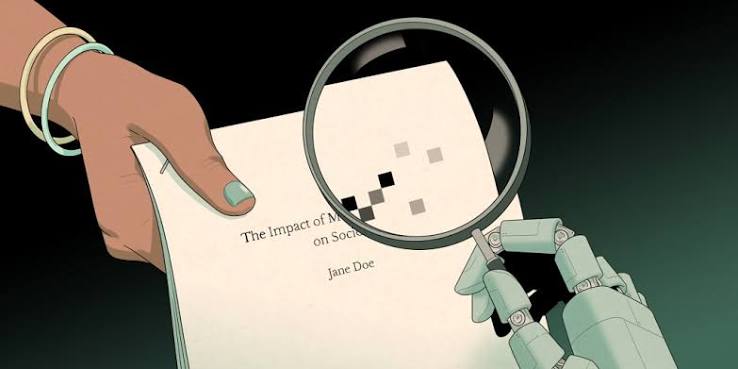
    AI detectors like GPTZero and Originality.ai rely on two statistical fingerprints: perplexity and burstiness. Perplexity measures how predictable a piece of text is. Humans tend to write in surprising ways, so a low perplexity score (meaning the text is very predictable) is a telltale sign of AI. Burstiness looks at variation in sentence length and structure. Human writing has natural rhythm, mixing long, meandering sentences with short, punchy ones. AI tends to produce more uniform sentences, so low burstiness is another red flag.

    Humanizers, on the other hand, are designed to manipulate these very metrics. They rewrite AI output by injecting unexpected word choices, varying sentence lengths, and adding a few deliberate grammatical quirks—all to raise the perplexity and burstiness scores. The irony is that humanizers are themselves AI tools. They are using machine intelligence to make machine text look more human.

    But here is the catch: detection accuracy is far from perfect. A 2023 Stanford study found that detectors incorrectly flagged essays by non-native English speakers as AI-generated at much higher rates than those by native speakers. OpenAI itself shut down its own AI classifier in July 2023, citing a “low rate of accuracy.” Detector companies like Turnitin claim 95–99% accuracy on their own benchmarks, but independent evaluations, such as one by the Center for Countering Digital Hate in 2024, show that real-world accuracy drops sharply, especially when text has been edited or paraphrased.

    The Two Camps: Control vs. Freedom

    The debate is not just technical; it is a clash of worldviews.

    The detection camp argues that AI content must be labeled or removed to preserve trust in education, journalism, and online information. They see it as a public-safety issue: undisclosed AI can spread misinformation, enable academic fraud, and flood the internet with spam. For them, detectors are a necessary shield.

    The humanization camp counters that detectors are unreliable and punitive. They point to false accusations against students, particularly those who are not native English speakers, who have been threatened with disciplinary action for work they genuinely wrote. They also argue that AI is a legitimate tool for people who struggle with writing due to disabilities, neurodivergence, or language barriers. The “authenticity” standard, they say, is culturally biased—it privileges a certain style of writing that is not universal.

    The Economic Stakes: Who Profits from Authenticity

    This is not a philosophical debate happening in a vacuum. There is real money at stake.

    In the content marketing world, Google’s March 2024 update made clear that it does not penalize AI content per se; it rewards “helpful content” regardless of origin. That stance undercuts the entire value proposition of AI detectors for SEO purposes. Yet, agencies still fear de-indexing if their AI-generated articles are detected, so they spend thousands on humanization services to make the text appear more natural.

    In academia, Turnitin’s AI detector is used by roughly 10,000 institutions. False positives have led to student disciplinary cases, including a widely publicized incident at UC Davis in 2023, where a student was accused of cheating based on the detector’s flawed output. The fear of being falsely accused creates a “guilty until proven innocent” environment, especially for ESL students who already face biases.

    In journalism, outlets like CNET and Sports Illustrated suffered credibility damage when they were caught publishing undisclosed AI content. The pressure to produce more content with fewer resources clashes with the need for transparency to maintain reader trust.

    The Deeper Question: What Does Authenticity Mean?

    Underneath the technical arms race and the economic incentives lies a cultural anxiety. Before 2022, we assumed that a piece of writing came from a human mind. That assumption was the foundation of trust in public discourse. When we read an essay, a news article, or a social media post, we implicitly trust that a human thought it, felt it, and chose those words to express it.

    AI collapses that assumption. If a machine can produce text that passes as human, then human writing is no longer a reliable signal of human thought. This is not just a problem for plagiarism detection; it is a challenge to the very idea of authorship and voice.

    Some argue that this anxiety is overblown. They say that writing has always been a tool, and AI is just a new tool in the writer’s kit. The authenticity of a piece of writing should be judged by its content, not its origin. Others insist that provenance matters—that knowing who (or what) wrote something is essential for evaluating its reliability and value.

    The battle between AI detectors and humanizers is not going to end with a decisive victory. The technology will keep evolving, and the cultural debate over authenticity will continue. But the next time you see a claim that a text is “AI-free” or “human-written,” remember that those labels are not neutral descriptions. They are weapons in a fight over what we can trust, and who gets to decide.

    Summary

    • AI detectors use perplexity and burstiness to identify machine-generated text, but their accuracy is contested, especially for non-native English speakers.
    • Humanizers use AI to rewrite text and evade detection, creating an arms race that undermines trust in both tools.
    • The debate reflects a cultural conflict over the meaning of authenticity, with implications for education, journalism, and online discourse.
    • Economic pressures in SEO, academia, and media drive the demand for both detection and humanization services.
    • The real question is not just technological but philosophical: what does it mean for a text to be authentic?

    FAQ

    Q: Are AI content detectors accurate?
    A: Accuracy varies. Detector companies claim high accuracy on their own benchmarks, but independent studies show real-world performance drops significantly, especially with edited or paraphrased text. A 2023 Stanford study found bias against non-native English speakers.

    Q: What is perplexity and burstiness?
    A: Perplexity measures how predictable text is; humans tend to be less predictable than AI. Burstiness is variation in sentence length and structure; humans mix long and short sentences, while AI tends to be more uniform. Detectors use these metrics to flag AI text.

    Q: Why would someone use a humanizer?
    A: People use humanizers to make AI-generated text appear more natural and avoid detection, often to bypass detectors in academic or professional settings. Some argue it is a legitimate tool for non-native speakers or those with writing difficulties.

    Q: Does Google penalize AI content?
    A: No. Google’s March 2024 update states it rewards “helpful content” regardless of origin, focusing on quality and relevance rather than whether AI or a human wrote it.

    Q: What are the ethical concerns with AI detectors?
    A: Detectors can falsely accuse students of cheating, especially ESL students, and create a chilling effect. They are also surveillance tools that can be used to police writing, raising concerns about privacy and fairness.

  • 10 Mistakes to Avoid When Starting a YouTube Channel

    10 Mistakes to Avoid When Starting a YouTube Channel

    Starting a YouTube channel is an exciting venture, but it’s also a crowded one. With over 2.5 billion monthly users and 500 hours of video uploaded every minute, the competition for attention is fierce. Many new creators dive in without a strategy, only to abandon their channels within a year due to slow growth or burnout.

    But it doesn’t have to be that way. By understanding the common pitfalls and how to avoid them, you can set yourself up for sustainable growth and success. This guide breaks down the 10 most critical mistakes to avoid when starting your YouTube journey, from technical blunders to strategic missteps.

    1. Ignoring Audio Quality

    One of the quickest ways to lose viewers is poor audio. Viewers will tolerate a grainy video, but they won’t tolerate muffled or echoey sound. Your smartphone’s built-in microphone is not enough. Invest in a decent USB or lapel microphone—even a budget one can dramatically improve your audio. Remember, audio is 50% of the viewing experience.

    2. Inconsistent Upload Schedule

    Consistency builds trust and trains the algorithm. You don’t need to post daily, but you should pick a schedule you can maintain—whether it’s weekly or bi-weekly. Inconsistent uploads confuse both your audience and YouTube’s recommendation system, leading to lower engagement and slower growth.

    3. Neglecting Thumbnails and Titles

    Your thumbnail and title are the first things viewers see. They determine your click-through rate (CTR), which is a key ranking factor. Avoid generic thumbnails and clickbait titles that don’t deliver. Instead, create custom thumbnails with high-contrast colors and expressive faces, and craft titles that are specific and curiosity-driven without being misleading.

    4. Choosing a Saturated Niche Without a Unique Angle

    Gaming, vlogging, and reaction videos are oversaturated. If you enter these niches, you need a unique angle or a specific underserved sub-niche. For example, instead of general gaming, focus on “speedrunning retro RPGs with commentary on game design.” Find the intersection of what you love and what people are searching for.

    5. Obsessing Over Subscriber Count

    Subscribers are a vanity metric. What really matters is watch time and engagement. A channel with 5,000 engaged subscribers can outperform one with 50,000 passive ones. Focus on building a community that watches, likes, comments, and shares your content. The algorithm rewards satisfaction, not just numbers.

    6. Ignoring Analytics

    YouTube provides a treasure trove of data—retention graphs, CTR, traffic sources, and more. Many beginners ignore these analytics, but they’re essential for growth. Study your retention graph to see where viewers drop off. If they leave early, your intro is too slow. If they leave at a specific point, that segment may be boring. Use this data to improve your next video.

    7. Trying to Please Everyone

    If you try to appeal to everyone, you’ll appeal to no one. Define your target audience and create content specifically for them. Use language, references, and topics that resonate with that group. This builds a loyal community that the algorithm will recognize as a strong signal.

    8. Buying Subscribers or Using Engagement Bots

    This is a fatal mistake. Not only does it violate YouTube’s policies, but it also destroys your channel’s credibility. Bought subscribers are inactive and won’t watch your videos, hurting your engagement rates. YouTube can also detect and remove these subscribers, and in severe cases, terminate your channel. Build your audience organically.

    9. Quitting Too Early

    Most channels don’t see significant growth in the first few months. It takes time to build an audience and for the algorithm to understand your content. Many creators give up right before a breakthrough. Set realistic expectations and commit to a long-term plan. Consistency and patience are your best allies.

    10. Not Treating Your Channel Like a Business

    If you want to make money or build a brand, treat your channel as a business from day one. This means having a clear niche, a content strategy, and a plan for diversification (merch, Patreon, sponsorships). Relying solely on AdSense is rarely sustainable. Think about your channel as a product that provides value to a specific audience.

    Avoiding these mistakes won’t guarantee overnight success, but it will give you a solid foundation. Remember, YouTube is a marathon, not a sprint. Focus on creating quality content, engaging with your audience, and learning from your analytics. With persistence and a strategic approach, you can grow a channel that not only reaches monetization but also builds a loyal community.

    Summary

    • Audio quality matters more than video quality; invest in a decent microphone.
    • Consistency beats frequency; stick to a schedule you can maintain.
    • Thumbnails and titles are your first impression; make them compelling and honest.
    • Subscribers are not the goal; watch time and engagement drive growth.
    • Don’t buy subscribers; it’s a violation of policies and kills your channel’s health.

    FAQ

    Q: Do I need expensive gear to start a YouTube channel?
    A: No. A smartphone camera and free editing software like DaVinci Resolve or CapCut are sufficient. Focus on good lighting and clear audio.

    Q: How often should I upload?
    A: Consistency is more important than frequency. Choose a schedule you can maintain, whether it’s weekly or bi-weekly, and stick to it.

    Q: Are YouTube Shorts a good way to grow?
    A: Shorts can boost subscriber counts quickly, but those viewers often don’t watch long-form content. Use Shorts to complement your long-form videos, not replace them.

    Q: Can I change my niche after starting?
    A: Yes, but it’s harder. You may lose some audience, but a well-executed pivot can work. Just be aware of the risks.

    Q: How long does it take to get monetized?
    A: It varies. Some channels reach 1,000 subscribers and 4,000 watch hours in a few months, others take years. Focus on creating great content and the milestones will follow.