Tag: trade

  • Dodgers Land Tarik Skubal: A Superteam’s Ultimate Ace and the Tigers’ Calculated Gamble

    Dodgers land two-time Cy Young winner Tarik Skubal in trade – Orange County Register

    Tarik Skubal in a Dodgers uniform pitching at Dodger Stadium with a packed crowd, symbolizing his arrival as the ace.

    In a move that sends shockwaves through Major League Baseball, the Los Angeles Dodgers have acquired two-time Cy Young winner Tarik Skubal from the Detroit Tigers. This is the blockbuster of the 2025 trade deadline, a seismic shift that redefines the balance of power in the National League and signals a bold new chapter for both franchises.

    For the Dodgers, this is the missing piece to a championship puzzle that has been held together by duct tape and desperation. Their rotation, once a fortress, has been decimated by injuries, leaving them to patch together starts with bullpen games and unproven rookies. Skubal isn’t just an upgrade—he’s a lifeline, a bona fide ace who can anchor a postseason run and give a superteam its best shot at a repeat.

    For the Tigers, this is a painful but pragmatic decision. Skubal was the crown jewel of their rebuild, a homegrown star who blossomed into the best pitcher on the planet. But with free agency looming and a roster not quite ready to contend, Detroit has chosen to cash in its most valuable asset for a future built on young talent. It’s a gamble that could define the franchise for a decade.

    The Dodgers’ Desperation and the Ace Who Answers the Call

    The Dodgers entered 2025 as defending champions, but their starting rotation has been a war zone. Tyler Glasnow, Yoshinobu Yamamoto, Bobby Miller, and Dustin May have all spent time on the injured list, and Shohei Ohtani is still recovering from his second Tommy John surgery. The result? A patchwork rotation that has forced the team to rely on bullpen games and unproven arms—a recipe for disaster in October.

    Enter Tarik Skubal. The 28-year-old left-hander is not just a starter; he’s a difference-maker. With a career ERA around 3.10, a WHIP near 1.05, and an average of 10.5 strikeouts per nine innings, Skubal has been the consensus best pitcher in baseball. In 2024, he posted a 2.39 ERA with 228 strikeouts in 192 innings, and he was having another dominant season in 2025 with an ERA in the low 2.00s. He immediately becomes the Dodgers’ ace, slotting ahead of Blake Snell and giving the team a legitimate Game 1 starter in any playoff series.

    This trade is a testament to the Dodgers’ win-now mandate. They’ve already committed over $350 million to a roster that includes Shohei Ohtani, Mookie Betts, and Freddie Freeman. Adding Skubal—who is under team control through 2026—isn’t a rental; it’s a strategic acquisition that strengthens their chances not just this year, but next year as well. The financial flexibility to absorb his arbitration salary (~$10-12 million) is a non-issue for a team that operates in a different economic stratosphere.

    The Tigers’ Calculated Rebuild: Selling High on a Homegrown Star

    For the Tigers, this trade is about maximizing value at the perfect moment. Skubal was drafted in the 9th round in 2018 and developed into a two-time Cy Young winner—a remarkable success story. But Detroit has hovered around .500 in 2025, and with Skubal’s free agency approaching after 2026, the Tigers faced a choice: extend him at a massive cost or trade him for a haul that could accelerate their rebuild.

    They chose the latter. The return package, while not fully confirmed, is expected to include multiple top-100 prospects. This is a clear signal that the Tigers are prioritizing long-term asset accumulation over a short-term playoff push. They have a young core in Riley Greene, Colt Keith, and Jackson Jobe, and these new prospects will join that group to form the foundation of the next contending Tigers team.

    It’s a move that will likely draw mixed reactions from fans. Losing a homegrown superstar is never easy, especially one as beloved as Skubal. But the business logic is sound: selling at peak value, with a year and a half of control remaining, is the kind of disciplined decision that can turn a rebuild into a sustained contender. The Tigers are betting on the future, and this trade is the first major step.

    Historical Context: A Trade for the Ages

    This deal ranks among the largest pitching trades in recent memory. Comparisons to Max Scherzer’s mid-season trade to the Dodgers in 2021, Justin Verlander’s move to the Astros in 2017, and Chris Sale’s trade to the Red Sox in 2016 are apt. But Skubal’s situation is unique: he’s the first two-time Cy Young winner to be traded mid-season since Scherzer in 2021, and he’s younger than any of those pitchers were at the time of their deals.

    The Dodgers have a history of making bold moves at the deadline, but this one feels different. They’re not just adding a piece; they’re adding the piece. With Skubal leading the rotation, the Dodgers become the overwhelming favorites in the National League, and possibly the entire league. The pressure is now on the rest of the MLB to respond.

    The Players’ Perspective: Skubal’s Shot at Glory, Prospects’ Shot at Opportunity

    For Skubal, this trade is a dream come true. He’s joining a superteam with a legitimate chance at a World Series ring, and he’ll be the clear #1 starter on a contender—a role that could boost his free-agent value in 2026. He’s no longer the lone star on a rebuilding team; he’s the final piece of a championship puzzle.

    For the prospects heading to Detroit, this is a life-changing opportunity. They go from a stacked Dodgers system, where playing time was uncertain, to a Tigers organization that will give them a clear path to the majors. It’s a chance to prove themselves at the highest level and become part of something special in Detroit.

    The Stakes: A Defining Moment for Both Franchises

    This trade is a defining moment for both franchises. For the Dodgers, it’s a declaration that they will stop at nothing to defend their title. For the Tigers, it’s a bet on the future, a willingness to sacrifice short-term success for long-term greatness. The next two seasons will reveal whether these gambles pay off, but one thing is certain: the baseball world will be watching.

    The acquisition of Tarik Skubal is a blockbuster that reshapes the MLB landscape. The Dodgers have their ace, and the Tigers have a treasure trove of prospects to build around. It’s a win-now move for one, a build-for-tomorrow move for the other, and a trade that will be analyzed for years to come. As the 2025 postseason approaches, all eyes will be on Los Angeles and Detroit to see which strategy proves superior.

    Summary

    • The Dodgers acquired two-time Cy Young winner Tarik Skubal from the Tigers in the biggest trade of the 2025 deadline.
    • Skubal, under team control through 2026, immediately becomes the Dodgers’ ace, addressing a rotation decimated by injuries.
    • The Tigers receive a significant package of top prospects, signaling a long-term rebuild strategy.
    • This trade is historically significant, comparable to mid-season deals for Scherzer, Verlander, and Sale.
    • The move solidifies the Dodgers as overwhelming favorites while giving the Tigers a foundation for future contention.

    FAQ

    Q: Why did the Dodgers trade for Skubal when they already have Blake Snell?
    A: The Dodgers’ rotation has been ravaged by injuries, and Snell alone isn’t enough. Skubal provides a proven ace who can anchor the staff in the postseason and gives them a formidable 1-2 punch at the top.

    Q: What does this mean for the Tigers’ rebuild?
    A: The Tigers are prioritizing long-term success. By trading Skubal at peak value, they acquire multiple top prospects to join their young core, positioning themselves for sustained contention in the coming years.

    Q: Is Skubal a rental?
    A: No. Skubal is under team control through the 2026 season, so the Dodgers have him for roughly a season and a half, not just the remainder of 2025.

    Q: How does this trade compare to other big pitching deals?
    A: It’s on par with the Scherzer-to-Dodgers trade in 2021, the Verlander-to-Astros deal in 2017, and the Sale-to-Red Sox trade in 2016. Skubal is younger than those pitchers were at the time, making this a particularly significant acquisition.

    Q: What are the risks for the Dodgers?
    A: Skubal has a history of Tommy John surgery, and trading multiple top prospects for a pitcher with 1.5 years of control carries inherent risk. However, the Dodgers are betting on his elite performance to deliver a championship.

  • Sparks Trade Kelsey Plum to Mercury: A Win-Now Move and a Rebuild Signal

    Sparks trade Kelsey Plum to Phoenix Mercury – Orange County Register

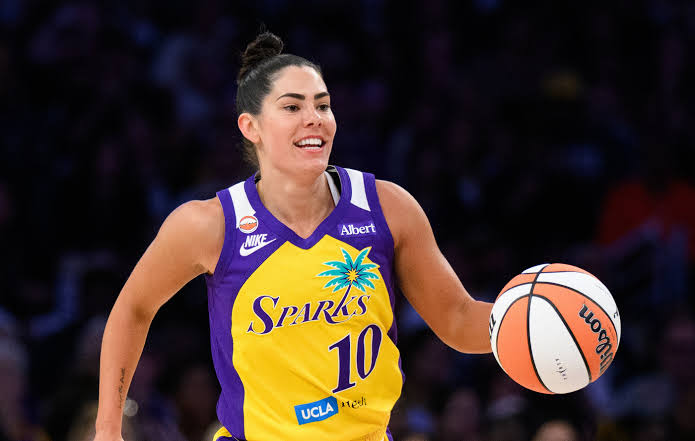
    A dynamic action shot of Kelsey Plum in her Sparks jersey driving to the basket, with a split background showing the Sparks’ purple and the Mercury’s orange to symbolize the trade.

    The WNBA trade deadline delivered a seismic shock on Sunday as the Los Angeles Sparks sent five-time All-Star guard Kelsey Plum to the Phoenix Mercury. The move, which comes just months after Plum was traded from the Las Vegas Aces to Los Angeles, reshapes the playoff picture and signals a clear strategic divergence between two franchises with very different ambitions.

    For the Sparks, this is a pragmatic acknowledgment of a lost season and a commitment to a long-term rebuild. For the Mercury, it’s an aggressive bet on a championship run. And for Plum, it’s another twist in a whirlwind year that has seen her change teams twice and face an uncertain free agency this summer. The trade is a microcosm of the modern WNBA: player movement is accelerating, and no star is untouchable.

    The Trade: What We Know

    The Los Angeles Sparks traded five-time All-Star guard Kelsey Plum to the Phoenix Mercury ahead of Sunday’s WNBA trade deadline. The Sparks will receive compensation from the Mercury, though the exact details of the return—whether draft picks, young players, or a combination—remain unconfirmed. What is clear is that the Sparks are prioritizing future assets over short-term competitiveness.

    Plum, the No. 1 overall pick in the 2017 draft, has been one of the league’s most prolific scorers since entering the WNBA. She was a cornerstone of the Las Vegas Aces’ back-to-back championships in 2022 and 2023, earning All-Star honors five times. In January 2025, she was traded to the Sparks in a three-team deal, signing a one-year contract that made her an unrestricted free agent after this season. That expiring deal is the key to understanding this trade.

    The Sparks’ Perspective: A Rational Rebuild

    At first glance, trading a player of Plum’s caliber might seem like a white flag. But the Sparks’ decision is rooted in cold, hard logic. Los Angeles is sitting near the bottom of the standings in 2025, and Plum’s contract expires at the end of the season. If the Sparks had kept her, they risked losing her in free agency for nothing. By trading her now, they’ve turned an expiring asset into something of value—draft picks, young players, or both.

    This is not a salary dump; it’s asset management. The Sparks are signaling a full rebuild, prioritizing long-term flexibility over a meaningless push for the playoffs. The return, while not yet disclosed, will likely include future draft capital that can be used to build a new core. For a franchise that has struggled to find consistency since its championship era, this is a necessary step.

    Critics might say the Sparks “gave up on a star,” but that framing misses the point. Plum’s talent was never in question; the question was whether she fit the timeline. In a lost season, keeping her would have been sentimental, not strategic. The Sparks are making a calculated bet on the future, and Plum was the most valuable chip they had.

    The Mercury’s Perspective: All-In on a Title

    The Phoenix Mercury are in win-now mode, and adding Plum is a clear statement of intent. Phoenix has been aggressive in recent years, building around veteran stars and adding high-profile talent. Plum gives them a proven scorer and playoff performer who can create her own shot and thrive in high-pressure moments. Her experience in back-to-back championship runs with the Aces is invaluable.

    However, it’s important to temper expectations. Adding Plum doesn’t automatically make the Mercury title favorites. Phoenix still has questions about depth, defense, and health. The team has relied heavily on its veteran core, and integrating another ball-dominant guard will require adjustments. Can Plum coexist with the Mercury’s existing stars? Will there be enough shots to go around? These are legitimate concerns.

    But the upside is undeniable. Plum is more than just a scorer—she’s improved as a playmaker and defender over her career. She’s a winner, and she gives Phoenix a legitimate chance to compete for a championship. For a franchise that has consistently pushed its chips to the center of the table, this is another bold move.

    Plum’s Perspective: A Year of Whiplash

    For Kelsey Plum, this trade is the latest chapter in a year of upheaval. She spent her entire career with the Aces before being traded to the Sparks in January. She reportedly wanted to be in Los Angeles, and now she’s on the move again. That has to be jarring.

    But there’s a silver lining: Plum is joining a contender. She gets a chance to compete for another title, which is what any competitor wants. And her free agency this summer remains a major storyline. Will she sign a long-term extension with the Mercury, or is this a short-term rental? The answer will shape how this trade is ultimately judged.

    Plum’s situation also highlights the reality of the modern WNBA. Players have more leverage than ever, but they’re also more expendable. The new collective bargaining agreement, expansion teams, and increased salary cap flexibility have made trades more common. Plum is a star, but she’s also an asset, and assets get moved.

    League-Wide Implications: A New Era of Movement

    This trade is part of a broader trend in the WNBA. The league is evolving, with expansion (Golden State Valkyries joining in 2025, Toronto and Portland in 2026) and increased financial flexibility leading to more player movement. Teams are more willing to make bold moves than in previous eras, and the trade deadline has become a focal point of the season.

    For the Sparks, this trade is a signal that they’re embracing the rebuild. For the Mercury, it’s a signal that they’re all-in on winning now. And for the league, it’s a reminder that no player is untouchable. The WNBA is entering a new era, and trades like this are just the beginning.

    The Bottom Line

    This trade is a win-win in the short term: the Sparks get future assets, and the Mercury get a proven star. But the long-term evaluation will depend on the details. What did the Sparks actually receive? Will Plum stay in Phoenix? Can the Mercury make a deep playoff run? These questions will be answered in the coming months.

    For now, the trade is a fascinating case study in franchise strategy. The Sparks are thinking about 2027; the Mercury are thinking about 2025. Both are making rational decisions based on their circumstances. And Kelsey Plum, once again, is at the center of it all.

    The Kelsey Plum trade is more than just a headline—it’s a reflection of the WNBA’s evolving landscape. The Sparks made a pragmatic decision to rebuild, the Mercury made an aggressive move to contend, and Plum finds herself in a new city with a chance to chase another title. As the season unfolds, the true winners and losers of this deal will become clear. But one thing is certain: the WNBA trade deadline just got a lot more interesting.

    Summary

    • The Los Angeles Sparks traded five-time All-Star Kelsey Plum to the Phoenix Mercury ahead of the WNBA trade deadline.
    • The Sparks are rebuilding, trading Plum on an expiring contract for future assets rather than losing her in free agency.
    • The Mercury are in win-now mode, adding a proven scorer and playoff performer to their veteran core.
    • Plum has been traded twice in less than a year and faces free agency this summer, making her long-term future uncertain.
    • The trade reflects a broader trend of increased player movement in the WNBA, driven by expansion and new CBA rules.

    FAQ

    Q: Why did the Sparks trade Kelsey Plum?
    A: The Sparks are in a rebuilding phase, sitting near the bottom of the standings. Plum was on an expiring contract, so trading her now allowed them to get assets in return rather than losing her for nothing in free agency.

    Q: What did the Sparks get in return?
    A: The exact compensation has not been officially disclosed, but it is expected to include draft picks and/or young players as part of the Sparks’ long-term rebuild strategy.

    Q: Will Kelsey Plum stay with the Mercury long-term?
    A: Plum is set to become an unrestricted free agent this summer. Whether she signs a long-term extension with Phoenix or tests the market remains to be seen.

    Q: Does this trade make the Mercury title favorites?
    A: Not automatically. While Plum adds significant scoring and playoff experience, the Mercury still have questions about depth, defense, and chemistry. They are contenders, but not guaranteed champions.

    Q: How does this trade affect the Sparks’ future?
    A: The trade signals a full rebuild for the Sparks. By acquiring future assets, they are prioritizing long-term flexibility and aiming to build a new core around young talent and draft picks.