Tag: Sogdians

  • The Sogdians: The Silk Road’s Forgotten Middlemen and the Secrets of Their Rise and Fall

    The Sogdians: The Silk Road’s Forgotten Middlemen and the Secrets of Their Rise and Fall

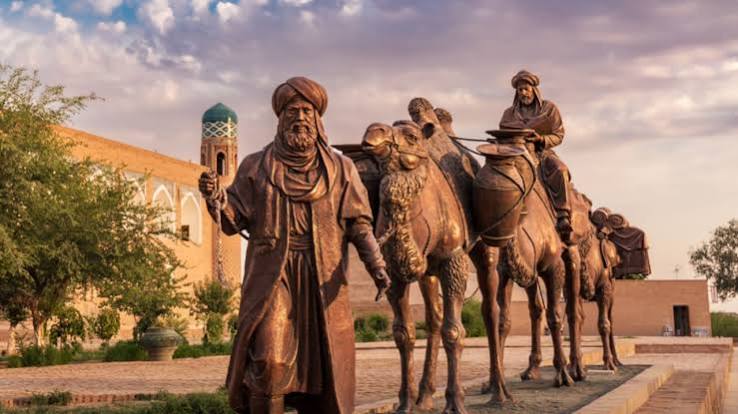
    Two thousand years ago, a merchant in Samarkand loaded his caravan with bolts of silk, jars of rhubarb, and a stack of written contracts. He was a Sogdian, and his people controlled the arteries of commerce between China and the Mediterranean. They spoke a language that became the lingua franca of Central Asia, built self-governing colonies from Mongolia to Korea, and translated Buddhist scriptures for the Chinese. Yet today, their name barely registers outside academic circles.

    For six centuries, the Sogdians were the indispensable intermediaries of the Silk Road. They didn’t build an empire or field a great army. Instead, they built something more durable: a network. When the Arabs arrived in the 8th century and the Tang dynasty retreated, that network collapsed. The Sogdians didn’t vanish—they assimilated, converted, and dissolved into the Persianate world. Their story is a masterclass in how trade can shape history, and how geopolitics can erase a people.

    Who Were the Sogdians?

    Imagine a land of fertile river valleys ringed by desert and steppe. That was Sogdiana, centered on the Zeravshan River in what is now Uzbekistan and Tajikistan. The Sogdians were an Eastern Iranian people, with roots stretching back to the Achaemenid Empire of the 6th century BCE. By the 4th century BCE, Alexander the Great had stormed through their territory, folding them into the Hellenistic world. But they were never a unified state—they were a collection of oasis city-states: Samarkand, Bukhara, Panjakent.

    Their language, Sogdian, was written in a script borrowed from Aramaic and adapted over time. It doesn’t sound like much, but that language became the diplomatic and commercial language of the Silk Road for centuries. If you were doing business in Central Asia in the 6th century, you did it in Sogdian.

    The Silk Road’s Commercial Geniuses

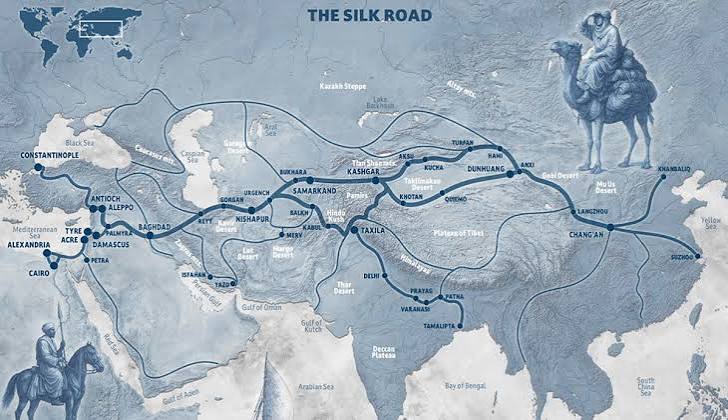
    The Sogdians didn’t invent the Silk Road, but they perfected the art of moving goods across it. They were the middlemen who connected China’s silk and paper with Persia’s silver and glass, India’s spices, and the steppe’s horses. They didn’t just carry things—they engineered the entire logistics.

    Take the Sogdian Ancient Letters, a cache of correspondence from the early 4th century CE, found near Dunhuang. These letters reveal a sophisticated commercial network. Merchants wrote to each other about credit, debts, and market conditions. They used written contracts and agency relationships, where one merchant would represent another’s interests in a distant city. In modern terms, they invented supply chain management and international brokerage.

    They also spread their diaspora communities along the routes. In Tang China’s capital, Chang’an, a whole quarter was Sogdian. They had their own self-governing colonies in Dunhuang, Turfan, and even Mongolia and Korea. These weren’t just trading posts—they were cultural bubbles where Sogdian customs, religions, and art flourished.

    What did they trade? Silk, of course, but also jade, musk, rhubarb (a prized medicine), and horses from the steppes. They dealt in glassware and silverware from the west, and they traded slaves. They were experts in arbitrage—buying low in one empire and selling high in another, while navigating the patchwork of imperial taxes and tariffs.

    Cultural Middlemen: More Than Merchants

    The Sogdians’ role wasn’t just commercial. They were cultural conduits. As they moved goods, they moved ideas. They practiced Zoroastrianism, but they were remarkably tolerant. They adopted Buddhism, Manichaeism, and Nestorian Christianity and spread them along the Silk Road.

    Their most impressive cultural feat was translation. When Buddhism traveled from India to China, the Sogdians acted as intermediaries. They translated Buddhist scriptures into Chinese, not directly from Sanskrit but via Sogdian. They shaped how East Asia received a world religion.

    Their art reflects this synthesis. The wall paintings of Panjakent and Afrasiab show a visual blend of Persian motifs, Indian postures, Greek drapery, and Chinese brushwork. The Sogdians didn’t just carry objects—they carried aesthetics and styles, fusing them into something new.

    Their language left a lasting mark, too. The Sogdian script influenced the Uyghur script, which later gave rise to the Mongolian and Manchu scripts. So the next time you see Mongolian writing, you’re looking at a distant descendant of Sogdian.

    Empires and Alliances: The Geopolitical Tightrope

    The Sogdians survived for centuries by being useful to larger powers. They served as administrators under the Achaemenids, as diplomats under the Göktürk Khaganate, and as officials in Tang China. They weren’t a threat, so empires tolerated them. They were an asset.

    Their partnership with the Göktürks in the 6th and 7th centuries was particularly fruitful. The Sogdians provided the commercial expertise, and the Göktürks provided military protection on the northern Silk Road. This nomadic-sedentary alliance was a model of cooperation that kept trade flowing.

    In Tang China, Sogdians reached the highest levels. They served as generals, ministers, and even influenced court politics. But this dependence on empires was their Achilles’ heel. When those empires clashed, the Sogdians were caught in the middle.

    The Fall: Squeezed Between Caliph and Emperor

    The Arab conquest of Transoxiana began in the early 8th century. By 722 CE, the Arabs had taken Samarkand and Bukhara. The Sogdians resisted, but they were not a unified state, and their city-states fell one by one.

    The decisive blow came at the Battle of Talas in 751 CE. The Abbasid Caliphate faced Tang China on the banks of the Talas River in modern Kyrgyzstan. Sogdians fought on both sides. The Arabs won, and the battle shifted the balance of power in Central Asia. The Tang withdrew their influence, and the Arabs tightened their grip.

    For the Sogdians, this was a catastrophe. They were squeezed between two expanding powers. With the Arabs in control and the Chinese retreating, their comfortable position as intermediaries vanished. The trade routes shifted, and the Sogdian network began to unravel.

    Assimilation and Legacy

    The Sogdians didn’t die out—they were absorbed. Over the next two centuries, they converted to Islam and adopted Persian culture. The Sogdian language faded, replaced by Persian and Tajik. By the 10th or 11th century, it was effectively dead.

    But their legacy persisted. The Sogdian diaspora in China—families with names like Shi and An—continued for generations, even as they assimilated into Chinese society. Their descendants included famous generals and officials. The artistic styles they helped spread lived on in later Central Asian cultures.

    Their greatest legacy might be the model of trade itself. The Sogdians showed that you don’t need an army to shape the world—you need a network, a language, and the ability to adapt. Their rise was built on innovation and tolerance. Their fall came when geopolitics left no room for middlemen.

    The Sogdians are a reminder that history often forgets the mediators. Empires write chronicles; merchants leave ledgers. But those ledgers shaped civilization. The Sogdians connected worlds, carried ideas, and paid the price when the worlds collided. Their story isn’t just a chapter in Central Asian history—it’s a lesson in how commerce and culture intertwine, and how fragile that web can be.

    Summary

    • The Sogdians were an Eastern Iranian people from Sogdiana (modern Uzbekistan/Tajikistan), who dominated Silk Road trade from the 4th to 8th centuries CE.
    • They operated a vast commercial network with diaspora colonies from China to Korea, using language, contracts, and logistics to control trade.
    • They were cultural brokers, spreading Buddhism, Christianity, and Manichaeism, and translating scriptures into Chinese.
    • Their power came from alliances with empires like the Göktürks and Tang China, but they were squeezed between the Arab Caliphate and Tang, leading to their decline after the Battle of Talas (751 CE).
    • They assimilated into Islamic Persianate culture, with their language dying out by the 10th century, but their influence on scripts and trade practices endured.

    FAQ

    Q: What was the Sogdians’ main contribution to the Silk Road?
    A: The Sogdians were the dominant middlemen, connecting China with Persia and the Mediterranean. They pioneered logistics, credit instruments, and multilingual brokerage, moving goods and ideas across Central Asia.

    Q: Why did the Sogdians disappear?
    A: They didn’t disappear suddenly. After the Arab conquest and the Battle of Talas, they lost their privileged position. They gradually converted to Islam and adopted Persian culture, and their language died out by the 10th century.

    Q: Where can we see Sogdian influence today?
    A: Their script influenced Mongolian and Manchu scripts. Their art and culture left traces in Central Asian heritage, and their descendants in China kept family names like Shi and An.

    Q: Were the Sogdians a unified empire?
    A: No, they were a network of independent city-states like Samarkand and Bukhara. Their power relied on commercial cooperation, not political unity.

    Q: What did the Sogdians trade?
    A: They traded silk, jade, horses, glass, silverware, rhubarb, and slaves, among other goods. They were skilled at arbitrage across different imperial tax systems.
  • The Silk Road’s Unsung Traders: How the Sogdians Shaped Eurasian History

    The Silk Road’s Unsung Traders: How the Sogdians Shaped Eurasian History

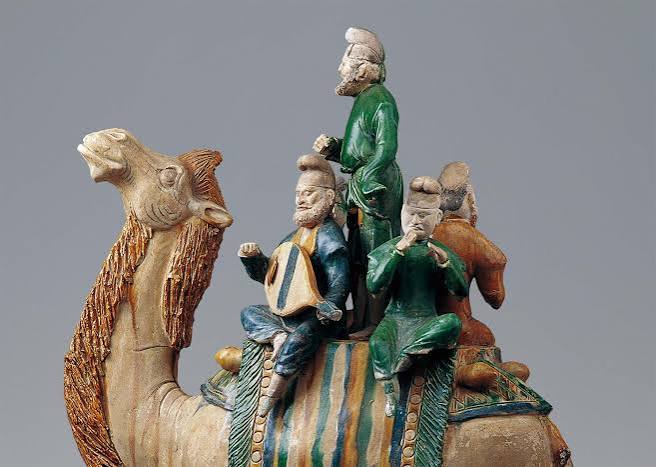
    When we think of the Silk Road, images of camel caravans laden with Chinese silk and Roman glass often come to mind. But who actually drove these caravans? The answer, for centuries, was the Sogdians a people from Central Asia who were the ultimate middlemen of the ancient world. They were not just traders; they were diplomats, translators, and cultural catalysts who linked the great empires of China, Persia, and Byzantium.

    Yet today, their name is barely known outside specialist circles. This article uncovers the story of these unsung traders, from their bustling city-states on the Zeravshan River to their far-flung colonies in China, revealing how they helped shape the course of Eurasian history.

    Who Were the Sogdians?

    The Sogdians were an Eastern Iranian people who inhabited Sogdiana, a region centered on the fertile Zeravshan River valley in what is now Uzbekistan and Tajikistan. Their heartland was a patchwork of independent city-states, including Samarkand, Bukhara, and Panjakent. Unlike their neighbors, the Sogdians never formed a unified empire. Instead, they built a network of commercially driven cities, each governed by local lords known as afshins. This decentralized structure proved to be an advantage: it allowed them to act as neutral intermediaries between rival powers, trusted by all sides.

    Their language, Sogdian, was an Eastern Iranian tongue written in a script derived from Aramaic. Remarkably, this script later influenced the development of the Uyghur and Mongolian alphabets, a lasting legacy of their cultural reach. From the 6th century BCE to the 10th century CE, the Sogdians rose and fell, with their golden age spanning the 4th to 8th centuries CE.

    Masters of the Silk Road

    The Sogdians dominated the central section of the Silk Road, controlling trade routes that linked China, India, Persia, and the Byzantine Empire. Their caravans carried a vast array of goods: silk, spices, glassware, precious metals, horses, and even slaves. They established merchant colonies, known as karvansarai networks, along the routes, with significant communities in Dunhuang, Turfan, and Chang’an (modern Xi’an). Some even ventured as far as the Korean Peninsula.

    But their trade was not limited to luxury goods. They were instrumental in the exchange of ideas and technologies. For instance, they helped transmit papermaking technology westward, a revolutionary development that would transform the Islamic world and Europe. They also dealt in horses, which were crucial for the Tang military, and jade from Khotan, prized in China.

    The Sogdians’ rise to prominence began under the Kushan Empire (1st–3rd centuries CE) and peaked during the early Tang Dynasty (7th–8th centuries CE). The Tang’s expansion into Central Asia created a stable political environment that fostered long-distance trade. The Sogdians also forged a vital alliance with the Turkic Khaganates, serving as administrators, scribes, and diplomats. In effect, they managed the political economy of the steppe, bridging the nomadic and sedentary worlds.

    The Cultural Intermediaries

    The Sogdians were more than just merchants; they were the primary translators and cultural brokers between the Indian, Persian, Chinese, and Turkic worlds. Their religious tolerance was remarkable—they practiced Zoroastrianism, Buddhism, Manichaeism, and Nestorian Christianity, often simultaneously. This openness made them uniquely suited to bridge diverse cultures.

    One of their most significant contributions was the transmission of Buddhism from India to China. Sogdian monks, such as Kang Senghui in the 3rd century CE, traveled to China and helped translate numerous Sanskrit texts into Chinese. They played a similar role for Manichaeism and Nestorian Christianity, spreading these faiths along the Silk Road.

    Their artistic legacy is equally rich. The murals of Panjakent and Afrasiab (near Samarkand) provide some of the most vivid visual records of Silk Road life, depicting scenes of trade, feasting, and mythology. These paintings offer a window into the cosmopolitan world the Sogdians inhabited.

    Sogdians in Chinese Courts

    Sogdians wielded significant political power in China, serving as military generals, court advisors, and even imperial consorts. The most dramatic example is An Lushan, a Sogdian-Turkic general who led a massive rebellion against the Tang Dynasty in 755 CE. The An Lushan Rebellion nearly toppled the dynasty and caused millions of deaths, fundamentally weakening Tang authority and disrupting the very trade networks the Sogdians had built.

    The rebellion also marked a turning point for the Sogdians in China. After its suppression, anti-Sogdian sentiment grew, and many Sogdians assimilated into Chinese society, losing their distinct identity over time.

    The Fall of the Sogdians

    The decline of the Sogdians was a gradual process, driven by two major forces. First, the Arab conquest of Transoxiana in the early 8th century CE eroded their political independence. The last ruler of Panjakent, Divashtich, resisted the invasion but was defeated and killed in 722 CE. Many Sogdians converted to Islam and were assimilated into Persian and Turkic cultures.

    Second, the collapse of Tang authority after the An Lushan Rebellion disrupted their trade networks in China. By the 10th century, the Sogdian language had largely died out, replaced by Persian and Turkic dialects. The Samanid Empire (819–999 CE) absorbed the remnants of Sogdian culture, and the once-thriving merchant communities faded into history.

    Yet their legacy endured. The Sogdians left an indelible mark on the regions they touched, from the scripts of Central Asia to the spread of Buddhism and the artistic traditions of the Silk Road. They were the connective tissue of the ancient world, and their story is a testament to the power of trade and cultural exchange.

    The Sogdians may not have built grand empires or left behind monumental architecture, but their impact on Eurasian history is undeniable. As the unsung traders of the Silk Road, they facilitated the exchange of goods, ideas, and beliefs that shaped the development of entire civilizations. Their story reminds us that history is often driven not by kings and conquerors, but by the merchants and middlemen who connect the world.

    Summary

    • The Sogdians were an Eastern Iranian people from Central Asia who dominated Silk Road trade between the 4th and 8th centuries CE.
    • They acted as cultural brokers, transmitting Buddhism, Manichaeism, and Nestorian Christianity, as well as artistic and literary traditions, between East and West.
    • Their decentralized city-states allowed them to remain neutral intermediaries among powerful empires like the Tang, Sassanian Persia, and the Byzantine Empire.
    • Sogdians held significant political power in China, exemplified by An Lushan, whose rebellion in 755 CE nearly toppled the Tang Dynasty.
    • The Arab conquest and the collapse of Tang authority led to their decline, but their legacy persists in scripts, art, and the flow of ideas across Eurasia.

    FAQ

    Q: Why are the Sogdians considered “unsung” traders?
    A: Despite their crucial role as the main middlemen of the Silk Road, the Sogdians are not as well-known as the Romans, Chinese, or Persians. Their decentralized political structure and eventual assimilation into other cultures meant they left no single dominant empire to preserve their fame.

    Q: What did the Sogdians trade besides silk?
    A: They traded a wide variety of goods, including horses, jade, glassware, spices, precious metals, and slaves. They also helped transmit technologies like papermaking.

    Q: How did the Sogdians influence the spread of Buddhism?
    A: Sogdian monks and translators, such as Kang Senghui, played a key role in translating Buddhist texts from Sanskrit into Chinese, making the religion accessible to Chinese audiences. They also facilitated cultural exchange along the trade routes.

    Q: What was the An Lushan Rebellion and why is it significant?
    A: The An Lushan Rebellion (755–763 CE) was a massive uprising led by An Lushan, a Sogdian-Turkic general, against the Tang Dynasty. It nearly toppled the dynasty, caused millions of deaths, and weakened Tang control over Central Asia, disrupting Silk Road trade.

    Q: When did the Sogdian civilization decline?
    A: The Sogdians began to decline in the early 8th century with the Arab conquest of Transoxiana. Their language and culture gradually disappeared over the following centuries, assimilating into Persian and Turkic populations by the 10th century.

  • The Sogdians: The Ancient Silk Road Traders Who Shaped Eurasian History

    The Sogdians: The Ancient Silk Road Traders Who Shaped Eurasian History

    Long before the Silk Road became a byword for exotic goods and cultural exchange, a network of city-states in Central Asia had already turned trade into an art form. The Sogdians, an Eastern Iranian people from the fertile valleys of modern Uzbekistan and Tajikistan, were the master middlemen of Eurasia for over five centuries. Their language became the lingua franca of the Silk Road, their merchants reached the courts of Byzantium and Chang’an, and their ideas religious, artistic, and technological flowed across continents.

    Yet, despite their outsized influence, the Sogdians remain a footnote in most history books. They never built an empire, raised a massive army, or left behind monumental architecture. Instead, they built something more durable: a commercial and cultural network that held Eurasia together. This is the story of how a people without a state shaped the course of world history, and why their legacy still matters today.

    Who Were the Sogdians?

    The Sogdians were an Eastern Iranian people who inhabited Sogdiana, a region centered on the Zarafshan River Valley in modern-day Uzbekistan and Tajikistan. Their major cities—Samarkand, Bukhara, and Panjakent—were not capitals of a unified kingdom but independent city-states that cooperated for commercial gain. They spoke Sogdian, an Eastern Iranian language written in a script adapted from Aramaic, which later evolved into the Uyghur and Mongolian scripts.

    Their civilization flourished from roughly the 6th century BCE to the 10th century CE, with a golden age between the 4th and 8th centuries CE. Sogdiana sat at the crossroads of the steppe nomads to the north, Persia to the west, India to the south, and China to the east. This geographic position made them natural intermediaries, but their success was not just luck—it was a deliberate strategy of cultural and commercial adaptability.

    The Trading Network That Connected Continents

    The Sogdians were the dominant middlemen of the Silk Road for over 500 years. They controlled trade routes that linked China, India, Persia, and the Mediterranean, handling goods like silk, glassware, spices, precious metals, horses, and even slaves. Their commercial networks stretched from Byzantium in the west to Chang’an (modern Xi’an) in the east, with diaspora communities established at every major trading post along the way.

    What set the Sogdians apart was their business acumen. They developed sophisticated commercial practices, including partnership agreements, credit instruments, and long-distance agency relationships. These were not just informal arrangements—they were legally binding contracts that facilitated trade across vast distances. The Sogdians essentially operated as proto-capitalists, creating a framework for commerce that would later be adopted by other cultures.

    The Ancient Letters: A Window into Sogdian Life

    In 1907, a cache of Sogdian letters was discovered in a watchtower near Dunhuang, China. Known as the Ancient Letters, they date from the early 4th century CE and offer a rare first-person glimpse into the Sogdian world. The letters reveal the everyday concerns of merchants, including trade disputes, family matters, and the disruptions caused by political instability. One letter, written by a Sogdian merchant named Nanai-Vandak, describes the chaos following the fall of the Han Dynasty and the collapse of trade routes. These letters are invaluable historical documents, showing that the Sogdians were not just faceless traders but real people dealing with the same challenges we face today: market volatility, political risk, and the struggle to maintain connections across borders.

    Cultural Transmitters: More Than Merchants

    The Sogdians were not just carriers of goods; they were carriers of ideas. They played a pivotal role in transmitting Buddhism from India to China, translating numerous sutras into Chinese. One prominent figure, Kang Senghui, was a Sogdian Buddhist monk who helped spread Buddhism in southern China in the 3rd century CE. They also carried Manichaeism and Nestorian Christianity eastward, while practicing Zoroastrianism themselves.

    Their artistic influence was equally profound. The murals of Panjakent and Afrasiab are among the richest visual records of Silk Road life, depicting scenes of trade, warfare, and mythology. These works blended Persian, Indian, and Chinese influences, creating a unique Sogdian style that would later inspire the art of the Tang Dynasty and beyond.

    The An Lushan Rebellion: A Sogdian Who Shook China

    Perhaps the most dramatic impact the Sogdians had on world history came through a man named An Lushan. Born in 703 CE to a Sogdian father and a Turkic mother, An Lushan rose to become a powerful general in the Tang Dynasty. In 755 CE, he launched a massive rebellion that nearly toppled the dynasty, plunging China into a devastating civil war that killed millions. The An Lushan Rebellion, as it came to be known, not only shattered the Tang’s golden age but also disrupted the Silk Road trade that the Sogdians had built their fortunes on. This event was a turning point in Sogdian history, marking the beginning of their decline.

    Decline and Legacy

    The Arab conquest of Sogdiana in the 8th century was the beginning of the end. Qutayba ibn Muslim’s armies captured Samarkand in 712 CE, and a series of Sogdian revolts against Arab rule in the 720s-740s were ultimately unsuccessful. The An Lushan Rebellion further devastated Sogdian communities in China, and the rise of maritime trade routes shifted commercial power away from the overland Silk Road. By the 10th century, the Samanid Empire had absorbed Sogdiana, and the Sogdian language gradually gave way to Persian and Turkic.

    Yet the Sogdian legacy endures. Their script influenced the Uyghur and Mongolian writing systems. Their commercial practices laid the groundwork for modern international trade. And their role as cultural intermediaries helped shape the religious and artistic landscape of Asia. The Sogdians may have vanished as a distinct people, but their impact on Eurasian history is undeniable.

    The Sogdians were the unseen architects of the Silk Road, a people who built bridges between civilizations without ever building an empire. Their story reminds us that history is often shaped not by kings and generals but by merchants and translators who move goods, ideas, and beliefs across borders. In an age of globalization, the Sogdians offer a powerful lesson: that the most enduring connections are forged not by conquest but by commerce and cultural exchange.

    Summary

    • The Sogdians were an Eastern Iranian people from Central Asia who dominated Silk Road trade for over 500 years.
    • They never formed a unified empire, organizing instead as a network of city-states like Samarkand and Bukhara.
    • Their language became the lingua franca of the Silk Road, and they were key transmitters of Buddhism, Manichaeism, and Nestorian Christianity.
    • The Ancient Letters, discovered near Dunhuang, offer a rare first-hand look at their trade operations and daily life.
    • Their decline came after the Arab conquest and the An Lushan Rebellion, but their legacy lives on in commercial practices and cultural transmission.

    FAQ

    Q: Who were the Sogdians?
    A: The Sogdians were an Eastern Iranian people who lived in Sogdiana, a region in modern-day Uzbekistan and Tajikistan, from the 6th century BCE to the 10th century CE. They were renowned as the dominant traders of the Silk Road.

    Q: What made the Sogdians such successful traders?
    A: Their success lay in their sophisticated business practices, including partnership agreements, credit instruments, and long-distance agency relationships. They also controlled key trade routes and established diaspora communities across Eurasia.

    Q: How did the Sogdians influence religion and culture?
    A: They transmitted Buddhism from India to China, translating sutras into Chinese, and also carried Manichaeism and Nestorian Christianity eastward. Their art and murals blended Persian, Indian, and Chinese styles, influencing the artistic traditions of the Silk Road.

    Q: What was the An Lushan Rebellion and why is it significant?
    A: The An Lushan Rebellion was a massive uprising in Tang China led by An Lushan, a general of Sogdian-Turkic origin. It nearly toppled the dynasty and disrupted Silk Road trade, contributing to the decline of Sogdian influence.

    Q: Why did the Sogdians disappear?
    A: The Arab conquest in the 8th century, combined with the An Lushan Rebellion and the rise of maritime trade routes, weakened their networks. By the 10th century, they were assimilated into Persian and Turkic cultures.