Tag: naval warfare

  • The Punic Wars: How a Naval Rivalry Forged Rome’s Empire

    The Punic Wars: How a Naval Rivalry Forged Rome’s Empire

    Rome was not always a maritime power. In 264 BCE, the Roman Republic had conquered the Italian peninsula but owned not a single warship. Carthage, by contrast, ruled the waves with a professional navy and mercenary armies. Yet over the next century, Rome not only defeated its rival but erased it from the map. This is the story of the Punic Wars: a conflict that killed over a million people, tested Rome’s institutions to their limits, and ultimately set the template for Western empire.

    The Spark: A Mercenary Dispute in Sicily

    The trigger for the First Punic War was not a grand strategic ambition but a plea from a band of Italian mercenaries called the Mamertines. They had seized the city of Messana on Sicily’s northeastern tip, only to find themselves besieged by Carthage and Syracuse. In desperation, they appealed to Rome for help. The Roman Senate hesitated—they had no treaty with the Mamertines and no experience fighting overseas. But the people’s assembly, swayed by the promise of plunder and the fear of Carthaginian power so close to Italy, voted to intervene. Rome’s first overseas campaign began almost by accident.

    Rome Learns to Fight at Sea

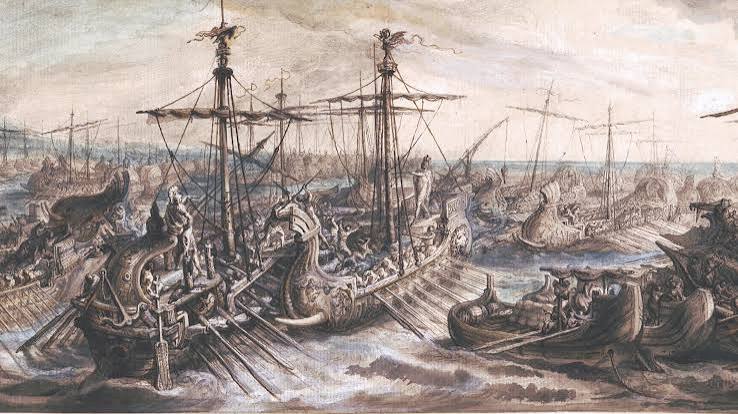
    Carthage was a maritime commercial empire, descended from Phoenician colonists. Its navy was the best in the Mediterranean. Rome had no fleet at all. According to the historian Polybius, the Romans found a Carthaginian warship wrecked on their coast and used it as a blueprint. Within 60 days, they built a fleet of 100 ships—though the quality was rough, and their crews were landsmen.

    To compensate, they invented the corvus, a boarding bridge with a spike that could be dropped onto enemy ships, locking them together. This turned naval battles into land battles, where Roman soldiers excelled. At the Battle of Mylae in 260 BCE, the corvus helped Rome win its first naval victory. By 241 BCE, after 23 years of war, Rome had exhausted Carthage and forced it to surrender Sicily—Rome’s first province. The war also cost Rome hundreds of ships and thousands of men, but it had learned to dominate the sea.

    Hannibal’s Bold Gambit

    Carthage did not accept defeat gracefully. To recover, it expanded into Spain under the Barcid family—Hamilcar Barca and his son Hannibal. Hamilcar made his young son swear an oath of eternal hatred against Rome. In 218 BCE, Hannibal provoked the Second Punic War by besieging Saguntum, a Roman ally in Spain. Then he did what no one expected: he marched his army, including 37 war elephants, over the Alps.

    The crossing was catastrophic. Winter storms, treacherous terrain, and Gallic attacks reduced his force from about 40,000 infantry and 6,000 cavalry to roughly 26,000 men. Only a fraction of the elephants survived. Yet Hannibal still managed to win three crushing victories in Italy: at the Trebia, Lake Trasimene, and, most famously, Cannae in 216 BCE.

    Cannae: The Bloodiest Day Before World War I

    At Cannae, Hannibal executed a perfect double envelopment. He placed his weakest troops in the center, who gradually fell back as the Romans pushed forward. Meanwhile, his cavalry drove off the Roman horse and circled behind, surrounding the Roman infantry. The result was a massacre. Estimates of Roman casualties range from 50,000 to 70,000 dead in a single day. No other battle in history would match that toll until the trenches of World War I. The Roman Republic was on the brink of collapse.

    Yet Hannibal did not march on Rome. He expected Rome’s Italian allies to defect, but they largely remained loyal. The Romans, meanwhile, turned to a new strategy.

    The Fabian Strategy: Winning by Not Fighting

    The Roman dictator Fabius Maximus understood that Hannibal was unbeatable in a pitched battle. So he avoided them entirely. He shadowed Hannibal’s army, harassing its foragers, cutting off supplies, and refusing to engage. This “Fabian strategy” was deeply unpopular with Romans who demanded revenge, but it worked. Hannibal’s army, stranded in Italy without reinforcement, began to weaken.

    Fabius was eventually replaced by more aggressive commanders, who suffered defeats. But his principle—that time and attrition could defeat a superior general—eventually proved correct. It became a model for later commanders like George Washington and Wellington.

    Scipio Africanus and the Battle of Zama

    Rome’s ultimate victory came from a different approach. A young general named Scipio Africanus proposed an audacious plan: instead of fighting Hannibal in Italy, Rome would invade Carthage’s homeland in North Africa. The gamble worked. Carthage was forced to recall Hannibal from Italy, and in 202 BCE, the two greatest generals of the age met at Zama.

    Scipio had learned from Cannae. He arranged his infantry in a checkerboard formation, leaving gaps that Hannibal’s war elephants could pass through harmlessly. Then his cavalry, which had been trained to outflank, won the day. Hannibal was defeated for the first time. Carthage sued for peace, surrendering its fleet, its empire, and its pride.

    The Third Punic War: The Destruction of Carthage

    The peace lasted 50 years, but Rome’s fear and hatred of Carthage never died. The statesman Cato the Elder ended every speech—on any topic—with the phrase “Carthago delenda est”: “Carthage must be destroyed.” In 149 BCE, Rome found a flimsy pretext in a border dispute with Carthage’s neighbor, and declared war.

    The Third Punic War was less a war than a siege and slaughter. In 146 BCE, after three years, Roman forces under Scipio Aemilianus broke through the city walls. Carthage was burned to the ground. The surviving population of about 50,000 was sold into slavery. The legend that the Romans sowed the fields with salt is debated by historians, but the symbolic point stands: Rome did not just defeat Carthage; it annihilated it.

    The Legacy: How the Punic Wars Shaped the West

    The Punic Wars transformed Rome from a regional Italian power into a Mediterranean empire. By destroying Carthage, Rome eliminated its only serious rival for dominance. The result was an unprecedented period of Roman expansion that would eventually encompass the entire Mediterranean basin and beyond, spreading Latin language, Roman law, and Greek culture across Europe, North Africa, and the Middle East.

    But the wars also sowed the seeds of Rome’s own decline. The acquisition of overseas provinces created new sources of wealth and power for generals, leading to political instability and civil wars. The citizen-soldier army that had fought so bravely was eventually replaced by professional legions loyal to their commanders, not the state—a shift that would culminate in the rise of emperors.

    The Punic Wars also left a cultural legacy. The story of Hannibal crossing the Alps remains one of the most celebrated feats in military history. The duel between Hannibal and Scipio inspired countless later generals. And the Fabian strategy became a byword for patient, indirect warfare.

    Conclusion

    The Punic Wars were not merely a series of battles. They were a clash between two radically different models of society: Carthage’s commercial, maritime, mercenary-based empire versus Rome’s agrarian, land-focused, citizen-soldier republic. The outcome determined which model would dominate the Mediterranean, and by extension, the future of Western civilization. Rome’s victory did not just create an empire; it set a precedent for how the West would project power for the next two millennia—through disciplined citizen armies, technological adaptation, and an unyielding determination to eliminate rivals. The ruins of Carthage, lying silent near modern Tunis, are a reminder that history is written by the victors, but also that victory can carry costs that shape the future in unexpected ways.

    The Punic Wars ended with Carthage in ashes and Rome supreme. Yet the cost was immense: a million dead, a century of conflict, and the transformation of a republic into an empire. The rivalry with Carthage forced Rome to become a naval power, a colonial ruler, and ultimately a conqueror of the Mediterranean. In doing so, Rome forged the cultural and legal foundations of the West, but also sowed the seeds of its own imperial destiny. The lesson of the Punic Wars is that great powers are often shaped by their enemies—and that destruction, even of an enemy, can have consequences far beyond the battlefield.

    Summary

    • The Punic Wars were three conflicts between Rome and Carthage (264–146 BCE) that determined control of the Mediterranean.
    • Rome’s first major naval war forced it to build a fleet from scratch, using the corvus boarding bridge to turn sea battles into land battles.
    • Hannibal’s audacious crossing of the Alps and victory at Cannae (216 BCE) nearly destroyed Rome, but the Fabian strategy of attrition saved it.
    • Scipio Africanus defeated Hannibal at Zama (202 BCE), making Rome the dominant power in the western Mediterranean.
    • The Third Punic War ended with the complete destruction of Carthage, removing Rome’s last rival and paving the way for its empire.

    FAQ

    Q: What were the Punic Wars?
    A: The Punic Wars were a series of three wars between the Roman Republic and the Carthaginian Empire, fought from 264 BCE to 146 BCE, primarily over control of Sicily and dominance in the Mediterranean.

    Q: Who was Hannibal and why is he famous?
    A: Hannibal Barca was a Carthaginian general renowned for his tactical genius. He famously led his army, including war elephants, across the Alps to invade Italy, winning major victories like the Battle of Cannae before being defeated by Scipio Africanus at Zama.

    Q: What was the Fabian strategy?
    A: The Fabian strategy, named after the Roman dictator Fabius Maximus, involves avoiding pitched battles and instead using attrition, harassment, and scorched-earth tactics to weaken a stronger enemy over time. It was used to counter Hannibal’s superior tactical skills.

    Q: How did the Punic Wars affect Rome’s rise to power?
    A: The wars transformed Rome from a regional Italian power into a Mediterranean empire by giving it its first overseas provinces (Sicily, Sardinia, Spain), a powerful navy, and a reputation for military invincibility. They also led to social and political changes that eventually contributed to the fall of the Republic.

    Q: Why did Rome destroy Carthage in the Third Punic War?
    A: Rome’s destruction of Carthage was driven by long-standing fear and hatred of its rival, revived by Cato the Elder’s persistent calls of “Carthage must be destroyed.” The immediate cause was a minor territorial dispute, but the underlying motive was to eliminate a potential threat to Rome’s dominance.
  • Greek Fire: The Byzantine Weapon That Burned on Water—and Vanished


    Imagine a weapon that could set enemy ships ablaze while floating on water, a fire that refused to die when doused, and a government so terrified of its secret that it was whispered only among a handful of trusted hands. That weapon was Greek Fire, the Byzantine Empire’s most guarded asset, which for centuries kept the world’s most powerful navies at bay. Its formula was so sacred that emperors swore their heirs to secrecy yet today, we don’t know exactly what it was. The story of Greek Fire is not just a tale of ancient warfare; it’s a lesson in how technology, secrecy, and geopolitics can intertwine and how a secret can vanish with the empire that guarded it.

    The Fire That Burned on Water

    Greek Fire was not a myth or a legend—it was a terrifying reality. First deployed in the 7th century, this incendiary weapon could burn on the surface of water, making it the ultimate naval nightmare. Byzantine warships, called dromons, were equipped with bronze siphons that shot streams of liquid fire at enemy vessels. The effect was devastating: wooden ships turned to infernos, crews leapt into the sea only to find the flames following them, and entire fleets were reduced to ash and smoke.

    The weapon’s most famous appearances came during the Arab sieges of Constantinople in 673–678 CE and again in 717–718 CE. In both cases, the Byzantine navy, vastly outnumbered, used Greek Fire to break the Arab blockades and save the empire. The Arab fleets, which had expected an easy victory, were repelled with catastrophic losses. For the Byzantines, Greek Fire was not just a military advantage—it was a divine gift, a symbol of God’s favor.

    A Secret Worthy of Death

    The Byzantine government treated Greek Fire’s formula as a state secret of the highest order, perhaps the first example of a weapon of mass destruction kept under lock and key. Emperor Constantine VII Porphyrogenitus, writing in the 10th century, explicitly warned his son in his manual De Administrando Imperio: never reveal the secret, for it was given by God to the Byzantines alone. The formula was reportedly divided among a few trusted families or guilds, and the penalty for disclosing it was death. Some legends even claimed an angel delivered the recipe to Emperor Constantine IV, cementing its sacred status.

    This secrecy had practical consequences. Because the formula was never written down openly, it was passed orally or in coded form. As the empire’s fortunes declined, the knowledge became ever more concentrated—and ever more vulnerable. By the 12th century, references to Greek Fire in battle dwindle, and by the Fourth Crusade in 1204, when Constantinople was sacked by Western Christians, the weapon appears to have been largely lost or degraded.

    What Was Greek Fire? The Scientific Mystery

    Modern historians and chemists have long debated the composition of Greek Fire. The most widely accepted theory is that it was a petroleum-based mixture, likely naphtha (a flammable liquid derived from crude oil, found in the Caucasus or Dead Sea regions), thickened with resins like pine tar to make it stick to targets. Sulfur and quicklime may have been added: quicklime reacts violently with water, generating heat that could ignite the naphtha—a plausible mechanism for a fire that burned on water.

    Other theories propose saltpeter-based mixtures, which would have made it an early form of gunpowder, but evidence for that is thin. Some modern chemists have suggested calcium phosphide, a compound that self-ignites on contact with water, but ancient technology likely couldn’t produce it. The most probable recipe, according to historical consensus, is a blend of naphtha, sulfur, and resin—a sticky, flammable cocktail that could be sprayed from a siphon and would cling to enemy ships, burning even as the crew tried to douse it with water.

    The Decline and Disappearance

    Why did such a formidable weapon vanish? Several factors likely contributed. First, the Byzantine Empire itself was shrinking. The territories that supplied the ingredients—particularly the oil fields of the Caucasus—fell to enemies, cutting off the raw materials. Second, the Byzantine navy, once the empire’s pride, declined in size and importance as the empire focused on land defenses and diplomatic alliances.

    Third, the tight secrecy may have backfired. If the formula was held by a specific family or guild that died out or lost power, the knowledge could have died with them. Finally, new technologies emerged. By the 12th century, Arab and Western navies were developing their own incendiary weapons, and later, gunpowder-based firearms and cannons made Greek Fire obsolete. Some historians argue the formula wasn’t truly “lost” but simply became irrelevant—a weapon replaced by more effective means of destruction.

    The Legacy of Lost Knowledge

    The story of Greek Fire endures as a classic “lost knowledge” narrative. It reminds us that ancient civilizations often possessed technologies we still don’t fully understand, and that the loss of a single formula—or the knowledge of how to build a machine—can alter the course of history. The Byzantine Empire’s rise and fall was shaped in part by this weapon, but its decline was equally shaped by the inability to innovate beyond it.

    For modern readers, Greek Fire is a testament to the power of secrecy and the fragility of knowledge. It also underscores a paradox: the more a state protects its technological secrets, the more vulnerable those secrets become to extinction. In an age of open-source intelligence and rapid innovation, the Byzantine model of guardianship seems archaic—yet it offers a cautionary tale about the risks of over-reliance on a single, closely held advantage.

    Greek Fire was a weapon born of desperation and genius, a secret that helped a dwindling empire survive for centuries. Its formula may be lost, but its mystery persists, fueling both historical debate and our imagination. The next time you see a flame that refuses to die, remember the Byzantines—and the fire that once ruled the seas, only to vanish with the empire that kept it.

    Summary

    • Greek Fire was an incendiary weapon used by the Byzantine Empire from the 7th to 12th centuries, capable of burning on water and used primarily in naval warfare.
    • Its formula was a closely guarded state secret, with emperors swearing heirs to secrecy; the penalty for revealing it was death.
    • The most likely composition was a petroleum-based mixture (naphtha) thickened with resins, possibly with sulfur and quicklime; modern theories include calcium phosphide but are considered unlikely.
    • The weapon’s use declined due to loss of territories for ingredients, decline of the Byzantine navy, and the emergence of new technologies like gunpowder.
    • The story of Greek Fire illustrates the fragility of secret knowledge and the risks of over-reliance on a single technological advantage.

    FAQ

    Q: Was Greek Fire actually fire that burned on water?
    A: Yes, Greek Fire could burn on water, which made it devastating in naval combat. Its exact mechanism is debated, but a mixture of naphtha and quicklime is a plausible explanation: quicklime reacts with water to generate heat, potentially igniting the flammable naphtha.

    Q: Who invented Greek Fire?
    A: It is traditionally attributed to Kallinikos, a Greek-speaking engineer from Heliopolis (modern Baalbek, Lebanon), who fled to Constantinople around 672 CE during the Arab conquests. However, the formula may have been developed earlier or refined by Byzantine chemists.

    Q: Why is the formula lost?
    A: The formula was kept secret and passed down orally or in coded form among a few trusted families. As the Byzantine Empire declined, the knowledge became concentrated and eventually died out. Additionally, the loss of territories that supplied key ingredients like naphtha made production impossible.

    Q: Could Greek Fire be extinguished?
    A: Contemporary sources say it was notoriously difficult to extinguish. Sand, vinegar, or urine were reportedly the only effective countermeasures, though these were not always practical in battle.

    Q: Did Greek Fire lead to the development of gunpowder?
    A: No, Greek Fire was a separate technology. It was primarily based on petroleum, whereas gunpowder is a mixture of saltpeter, charcoal, and sulfur. However, some later recipes in texts like Liber Ignium blended both, but these are considered medieval inventions rather than authentic Byzantine formulas.

  • Isoroku Yamamoto: The Admiral Who Warned Japan Against War

    Isoroku Yamamoto: The Admiral Who Warned Japan Against War

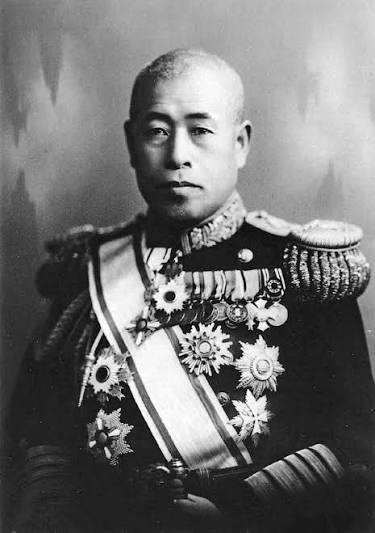
    On December 7, 1941, Japanese carrier aircraft devastated the U.S. Pacific Fleet at Pearl Harbor. The man who planned that attack, Admiral Isoroku Yamamoto, had spent years warning his own government that such a war would end in disaster. He knew America’s industrial might firsthand—he had studied at Harvard and served as a naval attaché in Washington. Yet he followed orders, launching a war he believed Japan could not win.

    Yamamoto’s life is a study in contradictions. He was a gambler who calculated odds with cold precision, a samurai descendant who embraced modern aviation, and a reluctant warrior who became his nation’s most famous naval commander. His story offers a window into how Japan hurtled toward war, and why one of its most brilliant military minds couldn’t stop it.

    The Making of a Naval Strategist

    Isoroku Yamamoto was born in 1884 into a low-ranking samurai family in Nagaoka, Japan. His birth name was Isoroku Takano, but he was later adopted into the Yamamoto clan—a traditional practice to preserve a family name. From an early age, he was shaped by the strict values of the samurai class: discipline, honor, and loyalty to the emperor.

    He entered the Imperial Japanese Naval Academy in 1901, graduating in the midst of the Russo-Japanese War. At the Battle of Tsushima in 1905, he lost two fingers on his left hand—a wound that earned him the nickname “Eighty Sen” from geisha and gamblers, mocking the cost of a manicure. But the battle also taught him a lesson that would define his career: modern naval warfare was changing, and those who adapted would prevail.

    After the war, Yamamoto rose through the ranks, attending the Naval War College and then serving as a naval attaché in Washington, D.C., from 1919 to 1921. He even took courses at Harvard University. This American experience left a lasting impression. He traveled widely, studied the country’s industries and shipyards, and understood that the United States had vast resources Japan simply couldn’t match.

    The Reluctant Advocate for Aviation

    Back in Japan, Yamamoto became a vocal proponent of naval aviation. In the 1920s and 1930s, most senior officers still worshipped the battleship, seeing it as the ultimate weapon. Yamamoto argued otherwise. He pushed for the development of aircraft carriers and long-range bombers, insisting that airpower would dominate future conflicts.

    His advocacy put him at odds with the navy’s traditionalists. But Yamamoto’s record and intellect earned him respect. By 1939, he was appointed Commander-in-Chief of the Combined Fleet, Japan’s main battle force.

    He also opposed the Tripartite Pact with Nazi Germany and fascist Italy, signed in 1940. Yamamoto believed that aligning with these powers would inevitably drag Japan into a war with the United States and Britain—a conflict he was convinced Japan would lose. His opposition made him enemies among ultranationalist military officers and civilians. He received death threats and required a personal bodyguard.

    The Plan for Pearl Harbor

    Despite his misgivings, when the decision to go to war was made, Yamamoto threw his skill behind it. He conceived the attack on Pearl Harbor as a preemptive strike to cripple the U.S. Pacific Fleet. His goal wasn’t to conquer America—it was to buy Japan six months to a year of free rein in Southeast Asia, time to fortify its conquests and hopefully negotiate a favorable peace.

    He reportedly told Prime Minister Fumimaro Konoe, “If I am told to fight regardless of the consequences, I shall run wild for the first six months or a year, but I have utterly no confidence for the second or third year.”

    On December 7, 1941, the plan unfolded with devastating precision. Japanese carrier aircraft sank or damaged eight battleships, destroyed nearly 200 aircraft, and killed over 2,400 Americans. The attack achieved its immediate objective, but it also galvanized the United States. Instead of negotiating, America declared war and entered World War II with a fury Yamamoto had feared.

    The Turning Point: Midway

    Yamamoto’s next major operation was the Battle of Midway in June 1942. His plan was complex, designed to lure the U.S. carriers into a trap. It backfired catastrophically. On June 4, 1942, American dive bombers found the Japanese fleet with its aircraft rearming and refueling. In a single day, Japan lost four aircraft carriers—the heart of its naval aviation.

    The defeat at Midway is often cited as the turning point of the Pacific War. Yamamoto was not solely responsible; the plan was a product of the naval staff’s overconfidence. But his reputation as a flawless strategist suffered. From then on, Japan was on the defensive, fighting a grinding war of attrition in the Solomon Islands.

    The Final Mission

    By April 1943, Yamamoto was directing operations around Guadalcanal. He decided to make an inspection tour of forward bases to boost morale. American intelligence intercepted and decrypted his travel schedule. President Franklin D. Roosevelt reportedly approved a mission to shoot him down—Operation Vengeance.

    On April 18, 1943, a squadron of U.S. Army P-38 Lightning fighters ambushed Yamamoto’s transport aircraft near Bougainville Island. The plane was shot down, killing Yamamoto and several others. He was 59 years old.

    His death was a significant blow to Japanese morale. Ironically, some Japanese hardliners who had once threatened his life saw his demise as a blessing. They had considered him too moderate, too willing to compromise with the West.

    Admiral Chester Nimitz, commander of the U.S. Pacific Fleet, later paid tribute to his fallen adversary: “He was one of the ablest officers in the Japanese Navy.” Nimitz understood that Yamamoto’s death was more than a tactical victory—it was the removal of a brilliant mind from an enemy that could ill afford to lose him.

    A Contradictory Legacy

    Isoroku Yamamoto remains one of the most enigmatic figures of World War II. He was a man who loved gambling but faced the ultimate stakes of war. He warned against a conflict he knew was unwinnable, yet he fought with uncompromising resolve. He embraced modern aviation while honoring ancient samurai traditions.

    His story is not just a military biography. It’s a lesson in how individuals can be caught in the machinery of history, forced to choose between their conscience and their duty. Yamamoto chose duty, and in doing so, he helped write one of the most tragic chapters of the 20th century.

    Yamamoto’s prediction proved tragically accurate. Japan ran wild for six months, but after two years, the industrial might of America overwhelmed it. His death in 1943 spared him from witnessing his nation’s ruin, but it also robbed him of the chance to see his warnings fully vindicated. Today, he is remembered not only as a brilliant tactician but as a man who saw the abyss clearly—and was powerless to pull his country back from its edge.

    Summary

    • Isoroku Yamamoto was the Japanese admiral who planned the attack on Pearl Harbor, despite warning that Japan couldn’t win a long war against the U.S.
    • He was a visionary advocate for naval aviation, pushing for carrier-based airpower when battleships still dominated naval thinking.
    • He opposed Japan’s alliance with Germany and Italy, leading to death threats from ultranationalists.
    • The Battle of Midway in 1942 was a decisive Japanese defeat, often blamed in part on Yamamoto’s overly complex plan.
    • He was killed in 1943 when American fighters shot down his transport plane, a mission code-named Operation Vengeance.

    FAQ

    Q: Why did Yamamoto plan the attack on Pearl Harbor if he opposed war with the U.S.?
    A: Yamamoto believed that if Japan went to war, it had to strike first and hard to disable the U.S. Pacific Fleet. He hoped a surprise attack would buy time for Japan to secure its conquests and negotiate a favorable peace. Despite his personal opposition, he followed orders and executed the plan with full commitment.

    Q: How did Yamamoto lose his fingers?
    A: He lost two fingers on his left hand during the Battle of Tsushima in 1905, a major naval victory against Russia. The injury was a badge of honor and also gave him the nickname “Eighty Sen,” referring to the cost of a manicure at the time.

    Q: What was Operation Vengeance?
    A: Operation Vengeance was the American mission to shoot down Yamamoto’s aircraft. U.S. intelligence intercepted and decoded his travel plans, and on April 18, 1943, P-38 Lightning fighters ambushed and killed him near Bougainville Island.

    Q: How did Yamamoto’s death affect the war?
    A: Yamamoto’s death was a major morale blow to Japan. He was highly respected as a brilliant strategist, and his loss weakened the Imperial Japanese Navy’s leadership. Some historians also argue it deprived Japan of one of its most capable commanders during a critical phase of the war.

    Q: What was Yamamoto’s view on the Tripartite Pact?
    A: Yamamoto strongly opposed Japan’s alliance with Germany and Italy in 1940. He believed it would inevitably lead to war with the United States and Britain, a conflict he thought Japan could not win. His opposition made him a target for ultranationalist extremists.

  • The Proximity Fuze: The Secret Weapon That Stopped the Kamikazes

    The Proximity Fuze: The Secret Weapon That Stopped the Kamikazes

    The Allies' Billion-dollar Secret: The Proximity Fuze of World War II

    In the spring of 1945, off the coast of Okinawa, a U.S. Navy sailor watched a Japanese Zero dive toward his ship. The anti-aircraft guns opened fire, but the shells weren’t aimed to hit the plane—they were set to explode in the air, filling the sky with shrapnel. Yet this time, something was different. The shells didn’t burst at a pre-set altitude. They waited until the plane was close, then detonated with deadly precision, shredding the Zero before it could release its payload or crash into the deck.

    That difference was the proximity fuze, a tiny radar inside each shell that made it ‘smart’ for the first time in history. Developed in utmost secrecy, it was arguably as important as the atomic bomb in ending World War II and it was the key to stopping the kamikaze onslaught that threatened to turn the tide in the Pacific.

    The Problem: A Shell That Couldn’t Hit a Plane

    By 1940, aircraft had become faster and more maneuverable than ever. Anti-aircraft guns fired shells that exploded either on impact or after a preset time, calculated by a gunner who had to guess the aircraft’s speed, altitude, and direction. Against a diving Zero or a high-flying bomber, that guess was often wrong. A shell that exploded too early produced a harmless puff of smoke; too late, and it fell into the sea. The U.S. Navy calculated that it took about 2,500 rounds of standard 5-inch ammunition to down a single aircraft. That was an unacceptable ratio when Japanese planes were intentionally crashing into American ships.

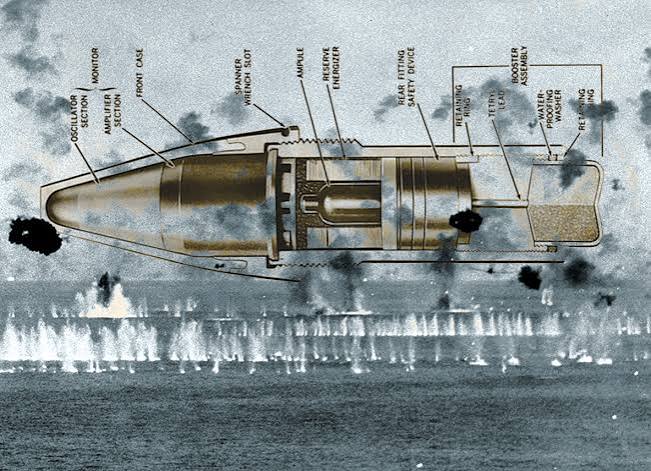
    The solution required a fundamental change: a fuze that could sense the target and detonate at the optimal moment. That meant putting a radar transmitter and receiver inside a shell small enough to fit in a 5-inch gun, rugged enough to survive the 20,000g shock of being fired, and cheap enough to produce by the millions.

    The Innovation: A Radar in Every Shell

    The idea was proposed by British scientists, who shared their cavity magnetron—a device that generated high-frequency radio waves with the United States in 1940 as part of the Tizard Mission. This breakthrough made it possible to miniaturize radar. The U.S. Navy’s National Defense Research Committee, under the leadership of Dr. Merle Tuve at Johns Hopkins University’s Applied Physics Laboratory, took on the challenge.

    The result was the VT fuze, short for ‘variable time.’ Each fuze contained a tiny radio transmitter that sent out a signal. When the shell approached a target, the signal bounced back, and the fuze detonated the shell within 20 to 70 feet of the aircraft close enough for the shrapnel to be lethal. The first successful test was in January 1942, and by 1943, factories were mass-producing them.

    The Secret Weapon: Guarding the Secret

    The proximity fuze was one of the most closely guarded secrets of World War II. The U.S. military was terrified that if an unexploded shell fell into enemy hands, the Germans or Japanese would reverse-engineer the technology. So, the fuze was used only over water where the shells would sink into the ocean and only against aircraft. Its use over land was forbidden until the Battle of the Bulge in December 1944, when the U.S. Army, desperate against a surprise German offensive, got permission to use VT-fuzed artillery. The results were devastating: shells that exploded in the air above German infantry in the open caused horrific casualties and helped break the offensive.

    The secrecy extended even to allies. The British had helped develop the technology, but the U.S. initially restricted sharing details, a source of tension. Only after the fuze’s success was undeniable did the U.S. relax the restrictions.

    The Kamikaze Crisis: A Turning Point at Okinawa

    The kamikaze campaign began in earnest in October 1944, during the Battle of Leyte Gulf. By the time the U.S. invaded Okinawa in April 1945, the Japanese were launching mass waves of suicide planes. The attacks were devastating: in the first weeks, kamikazes sank or damaged dozens of ships, killing thousands of sailors. The U.S. Navy was facing a crisis that threatened the entire invasion.

    The proximity fuze was the answer. When VT-fuzed shells were used in the anti-aircraft guns, the kill probability per round increased by four to five times. The Navy’s radar-directed fire control, combined with VT fuzes, meant that a shell didn’t have to hit the plane it just had to get close. Japanese pilots reported that American shells seemed to ‘explode in their faces’ with uncanny accuracy, a psychological blow as much as a physical one. By the end of Okinawa, the VT fuze had helped the Navy shoot down thousands of kamikaze planes, turning the tide.

    The Industrial Miracle: A Billion-Dollar Investment

    Developing the fuze was only half the battle. Producing it in the quantities needed was another. The program cost roughly $1 billion in 1940s dollars comparable to the Manhattan Project. By 1945, U.S. factories, including those run by Sylvania and Raytheon, were producing over 1 million fuzes per month. Each one contained fragile vacuum tubes that had to survive the shock of being fired. It was a triumph of industrial engineering, turning a complex electronic device into a cheap, reliable component.

    The Legacy: From War to Peace

    After the war, the proximity fuze’s technology found peacetime uses. It was adapted for weather radar, air traffic control, and modern artillery. But its greatest impact was on the battlefield. Some historians, like Ralph Baldwin, argue that it was the second most important secret weapon of World War II, after the atomic bomb. While the bomb ended the war, the proximity fuze saved countless American lives and helped secure victory in the Pacific.

    The proximity fuze was a weapon of genius, born of scientific collaboration and industrial might. It didn’t just improve anti-aircraft fire it transformed it, turning a desperate defense into a lethal shield. In the dark days of the kamikaze campaign, it was the difference between defeat and victory. And yet, it remains one of the least-known secrets of the war, a silent hero that saved thousands of lives and helped end the conflict.

    Summary

    • The proximity fuze (VT fuze) used a miniature radar to detonate shells near targets, making anti-aircraft fire 4-5 times more effective.
    • Developed in secret by the U.S. Navy and NDRC, it cost ~$1 billion and was produced at a rate of 1 million per month by 1945.
    • It played a crucial role against kamikazes at Okinawa, where it helped shoot down thousands of planes.
    • Its use was restricted to over-water operations to keep it secret, until the Battle of the Bulge.
    • Post-war, the technology was adapted for weather radar and air traffic control.

    FAQ

    Q: What is a proximity fuze?
    A: A proximity fuze, or VT fuze, is a radar-based detonator that explodes a shell when it comes within 20-70 feet of its target, rather than on impact or after a preset time.

    Q: How did the proximity fuze work?
    A: Each fuze contained a tiny radio transmitter and receiver. The transmitter sent out a signal; when it bounced back off a target, the fuze triggered the explosion.

    Q: Why was it so secret?
    A: The U.S. feared that if an unexploded shell fell into enemy hands, they could reverse-engineer the technology. So it was only used over water until late in the war.

    Q: How effective was it against kamikazes?
    A: VT-fuzed shells increased kill probability by 4-5 times compared to time fuzes, and were a primary defense at Okinawa, helping to defeat the kamikaze campaign.

    Q: What was the post-war impact?
    A: The technology was adapted for weather radar, air traffic control, and modern artillery, leaving a lasting legacy beyond the battlefield.

  • The Silent Siege: How Naval Blockades Strangled Nations and Reshaped History

    The Silent Siege: How Naval Blockades Strangled Nations and Reshaped History

    In the winter of 1918, a young German boy named Erich Kästner watched his mother cry over a bowl of turnip soup. The soup was all they had, and it was thin. Across the North Sea, British warships had been sitting in the gray waters for nearly four years, their steel hulls a constant reminder that no food, no medicine, and no hope could reach Germany’s ports. Kästner later wrote, ‘The blockade was a siege, and we were the besieged.’ He was not a soldier. He was a child, and he was starving.

    Naval blockades are the quiet engines of war. They do not explode or charge across fields. They simply wait. And in that waiting, they can kill more people than any battle. From Napoleon’s Continental System to the U.S. quarantine of Cuba, blockades have strangled economies, toppled governments, and pushed the world to the brink of annihilation—all without a single shot fired at the enemy’s main forces.

    The Weapon That Waits

    A naval blockade is a military act: the isolation of a port or coastline by enemy ships to cut off all maritime traffic. It is not an embargo, which is a political or economic tool. A blockade is enforced by cannon and steel, and it has a legal backbone. Under the 1856 Declaration of Paris and the 1909 Declaration of London, a blockade must be publicly declared, effectively enforced—not a mere “paper blockade”—and applied equally to all nations. But the law has rarely cushioned the suffering it causes.

    Blockades became strategically vital only when nations grew dependent on the sea for survival. In the 19th century, industrial warfare meant that a country’s ability to fight rested on imported food, coal, rubber, and oil. Cut those imports, and the war machine sputters. The concept of a “fleet in being” emerged: a fleet doesn’t have to win a battle; its mere presence deters enemy shipping, creating a psychological and economic stranglehold.

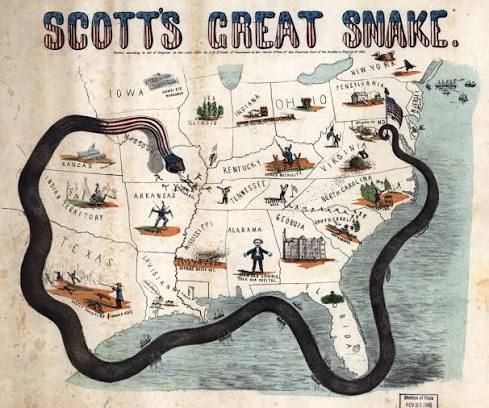
    The American Civil War’s Anaconda Plan is a textbook example. In 1861, the Union navy began a blockade of Confederate ports, stretching from Virginia to Texas. The plan was slow, but it worked. Southern cotton exports plummeted, and weapons imports dried up. By 1865, the Confederacy’s economy was in ruins, and its armies were short on rifles and gunpowder. The blockade didn’t win the war alone, but it squeezed the life out of the South’s ability to fight.

    The Hunger Blockade of World War I

    World War I elevated the blockade to an industrial-scale instrument of mass suffering. Britain, with its overwhelming naval superiority, blockaded Germany from the war’s first days. The British aimed to starve Germany into submission. They intercepted neutral ships, confiscated cargoes, and mined the North Sea. By 1918, Germany was importing almost nothing. The result was catastrophic: an estimated 400,000 to 800,000 German civilians died from starvation and disease—people who never wore a uniform.

    The German government exploited the blockade for propaganda, but the suffering was real. Children, the elderly, and the sick were the first to fall. Turnip soup became a symbol of desperation. The blockade didn’t break the German army, but it broke the home front. The German Revolution of 1918–1919, which toppled the Kaiser, was fueled in part by hunger. The blockade was not lifted until July 1919, months after the armistice, a decision that historians still debate as a deliberate act of cruelty.

    Germany’s response to the British blockade was to invert the concept. Since Germany couldn’t match British surface power, it turned to submarines. The U-boat campaign was a counter-blockade: Germany declared the waters around Britain a war zone and sank merchant ships, including those of neutral nations. The sinking of the Lusitania in 1915, which killed 1,198 civilians, showed how blockades could blur the line between combatant and civilian. The U-boats nearly brought Britain to its knees in 1917, but the introduction of convoys and the entry of the United States turned the tide. Both blockades caused immense suffering, but the Allied blockade was the more effective and the more deadly.

    The Battle of the Atlantic and the Axis Stranglehold

    World War II saw blockades on a global scale. Germany again tried to starve Britain, this time with U-boats in the Battle of the Atlantic. The goal was to sink enough merchant ships to cut Britain’s lifeline. In 1942, German submarines were sinking ships faster than the Allies could build them. The turning point came with improved radar, code-breaking, and air cover. By 1943, the Allies were winning the battle, and the blockade of Germany’s sea routes was nearly complete. The Allies also blockaded Japan, which was heavily dependent on imported oil, rice, and other essentials. The U.S. Navy’s submarine campaign sank Japanese merchant shipping, and by 1945, Japan’s industrial production had collapsed. The blockade contributed to widespread malnutrition and an estimated 1 million civilian deaths, though the atomic bombs and the Soviet invasion ultimately forced Japan’s surrender.

    The blockades of WWII were part of a broader strategy of total war, where the distinction between soldier and civilian dissolved. The Allied blockade of Europe, while designed to weaken the Axis, also caused suffering among occupied populations. The Dutch famine of 1944–1945, which killed tens of thousands, was exacerbated by the German blockade of the Netherlands, a reverse blockade. Blockades were not just between nations; they were also tools of occupation.

    The Brink of Nuclear War: The Cuban Quarantine

    The most dangerous blockade in history came in 1962, during the Cuban Missile Crisis. The United States discovered Soviet nuclear missiles in Cuba, just 90 miles from Florida. President John F. Kennedy chose a “quarantine”—a blockade—rather than an air strike or invasion. U.S. warships formed a ring around Cuba, and Kennedy announced that any Soviet ship carrying offensive weapons would be stopped. The world held its breath. For 13 days, American and Soviet forces teetered on the edge of nuclear conflict. The blockade worked as a tool of coercive diplomacy: Soviet ships turned back, and the crisis ended with a secret deal to remove missiles from both Cuba and Turkey.

    The Cuban quarantine was different from the hunger blockades of the world wars. It was brief, targeted, and did not aim to starve civilians. But it showed that the blockade was still a potent weapon in the nuclear age—a way to apply pressure without escalating to full-scale war. It also highlighted the legal and moral complexities of blockades. Was it legal to stop and search Soviet ships on the high seas? The United States argued it was a quarantine, not a blockade, to avoid the formal declaration required under international law. The crisis passed, but the precedent remains controversial.

    The Ethics of Starvation

    Blockades raise profound ethical questions. Is it legitimate to starve a civilian population to force a military surrender? The international community has tried to answer with law. The Geneva Conventions and modern international humanitarian law place limits on blockades, requiring that food and medicine be allowed through for civilian populations. But these rules are often ignored in practice. The debate over the WWI blockade—whether it was a legitimate military strategy or a war crime—has never been fully resolved. Historians remain divided. Some argue that the blockade was a lawful means of warfare, aimed at breaking Germany’s war-making capacity. Others see it as a deliberate policy of mass starvation, a war crime.

    Modern conflicts have seen blockades in Yemen, Gaza, and elsewhere, where humanitarian organizations decry the civilian toll. The same logic that drove the Anaconda Plan still operates: cut off supplies, and the enemy will eventually capitulate. But the cost in human life is staggering. Children are the most vulnerable. The blockade of Germany in WWI led to a generation of undernourished children, who grew up with lasting health problems. The blockade of Japan in WWII led to food shortages that killed civilians even before the atomic bombs fell.

    The political and psychological effects of a blockade are also profound. A siege mentality can unite a population against the enemy, as it did in Britain during the U-boat campaigns. But it can also breed despair and revolution, as it did in Germany in 1918. Blockades are slow, grinding instruments of war. They test national resolve, create political instability, and can reshape the balance of power long after the war ends.

    Conclusion

    Naval blockades are a paradox of war: they are invisible, silent, and slow, yet they can be more devastating than any battle. From the Continental System to the Cuban quarantine, they have changed the course of history by strangling economies, breaking morale, and killing millions. They are a testament to the brutal calculus of total war, where the line between soldier and civilian is erased. And they remain a haunting reminder that in war, the most powerful weapon is often not the one that explodes, but the one that waits.

    Blockades are a weapon of attrition, and their history is a grim ledger of human suffering. They have been used by empires, republics, and dictatorships alike, and they have always been justified by necessity. But the cost is always borne by the most vulnerable. As long as nations depend on the sea for survival, the blockade will remain a tool of war—and a moral challenge that we have yet to answer.

    Summary

    • A naval blockade is a military isolation of a coast, enforced by warships, distinct from a political embargo.
    • The WWI British blockade of Germany caused an estimated 400,000–800,000 civilian deaths from starvation and disease.
    • The WWII Allied blockade of Japan contributed to approximately 1 million civilian deaths and widespread malnutrition.
    • The Cuban Missile Crisis of 1962 saw a U.S. “quarantine” of Cuba that brought the world to the brink of nuclear war.
    • Modern international law tries to limit blockades by requiring food and medicine to reach civilians, but enforcement remains weak.

    FAQ

    Q: What is the difference between a blockade and an embargo?
    A: A blockade is a military measure enforced by naval forces, while an embargo is a political or economic measure that restricts trade. A blockade physically prevents ships from reaching a port.

    Q: How did the WWI British blockade affect Germany?
    A: The blockade cut off food and raw material imports, leading to an estimated 400,000–800,000 civilian deaths from starvation and disease, and contributed to the German Revolution of 1918–1919.

    Q: Was the Cuban Missile Crisis a blockade?
    A: The United States called it a “quarantine,” but it was a naval blockade of Cuba to prevent Soviet missiles from being delivered. It was a short, targeted action that avoided a direct invasion.

    Q: Are blockades legal under international law?
    A: Yes, but they must be declared, effective, and impartial. Modern humanitarian law also requires allowing food and medicine for civilians, but this is often violated in practice.

    Q: What is the “fleet in being” concept?
    A: It is the idea that a fleet can have strategic effect without fighting a battle, simply by its presence. In a blockade, the mere threat of interception deters enemy shipping, creating economic pressure.