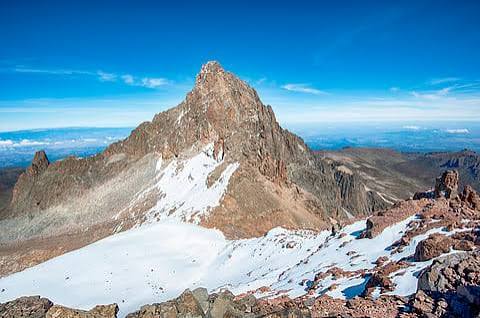
On a clear morning in 1889, Hans Meyer and Ludwig Purtscheller stood atop Kilimanjaro, surrounded by a vast expanse of ice and snow. They were the first Europeans to reach the summit, but their photographs and descriptions revealed a scene that has since become a ghost of its former self. Over a century later, that ice cap has lost roughly 85% of its area, and scientists expect the remaining ice to vanish entirely within the next two to three decades. This isn’t just a story about a mountain losing its hat it’s a story about how climate change rewrites landscapes, ecosystems, and cultures in ways we rarely anticipate.
Kilimanjaro, Mount Kenya, and the Rwenzori Mountains are the only places in Africa where glaciers still cling to the equator. They are sentinels of a colder past and, for many, symbols of an unchanging natural order. But they are retreating at an unprecedented rate, and not for the reason you might expect. The primary driver isn’t simply warmer air at altitude it’s a complex chain of events that begins thousands of kilometers away in the Indian Ocean. Understanding this mechanism reveals why these glaciers are a ‘canary in the coal mine’ for global climate shifts, and why their loss will ripple through ecosystems, economies, and spiritual traditions across East Africa.
The Ice That Shouldn’t Be There
Tropical glaciers are a paradoxical marvel. They exist at latitudes where average temperatures at sea level are consistently warm, yet they persist because of high altitude and specific atmospheric conditions. Kilimanjaro, at 5,895 meters, Mount Kenya at 5,199 meters, and the Rwenzori’s Margherita Peak at 5,109 meters all rise high enough to support permanent ice. These peaks have been capped with ice for at least the last 20,000 years, surviving the Holocene warm periods that melted glaciers in many other parts of the world. But their resilience has limits.
Since the early 20th century, Kilimanjaro has lost 80–85% of its ice cover. Mount Kenya’s glaciers have shrunk by a similar proportion, and the Rwenzori’s ice fields have retracted by more than 80% since 1906. The retreat is accelerating. Scientists project that these glaciers will effectively disappear within the next two to three decades, with Kilimanjaro’s ice cap potentially ice-free by the 2040s–2060s, depending on emissions scenarios. This isn’t a distant problem it’s happening now, and it’s happening fast.
The Surprising Culprit: The Indian Ocean
If you assume these glaciers are melting because of rising air temperatures at altitude, you’d be wrong. High-altitude air temperatures in East Africa have warmed, but not as much as at lower elevations. The real driver is a change in sea surface temperatures in the Indian Ocean, particularly in the western Indian Ocean. As the ocean warms, it alters atmospheric circulation patterns specifically the Walker circulation and the Indian Ocean Dipole. This leads to reduced cloud cover and lower humidity over East Africa, which in turn allows more direct solar radiation to hit the ice. The result is sublimation: the ice transitions directly from solid to vapor without melting, a process that is less visible but just as destructive.
This mechanism, documented by Lonnie Thompson of Ohio State University and other researchers using ice cores and satellite data, explains why these glaciers are vanishing even though the air around them isn’t dramatically warmer. It also underscores their sensitivity: they are influenced by ocean conditions thousands of miles away. As Thompson has said, these glaciers are ‘the canaries in the coal mine’ for climate change, providing an early warning system for shifts that will eventually affect lower elevations and broader regions.
A Chain Reaction of Loss
Unique Ecosystems on the Edge
The mountains are more than ice and rock. They host distinct altitudinal zones—montane forest, heath, moorland, and alpine desert—each with its own array of life. The glaciers feed high-altitude wetlands and streams that sustain endemic species found nowhere else on Earth. In the Rwenzori, giant lobelias and groundsels, some reaching 6 meters tall, grow in the misty moorlands, while Mount Kenya has its own set of endemic plants, including the giant groundsel and various alpine flowers. These species are adapted to the cold, wet conditions that the glaciers help maintain. As the ice retreats, these habitats shrink and fragment, and species face what scientists call a ‘summit trap’: they have nowhere to migrate to because they’re already at the top. The loss of snow will push some of these species closer to extinction.
Water Woes Downstream
Glacial melt contributes only a small fraction to the total river flow in these regions—rainfall is the dominant source. But the timing matters. During dry seasons, glacial melt provides a buffer, maintaining stream flow that supports downstream communities, agriculture, and hydropower. When the glaciers are gone, that buffer disappears. The impact will be most acute in the dry months, when water is already scarce. The Rwenzori Mountains, for instance, are a crucial water tower for the Semliki River, which feeds Lake Albert and supports livelihoods in Uganda and the DRC. Even a small reduction in dry-season flow can have outsized effects.
The Economic Toll
Tourism is a major economic engine for the region. Kilimanjaro alone draws tens of thousands of climbers each year, generating revenue through park fees, guides, porters, and local businesses. The ‘snows of Kilimanjaro’ are a powerful draw, immortalized in literature and film. Mount Kenya and the Rwenzori also attract trekkers and mountaineers. As the snow disappears, the mountains’ aesthetic appeal may diminish, potentially reducing visitor numbers. Some operators are already marketing ‘last chance’ climbs, which raises ethical questions about profiting from loss. The economic ripple could be significant, affecting not just mountain guides but also hotels, restaurants, and transport providers in nearby towns.
Cultural and Spiritual Fractures
For the Chagga people on Kilimanjaro, the Kikuyu and Embu on Mount Kenya, and the Bakonjo and Banande in the Rwenzori, these mountains are sacred. The snow and ice are often seen as spiritual markers—the dwelling places of deities or symbols of purity and continuity. The ‘white crown’ is woven into oral histories, rituals, and cultural identity. When it disappears, it will alter more than a landscape; it will sever a tangible link to the divine. Communities will have to renegotiate their relationship with these mountains, which have always been a constant in their worldview. The loss of snow is not just an environmental issue—it’s a cultural rupture.
What Can Be Done?
There is no realistic way to stop these glaciers from melting in the short term. Even if global emissions were cut dramatically today, the momentum in the climate system means the ice will likely still disappear. The focus, therefore, shifts to adaptation and preservation of what can be saved. Protecting the unique ecosystems around the glaciers—through robust park management and conservation efforts—can help buffer some species from the worst impacts. Diversifying local economies beyond glacier-dependent tourism can soften the economic blow. And documenting cultural traditions and oral histories before the snow is gone can preserve at least the memory of what once was.
But the disappearance of these glaciers is also a global wake-up call. They are among the most visible signs of climate change on the African continent, a stark reminder that no place is immune. As the ice melts, it tells us that the world we know is changing, and we must adapt or be left behind.
The snows of East Africa will soon be a memory. Their disappearance will be measured not just in square kilometers of ice lost, but in the silence of streams that once flowed year-round, the absence of endemic plants that had no refuge, the quieting of tourism hubs, and the reshaping of cultural narratives. The loss is inevitable in the short term, but what we do in response—how we adapt, how we conserve, how we honor the heritage of these mountains—is still within our control. The glaciers may be vanishing, but they leave behind a lesson that will outlast their ice: the Earth is a deeply interconnected system, and changes in one place can echo across the world.
Summary
- East Africa’s only glaciers—on Kilimanjaro, Mount Kenya, and the Rwenzori Mountains—are projected to disappear within 20–30 years.
- The primary cause is not local air warming but changes in Indian Ocean sea surface temperatures, which reduce cloud cover and increase solar radiation, driving sublimation.
- These glaciers have lost 80–85% of their ice since the early 20th century, a trend documented through ice cores and satellite data.
- The loss will affect unique ecosystems, including endemic species like giant lobelias, and reduce dry-season water flow to downstream communities.
- Economic and cultural impacts include potential declines in tourism revenue and the loss of sacred symbols for indigenous peoples like the Chagga and Kikuyu.
FAQ
Q: Why are these glaciers melting if air temperatures aren’t rising much at high altitude?
A: The main driver is a change in Indian Ocean sea surface temperatures, which alters atmospheric circulation and reduces cloud cover over East Africa. This allows more direct solar radiation to hit the ice, causing sublimation—the direct conversion of ice to vapor—rather than melting.
Q: How much ice have these glaciers lost?
A: Kilimanjaro has lost roughly 80–85% of its ice cover since the early 20th century, Mount Kenya similar proportions, and the Rwenzori glaciers have shrunk by more than 80% since 1906.
Q: Will the disappearance of glaciers cause water shortages?
A: Glacial melt contributes only a small fraction to total river flow, but it provides important dry-season buffering. Their loss could reduce stream flow during dry periods, affecting downstream agriculture and hydropower in some areas.
Q: Can anything be done to save the glaciers?
A: In the short term, no. Even with drastic emissions cuts, the existing momentum means the ice will likely disappear. Adaptation efforts focus on conserving ecosystems, diversifying tourism, and preserving cultural heritage.
Q: Are these mountains sacred to local people?
A: Yes. The Chagga, Kikuyu, Embu, Bakonjo, and Banande peoples consider these mountains sacred, with snow often seen as a spiritual marker. The loss of snow will have deep cultural impacts.
Leave a Reply