You’ve probably heard the terms ‘carbon capture’ and ‘carbon dioxide removal’ thrown around in climate discussions, but what do they actually mean? Are they the same thing? And why do experts insist we need both? This confusion is understandable—the jargon is dense, and the concepts are often conflated. But understanding the difference is crucial for grasping how we might actually solve the climate crisis.
In simple terms, carbon capture is about stopping new emissions from reaching the atmosphere, while carbon dioxide removal is about cleaning up the CO₂ that’s already there. Both are essential, but they serve different purposes and face different challenges. Let’s break it down.
The Two Main Categories: CCUS and CDR
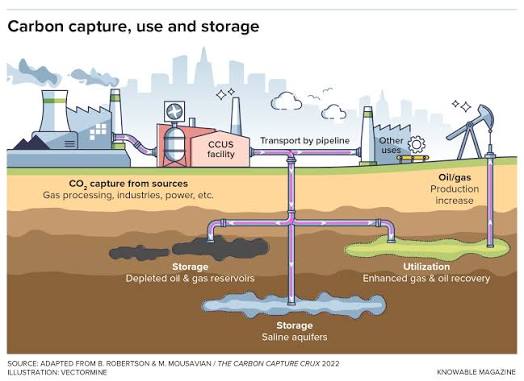
Carbon Capture, Utilisation and Storage (CCUS) — often just called “carbon capture” — is the process of capturing CO₂ at the point of emission. Think of a power plant, cement factory, or steel mill: these industrial facilities produce CO₂ as a byproduct. CCUS technology captures that CO₂ before it escapes into the air. The captured CO₂ can then be either utilised (turned into products like synthetic fuels, chemicals, or building materials) or stored (injected deep underground into geological formations like depleted oil and gas reservoirs or saline aquifers).
Carbon Dioxide Removal (CDR), on the other hand, is about removing CO₂ that is already in the atmosphere. This includes nature-based approaches like planting trees (afforestation/reforestation), improving soil carbon storage, and restoring coastal wetlands (blue carbon). It also includes technology-based methods like Direct Air Capture (DAC), where machines suck CO₂ directly from the air, and Bioenergy with Carbon Capture and Storage (BECCS), where plants absorb CO₂ as they grow, and then the resulting biomass is burned for energy while the emissions are captured and stored.
The Key Distinction: Flow vs. Stock
Think of it this way: CCUS is like stopping a bathtub from overflowing—it prevents more water from spilling onto the floor. CDR is like bailing out the water that’s already spilled. CCUS addresses the flow of new emissions; CDR addresses the stock of existing atmospheric CO₂.
This distinction is critical. Even if we magically stopped all new emissions tomorrow, the CO₂ already in the atmosphere would continue to trap heat for centuries. That’s why CDR is not just a nice-to-have; it’s a necessity.
Why We Need Both
You might wonder: why not just focus on one? The answer is that neither alone is sufficient.
CCUS is essential for decarbonising existing infrastructure. We have decades of investments in fossil-fuel-based power plants and industrial facilities. Retrofitting these with carbon capture allows us to continue using them while drastically reducing their emissions, avoiding stranded assets and economic disruption. CCUS is also crucial for producing low-carbon hydrogen from natural gas, which could be a key clean fuel.
CDR is essential for offsetting residual emissions. Some sectors are incredibly hard to fully decarbonise—aviation, agriculture, and heavy industry, for example. Even with aggressive emissions reductions, these sectors will likely still produce some CO₂. CDR can offset those remaining emissions, helping us reach net-zero. Moreover, most climate models that limit warming to 1.5°C rely on CDR to achieve net-negative emissions later this century—meaning we’ll need to remove more CO₂ than we emit.
The IPCC estimates we may need 5–10 billion tonnes of CDR per year by 2050 to meet Paris Agreement goals. Currently, we’re removing about 2 billion tonnes annually, but almost all of that is from conventional forestry. Novel CDR methods like DAC and BECCS account for only about 0.1%—roughly 2 million tonnes. That’s a massive scale-up gap.
The Current State of Play
CCUS is more mature. As of 2023–2024, about 45 million tonnes of CO₂ are captured annually across ~40 commercial facilities worldwide. The technology has been around since the 1970s, initially for enhanced oil recovery (EOR), where CO₂ is injected into oil fields to extract more oil. This history has led to criticism that CCUS is a tool for the fossil fuel industry rather than a climate solution.
CDR is newer and less developed. The Paris Agreement in 2015 brought it into the spotlight, but the novel methods are still expensive and unproven at scale. Direct Air Capture, for instance, can cost anywhere from $100 to $1,000+ per tonne of CO₂ removed, making it far pricier than simply planting trees. However, private investment is surging, with companies like Microsoft, Stripe, and Google purchasing removal credits at premium prices to kickstart the market.
The Debates and Critiques
The ‘CCUS as Distraction’ Critique
Environmental groups like Greenpeace argue that CCUS prolongs fossil fuel dependence. They point to the energy penalty—capturing CO₂ uses 10–30% of a plant’s energy output—and the risk of CO₂ leakage from storage sites. They also note that using captured CO₂ for enhanced oil recovery is counterproductive, as it leads to more oil extraction.
The ‘CDR as Moral Hazard’ Concern
Some worry that the promise of CDR could become a moral hazard—a justification to keep emitting now because we think we can remove it later. This is a valid concern, but experts counter that CDR is not an alternative to emissions reductions; it’s a complement. We need both aggressive cuts and removal.
The ‘Utilisation’ Sub-Debate
Even among experts, there’s confusion about “utilisation.” Using CO₂ in products like concrete or plastics is often temporary—the CO₂ may be released again when the product degrades. Only permanent storage counts as true removal. Utilisation is often just delayed emission, which is why it’s important to distinguish between CCUS with storage and CCUS with utilisation.
The Bottom Line
Climate change is a problem of both flow and stock. We need to stop the flow of new emissions (CCUS) and clean up the stock of existing CO₂ (CDR). They are not competing solutions; they are complementary tools in our climate toolbox. The scientific consensus is clear: both are necessary to meet our climate goals.
So, the next time you hear about carbon capture, ask yourself: is it CCUS or CDR? Are we preventing new emissions or removing existing ones? Both are vital, but they serve different roles. As we navigate the complex path to a net-zero future, understanding these distinctions is more than a semantic exercise—it’s the key to making informed decisions about climate policy and investment.
Summary
- CCUS captures CO₂ at the source (e.g., power plants) to prevent new emissions; CDR removes CO₂ already in the atmosphere.
- CCUS is like stopping a bathtub from overflowing; CDR is like bailing out spilled water.
- Both are needed: CCUS decarbonises existing infrastructure; CDR offsets hard-to-avoid emissions and achieves net-negative later.
- Current scale: CCUS captures ~45 million tonnes/year; CDR removes ~2 billion tonnes/year, but mostly from forestry—novel methods are tiny.
- Debates exist: CCUS may prolong fossil fuels; CDR could create moral hazard; utilisation is often not permanent removal.
FAQ
Q: What’s the difference between carbon capture and carbon dioxide removal?
A: Carbon capture (CCUS) prevents CO₂ from entering the atmosphere by capturing it at the emission source, like a power plant. Carbon dioxide removal (CDR) takes CO₂ out of the atmosphere after it’s already been emitted.
Q: Why do we need both?
A: CCUS helps decarbonise existing industrial infrastructure and reduce new emissions, while CDR is necessary to offset residual emissions from hard-to-decarbonise sectors and to eventually achieve net-negative emissions.
Q: Is carbon capture just a way to keep using fossil fuels?
A: Critics argue that CCUS can prolong fossil fuel dependence, especially when used for enhanced oil recovery. However, it can also be used to decarbonise essential industries like cement and steel, which are difficult to electrify.
Q: How much carbon are we currently capturing and removing?
A: CCUS captures about 45 million tonnes of CO₂ annually. CDR removes about 2 billion tonnes, but almost all of that is from traditional forestry. Novel methods like direct air capture account for only about 0.1%.
Q: Is using captured CO₂ in products the same as storing it?
A: No. Utilisation is often temporary—the CO₂ can be released again when the product degrades. Only permanent storage, like underground injection, counts as true removal.
Leave a Reply