Tag: WWII

  • The Jet That Outran the War: How the Me 262 Redefined Aerial Combat

    The Jet That Outran the War: How the Me 262 Redefined Aerial Combat

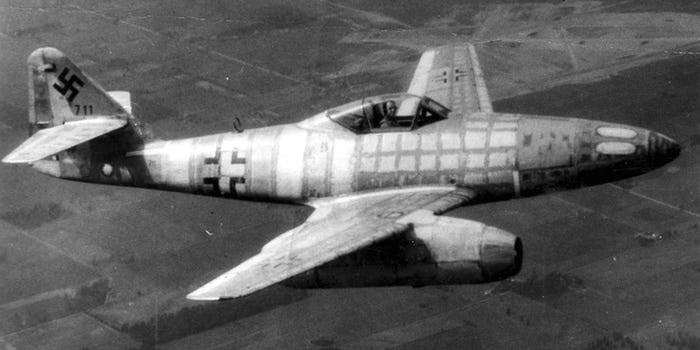
    On a July afternoon in 1942, test pilot Fritz Wendel climbed into a sleek, twin-engine Messerschmitt and roared down a German runway. When he lifted off, he was flying faster than any propeller-driven aircraft ever had and the world of aerial combat shifted forever. The Me 262, Germany’s ‘Schwalbe’ (Swallow), wasn’t just another fighter; it was a technological leap that would render every piston-engine fighter obsolete.

    The First Jet Combat Aircraft

    The Me 262 was the first operational jet fighter in history. Its two Junkers Jumo 004B turbojets the world’s first operational turbojet engines propelled it to roughly 540 mph at altitude, about 100 mph faster than the famed P-51 Mustang. Its four 30 mm MK 108 cannons in the nose could tear a B-17 apart with just a few hits, and its climb rate made it a terror at high altitude.

    But the Me 262’s story is not just one of triumph. It was a weapon born from desperation, plagued by production delays, strategic blunders, and a fuel crisis that grounded many of its sorties. By the time it entered combat in 1944, Germany was already losing the war. The jet could outrun any Allied fighter, but it couldn’t outrun the inevitable.

    The Race to Build a Jet

    Germany and Britain were in a parallel race to harness jet propulsion in the 1930s. German physicist Hans von Ohain and British engineer Frank Whittle independently developed jet engine concepts, but Germany got a head start. The Heinkel He 178, flown in August 1939, was the world’s first jet aircraft. By 1941, Germany had multiple jet programs underway, including the Me 262 and the He 280.

    The British Gloster Meteor entered service in July 1944, but it was deliberately kept out of German airspace to prevent capture and it was slower than the Me 262. So, when the Me 262 finally took to the skies in combat, it faced no equal in speed or firepower.

    A Wonder Weapon in a Burning Reich

    By 1943, the Allied bombing offensive was devastating German industry. The USAAF’s daylight raids, escorted by P-51 Mustangs and P-47 Thunderbolts, were grinding down the Luftwaffe in an attrition war. Germany needed a miracle. The Me 262 was touted as a ‘wonder weapon’ that could restore air superiority.

    But production was a nightmare. The Jumo 004 engine required strategic materials like chrome, nickel, and cobalt for turbine blades all in short supply. Factories were dispersed and bombed. Skilled labor was scarce. Only about 1,430 Me 262s were ever produced, and fewer than 300 saw combat.

    Hitler’s Fatal Interference

    Perhaps the most damaging blow was self-inflicted. Adolf Hitler insisted the Me 262 be built primarily as a fast bomber, or ‘Blitzbomber,’ believing it could blunt the Allied invasion of France. This forced a change in production priorities, delaying fighter production by several months and diverting resources.

    The debate over Hitler’s meddling remains a major historical controversy, but the outcome is clear: the Me 262 was never used to its full potential as a fighter. Instead of intercepting the bomber streams that were leveling German cities, many jets were held back for a bomber role that never materialized.

    Combat: The Brief, Violent Encounters

    The first operational unit, Kommando Nowotny, formed in April 1944. By July, Me 262s were flying combat sorties against Allied reconnaissance aircraft. The first confirmed kill came in October 1944, when a British Mosquito was shot down.

    For Allied bomber crews, the sight of a Me 262 was terrifying. It approached so fast that gunners barely had time to react. Its 30 mm cannons could destroy a B-17 with a few hits, and its speed meant it could strike and escape before escort fighters could respond.

    But the jet had fatal vulnerabilities. The Jumo 004 engine was unreliable, with a lifespan of only about 25 hours. It was prone to compressor stalls and flameouts. Pilot training was inadequate many pilots had minimal time in jets. And by 1945, Germany’s synthetic fuel plants were destroyed, leaving many Me 262s grounded for lack of fuel.

    Allied pilots quickly learned to exploit these weaknesses. They attacked Me 262s during takeoff and landing, when they were slow and vulnerable. They strafed German airfields to catch jets on the ground. The jet’s speed became irrelevant if it couldn’t get off the runway or couldn’t land safely.

    The Legacy: Shaping the Post-War Skies

    Despite its strategic failure, the Me 262’s engineering was revolutionary. Its swept-wing design, about 18.5 degrees, was a pioneering aerodynamic feature that would influence post-war jet design, including the Soviet MiG-15 and the American F-86 Sabre. The axial-flow turbojet, the cannon armament, and the concept of a high-speed interceptor all shaped the future of military aviation.

    When the war ended in May 1945, many Me 262s were destroyed by their crews or captured by the Allies. The technology was divided among the victors, who would spend the next decade developing their own jet fighters based on what they learned from the Schwalbe.

    The Paradox of the Me 262

    The Me 262 was a tactical marvel and a strategic failure. It was the fastest, most heavily armed fighter of its time, yet it couldn’t change the outcome of the war. It was a weapon of desperation, a glimpse of the future that arrived too late and in too few numbers.

    For the pilots who flew it, the Me 262 offered a taste of what was possible—a machine that could outrun anything in the sky, if only it could stay in the air long enough. For the Allies, it was a warning of what lay ahead, a preview of the jet age that would define the Cold War.

    The Me 262 didn’t just change aerial combat; it ended an era and began another. It was the first step toward a future where speed was king, and nothing would ever be the same.

    The Me 262’s story is a reminder that technological brilliance alone cannot win a war. It was a revolutionary machine that outclassed everything in the sky, but it was hobbled by leadership, resources, and time. Its legacy, however, is undeniable: it set the template for every jet fighter that followed, and its influence is still felt in the skies today.

    Summary

    • The Me 262 was the world’s first operational jet fighter, with a top speed of ~540 mph, about 100 mph faster than the P-51 Mustang.
    • It was armed with four 30 mm cannons and optional R4M rockets, capable of destroying a B-17 with a few hits.
    • Only ~1,430 were built, and fewer than 300 saw combat due to production problems, Hitler’s insistence on a bomber role, and fuel shortages.
    • Its first confirmed kill was a British Mosquito in October 1944.
    • The swept-wing design and axial-flow turbojets influenced post-war jets like the MiG-15 and F-86 Sabre.

    FAQ

    Q: What made the Me 262 so fast?
    A: Its two Junkers Jumo 004B turbojets were the world’s first operational turbojet engines, providing a top speed of ~540 mph—about 100 mph faster than the P-51 Mustang.

    Q: Why didn’t the Me 262 change the outcome of the war?
    A: It was produced in small numbers (fewer than 300 saw combat), was grounded by fuel shortages, and was delayed by Hitler’s insistence on using it as a bomber rather than a fighter.

    Q: How did Allied pilots counter the Me 262?
    A: They attacked it during takeoff and landing, when it was slow and vulnerable, and strafed German airfields to destroy jets on the ground.

    Q: What was the Me 262’s first confirmed kill?
    A: A British Mosquito reconnaissance aircraft, shot down in October 1944.

    Q: How did the Me 262 influence post-war aviation?
    A: Its swept-wing design and axial-flow turbojets were copied by the Soviets and Americans, leading to jets like the MiG-15 and F-86 Sabre.
  • Go for Broke: The 442nd’s Fight for America While America Imprisoned Their Families

    Go for Broke: The 442nd’s Fight for America While America Imprisoned Their Families

    In the fall of 1944, deep in the Vosges Mountains of eastern France, a battalion of Texans was surrounded by German forces. They were low on ammunition, food, and hope. The unit sent to rescue them was not composed of the usual infantry it was a regiment of Japanese Americans, many of whose families were locked in internment camps back home. The 442nd Regimental Combat Team would suffer hundreds of casualties to save 211 men. Their motto, ‘Go for Broke,’ meant risking everything. For the Nisei soldiers, that risk was doubly profound: they were fighting for a country that had stripped them of their rights, yet they believed that proving their valor on the battlefield was the only way to reclaim their place as Americans.

    The Paradox of Service

    On February 1, 1943, the U.S. Army activated the 442nd Regimental Combat Team at Camp Shelby, Mississippi. The unit was composed almost entirely of second-generation Japanese Americans—Nisei—who had volunteered to fight. But here’s the catch: many of their parents and siblings were behind barbed wire in remote camps like Manzanar and Heart Mountain, imprisoned under Executive Order 9066. Over 110,000 Japanese Americans had been forcibly removed from the West Coast, two-thirds of them U.S. citizens. The government called the camps ‘relocation centers,’ but they were prisons in all but name.

    Despite this, more than 14,000 men would serve in the 442nd over the course of the war. The initial call for volunteers in Hawaii drew over 10,000 responses for just 1,500 slots. In the mainland camps, the response was more complicated—some resisted the draft, facing prison sentences. But thousands still volunteered, driven by a painful logic: if they died for America, maybe America would finally see them as loyal.

    The Purple Heart Battalion

    Before the 442nd was even formed, a separate unit of Hawaiian Nisei—the 100th Infantry Battalion—was already training. Activated in June 1942, the 100th was sent to Italy in September 1943 and quickly earned a brutal nickname: the ‘Purple Heart Battalion.’ In one battle at Monte Cassino, the unit suffered over 50% casualties. Their ferocity and sacrifice became legend, but it came at a staggering cost.

    When the 100th was attached to the 442nd in Italy in 1944, it became the regiment’s 1st Battalion. The combined unit then fought through the Rome-Arno Campaign, pushing against the Gothic Line—a formidable German defensive line in the northern Apennines. The fighting was vicious, with soldiers battling not only the enemy but also mud, mines, and mountain cold.

    The Rescue of the Lost Battalion

    It was in France, however, that the 442nd would cement its place in military history. In October 1944, the 1st Battalion of the 141st Infantry Regiment—a Texas National Guard unit—was cut off by German forces in the Vosges Mountains. For days, the ‘Lost Battalion’ held out, but they were running out of time. The 442nd was ordered to break through.

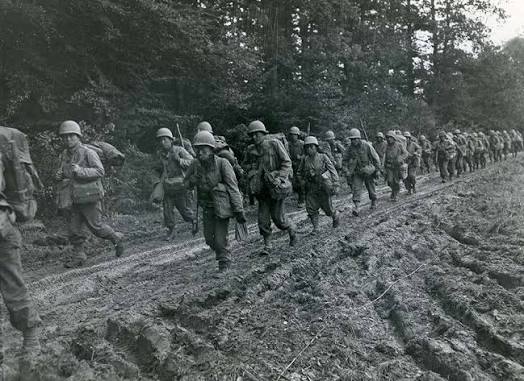
    The rescue was a nightmare. The terrain was steep, forested, and heavily fortified. The Germans had dug in with machine guns and artillery. Over five days, the 442nd launched repeated frontal assaults, suffering enormous losses. In one company, only a handful of men survived. In total, the unit lost over 800 men—killed, wounded, or missing—to save 211. It was a Pyrrhic victory that some called a ‘suicide mission.’ But the 442nd did it, and the image of Japanese American soldiers hauling wounded Texans to safety became a powerful symbol.

    The cost was so high that the 442nd’s casualties over the entire war exceeded 9,000—a casualty rate of over 300% of its original strength. That number reflects the constant flow of replacements, many of whom were killed or wounded within days of arriving.

    The Most Decorated Unit in U.S. History

    For its size and length of service, the 442nd became the most decorated unit in U.S. military history. Its members earned over 4,000 Purple Hearts, 560 Silver Stars, 52 Distinguished Service Crosses, and, after a 2000 review that upgraded many awards, 21 Medals of Honor. The original tally was just one Medal of Honor, but a congressional investigation found that many had been denied due to racial prejudice.

    Among the heroes was Daniel Inouye, a future U.S. Senator from Hawaii, who lost his right arm to a German grenade in Italy. Despite the wound, he continued to lead his platoon until he collapsed. Another notable figure, Spark Matsunaga, would also become a Senator. Their post-war political careers were as much a continuation of the fight for equality as their military service.

    The 522nd Field Artillery Battalion, part of the 442nd, also played a role in liberating a subcamp of Dachau in 1945—an often-overlooked chapter of the unit’s history.

    The Complicated Story of Resistance

    The story of the 442nd is often told as a simple triumph of loyalty over prejudice. But that narrative obscures a crucial counterpoint: the draft resistance within the camps. The Heart Mountain Fair Play Committee, led by Frank Emi, organized a movement among incarcerated Nisei who refused to report for the draft. Their argument was stark: it was unconstitutional to demand military service from people whose families were imprisoned without trial. They were convicted and sent to federal prison, branded as traitors. It took decades for their records to be cleared—they were pardoned posthumously in 2002.

    This tension—between those who served and those who resisted—isn’t a contradiction. Both were responses to an impossible situation. The volunteers risked death to prove their citizenship; the resisters risked prison to assert their rights. Together, they complicate the heroic myth and remind us that loyalty isn’t always simple.

    Legacy and Reckoning

    The 442nd’s legacy is not just about medals. It forced the nation to confront its own hypocrisy. When the war ended, the survivors returned to a country that had treated them as enemies, yet they had fought and died as Americans. Their sacrifice helped pave the way for the eventual apology and reparations for internment in 1988, when President Ronald Reagan signed the Civil Liberties Act.

    Today, the unit is remembered at the National Japanese American Memorial in Washington, D.C., and in countless books and documentaries. But the most profound memorial is the story itself—a story of men who refused to let their country’s injustice define their loyalty. They went for broke, and in doing so, they broke the back of prejudice, one battle at a time.

    The 442nd Regimental Combat Team was a paradox made of flesh and blood: soldiers fighting for a flag that had been raised over their families’ prison camps. Their courage did not erase the injustice of internment, but it forced a reckoning. They proved that citizenship is not a gift granted by the state, but a claim staked through sacrifice. And in the end, their ‘Go for Broke’ spirit—risking everything for a country that had risked nothing for them—became a founding story for Japanese Americans and a challenge to America itself.

    Summary

    • The 442nd RCT was composed of Japanese American Nisei volunteers, many whose families were interned under Executive Order 9066.
    • The unit fought in Italy and France, including the rescue of the ‘Lost Battalion’ in the Vosges Mountains, suffering over 800 casualties to save 211 Texans.
    • It became the most decorated unit for its size in U.S. history, with 21 Medals of Honor and over 4,000 Purple Hearts.
    • The 100th Infantry Battalion, the ‘Purple Heart Battalion,’ was a predecessor that suffered heavy losses in Italy.
    • Not all Japanese Americans supported the war effort; the Heart Mountain draft resisters challenged the draft as unconstitutional and were later pardoned.

    FAQ

    Q: What does ‘Go for Broke’ mean?
    A: It’s a Hawaiian pidgin phrase meaning to risk everything, to go all-in. It became the motto of the 442nd, reflecting their willingness to sacrifice all for their country.

    Q: Were the soldiers of the 442nd volunteers?
    A: Yes, the unit was composed of volunteers, many from Hawaii and mainland internment camps. However, there was also draft resistance among some incarcerated Nisei, who refused to serve while their families were imprisoned.

    Q: What was the ‘Lost Battalion’ rescue?
    A: In October 1944, the 442nd was ordered to rescue the 1st Battalion of the 141st Infantry Regiment, which was surrounded by Germans in the Vosges Mountains. The rescue succeeded but cost over 800 casualties.

    Q: How many Medals of Honor did the 442nd receive?
    A: Originally one, but after a 2000 review, many awards were upgraded, and the unit now has 21 Medal of Honor recipients.

    Q: How did the 442nd’s service affect Japanese Americans after the war?
    A: Their sacrifice helped shift public opinion, contributing to the eventual apology and reparations for internment in 1988. Many survivors went on to prominent careers, including Senators Daniel Inouye and Spark Matsunaga.

  • Mind Control on the Home Front: How WWII Propaganda Shaped American Psychology

    Mind Control on the Home Front: How WWII Propaganda Shaped American Psychology

    In the summer of 1942, a Chicago housewife named Margaret Jones received a letter from her son, a soldier stationed in the Pacific. He wrote about the heat, the mud, and the fear. But when she tried to share his words with her neighbor, she stopped herself. A poster on the wall of the post office reminded her: ‘Loose Lips Sink Ships.’ She said nothing.

    That poster was one of thousands produced by the U.S. government’s Office of War Information (OWI), which, between 1941 and 1945, saturated American life with propaganda. It wasn’t just about selling war bonds or rationing sugar it was about psychologically reshaping a nation. The OWI and its private-sector partners used fear, guilt, and a relentless drumbeat of patriotic messaging to turn a reluctant public into a unified war machine. But the psychological cost on children, on minorities, on the very fabric of civic trust would linger long after the guns fell silent.

    The Machinery of Persuasion

    The United States didn’t invent propaganda in World War II. During World War I, the Committee on Public Information (CPI), led by George Creel, had pioneered mass-scale government messaging, using films, posters, and 75,000 volunteer speakers known as “Four Minute Men.” But the CPI’s excesses including outright lies about German atrocities sparked a public backlash, and it was dismantled in 1919. By the 1930s, Americans were deeply suspicious of propaganda, especially as Nazi Germany elevated it to a dark art.

    So when war broke out in Europe, U.S. officials faced a dilemma. They knew they needed to rally public support, but they feared a cynical population would reject anything that smelled of manipulation. The solution, as historian Allan Winkler notes in The Politics of Propaganda, was to create an agency that would “tell the truth”—but strategically.

    The Office of War Information, established in June 1942 under journalist Elmer Davis, walked that line. It produced more than 1,000 posters, 60 films, and countless radio scripts. It didn’t fabricate stories wholesale; it chose which facts to highlight and which to bury. Casualty figures were downplayed, setbacks in the Pacific were spun as “strategic withdrawals,” and the enemy was reduced to a caricature.

    Fear, Guilt, and the Psychology of Control

    The OWI’s methods were grounded in the emerging science of persuasion. Behavioral psychologist John B. Watson had already shown that fear and emotion could drive consumer behavior. The government, working with advertising executives through the War Advertising Council, applied those same principles to the war effort.

    Fear was the sharpest tool. Posters depicted Japanese soldiers as subhuman “Japs” with clawed hands and bestial faces, and Germans as goose-stepping automatons. The threat of invasion was made visceral: “If you tell a friend, you might tell the enemy.” Atrocity stories, some true and some embellished, stoked a righteous anger.

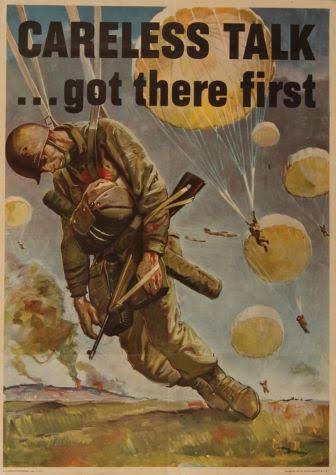
    But fear alone wasn’t enough. The OWI also wielded guilt. “Do with less—so they’ll have enough” shamed hoarders. “Someone talked!” posters accused the careless. Women were told that keeping a clean home and canning vegetables was a patriotic duty, and that any failure endangered the troops. Children were recruited into scrap drives and war stamp campaigns, their schoolrooms plastered with reminders that “Every Slip of the Tongue Can Help the Enemy.”

    The result was a pervasive atmosphere of anxiety and obligation. A 1943 study by the American Psychological Association found that 40% of children surveyed reported fears of air raids and enemy invasion—fears that had no basis in reality for most of the country. Japanese American families, already facing internment, were simultaneously told to prove their loyalty through “voluntary” contributions to war bond drives.

    The Cooperation of Hollywood and Madison Avenue

    The OWI didn’t work alone. It had two powerful partners: Hollywood and the advertising industry. The Bureau of Motion Pictures reviewed scripts, and studios willingly produced pro-war films like Casablanca and Mrs. Miniver. These films didn’t just entertain; they normalized sacrifice and demonized the enemy.

    The War Advertising Council coordinated roughly $1 billion in free advertising space each year—the equivalent of $15–18 billion today. Advertisers seamlessly integrated war messages into commercial campaigns. A soap ad might remind you to save fat for explosives. A cigarette ad might feature a soldier smoking the same brand, linking patriotism to a product.

    This saturation was deliberate. Psychologists like Carl Hovland, who would later study persuasion at Yale, knew that repetition was key. The same message, repeated across radio, print, and film, would eventually feel like a natural truth.

    The Skeptics and the Silenced

    Not every American was a passive sponge. Historian Michael Sweeney, in Secrets of Victory, shows that many people recognized the propaganda and resented it. They complained about censorship, mocked the rosy newsreels, and developed a critical eye that would serve them well in the postwar era.

    But dissent was not tolerated. The OWI and the Office of Censorship suppressed anti-war publications and imprisoned some objectors. The government’s messaging about Japanese Americans—that they were a threat—legitimized the internment of over 110,000 people, a decision that caused profound psychological trauma that survivors described for decades.

    The Legacy: A Template for Manipulation

    When the war ended, the machinery didn’t shut down. The Advertising Council, which had been a wartime partner, turned its attention to peacetime campaigns—”Smokey Bear,” “Keep America Beautiful.” The techniques of persuasion honed in the war—fear appeals, guilt, bandwagon effects—became the backbone of modern public relations and consumer marketing.

    The Cold War extended the pattern. The government continued to use propaganda to shape public opinion, from “Duck and Cover” films that frightened schoolchildren to the demonization of the Soviet Union. The post-9/11 era saw similar tactics, from color-coded terror alerts to “Support Our Troops” ribbons.

    What the Research Tells Us About the Psychological Impact

    Scholarship on the subject is clear: WWII propaganda succeeded in its immediate goals—maintaining morale, mobilizing 16 million workers, selling $185 billion in war bonds. But it came at a cost. The fear and guilt it instilled left lasting psychological scars, particularly among those who were already vulnerable.

    Children who grew up in the 1940s carried a sense of constant threat into adulthood. Japanese Americans faced a double betrayal: being asked to prove loyalty to a country that had stripped them of their rights. And the public’s trust in government, battered by the CPI’s excesses in WWI, was again eroded by the OWI’s omissions.

    Yet there was a silver lining. The very exposure to propaganda taught a generation to be wary. The skepticism they developed in the 1940s laid the groundwork for the media literacy movements of the 1960s and beyond. As Susan Brewer argues in Why America Fights, the war taught Americans not just what to think, but how to question what they were told.

    The propaganda of the American home front was a double-edged sword. It united a nation and helped win a war, but it also demonstrated how easily democratic societies can be psychologically manipulated. The posters are faded now, but the lessons remain: when we hear “Loose Lips Sink Ships,” we should also ask who is doing the sinking, and why we are being told to stay silent.

    Summary

    • The OWI produced over 1,000 posters, 60 films, and countless radio scripts during WWII, saturating American media.
    • Techniques included fear appeals (enemy caricatures), guilt (rationing shaming), and bandwagon effects (“everyone’s doing their part”).
    • Children and minorities bore a disproportionate psychological burden, with 40% of kids fearing air raids and Japanese Americans facing internment while being asked to prove loyalty.
    • Hollywood and the advertising industry cooperated voluntarily, with the War Advertising Council providing $1 billion in free ad space annually.
    • The legacy extends to modern public relations and government messaging, shaping how we consume information today.

    FAQ

    Q: Was the ‘We Can Do It!’ poster really a government propaganda tool?
    A: No. The famous “We Can Do It!” poster was actually an internal morale booster made by Westinghouse for its own workers, not an OWI campaign. It was not widely displayed during the war and only became iconic decades later.

    Q: How did children experience WWII propaganda?
    A: Children were heavily targeted through schools, scrap drives, and war stamps. They were exposed to fear-based messages about invasion and espionage, leading to widespread anxiety. A 1943 study found 40% of children surveyed feared air raids, even though the U.S. mainland was never attacked.

    Q: Did Americans accept propaganda passively?
    A: No. Many recognized it and resented censorship. Historian Michael Sweeney’s research shows that audiences developed a critical awareness, which contributed to postwar skepticism toward advertising and government messaging.

    Q: What was the ‘Double V’ campaign?
    A: The ‘Double V’ was a grassroots African American campaign during WWII, not an OWI initiative. It called for victory over fascism abroad and victory over segregation at home, highlighting the contradiction of fighting for freedom while denying it to Black Americans.

    Q: How did WWII propaganda influence the Cold War?
    A: The techniques and personnel from wartime propaganda were repurposed for Cold War messaging, including ‘Duck and Cover’ films and the demonization of the Soviet Union. The Advertising Council also transitioned to peacetime public service campaigns like Smokey Bear.